
Propulsion Systems Aircraft Rocket Space Aerospace Engineering 2011

- Slides: 18
Propulsion Systems Aircraft , Rocket, Space Aerospace Engineering © 2011 Project Lead The Way, Inc.
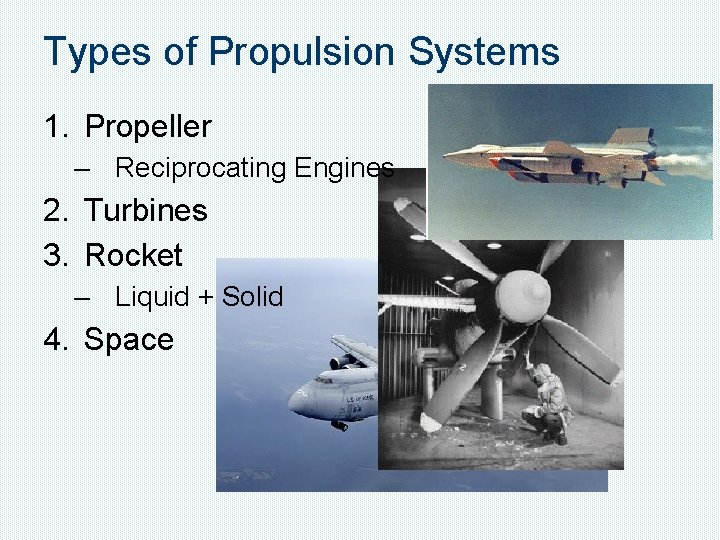
Types of Propulsion Systems 1. Propeller – Reciprocating Engines 2. Turbines 3. Rocket – Liquid + Solid 4. Space
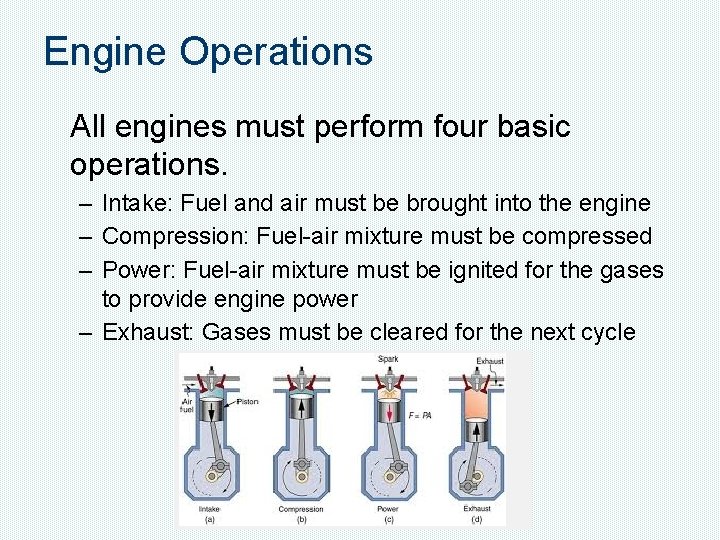
Engine Operations All engines must perform four basic operations. – Intake: Fuel and air must be brought into the engine – Compression: Fuel-air mixture must be compressed – Power: Fuel-air mixture must be ignited for the gases to provide engine power – Exhaust: Gases must be cleared for the next cycle
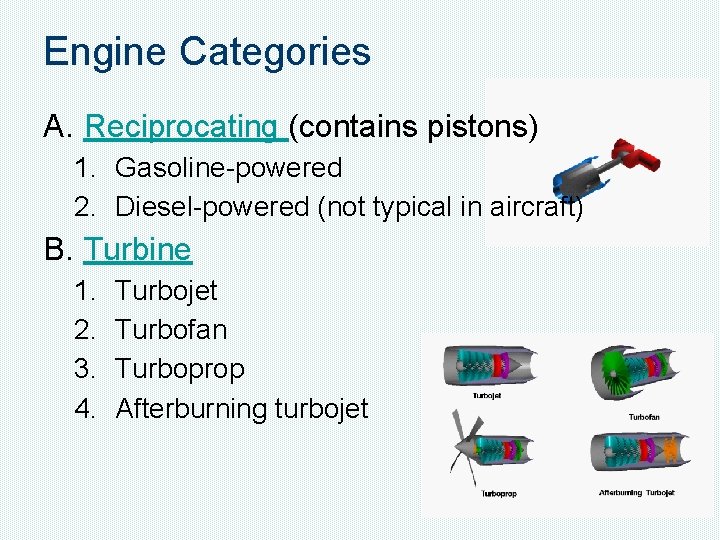
Engine Categories A. Reciprocating (contains pistons) 1. Gasoline-powered 2. Diesel-powered (not typical in aircraft) B. Turbine 1. 2. 3. 4. Turbojet Turbofan Turboprop Afterburning turbojet
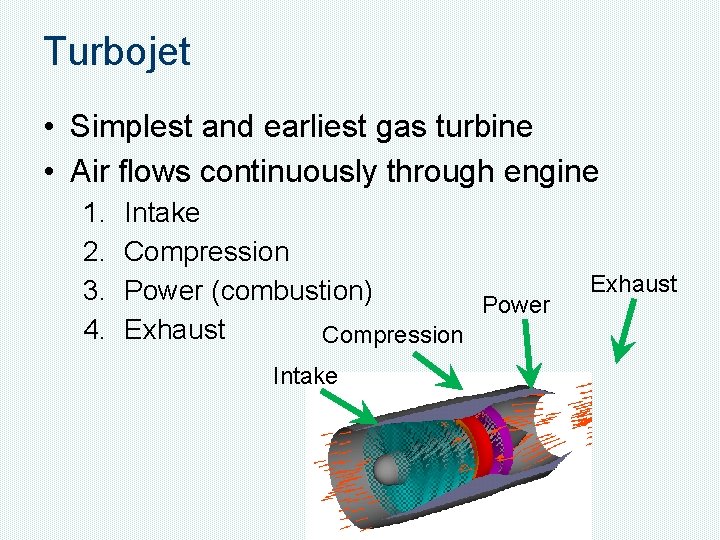
Turbojet • Simplest and earliest gas turbine • Air flows continuously through engine 1. 2. 3. 4. Intake Compression Power (combustion) Power Exhaust Compression Intake Exhaust
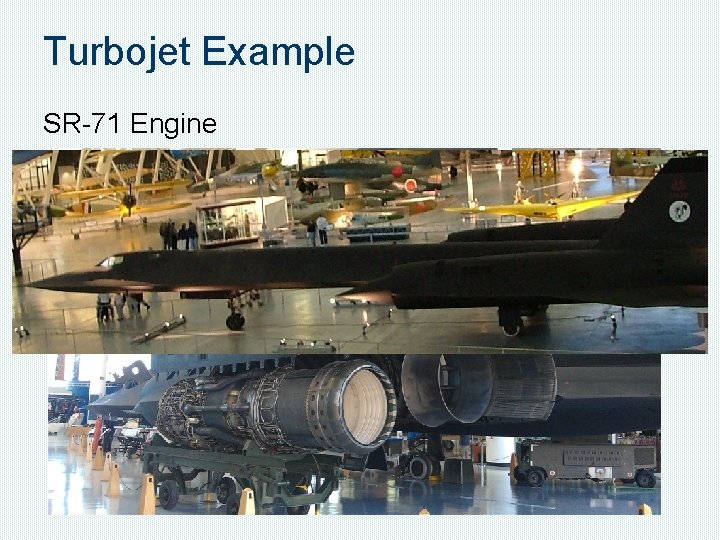
Turbojet Example SR-71 Engine
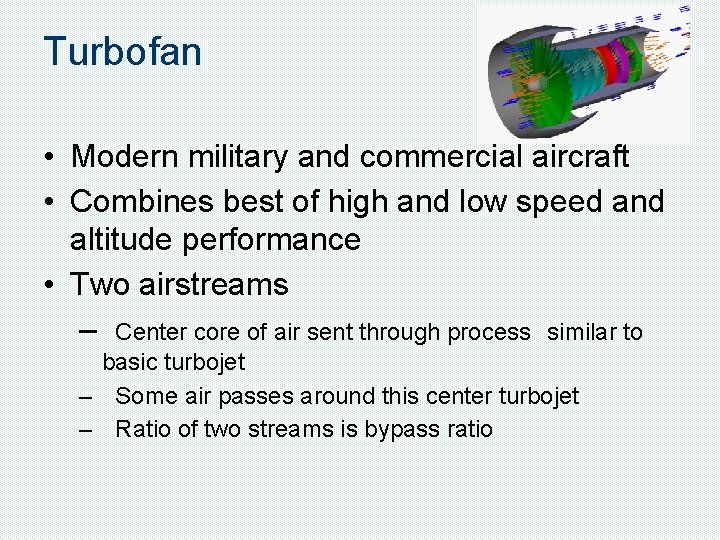
Turbofan • Modern military and commercial aircraft • Combines best of high and low speed and altitude performance • Two airstreams – Center core of air sent through process similar to basic turbojet – Some air passes around this center turbojet – Ratio of two streams is bypass ratio
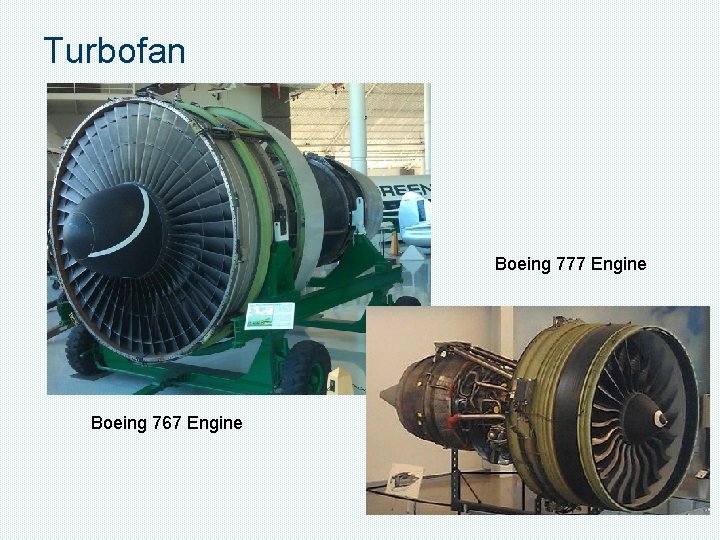
Turbofan Boeing 777 Engine Boeing 767 Engine
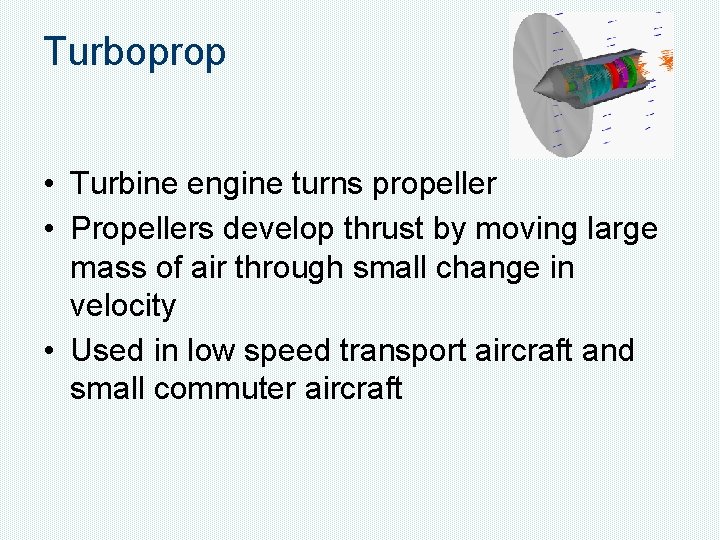
Turboprop • Turbine engine turns propeller • Propellers develop thrust by moving large mass of air through small change in velocity • Used in low speed transport aircraft and small commuter aircraft
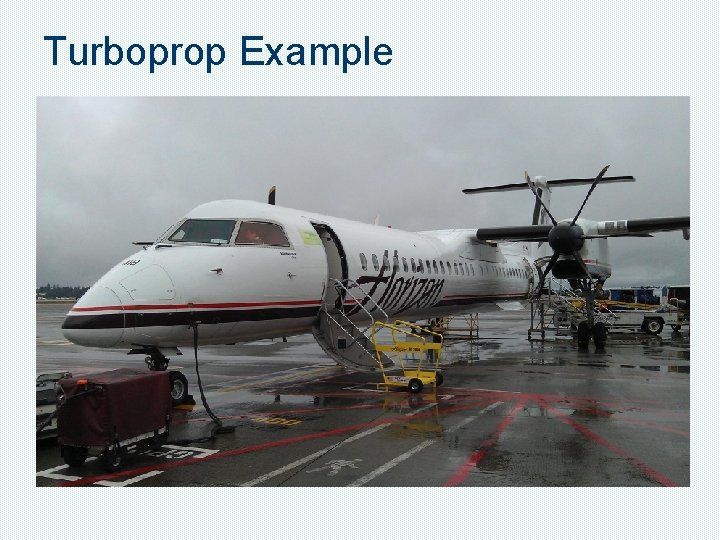
Turboprop Example
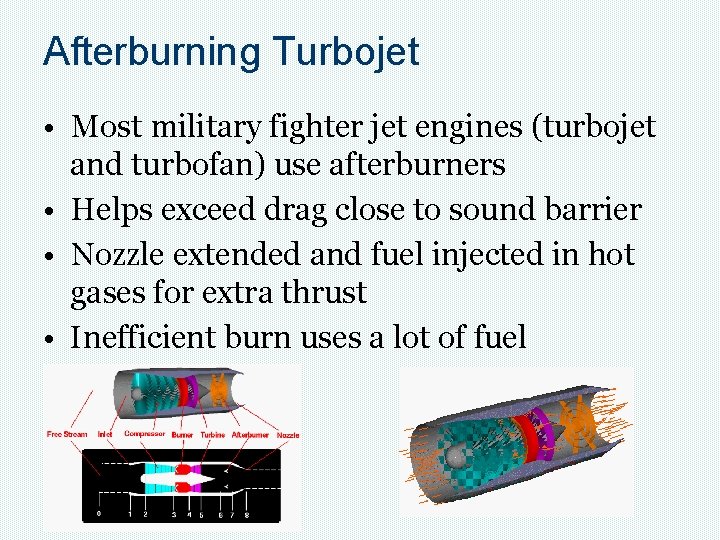
Afterburning Turbojet • Most military fighter jet engines (turbojet and turbofan) use afterburners • Helps exceed drag close to sound barrier • Nozzle extended and fuel injected in hot gases for extra thrust • Inefficient burn uses a lot of fuel
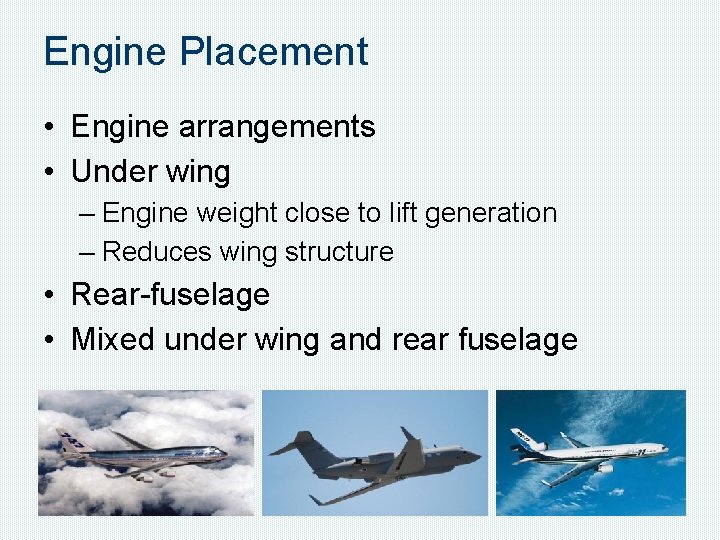
Engine Placement • Engine arrangements • Under wing – Engine weight close to lift generation – Reduces wing structure • Rear-fuselage • Mixed under wing and rear fuselage
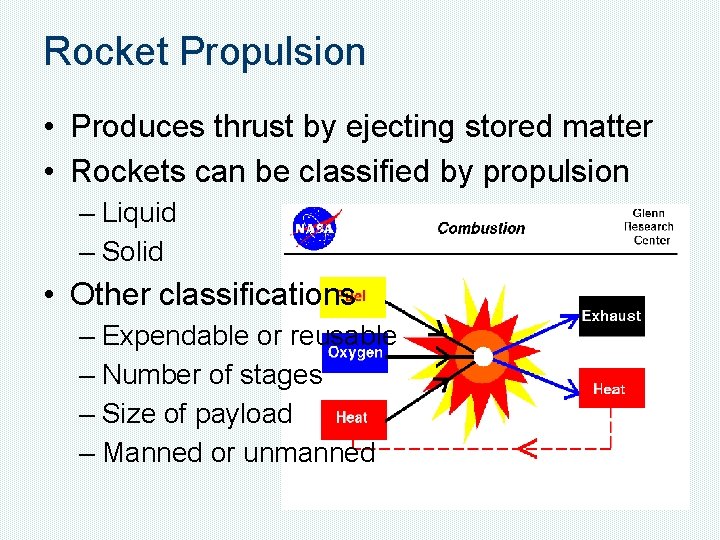
Rocket Propulsion • Produces thrust by ejecting stored matter • Rockets can be classified by propulsion – Liquid – Solid • Other classifications – Expendable or reusable – Number of stages – Size of payload – Manned or unmanned
Liquid Fuel Rocket • Fuel mixed with oxidizer and burned • Gases escape out nozzle to generate thrust
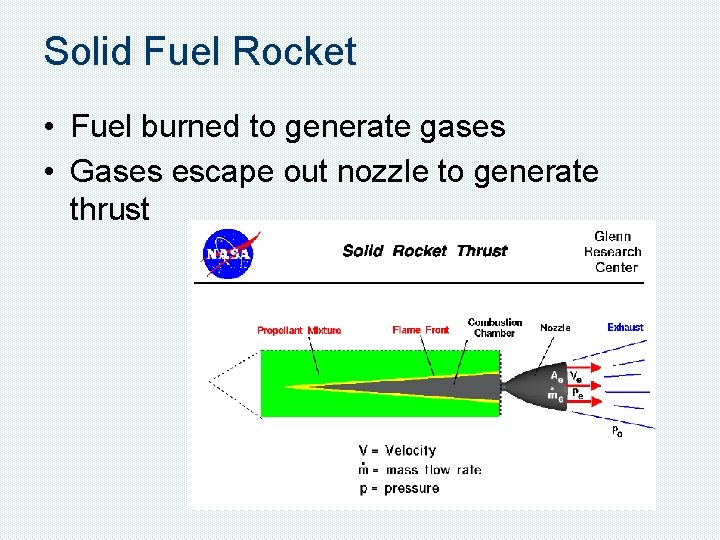
Solid Fuel Rocket • Fuel burned to generate gases • Gases escape out nozzle to generate thrust
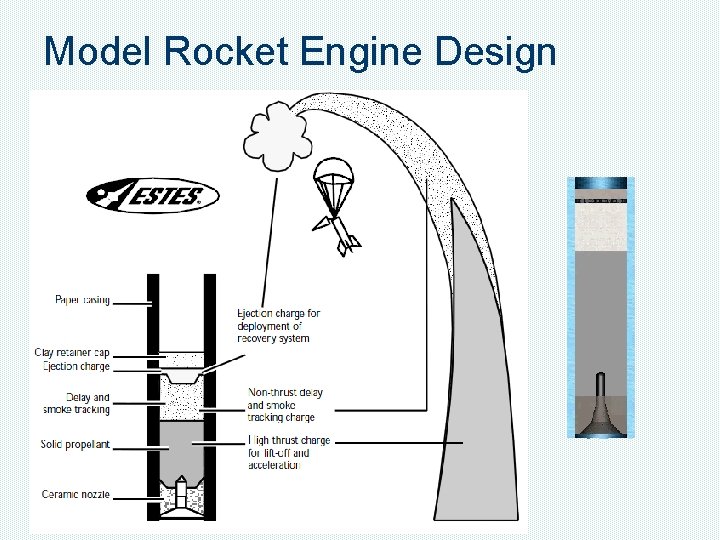
Model Rocket Engine Design
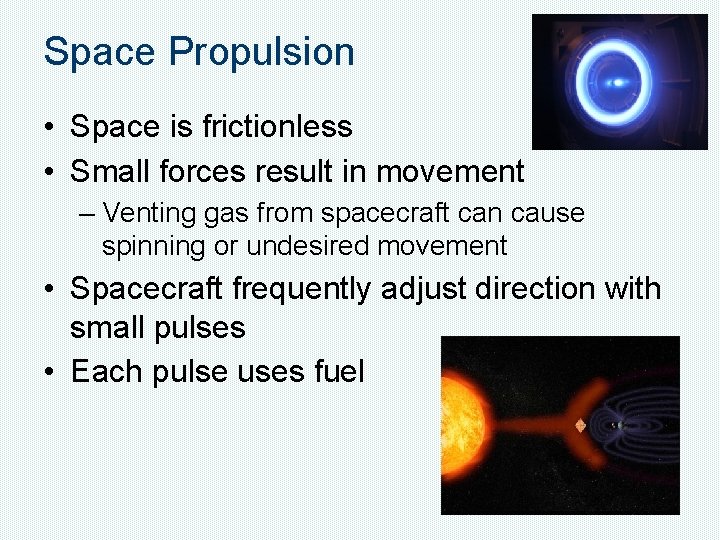
Space Propulsion • Space is frictionless • Small forces result in movement – Venting gas from spacecraft can cause spinning or undesired movement • Spacecraft frequently adjust direction with small pulses • Each pulse uses fuel
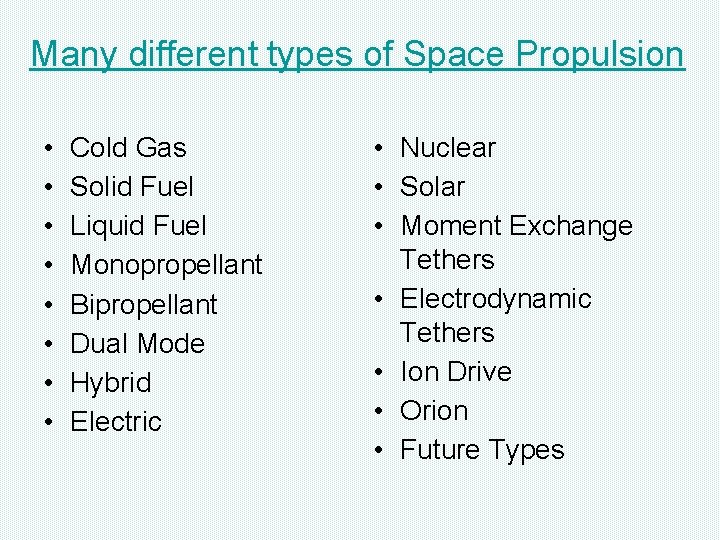
Many different types of Space Propulsion • • Cold Gas Solid Fuel Liquid Fuel Monopropellant Bipropellant Dual Mode Hybrid Electric • Nuclear • Solar • Moment Exchange Tethers • Electrodynamic Tethers • Ion Drive • Orion • Future Types