
Proposed hoggin path and dune zone extension Current
- Slides: 4
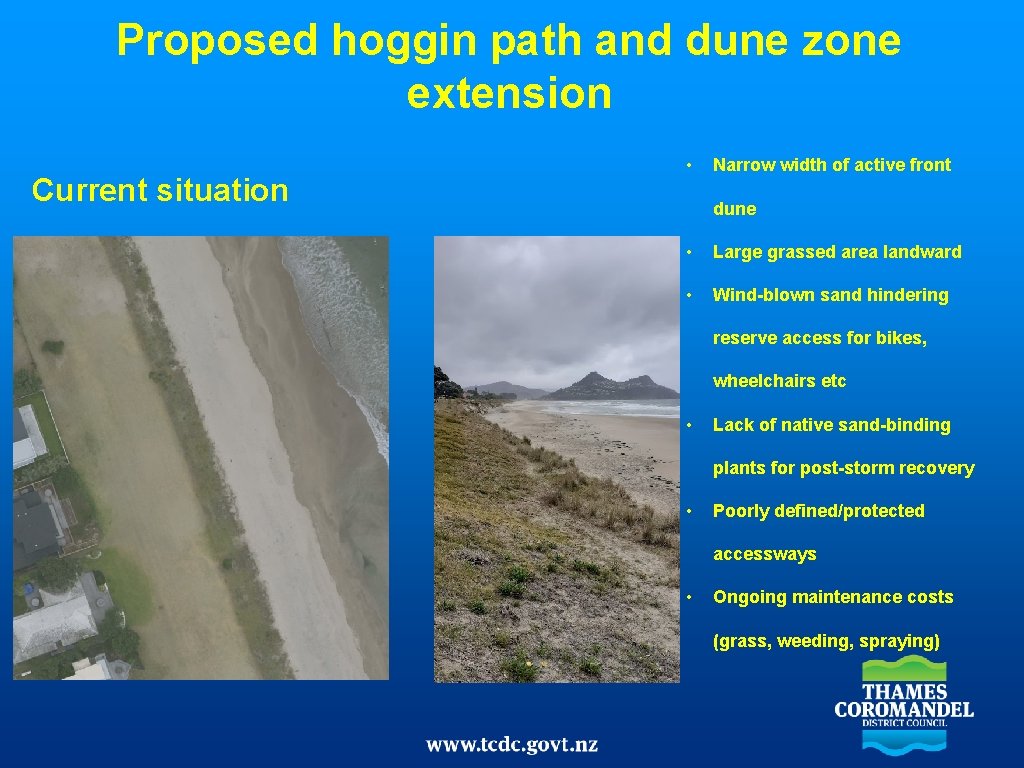
Proposed hoggin path and dune zone extension Current situation • Narrow width of active front dune • Large grassed area landward • Wind-blown sand hindering reserve access for bikes, wheelchairs etc • Lack of native sand-binding plants for post-storm recovery • Poorly defined/protected accessways • Ongoing maintenance costs (grass, weeding, spraying)
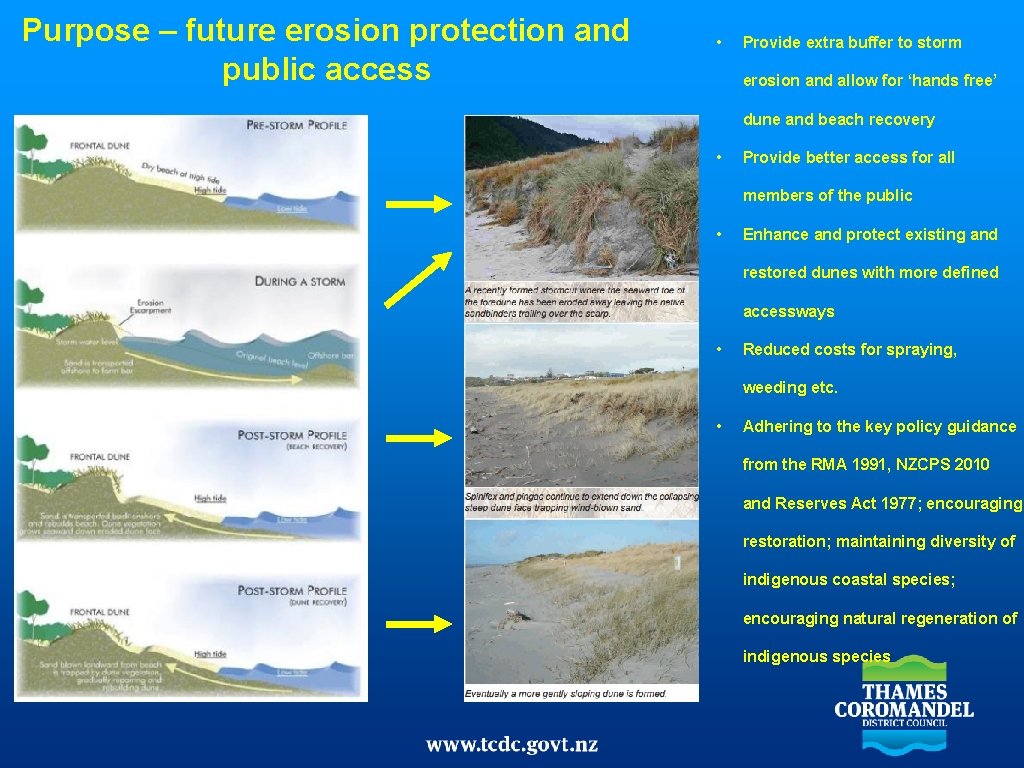
Purpose – future erosion protection and public access • Provide extra buffer to storm erosion and allow for ‘hands free’ dune and beach recovery • Provide better access for all members of the public • Enhance and protect existing and restored dunes with more defined accessways • Reduced costs for spraying, weeding etc. • Adhering to the key policy guidance from the RMA 1991, NZCPS 2010 and Reserves Act 1977; encouraging restoration; maintaining diversity of indigenous coastal species; encouraging natural regeneration of indigenous species
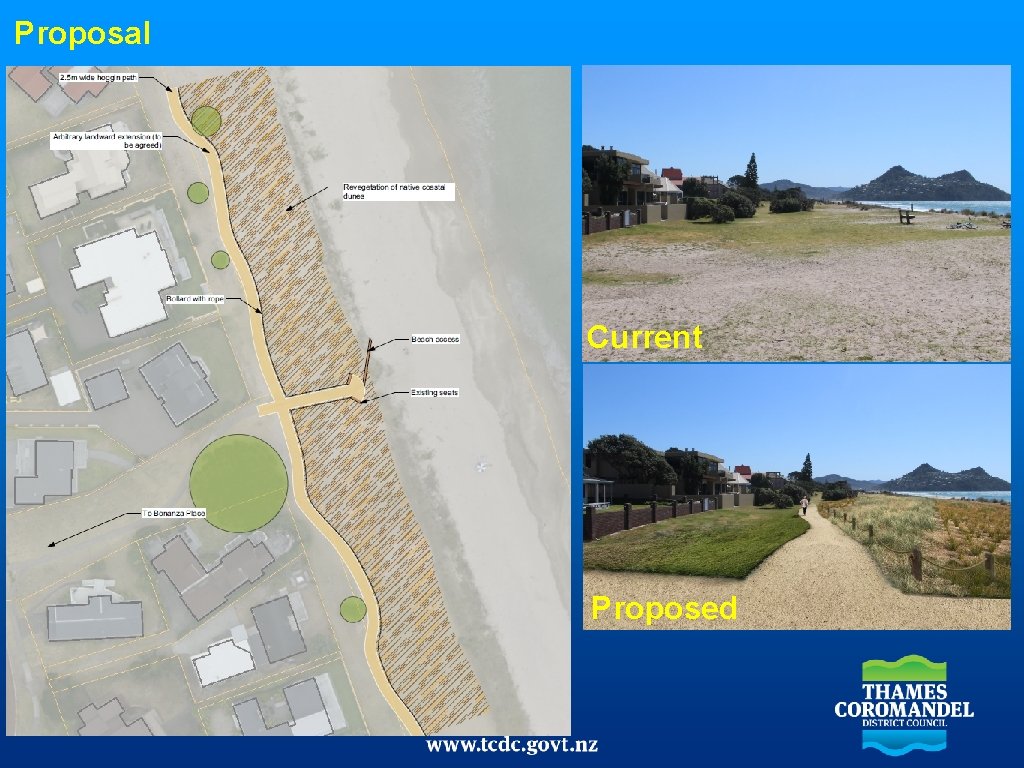
Proposal Current Proposed
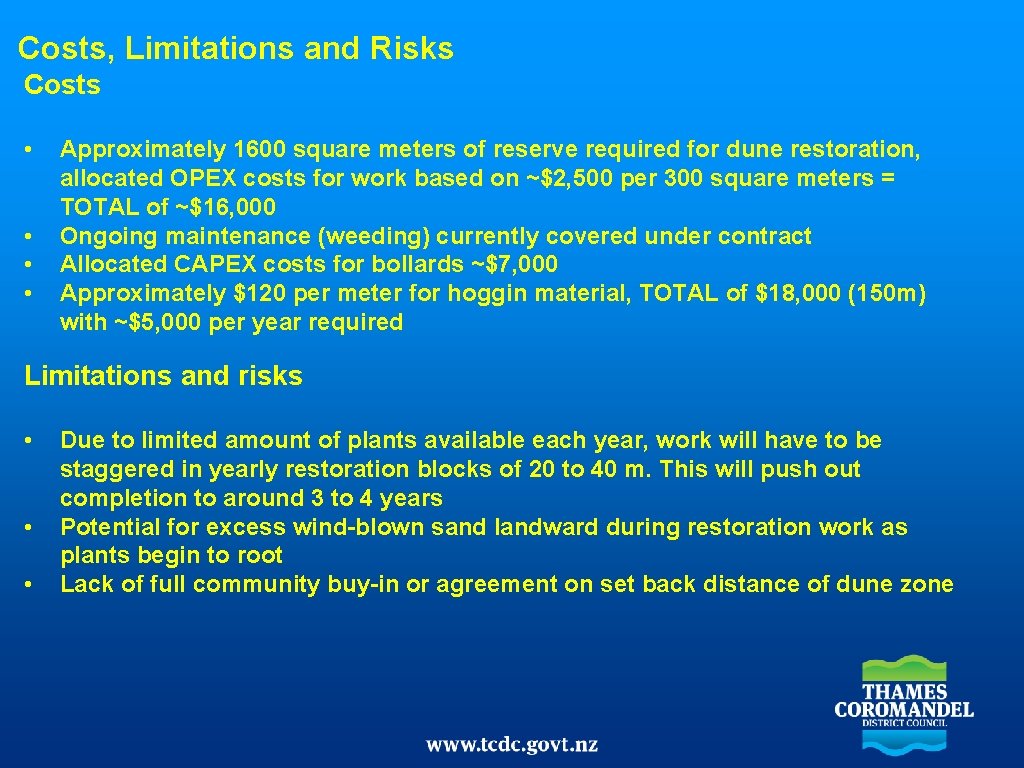
Costs, Limitations and Risks Costs • • Approximately 1600 square meters of reserve required for dune restoration, allocated OPEX costs for work based on ~$2, 500 per 300 square meters = TOTAL of ~$16, 000 Ongoing maintenance (weeding) currently covered under contract Allocated CAPEX costs for bollards ~$7, 000 Approximately $120 per meter for hoggin material, TOTAL of $18, 000 (150 m) with ~$5, 000 per year required Limitations and risks • • • Due to limited amount of plants available each year, work will have to be staggered in yearly restoration blocks of 20 to 40 m. This will push out completion to around 3 to 4 years Potential for excess wind-blown sand landward during restoration work as plants begin to root Lack of full community buy-in or agreement on set back distance of dune zone