
Proposal for Giant a Radio Array for Neutrino
- Slides: 26
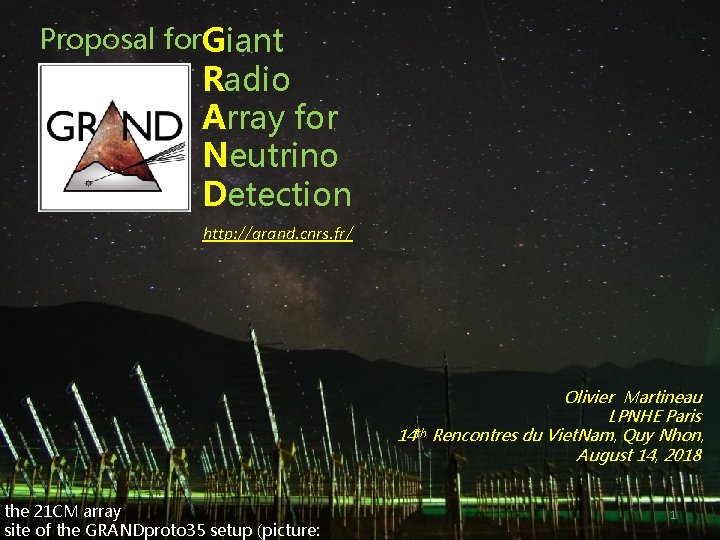
Proposal for. Giant a Radio Array for Neutrino Detection http: //grand. cnrs. fr/ Olivier Martineau LPNHE Paris 14 th Rencontres du Viet. Nam, Quy Nhon, August 14, 2018 the 21 CM array site of the GRANDproto 35 setup (picture: 1
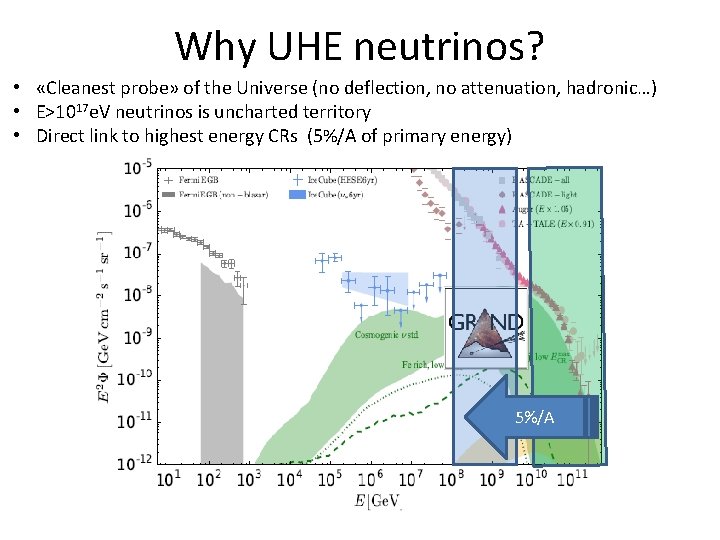
Why UHE neutrinos? • «Cleanest probe» of the Universe (no deflection, no attenuation, hadronic…) • E>1017 e. V neutrinos is uncharted territory • Direct link to highest energy CRs (5%/A of primary energy) 5%/A
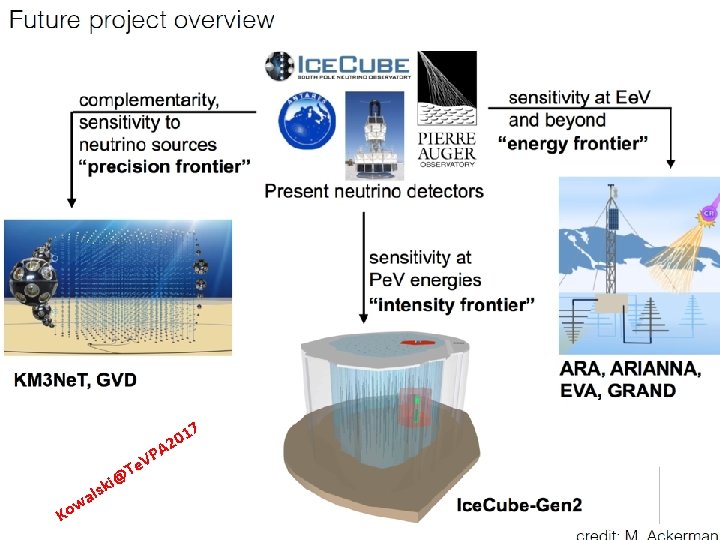
7 P 01 2 A V Te K ki@ s l a w o
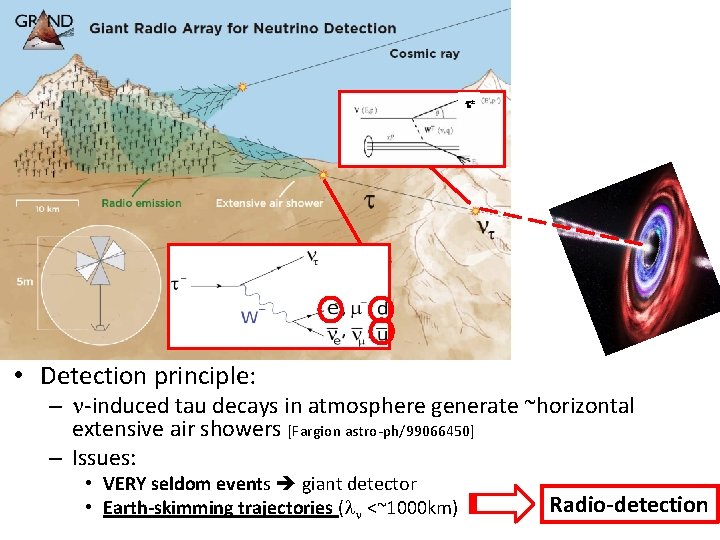
t± • Detection principle: – n-induced tau decays in atmosphere generate ~horizontal extensive air showers [Fargion astro-ph/99066450] – Issues: • VERY seldom events giant detector • Earth-skimming trajectories (ln <~1000 km) Radio-detection
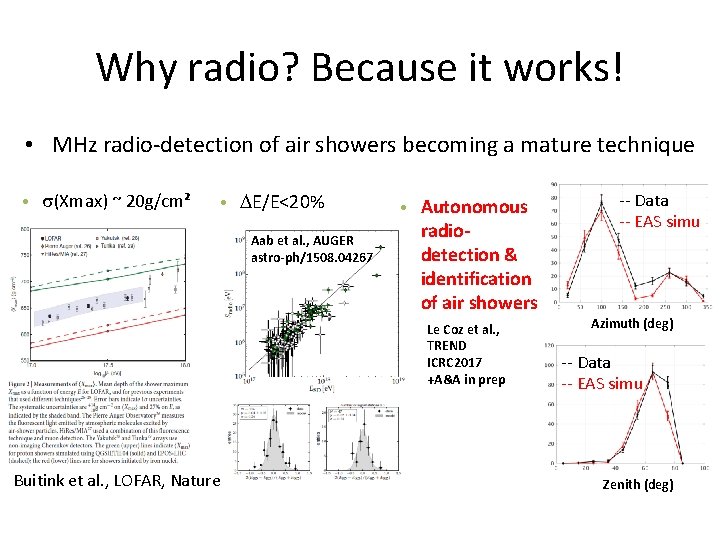
Why radio? Because it works! • MHz radio-detection of air showers becoming a mature technique • s(Xmax) ~ 20 g/cm² • DE/E<20% Aab et al. , AUGER astro-ph/1508. 04267 • Autonomous radiodetection & identification of air showers Le Coz et al. , TREND ICRC 2017 +A&A in prep Buitink et al. , LOFAR, Nature -- Data -- EAS simu Azimuth (deg) -- Data -- EAS simu Zenith (deg)
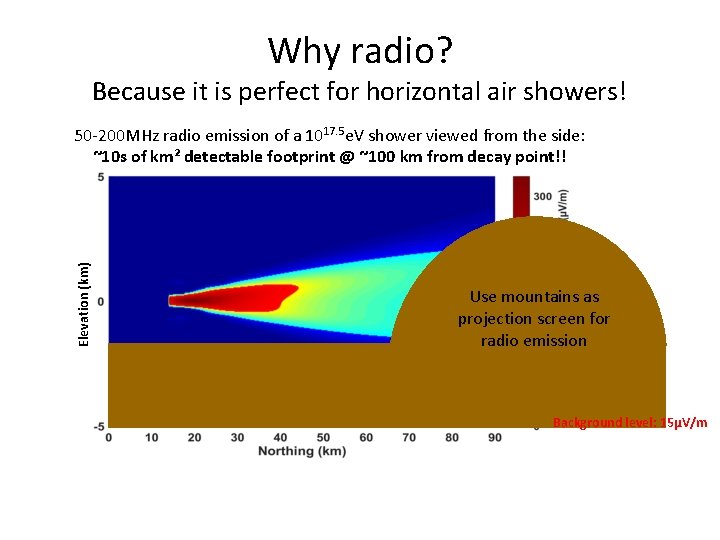
Why radio? Because it is perfect for horizontal air showers! Elevation (km) 50 -200 MHz radio emission of a 1017. 5 e. V shower viewed from the side: ~10 s of km² detectable footprint @ ~100 km from decay point!! Use mountains as projection screen for radio emission Background level: 15µV/m
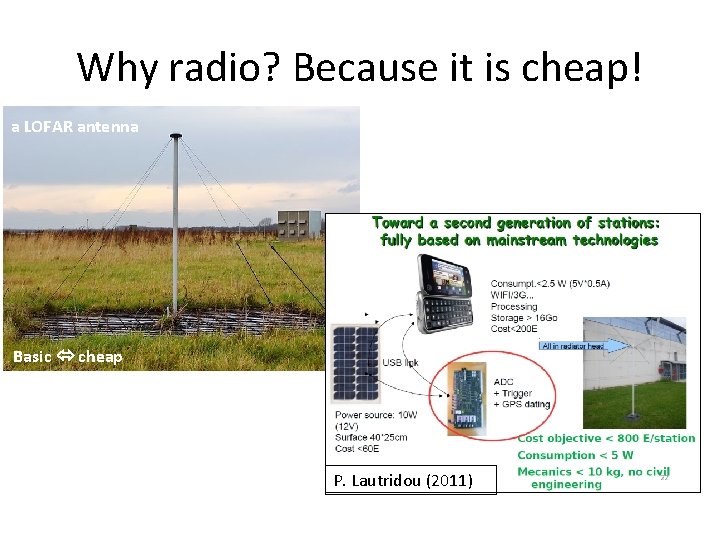
Why radio? Because it is cheap! a LOFAR antenna Basic cheap P. Lautridou (2011)
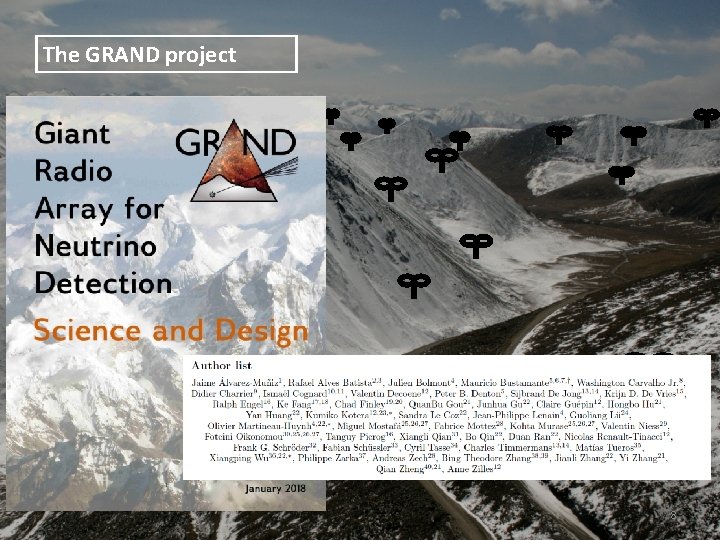
The GRAND project • Size of the neutrino detector is a key parameter. Ulastai • >10000 km²? - technical capacity? - topology? 8
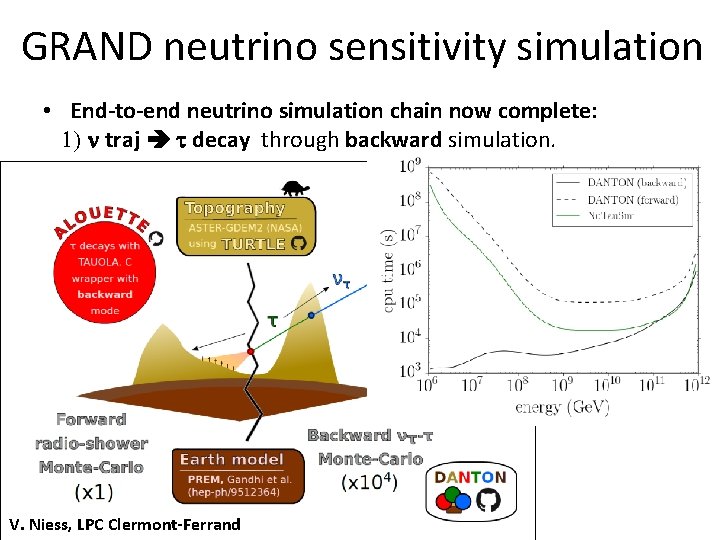
GRAND neutrino sensitivity simulation • End-to-end neutrino simulation chain now complete: 1) n traj t decay through backward simulation. V. Niess, LPC Clermont-Ferrand
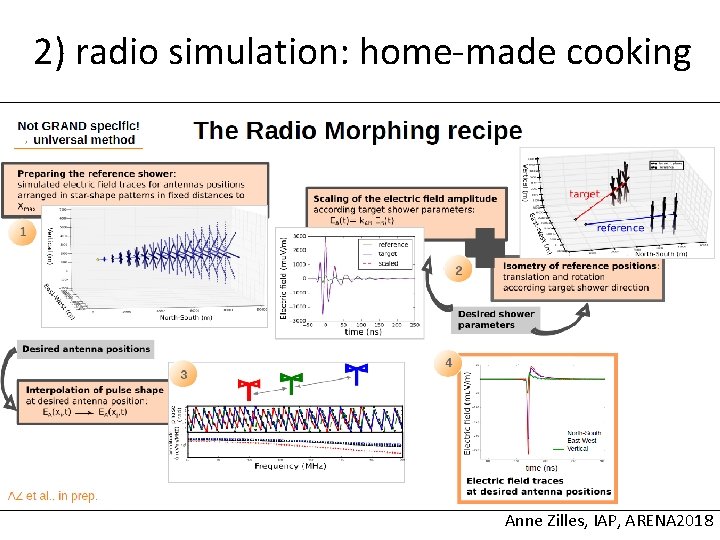
2) radio simulation: home-made cooking Anne Zilles, IAP, ARENA 2018
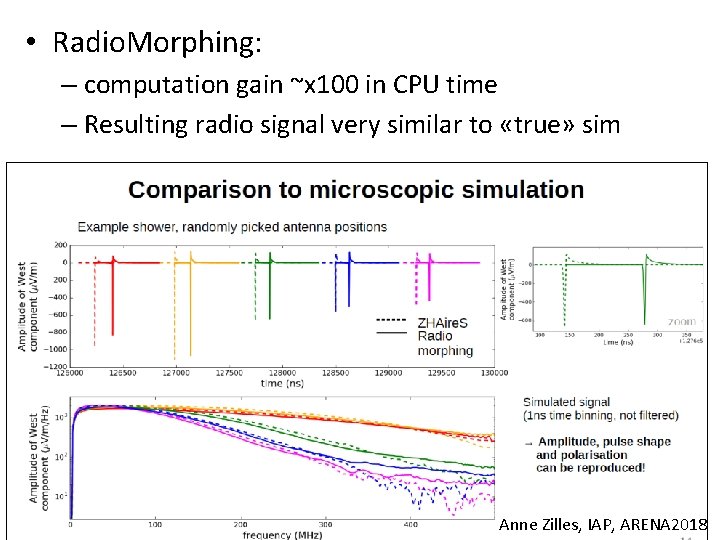
• Radio. Morphing: – computation gain ~x 100 in CPU time – Resulting radio signal very similar to «true» sim Anne Zilles, IAP, ARENA 2018
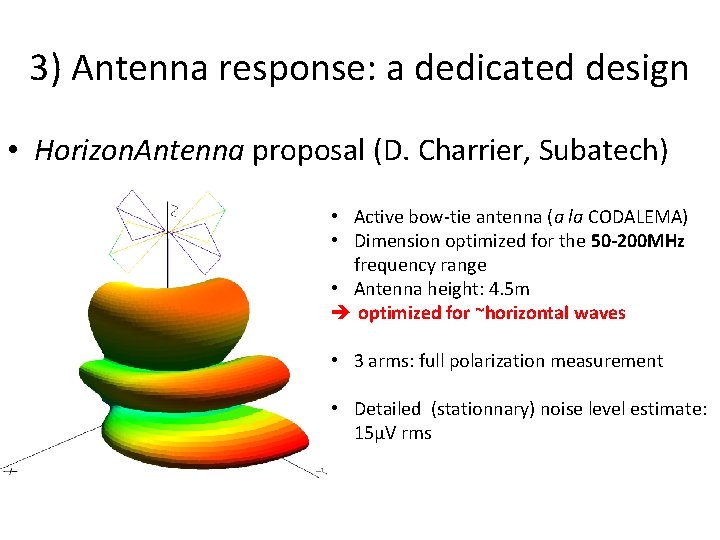
3) Antenna response: a dedicated design • Horizon. Antenna proposal (D. Charrier, Subatech) • Active bow-tie antenna (a la CODALEMA) • Dimension optimized for the 50 -200 MHz frequency range • Antenna height: 4. 5 m optimized for ~horizontal waves • 3 arms: full polarization measurement • Detailed (stationnary) noise level estimate: 15µV rms
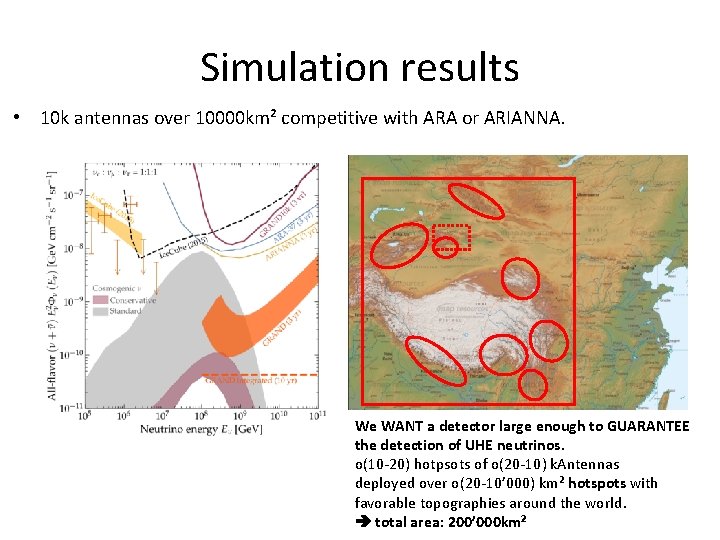
Simulation results • 10 k antennas over 10000 km² competitive with ARA or ARIANNA. ARY N I IM PREL We WANT a detector large enough to GUARANTEE the detection of UHE neutrinos. o(10 -20) hotpsots of o(20 -10) k. Antennas deployed over o(20 -10’ 000) km² hotspots with favorable topographies around the world. total area: 200’ 000 km²
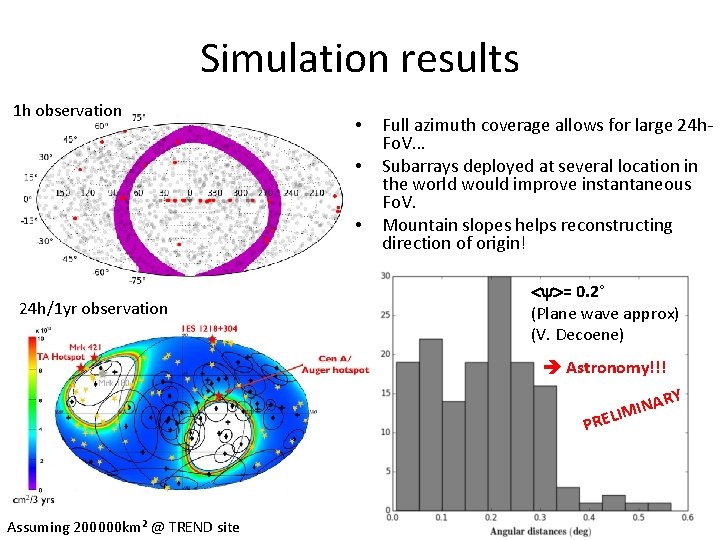
Simulation results 1 h observation • • • 24 h/1 yr observation Full azimuth coverage allows for large 24 h. Fo. V… Subarrays deployed at several location in the world would improve instantaneous Fo. V. Mountain slopes helps reconstructing direction of origin! <y>= 0. 2° (Plane wave approx) (V. Decoene) Astronomy!!! Y NAR I M I REL P Assuming 200000 km² @ TREND site
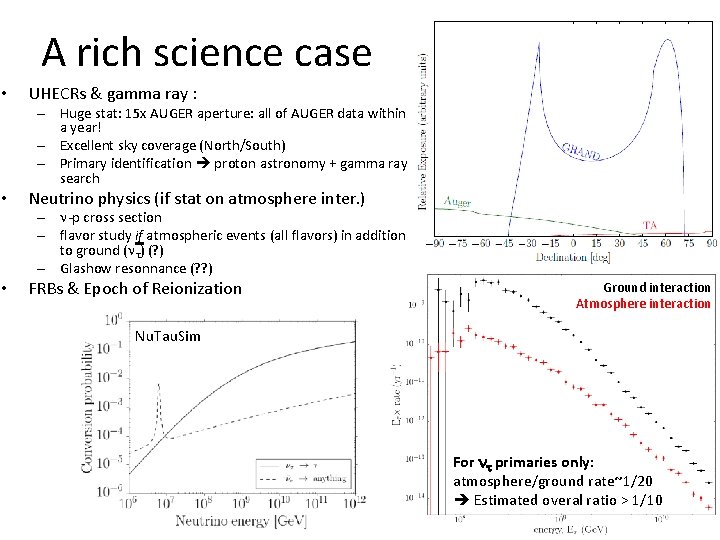
A rich science case • UHECRs & gamma ray : – Huge stat: 15 x AUGER aperture: all of AUGER data within a year! – Excellent sky coverage (North/South) – Primary identification proton astronomy + gamma ray search • Neutrino physics (if stat on atmosphere inter. ) • FRBs & Epoch of Reionization – n-p cross section – flavor study if atmospheric events (all flavors) in addition to ground (nt) (? ) – Glashow resonnance (? ? ) Ground interaction Atmosphere interaction Nu. Tau. Sim For nt primaries only: atmosphere/ground rate~1/20 Estimated overal ratio > 1/10
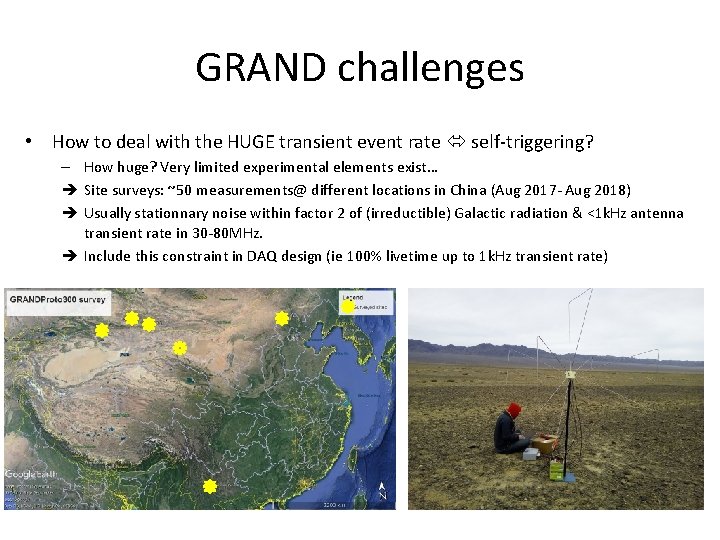
GRAND challenges • How to deal with the HUGE transient event rate self-triggering? – How huge? Very limited experimental elements exist… Site surveys: ~50 measurements@ different locations in China (Aug 2017 - Aug 2018) Usually stationnary noise within factor 2 of (irreductible) Galactic radiation & <1 k. Hz antenna transient rate in 30 -80 MHz. Include this constraint in DAQ design (ie 100% livetime up to 1 k. Hz transient rate)
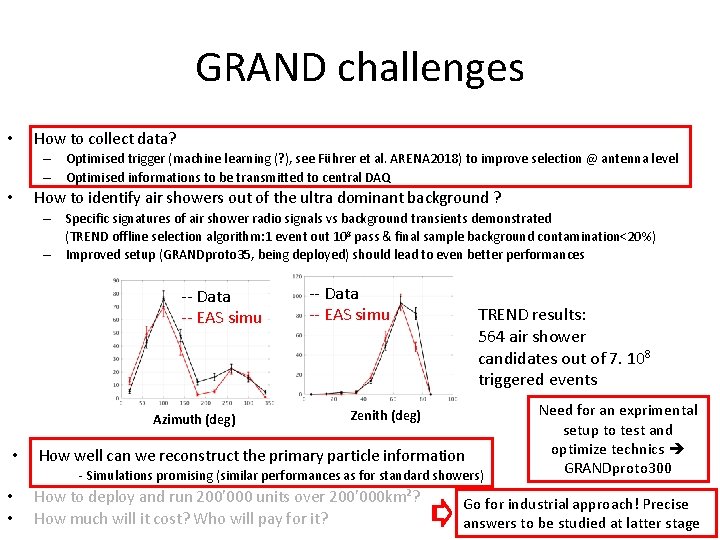
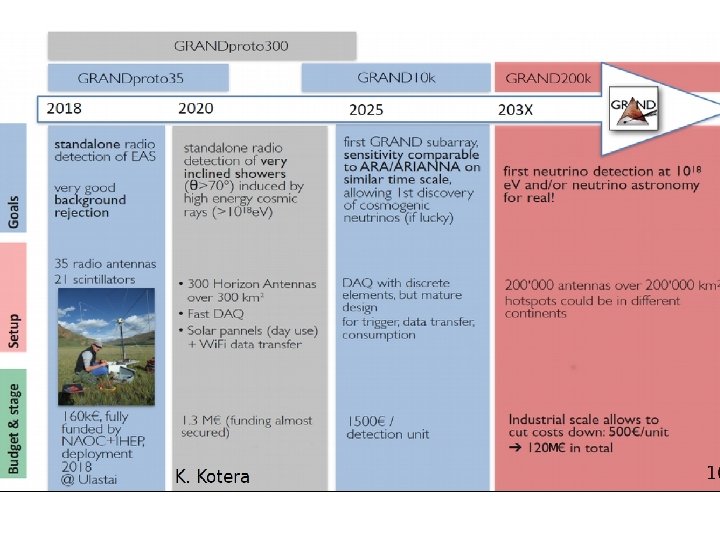
GRAND challenges • How to collect data? – Optimised trigger (machine learning (? ), see Führer et al. ARENA 2018) to improve selection @ antenna level – Optimised informations to be transmitted to central DAQ • How to identify air showers out of the ultra dominant background ? – Specific signatures of air shower radio signals vs background transients demonstrated (TREND offline selection algorithm: 1 event out 108 pass & final sample background contamination<20%) – Improved setup (GRANDproto 35, being deployed) should lead to even better performances -- Data -- EAS simu Azimuth (deg) • -- Data -- EAS simu TREND results: 564 air shower candidates out of 7. 108 triggered events Zenith (deg) How well can we reconstruct the primary particle information - Simulations promising (similar performances as for standard showers) • • How to deploy and run 200’ 000 units over 200’ 000 km²? How much will it cost? Who will pay for it? Need for an exprimental setup to test and optimize technics GRANDproto 300 Go for industrial approach! Precise answers to be studied at latter stage
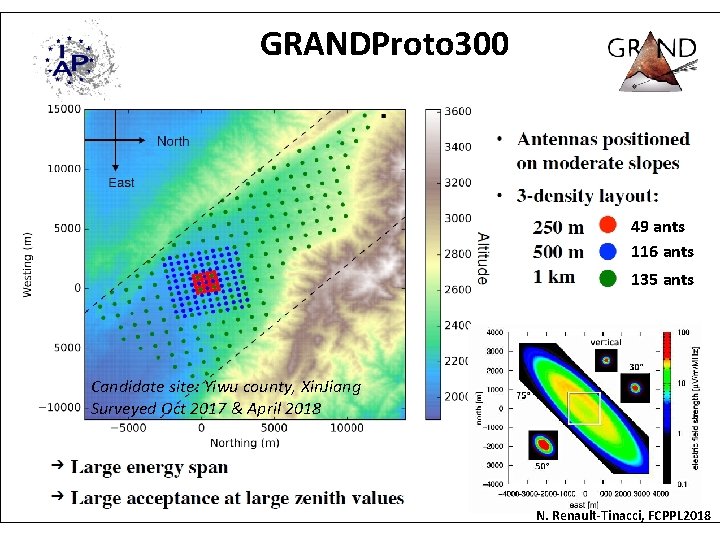
GRANDProto 300 49 ants 116 ants 135 ants Candidate site: Yiwu county, Xin. Jiang Surveyed Oct 2017 & April 2018 N. Renault-Tinacci, FCPPL 2018
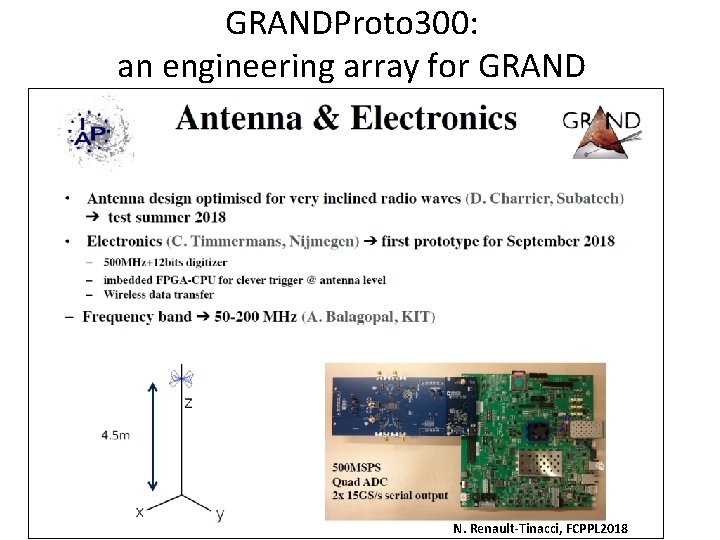
GRANDProto 300: an engineering array for GRAND N. Renault-Tinacci, FCPPL 2018
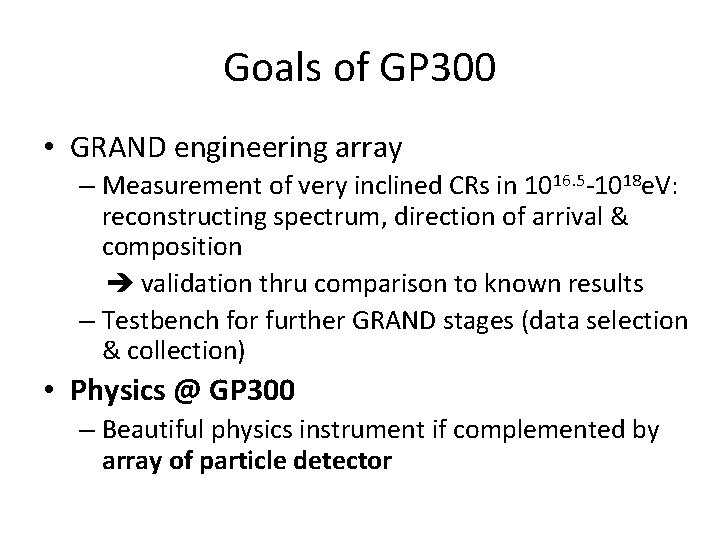
Goals of GP 300 • GRAND engineering array – Measurement of very inclined CRs in 1016. 5 -1018 e. V: reconstructing spectrum, direction of arrival & composition validation thru comparison to known results – Testbench for further GRAND stages (data selection & collection) • Physics @ GP 300 – Beautiful physics instrument if complemented by array of particle detector
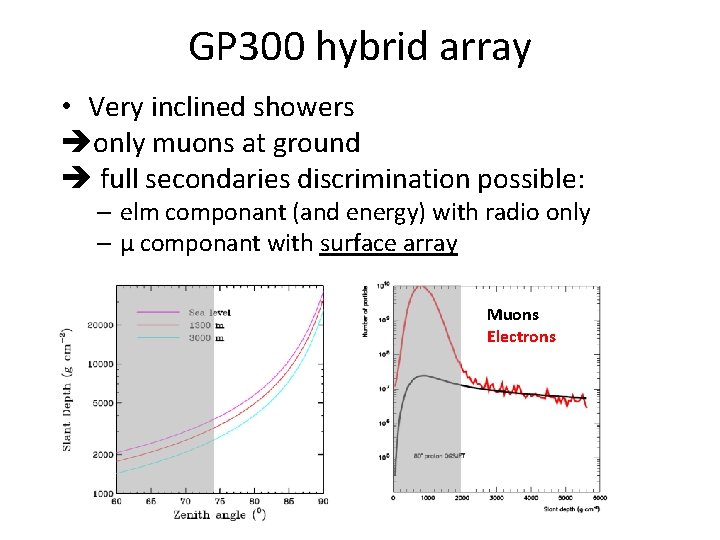
GP 300 hybrid array • Very inclined showers only muons at ground full secondaries discrimination possible: – elm componant (and energy) with radio only – µ componant with surface array Muons Electrons
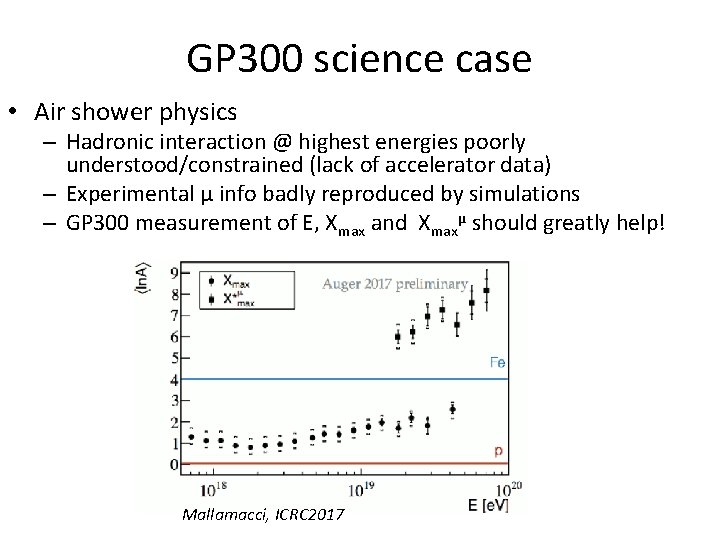
GP 300 science case • Air shower physics – Hadronic interaction @ highest energies poorly understood/constrained (lack of accelerator data) – Experimental µ info badly reproduced by simulations – GP 300 measurement of E, Xmax and Xmaxµ should greatly help! Mallamacci, ICRC 2017
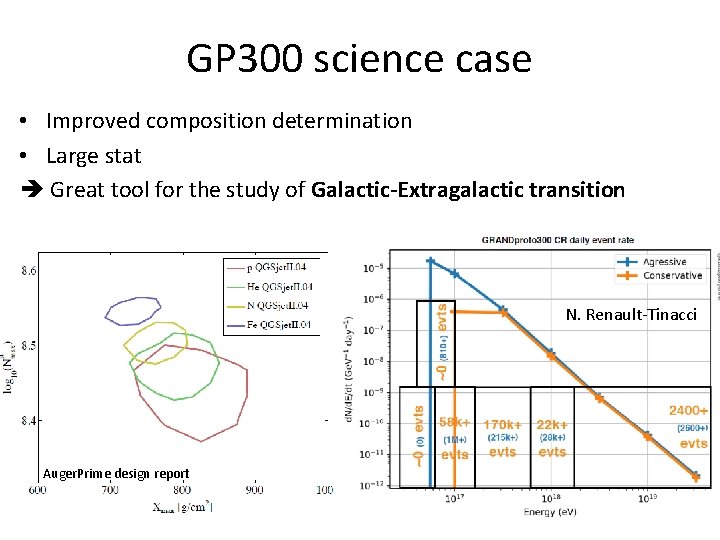
GP 300 science case • Improved composition determination • Large stat Great tool for the study of Galactic-Extragalactic transition N. Renault-Tinacci Auger. Prime design report
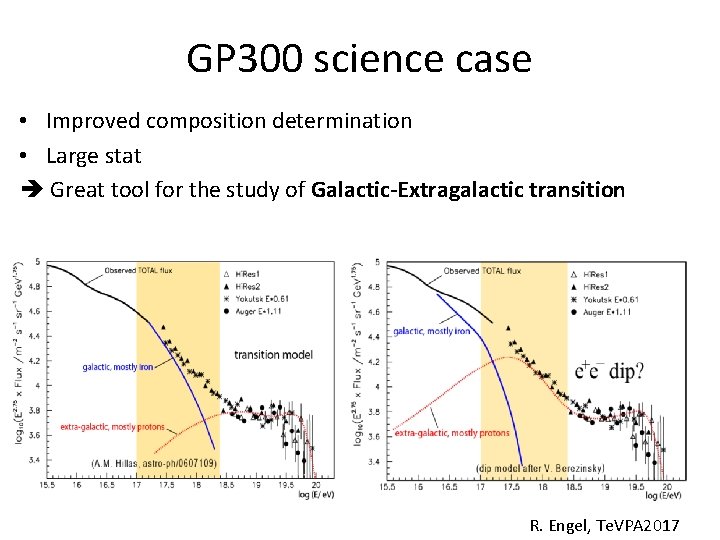
GP 300 science case • Improved composition determination • Large stat Great tool for the study of Galactic-Extragalactic transition R. Engel, Te. VPA 2017
Take-home message • GRAND is an ambitious project for a giant array of 200’ 000 radio antennas deployed at several locations in the world. • Very rich science case centered on UHE cosmic particles. • Huge experimental challenge staged approach over 10 -15 years. • Next step: 300 antennas for the autonomous radio-detection of inclined showers. Exciting science case if complemented by ground array. • We need more people to carry out GRAND’s large tasks list • Want to know more/keep in touch? – Check our webpage: http: //grand. cnrs. fr/ (in construction) – Suscribe to our info list GRAND-ALL-L@IN 2 P 3. FR – Join us at our next meeting (IAP Paris, August 22 -24, 2018)