
Proposal Evaluation Conducting an Effective Site Visit Social
- Slides: 14
Proposal Evaluation & Conducting an Effective Site Visit Social Venture Partners
Due Diligence Process* • Review grant proposal, budget, and supplemental documents –. –. –. • Conduct additional preliminary research –. –. • Conduct site visit with organization’s leadership –. –. –.
Due Diligence Process (cont’d) • Conduct additional follow-up research as needed (ie. reference calls) –. • Analyze and apply your due diligence findings –. • Synthesize information and present to others –. –. * Information from the Due Diligence Tool – for use in pre-grant assessment. La Piana Associates
Committee Member Proposal Evaluation Responsibilities • Attend at least two site visits. • Review proposals, submit questions, provide feedback. • Fully participate in all review team activities. • Six committee members will serve as site leads.
Evaluate and Assess • Evaluate proposal against SVP criteria. • Assess the following: – program efficacy – – organization health, competency of staff, and leadership – – potential fit with SVP – –
Proposal Evaluation Is More an Art than a Science! • Make the best initial decision based on the proposal and decide where to follow up • There is no guarantee that your grants will be uniformly effective or achieve intended results – gauging potential! • Be patient with poorly written proposals and don’t be duped by well written proposals • Give time and attention to proposal review
Why do a Site Visit • The proposal never tells the whole story • Get a personal feel for the organization, their work, and their facilities • Assess the leadership • Develop a personal connection with the organization • Learn more, get your questions answered, understand the challenges
Before the Site Visit • Review Team – Reread the proposal – Identify your outstanding questions or topics for discussion before the visit – Submit questions to Site Lead 7 working days prior to visit • Site Lead – Collect review team questions and topics for discussion. – Establish a loose agenda and give organization guidance about what you hope to accomplish.
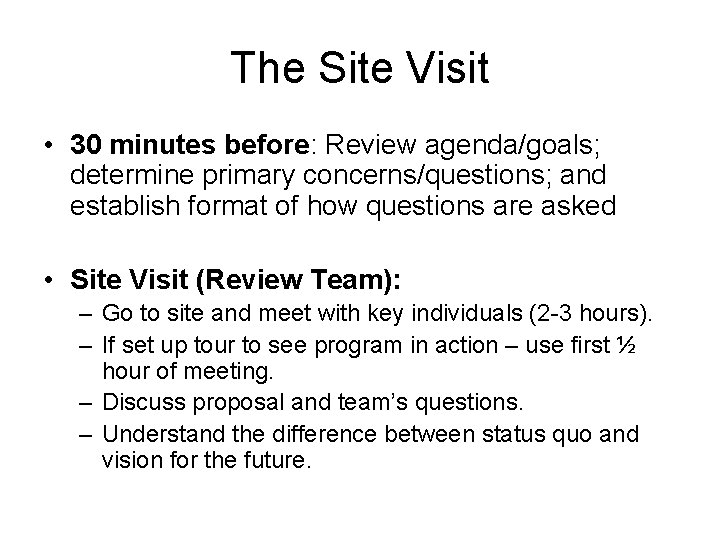
The Site Visit • 30 minutes before: Review agenda/goals; determine primary concerns/questions; and establish format of how questions are asked • Site Visit (Review Team): – Go to site and meet with key individuals (2 -3 hours). – If set up tour to see program in action – use first ½ hour of meeting. – Discuss proposal and team’s questions. – Understand the difference between status quo and vision for the future.
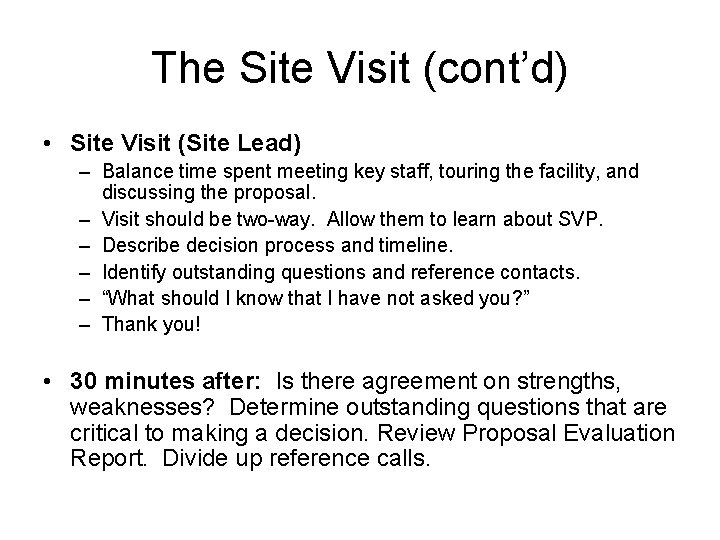
The Site Visit (cont’d) • Site Visit (Site Lead) – Balance time spent meeting key staff, touring the facility, and discussing the proposal. – Visit should be two-way. Allow them to learn about SVP. – Describe decision process and timeline. – Identify outstanding questions and reference contacts. – “What should I know that I have not asked you? ” – Thank you! • 30 minutes after: Is there agreement on strengths, weaknesses? Determine outstanding questions that are critical to making a decision. Review Proposal Evaluation Report. Divide up reference calls.
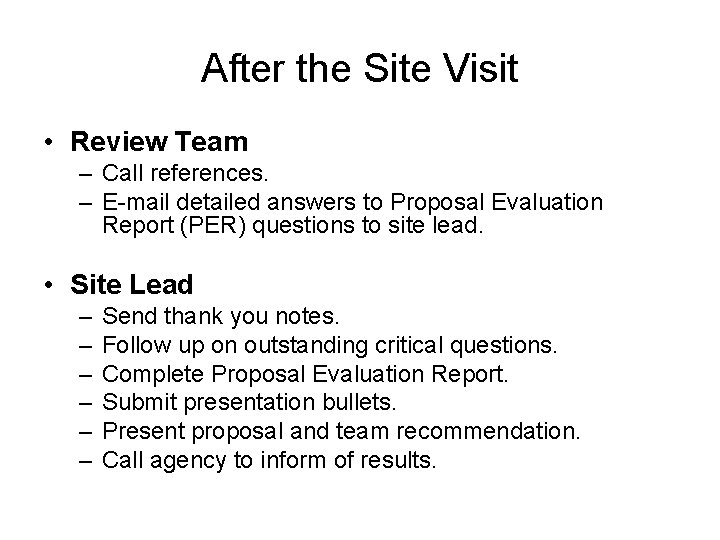
After the Site Visit • Review Team – Call references. – E-mail detailed answers to Proposal Evaluation Report (PER) questions to site lead. • Site Lead – – – Send thank you notes. Follow up on outstanding critical questions. Complete Proposal Evaluation Report. Submit presentation bullets. Present proposal and team recommendation. Call agency to inform of results.
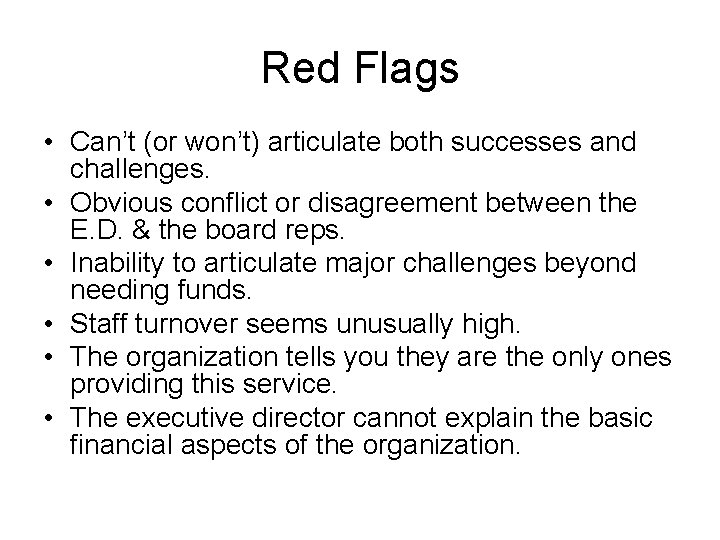
Red Flags • Can’t (or won’t) articulate both successes and challenges. • Obvious conflict or disagreement between the E. D. & the board reps. • Inability to articulate major challenges beyond needing funds. • Staff turnover seems unusually high. • The organization tells you they are the only ones providing this service. • The executive director cannot explain the basic financial aspects of the organization.
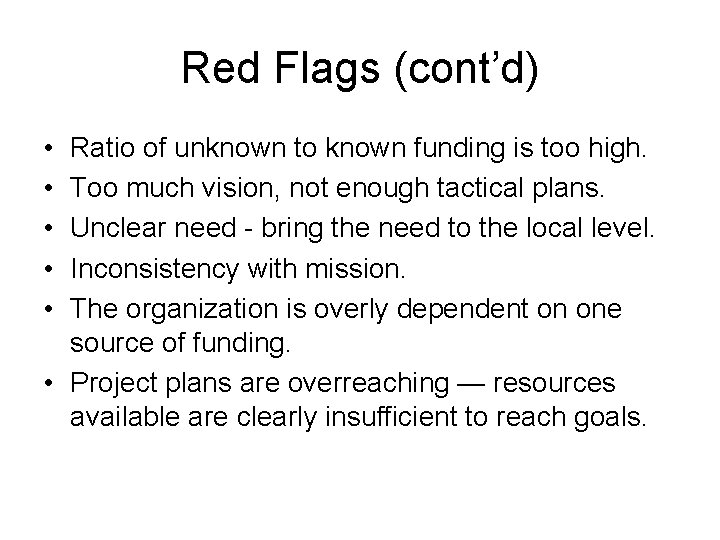
Red Flags (cont’d) • • • Ratio of unknown to known funding is too high. Too much vision, not enough tactical plans. Unclear need - bring the need to the local level. Inconsistency with mission. The organization is overly dependent on one source of funding. • Project plans are overreaching — resources available are clearly insufficient to reach goals.
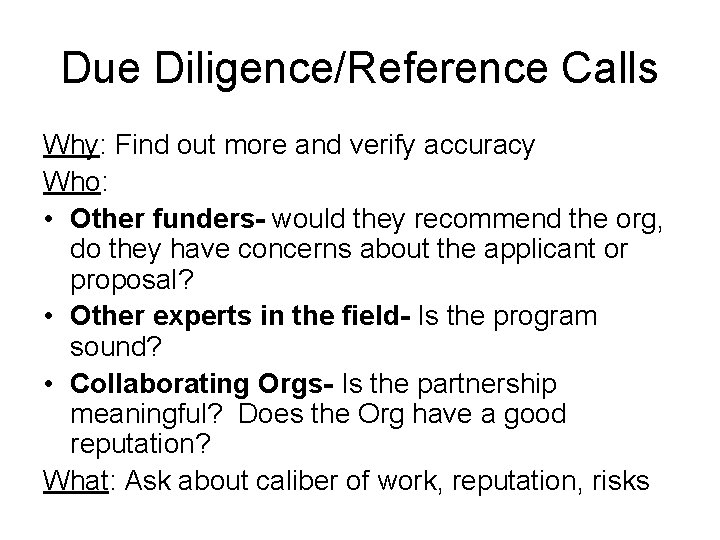
Due Diligence/Reference Calls Why: Find out more and verify accuracy Who: • Other funders- would they recommend the org, do they have concerns about the applicant or proposal? • Other experts in the field- Is the program sound? • Collaborating Orgs- Is the partnership meaningful? Does the Org have a good reputation? What: Ask about caliber of work, reputation, risks