
Proportion Proportion is The principle of art that
- Slides: 27
Proportion
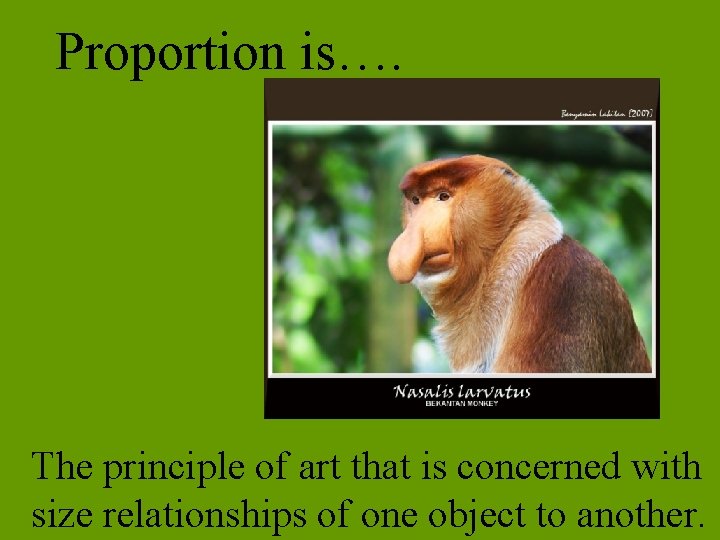
Proportion is…. The principle of art that is concerned with size relationships of one object to another.
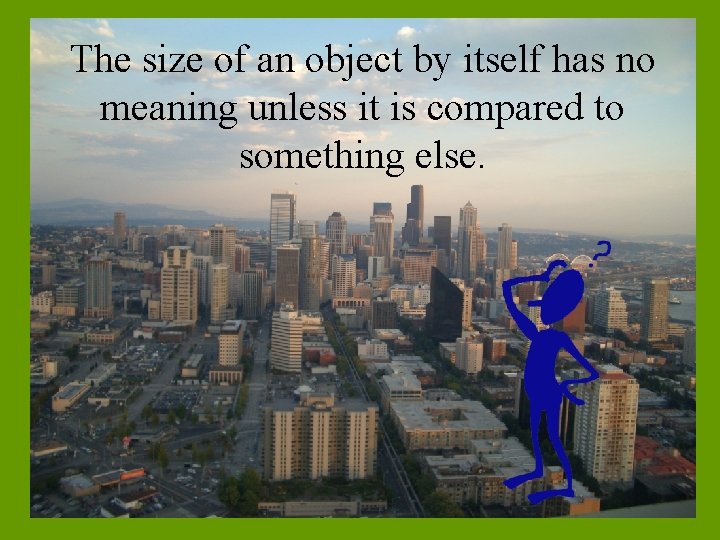
The size of an object by itself has no meaning unless it is compared to something else.
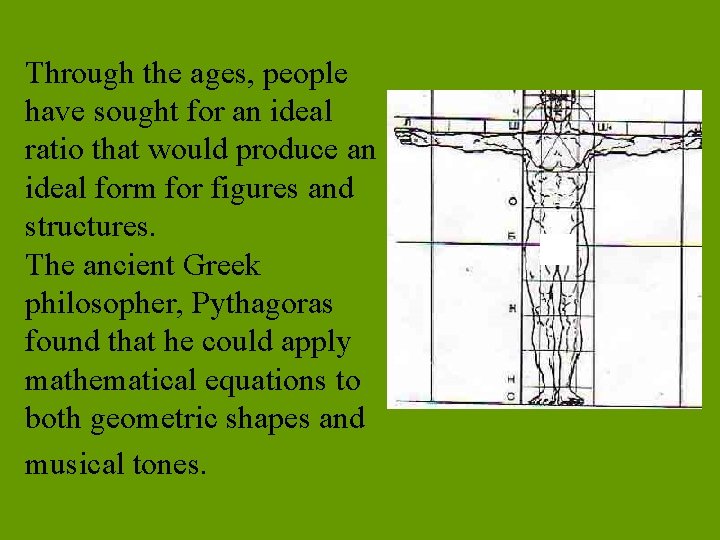
Through the ages, people have sought for an ideal ratio that would produce an ideal form for figures and structures. The ancient Greek philosopher, Pythagoras found that he could apply mathematical equations to both geometric shapes and musical tones.
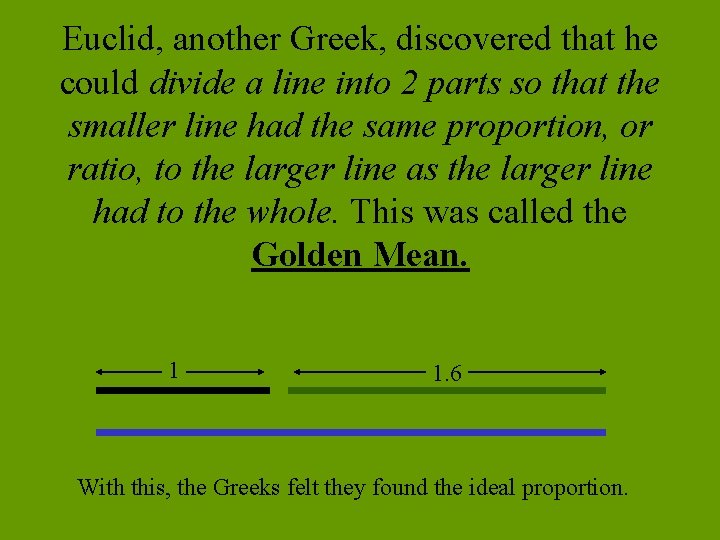
Euclid, another Greek, discovered that he could divide a line into 2 parts so that the smaller line had the same proportion, or ratio, to the larger line as the larger line had to the whole. This was called the Golden Mean. 1 1. 6 With this, the Greeks felt they found the ideal proportion.
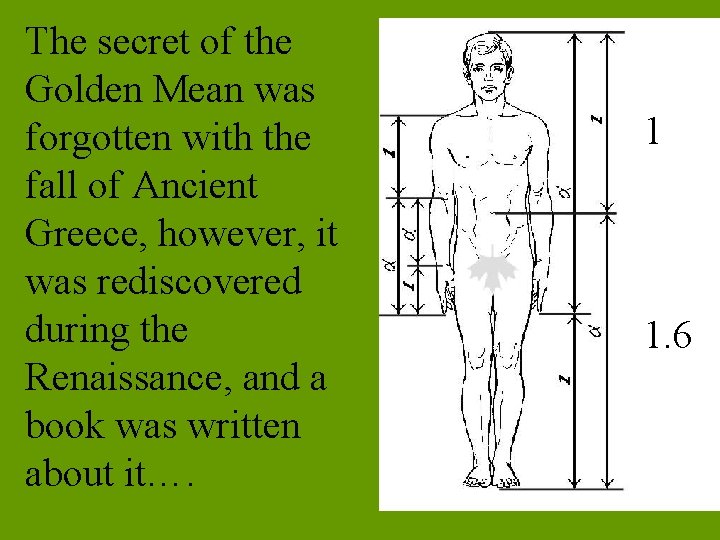
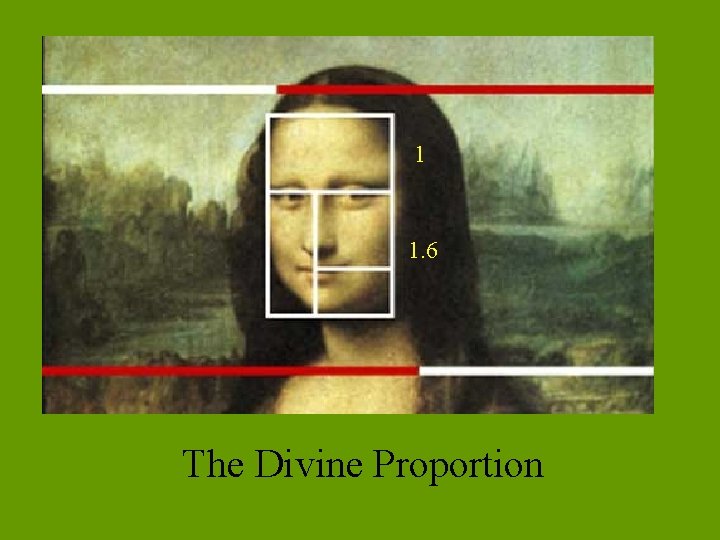
The secret of the Golden Mean was forgotten with the fall of Ancient Greece, however, it was rediscovered during the Renaissance, and a book was written about it…. 1 1. 6
1 1. 6 The Divine Proportion
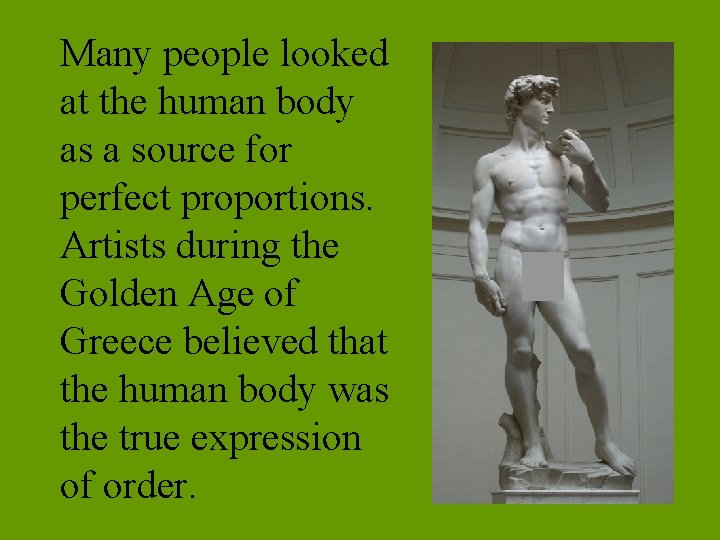
Many people looked at the human body as a source for perfect proportions. Artists during the Golden Age of Greece believed that the human body was the true expression of order.
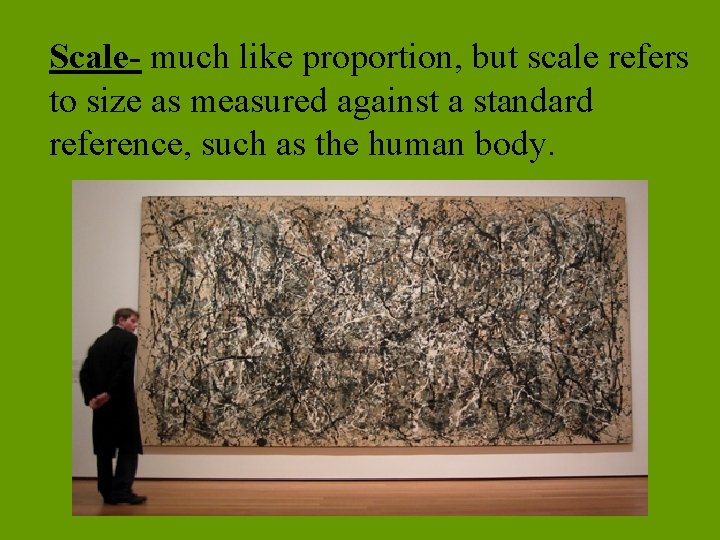
Scale- much like proportion, but scale refers to size as measured against a standard reference, such as the human body.
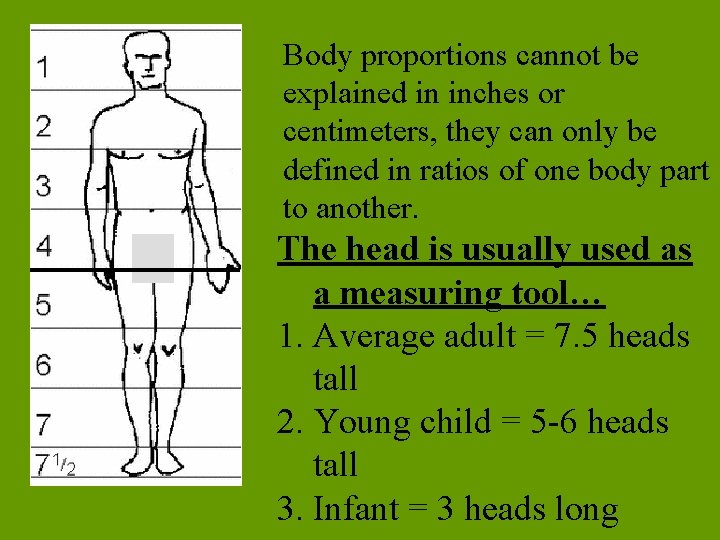
Body proportions cannot be explained in inches or centimeters, they can only be defined in ratios of one body part to another. The head is usually used as a measuring tool… 1. Average adult = 7. 5 heads tall 2. Young child = 5 -6 heads tall 3. Infant = 3 heads long
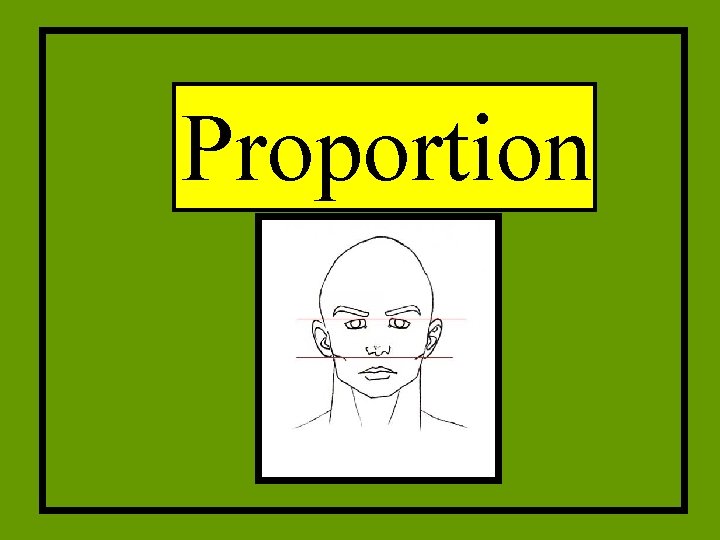
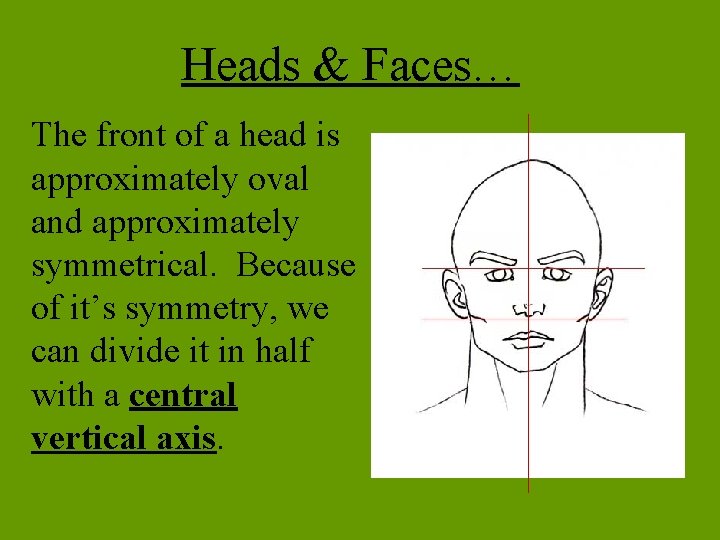
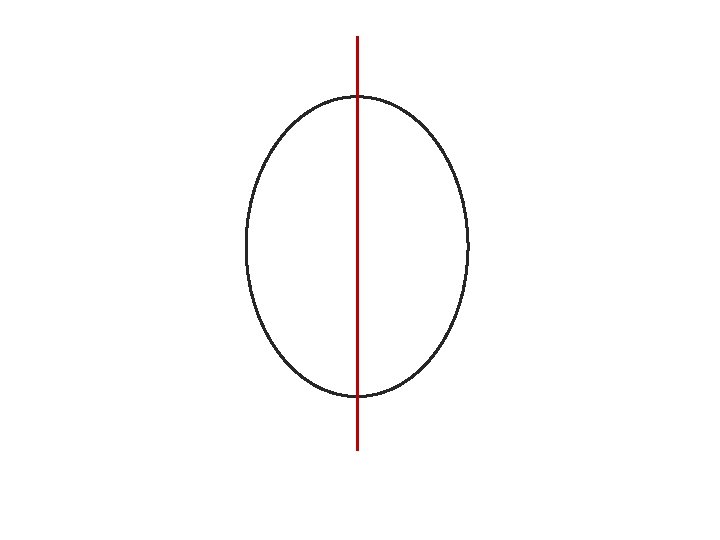
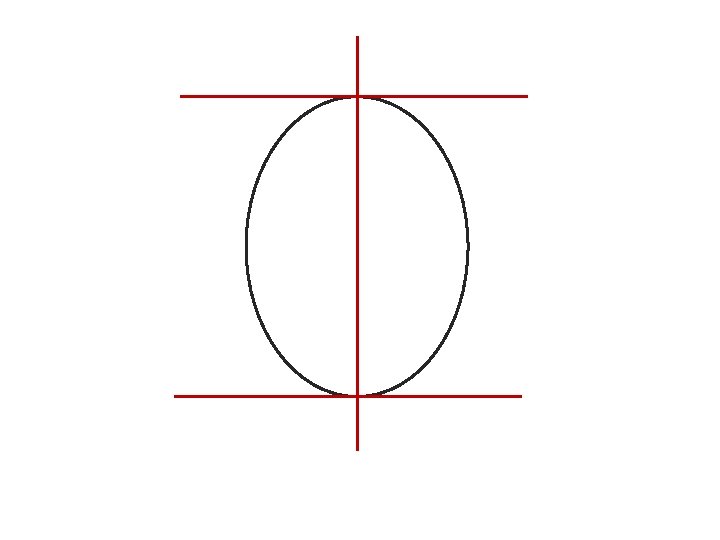
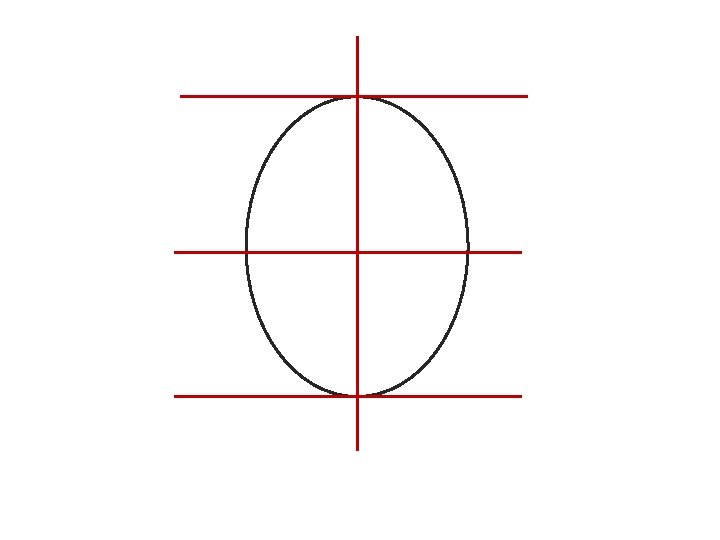
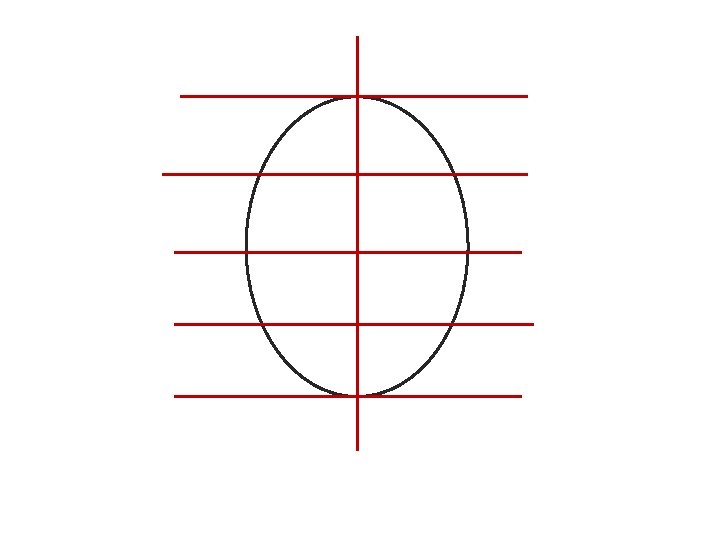
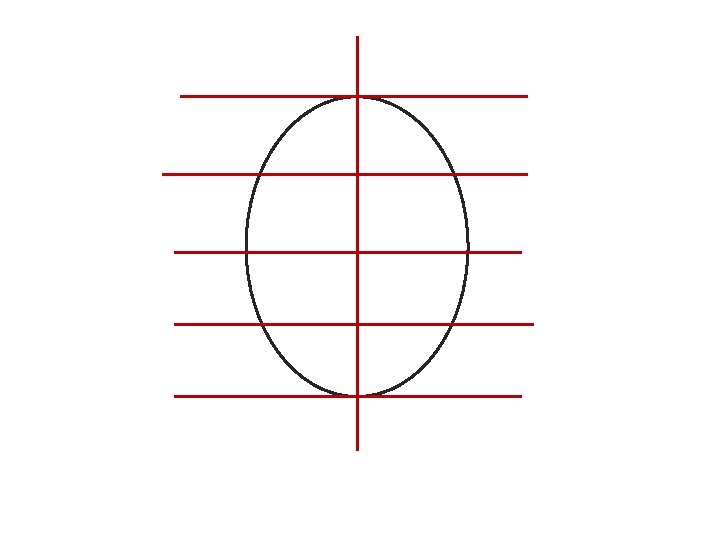
Heads & Faces… The front of a head is approximately oval and approximately symmetrical. Because of it’s symmetry, we can divide it in half with a central vertical axis.
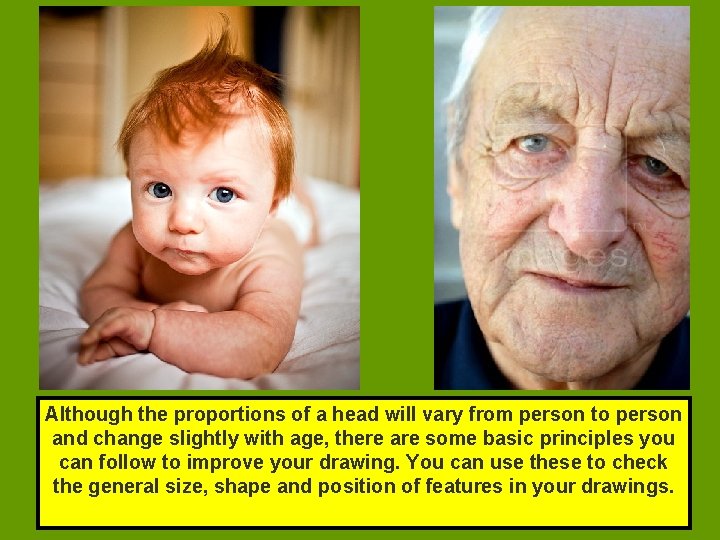
Although the proportions of a head will vary from person to person and change slightly with age, there are some basic principles you can follow to improve your drawing. You can use these to check the general size, shape and position of features in your drawings.
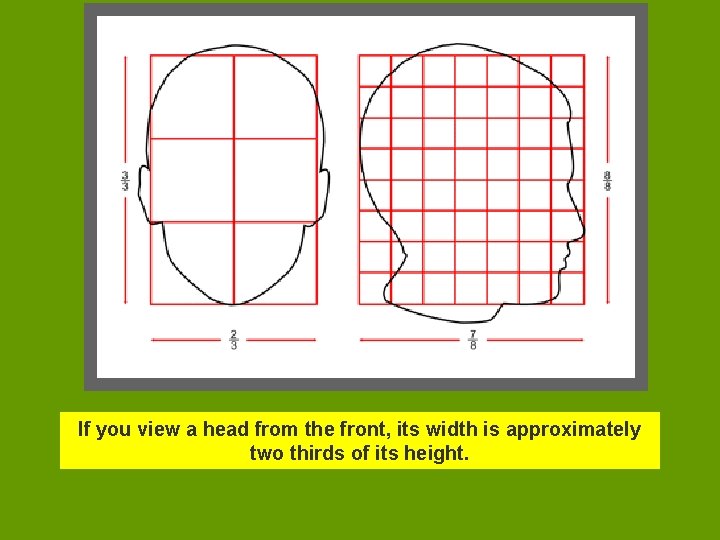
If you view a head from the front, its width is approximately two thirds of its height.
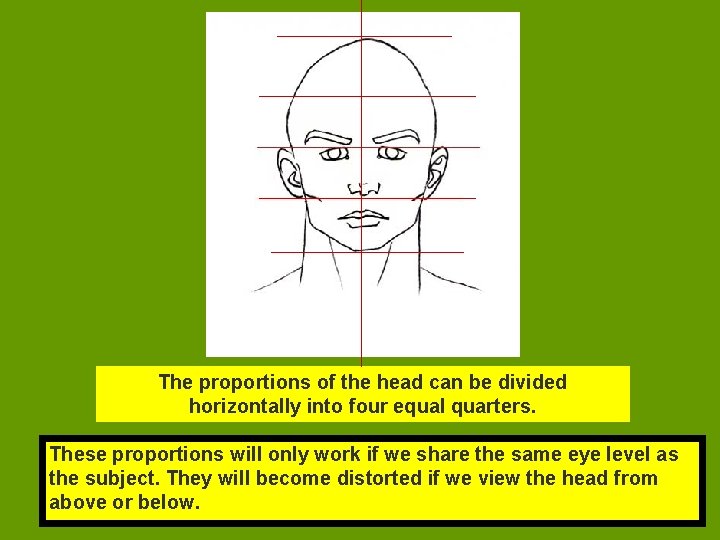
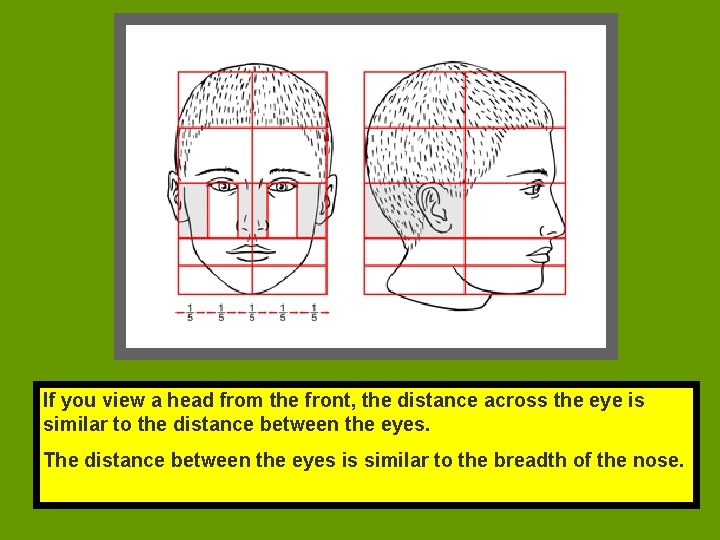
The proportions of the head can be divided horizontally into four equal quarters. These 3. 4. The 2. 1. The third final proportions The second quarter first quarter will stretches contains only measures work most fromifof the we from the base share features. the oftop the hairline theof same nose At the down eye head totop the level to ofchin this as section with the subject. thethe mouth eyes They positioned the are will eyes usually become down injust the level todistorted middle above thewith hairline. the of the ifthe halfway we ears, head. view and mark. the athead the bottom from the nose above or is below. roughly level with the ear lobes.
If you view a head from the front, the distance across the eye is similar to the distance between the eyes. The distance between the eyes is similar to the breadth of the nose.
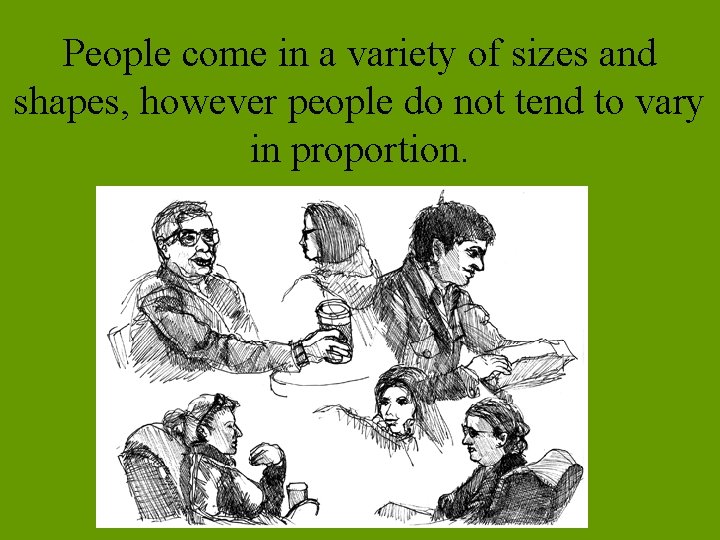
People come in a variety of sizes and shapes, however people do not tend to vary in proportion.
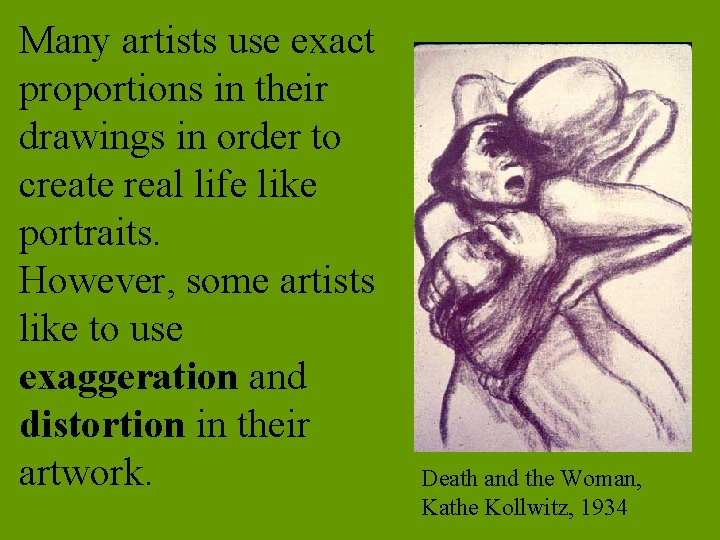
Many artists use exact proportions in their drawings in order to create real life like portraits. However, some artists like to use exaggeration and distortion in their artwork. Death and the Woman, Kathe Kollwitz, 1934
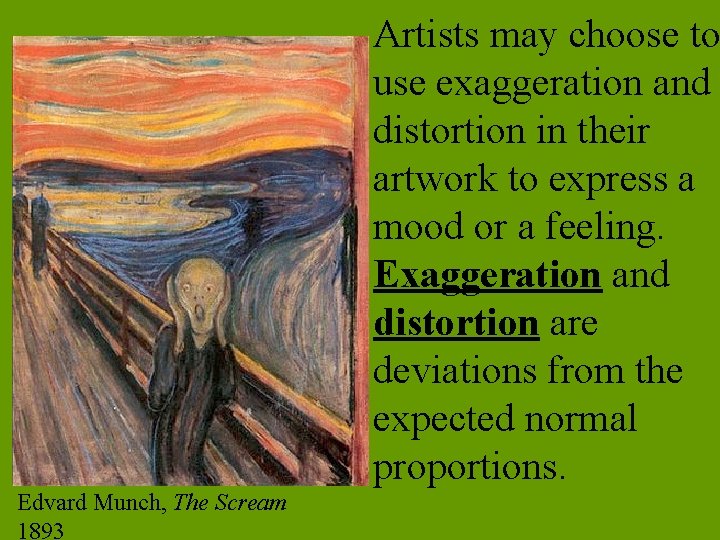
Artists may choose to use exaggeration and distortion in their artwork to express a mood or a feeling. Exaggeration and distortion are deviations from the expected normal proportions. Edvard Munch, The Scream 1893
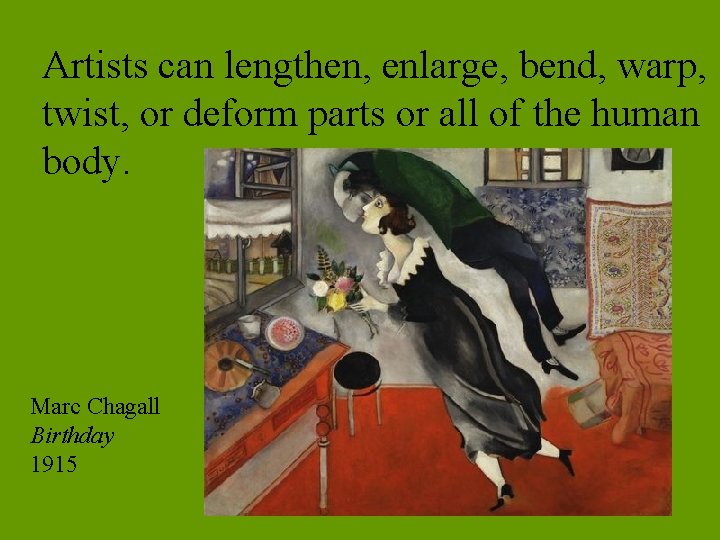
Artists can lengthen, enlarge, bend, warp, twist, or deform parts or all of the human body. Marc Chagall Birthday 1915
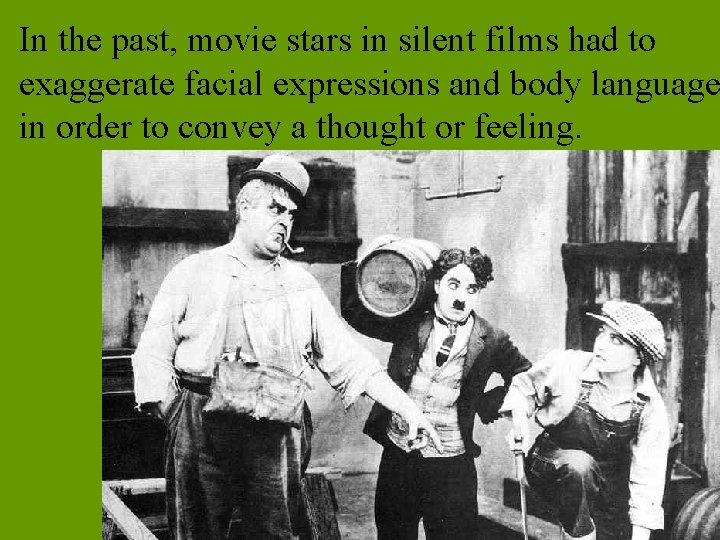
In the past, movie stars in silent films had to exaggerate facial expressions and body language in order to convey a thought or feeling.
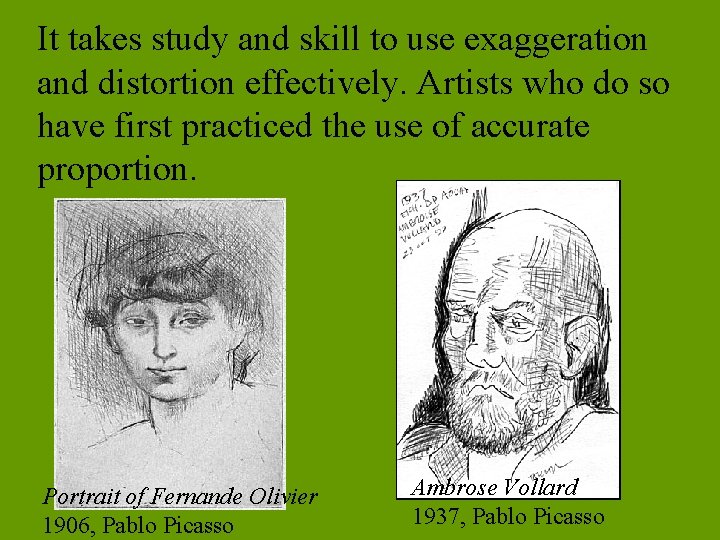
It takes study and skill to use exaggeration and distortion effectively. Artists who do so have first practiced the use of accurate proportion. Portrait of Fernande Olivier 1906, Pablo Picasso Ambrose Vollard 1937, Pablo Picasso
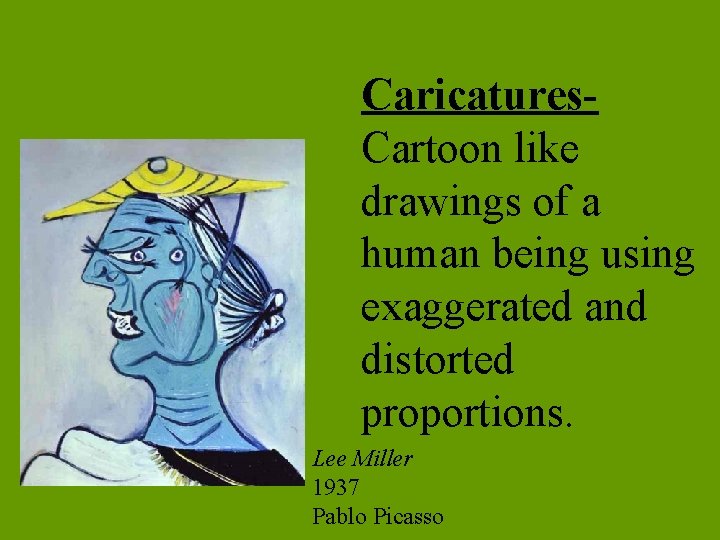
Caricatures. Cartoon like drawings of a human being using exaggerated and distorted proportions. Lee Miller 1937 Pablo Picasso