
Properties of Textile Fibers Properties Outline Structure and
Properties of Textile Fibers
Properties: • • Outline: Structure and Appearance Strength Elongation Elastic Properties Specific Gravity Effect of Moisture Effect of Heat • • Effect of Sunlight Chemical Properties Effect of Acids Effect of Alkalis Effect of Organic Solvents Resistance to Insects Resistance to Micro-organism Electrical Properties
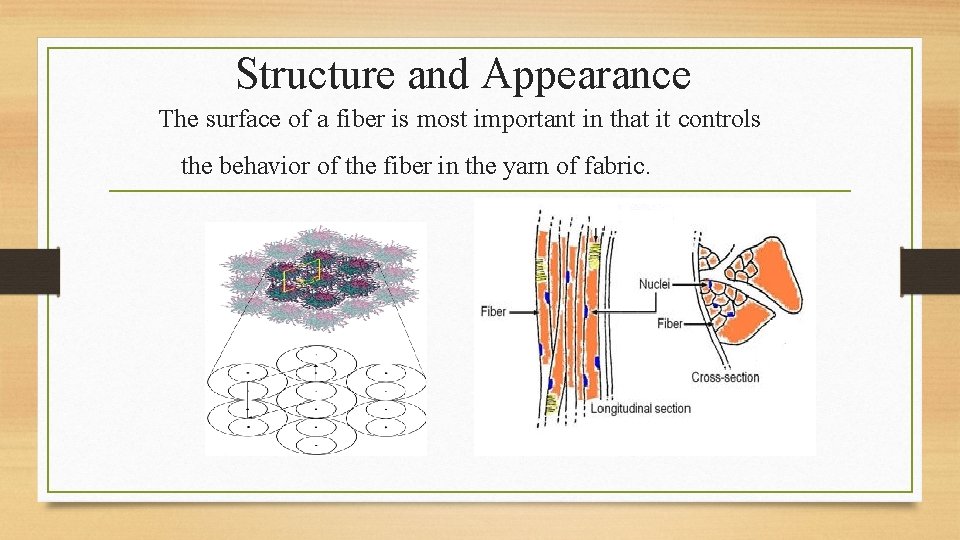
Structure and Appearance The surface of a fiber is most important in that it controls the behavior of the fiber in the yarn of fabric.
Strength It is the breaking strength of the fibers and most commonly known as Tenacity. q. Unit = Gram per Tex (GPT) “Force in grams required to break a bundle of fibres one tex unit size” Gram =>>> unit of force Tex =>>> unit of fineness
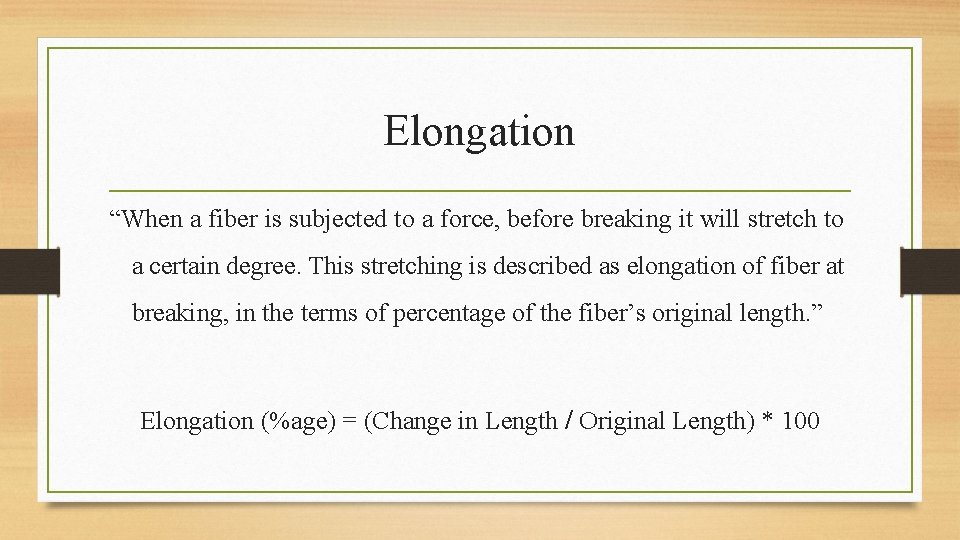
Elongation “When a fiber is subjected to a force, before breaking it will stretch to a certain degree. This stretching is described as elongation of fiber at breaking, in the terms of percentage of the fiber’s original length. ” Elongation (%age) = (Change in Length / Original Length) * 100
Elastic Properties When a fiber is stretched by small amount, it may exhibit almost perfect elasticity that is it will return to its original length when it is released.
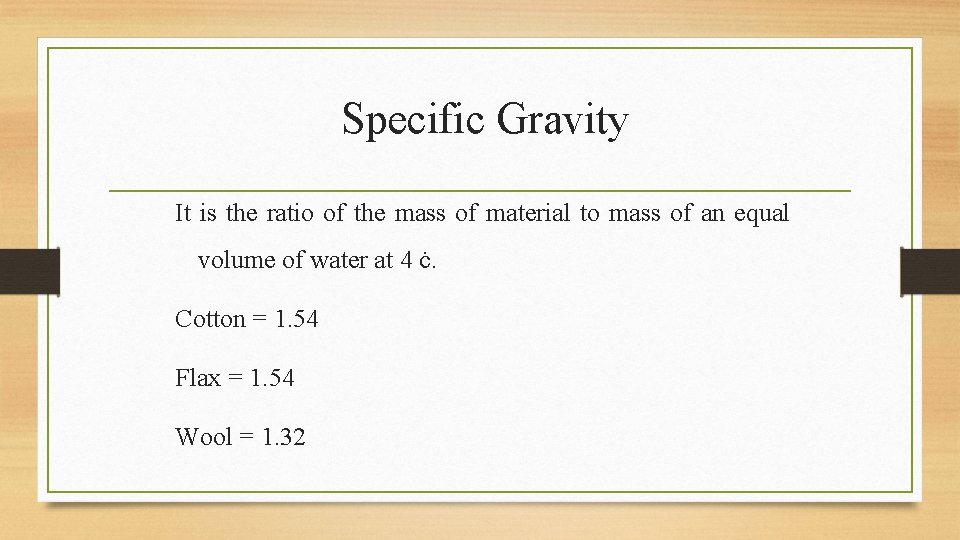
Specific Gravity It is the ratio of the mass of material to mass of an equal volume of water at 4 ċ. Cotton = 1. 54 Flax = 1. 54 Wool = 1. 32
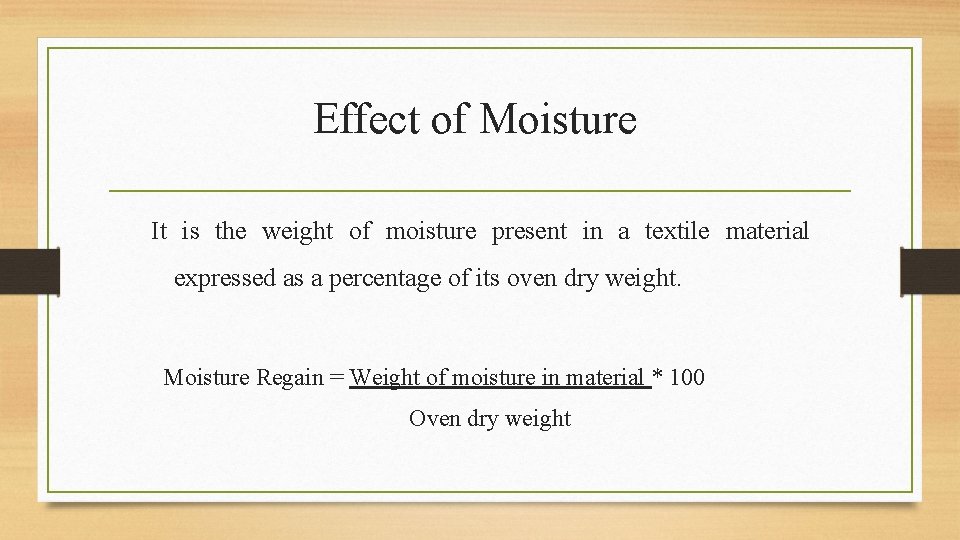
Effect of Moisture It is the weight of moisture present in a textile material expressed as a percentage of its oven dry weight. Moisture Regain = Weight of moisture in material * 100 Oven dry weight
Effect of Heat All fibers are affected in one way or another as they are heated. Because fabric should withstand the temperature used in laundering and ironing without undue deterioration.
Effect of Sunlight Fiber is affected by the powerful radiation of sunlight. Some fibers deteriorate, losing strength and changing color by the effect of light.
Chemical Properties Modern techniques of processing fibers, yarns and fabrics often involve the use of chemicals in great variety. The fiber itself must be able to withstand these substances without suffering harmful effect.
Effect of Acids Textiles are commonly subjected to acid solutions of one sort or another and the effects of different acids under varying conditions are important.
Effect of Alkalis Alkaline agents have been used for scouring textiles. Soap itself forms an alkaline solution in water.
Effect of Organic Solvents Dry cleaning agents have great importance in textiles because these solvents are commonly used for cleaning fabrics and the effect of these on the fiber itself is obviously important.
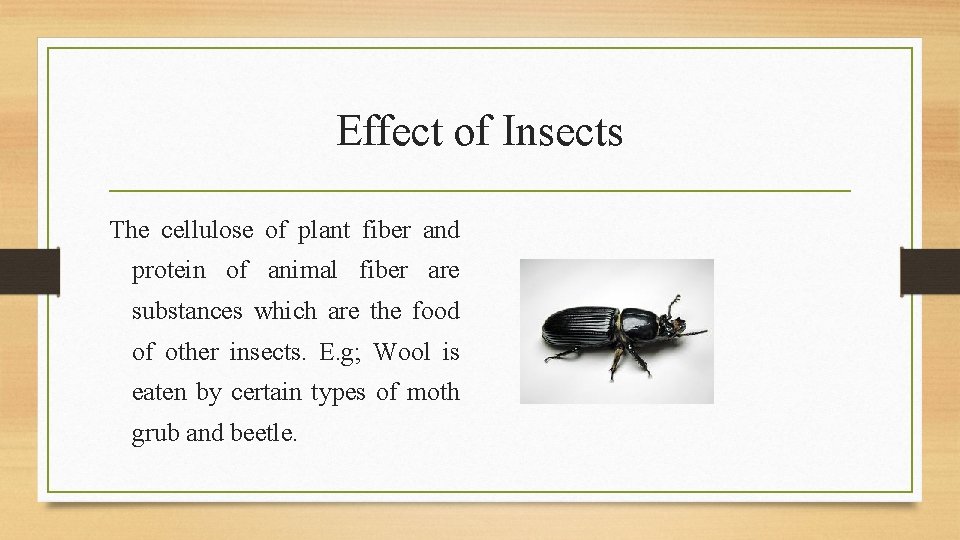
Effect of Insects The cellulose of plant fiber and protein of animal fiber are substances which are the food of other insects. E. g; Wool is eaten by certain types of moth grub and beetle.
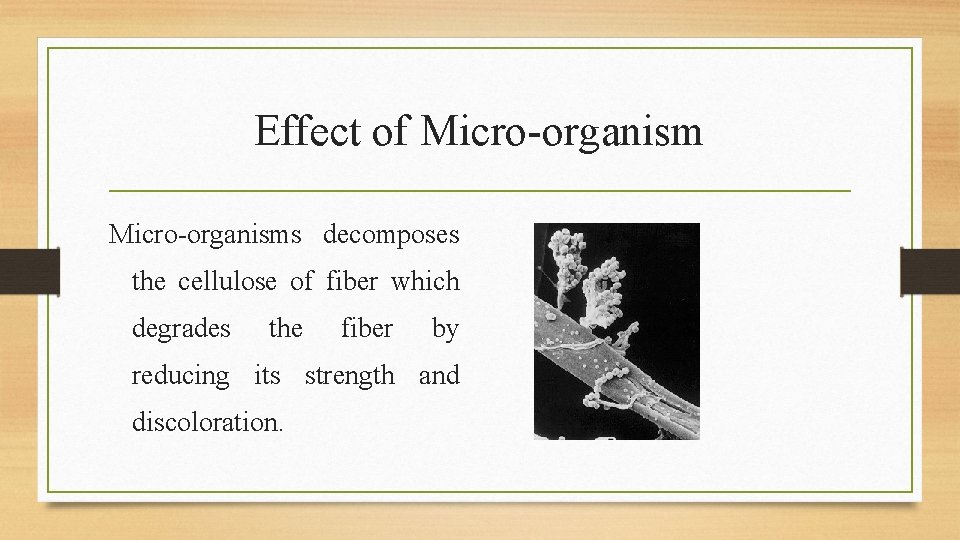
Effect of Micro-organisms decomposes the cellulose of fiber which degrades the fiber by reducing its strength and discoloration.
Electrical Properties It also influences the degree to which static electricity will accumulate on a yarn or fabric during processing or wear.
- Slides: 17