
Properties of Stars How do we classify stars
- Slides: 16
Properties of Stars
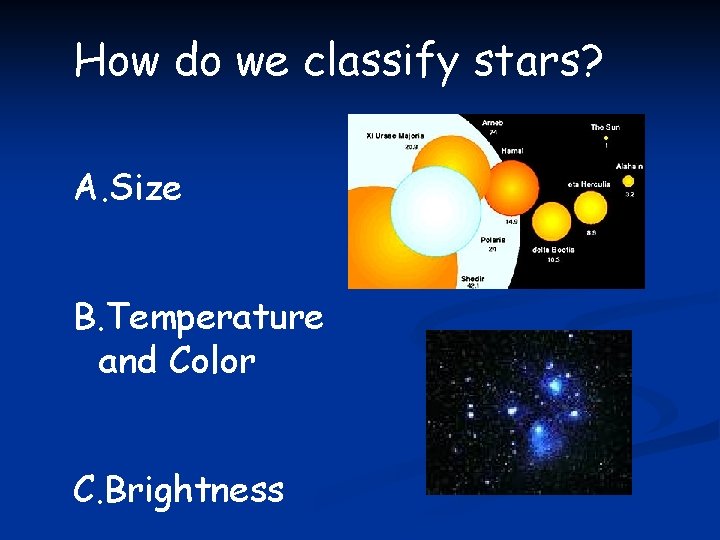
How do we classify stars? A. Size B. Temperature and Color C. Brightness
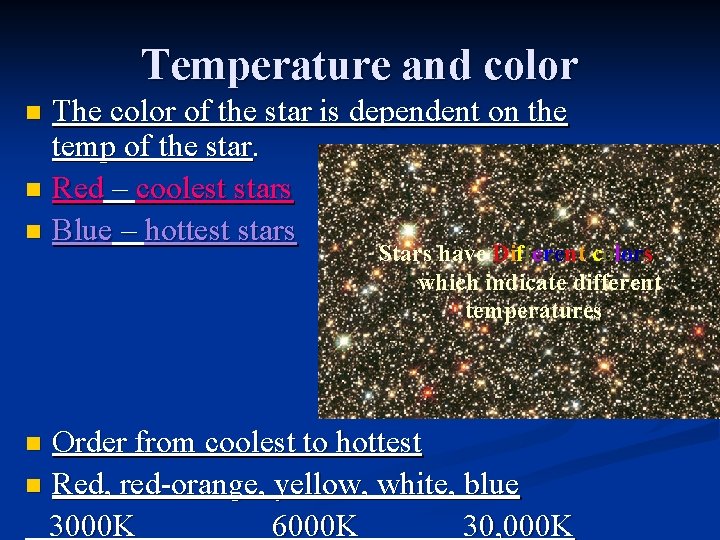
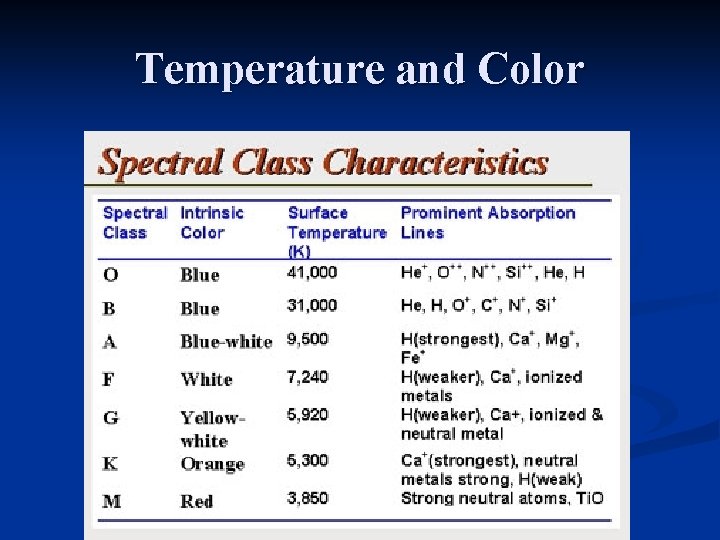
Temperature and color The color of the star is dependent on the temp of the star. n Red – coolest stars n Blue – hottest stars n Stars have Different colors which indicate different temperatures Order from coolest to hottest n Red, red-orange, yellow, white, blue 3000 K 6000 K 30, 000 K n
Temperature and Color
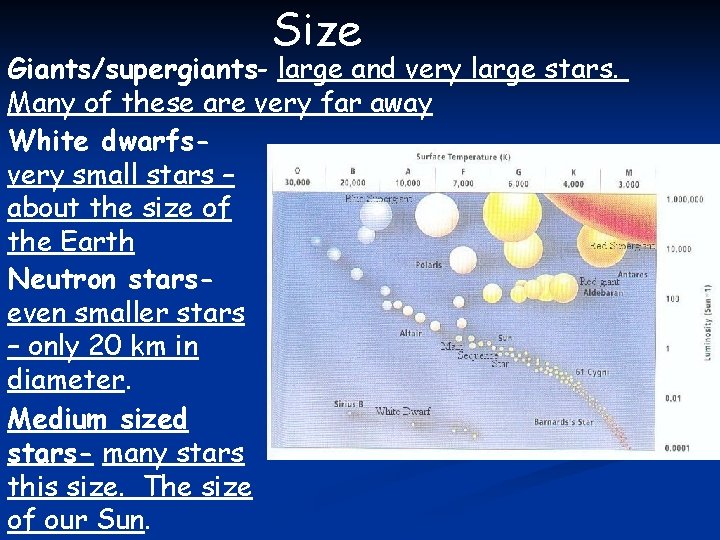
Size Giants/supergiants- large and very large stars. Many of these are very far away White dwarfsvery small stars – about the size of the Earth Neutron starseven smaller stars – only 20 km in diameter. Medium sized stars- many stars this size. The size of our Sun.
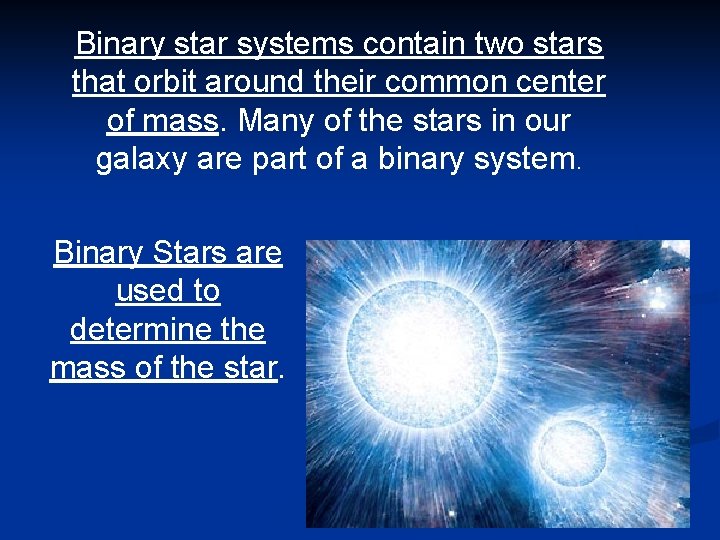
Binary star systems contain two stars that orbit around their common center of mass. Many of the stars in our galaxy are part of a binary system. Binary Stars are used to determine the mass of the star.
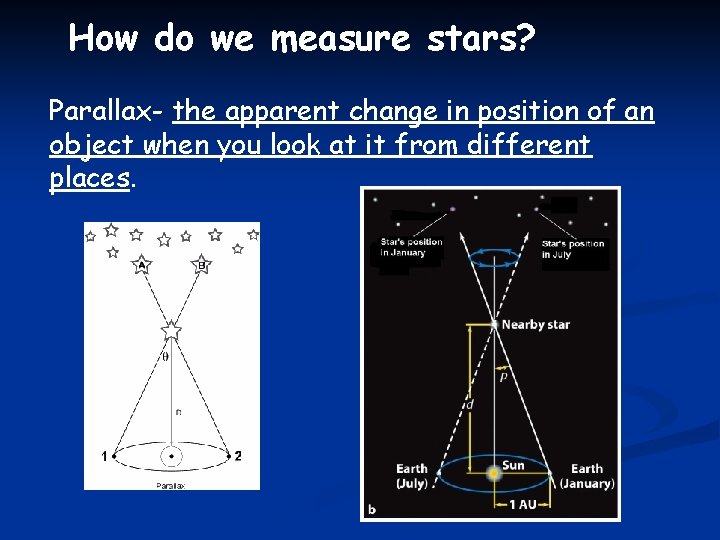
How do we measure stars? Parallax- the apparent change in position of an object when you look at it from different places.
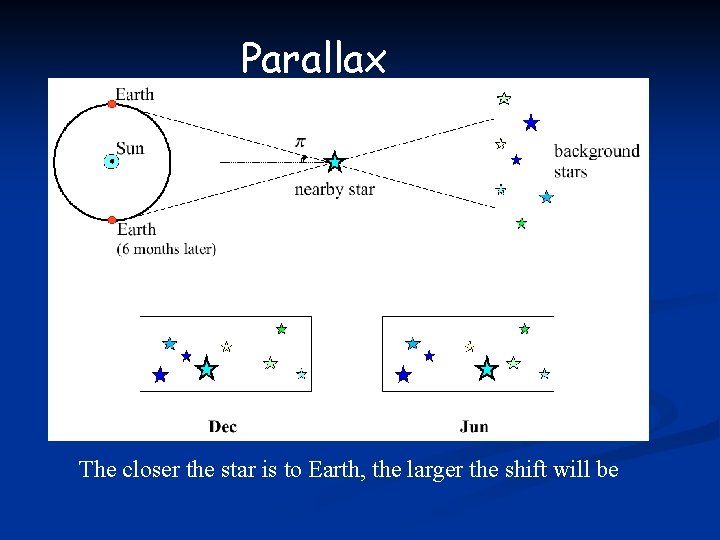
Parallax The closer the star is to Earth, the larger the shift will be
Parallax Only good for measuring stars close to us. Not farther than 1000 light years away. Why? The movement would be too small to measure accurately.
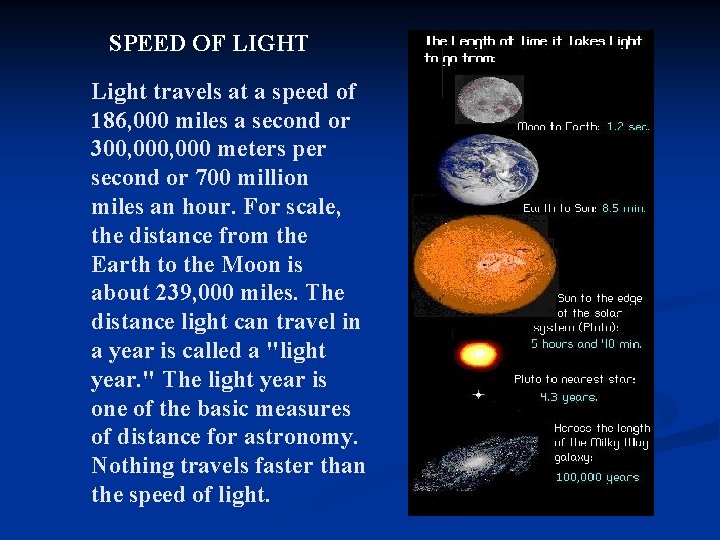
SPEED OF LIGHT Light travels at a speed of 186, 000 miles a second or 300, 000 meters per second or 700 million miles an hour. For scale, the distance from the Earth to the Moon is about 239, 000 miles. The distance light can travel in a year is called a "light year. " The light year is one of the basic measures of distance for astronomy. Nothing travels faster than the speed of light.
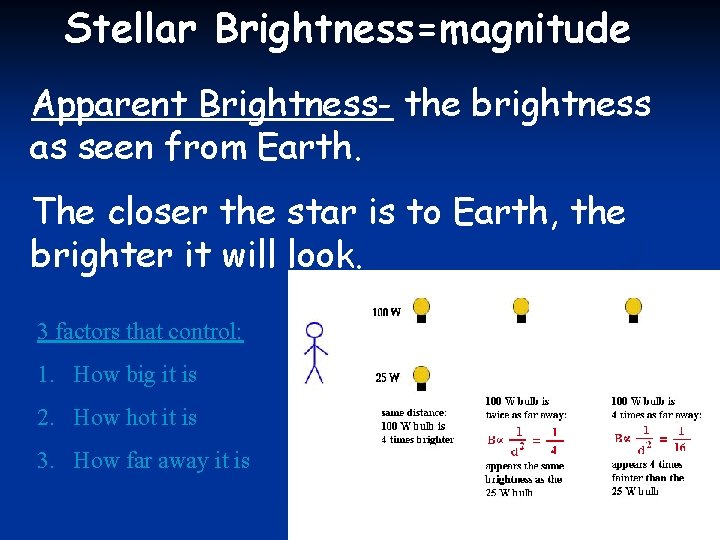
Stellar Brightness=magnitude Apparent Brightness- the brightness as seen from Earth. The closer the star is to Earth, the brighter it will look. 3 factors that control: 1. How big it is 2. How hot it is 3. How far away it is
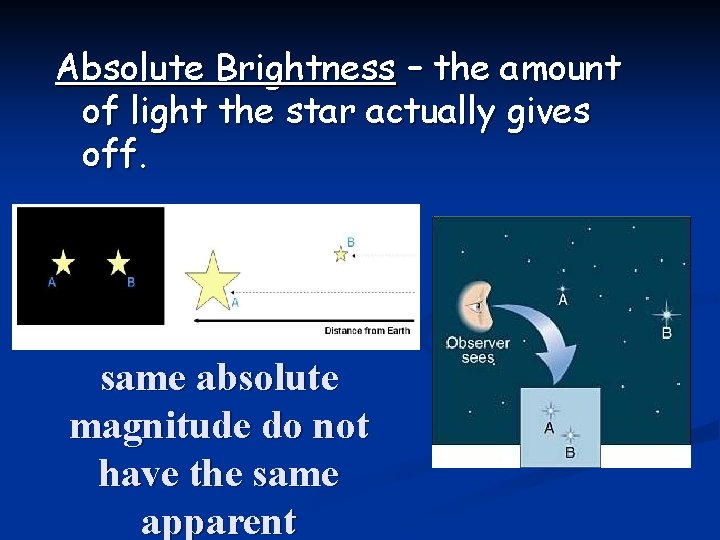
Absolute Brightness – the amount of light the star actually gives off. 2 stars with the same absolute magnitude do not have the same apparent
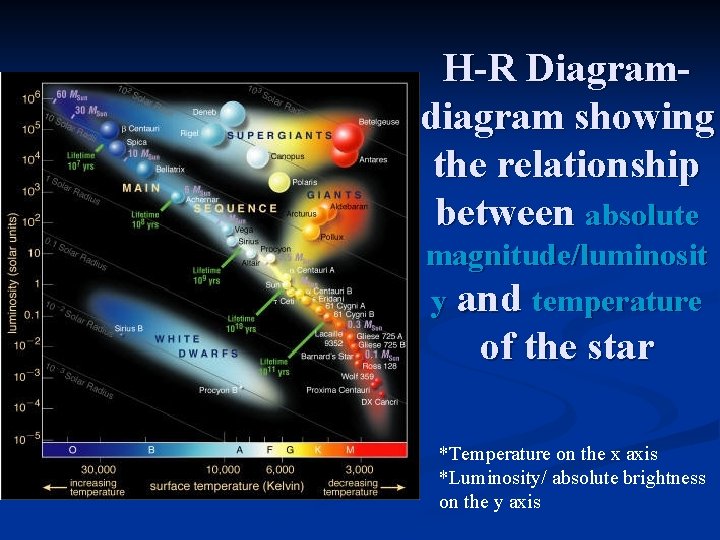
H-R Diagramdiagram showing the relationship between absolute magnitude/luminosit y and temperature of the star *Temperature on the x axis *Luminosity/ absolute brightness on the y axis
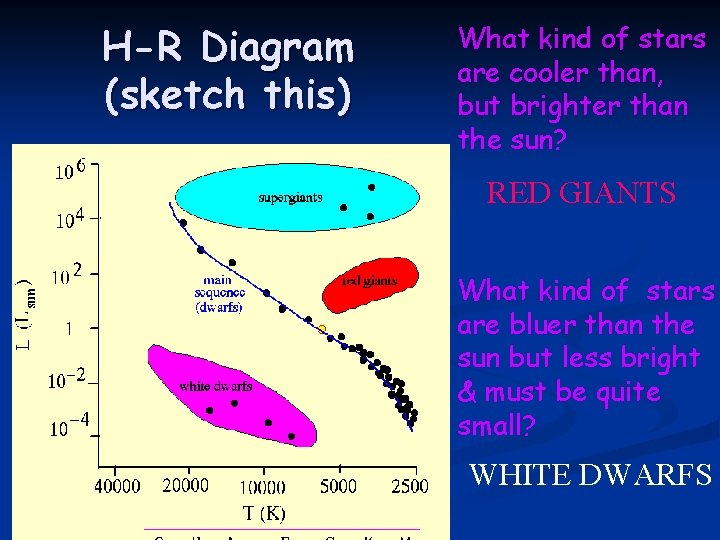
H-R Diagram (sketch this) What kind of stars are cooler than, but brighter than the sun? RED GIANTS What kind of stars are bluer than the sun but less bright & must be quite small? WHITE DWARFS
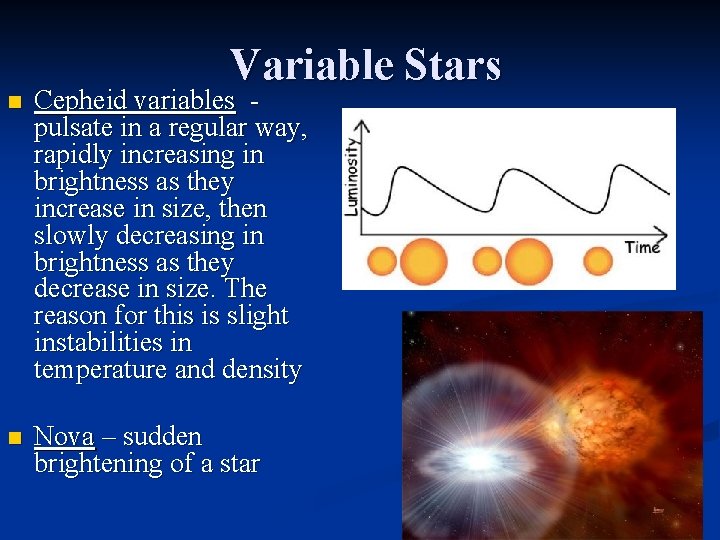
Variable Stars n Cepheid variables pulsate in a regular way, rapidly increasing in brightness as they increase in size, then slowly decreasing in brightness as they decrease in size. The reason for this is slight instabilities in temperature and density n Nova – sudden brightening of a star
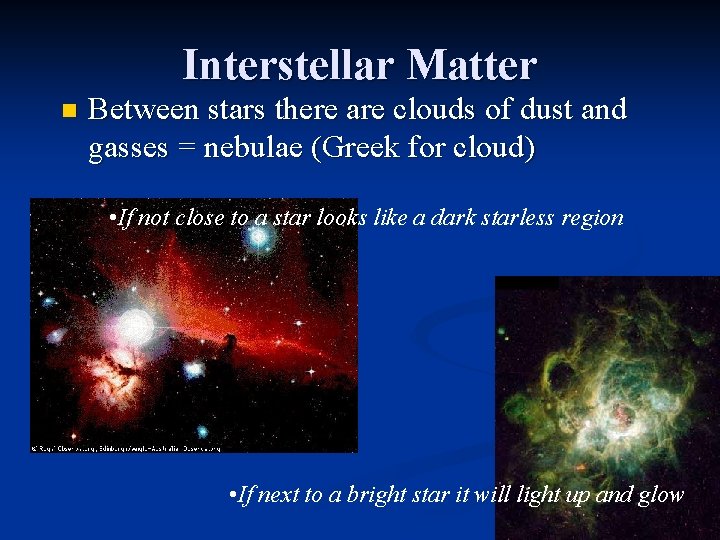
Interstellar Matter n Between stars there are clouds of dust and gasses = nebulae (Greek for cloud) • If not close to a star looks like a dark starless region • If next to a bright star it will light up and glow