
Properties of Sound Making Waves Sound Waves Sound
- Slides: 28
Properties of Sound Making Waves
Sound Waves ■Sound is created by vibrations
Sound Waves ■Sound is created by vibrations ■Vibrations move air molecules near them
Sound Waves ■Sound is created by vibrations ■Vibrations move air molecules near them ■Molecules forced together, raise air pressure
Sound Waves ■Sound is created by vibrations ■Vibrations move air molecules near them ■Molecules forced together, raise air pressure ■Pressure is transferred to other molecules
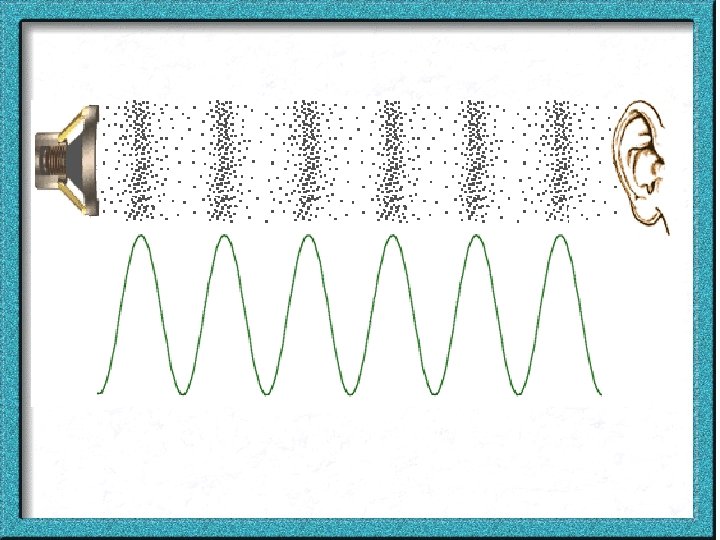
Sound Waves ■Sound is created by vibrations ■Vibrations move air molecules near them ■Molecules forced together, raise air pressure ■Pressure is transferred to other molecules ■This causes a ‘Wave of Pressure’.
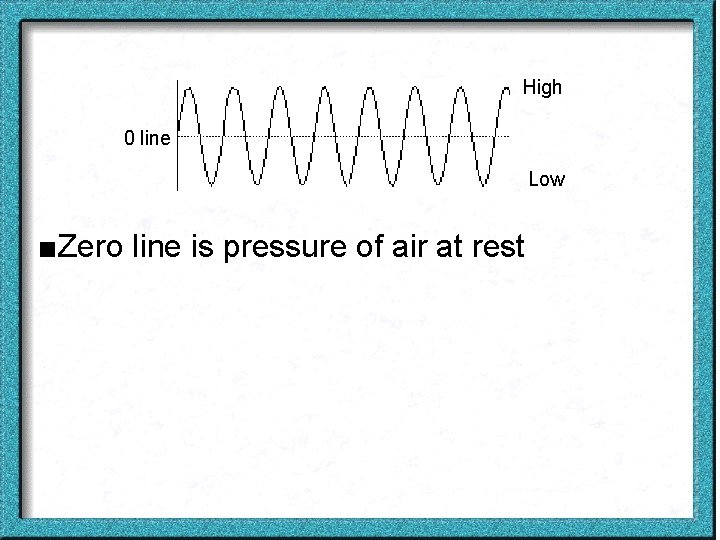
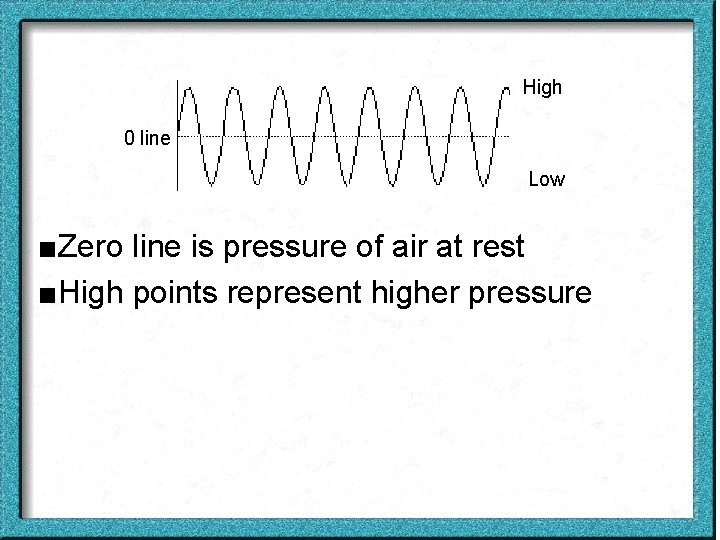
High 0 line Low ■Zero line is pressure of air at rest
High 0 line Low ■Zero line is pressure of air at rest ■High points represent higher pressure
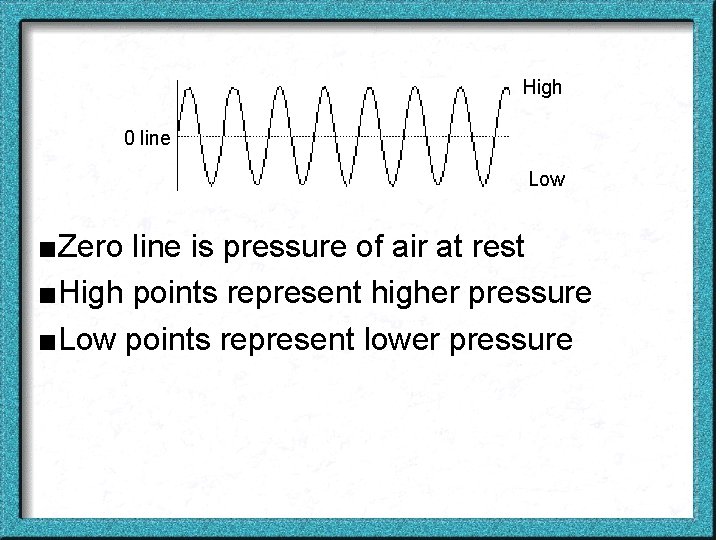
High 0 line Low ■Zero line is pressure of air at rest ■High points represent higher pressure ■Low points represent lower pressure
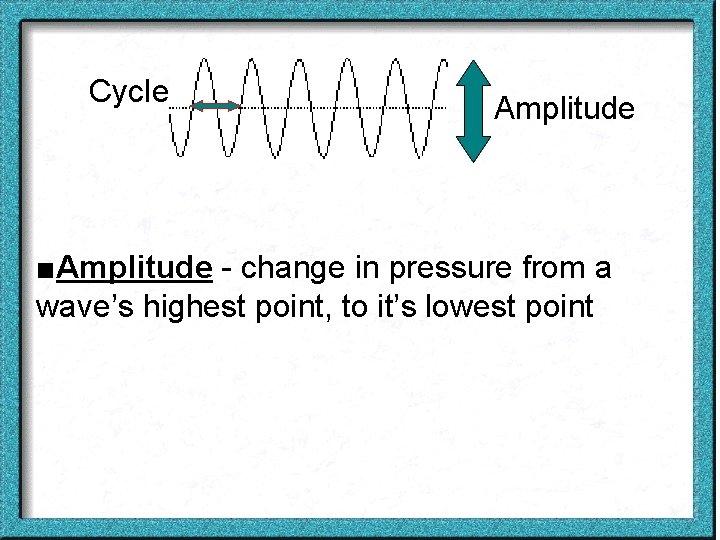
Cycle Amplitude ■Amplitude - change in pressure from a wave’s highest point, to it’s lowest point
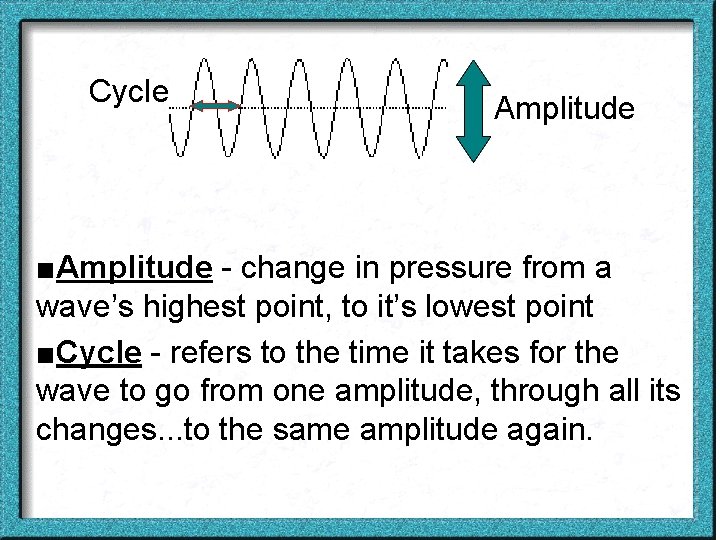
Cycle Amplitude ■Amplitude - change in pressure from a wave’s highest point, to it’s lowest point ■Cycle - refers to the time it takes for the wave to go from one amplitude, through all its changes. . . to the same amplitude again.
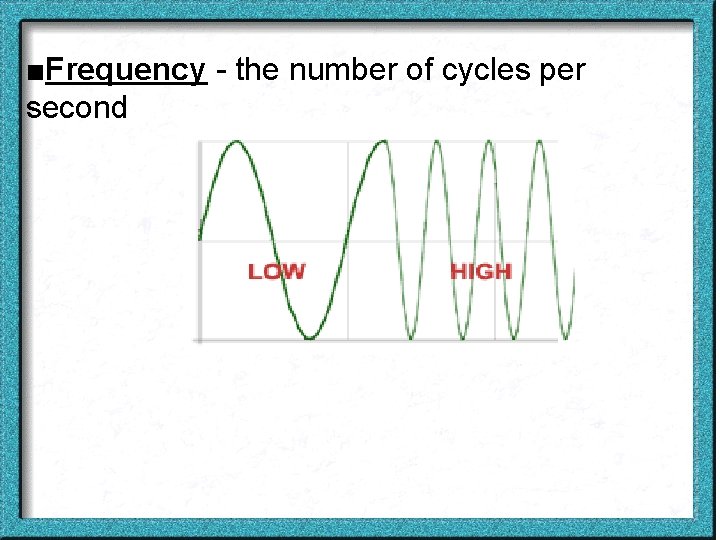
■Frequency - the number of cycles per second
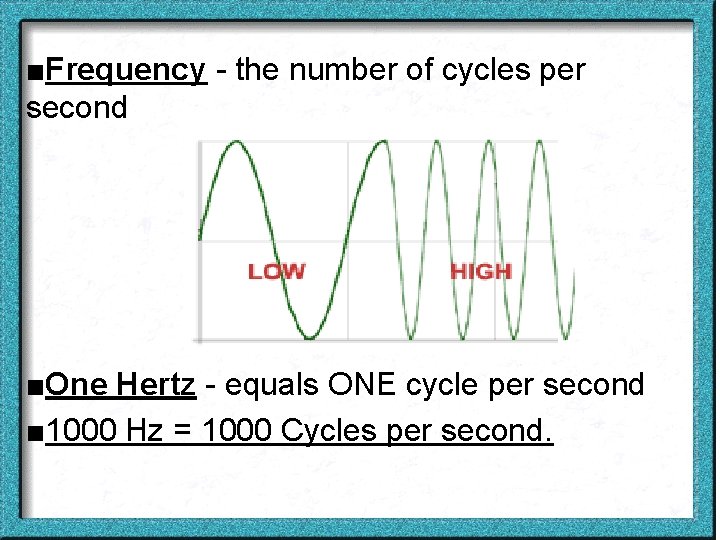
■Frequency - the number of cycles per second ■One Hertz - equals ONE cycle per second ■ 1000 Hz = 1000 Cycles per second.
■Sound is converted to electrical energy and sent through wires
■For transmission, sound is converted to electrical energy and sent through wires
■For transmission, sound is converted to electrical energy and sent through wires ■Analog - recorded on cassette tape as changes in magnetic strength
■For transmission, sound is converted to electrical energy and sent through wires ■Analog - recorded on cassette tape as changes in magnetic strength ■Digital – recorded and stored on a hard drive as a ‘file’.
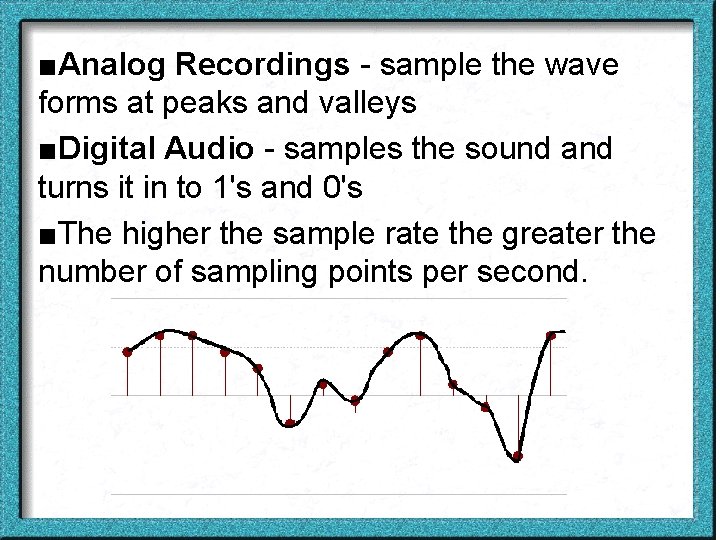
■Analog Recordings - sample the wave forms at peaks and valleys
■Analog Recordings - sample the wave forms at peaks and valleys ■Digital Audio - samples the sound and turns it in to 1's and 0's
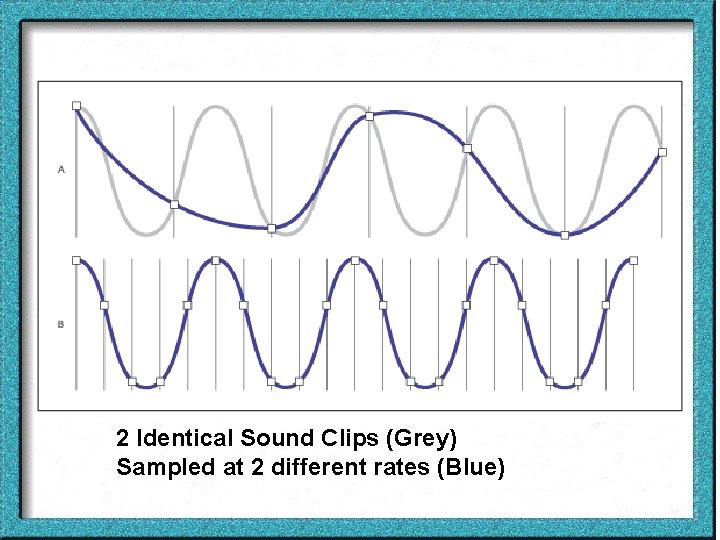
■Analog Recordings - sample the wave forms at peaks and valleys ■Digital Audio - samples the sound and turns it in to 1's and 0's ■The higher the sample rate the greater the number of sampling points per second
■Analog Recordings - sample the wave forms at peaks and valleys ■Digital Audio - samples the sound and turns it in to 1's and 0's ■The higher the sample rate the greater the number of sampling points per second.
■Lower sampling rates do not capture the true sound being recorded
■Lower sampling rates do not capture the true sound being recorded ■Sampling rate must be at least TWICE the frequency
■Lower sampling rates do not capture the true sound being recorded ■Sampling rate must be at least TWICE the frequency ■Therefore if frequency is 8000 Hz. . . the sampling rate must be at least 16, 000 times per second
■Lower sampling rates do not capture the true sound being recorded ■Sampling rate must be at least TWICE the frequency ■Therefore if frequency is 8000 Hz. . . the sampling rate must be at least 16, 000 times per second ■A CD recording is sampled 44, 000 times per second.
2 Identical Sound Clips (Grey) Sampled at 2 different rates (Blue)
Audio Task ■Open the Sound FX Assignment sheet in the Handout Folder. Write a short script and download all your FX files to your folder ■Using Sound Forge edit your short story then Export it as an MP 3 file to your Folder.