
Properties of Shapes Year One Shape Symmetry I


- Slides: 22
Properties of Shapes Year One
Shape Symmetry
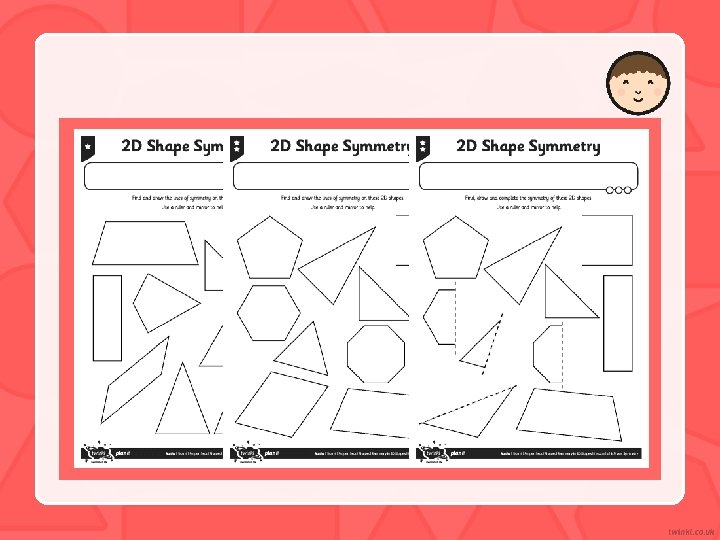
• I can find and draw lines of symmetry in a range of 2 D shapes. • I can find reflective symmetry by folding 2 D shapes. • I can draw lines of symmetry on 2 D shapes. • I can recognise lines of symmetry in 2 D shapes presented in different positions.
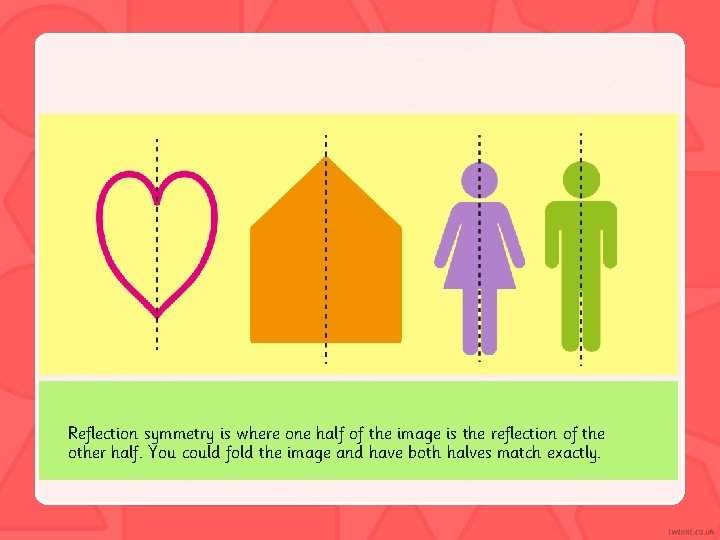
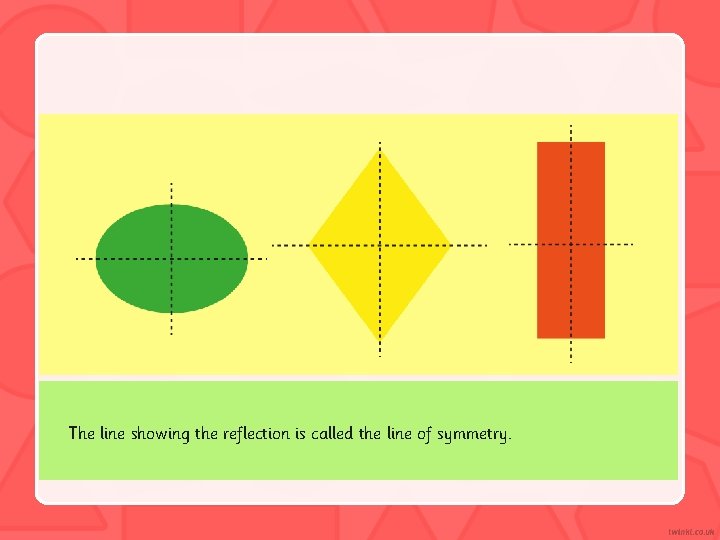
Reflection symmetry is where one half of the image is the reflection of the other half. You could fold the image and have both halves match exactly.
The line showing the reflection is called the line of symmetry.
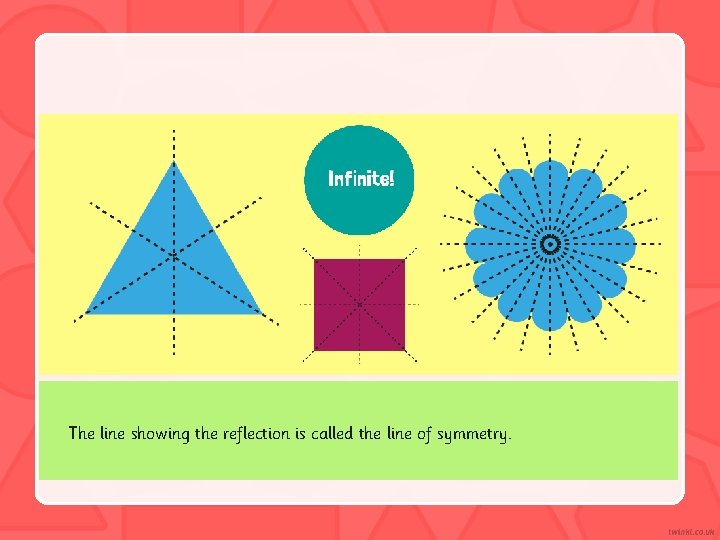
The line showing the reflection is called the line of symmetry.
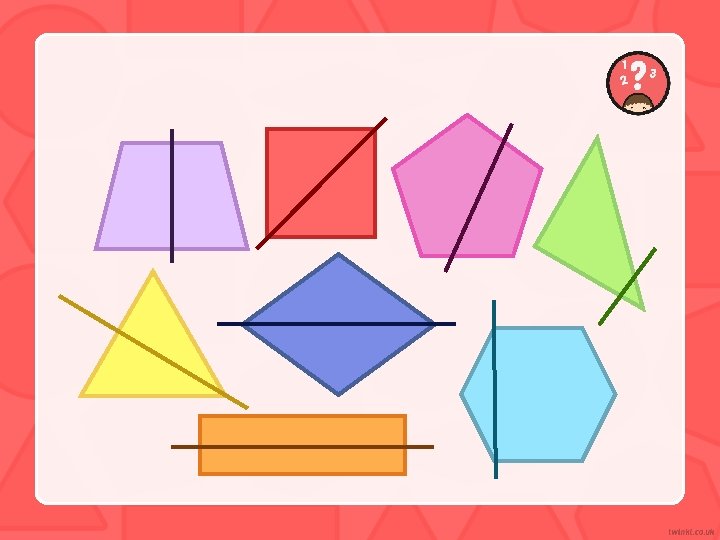
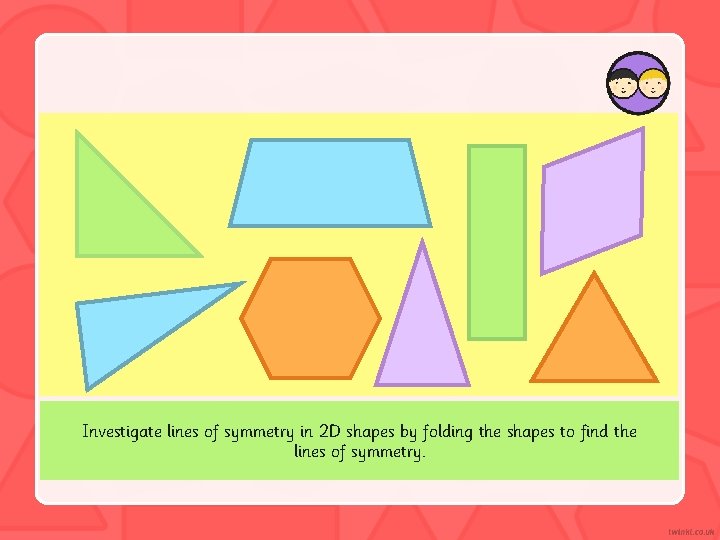
Investigate lines of symmetry in 2 D shapes by folding the shapes to find the lines of symmetry.
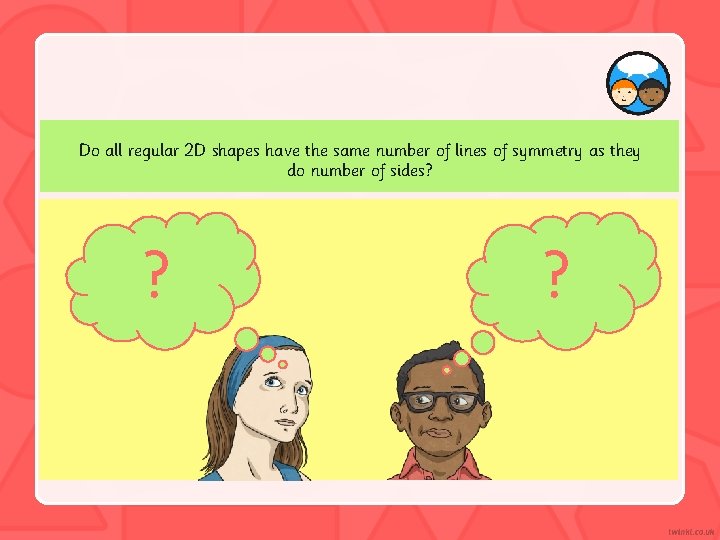
Do all regular 2 D shapes have the same number of lines of symmetry as they do number of sides? ? ?
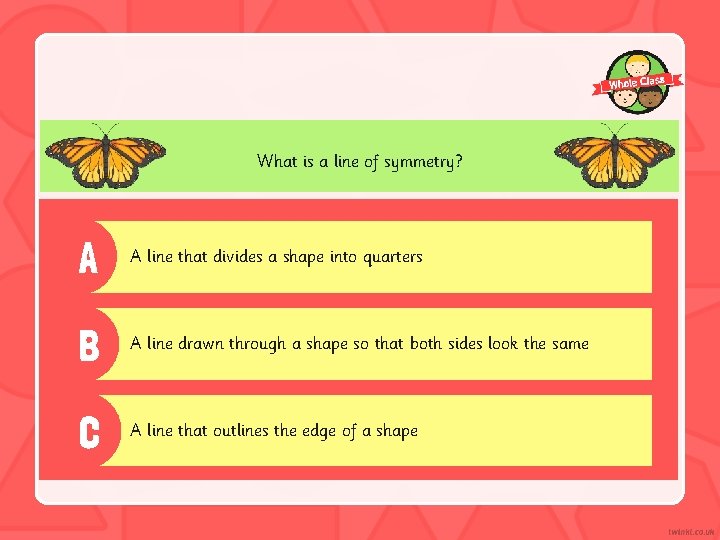
What is a line of symmetry? A A line that divides a shape into quarters B A line drawn through a shape so that both sides look the same C A line that outlines the edge of a shape
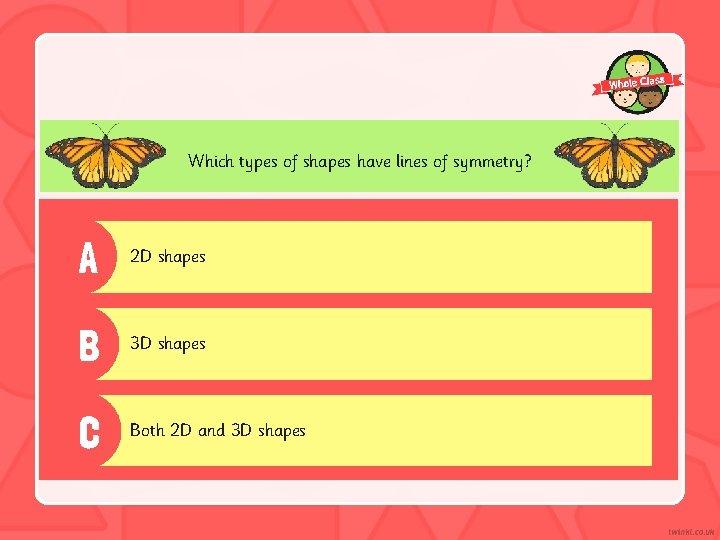
Which types of shapes have lines of symmetry? A 2 D shapes B 3 D shapes C Both 2 D and 3 D shapes
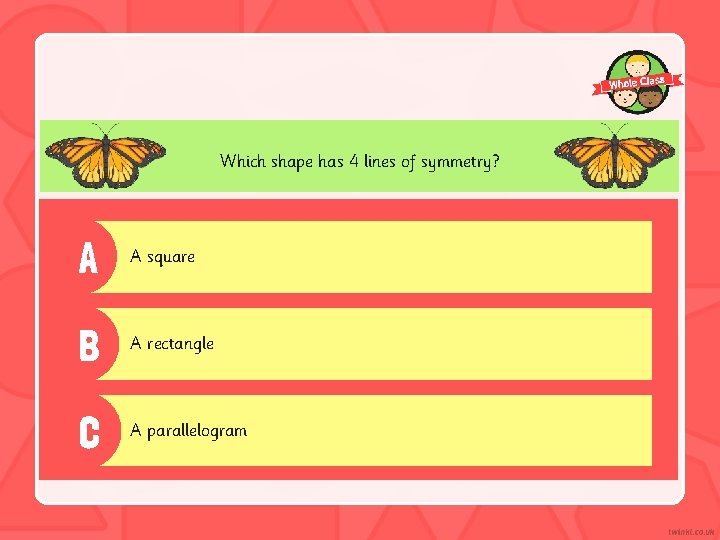
Which shape has 4 lines of symmetry? A A square B A rectangle C A parallelogram
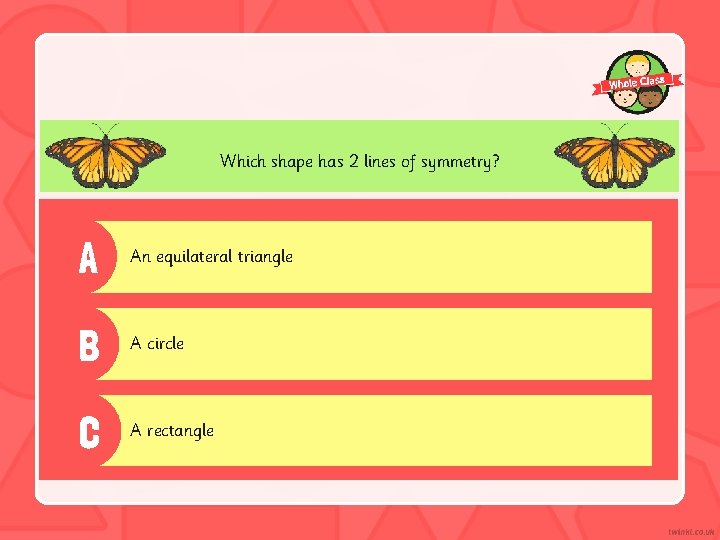
Which shape has 2 lines of symmetry? A An equilateral triangle B A circle C A rectangle
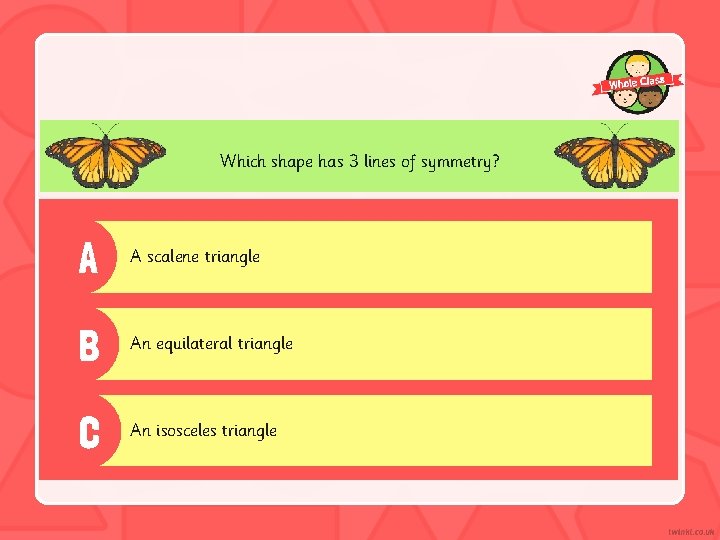
Which shape has 3 lines of symmetry? A A scalene triangle B An equilateral triangle C An isosceles triangle
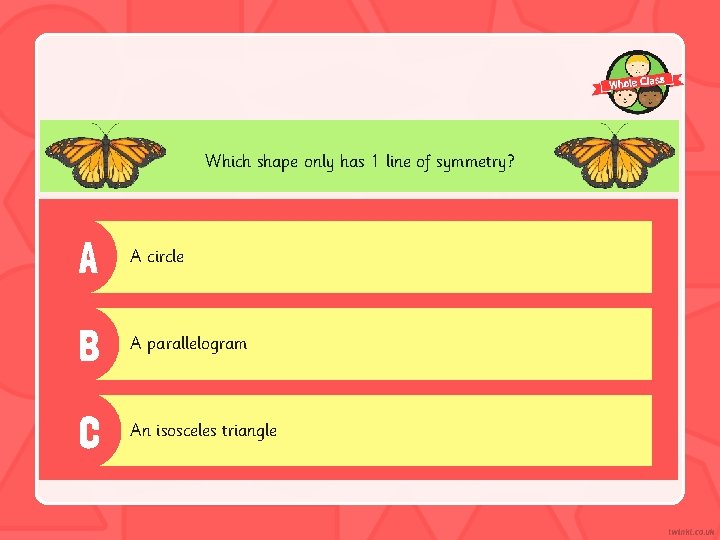
Which shape only has 1 line of symmetry? A A circle B A parallelogram C An isosceles triangle
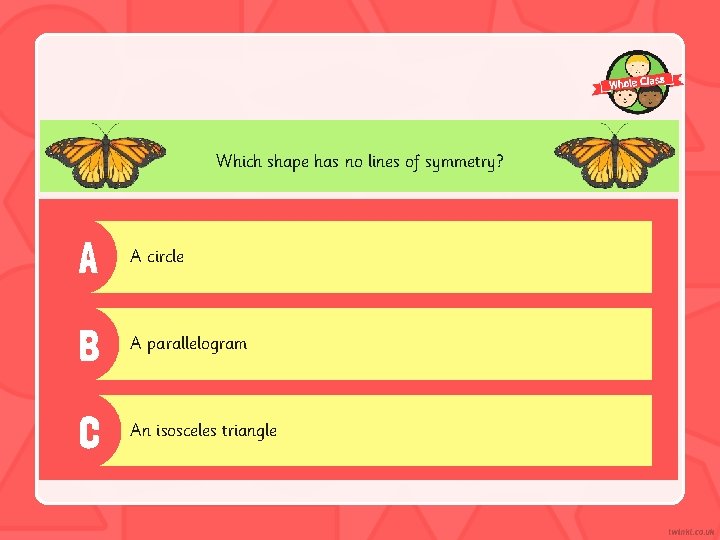
Which shape has no lines of symmetry? A A circle B A parallelogram C An isosceles triangle
Which of these statements is false? A A rectangle has 4 lines of symmetry B An isosceles triangle has one line of symmetry C A square has 4 lines of symmetry
Which of these statements is true? A An equilateral triangle has 2 lines of symmetry B A scalene triangle has 2 lines of symmetry C A rectangle has 2 lines of symmetry
Which shape has an infinite number of lines of symmetry? A A circle B A rectangle C A scalene triangle
• I can find and draw lines of symmetry in a range of 2 D shapes. • I can find reflective symmetry by folding 2 D shapes. • I can draw lines of symmetry on 2 D shapes. • I can recognise lines of symmetry in 2 D shapes presented in different positions.