
Properties of Quadrilaterals Using Proofs with Triangles Parallelogram
- Slides: 10
Properties of Quadrilaterals Using Proofs with Triangles
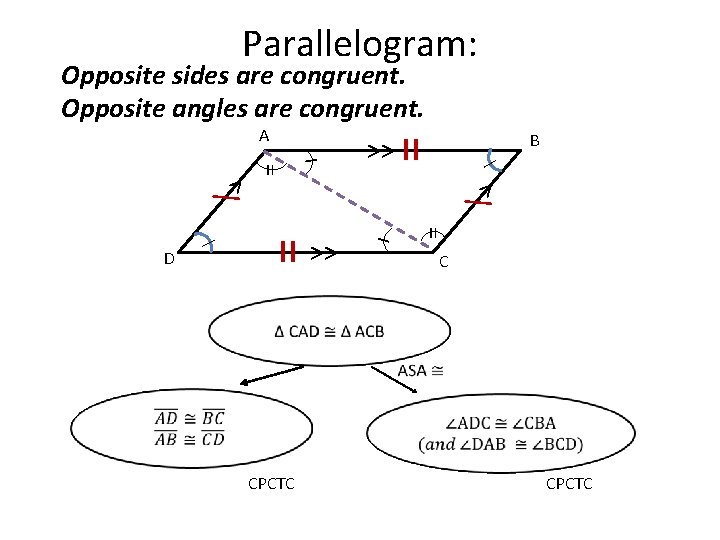
Parallelogram: — > CPCTC – = >> = D — B — > — = = Opposite sides are congruent. Opposite angles are congruent. A >> – C CPCTC
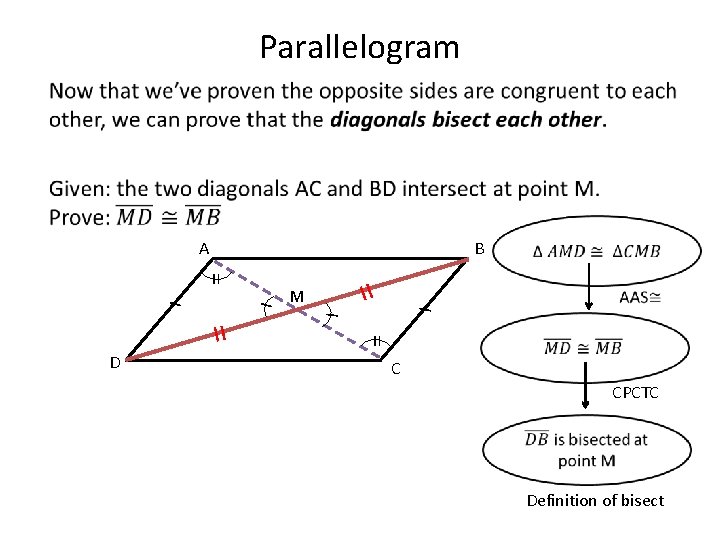
Parallelogram • B – = D M – – = = A C CPCTC Definition of bisect
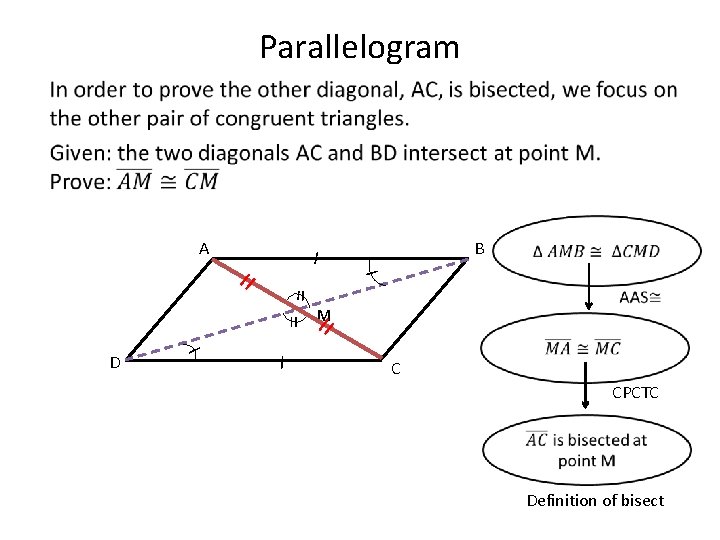
Parallelogram • – – – M = = D B = = – A C CPCTC Definition of bisect
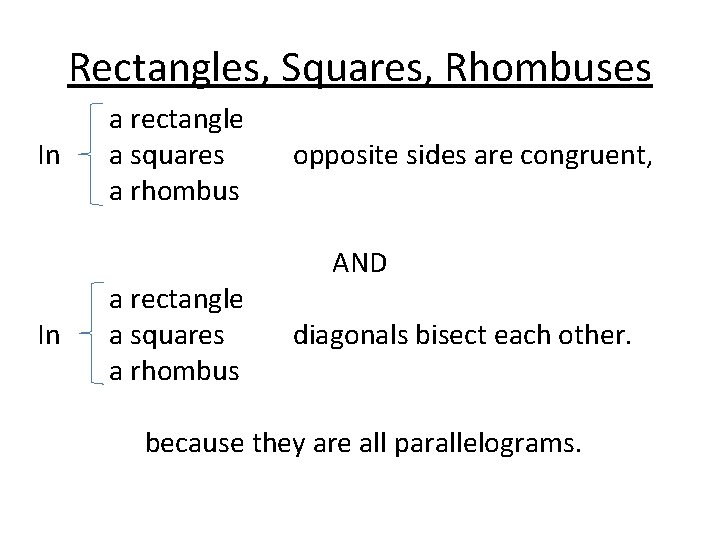
Rectangles, Squares, Rhombuses In In a rectangle a squares a rhombus opposite sides are congruent, AND diagonals bisect each other. because they are all parallelograms.
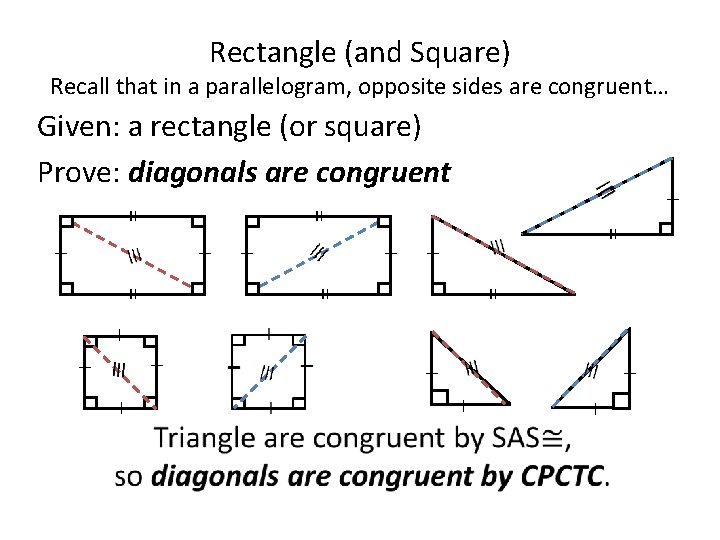
Rectangle (and Square) Recall that in a parallelogram, opposite sides are congruent… – – = = = Given: a rectangle (or square) Prove: diagonals are congruent – – – –
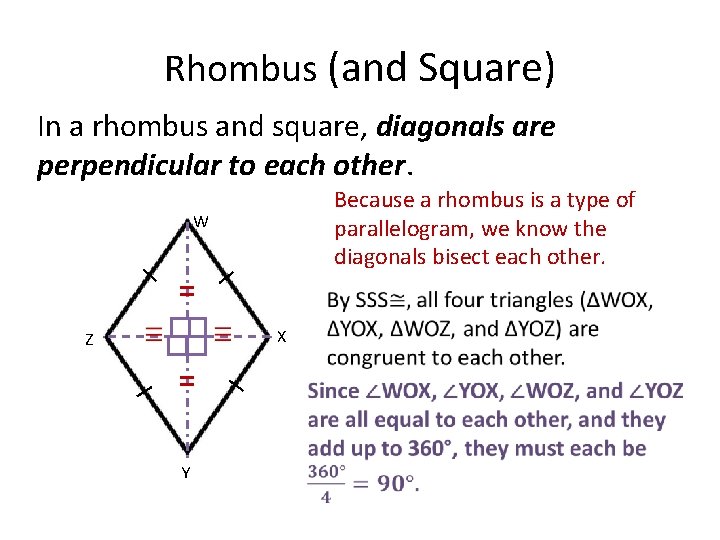
Rhombus (and Square) In a rhombus and square, diagonals are perpendicular to each other. Because a rhombus is a type of parallelogram, we know the diagonals bisect each other. W _ Z = _ O _ = Y _ X
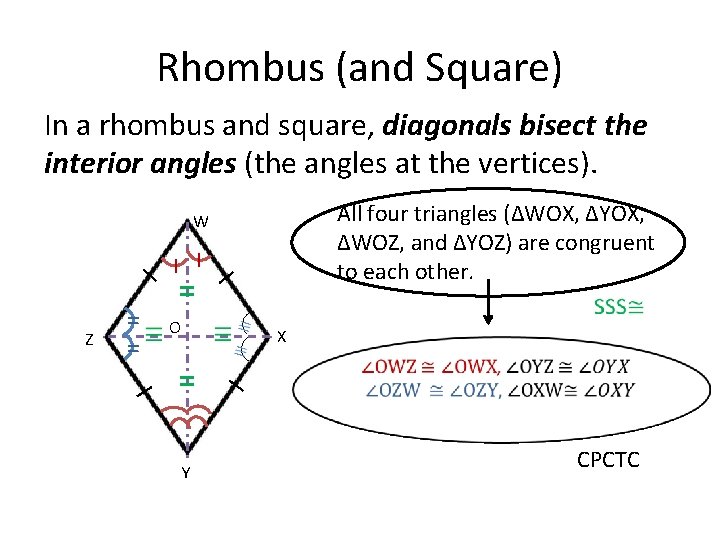
Rhombus (and Square) In a rhombus and square, diagonals bisect the interior angles (the angles at the vertices). All four triangles (ΔWOX, ΔYOX, ΔWOZ, and ΔYOZ) are congruent to each other. W _ _ Z = = = O _ = Y _ X CPCTC
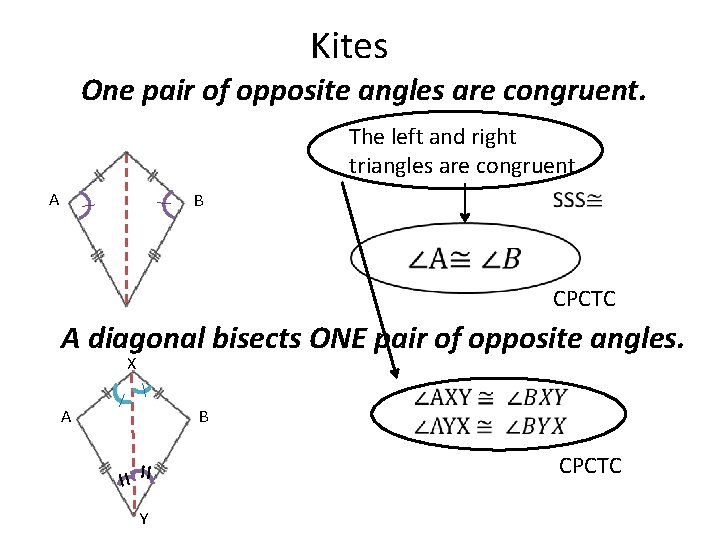
Kites One pair of opposite angles are congruent. The left and right triangles are congruent A — B — CPCTC A diagonal bisects ONE pair of opposite angles. — B = = A — X Y CPCTC
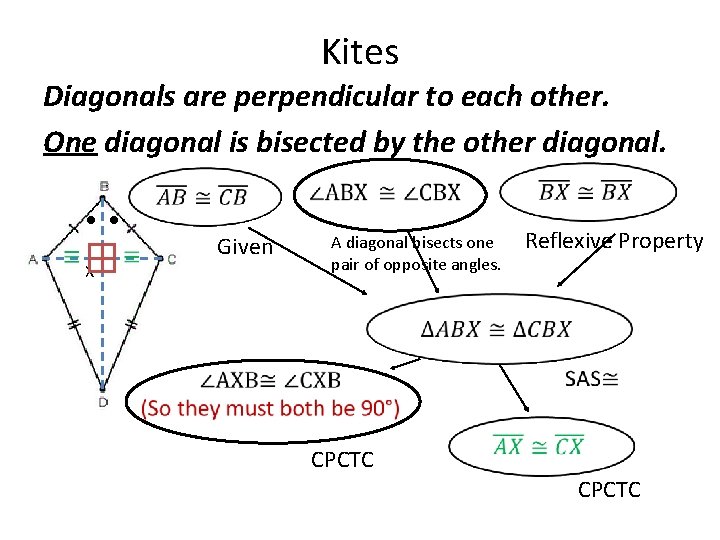
Kites Diagonals are perpendicular to each other. One diagonal is bisected by the other diagonal. ● ● X Given A diagonal bisects one pair of opposite angles. Reflexive Property CPCTC