
Properties of Ocean Water Can you see what

- Slides: 15
Properties of Ocean Water Can you see what the sea’s about?
The Ocean • About 68% of the Earth is covered in ocean water. • The average depth of all oceans is about 2. 3 miles. • There are four oceans • The largest one is the Pacific Ocean • Ocean waster has both chemical and physical properties
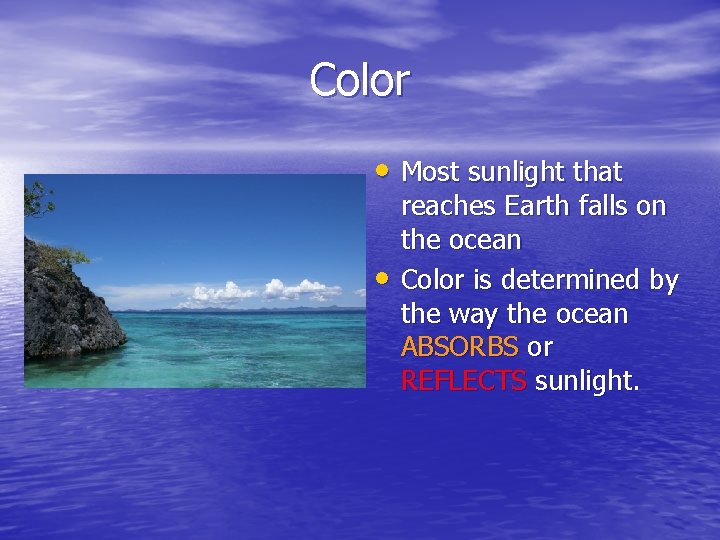
Color • Most sunlight that • reaches Earth falls on the ocean Color is determined by the way the ocean ABSORBS or REFLECTS sunlight.
Why blue? • The color of the ocean is normally blue because the ocean reflects the color of the DAYTIME sky. • BUT phytoplankton or other microscopic creatures or plants alter the color of the ocean.
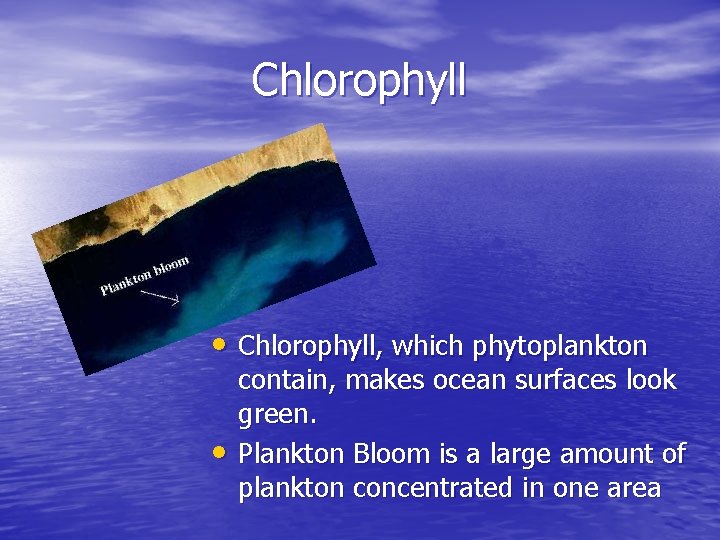
Chlorophyll • Chlorophyll, which phytoplankton • contain, makes ocean surfaces look green. Plankton Bloom is a large amount of plankton concentrated in one area
Temperature • Ocean water absorbs and reflects sunlight. • By absorbing sunlight, the sunlight heats the water. • Upper zone of ocean water absorbs sunlight completely. • Water movement mixes WARM surface water with COLD deep water.
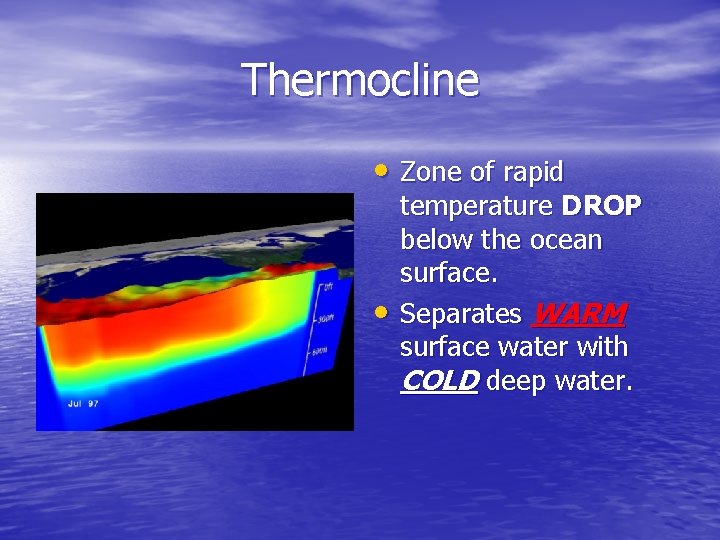
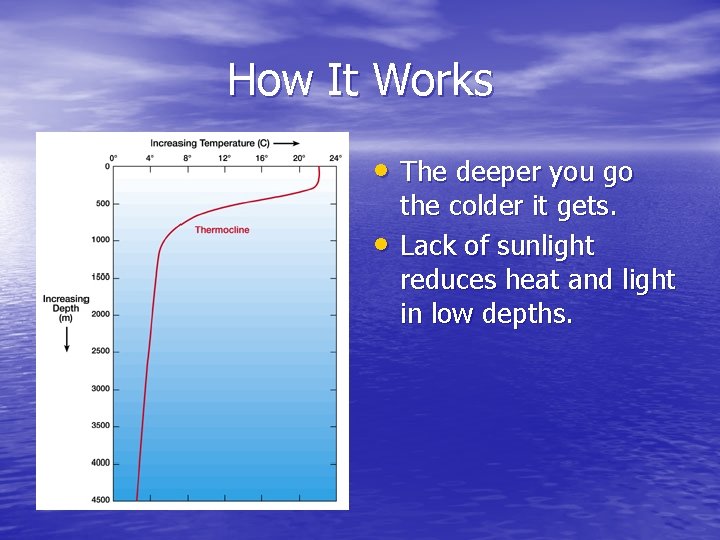
Thermocline • Zone of rapid • temperature DROP below the ocean surface. Separates WARM surface water with COLD deep water.
How It Works • The deeper you go • the colder it gets. Lack of sunlight reduces heat and light in low depths.
Salinity • All water has dissolved gases, liquids, or solids in • • • it. Salinity is the number of grams of dissolved salt in 1 kg of ocean water. I. E. How much salt is dissolved in certain amount of water. Measured in parts per thousand 5 g in 1 kg = 5%o.
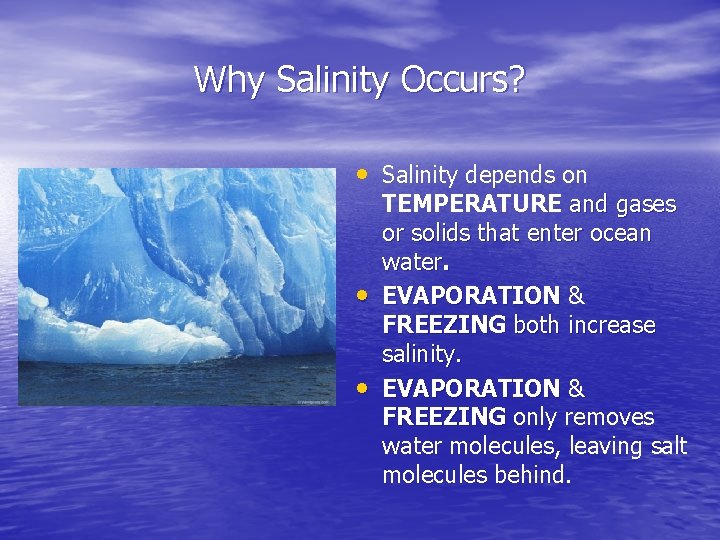
Why Salinity Occurs? • Salinity depends on • • TEMPERATURE and gases or solids that enter ocean water. EVAPORATION & FREEZING both increase salinity. EVAPORATION & FREEZING only removes water molecules, leaving salt molecules behind.
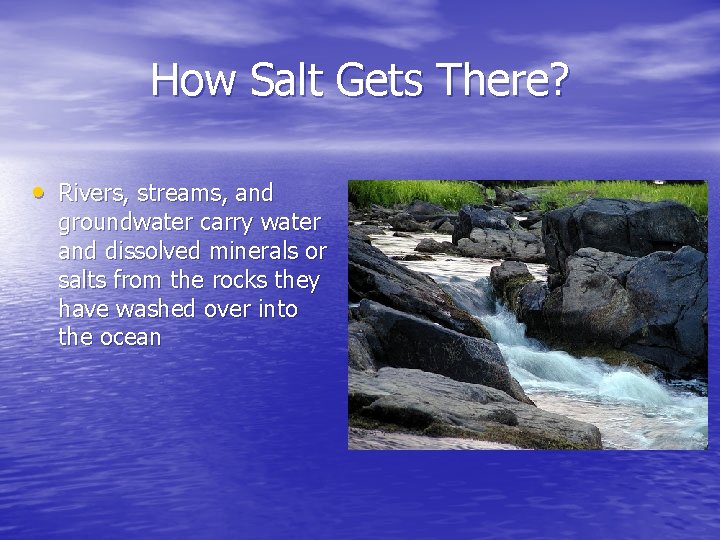
How Salt Gets There? • Rivers, streams, and groundwater carry water and dissolved minerals or salts from the rocks they have washed over into the ocean
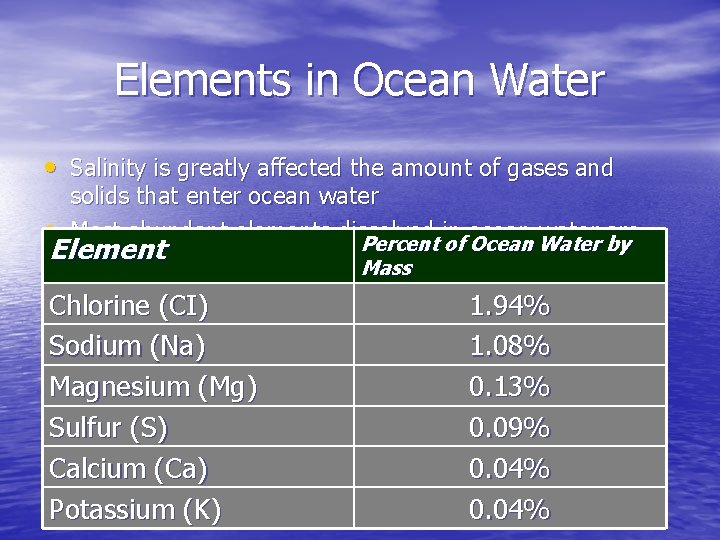
Elements in Ocean Water • Salinity is greatly affected the amount of gases and solids that enter ocean water Most abundant elements dissolved in ocean water are… Percent of Ocean Water by • Element Chlorine (CI) Sodium (Na) Magnesium (Mg) Sulfur (S) Calcium (Ca) Potassium (K) Percent of Ocean Water by Mass 1. 94% 1. 08% 0. 13% 0. 09% 0. 04%
Dissolved Gases • • • Gases dissolve better in cold water The colder the body of water, the more gases dissolved in the ocean The warmer the body of water, the more gases that will return to the atmosphere Three principal gases dissolved in the ocean are 1. Carbon Dioxide (CO 2) 2. Nitrogen (N 2) 3. Oxygen (O 2) Carbon Dioxide is the easiest to dissolve in ocean water Oxygen mainly dissolves at the water surface
Quick Notes • Color is determined by how the earth absorbs or reflects sunlight. • Thermocline is a zone of rapid temperature change in the ocean • Salinity is the number of grams of dissolved salt in 1 kg of ocean water. (measured in parts per thousand) • Gases dissolve better in cold water.
Don’t Let it Change