
Properties of Matter Physical Chemical Changes Physical Properties
- Slides: 13
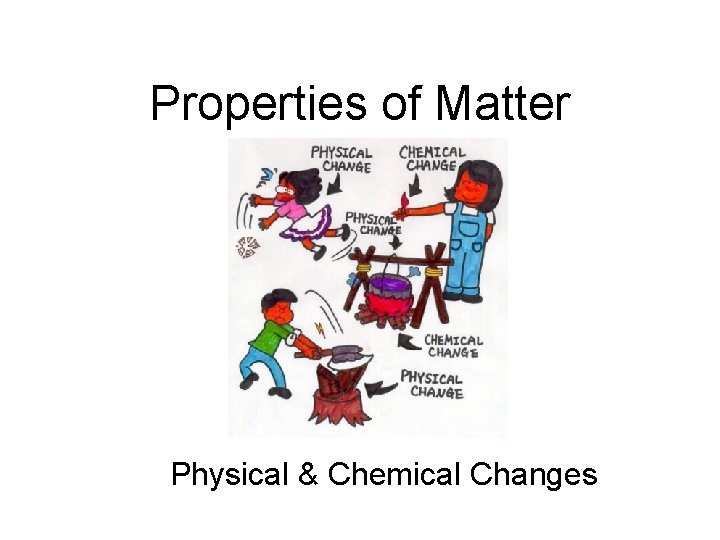
Properties of Matter Physical & Chemical Changes
Physical Properties • Physical properties can be observed or measured. • Observing or measuring physical properties does NOT CHANGE THE IDENTITY OF THE MATTER (you still have the same material!) They measure. are easy to observe and • Examples are: – – – Mass Volume Density Color Shape Melting point Boiling point Freezing Point Hardness Thermal conductivity Physical State – solid, liquid, or gas solubility
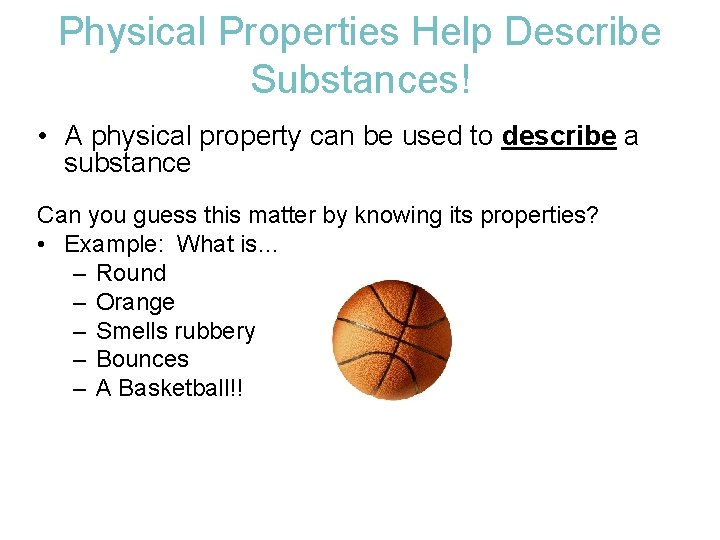
Physical Properties Help Describe Substances! • A physical property can be used to describe a substance Can you guess this matter by knowing its properties? • Example: What is… – Round – Orange – Smells rubbery – Bounces – A Basketball!!
Chemical Properties • Chemical Properties describe a substance based on its ability to change into a new substance with different properties. • They are not as easy to observe as physical properties • Must attempt to change the matter to observe chemical properties(test it!) • Examples: – Flammability – Reactivity
Physical vs. Chemical Properties • Physical properties are readily observable • Chemical properties can only be observed as the object is changing • Example – you do not know if an object is flammable until you set it on fire!
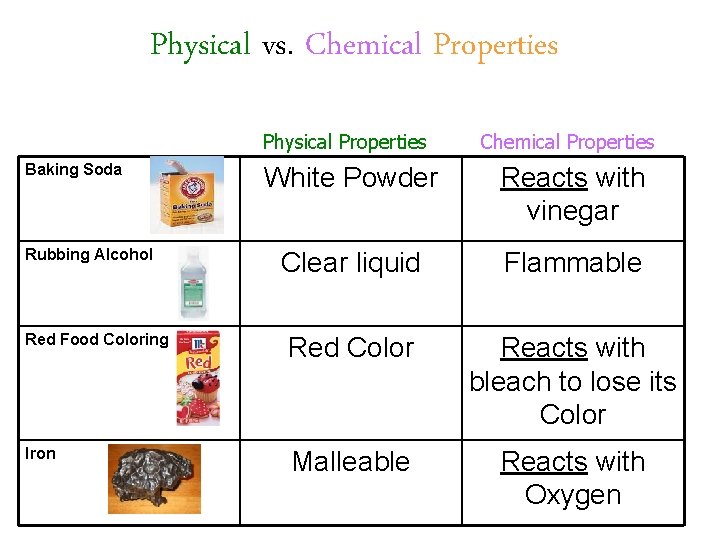
Physical vs. Chemical Properties Physical Properties Baking Soda Chemical Properties White Powder Reacts with vinegar Clear liquid Flammable Red Food Coloring Red Color Reacts with bleach to lose its Color Iron Malleable Reacts with Oxygen Rubbing Alcohol
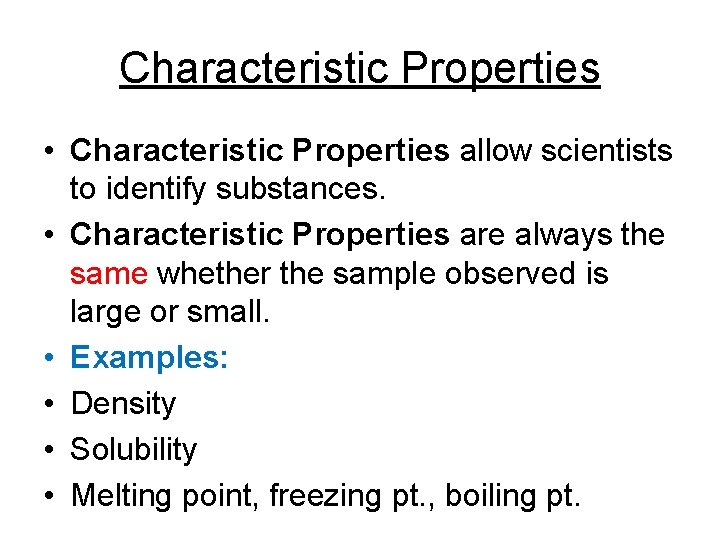
Characteristic Properties • Characteristic Properties allow scientists to identify substances. • Characteristic Properties are always the same whether the sample observed is large or small. • Examples: • Density • Solubility • Melting point, freezing pt. , boiling pt.
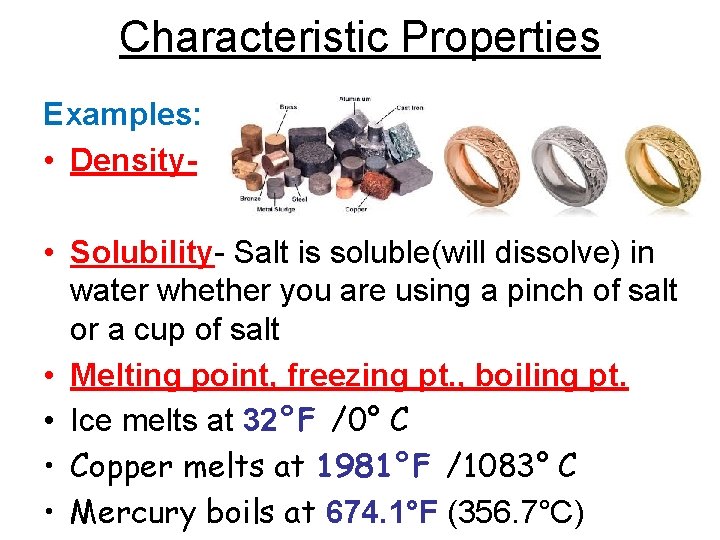
Characteristic Properties Examples: • Density- • Solubility- Salt is soluble(will dissolve) in water whether you are using a pinch of salt or a cup of salt • Melting point, freezing pt. , boiling pt. • Ice melts at 32°F /0° C • Copper melts at 1981°F /1083° C • Mercury boils at 674. 1°F (356. 7°C)
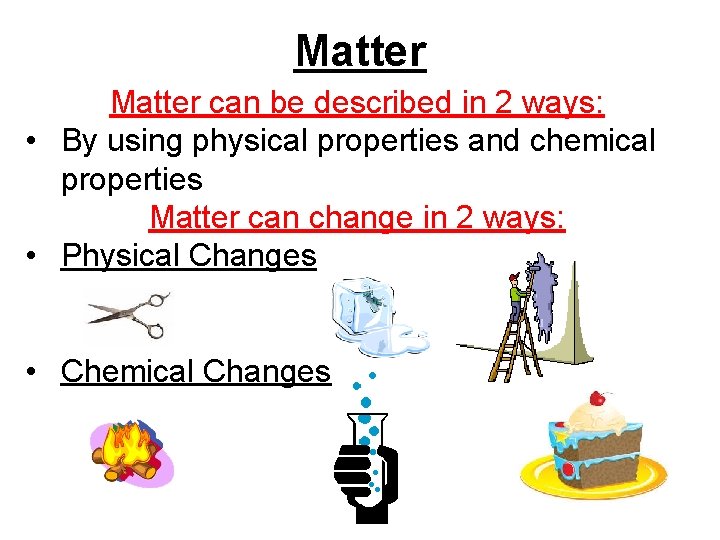
Matter can be described in 2 ways: • By using physical properties and chemical properties Matter can change in 2 ways: • Physical Changes • Chemical Changes
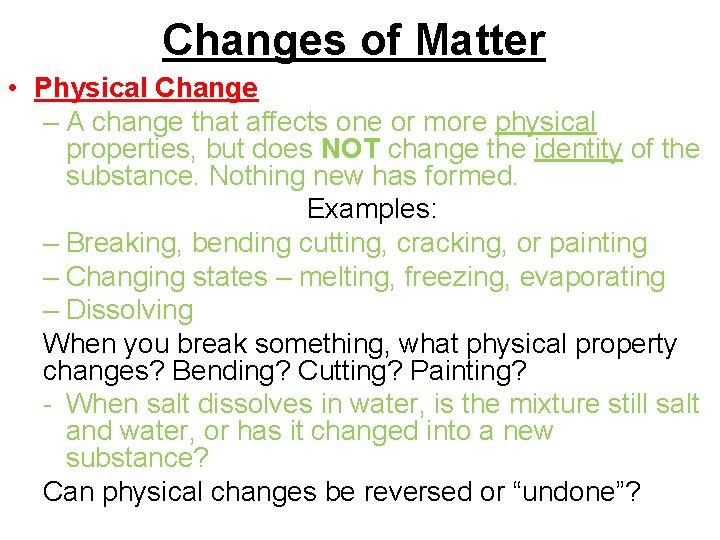
Changes of Matter • Physical Change – A change that affects one or more physical properties, but does NOT change the identity of the substance. Nothing new has formed. Examples: – Breaking, bending cutting, cracking, or painting – Changing states – melting, freezing, evaporating – Dissolving When you break something, what physical property changes? Bending? Cutting? Painting? - When salt dissolves in water, is the mixture still salt and water, or has it changed into a new substance? Can physical changes be reversed or “undone”?
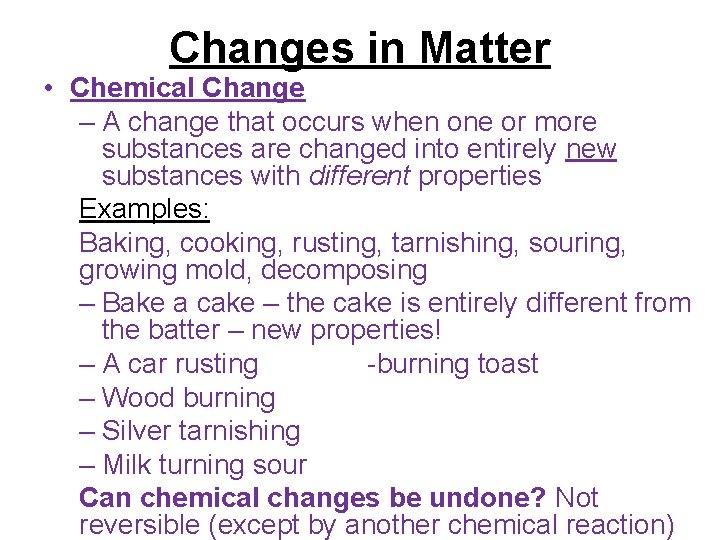
Changes in Matter • Chemical Change – A change that occurs when one or more substances are changed into entirely new substances with different properties Examples: Baking, cooking, rusting, tarnishing, souring, growing mold, decomposing – Bake a cake – the cake is entirely different from the batter – new properties! – A car rusting -burning toast – Wood burning – Silver tarnishing – Milk turning sour Can chemical changes be undone? Not reversible (except by another chemical reaction)
Clues or Hints that a Chemical Change has Taken Place • • • Color Change (unexpected) Bubbling, Fizzing, or foaming Production of light or sound Change in temperature(gets hot or cold) Production of an odor A Precipitate is formed (2 liquids mix to form a solid)
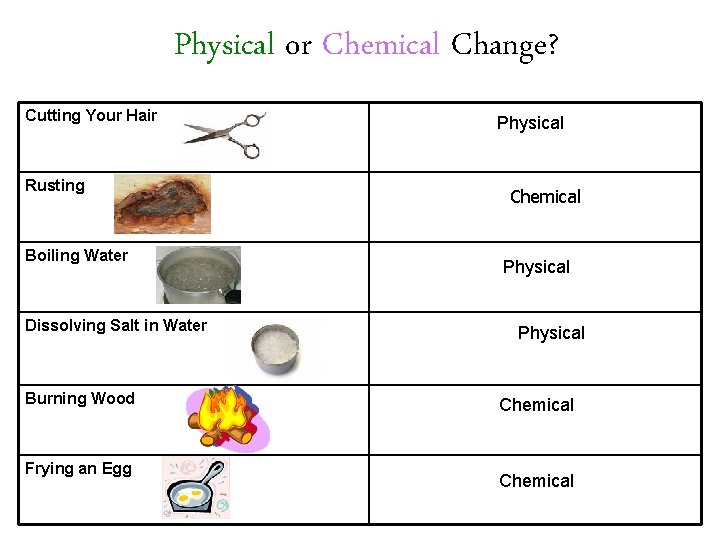
Physical or Chemical Change? Cutting Your Hair Rusting Boiling Water Dissolving Salt in Water Burning Wood Frying an Egg Physical Chemical