
Properties of LTI Systems Commutative Property xnhnhnxn Distributive
![Properties of LTI Systems • Commutative Property – x[n]*h[n]=h[n]*x[n] • Distributive Property – x[n]*(h](https://slidetodoc.com/presentation_image_h2/6f205e6f8f7b4be2e026f8f63135eb4a/image-1.jpg "Properties of LTI Systems • Commutative Property – x[n]*h[n]=h[n]*x[n] • Distributive Property – x[n]*(h")
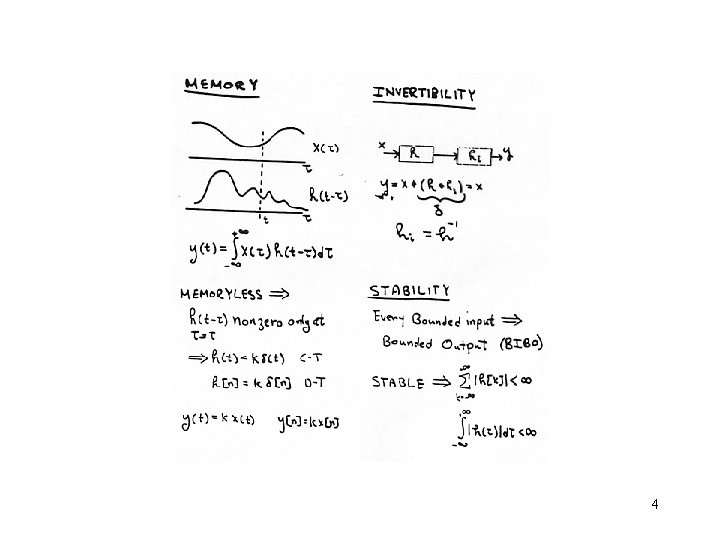
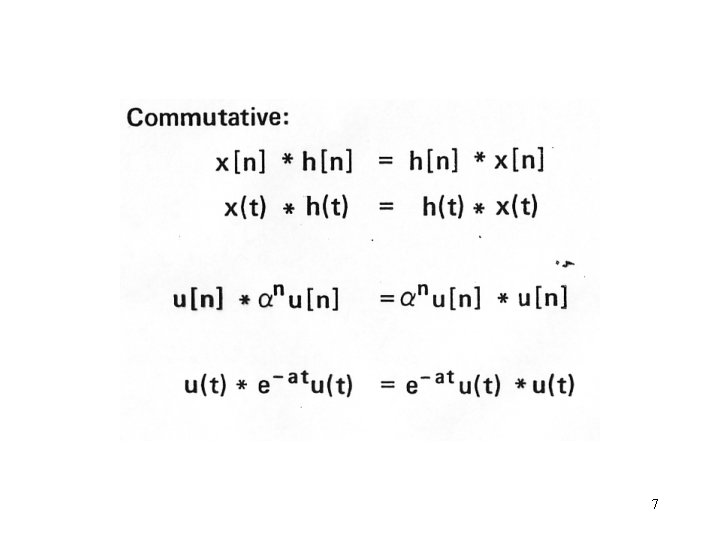
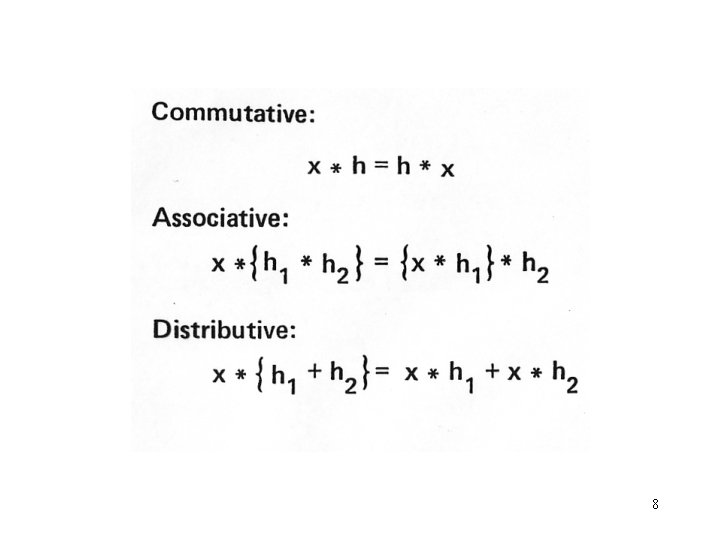
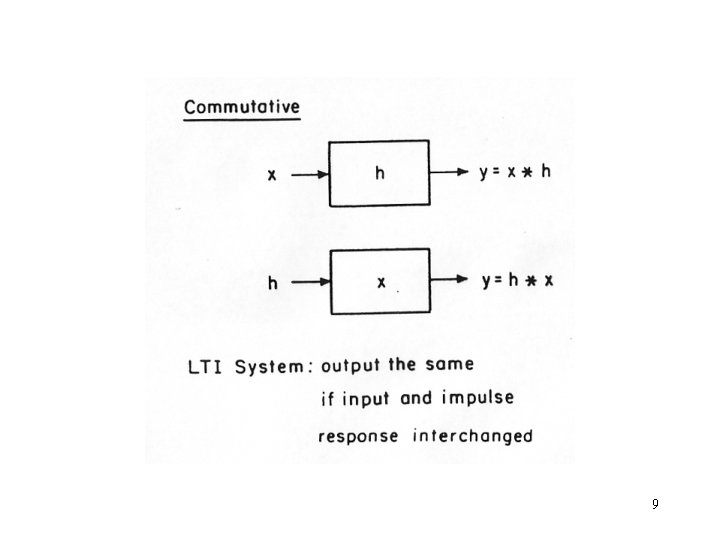
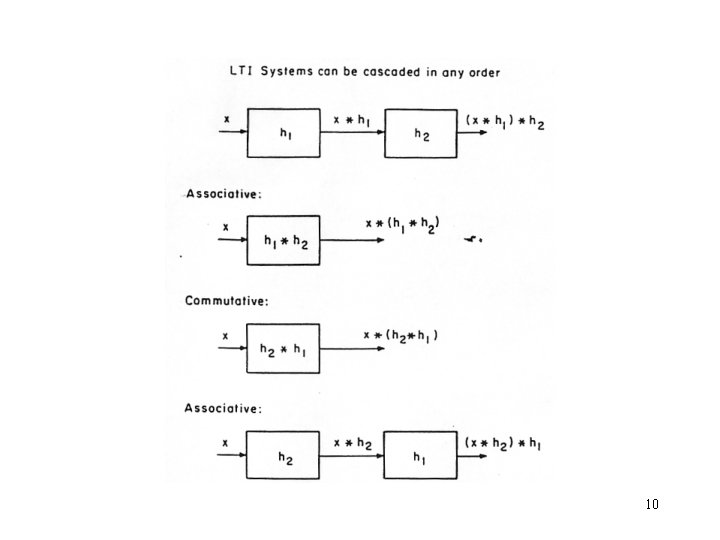
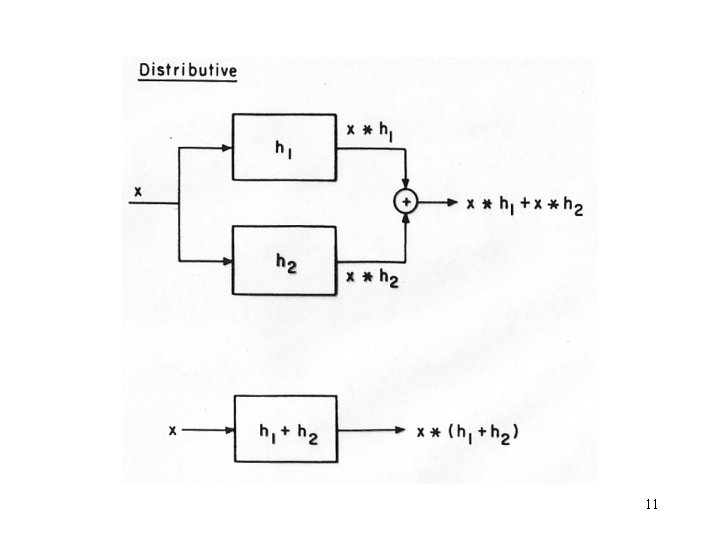
Properties of LTI Systems • Commutative Property – x[n]*h[n]=h[n]*x[n] • Distributive Property – x[n]*(h 1[n]+ h 2[n])= x[n]*h 1[n]+x[n]* h 2[n] • Associative Property – x[n]*(h 1[n]* h 2[n])= (x[n]*h 1[n])* h 2[n] • Memoryless – If h[n]=0 for n not equal 0. I. e. h[n]=Kd[n]. 1

Properties of LTI Systems • Invertibility – x(t) w(t)=x(t) h 1(t) Identity System d(t) y(t) 2
![Properties of LTI Systems • Causality – h[n]=0 for n<0 – or h(t)=0 for](http://slidetodoc.com/presentation_image_h2/6f205e6f8f7b4be2e026f8f63135eb4a/image-3.jpg "Properties of LTI Systems • Causality – h[n]=0 for n<0 – or h(t)=0 for")
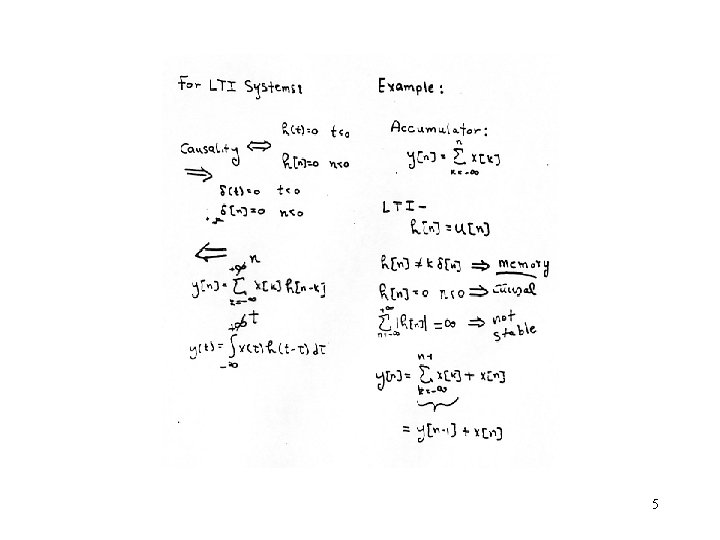
Properties of LTI Systems • Causality – h[n]=0 for n<0 – or h(t)=0 for t<0. • Stability – 3
4
5
6
7
8
9
10
11
![Unit Step Response of LTI System u[n] h[n] s[n] The step response of a](http://slidetodoc.com/presentation_image_h2/6f205e6f8f7b4be2e026f8f63135eb4a/image-12.jpg "Unit Step Response of LTI System u[n] h[n] s[n] The step response of a")
Unit Step Response of LTI System u[n] h[n] s[n] The step response of a discrete-time LTI system is the convolution of the unit step with the impulse response: s[n]=u[n]*h[n]. Via commutative property of convolution, s[n]=h[n]*u[n]. That means s[n] is the response to the input h[n] of a discrete-time LTI system with unit impulse response u[n]. h[n] u[n] s[n] 12
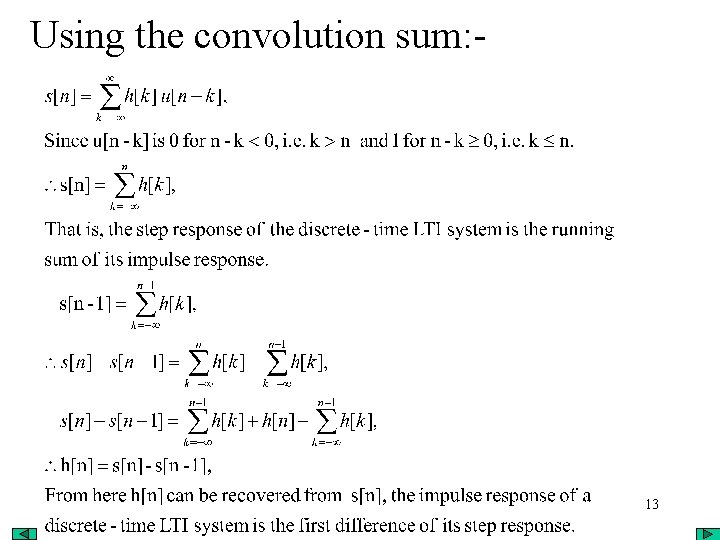
Using the convolution sum: - 13
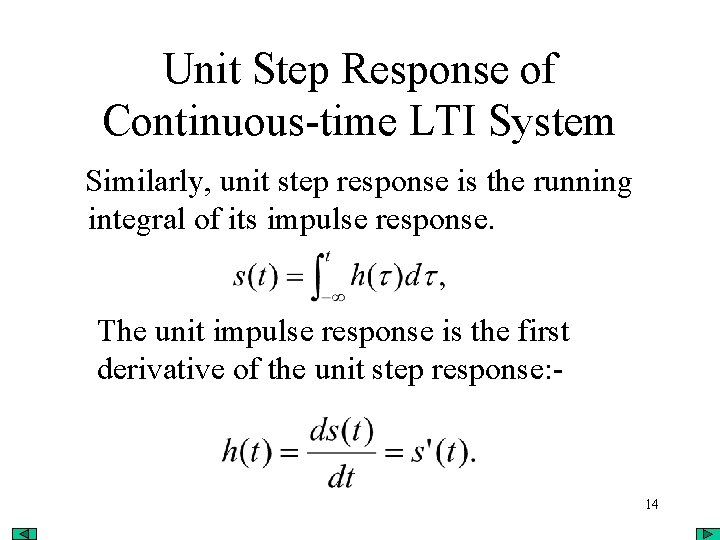
Unit Step Response of Continuous-time LTI System Similarly, unit step response is the running integral of its impulse response. The unit impulse response is the first derivative of the unit step response: - 14
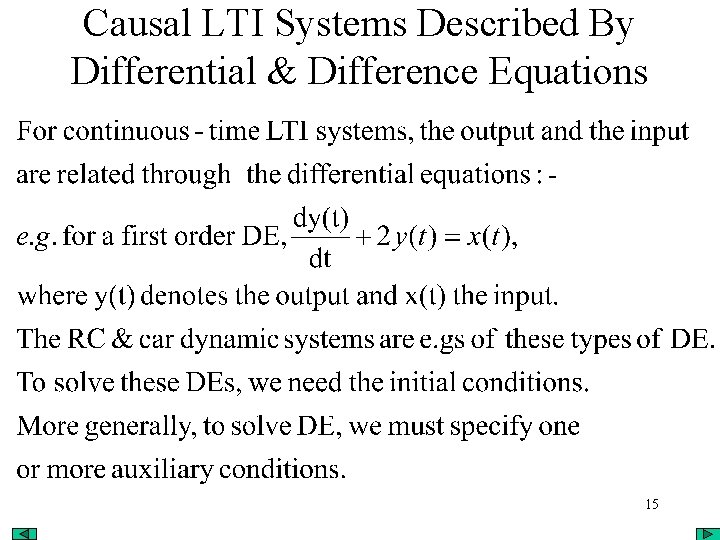
Causal LTI Systems Described By Differential & Difference Equations 15
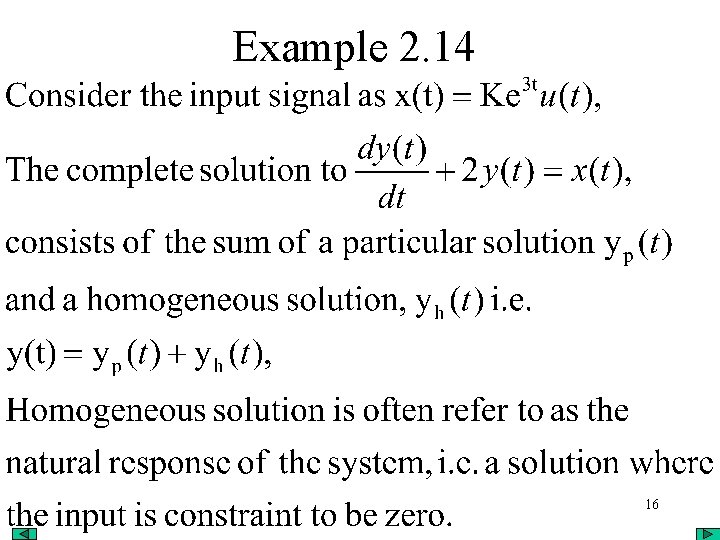
Example 2. 14 16
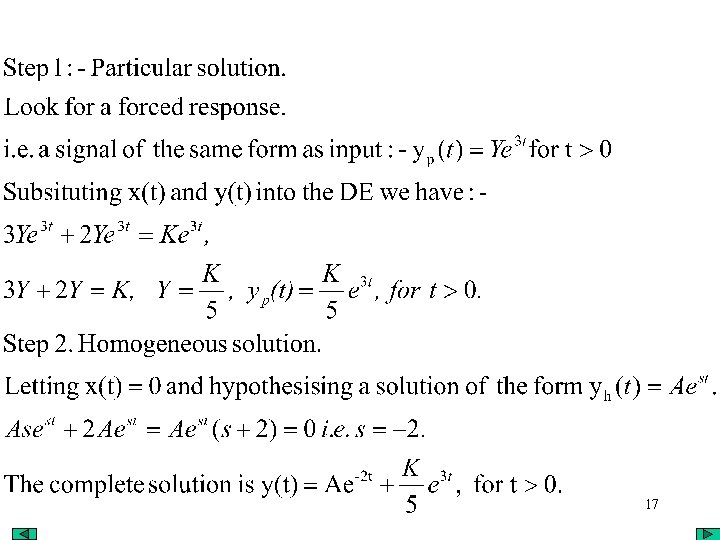
17
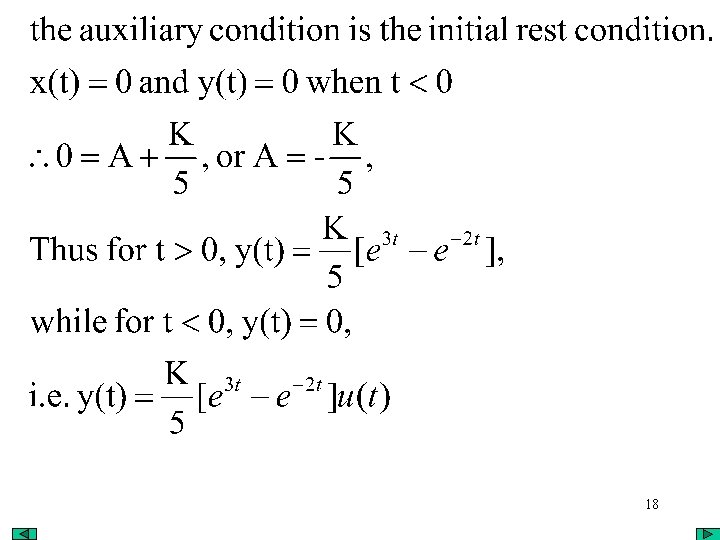
18
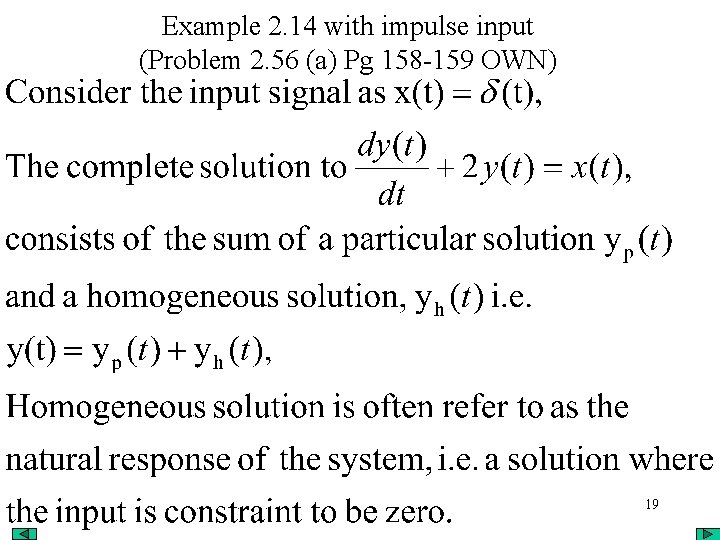
Example 2. 14 with impulse input (Problem 2. 56 (a) Pg 158 -159 OWN) 19
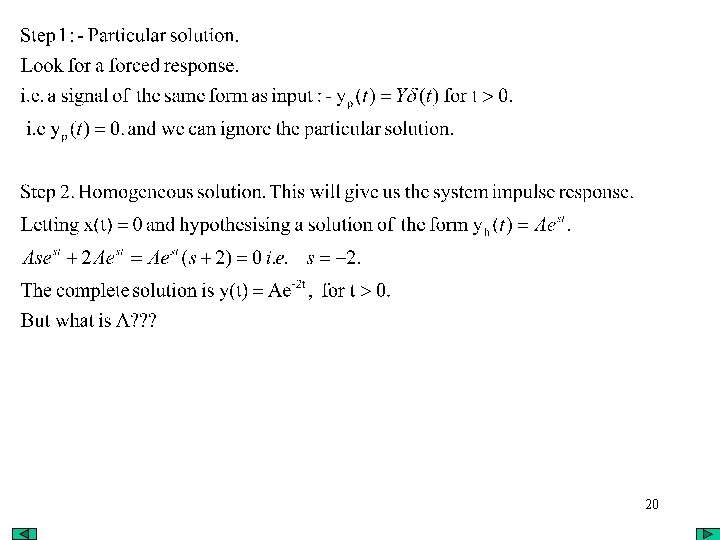
20
21
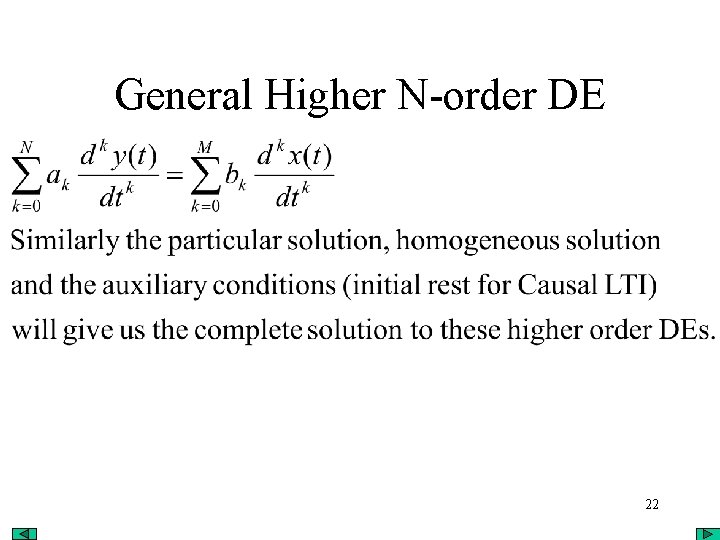
General Higher N-order DE 22
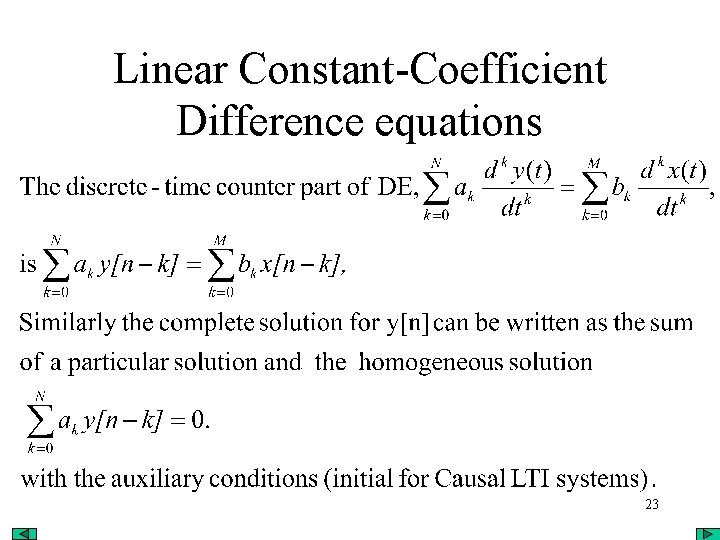
Linear Constant-Coefficient Difference equations 23
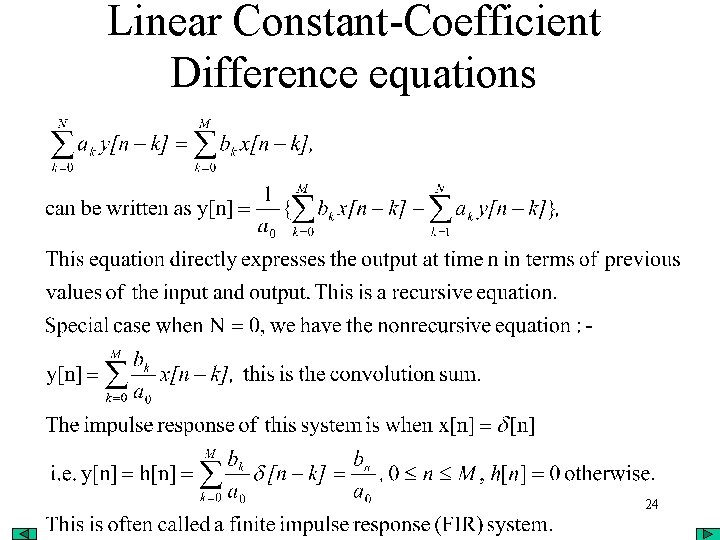
Linear Constant-Coefficient Difference equations 24
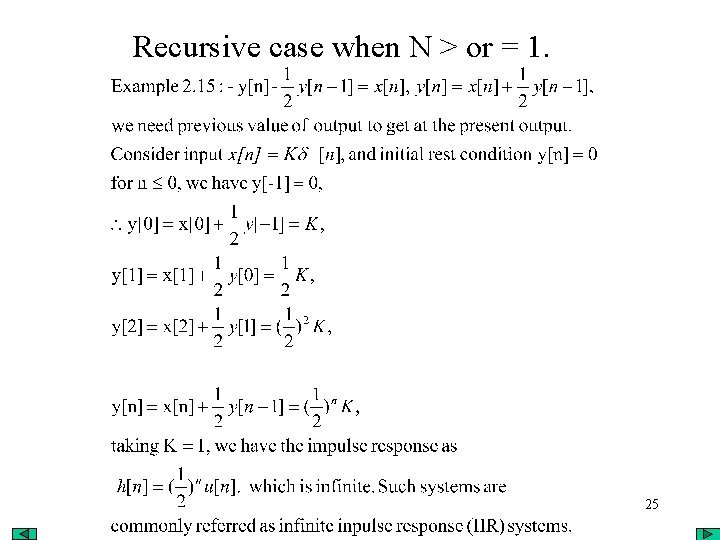
Recursive case when N > or = 1. 25
Block Diagram Representations of First- Order Systems. • Provides a pictorial representation which can add to our understanding of the behavior and properties of these systems. • Simulation or implementation of the systems. • Basis for analog computer simulation of systems described by DE. • Digital simulation & Digital Hardware implementations 26
![First-Order Recursive Discretetime System. y[n]+ay[n-1]=bx[n] y[n]=-ay[n-1]+bx[n] b y[n] + D -a y[n-1] 27](http://slidetodoc.com/presentation_image_h2/6f205e6f8f7b4be2e026f8f63135eb4a/image-27.jpg "First-Order Recursive Discretetime System. y[n]+ay[n-1]=bx[n] y[n]=-ay[n-1]+bx[n] b y[n] + D -a y[n-1] 27")
First-Order Recursive Discretetime System. y[n]+ay[n-1]=bx[n] y[n]=-ay[n-1]+bx[n] b y[n] + D -a y[n-1] 27
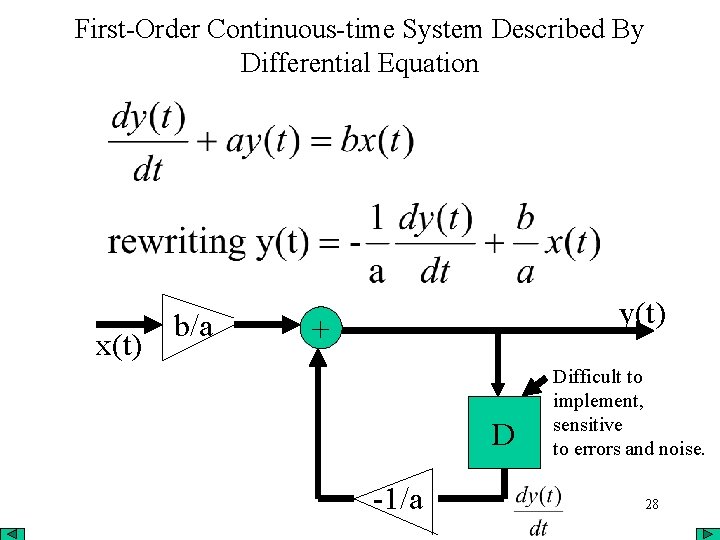
First-Order Continuous-time System Described By Differential Equation x(t) b/a y(t) + D -1/a Difficult to implement, sensitive to errors and noise. 28
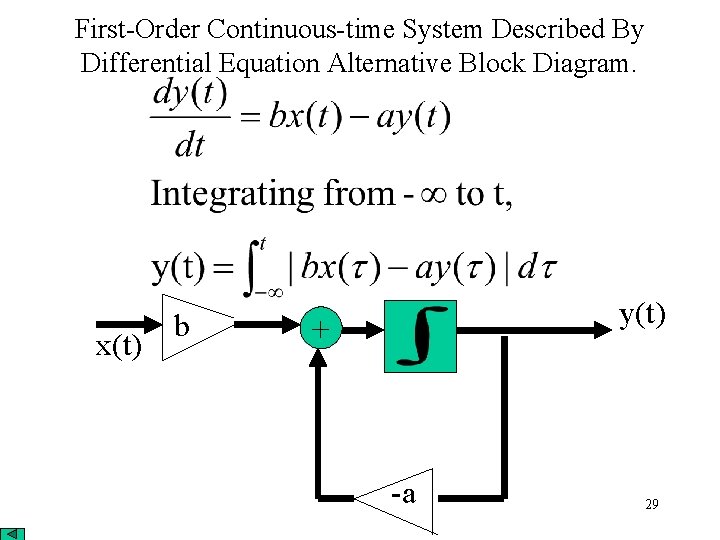
First-Order Continuous-time System Described By Differential Equation Alternative Block Diagram. x(t) b y(t) + -a 29
- Slides: 29