
Properties of Logarithms Tools for solving logarithmic and

- Slides: 73
Properties of Logarithms Tools for solving logarithmic and exponential equations
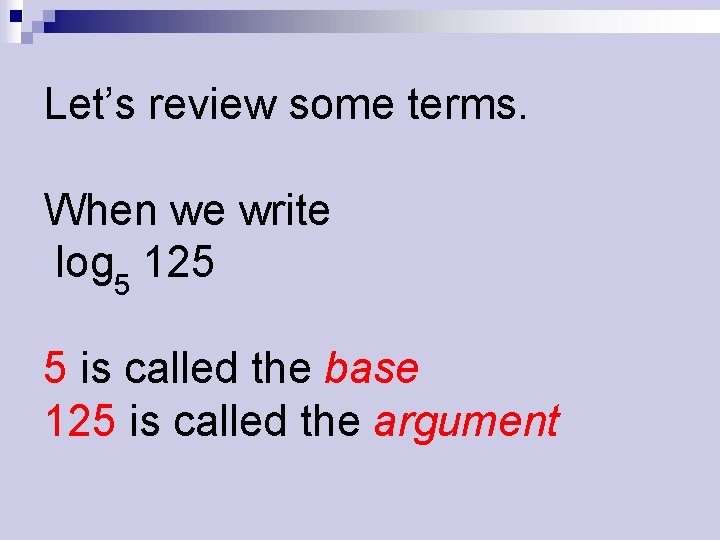
Let’s review some terms. When we write log 5 125 5 is called the base 125 is called the argument
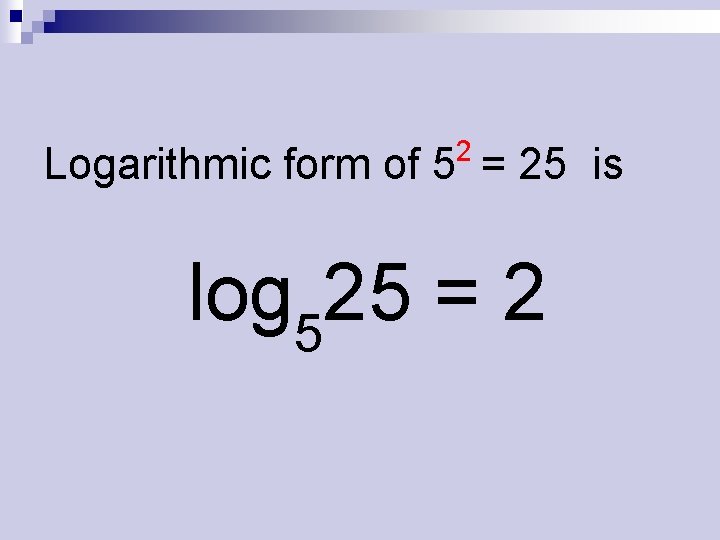
2 Logarithmic form of 5 = 25 is log 525 = 2
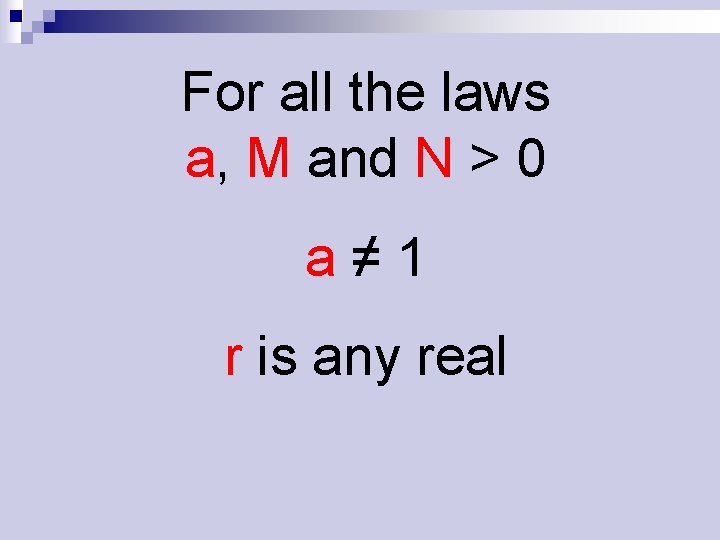
For all the laws a, M and N > 0 a≠ 1 r is any real
Remember ln and log nln is a short cut for loge nlog means log 10
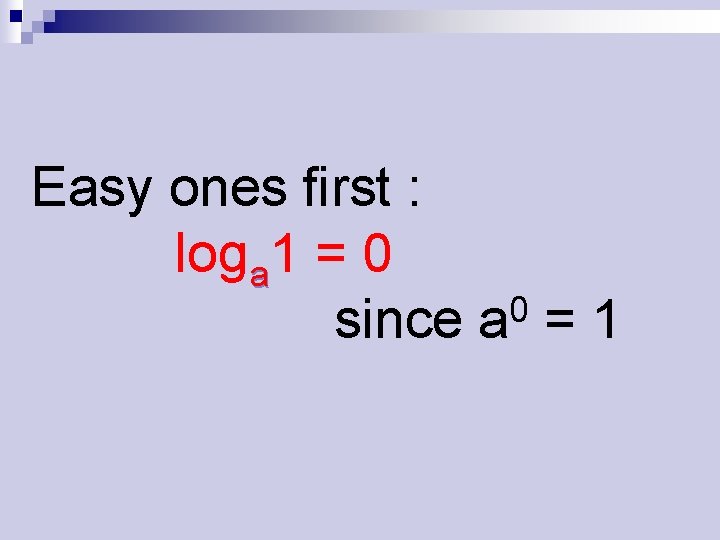
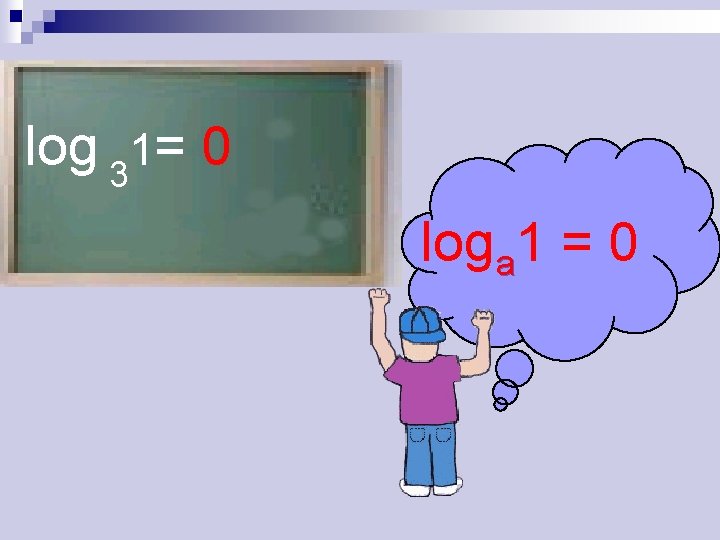
Easy ones first : loga 1 = 0 0 since a = 1
log 31= ?
log 31= ? loga 1 = 0
log 31= 0 loga 1 = 0
ln 1 = ?
ln 1 = ? loga 1 = 0
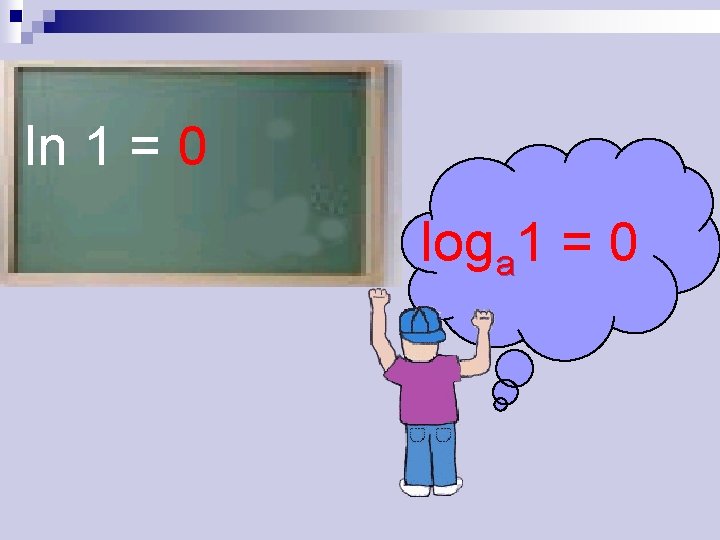
ln 1 = 0 loga 1 = 0
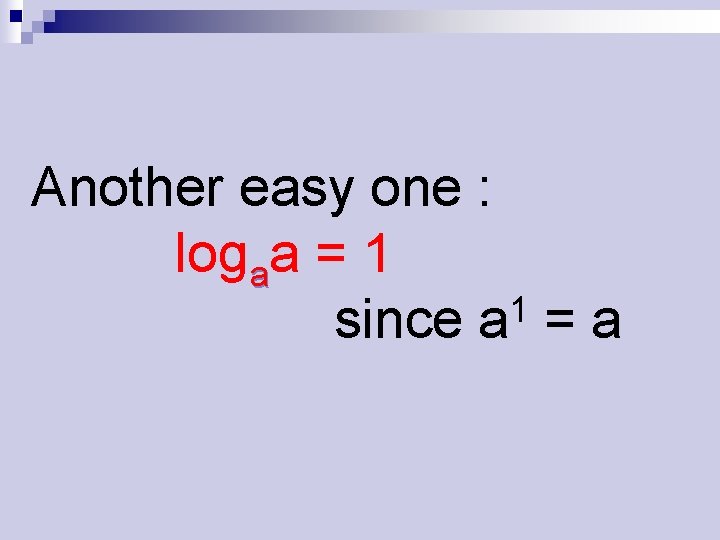
Another easy one : logaa = 1 1 since a = a
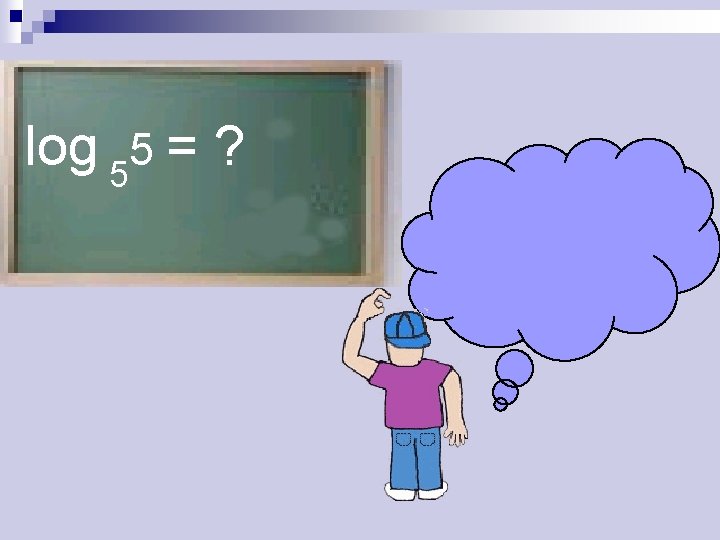
log 55 = ?
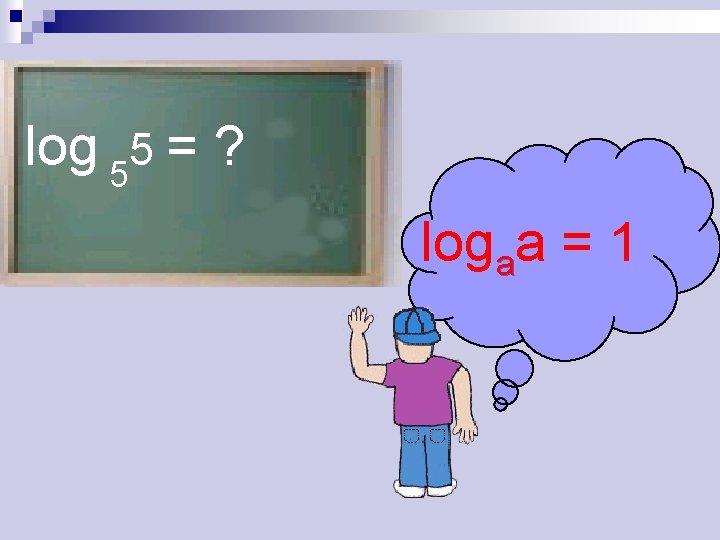
log 55 = ? logaa = 1
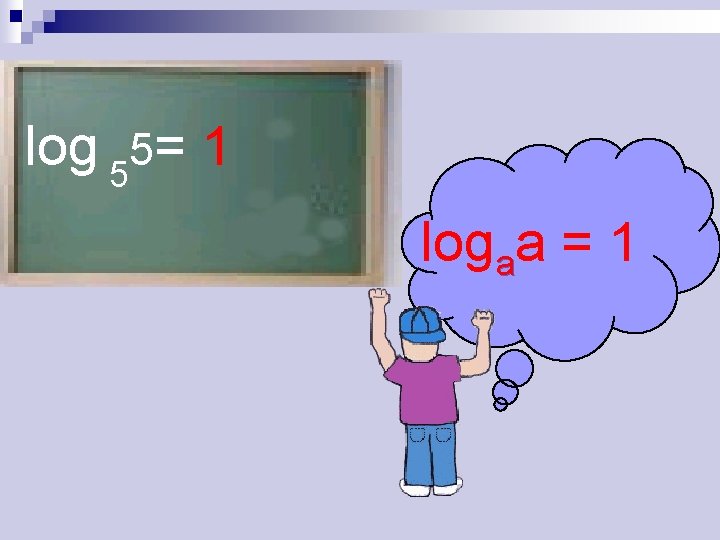
log 55= 1 logaa = 1
ln e = ?
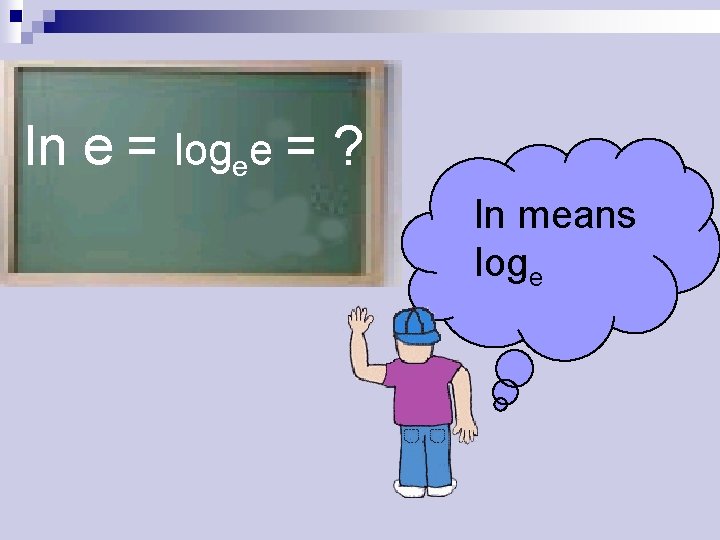
ln e = logee = ? ln means loge
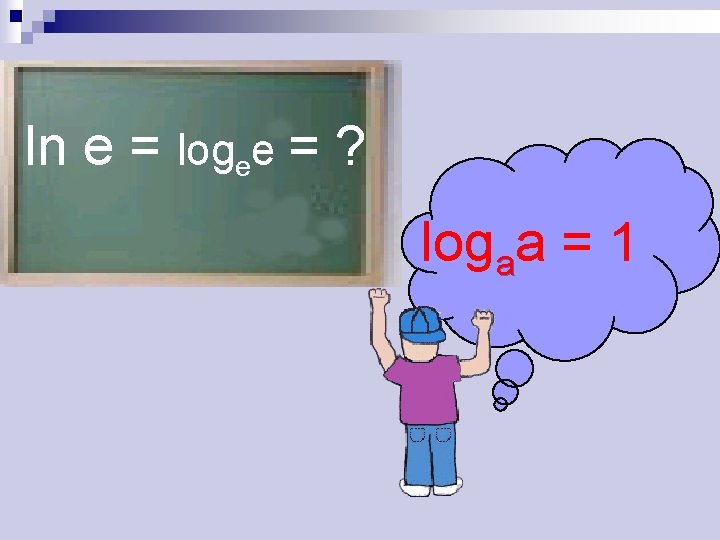
ln e = logee = ? logaa = 1
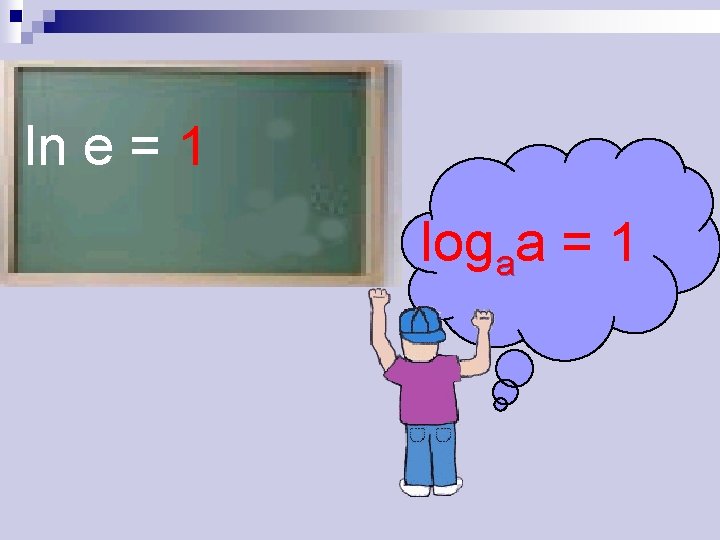
ln e = 1 logaa = 1
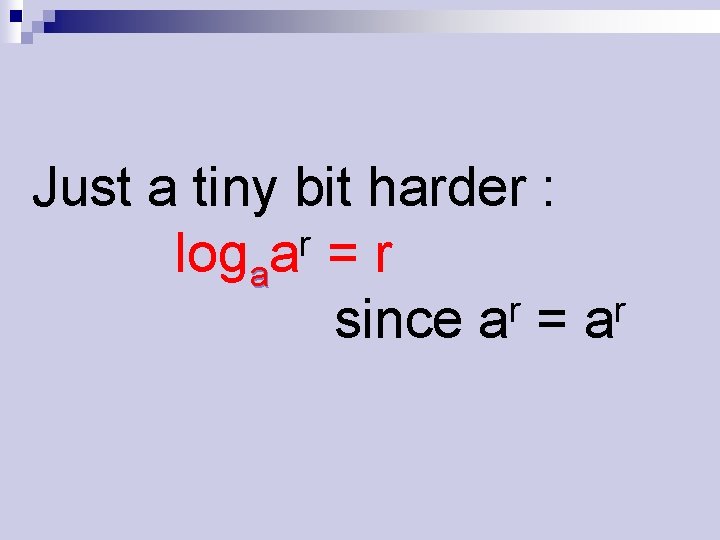
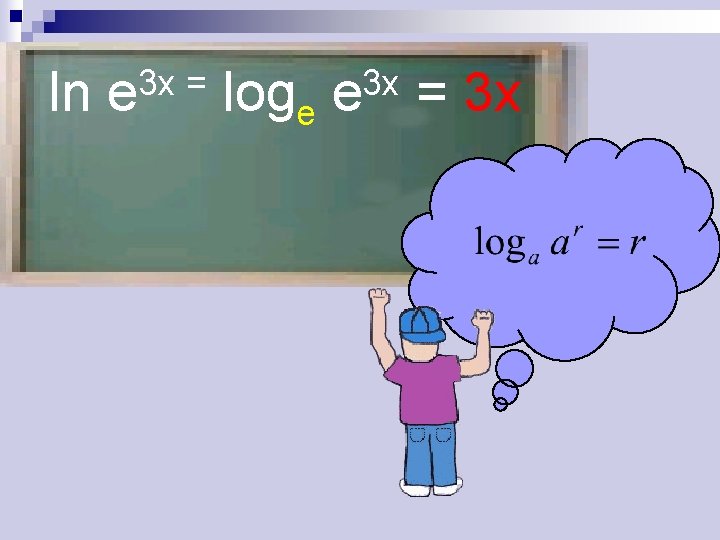
Just a tiny bit harder : r logaa = r r r since a = a
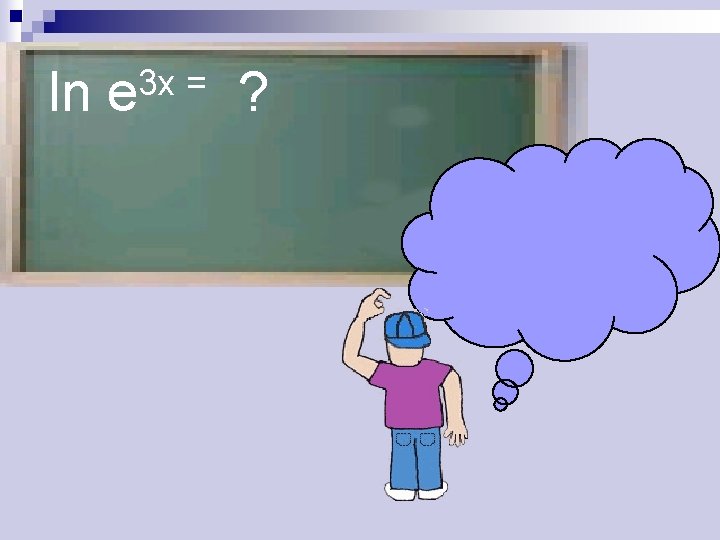
ln 3 x = e ?
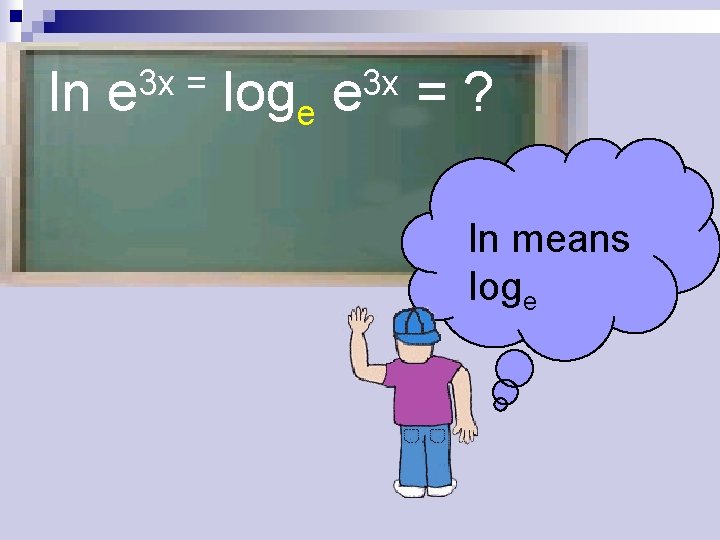
ln 3 x = e loge 3 x e =? ln means loge
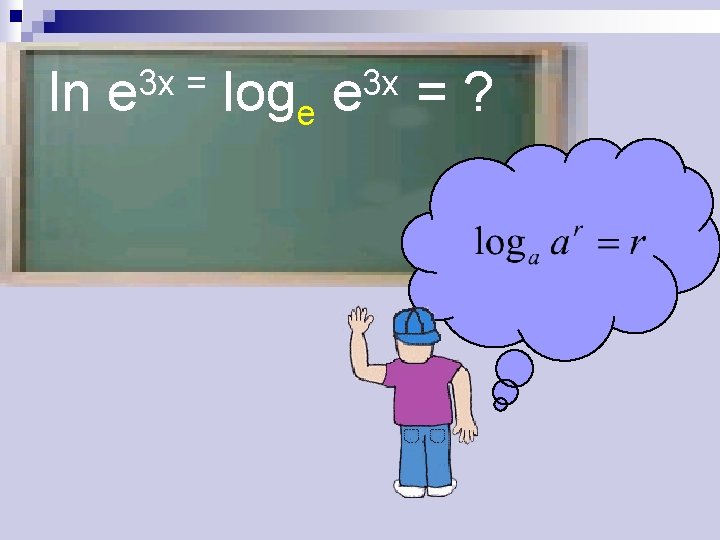
ln 3 x = e loge 3 x e =?
ln 3 x = e loge 3 x e = 3 x
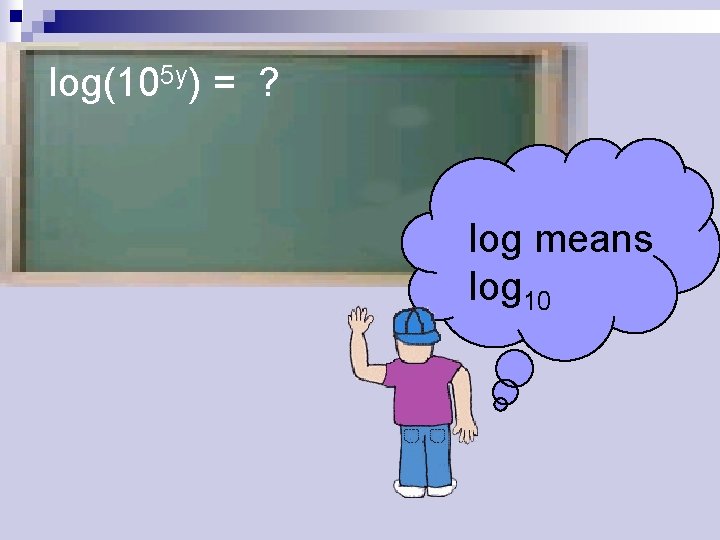
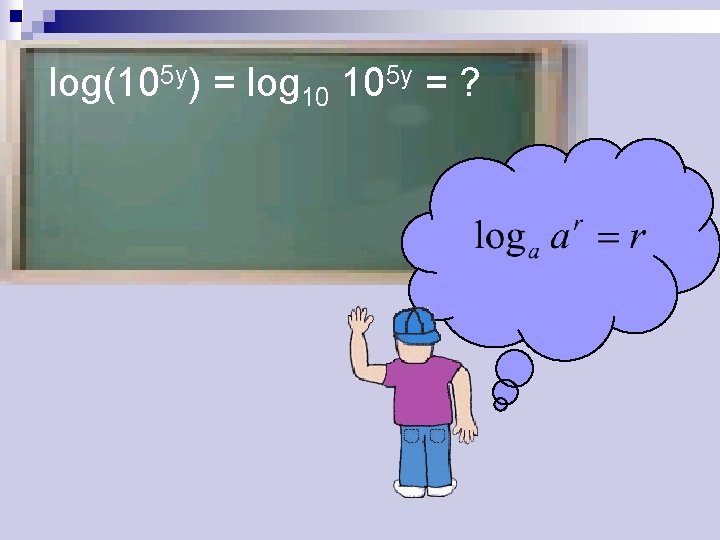
log(105 y) = ?
log(105 y) = ? log means log 10
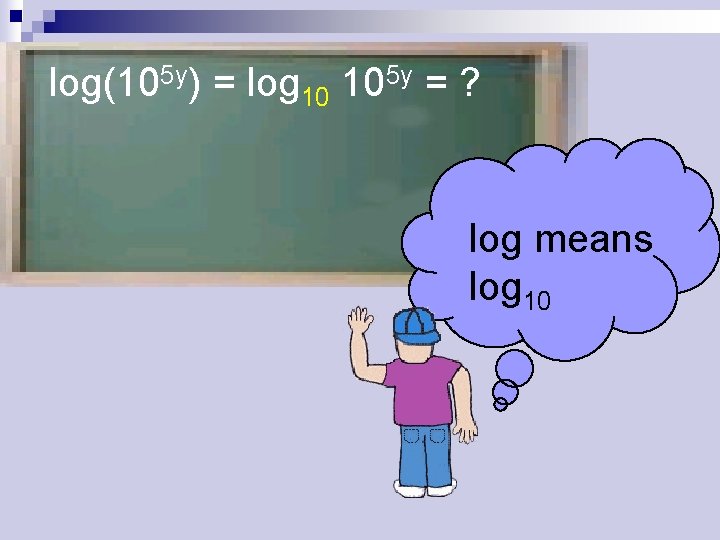
log(105 y) = log 10 105 y = ? log means log 10
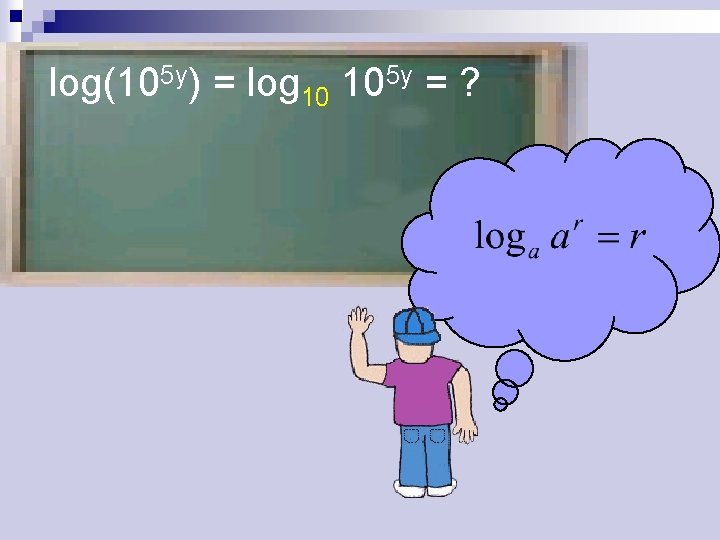
log(105 y) = log 10 105 y = ?
log(105 y) = log 10 105 y = ?
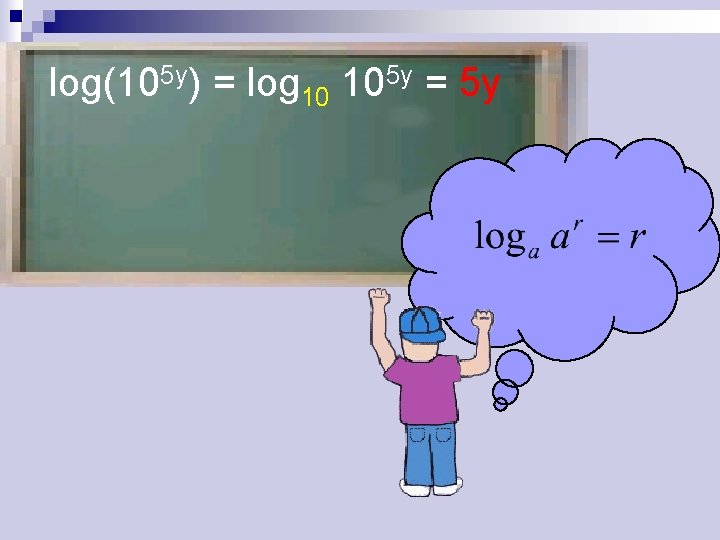
log(105 y) = log 10 105 y = 5 y
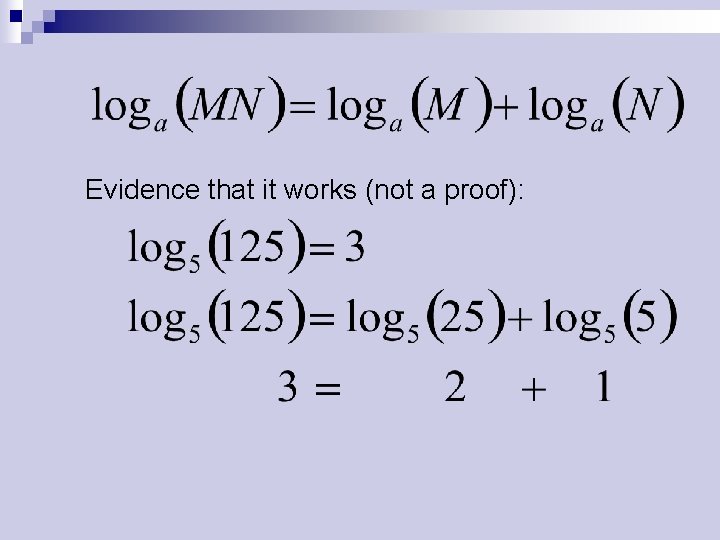
Evidence that it works (not a proof):
Evidence that it works (not a proof):
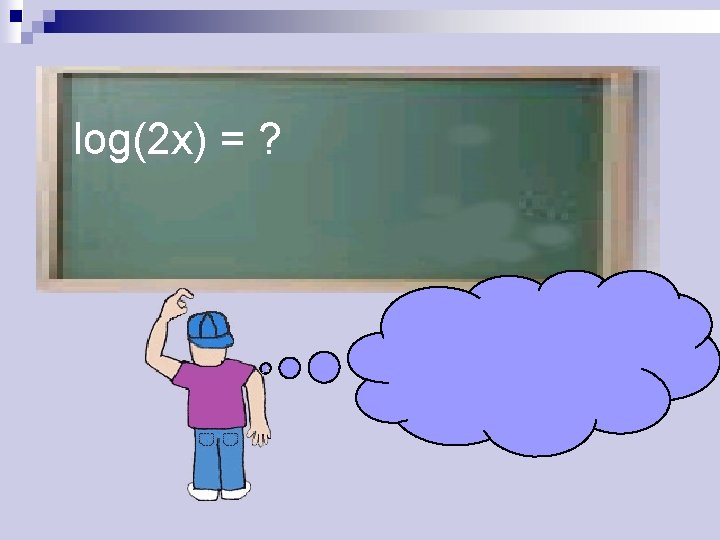
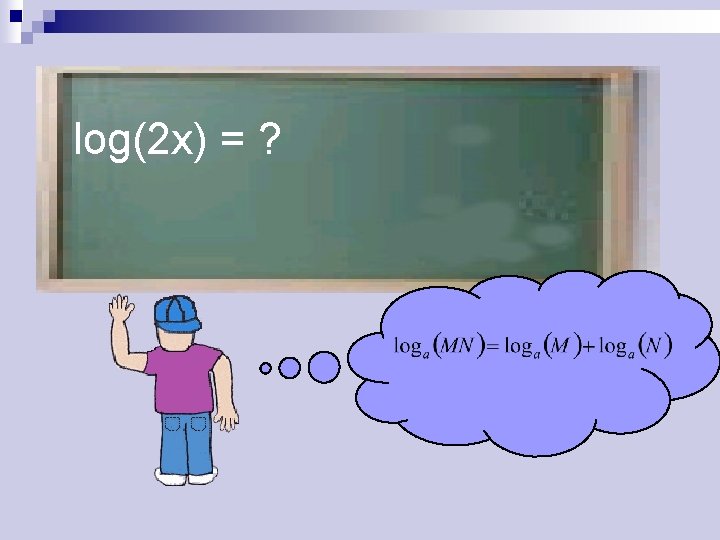
log(2 x) = ?
log(2 x) = ?
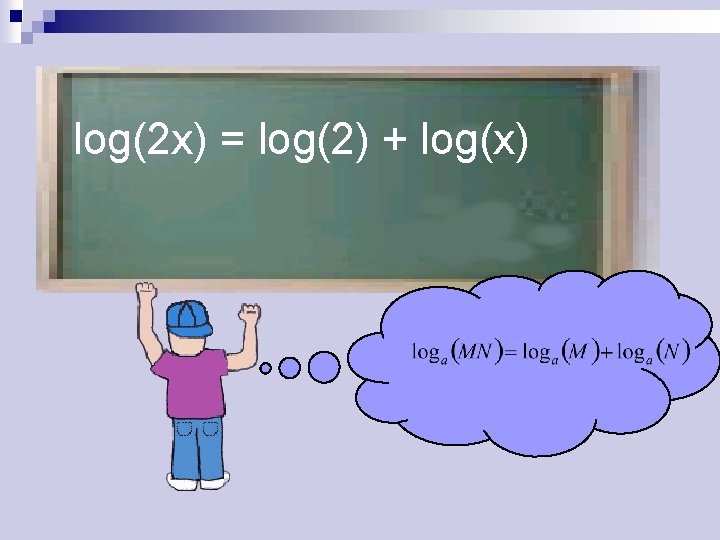
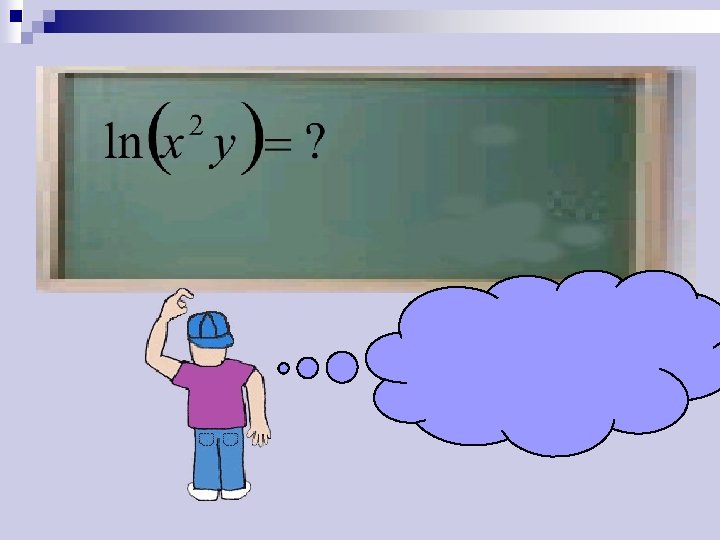
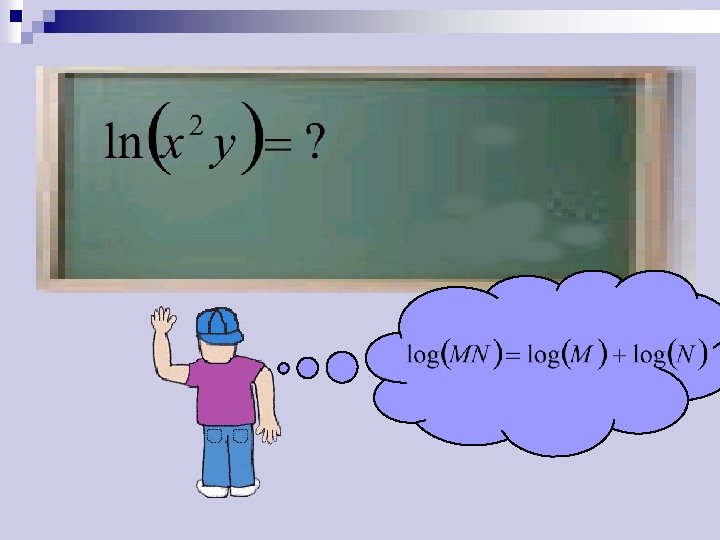
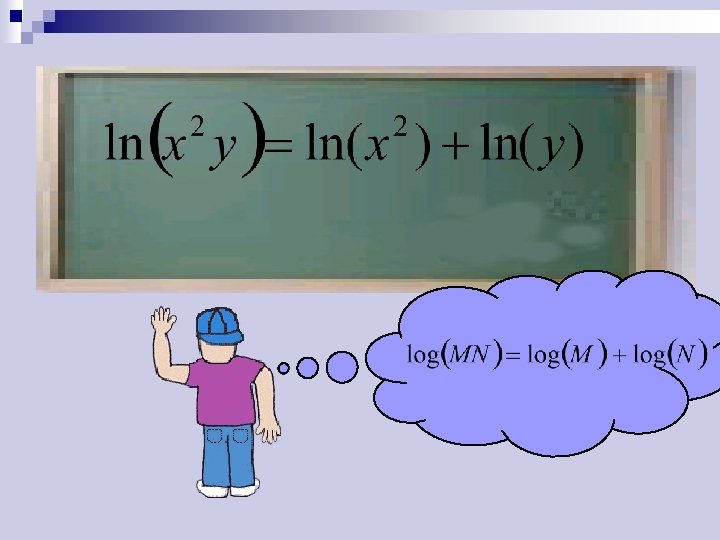
log(2 x) = log(2) + log(x)
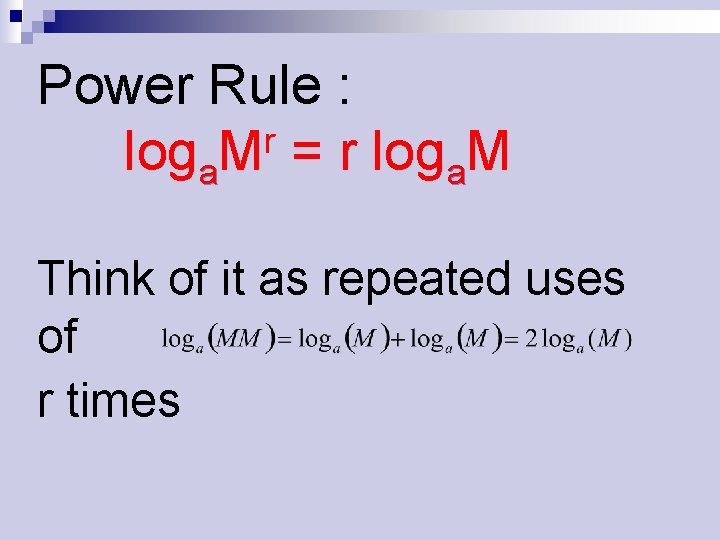
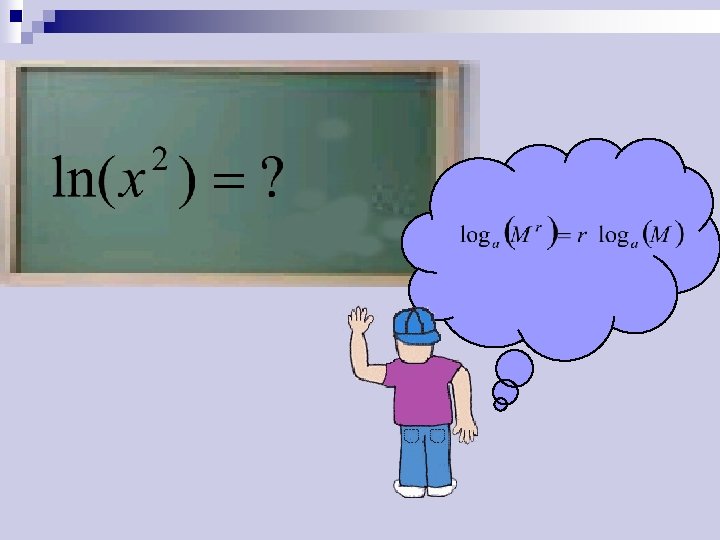
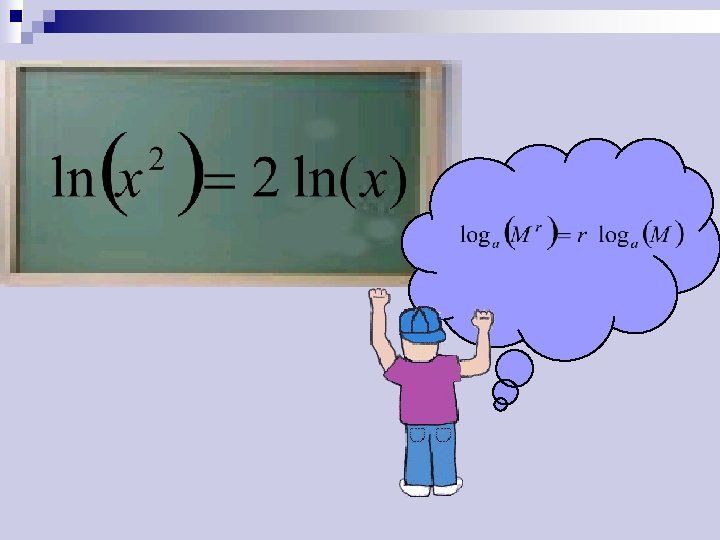
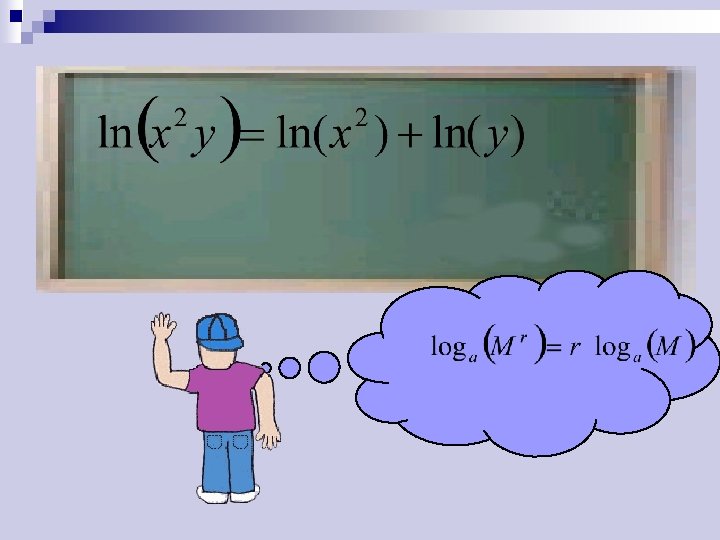
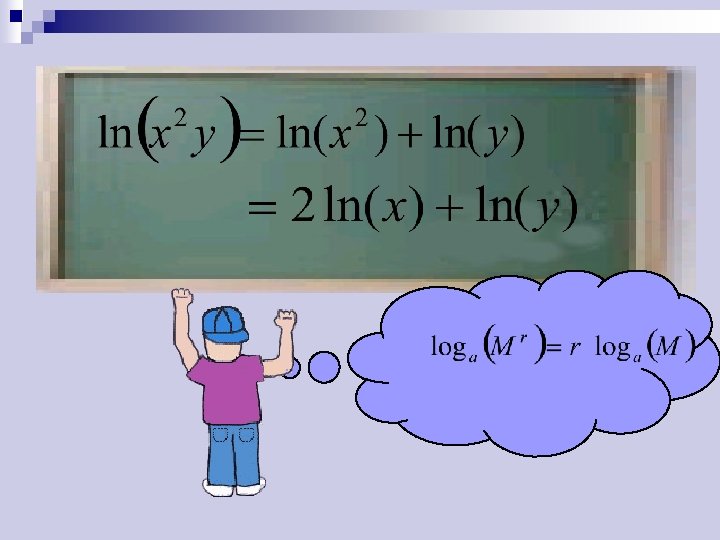
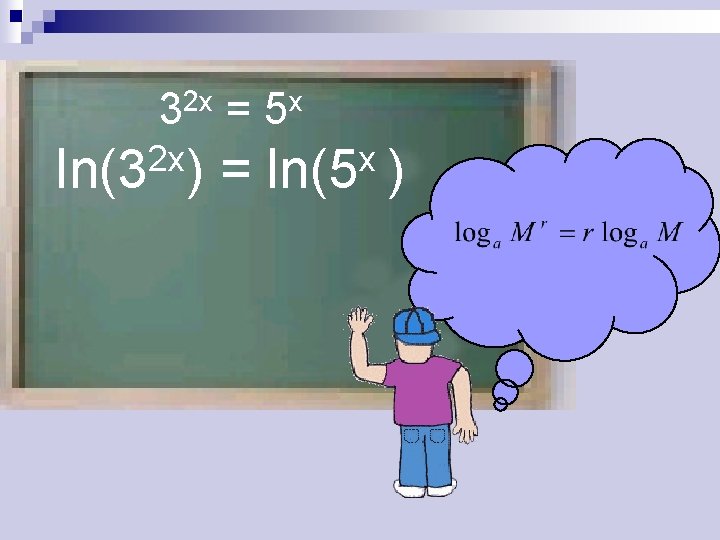
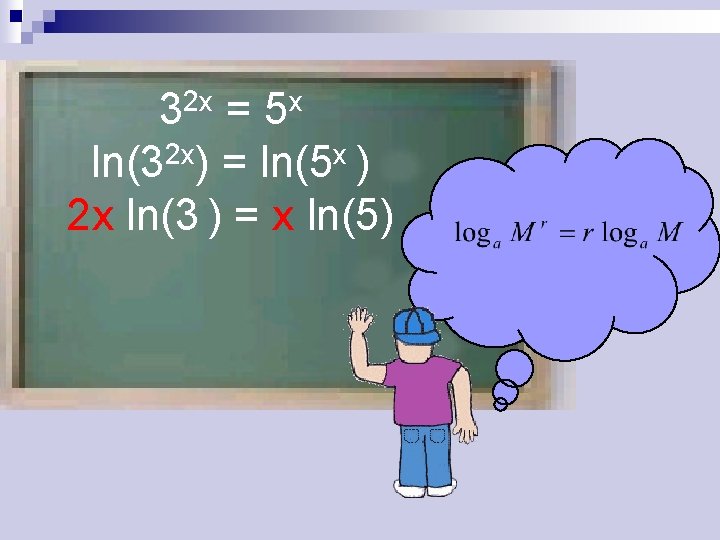
Power Rule : r loga. M = r loga. M Think of it as repeated uses of r times
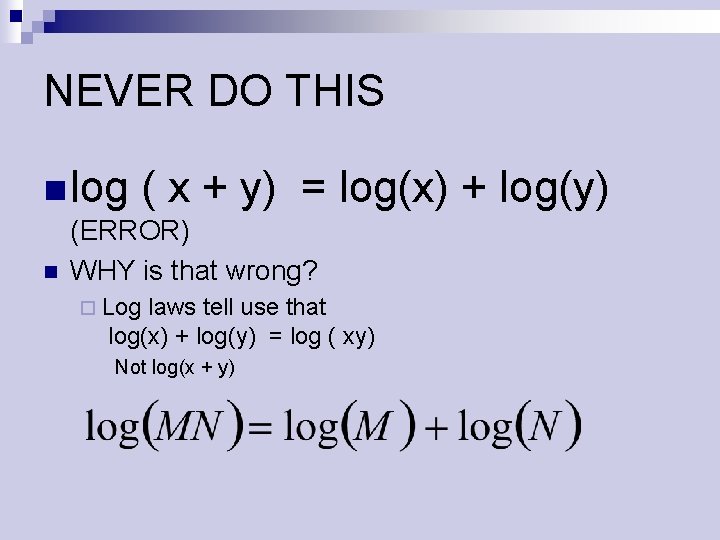
NEVER DO THIS n log n ( x + y) = log(x) + log(y) (ERROR) WHY is that wrong? ¨ Log laws tell use that log(x) + log(y) = log ( xy) Not log(x + y)
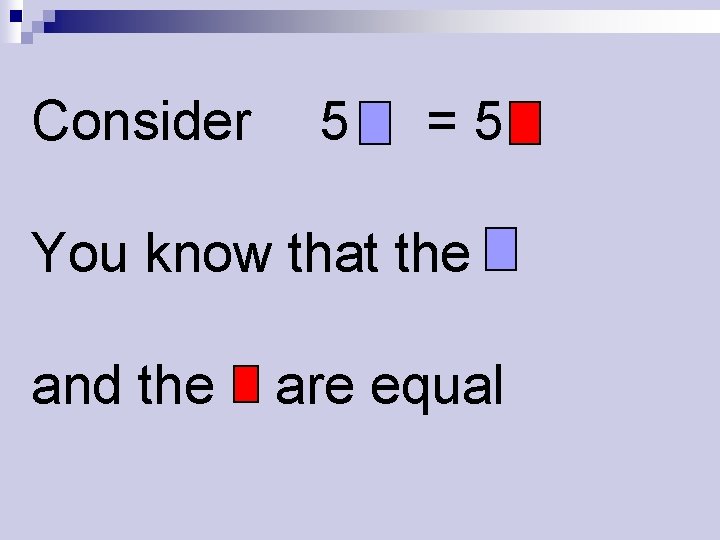
Consider 5 =5 You know that the and the are equal
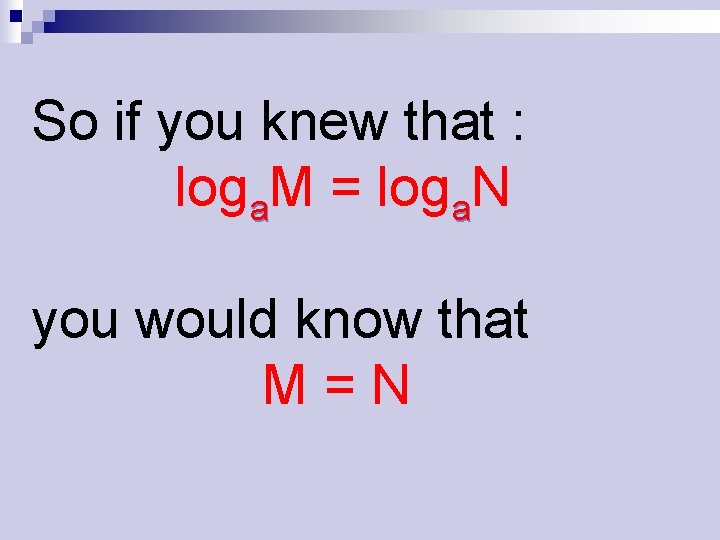
So if you knew that : loga. M = loga. N you would know that M=N
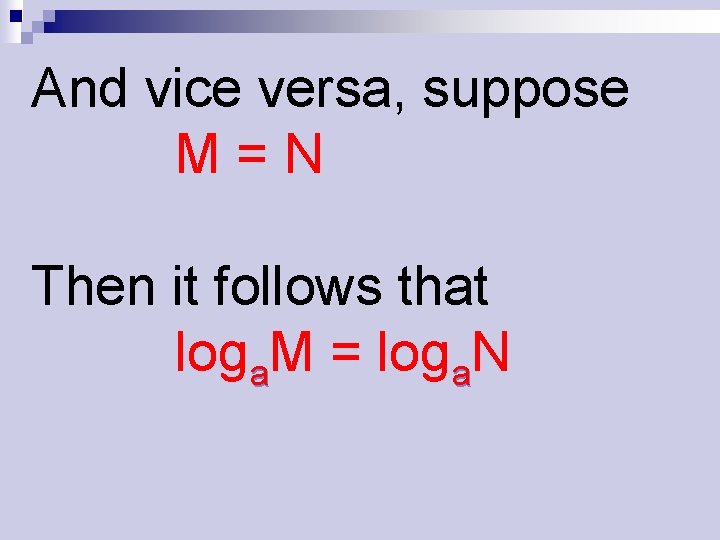
And vice versa, suppose M=N Then it follows that loga. M = loga. N
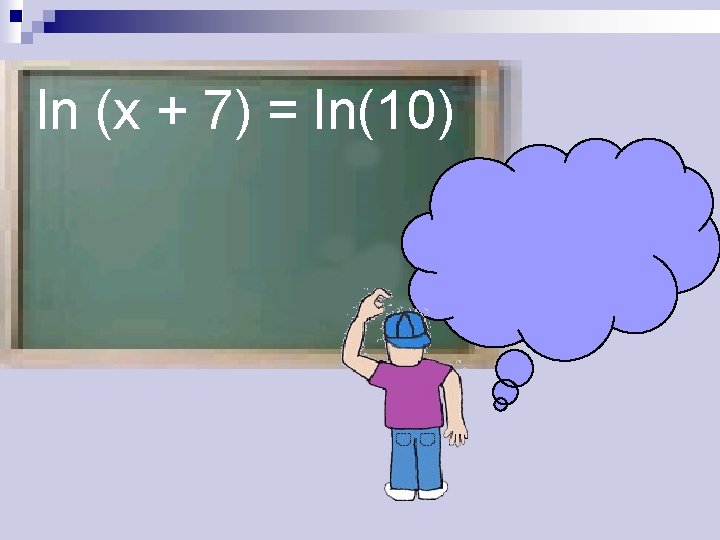
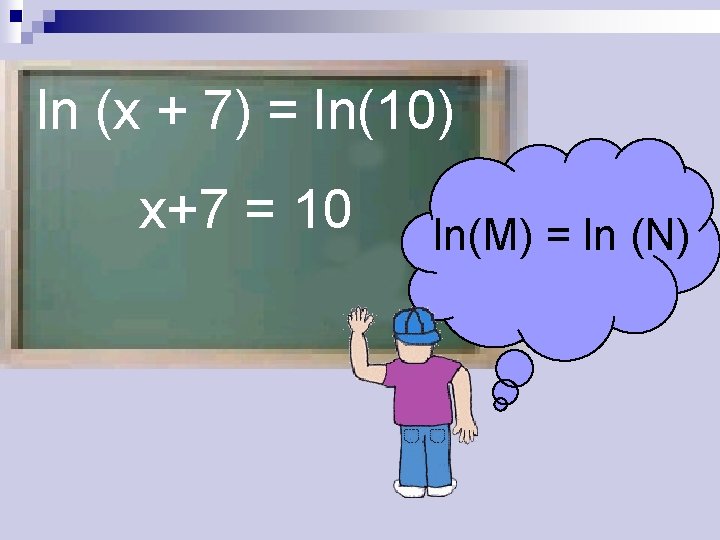
ln (x + 7) = ln(10)
ln (x + 7) = ln(10) x+7 = 10 ln(M) = ln (N)
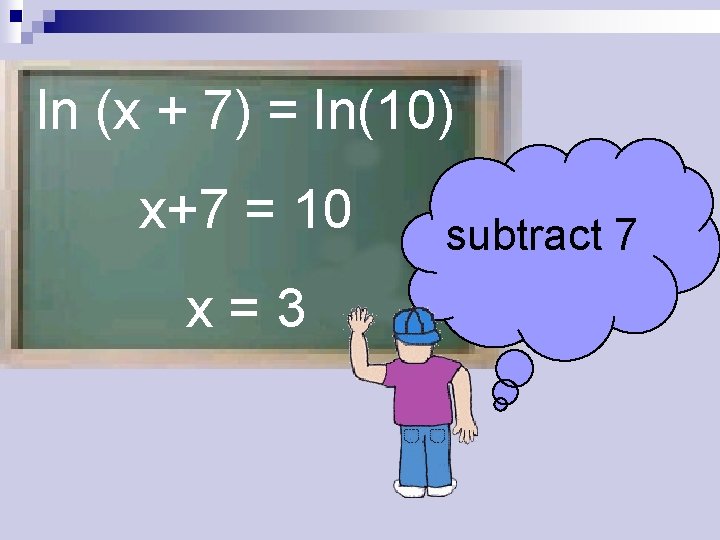
ln (x + 7) = ln(10) x+7 = 10 x=3 subtract 7
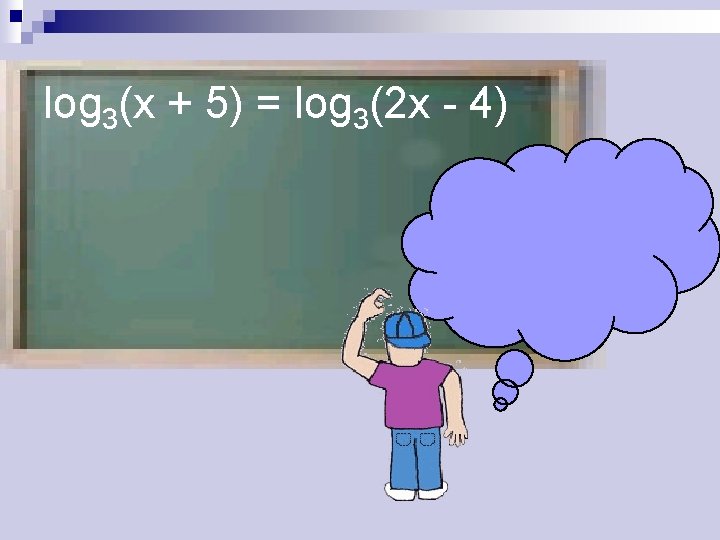
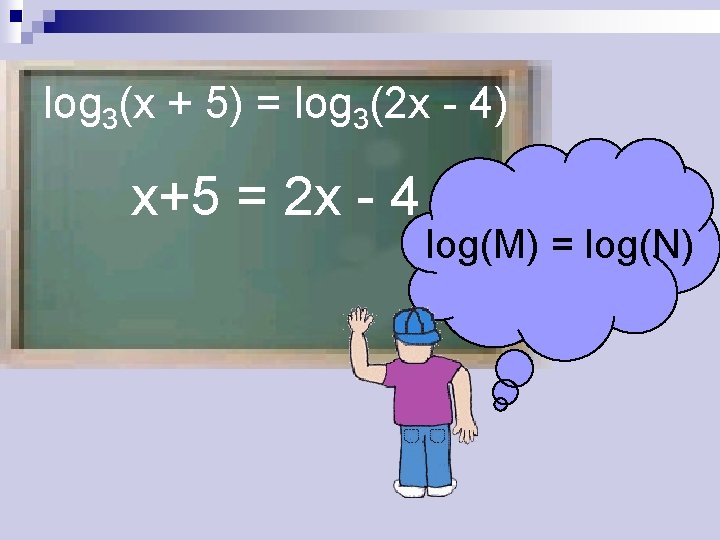
log 3(x + 5) = log 3(2 x - 4)
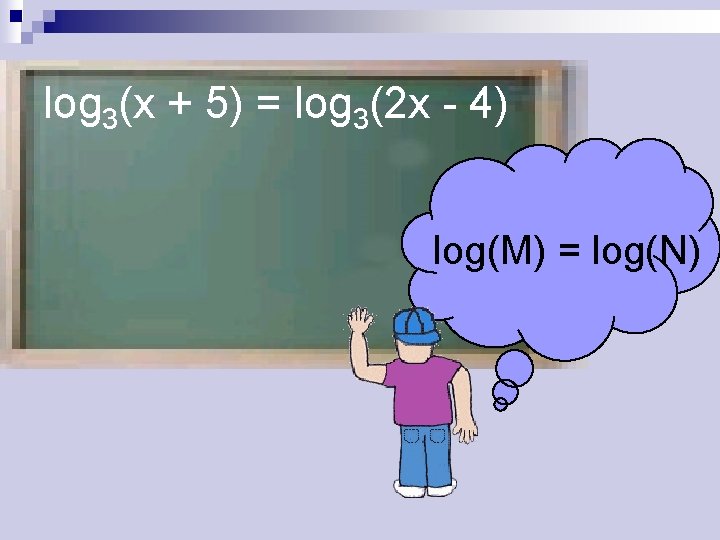
log 3(x + 5) = log 3(2 x - 4) log(M) = log(N)
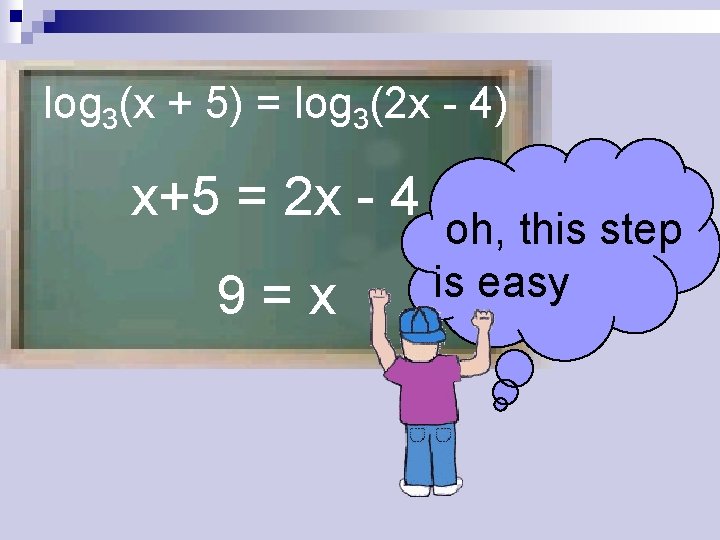
log 3(x + 5) = log 3(2 x - 4) x+5 = 2 x - 4 log(M) = log(N)
log 3(x + 5) = log 3(2 x - 4) x+5 = 2 x - 4 9=x oh, this step is easy
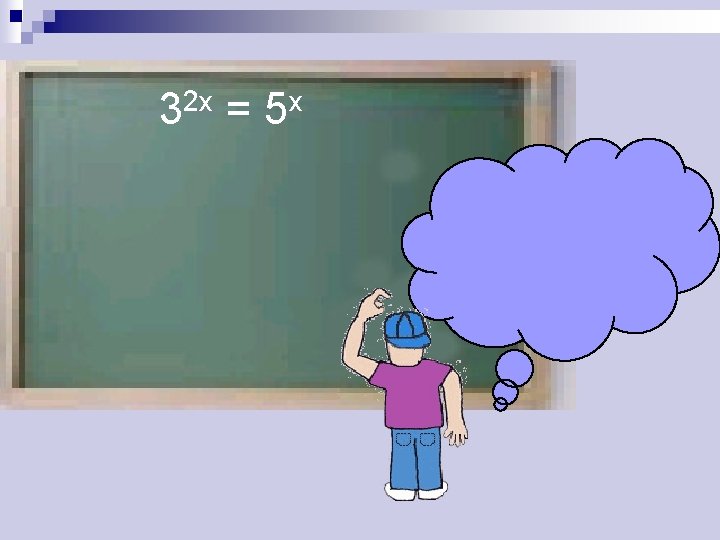
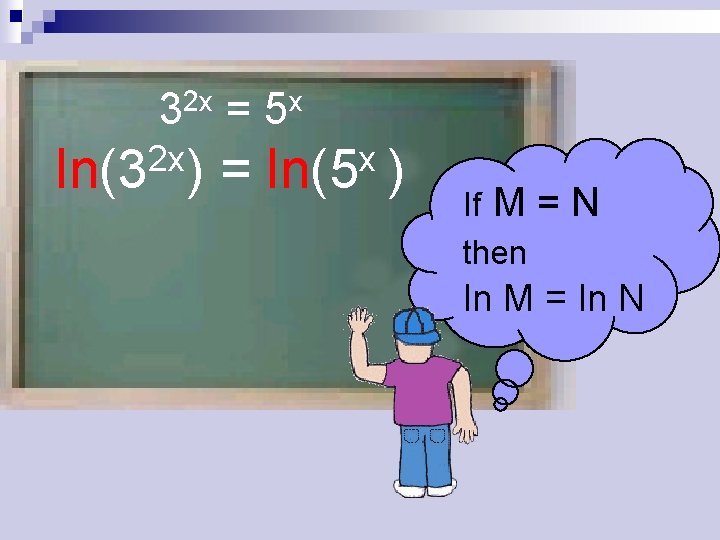
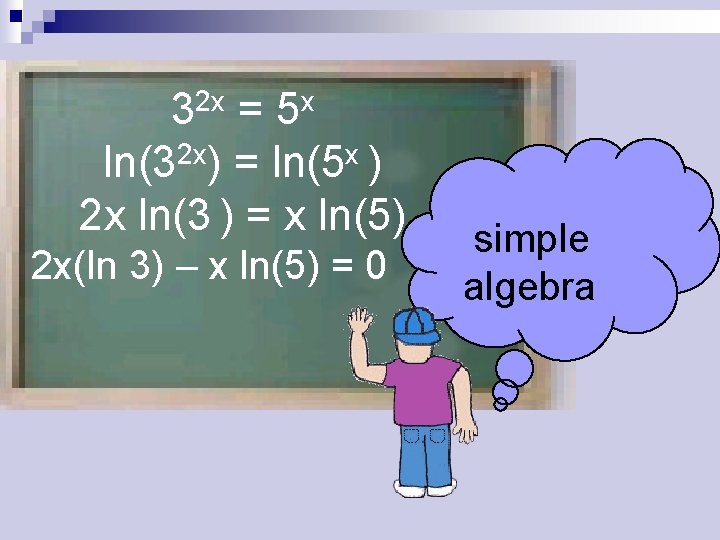
2 x 3 = x 5
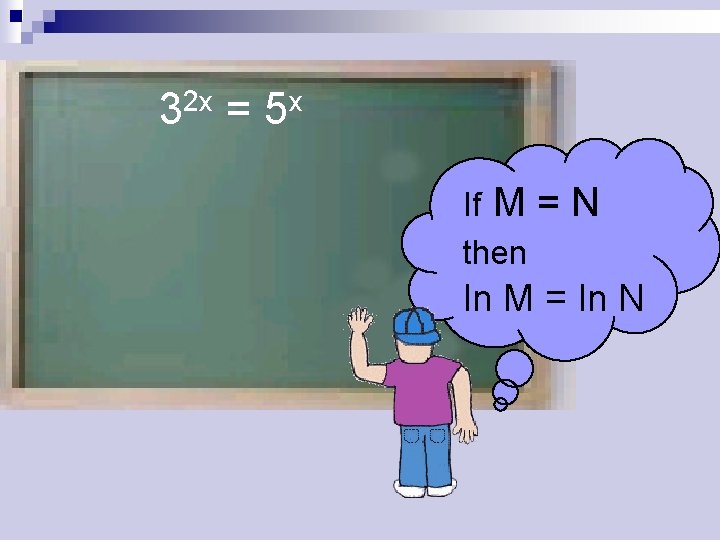
2 x 3 = x 5 If M = then N ln M = ln N
2 x 3 2 x ln(3 ) = x 5 = x ln(5 ) If M = then N ln M = ln N
2 x 3 2 x ln(3 ) = x 5 = x ln(5 )
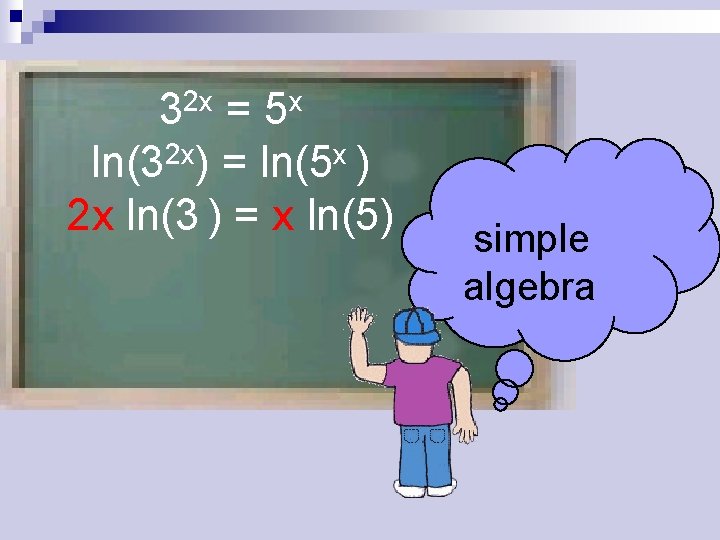
2 x 3 x 5 = 2 x x ln(3 ) = ln(5 ) 2 x ln(3 ) = x ln(5)
2 x 3 x 5 = 2 x x ln(3 ) = ln(5 ) 2 x ln(3 ) = x ln(5) simple algebra
2 x 3 x 5 = 2 x x ln(3 ) = ln(5 ) 2 x ln(3 ) = x ln(5) 2 x(ln 3) – x ln(5) = 0 simple algebra
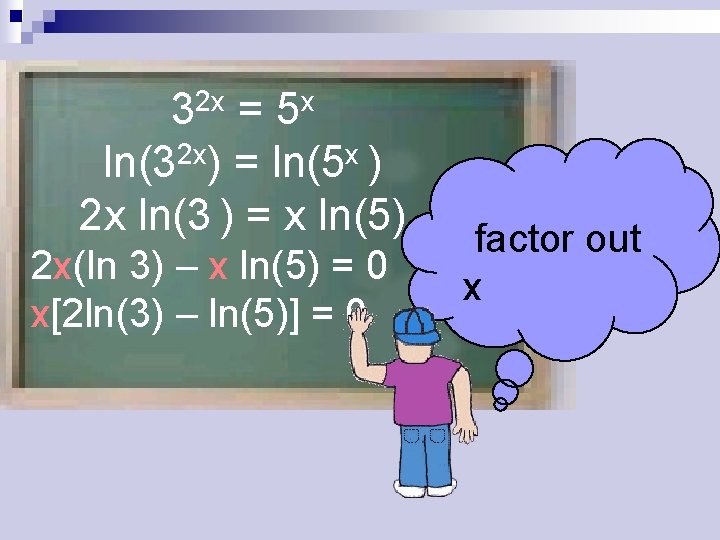
2 x 3 x 5 = 2 x x ln(3 ) = ln(5 ) 2 x ln(3 ) = x ln(5) 2 x(ln 3) – x ln(5) = 0 x[2 ln(3) – ln(5)] = 0 factor out x
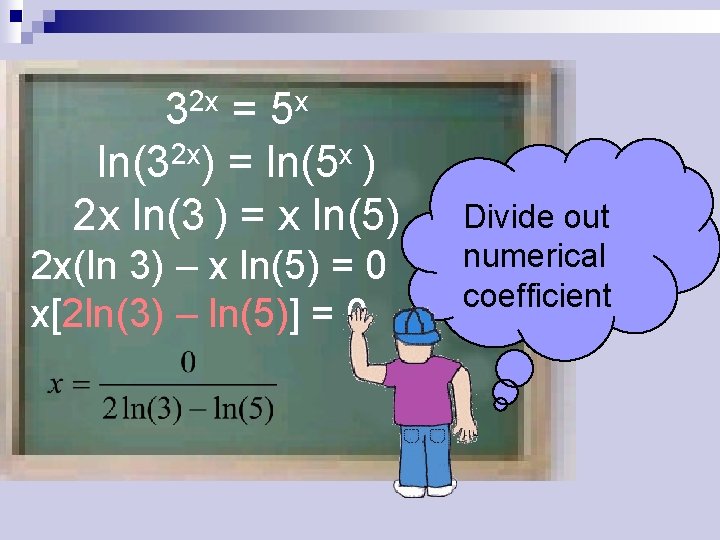
2 x 3 x 5 = 2 x x ln(3 ) = ln(5 ) 2 x ln(3 ) = x ln(5) 2 x(ln 3) – x ln(5) = 0 x[2 ln(3) – ln(5)] = 0 Divide out numerical coefficient
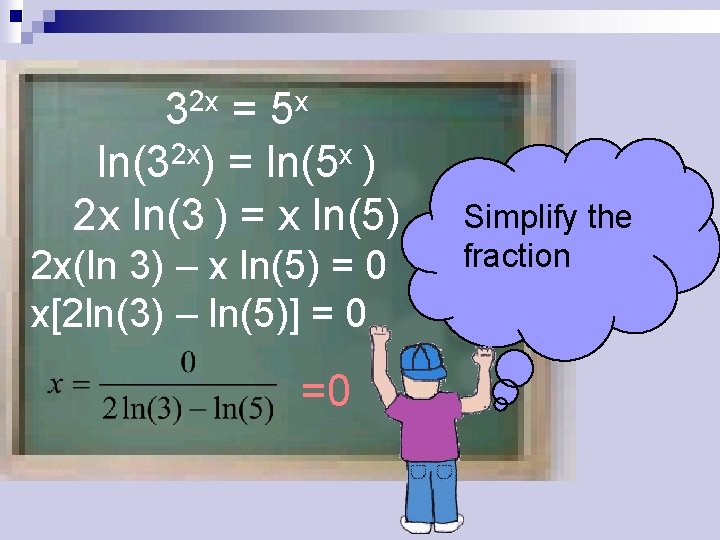
2 x 3 x 5 = 2 x x ln(3 ) = ln(5 ) 2 x ln(3 ) = x ln(5) 2 x(ln 3) – x ln(5) = 0 x[2 ln(3) – ln(5)] = 0 =0 Simplify the fraction
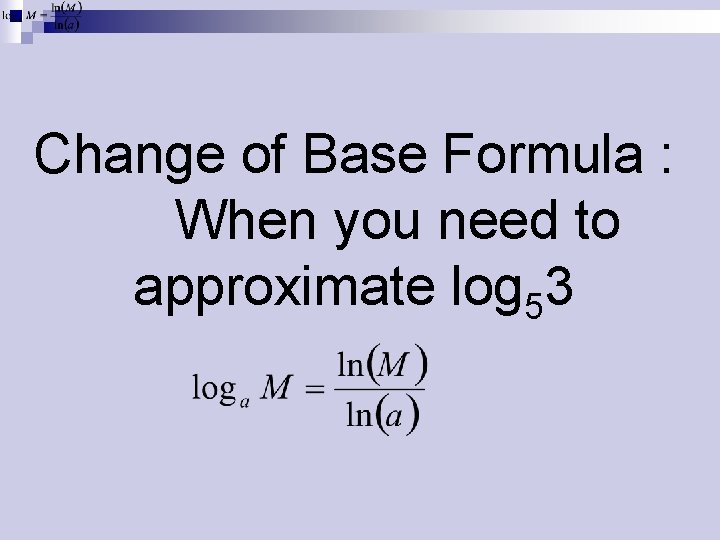
Change of Base Formula : When you need to approximate log 53
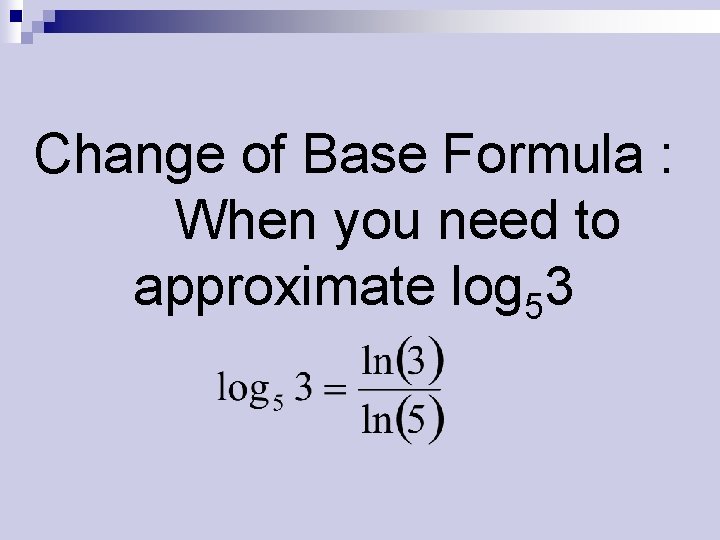
Change of Base Formula : When you need to approximate log 53
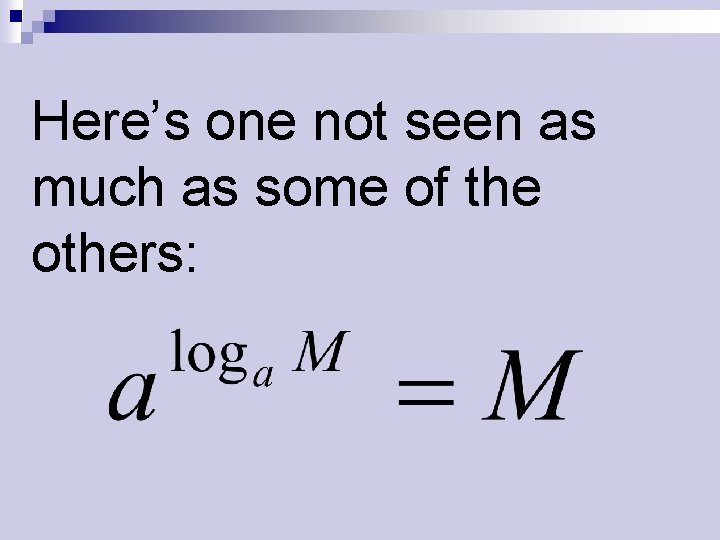
Here’s one not seen as much as some of the others:
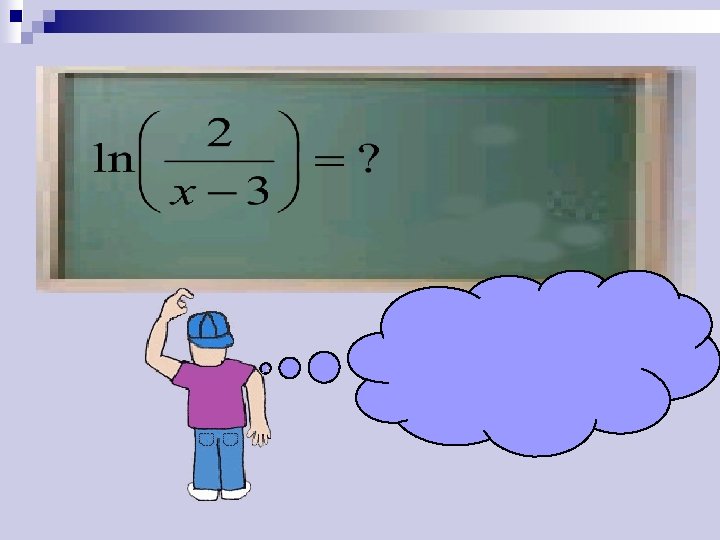
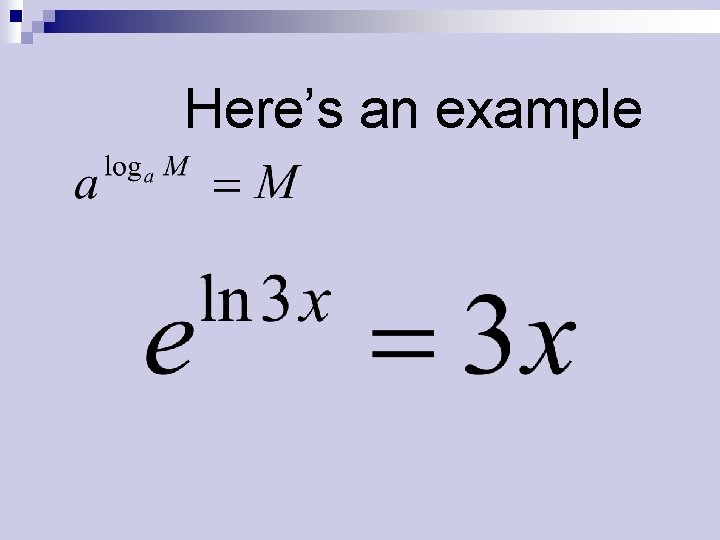
Here’s an example