
Properties of life Levels of organization Subatomic particles
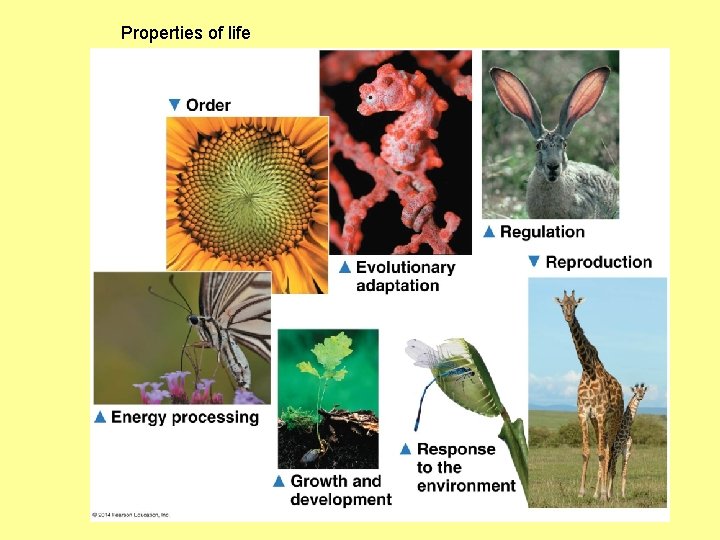
Properties of life
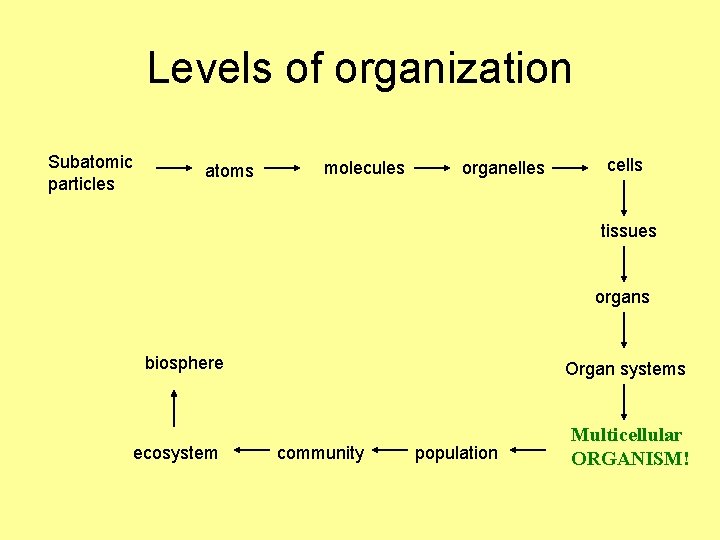
Levels of organization Subatomic particles atoms molecules organelles cells tissues organs biosphere Organ systems ecosystem Multicellular ORGANISM! community population
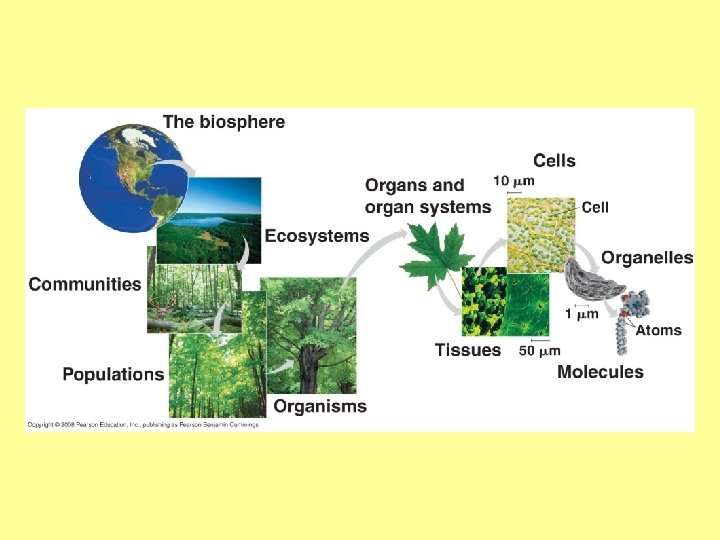

Levels of organization Subatomic particles atoms molecules organelles Smallest living unit cells tissues organs biosphere Organ systems ecosystem Multicellular ORGANISM! community population
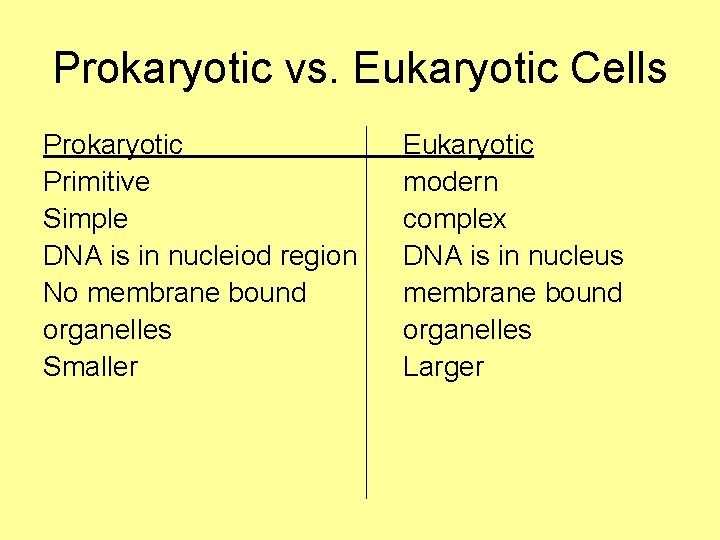
Prokaryotic vs. Eukaryotic Cells Prokaryotic Primitive Simple DNA is in nucleiod region No membrane bound organelles Smaller Eukaryotic modern complex DNA is in nucleus membrane bound organelles Larger
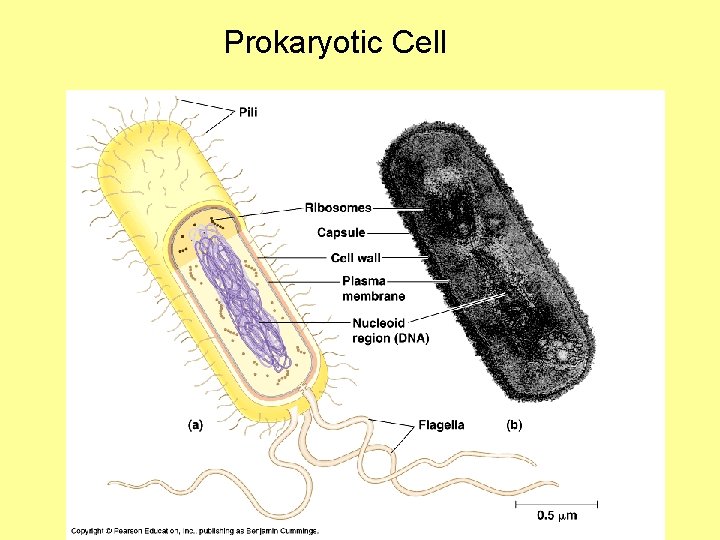
Prokaryotic Cell
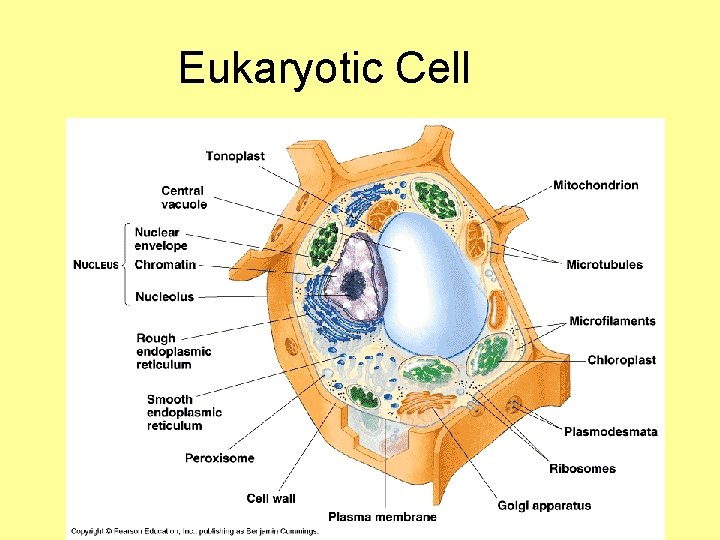
Eukaryotic Cell
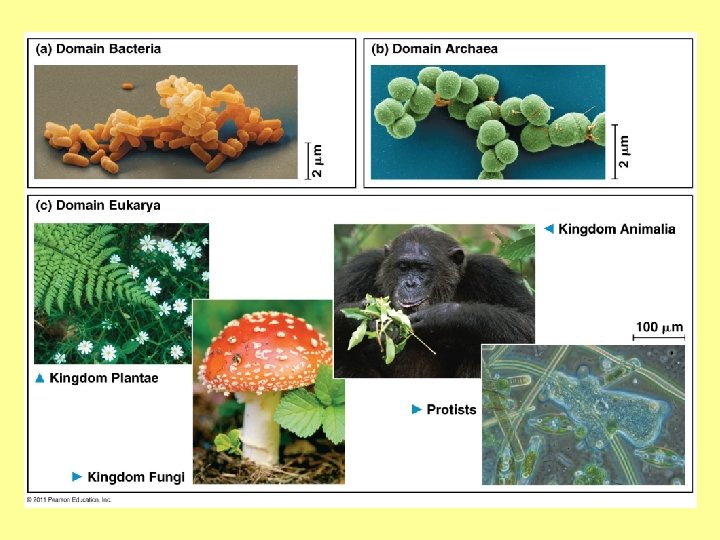
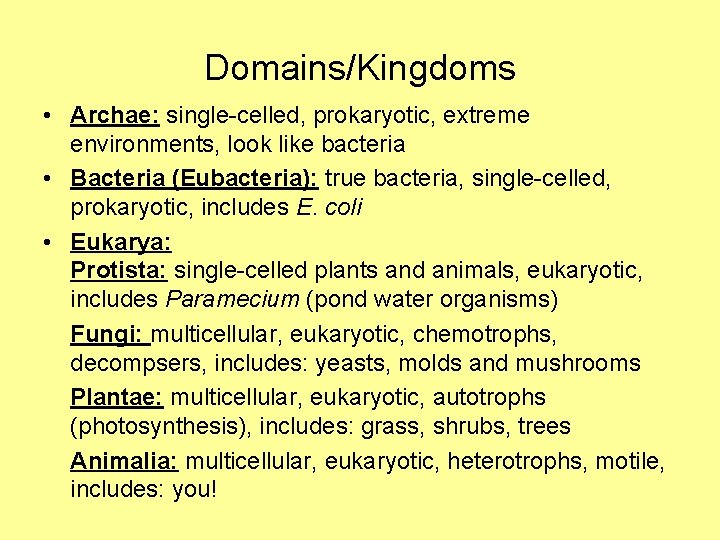
Domains/Kingdoms • Archae: single-celled, prokaryotic, extreme environments, look like bacteria • Bacteria (Eubacteria): true bacteria, single-celled, prokaryotic, includes E. coli • Eukarya: Protista: single-celled plants and animals, eukaryotic, includes Paramecium (pond water organisms) Fungi: multicellular, eukaryotic, chemotrophs, decompsers, includes: yeasts, molds and mushrooms Plantae: multicellular, eukaryotic, autotrophs (photosynthesis), includes: grass, shrubs, trees Animalia: multicellular, eukaryotic, heterotrophs, motile, includes: you!
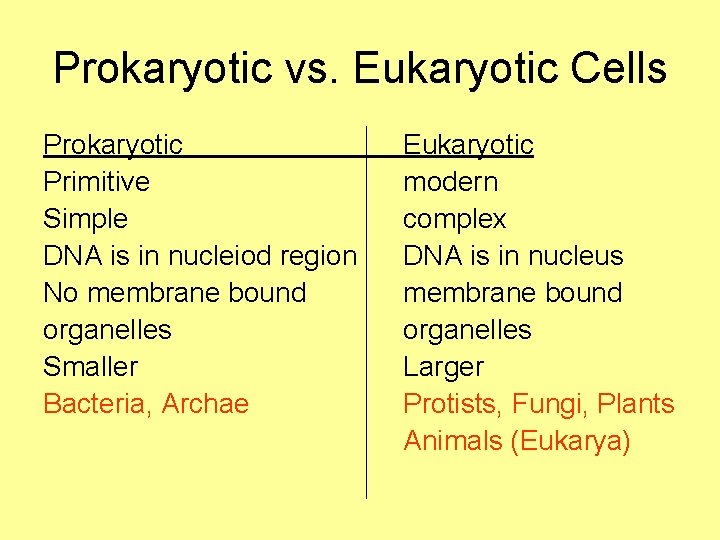
Prokaryotic vs. Eukaryotic Cells Prokaryotic Primitive Simple DNA is in nucleiod region No membrane bound organelles Smaller Bacteria, Archae Eukaryotic modern complex DNA is in nucleus membrane bound organelles Larger Protists, Fungi, Plants Animals (Eukarya)

Taxonomy • Linnaeus/binomial name (Genus species) • Humans = Homo sapiens • Kingdom, Phylum, Class, Order, Family, Genus, Species • Homology = similarity in structure due to a common ancestor • Analogy = similarity in function not due to a common ancestor • DNA comparison

Homologous Structures

Let’s play: Which is more closely related? • • BAT, BIRD, DOG? ? BAT & BIRD? BAT & DOG? DOG & BIRD? BAT & DOG!! WHY? ? THEY ARE BOTH MAMMALS (fur and teeth)

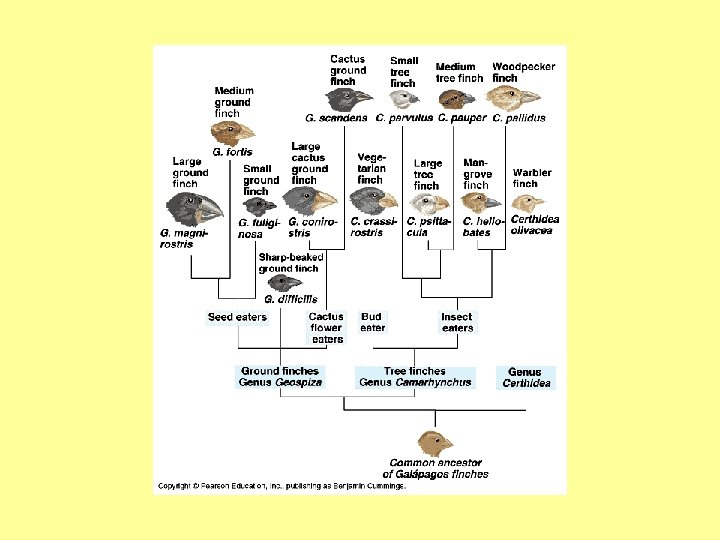
Schools of Taxonomy • Phenetics: looks for similarity and differences whether homology or analogy • Phylogenetics/systematics: use homologies to map evolutionary relationship Phylogenetic tree: series of branches


Energy flow: Food Chain Grass (producer) Mouse (herbivore) Snake (primary carnivore) Hawk (secondary carnivore) Should this be drawn in a line as above or another shape? ? ?

Energy pyramid

What did we leave out? ? Grass (producer) Mouse (herbivore) Snake (primary carnivore) Hawk (secondary carnivore) Decomposers (detritivores) = the recyclers!!!
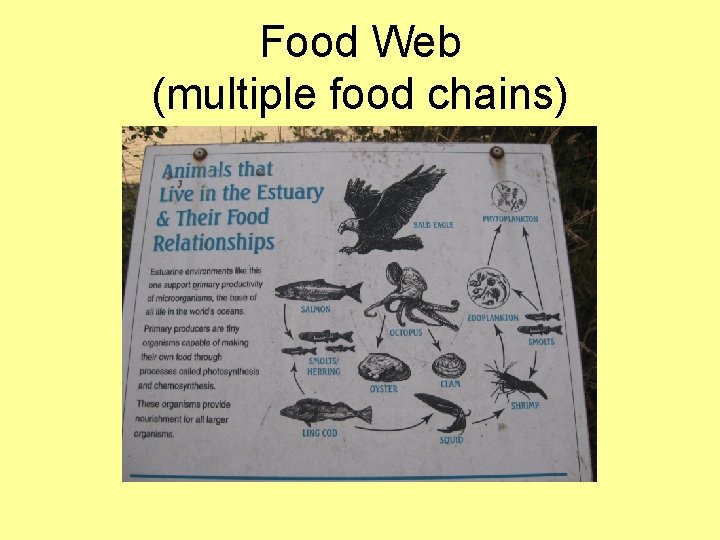
Food Web (multiple food chains)

Energy Flow/Nutrient Cycle

Natural Selection (best adapted survives and reproduces)

Charles Darwin

English Peppered Moth Example

English Peppered Moth Example Before industrial revolution After industrial revolution
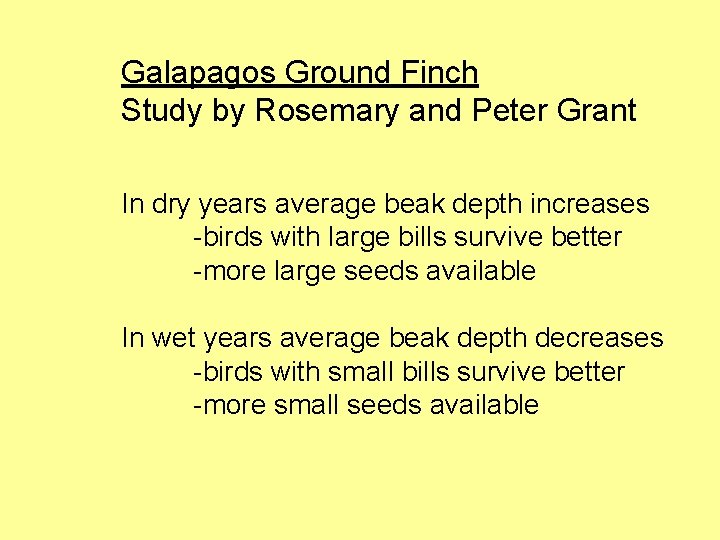
Galapagos Ground Finch Study by Rosemary and Peter Grant In dry years average beak depth increases -birds with large bills survive better -more large seeds available In wet years average beak depth decreases -birds with small bills survive better -more small seeds available

Reznick/Endler Study on Guppies • Guppies in Trinidad (Caribbean) • Correlated changes in life history characteristics with type of predator • Small predator (Killifish) preys on juvenile guppies • Large predator (Pike Cichlid) preys on large sexually mature guppies • Guppies with cichlids repro at younger age
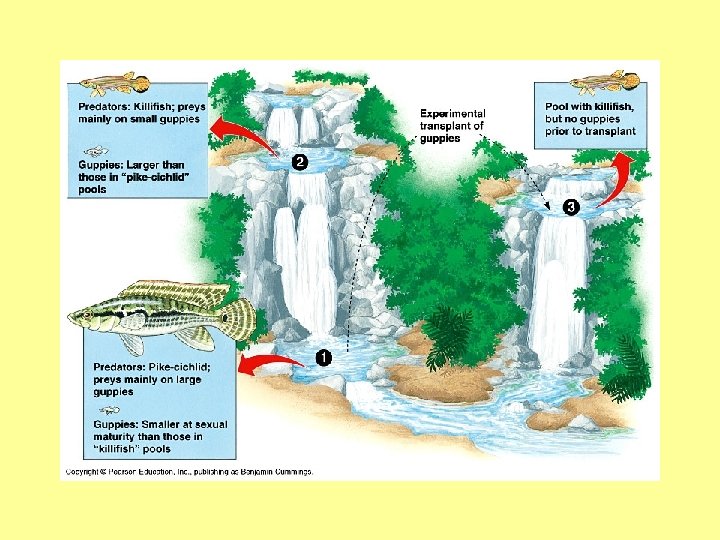
The Experiment • Experimental Group: guppies transplanted from pike cichlid to killifish pools • Control Group: guppies that remained in pike cichlid pools • What happened? ? • Experimental Group/transplanted guppies gained an average of 14% greater mass



- Slides: 35