
PROPERTIES OF CARDIAC MUSCLES At the end of
- Slides: 21
PROPERTIES OF CARDIAC MUSCLES
At the end of the class the students should know… • To describe in detail the properties of cardiac muscle AEJ 2
AUTOMATICITY • Automatic beating of heart • Continues to beat even after denervated and isolated from body
RHYTHMICITY • Autorhythmicity • Interbeat intervals remains almost constant
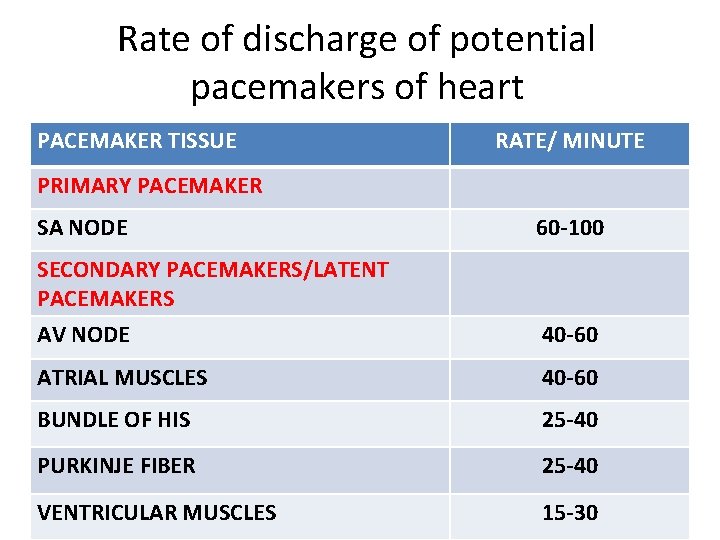
Rate of discharge of potential pacemakers of heart PACEMAKER TISSUE RATE/ MINUTE PRIMARY PACEMAKER SA NODE 60 -100 SECONDARY PACEMAKERS/LATENT PACEMAKERS AV NODE 40 -60 ATRIAL MUSCLES 40 -60 BUNDLE OF HIS 25 -40 PURKINJE FIBER 25 -40 VENTRICULAR MUSCLES 15 -30
CONDUCTIVITY • Specialized conducting system of heart
CONTRACTILITY • Contracts in response to stimuli • Increase contractility- increased cardiac output • Helps to pump blood by ventricles
EXCITABILITY • Ability of cardiac muscle to respond to different stimuli • Altered by autonomic activity, hormones, ions
DISTENSIBILITY • Ability to stretch • Helps in filling of chambers • Decreased distensibility decreases end diastolic volume
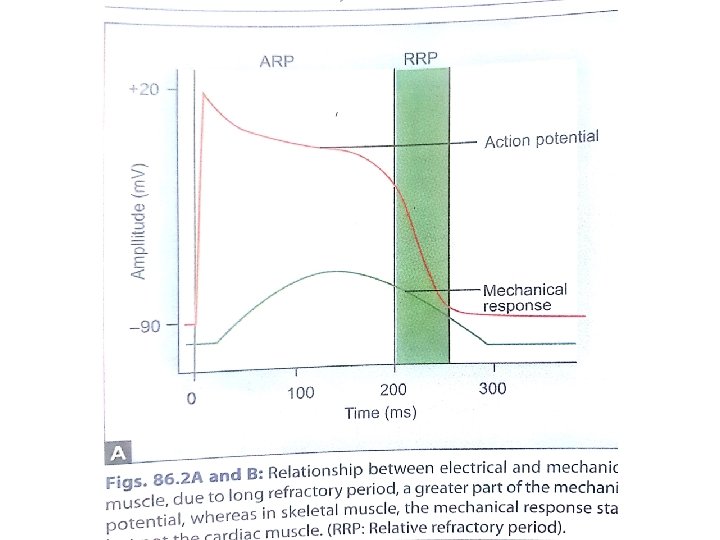
LONG REFRACTORY PERIOD • Long Absolute refractory period-200 ms • Relative refractory period- 50 ms • Refractory period extends to most of mechanical response • Cardiac muscle cannot be tetanized
FUNCTIONAL SYNCYTIUM • Due to the presence of numerous gap junctions
ALL OR NONE LAW • Magnitude of response of a tissue to a stimuli remains same irrespective of strength of stimuli • Subthreshold stimuli- does not respond • Threshold stimuli- optimal response • Height of contraction doesnot increase with application of suprathreshold stimuli • Occurs when both internal and external stimuli remains constant • Occurs because of i) all or none nature of action potential • ii) Syncytial nature of heart muscles (behaves as single unit)
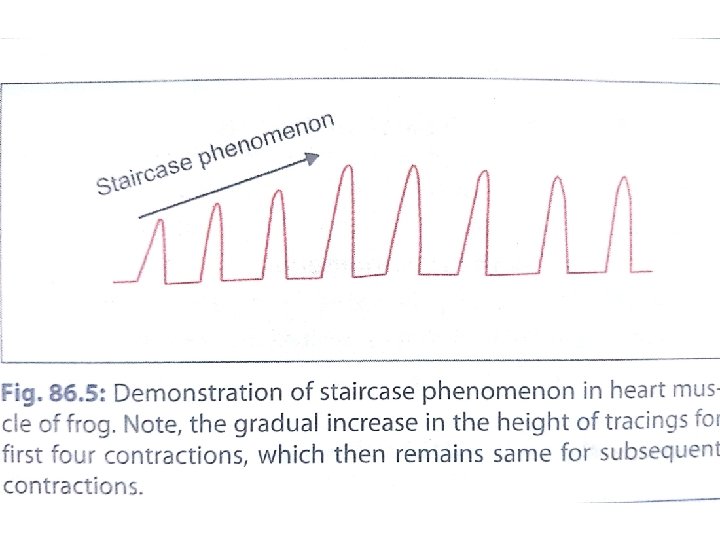
STAIRCASE PHENONMEMON • Stimuli<10 sec • Magnitude of first 3 or 4 contractions progressively increases - Increased quantity of Calcium available - Increased temperature- increased enzyme activity - Increased temperature- deceased viscosity
Staircase phenomenon Force of contraction 10 s 8 s 8 s 8 s (s – seconds)
LENGTH TENSION RELATIONSHIP • Frank – Starling’s law
FORCE FREQUENCY RELATIONSHIP • Bowditch phenomenon • Increased force due to increased heart rate
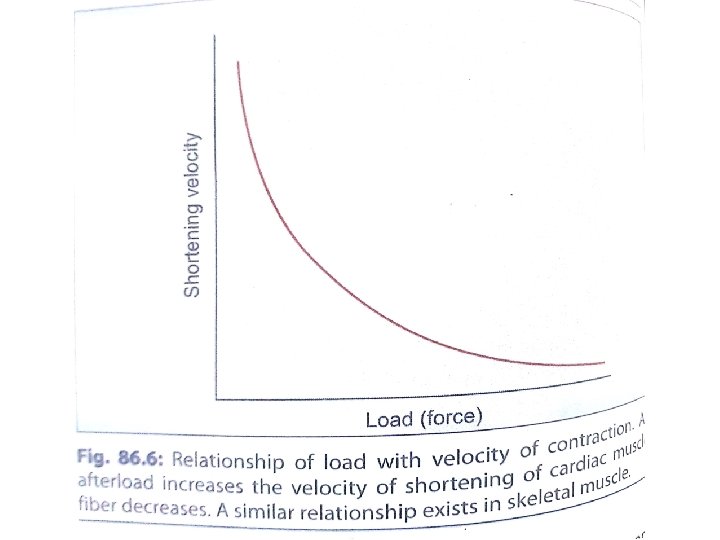
LOAD VELOCITY RELATIONSHIP • Increased load decreased shortening velocity • Load- afterload (peripheral resistance) • Velocity of shortening is inversely proportional to force developed in cardiac muscle
References • Comprehensive Textbook of Medical physiology (Vol 2 first edition) G K Pal • Text book of medical physiology (Vol 2 6 th edition) A K Jain • Essentials of medical physiology (6 th edition) K Sembulingam and Prema Sembulingam AEJ 21