
Properties of Action potential Threshold stimulus Minimal intensity




- Slides: 18
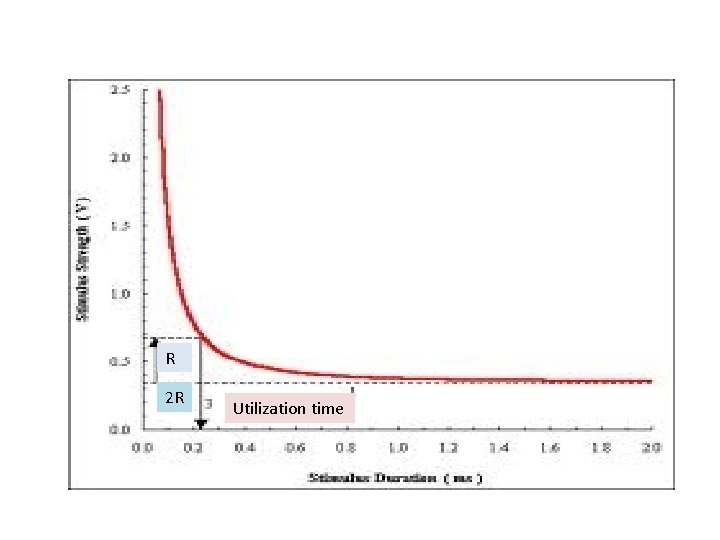
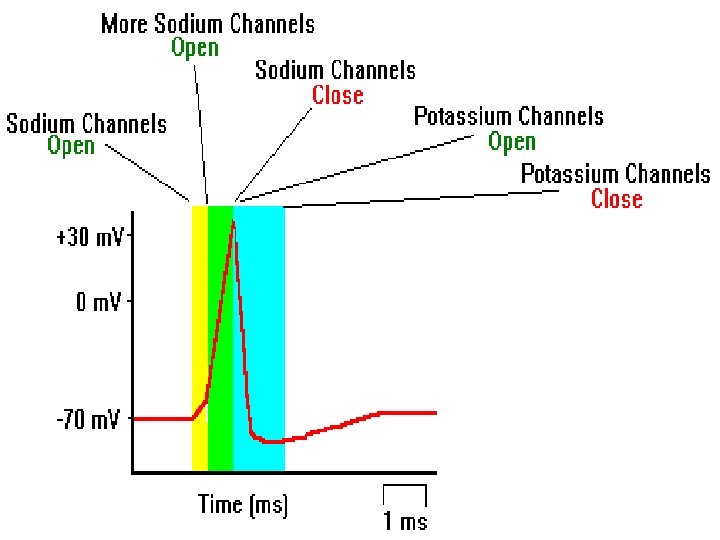
Properties of Action potential Threshold stimulus Minimal intensity (Threshold ) is required for action potential Strength –duration curve Relationship between strength of stimulating current and the duration for which it is applied to produce a response
• Rheobase Weakest current strength to excite a tissue when it is allowed to flow for adequate time. Utilization time Time for which the Rheobase current strength is applied.
• Chronaxie Length of time for which a current twice ‘Rheobase’ intensity is applied. • Chronaxie unit of excitability and is inversely related to it. • Order of excitability Nerve >skeletal muscle>cardiac > smooth muscle
R 2 R Utilization time
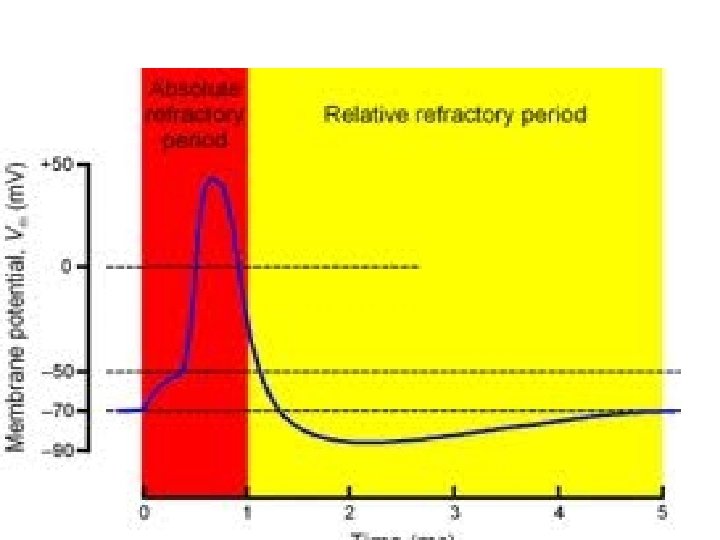
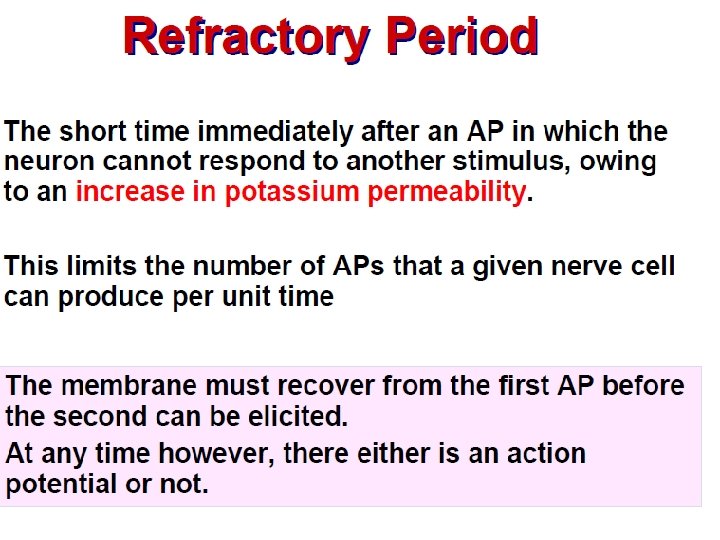
• Refractory period Two successive stimulus is applied to an excitable cell, the cell become refractory to second stimulus. Absolute refractory period(ARP) Firing level to 1/3 rd of Repolarization. Relative refractory period(RRP) At the end of ARP to start of after depolarization.
1) Absolute refractory periodv it is the period during an action potential, during which a second stimulus can’t produce a second response. v period of action potential from firing level until repolarization is almost 1/3 rd complete (spike potential)
2) Relative refractory periodü it is the period during an action potential, during which a stimulus of higher intensity can produce a second response ü It extends FROM the end of absolute refractory period to the start of after depolarization phase of action potential
• All or none law • Action potentials occur maximally or not at all. • Either the threshold potential is reached an action potential occurs, or it isn't reached and no action potential occurs.
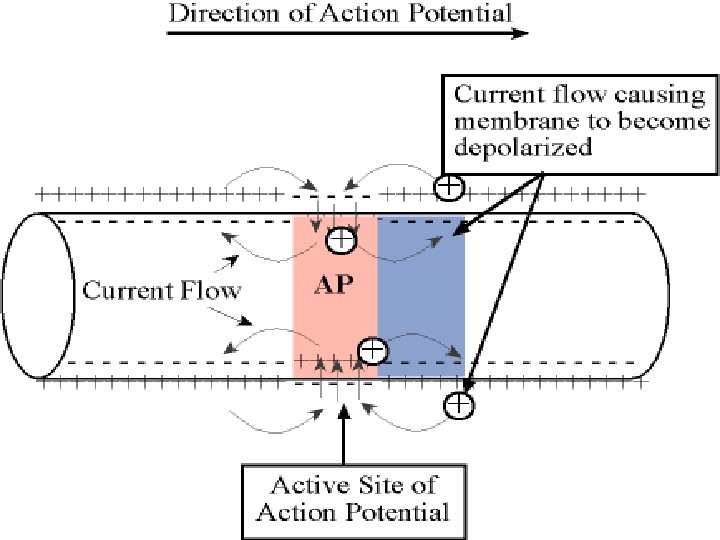
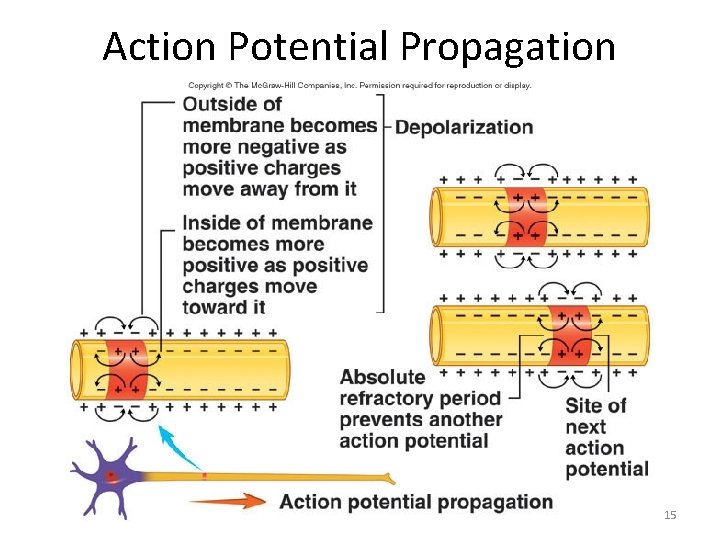
• Conduction of action potential • AP generated at one location act as stimulus for production of AP in adjacent membrane. • Excitation is conducted as wave of depolarization. • Due to circular current flow and successive depolarization to firing level of membrane ahead of AP
Action Potential Propagation Dentistry 07 15
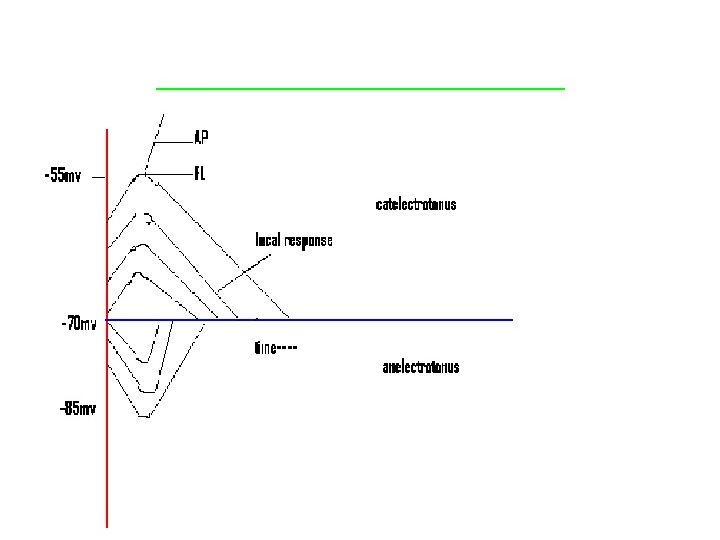
• Local response • Sub minimal stimulus is applied. • Axon is stimulated with slowly increasing strength of stimuli. MP is decreased by 7 mv. • Cathelectrotonic potential developed at the cathode. • Anelectrotonic potential is developed at the anode.
Graded potential Action potential Sub minimal stimulus Threshold stimulus Does not obey all or none law Obey all or none law Can be summated Cannot be propagated Can be propagated