
Properties and the Periodic Table S 1 Chemistry
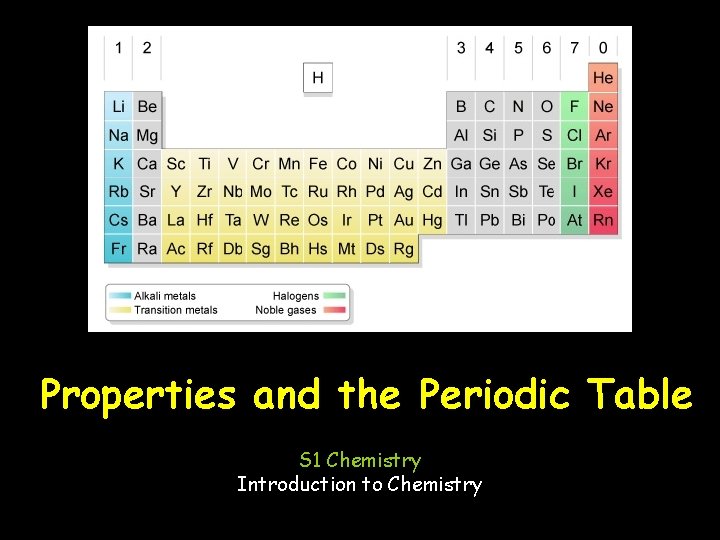
Properties and the Periodic Table S 1 Chemistry Introduction to Chemistry
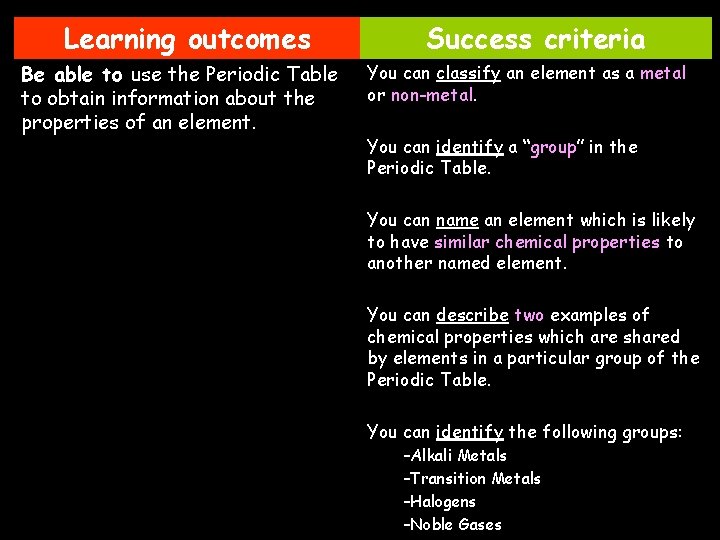
Learning outcomes Be able to use the Periodic Table to obtain information about the properties of an element. Success criteria You can classify an element as a metal or non-metal. You can identify a “group” in the Periodic Table. You can name an element which is likely to have similar chemical properties to another named element. You can describe two examples of chemical properties which are shared by elements in a particular group of the Periodic Table. You can identify the following groups: –Alkali Metals –Transition Metals –Halogens –Noble Gases
Balloon Debates Elements
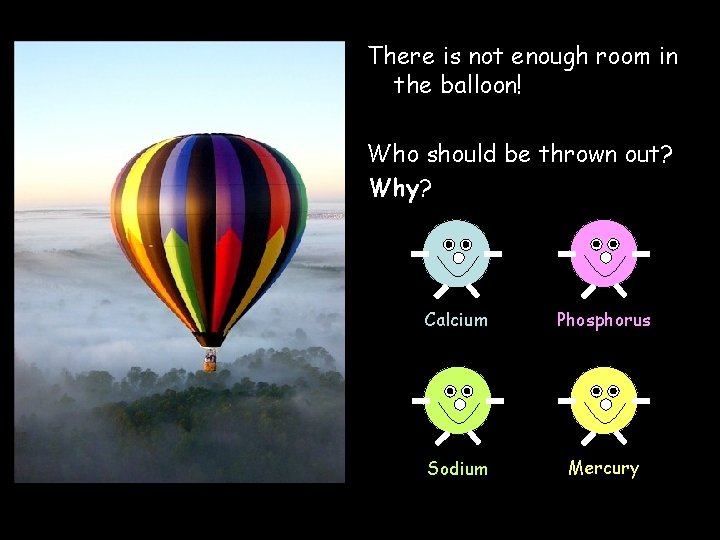
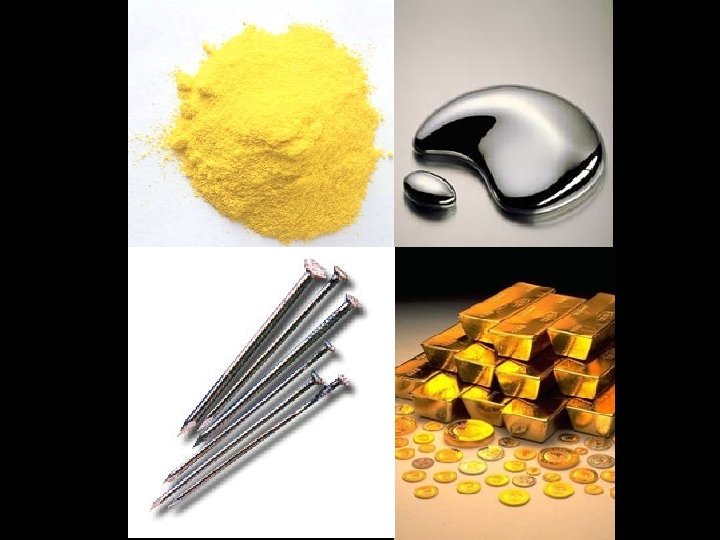
There is not enough room in the balloon! Who should be thrown out? Why? Calcium Phosphorus Sodium Mercury
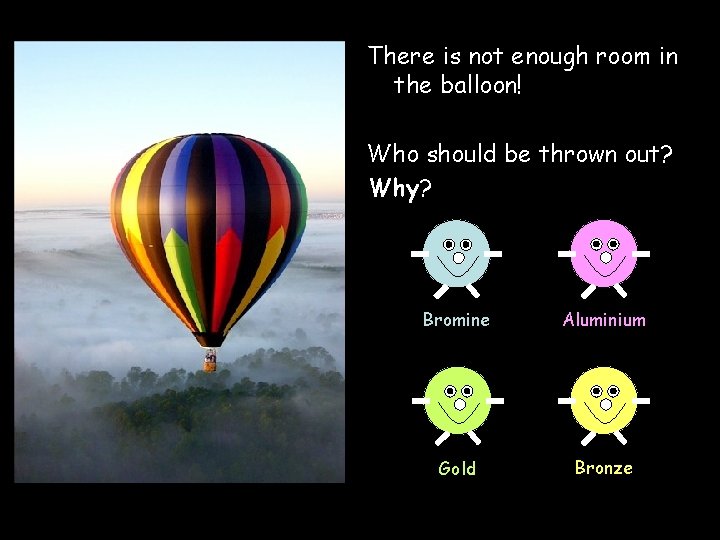
There is not enough room in the balloon! Who should be thrown out? Why? Bromine Aluminium Gold Bronze
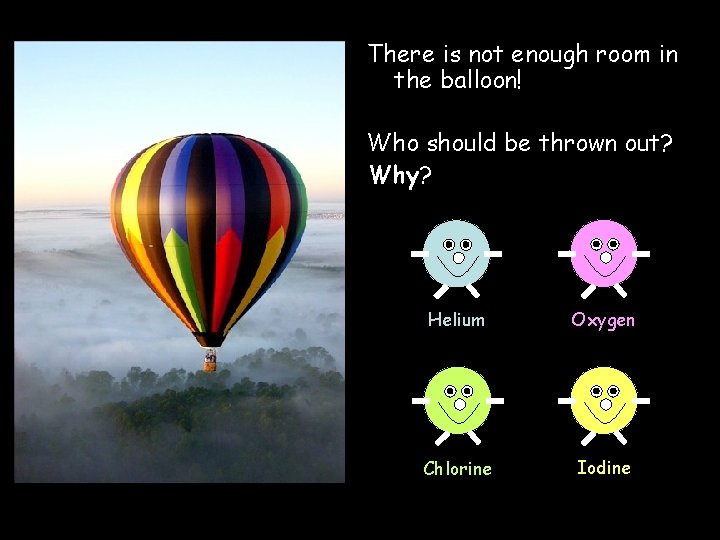
There is not enough room in the balloon! Who should be thrown out? Why? Helium Oxygen Chlorine Iodine
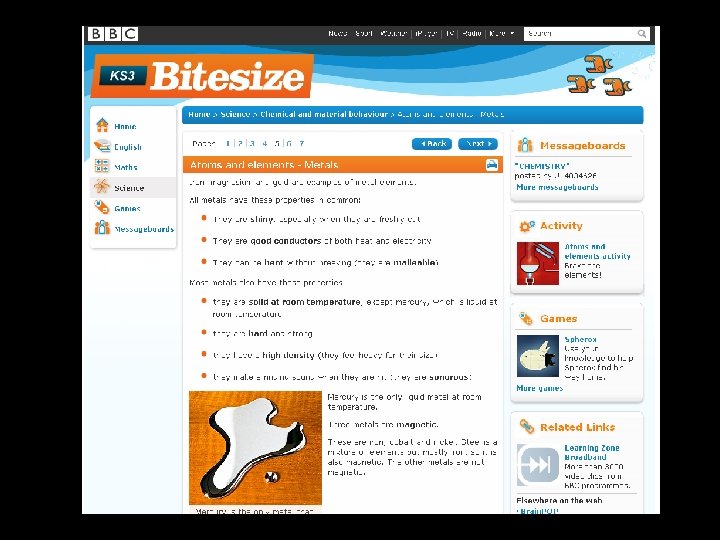
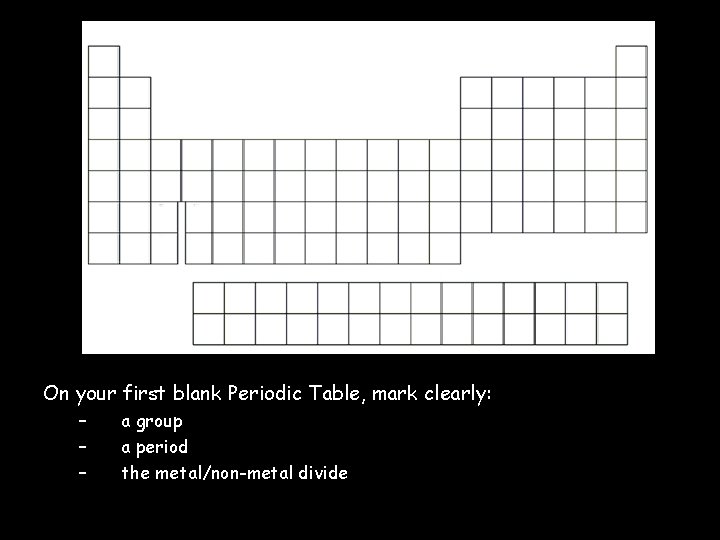
On your first blank Periodic Table, mark clearly: – – – a group a period the metal/non-metal divide
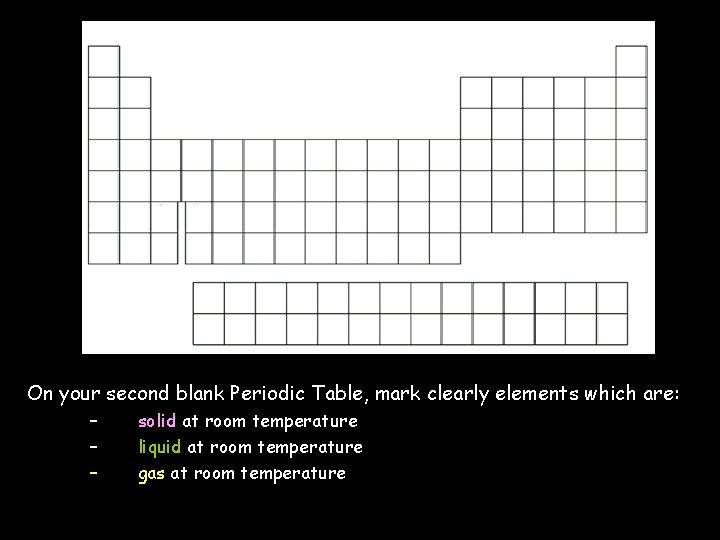
On your second blank Periodic Table, mark clearly elements which are: – – – solid at room temperature liquid at room temperature gas at room temperature
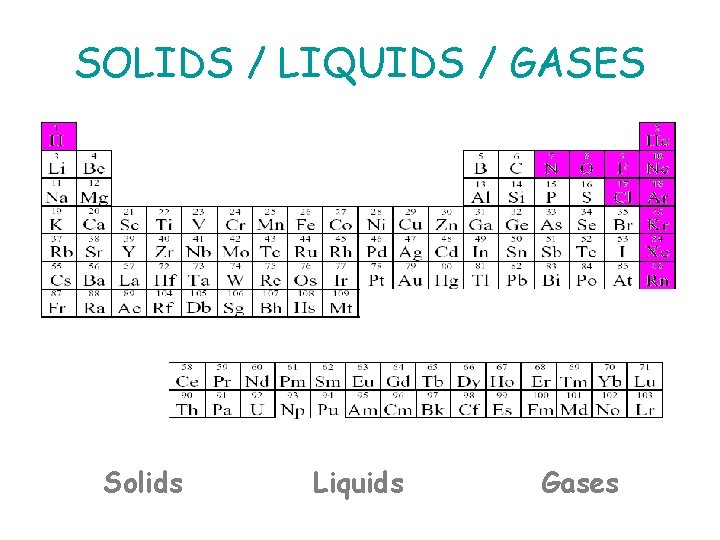
SOLIDS / LIQUIDS / GASES Solids Liquids Gases
Learning outcomes Be able to use the Periodic Table to obtain information about the properties of an element. Success criteria You can classify an element as a metal or non-metal. You can identify a “group” in the Periodic Table. You can name an element which is likely to have similar chemical properties to another named element. You can describe two examples of chemical properties which are shared by elements in a particular group of the Periodic Table. You can identify the following groups: –Alkali Metals –Transition Metals –Halogens –Noble Gases
- Slides: 13