
Properties and performance of EVOH in geosynthetic applications
- Slides: 27
Properties and performance of EVOH in geosynthetic applications Presented by: Robert Armstrong Kuraray America Inc. phone (281) 474 -1576 robert. armstrong@kurarayamerica. com
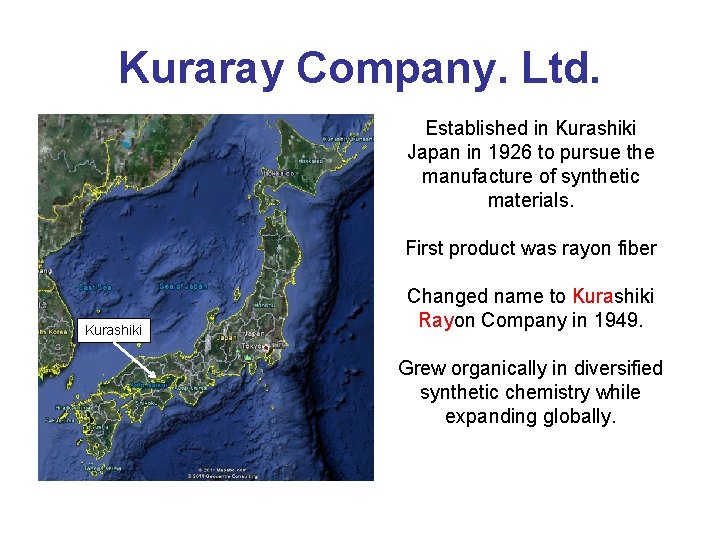
Kuraray Company. Ltd. Established in Kurashiki Japan in 1926 to pursue the manufacture of synthetic materials. First product was rayon fiber Kurashiki Changed name to Kurashiki Rayon Company in 1949. Grew organically in diversified synthetic chemistry while expanding globally.
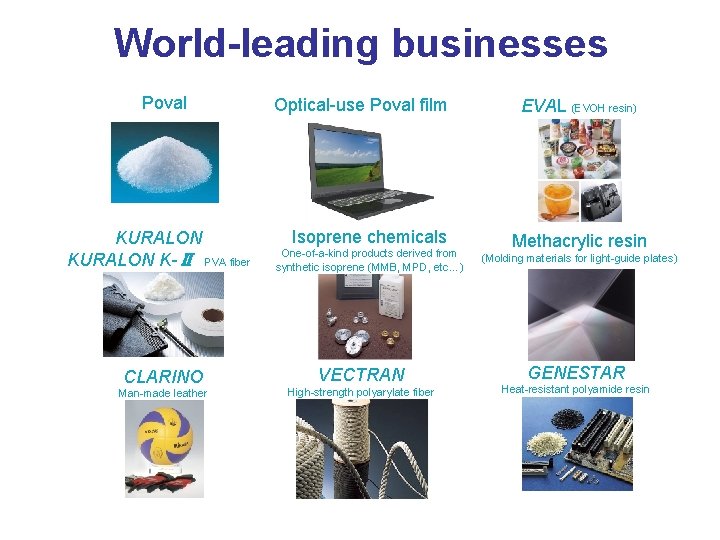
World-leading businesses Poval KURALON K-Ⅱ PVA fiber CLARINO Man-made leather Optical-use Poval film Isoprene chemicals One-of-a-kind products derived from synthetic isoprene (MMB, MPD, etc…) VECTRAN High-strength polyarylate fiber EVAL (EVOH resin) Methacrylic resin (Molding materials for light-guide plates) GENESTAR Heat-resistant polyamide resin
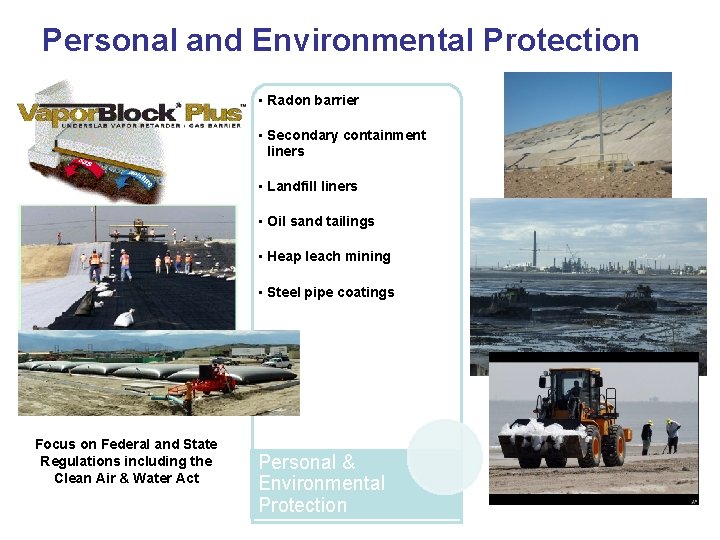
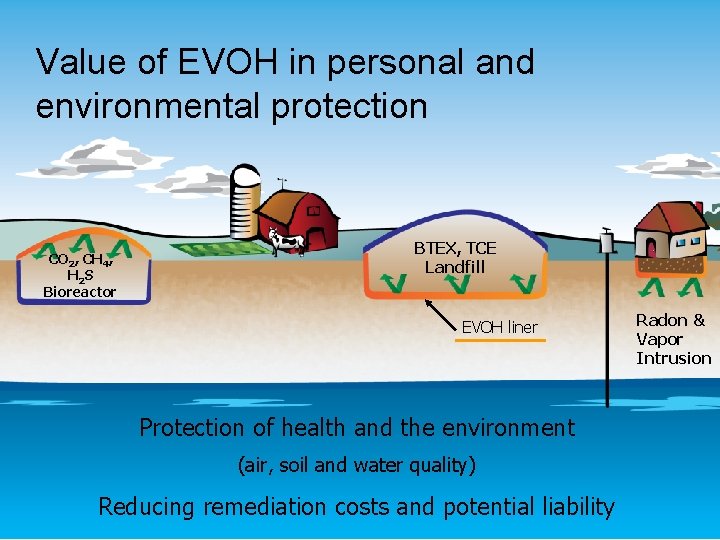
Personal and Environmental Protection • Radon barrier • Secondary containment liners • Landfill liners • Oil sand tailings • Heap leach mining • Steel pipe coatings Focus on Federal and State Regulations including the Clean Air & Water Act Personal & Environmental Protection
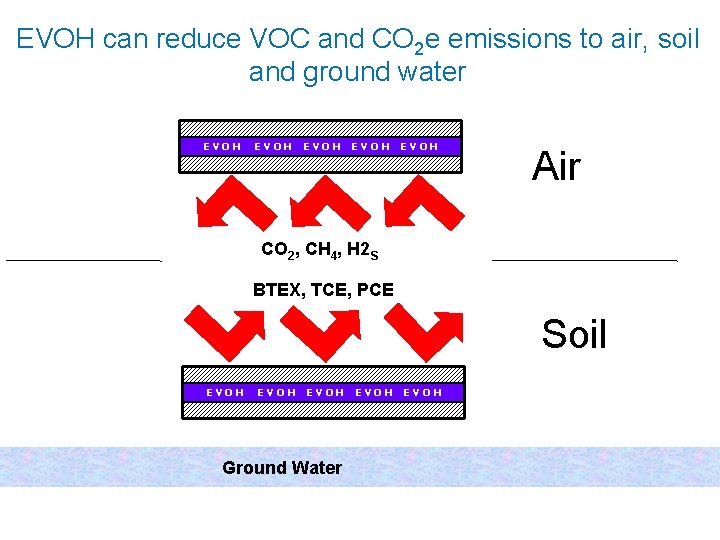
EVOH can reduce VOC and CO 2 e emissions to air, soil and ground water EVOH EVOH Air CO 2, CH 4, H 2 S BTEX, TCE, PCE Soil EVOH Ground Water EVOH
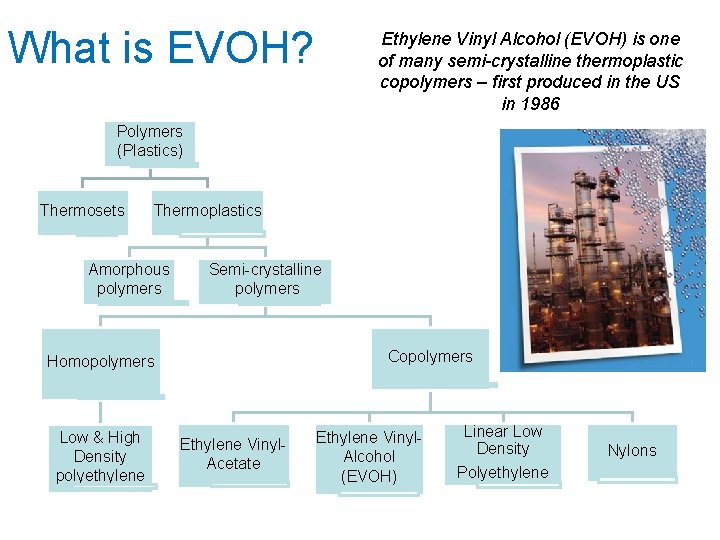
What is EVOH? Ethylene Vinyl Alcohol (EVOH) is one of many semi-crystalline thermoplastic copolymers – first produced in the US in 1986 Polymers (Plastics) Thermosets Thermoplastics Amorphous polymers Semi-crystalline polymers Copolymers Homopolymers Low & High Density polyethylene Ethylene Vinyl. Acetate Ethylene Vinyl. Alcohol (EVOH) Linear Low Density Polyethylene Nylons
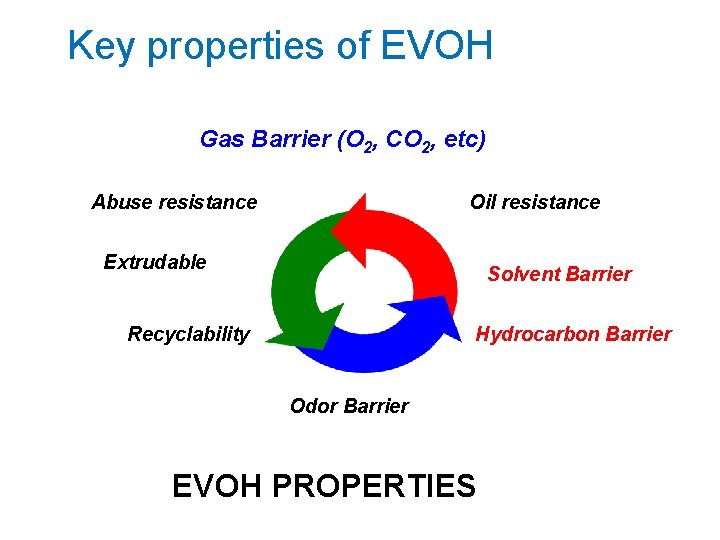
Key properties of EVOH Gas Barrier (O 2, CO 2, etc) Abuse resistance Oil resistance Extrudable Solvent Barrier Recyclability Hydrocarbon Barrier Odor Barrier EVOH PROPERTIES
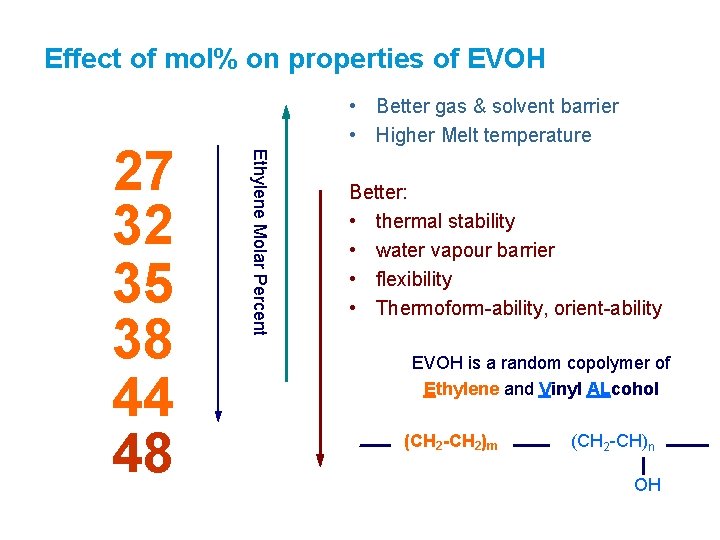
Effect of mol% on properties of EVOH Ethylene Molar Percent 27 32 35 38 44 48 • Better gas & solvent barrier • Higher Melt temperature Better: • thermal stability • water vapour barrier • flexibility • Thermoform-ability, orient-ability EVOH is a random copolymer of Ethylene and Vinyl ALcohol (CH 2 -CH 2)m (CH 2 -CH)n OH
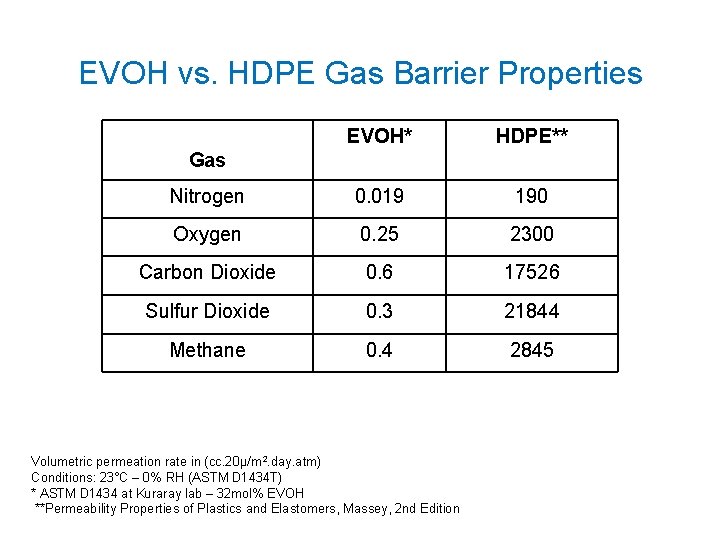
EVOH vs. HDPE Gas Barrier Properties EVOH* HDPE** Nitrogen 0. 019 190 Oxygen 0. 25 2300 Carbon Dioxide 0. 6 17526 Sulfur Dioxide 0. 3 21844 Methane 0. 4 2845 Gas Volumetric permeation rate in (cc. 20µ/m 2. day. atm) Conditions: 23°C – 0% RH (ASTM D 1434 T) * ASTM D 1434 at Kuraray lab – 32 mol% EVOH **Permeability Properties of Plastics and Elastomers, Massey, 2 nd Edition
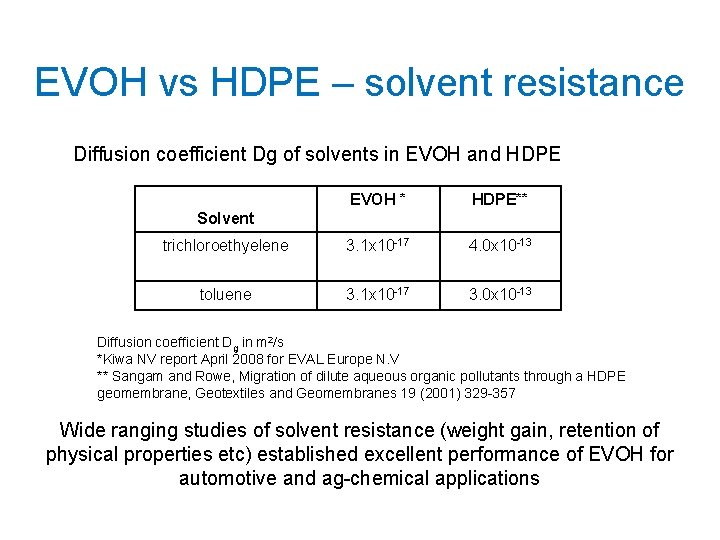
EVOH vs HDPE – solvent resistance Diffusion coefficient Dg of solvents in EVOH and HDPE EVOH * HDPE** trichloroethyelene 3. 1 x 10 -17 4. 0 x 10 -13 toluene 3. 1 x 10 -17 3. 0 x 10 -13 Solvent Diffusion coefficient Dg in m 2/s *Kiwa NV report April 2008 for EVAL Europe N. V ** Sangam and Rowe, Migration of dilute aqueous organic pollutants through a HDPE geomembrane, Geotextiles and Geomembranes 19 (2001) 329 -357 Wide ranging studies of solvent resistance (weight gain, retention of physical properties etc) established excellent performance of EVOH for automotive and ag-chemical applications
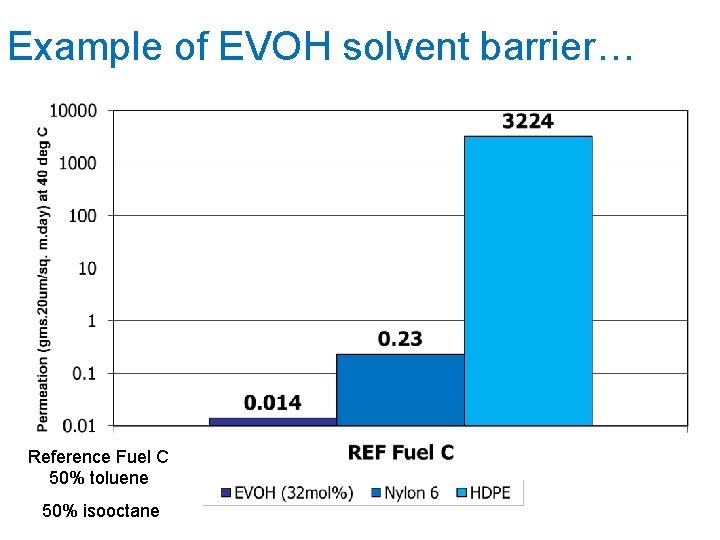
Example of EVOH solvent barrier… Reference Fuel C 50% toluene 50% isooctane
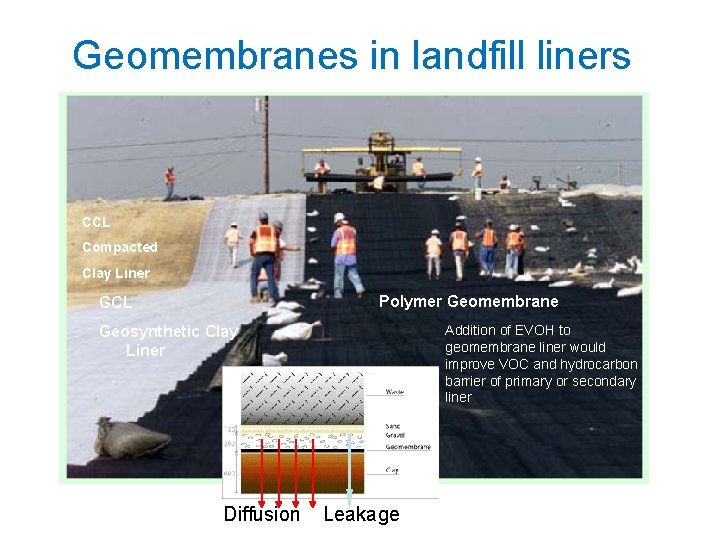
New Application Development Geomembranes in landfill liners CCL Compacted Clay Liner Polymer Geomembrane GCL Geosynthetic Clay Liner Diffusion Addition of EVOH to geomembrane liner would improve VOC and hydrocarbon barrier of primary or secondary liner Leakage
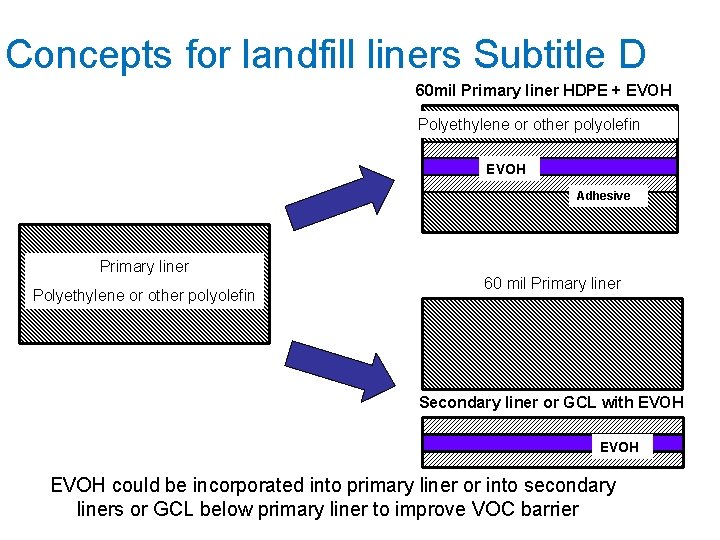
Concepts for landfill liners Subtitle D 60 mil Primary liner HDPE + EVOH Polyethylene or other polyolefin EVOH Adhesive Primary liner Polyethylene or other polyolefin 60 mil Primary liner Secondary liner or GCL with EVOH could be incorporated into primary liner or into secondary liners or GCL below primary liner to improve VOC barrier
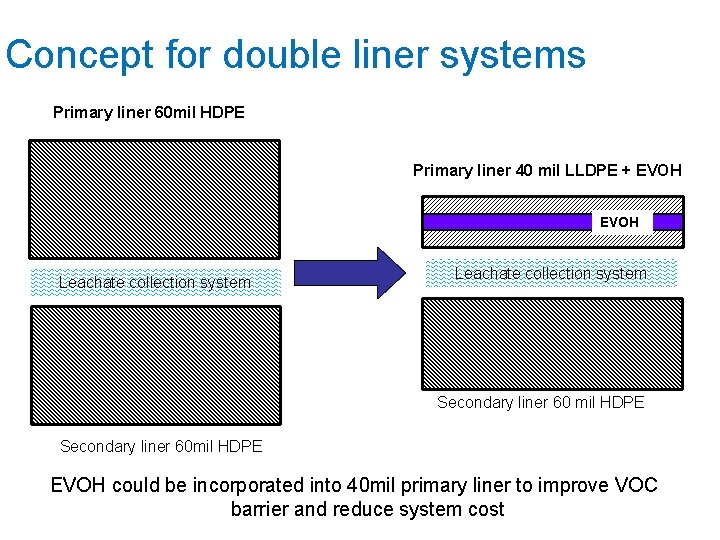
Concept for double liner systems Primary liner 60 mil HDPE Primary liner 40 mil LLDPE + EVOH Leachate collection system Secondary liner 60 mil HDPE Secondary liner 60 mil HDPE EVOH could be incorporated into 40 mil primary liner to improve VOC barrier and reduce system cost
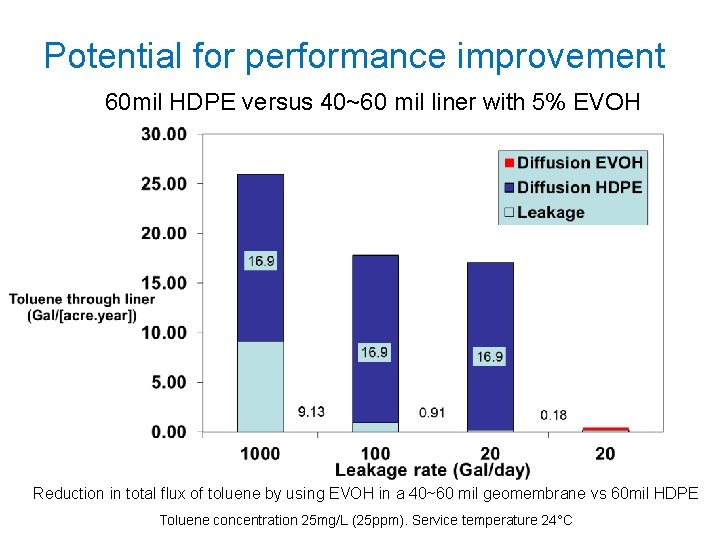
Potential for performance improvement 60 mil HDPE versus 40~60 mil liner with 5% EVOH Reduction in total flux of toluene by using EVOH in a 40~60 mil geomembrane vs 60 mil HDPE Toluene concentration 25 mg/L (25 ppm). Service temperature 24°C
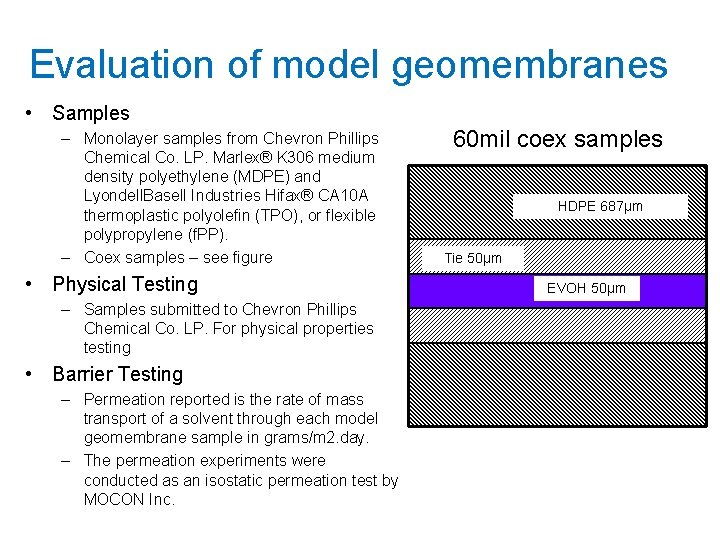
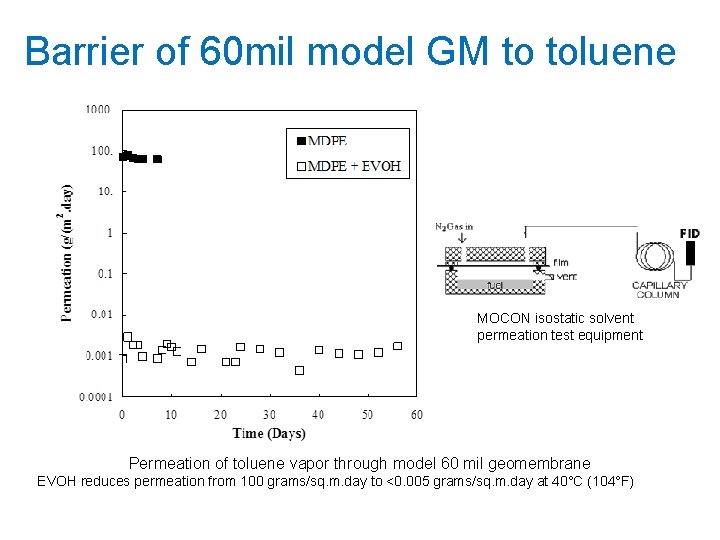
Evaluation of model geomembranes • Samples – Monolayer samples from Chevron Phillips Chemical Co. LP. Marlex® K 306 medium density polyethylene (MDPE) and Lyondell. Basell Industries Hifax® CA 10 A thermoplastic polyolefin (TPO), or flexible polypropylene (f. PP). – Coex samples – see figure • Physical Testing – Samples submitted to Chevron Phillips Chemical Co. LP. For physical properties testing • Barrier Testing – Permeation reported is the rate of mass transport of a solvent through each model geomembrane sample in grams/m 2. day. – The permeation experiments were conducted as an isostatic permeation test by MOCON Inc. 60 mil coex samples HDPE 687µm Tie 50µm EVOH 50µm
Barrier of 60 mil model GM to toluene MOCON isostatic solvent permeation test equipment Permeation of toluene vapor through model 60 mil geomembrane EVOH reduces permeation from 100 grams/sq. m. day to <0. 005 grams/sq. m. day at 40°C (104°F)
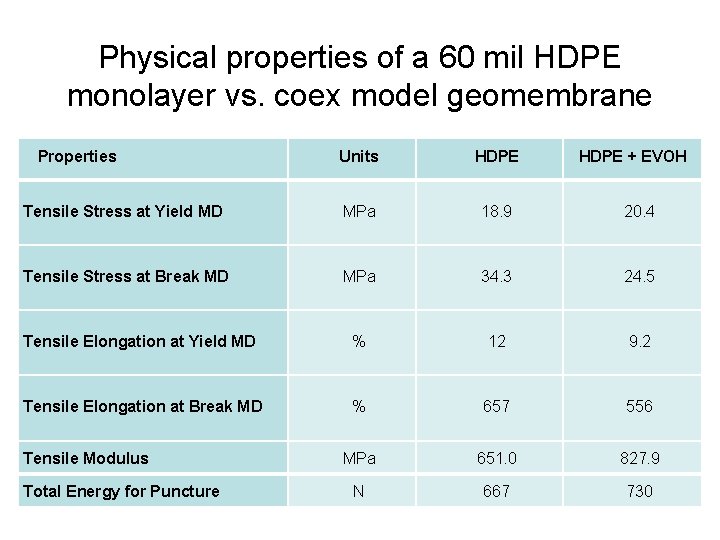
Physical properties of a 60 mil HDPE monolayer vs. coex model geomembrane Properties Units HDPE Tensile Stress at Yield MD MPa 18. 9 20. 4 Tensile Stress at Break MD MPa 34. 3 24. 5 Tensile Elongation at Yield MD % 12 9. 2 Tensile Elongation at Break MD % 657 556 MPa 651. 0 827. 9 N 667 730 Tensile Modulus Total Energy for Puncture HDPE + EVOH
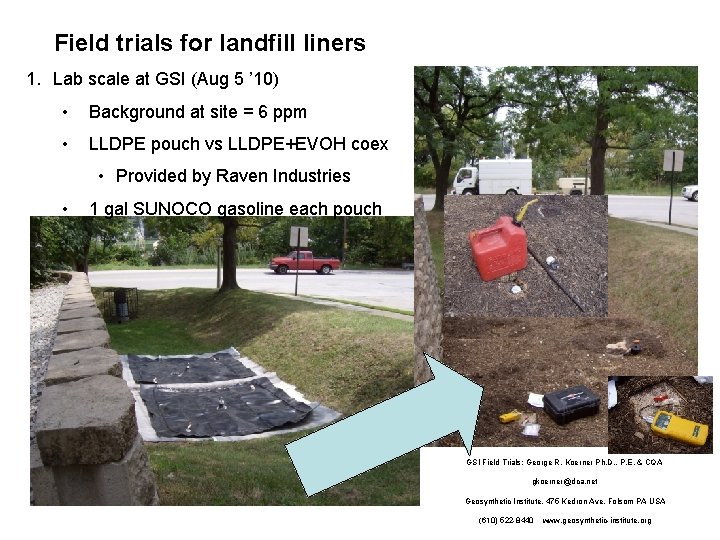
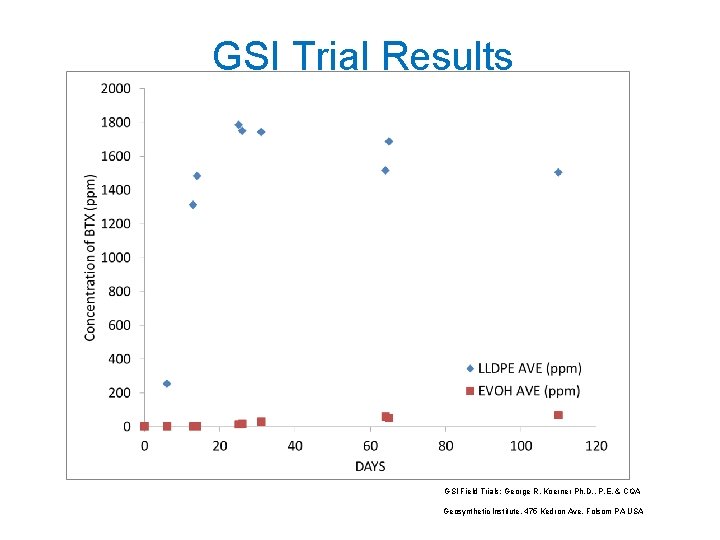
Field trials for landfill liners 1. Lab scale at GSI (Aug 5 ’ 10) • Background at site = 6 ppm • LLDPE pouch vs LLDPE+EVOH coex • Provided by Raven Industries • 1 gal SUNOCO gasoline each pouch Landfill trial WM site in Pennsylvania GSI Field Trials: George R. Koerner Ph. D. , P. E. & CQA gkoerner@dca. net Geosynthetic Institute, 475 Kedron Ave. Folsom PA USA (610) 522 -8440 www. geosynthetic-institute. org
GSI Trial Results GSI Field Trials: George R. Koerner Ph. D. , P. E. & CQA Geosynthetic Institute, 475 Kedron Ave. Folsom PA USA
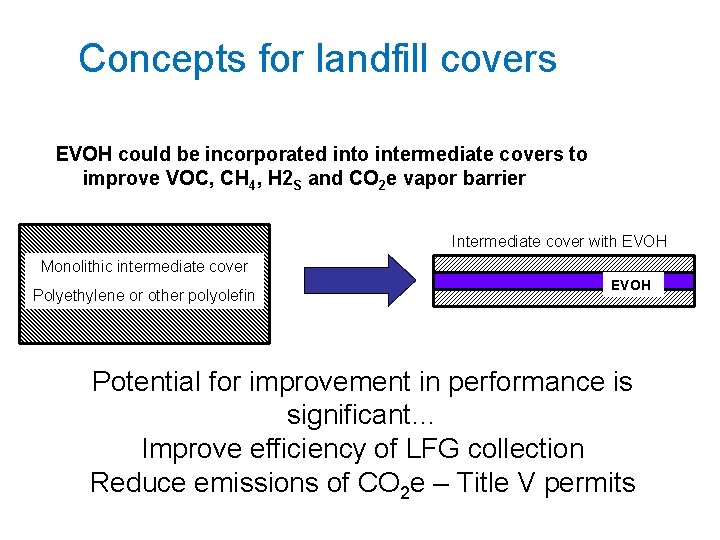
Concepts for landfill covers EVOH could be incorporated into intermediate covers to improve VOC, CH 4, H 2 S and CO 2 e vapor barrier Intermediate cover with EVOH Monolithic intermediate cover Polyethylene or other polyolefin EVOH Potential for improvement in performance is significant… Improve efficiency of LFG collection Reduce emissions of CO 2 e – Title V permits
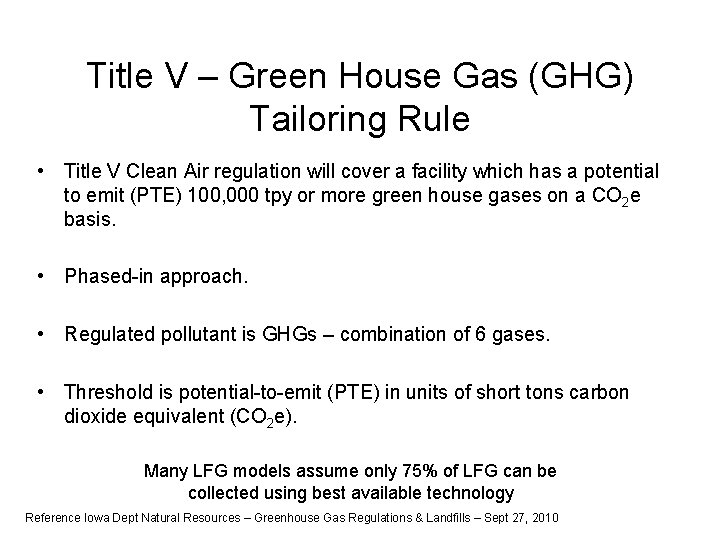
Title V – Green House Gas (GHG) Tailoring Rule • Title V Clean Air regulation will cover a facility which has a potential to emit (PTE) 100, 000 tpy or more green house gases on a CO 2 e basis. • Phased-in approach. • Regulated pollutant is GHGs – combination of 6 gases. • Threshold is potential-to-emit (PTE) in units of short tons carbon dioxide equivalent (CO 2 e). Many LFG models assume only 75% of LFG can be collected using best available technology Reference Iowa Dept Natural Resources – Greenhouse Gas Regulations & Landfills – Sept 27, 2010
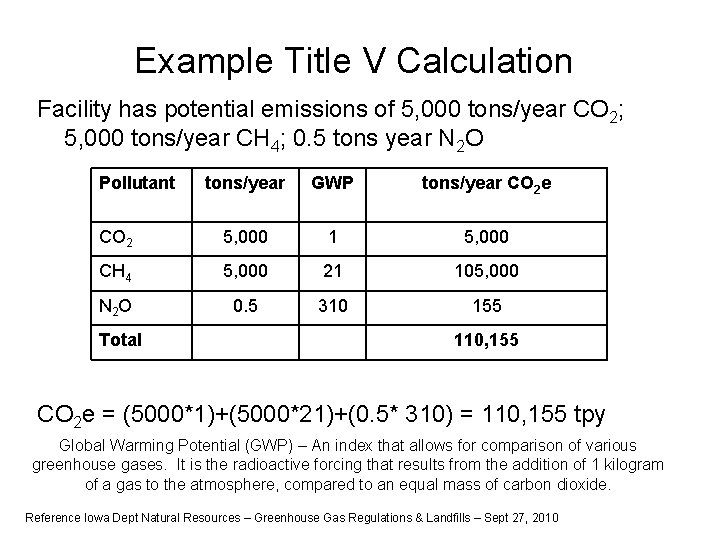
Example Title V Calculation Facility has potential emissions of 5, 000 tons/year CO 2; 5, 000 tons/year CH 4; 0. 5 tons year N 2 O Pollutant tons/year GWP tons/year CO 2 e CO 2 5, 000 1 5, 000 CH 4 5, 000 21 105, 000 N 2 O 0. 5 310 155 Total 110, 155 CO 2 e = (5000*1)+(5000*21)+(0. 5* 310) = 110, 155 tpy Global Warming Potential (GWP) – An index that allows for comparison of various greenhouse gases. It is the radioactive forcing that results from the addition of 1 kilogram of a gas to the atmosphere, compared to an equal mass of carbon dioxide. Reference Iowa Dept Natural Resources – Greenhouse Gas Regulations & Landfills – Sept 27, 2010
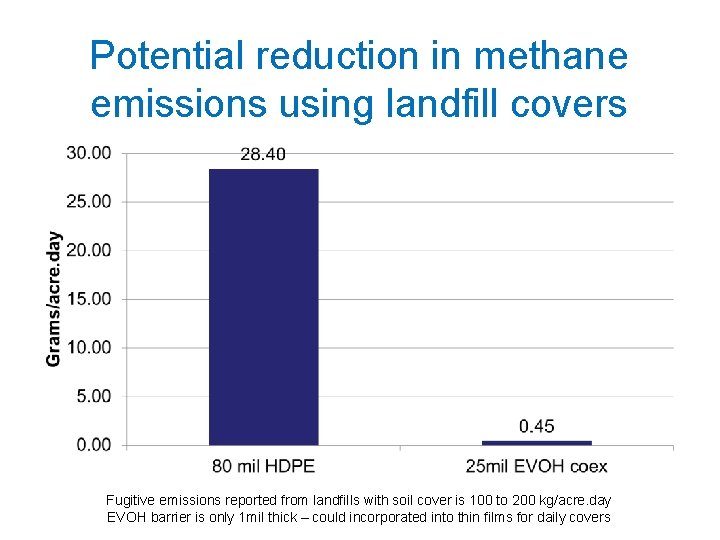
Potential reduction in methane emissions using landfill covers Fugitive emissions reported from landfills with soil cover is 100 to 200 kg/acre. day EVOH barrier is only 1 mil thick – could incorporated into thin films for daily covers
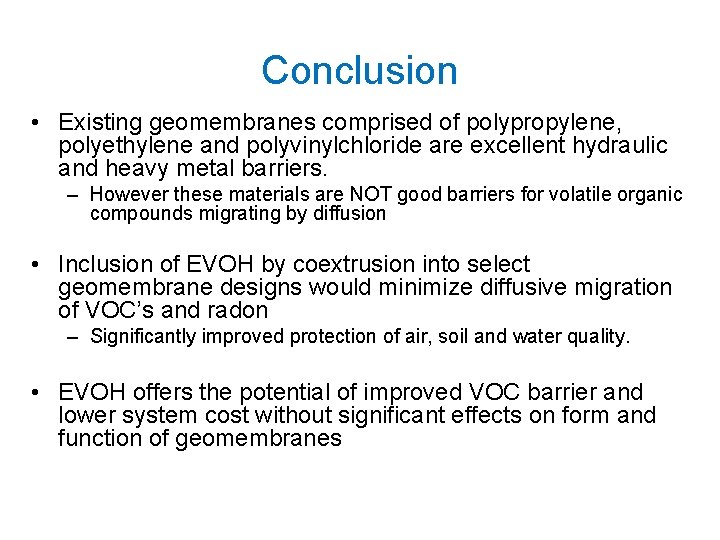
Conclusion • Existing geomembranes comprised of polypropylene, polyethylene and polyvinylchloride are excellent hydraulic and heavy metal barriers. – However these materials are NOT good barriers for volatile organic compounds migrating by diffusion • Inclusion of EVOH by coextrusion into select geomembrane designs would minimize diffusive migration of VOC’s and radon – Significantly improved protection of air, soil and water quality. • EVOH offers the potential of improved VOC barrier and lower system cost without significant effects on form and function of geomembranes
Value of EVOH in personal and environmental protection CO 2, CH 4, H 2 S Bioreactor BTEX, TCE Landfill EVOH liner Protection of health and the environment (air, soil and water quality) Reducing remediation costs and potential liability Radon & Vapor Intrusion
Questions are welcome. Presented by: Robert B. Armstrong phone (281) 474 -1576 robert. armstrong@kurarayamerica. com Logo here