
Properties and changes of materials Investigating reversible changes
Properties and changes of materials Investigating reversible changes by separating materials 1 Key Learning • Some changes to materials such as dissolving and mixing are reversible. The materials can be separated, as no new materials have been formed. • Insoluble materials can be separated from a liquid by sieving or filtering. • Soluble materials can be separated from a liquid by the process of evaporation. Activities (pages 3 -7): 30 - 45 mins, plus evaporation time! I can… Taking it further… (page 8): 20 - 30 mins • select equipment to separate two or more materials by sieving, filtering and/or evaporating. • You may like to try mixing and separating other insoluble materials. Alternatively, explore more about evaporating salty water. Household items to support learning: • Kitchen paper, sieve, bowls, cups. • Salt, flour and uncooked rice (or other dried grain/pulse). • Teaspoon and water. • Use lined paper and a pencil for recording. Alternatively you may wish to print page 7 as a worksheet.
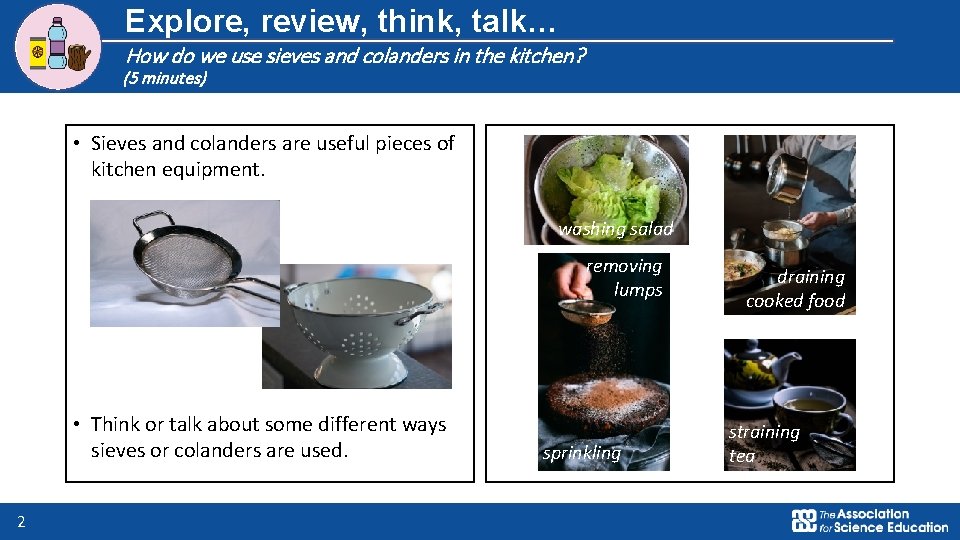
Explore, review, think, talk… How do we use sieves and colanders in the kitchen? (5 minutes) • Sieves and colanders are useful pieces of kitchen equipment. washing salad removing lumps • Think or talk about some different ways sieves or colanders are used. 2 sprinkling draining cooked food straining tea

Separating materials How do you separate materials that are mixed together? (pages 4 -7: 30 - 40 minutes) • Sieves have a mesh or small holes. • Different sized meshes are used depending on the size of the grains being separated. • Fine grained solids or powders can pass through a small mesh. • Sometimes more than one sieve size may be needed, for example, removing different sized stones from soil. 3 • Sieves can also separate many solids from a liquid. • Think or talk about when a sieve might not be suitable for separating a solid from a liquid. • Watch these two clips: https: //www. bbc. co. uk/bitesize/clips/z 9 jd 7 ty • https: //www. bbc. co. uk/bitesize/topics/zcvv 4 wx/ar ticles/zw 7 tv 9 q
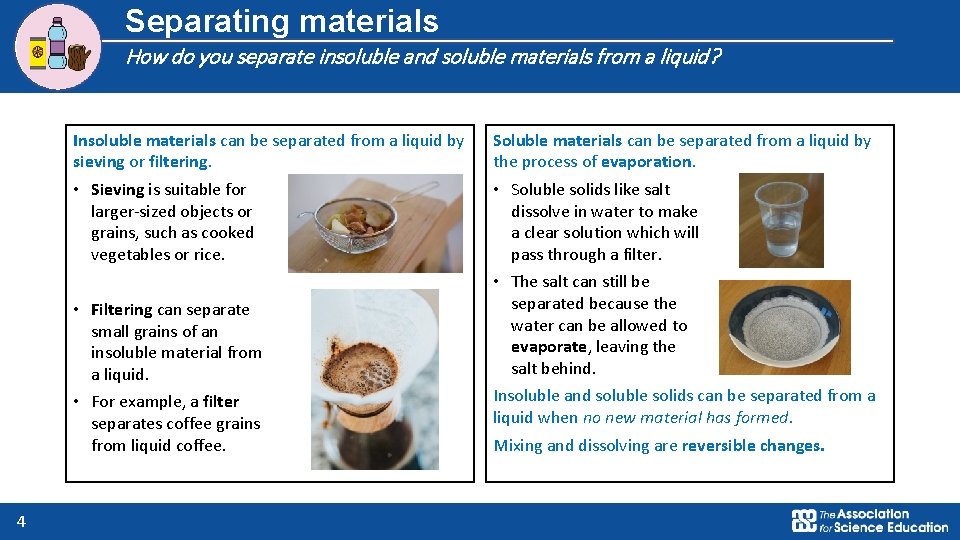
Separating materials How do you separate insoluble and soluble materials from a liquid? Insoluble materials can be separated from a liquid by sieving or filtering. Soluble materials can be separated from a liquid by the process of evaporation. • Sieving is suitable for larger-sized objects or grains, such as cooked vegetables or rice. • Soluble solids like salt dissolve in water to make a clear solution which will pass through a filter. • The salt can still be separated because the water can be allowed to evaporate, leaving the salt behind. Insoluble and soluble solids can be separated from a liquid when no new material has formed. Mixing and dissolving are reversible changes. • Filtering can separate small grains of an insoluble material from a liquid. • For example, a filter separates coffee grains from liquid coffee. 4
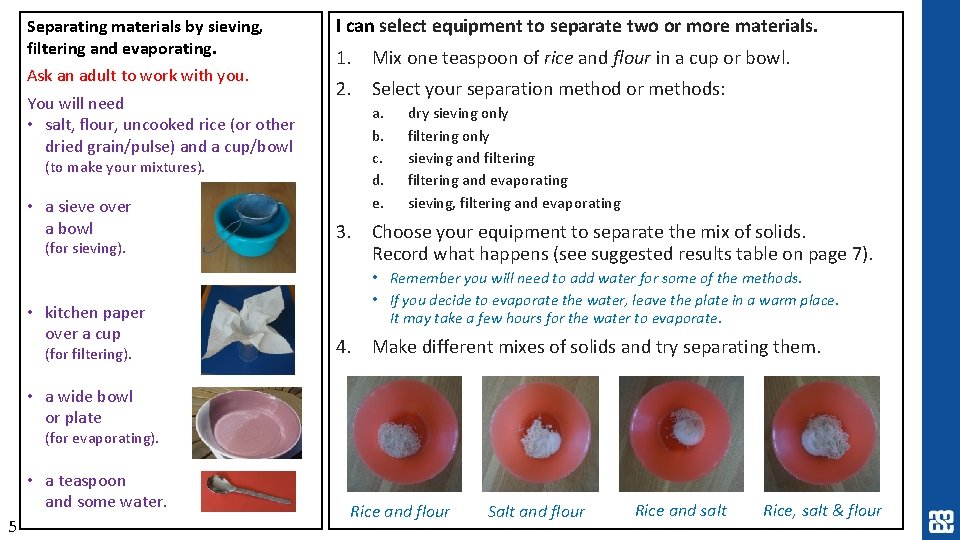
Separating materials by sieving, filtering and evaporating. Ask an adult to work with you. You will need • salt, flour, uncooked rice (or other dried grain/pulse) and a cup/bowl (to make your mixtures). • a sieve over a bowl (for sieving). • kitchen paper over a cup (for filtering). I can select equipment to separate two or more materials. 1. Mix one teaspoon of rice and flour in a cup or bowl. 2. Select your separation method or methods: a. b. c. d. e. dry sieving only filtering only sieving and filtering and evaporating sieving, filtering and evaporating 3. Choose your equipment to separate the mix of solids. Record what happens (see suggested results table on page 7). • Remember you will need to add water for some of the methods. • If you decide to evaporate the water, leave the plate in a warm place. It may take a few hours for the water to evaporate. 4. Make different mixes of solids and try separating them. • a wide bowl or plate (for evaporating). • a teaspoon and some water. 5 Rice and flour Salt and flour Rice and salt Rice, salt & flour
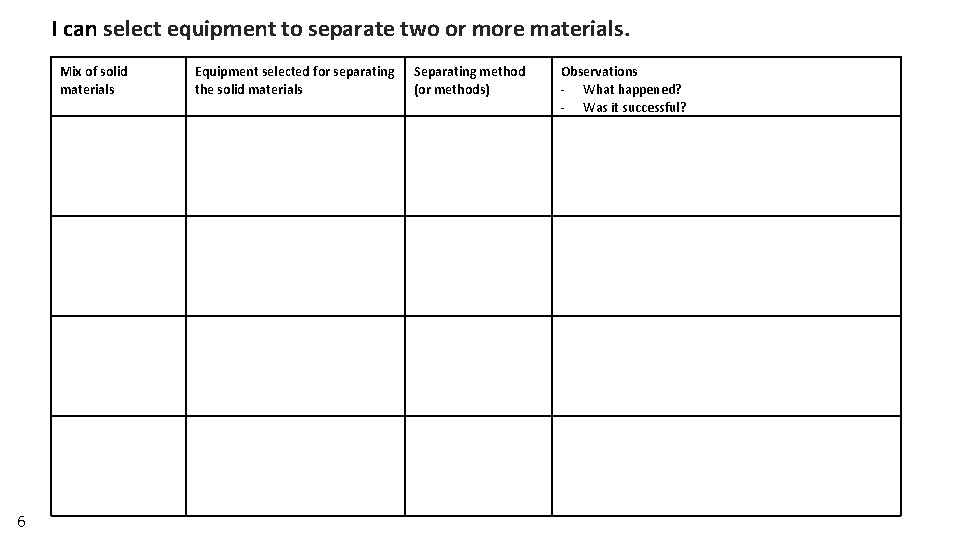
I can select equipment to separate two or more materials. Mix of solid materials 6 Equipment selected for separating the solid materials Separating method (or methods) Observations - What happened? - Was it successful?
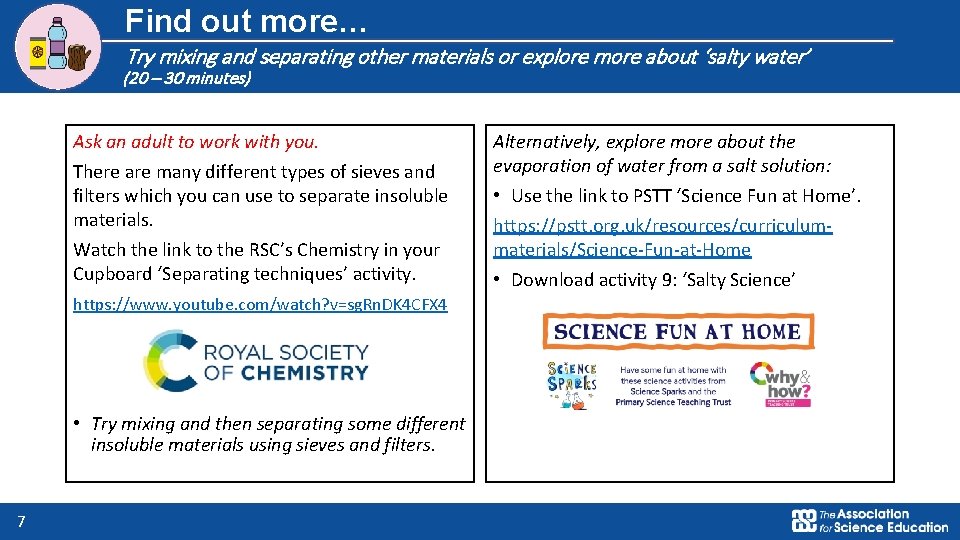
Find out more… Try mixing and separating other materials or explore more about ‘salty water’ (20 – 30 minutes) Ask an adult to work with you. There are many different types of sieves and filters which you can use to separate insoluble materials. Watch the link to the RSC’s Chemistry in your Cupboard ‘Separating techniques’ activity. https: //www. youtube. com/watch? v=sg. Rn. DK 4 CFX 4 • Try mixing and then separating some different insoluble materials using sieves and filters. 7 Alternatively, explore more about the evaporation of water from a salt solution: • Use the link to PSTT ‘Science Fun at Home’. https: //pstt. org. uk/resources/curriculummaterials/Science-Fun-at-Home • Download activity 9: ‘Salty Science’
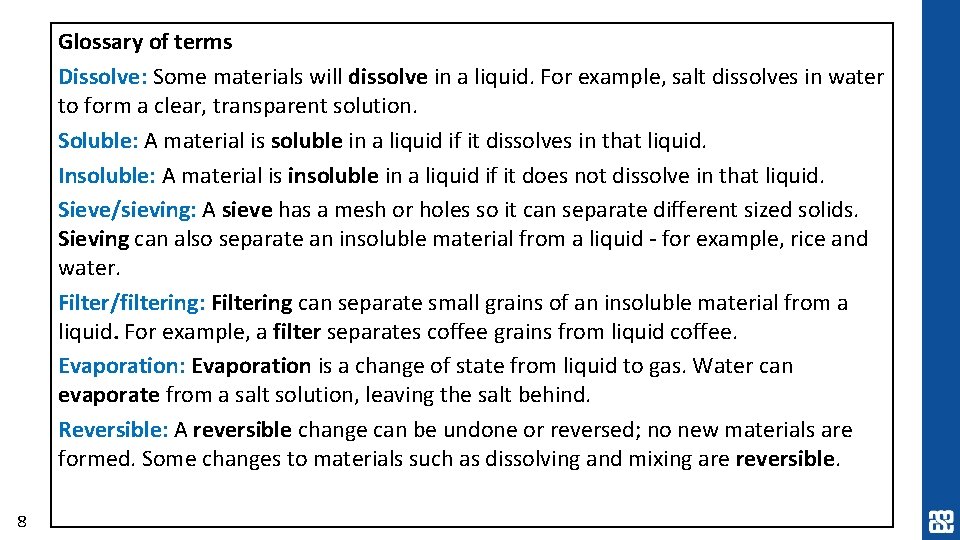
Glossary of terms Dissolve: Some materials will dissolve in a liquid. For example, salt dissolves in water to form a clear, transparent solution. Soluble: A material is soluble in a liquid if it dissolves in that liquid. Insoluble: A material is insoluble in a liquid if it does not dissolve in that liquid. Sieve/sieving: A sieve has a mesh or holes so it can separate different sized solids. Sieving can also separate an insoluble material from a liquid - for example, rice and water. Filter/filtering: Filtering can separate small grains of an insoluble material from a liquid. For example, a filter separates coffee grains from liquid coffee. Evaporation: Evaporation is a change of state from liquid to gas. Water can evaporate from a salt solution, leaving the salt behind. Reversible: A reversible change can be undone or reversed; no new materials are formed. Some changes to materials such as dissolving and mixing are reversible. 8
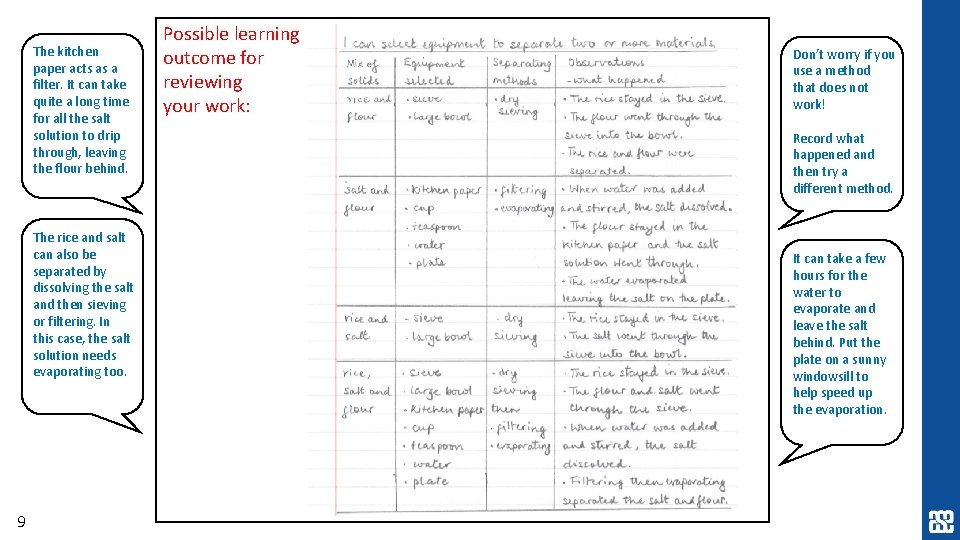
The kitchen paper acts as a filter. It can take quite a long time for all the salt solution to drip through, leaving the flour behind. The rice and salt can also be separated by dissolving the salt and then sieving or filtering. In this case, the salt solution needs evaporating too. 9 Possible learning outcome for reviewing your work: Don’t worry if you use a method that does not work! Record what happened and then try a different method. It can take a few hours for the water to evaporate and leave the salt behind. Put the plate on a sunny windowsill to help speed up the evaporation.
- Slides: 9