
Properties and changes of materials Comparing soluble and
Properties and changes of materials Comparing soluble and insoluble materials
Glossary of terms Material: Material is the matter from which a thing is or can be made. Dissolve: Some materials will dissolve in a liquid. For example, sugar dissolves in water to form a clear, transparent solution. Solution: When a material dissolves in a liquid it forms a clear solution. A solution can be transparent or coloured. For example, brown sugar forms a clear, coloured solution. Soluble: A material is soluble in a liquid if it dissolves in that liquid. Insoluble: A material is insoluble in a liquid if it does not dissolve in that liquid. Sediment: Some insoluble materials sink quickly and form a sediment at the bottom of a liquid. Suspended: Some insoluble materials do not sink quickly so the liquid looks cloudy. The sediment is suspended in the liquid. 2
Properties and changes of materials • Comparing soluble and insoluble materials Key Learning Activities • Some materials will dissolve in a liquid and form a solution. They are soluble materials. Household items to support learning: • Other materials do not dissolve in a liquid. They form a sediment. These materials are insoluble. • Salt, white sugar, brown sugar, flour and rice (or other grain/pulse). • Clear plastic cups (or glass cups). • Teaspoon and water. • Use lined paper and a pencil for recording. Alternatively you may wish to use the • worksheet. 3 I can… Taking it further • identify and compare soluble and insoluble materials. • You may like to find out more about the properties of salty water.
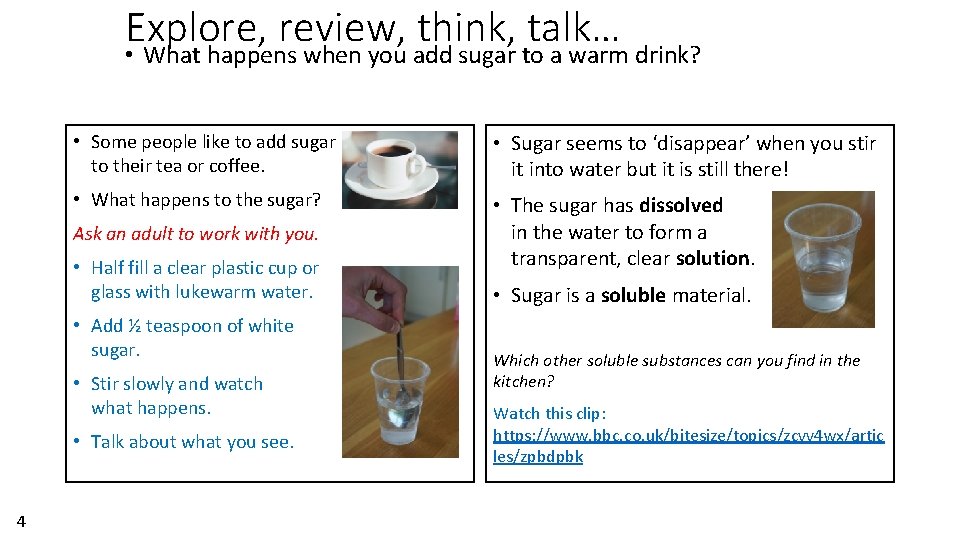
Explore, review, think, talk… • What happens when you add sugar to a warm drink? (5 minutes) • Some people like to add sugar to their tea or coffee. • Sugar seems to ‘disappear’ when you stir it into water but it is still there! • What happens to the sugar? • The sugar has dissolved in the water to form a transparent, clear solution. Ask an adult to work with you. • Half fill a clear plastic cup or glass with lukewarm water. • Add ½ teaspoon of white sugar. • Stir slowly and watch what happens. • Talk about what you see. 4 • Sugar is a soluble material. Which other soluble substances can you find in the kitchen? Watch this clip: https: //www. bbc. co. uk/bitesize/topics/zcvv 4 wx/artic les/zpbdpbk
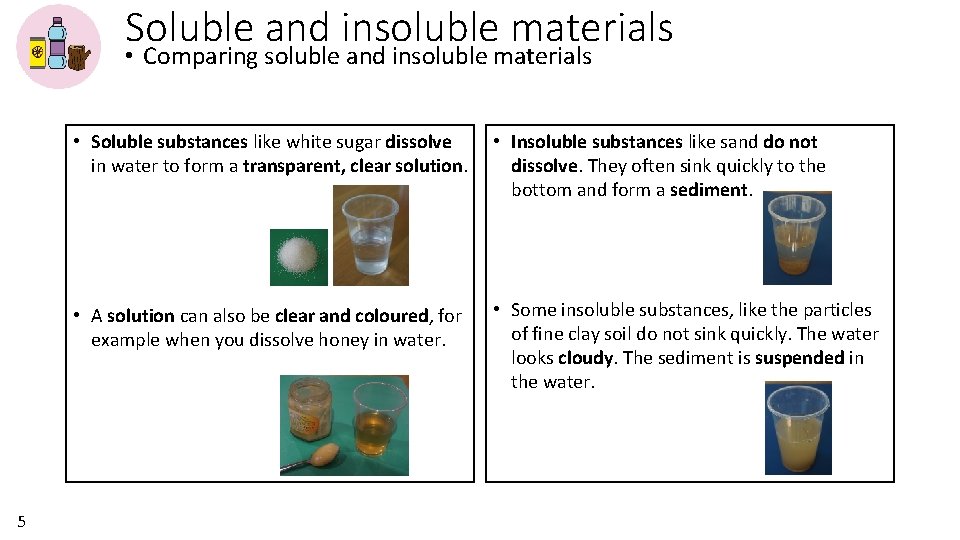
Soluble and insoluble materials • Comparing soluble and insoluble materials (pages 4 -6: 30 minutes) 5 • Soluble substances like white sugar dissolve in water to form a transparent, clear solution. • Insoluble substances like sand do not dissolve. They often sink quickly to the bottom and form a sediment. • A solution can also be clear and coloured, for example when you dissolve honey in water. • Some insoluble substances, like the particles of fine clay soil do not sink quickly. The water looks cloudy. The sediment is suspended in the water.
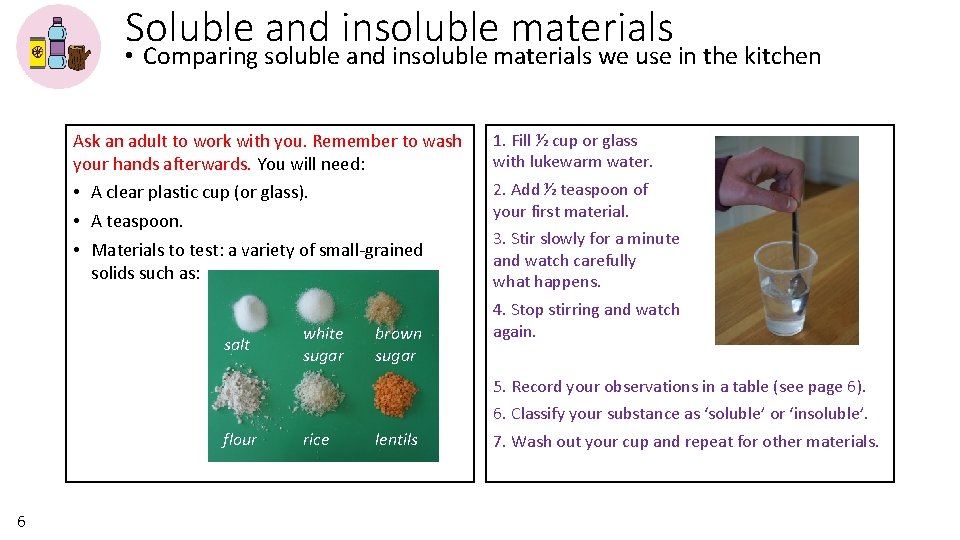
Soluble and insoluble materials • Comparing soluble and insoluble materials we use in the kitchen Ask an adult to work with you. Remember to wash your hands afterwards. You will need: 1. Fill ½ cup or glass with lukewarm water. • A clear plastic cup (or glass). • A teaspoon. • Materials to test: a variety of small-grained solids such as: 2. Add ½ teaspoon of your first material. salt white sugar brown sugar 3. Stir slowly for a minute and watch carefully what happens. 4. Stop stirring and watch again. 5. Record your observations in a table (see page 6). 6. Classify your substance as ‘soluble’ or ‘insoluble’. flour 6 rice lentils 7. Wash out your cup and repeat for other materials.
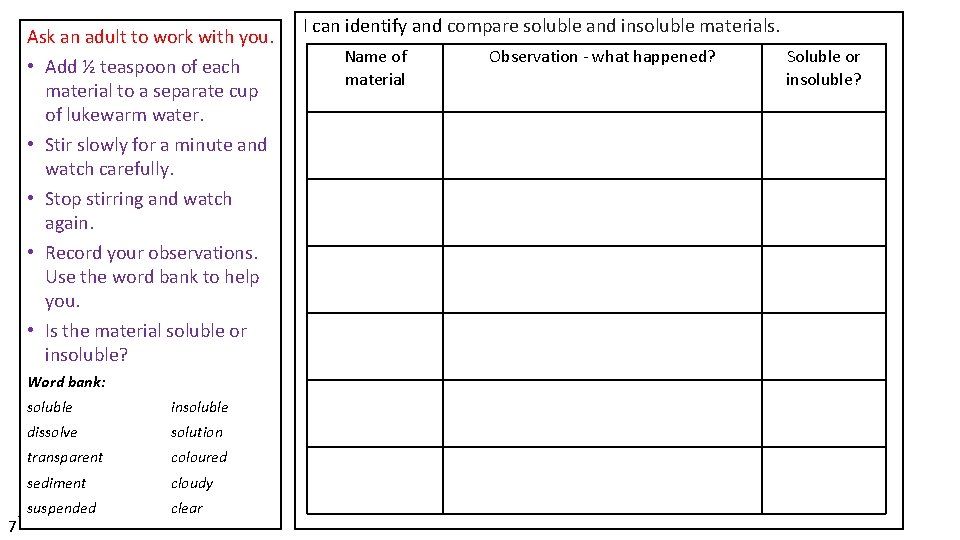
Ask an adult to work with you. • Add ½ teaspoon of each material to a separate cup of lukewarm water. • Stir slowly for a minute and watch carefully. • Stop stirring and watch again. • Record your observations. Use the word bank to help you. • Is the material soluble or insoluble? Word bank: 77 soluble insoluble dissolve solution transparent coloured sediment cloudy suspended clear I can identify and compare soluble and insoluble materials. Name of material Observation - what happened? Soluble or insoluble?
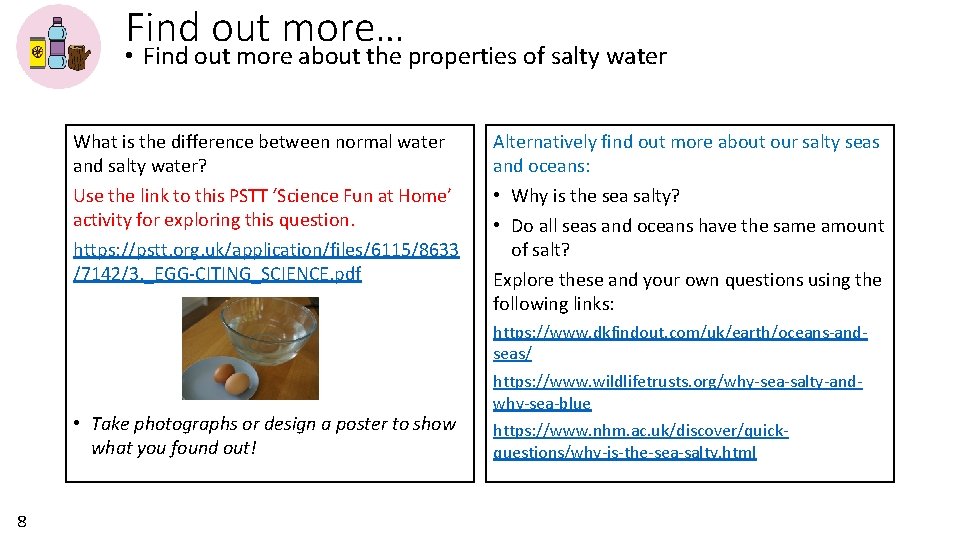
Find out more… • Find out more about the properties of salty water (20 – 30 minutes) What is the difference between normal water and salty water? Use the link to this PSTT ‘Science Fun at Home’ activity for exploring this question. https: //pstt. org. uk/application/files/6115/8633 /7142/3. _EGG-CITING_SCIENCE. pdf Alternatively find out more about our salty seas and oceans: • Why is the sea salty? • Do all seas and oceans have the same amount of salt? Explore these and your own questions using the following links: https: //www. dkfindout. com/uk/earth/oceans-andseas/ • Take photographs or design a poster to show what you found out! 8 https: //www. wildlifetrusts. org/why-sea-salty-andwhy-sea-blue https: //www. nhm. ac. uk/discover/quickquestions/why-is-the-sea-salty. html
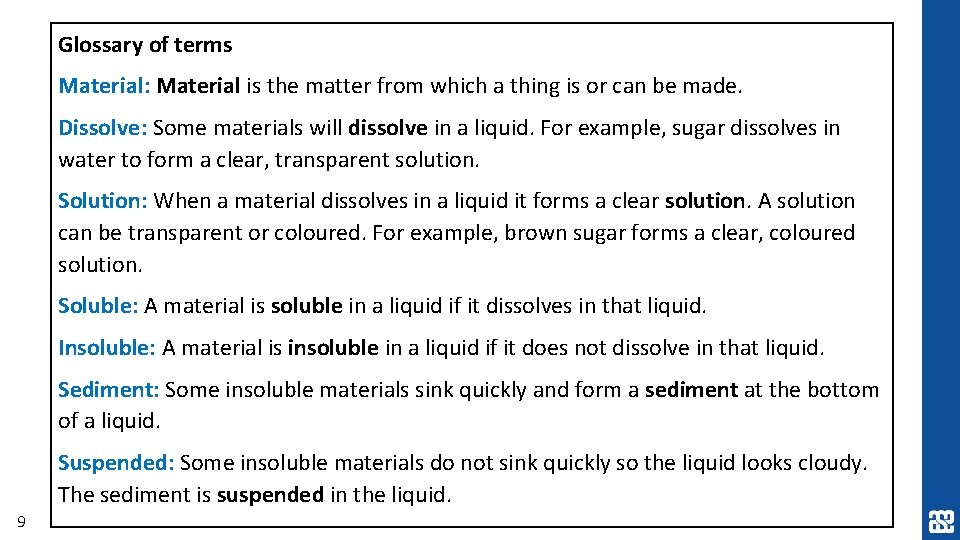
Glossary of terms Material: Material is the matter from which a thing is or can be made. Dissolve: Some materials will dissolve in a liquid. For example, sugar dissolves in water to form a clear, transparent solution. Solution: When a material dissolves in a liquid it forms a clear solution. A solution can be transparent or coloured. For example, brown sugar forms a clear, coloured solution. Soluble: A material is soluble in a liquid if it dissolves in that liquid. Insoluble: A material is insoluble in a liquid if it does not dissolve in that liquid. Sediment: Some insoluble materials sink quickly and form a sediment at the bottom of a liquid. Suspended: Some insoluble materials do not sink quickly so the liquid looks cloudy. The sediment is suspended in the liquid. 9
- Slides: 9