
Proper Micropipette Technique and Slide Preparation Day 2
- Slides: 16
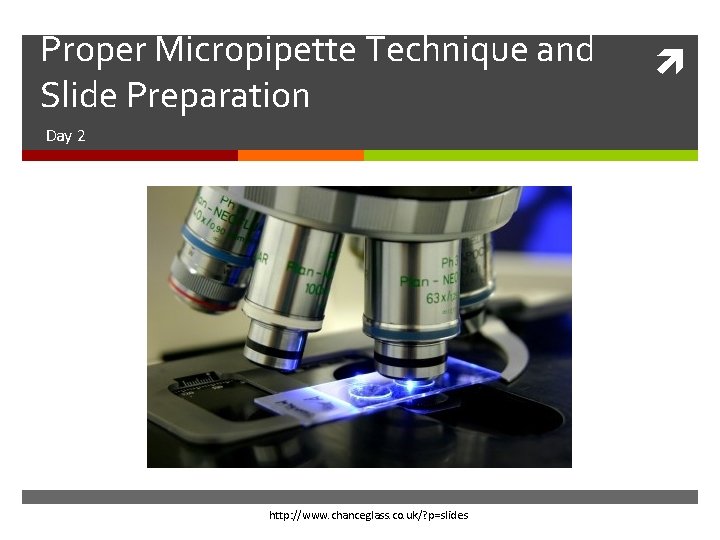
Proper Micropipette Technique and Slide Preparation Day 2 http: //www. chanceglass. co. uk/? p=slides
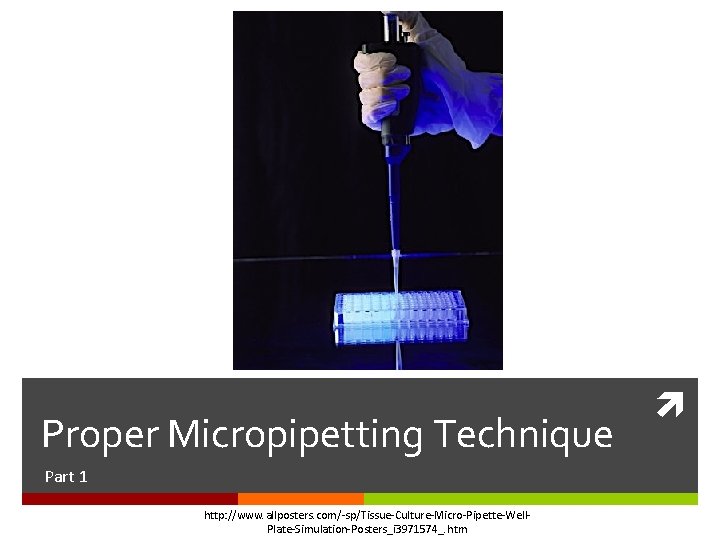
Proper Micropipetting Technique Part 1 http: //www. allposters. com/-sp/Tissue-Culture-Micro-Pipette-Well. Plate-Simulation-Posters_i 3971574_. htm
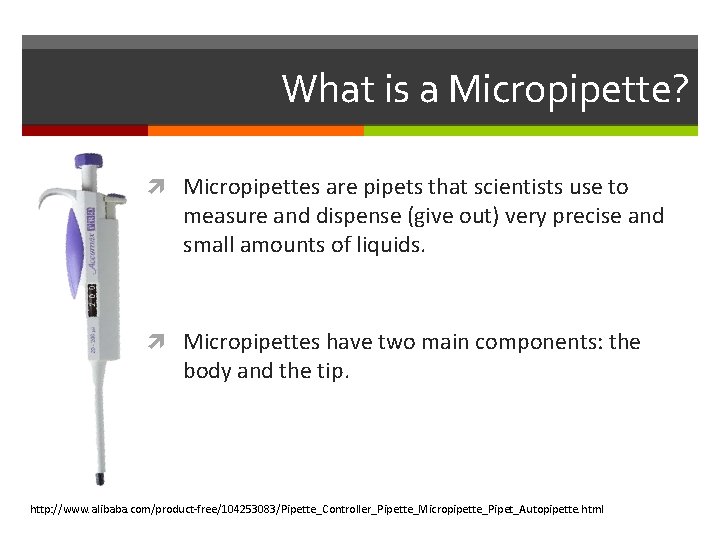
What is a Micropipette? Micropipettes are pipets that scientists use to measure and dispense (give out) very precise and small amounts of liquids. Micropipettes have two main components: the body and the tip. http: //www. alibaba. com/product-free/104253083/Pipette_Controller_Pipette_Micropipette_Pipet_Autopipette. html
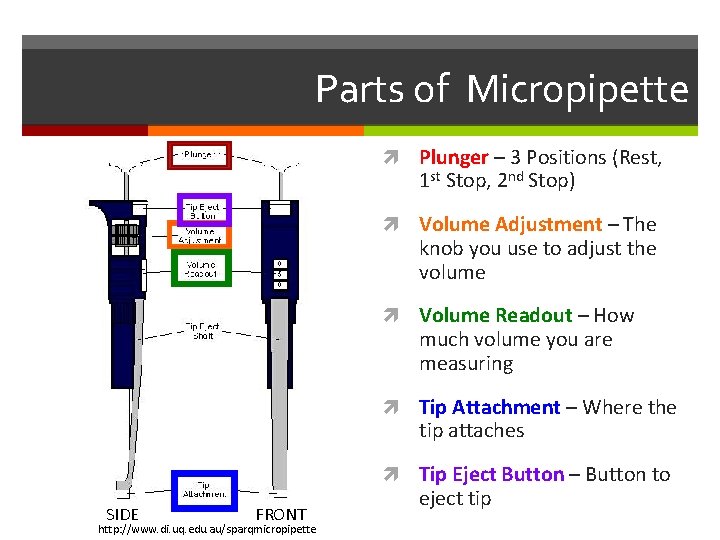
Parts of Micropipette Plunger – 3 Positions (Rest, 1 st Stop, 2 nd Stop) Volume Adjustment – The knob you use to adjust the volume Volume Readout – How much volume you are measuring Tip Attachment – Where the tip attaches Tip Eject Button – Button to SIDE FRONT http: //www. di. uq. edu. au/sparqmicropipette eject tip
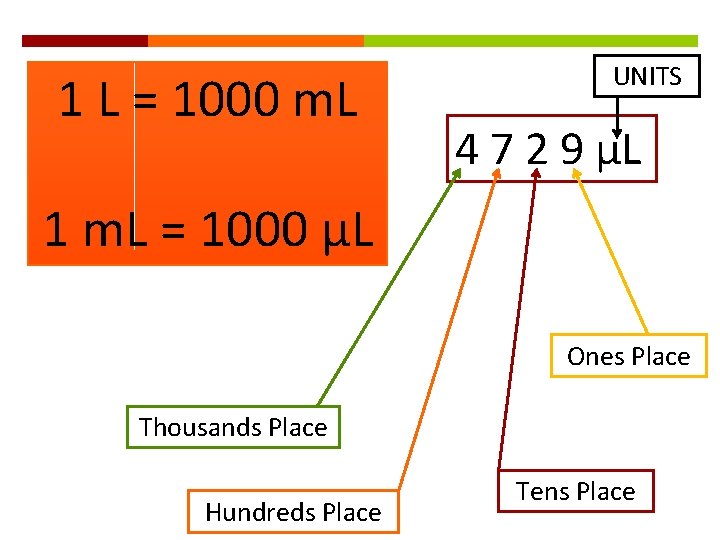
1 L = 1000 m. L UNITS 4 7 2 9 μL 1 m. L = 1000 μL Ones Place Thousands Place Hundreds Place Tens Place
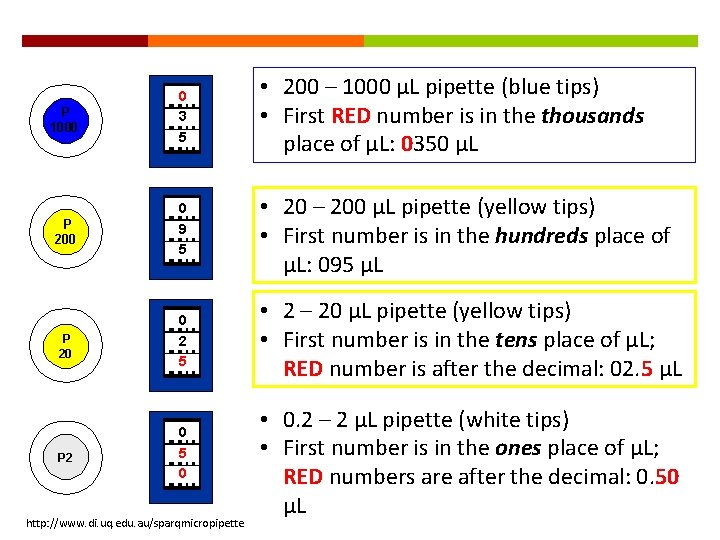
• 200 – 1000 μL pipette (blue tips) • First RED number is in the thousands place of μL: 0350 μL • 20 – 200 μL pipette (yellow tips) • First number is in the hundreds place of μL: 095 μL • 2 – 20 μL pipette (yellow tips) • First number is in the tens place of μL; RED number is after the decimal: 02. 5 μL http: //www. di. uq. edu. au/sparqmicropipette • 0. 2 – 2 μL pipette (white tips) • First number is in the ones place of μL; RED numbers are after the decimal: 0. 50 μL
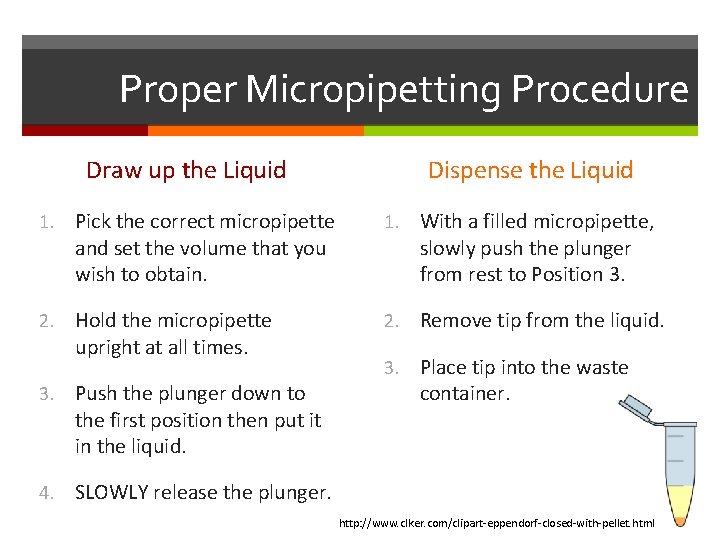
Proper Micropipetting Procedure Draw up the Liquid Dispense the Liquid 1. Pick the correct micropipette and set the volume that you wish to obtain. 1. With a filled micropipette, slowly push the plunger from rest to Position 3. 2. Hold the micropipette upright at all times. 2. Remove tip from the liquid. 3. Place tip into the waste container. 3. Push the plunger down to the first position then put it in the liquid. 4. SLOWLY release the plunger. http: //www. clker. com/clipart-eppendorf-closed-with-pellet. html
Practice Time! http: //wordartworld. blogspot. com/2009/10/practice-makes-perfect. html Complete Section 2. 1 You have until ______ (insert time)
Preparing Slides Part 2 http: //www. thermoscientific. com/ecomm/servlet/home? store. Id=11152
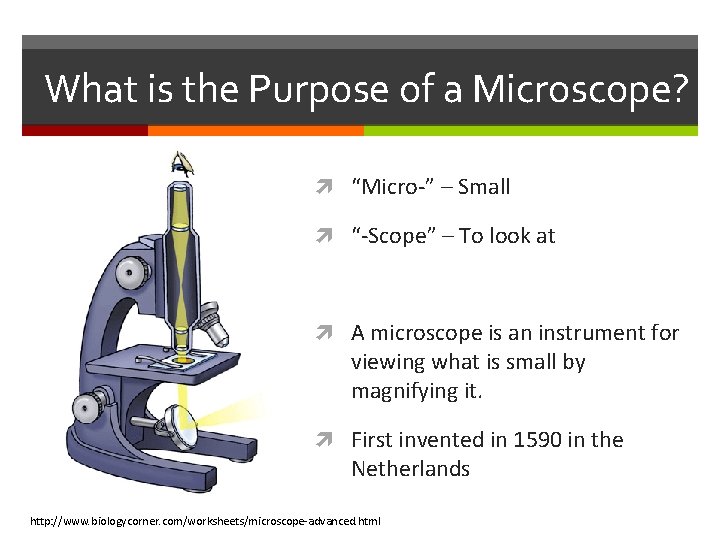
What is the Purpose of a Microscope? “Micro-” – Small “-Scope” – To look at A microscope is an instrument for viewing what is small by magnifying it. First invented in 1590 in the Netherlands http: //www. biologycorner. com/worksheets/microscope-advanced. html
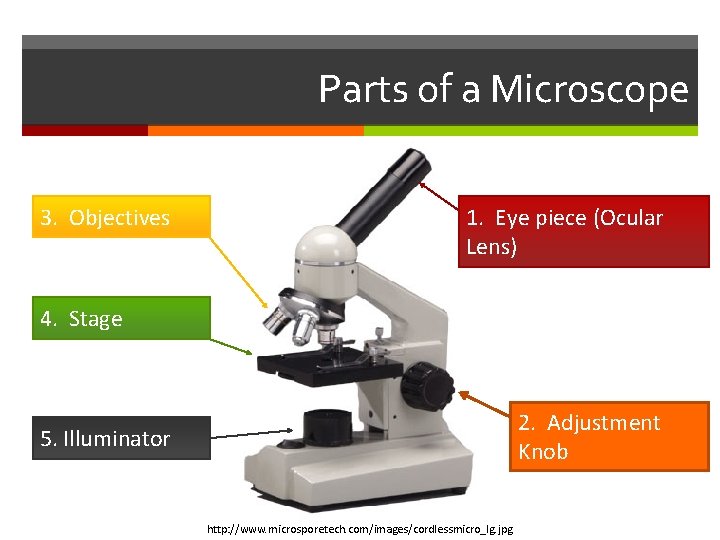
Parts of a Microscope 3. Objectives 1. Eye piece (Ocular Lens) 4. Stage 2. Adjustment Knob 5. Illuminator http: //www. microsporetech. com/images/cordlessmicro_lg. jpg
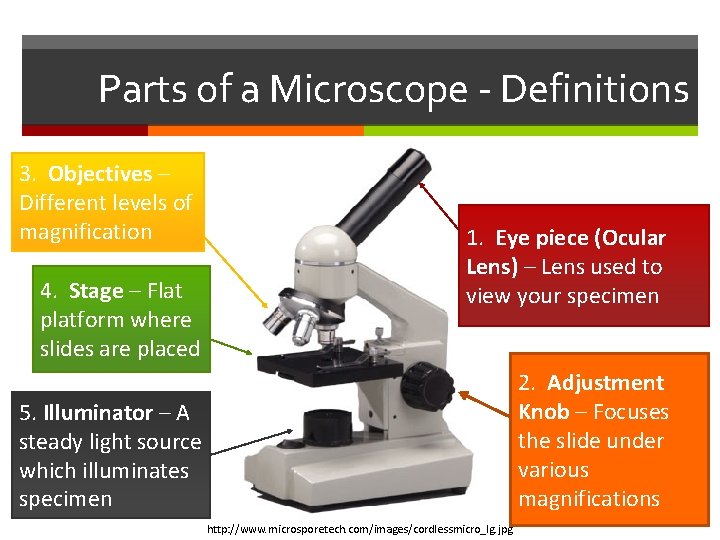
Parts of a Microscope - Definitions 3. Objectives – Different levels of magnification 4. Stage – Flat platform where slides are placed 1. Eye piece (Ocular Lens) – Lens used to view your specimen 2. Adjustment Knob – Focuses the slide under various magnifications 5. Illuminator – A steady light source which illuminates specimen http: //www. microsporetech. com/images/cordlessmicro_lg. jpg
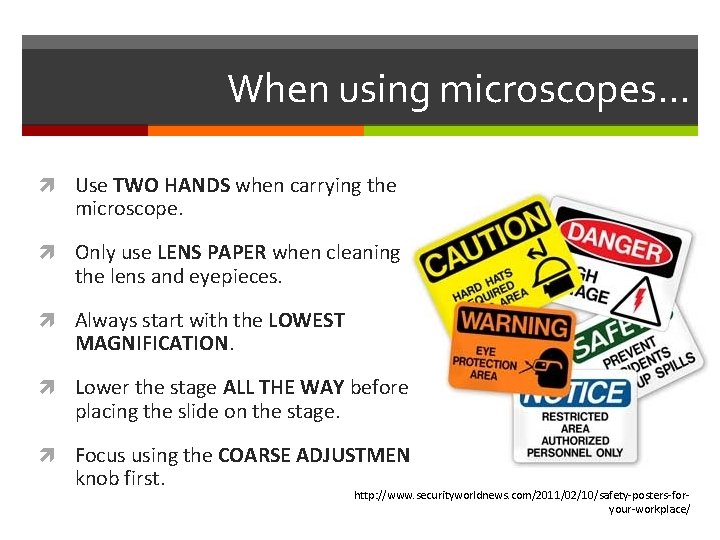
When using microscopes… Use TWO HANDS when carrying the microscope. Only use LENS PAPER when cleaning the lens and eyepieces. Always start with the LOWEST MAGNIFICATION. Lower the stage ALL THE WAY before placing the slide on the stage. Focus using the COARSE ADJUSTMENT knob first. http: //www. securityworldnews. com/2011/02/10/safety-posters-foryour-workplace/
Slide Preparation – Materials Slide Coverslip 2 -5 mm pieces of double stick tape Micropipette Liquid sample Nail polish (optional) http: //www. ehow. co. uk/how_7644973_prepare-wetmount-slide-pond-water. html
Slide Preparation – Procedure 1. Place 2 -5 x 20 mm pieces of double sided tape on a slide spaced about 10 mm apart. 2. Place the coverslip on top of the tape. 3. Using a micropipette, place 100 μL of your liquid solution in the channel created. 4. Place under the microscope. Observe. http: //www. ehow. co. uk/how_7644973_prepare-wetmount-slide-pond-water. html
Practice Time! http: //wordartworld. blogspot. com/2009/10/practice-makes-perfect. html Complete Section 2. 2 You have until ______ (insert time)