
Propelling Your Research into the public sphere Charity
Propelling Your Research (into the public sphere)! Charity Slobod
“ Who? I studied comics books and their translation, graduating with an MA from Modern Languages and Cultural Studies. Today I use that same research to apply what I’ve learned to help graduate students creatively communicate their work to – and for the public. 2
THE WHY “We spend so much time learning / developing skills, it makes sense to share them with others. Particularly in a publically funded institution, the things we learn should be shared. ” - An outreach student when asked: “why we do community volunteer/engagement work? ” 3
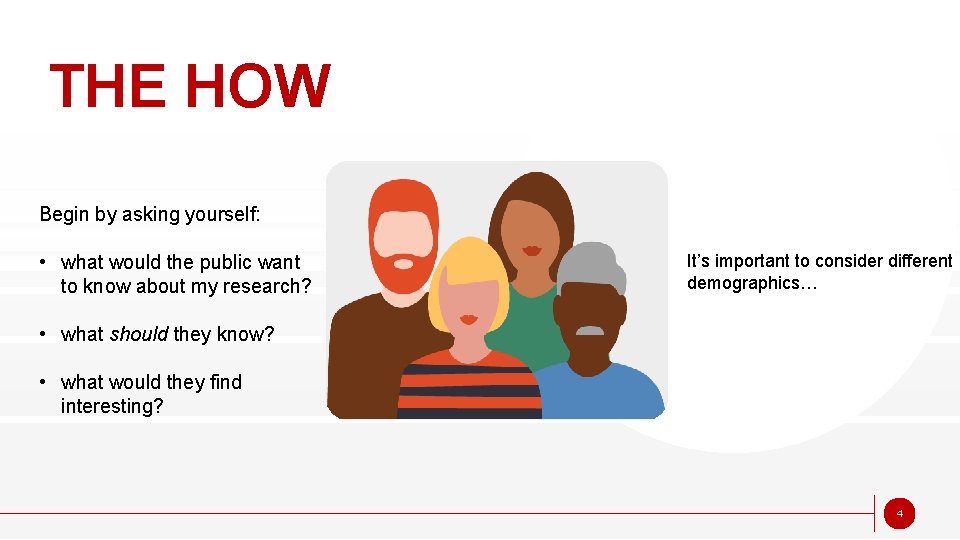
THE HOW Begin by asking yourself: • what would the public want to know about my research? It’s important to consider different demographics… • what should they know? • what would they find interesting? 4
Try diversifying your research to different demographics. What would _____ want to know about your work? • grade 12 students • newcomers to Canada • kindergarten students • retired university alumni • undergrads outside your field • your choice (think of an ideal group with who you want to connect Geeko 5
THE DIFFERENCES BETWEEN • Many younger children engage with material on a tactile level. • They also connect with research in more ‘general’ (broad) terms. • i. e. researching fire-retardant garments, children would want to touch fabrics, ask about firefighters (rather than know about ‘polymers’) • Adults are curious based on their personal interests or backgrounds. • Questions usually reflect their own knowledge. • What about special interest groups? Clubs? Non for Profits? • Ask, who should hear about your area of research
Semantic Fields | Exercise A. Think of 1 - 2 words to describe your research. I. II. Think of the ‘keywords’ of your work No jargon! B. Write that/those word(s) in the middle of your page. C. Now, GO! Write anything you associate with that/those word(s). I. The first things that come to mind! a) Using the backside of your sheet, write the same original word(s) in the middle of the page. b) Pass your sheet to someone at your table outside of your research area. c) Repeat previous exercise, but write words which resonate with you! I. Do not try to guess what they might want you to say. Document what first comes to mind when you see those words. 7
WHAT DID YOU FIND? Are there common words/expressions between what you wrote and your partner’s? à Note any commonalities (circle, make arrows, cartoons, etc. ). Ask: àWhy did they think of those specific terms? àWhat do they know about your research? àHow does your research related to theirs? àWhere could your work be shared outside of academia? àWhen do you have time to showcase your research outside of academia? 8

NOW USE THOSE WORDS TO CREATE A TITLE What is your brand? How do you attract the audience?
TITLES (THE DRAW) • • Nietzsche nihilism: the pervasive hyperreal in apollonian and Dionysian dichotomized rhetoric Nietzsche, what me worry? • • 6 word “tweets” Challenge! In 6 words or less, summarize your research: “Teeth show ancient Greeks shepherded” “Healing the Earth with Poop!” https: //blogcharge. com/catchy-words-list/
Now that you have ‘the heart’ of your research, what next? Think back to your demographic…
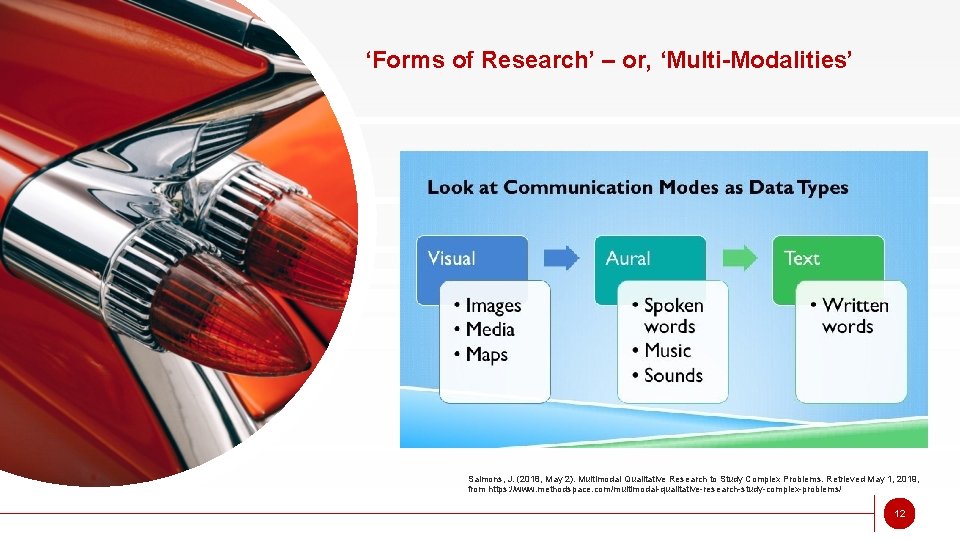
‘Forms of Research’ – or, ‘Multi-Modalities’ Salmons, J. (2018, May 2). Multimodal Qualitative Research to Study Complex Problems. Retrieved May 1, 2019, from https: //www. methodspace. com/multimodal-qualitative-research-study-complex-problems/ 12
COMMUNITY CONNECT FOUR PILLARS 1. Civic and Social Responsibility: widening access to research and education efforts and benefits society as a whole; 2. Knowledge Mobilization: communicating your research using creative means will inclusively educate the public; 3. Personal and Professional Development: build employable competencies while growing in confidence and personal abilities; and 4. Research Advocacy: share and showcase the value and impact of your research locally and globally.
EPL “On the Edge Speaker Series: Emerging Scholars” - adult audience, lecture style “ Telus World of Science Grad Showcase - interactive, simultaneous conversations Research in a Suitcase - interactive, every time is different Three Minute Thesis - ‘the pitch’, tell your research story Written Three Minute Thesis - ‘written’ version of above Images of Research - visual representation of your work C’est chic! 14

THANK YOU! Charity Slobod 780 -492 -0691 cslobod@ualberta. ca uab. ca/gradpd
- Slides: 15