
Pronounsantecedents Sentence structure and type Grammar Pronouns are
- Slides: 13
Pronouns+antecedents. Sentence structure and type. Grammar.
Pronouns are substitutes that take the place of nouns. EX: Samantha called Big Bird on her toy phone. pronouns here are “Samantha” and “Big Bird”
Pronouns as subjects or objects. Pronouns use different forms, depending on what job the pronoun does in the sentence. Using the wrong pronoun form is a common grammar glitch. To know which form to use, figure out whether the pronoun is the subject of a sentence or a clause.
1 st/2 nd/3 rd person First person: You are doing the speaking Second person: you are speaking to someone/something Third person: You are speaking about someone/something.
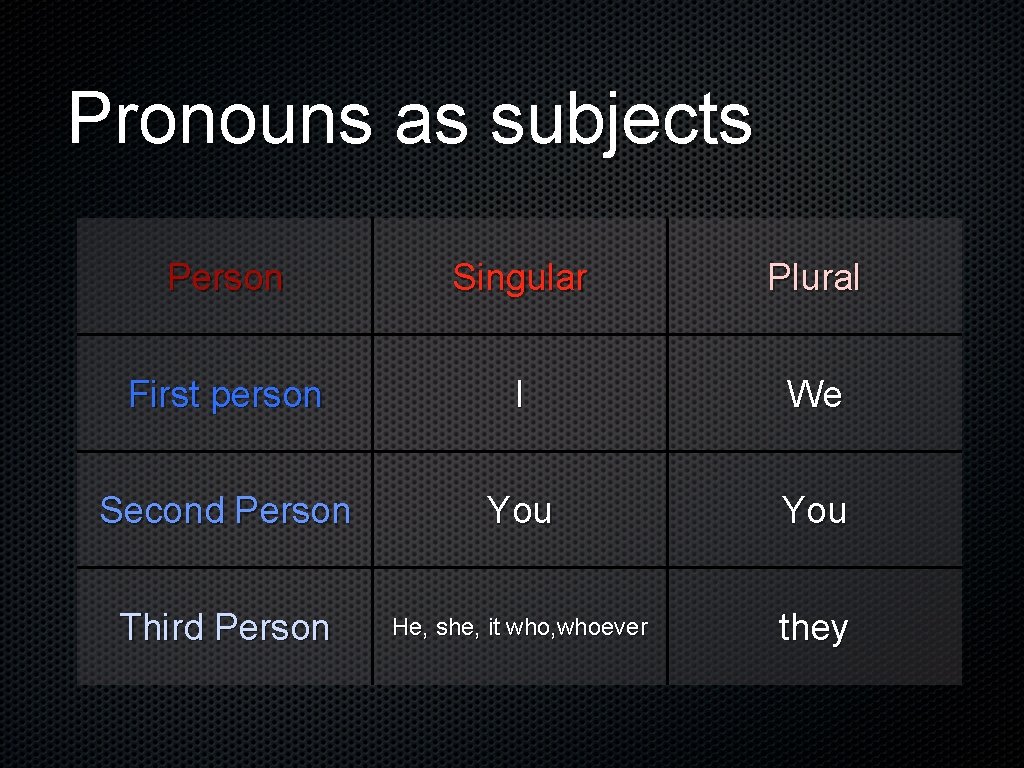
Pronouns as subjects Person Singular Plural First person I We Second Person You Third Person He, she, it who, whoever they
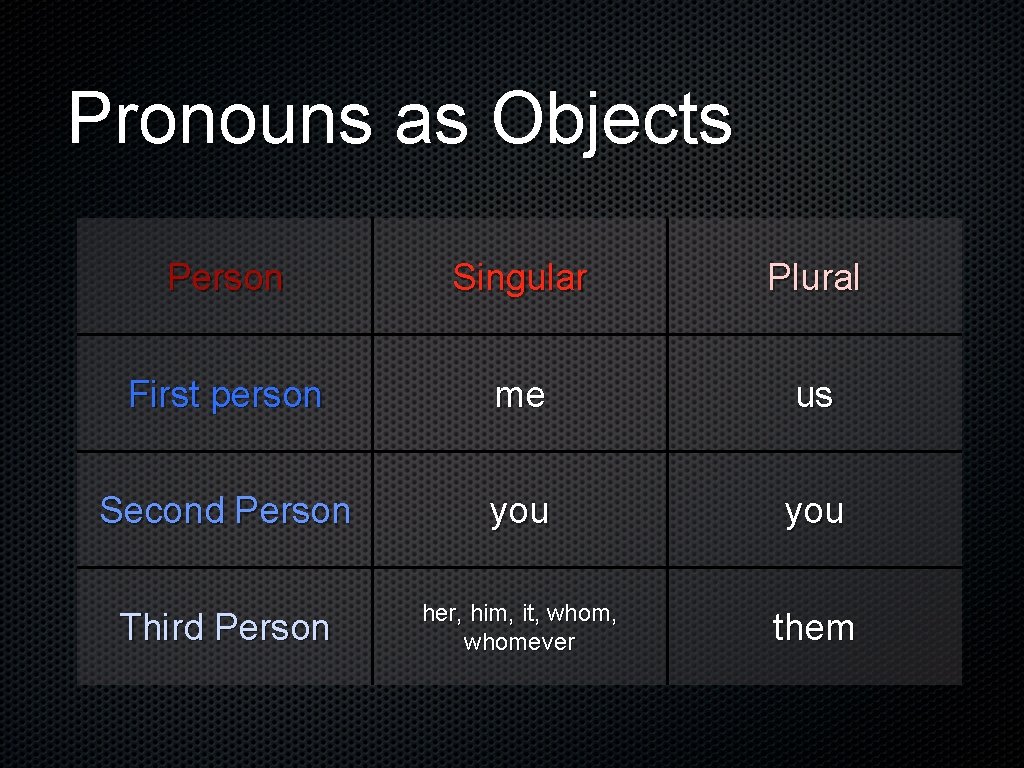
Pronouns as Objects Person Singular Plural First person me us Second Person you Third Person her, him, it, whomever them
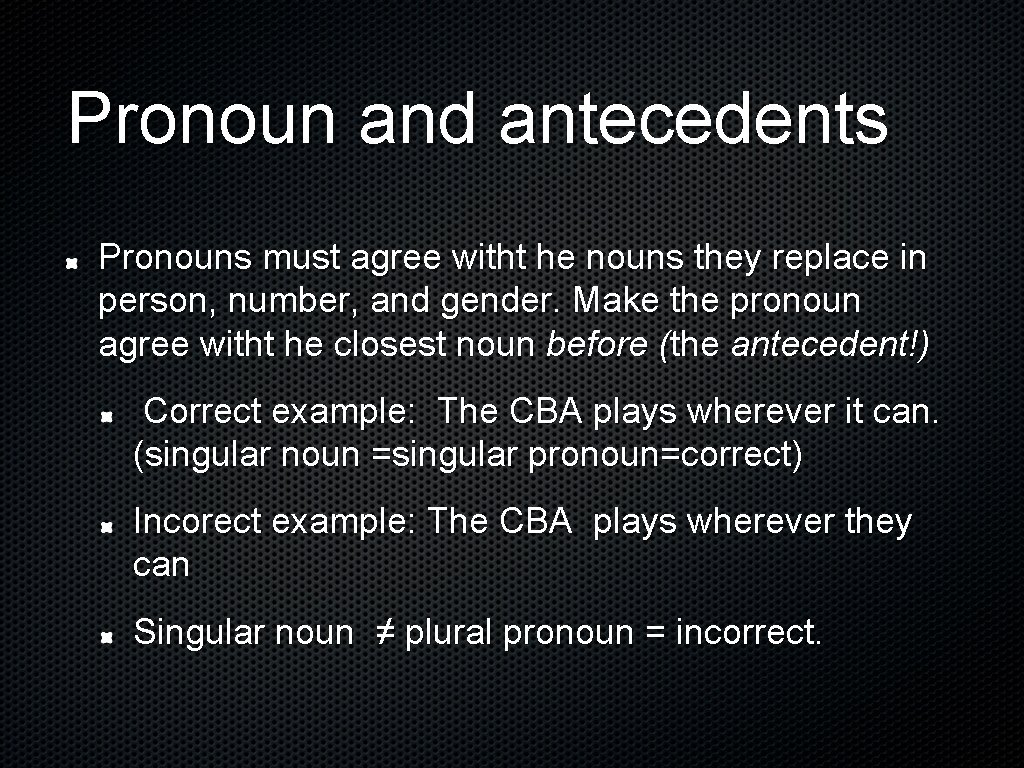
Pronoun and antecedents Pronouns must agree witht he nouns they replace in person, number, and gender. Make the pronoun agree witht he closest noun before (the antecedent!) Correct example: The CBA plays wherever it can. (singular noun =singular pronoun=correct) Incorect example: The CBA plays wherever they can Singular noun ≠ plural pronoun = incorrect.
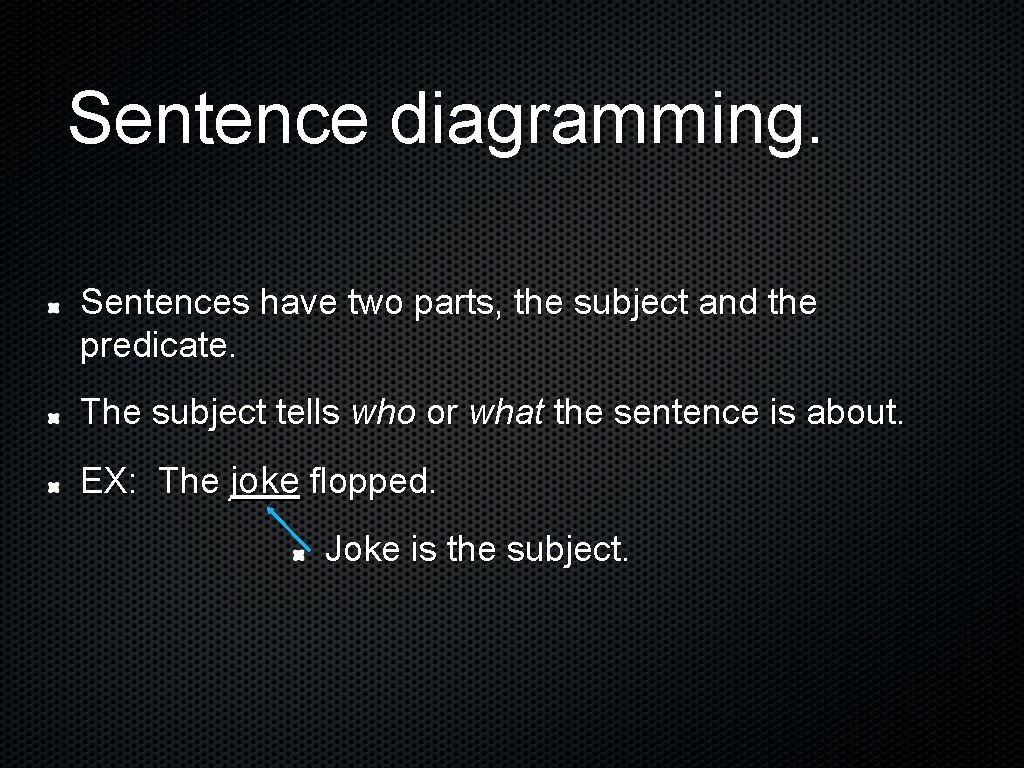
Sentence diagramming. Sentences have two parts, the subject and the predicate. The subject tells who or what the sentence is about. EX: The joke flopped. Joke is the subject.
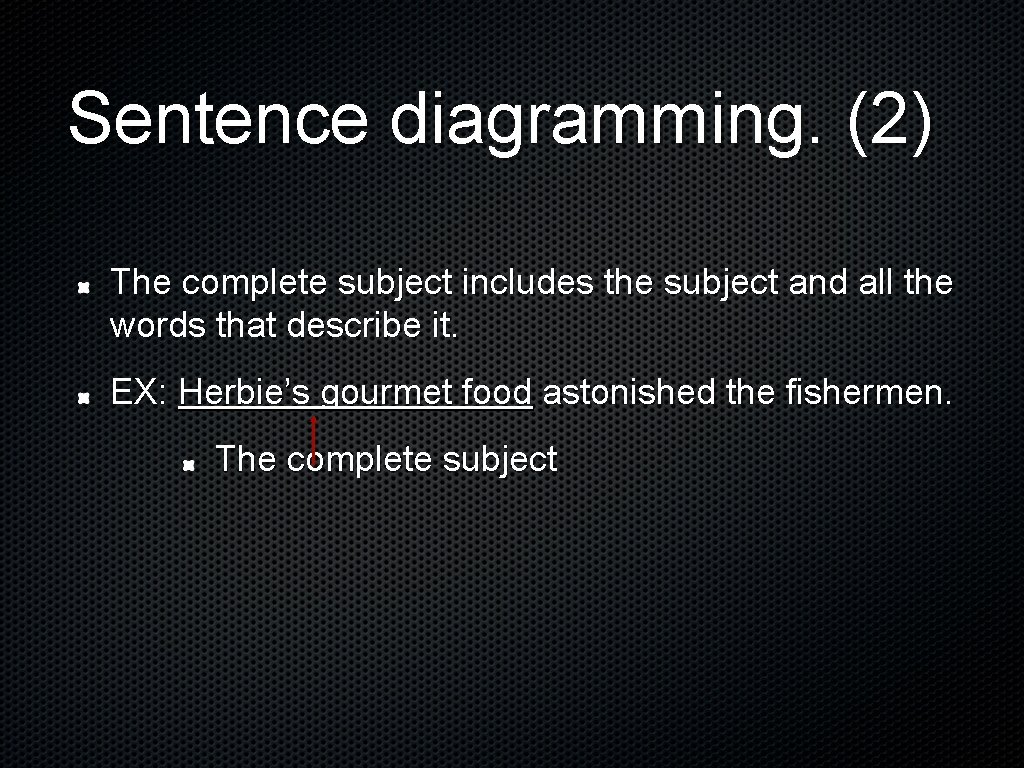
Sentence diagramming. (2) The complete subject includes the subject and all the words that describe it. EX: Herbie’s gourmet food astonished the fishermen. The complete subject
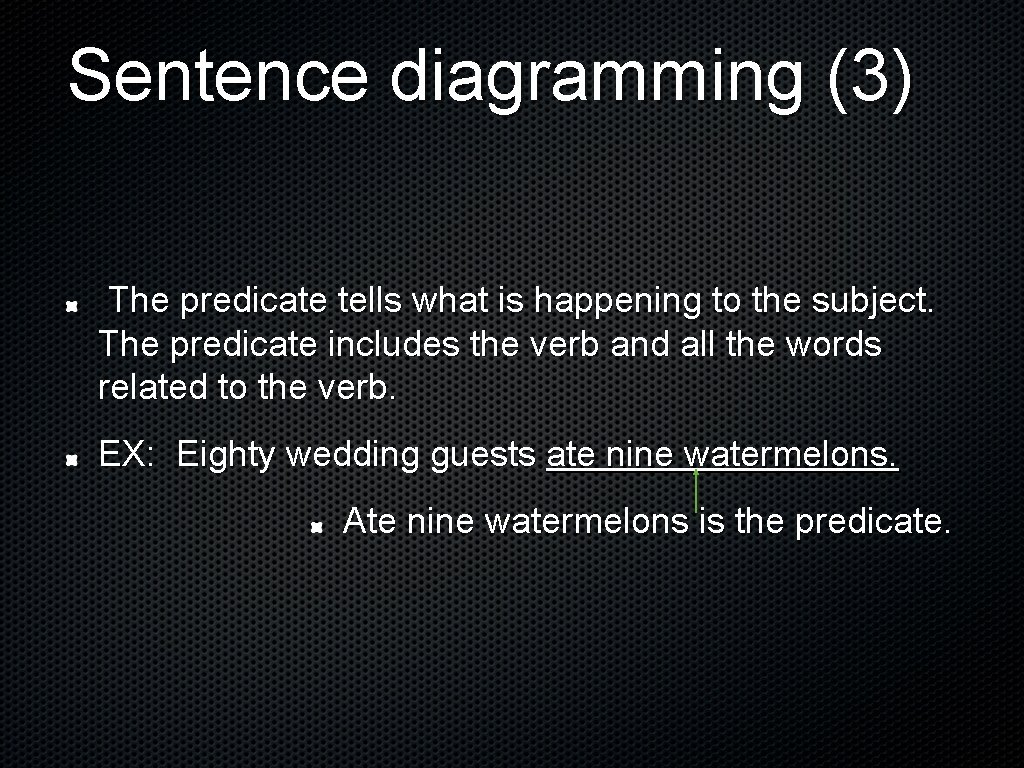
Sentence diagramming (3) The predicate tells what is happening to the subject. The predicate includes the verb and all the words related to the verb. EX: Eighty wedding guests ate nine watermelons. Ate nine watermelons is the predicate.
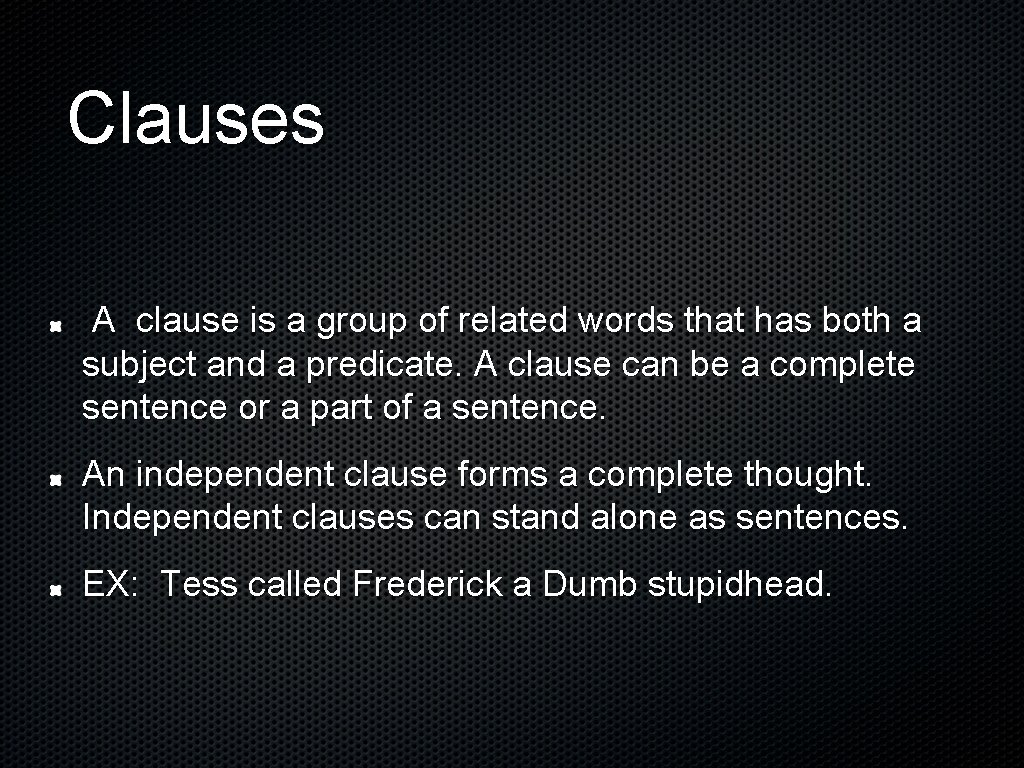
Clauses A clause is a group of related words that has both a subject and a predicate. A clause can be a complete sentence or a part of a sentence. An independent clause forms a complete thought. Independent clauses can stand alone as sentences. EX: Tess called Frederick a Dumb stupidhead.
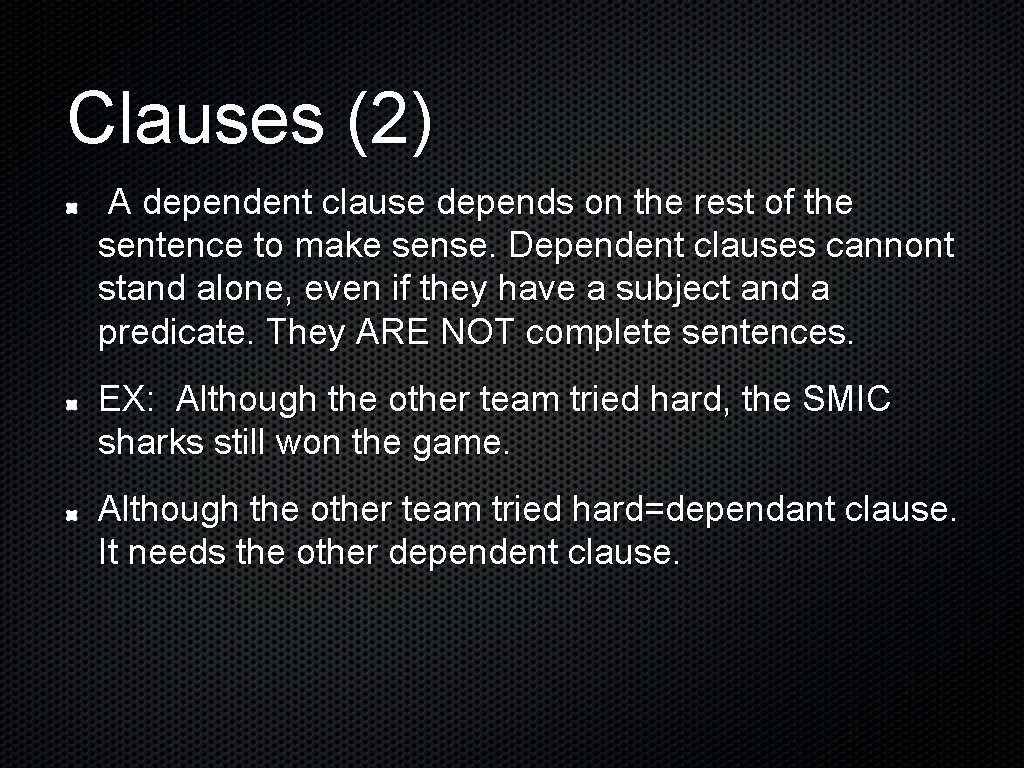
Clauses (2) A dependent clause depends on the rest of the sentence to make sense. Dependent clauses cannont stand alone, even if they have a subject and a predicate. They ARE NOT complete sentences. EX: Although the other team tried hard, the SMIC sharks still won the game. Although the other team tried hard=dependant clause. It needs the other dependent clause.
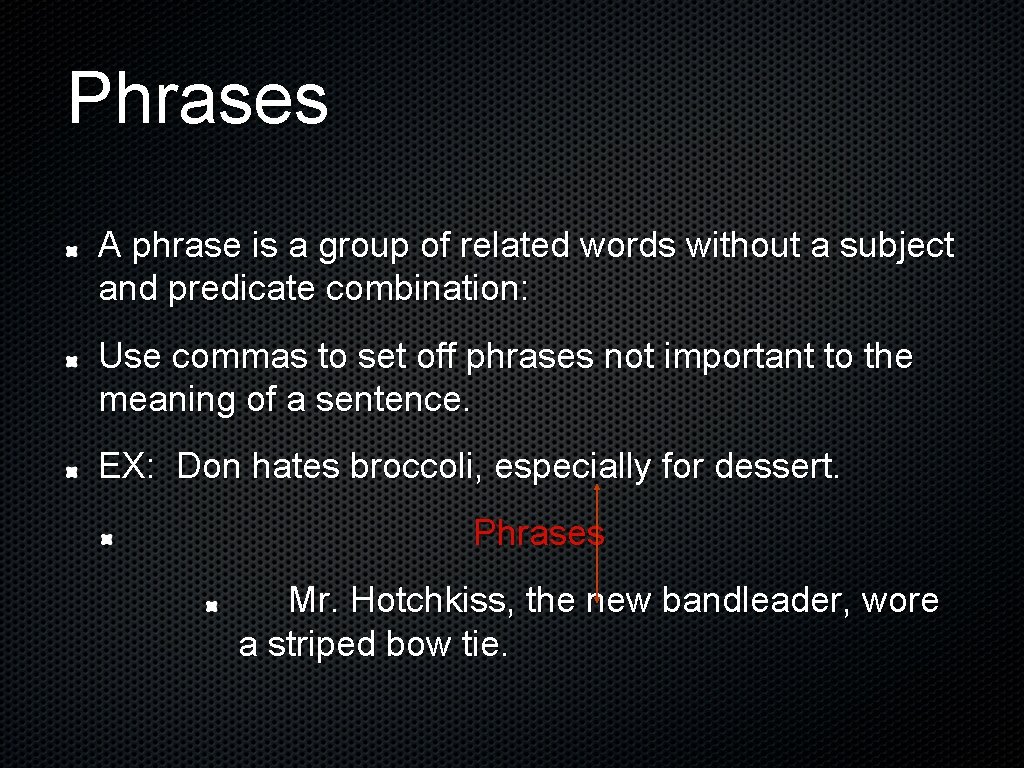
Phrases A phrase is a group of related words without a subject and predicate combination: Use commas to set off phrases not important to the meaning of a sentence. EX: Don hates broccoli, especially for dessert. Phrases Mr. Hotchkiss, the new bandleader, wore a striped bow tie.