
Pronouns take the place of one or more
- Slides: 72
Pronouns take the place of one or more nouns and the words that describe those nouns within a sentence.
Personal Pronouns Personal pronouns are used to refer to people or things.
Subject Pronouns Subject pronouns are pronouns in the nominative case used as the subject of a sentence.
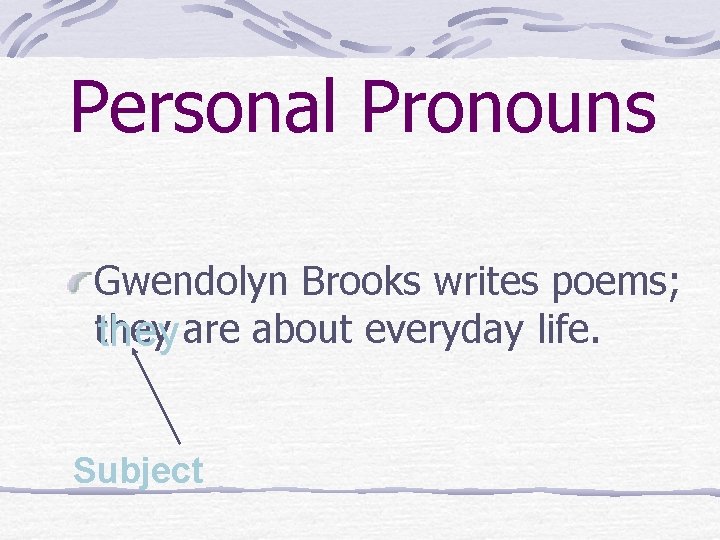
Personal Pronouns Gwendolyn Brooks writes poems; they are about everyday life. Subject
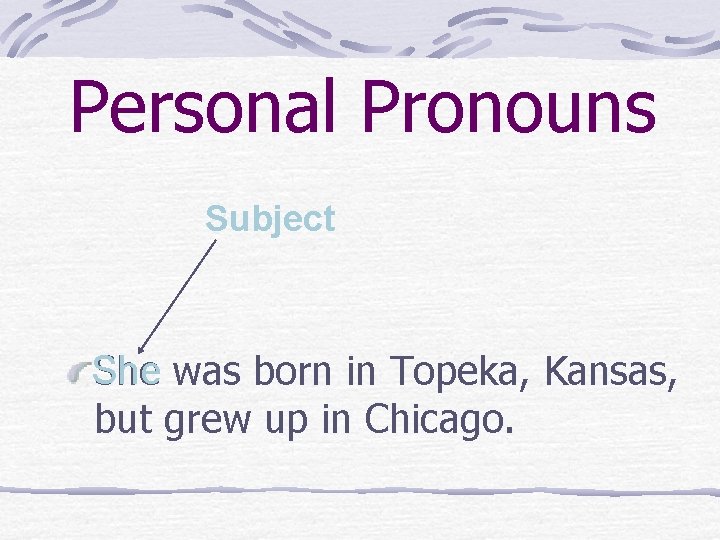
Personal Pronouns Subject She was born in Topeka, Kansas, but grew up in Chicago.
Object Pronouns Object pronouns are a pronouns in the objective case used as the object of a verb or a preposition.
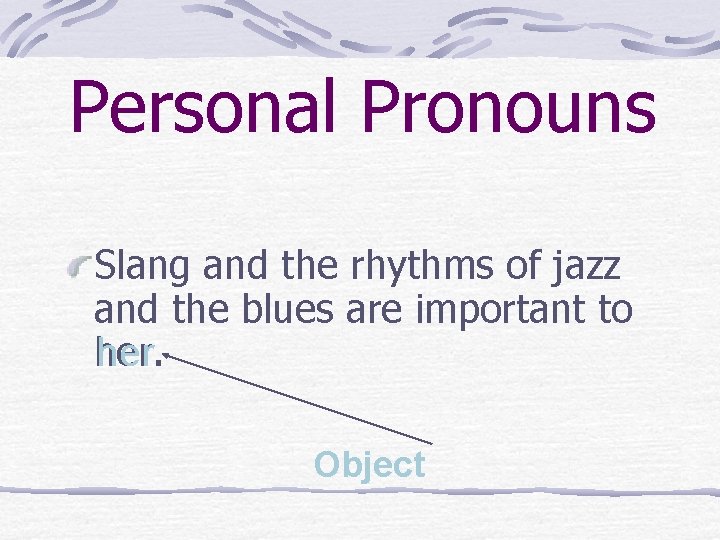
Personal Pronouns Slang and the rhythms of jazz and the blues are important to her Object
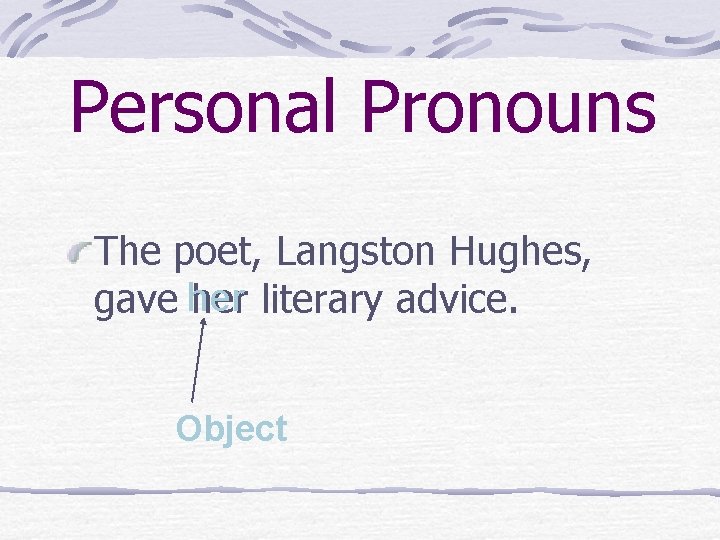
Personal Pronouns The poet, Langston Hughes, gave her literary advice. Object
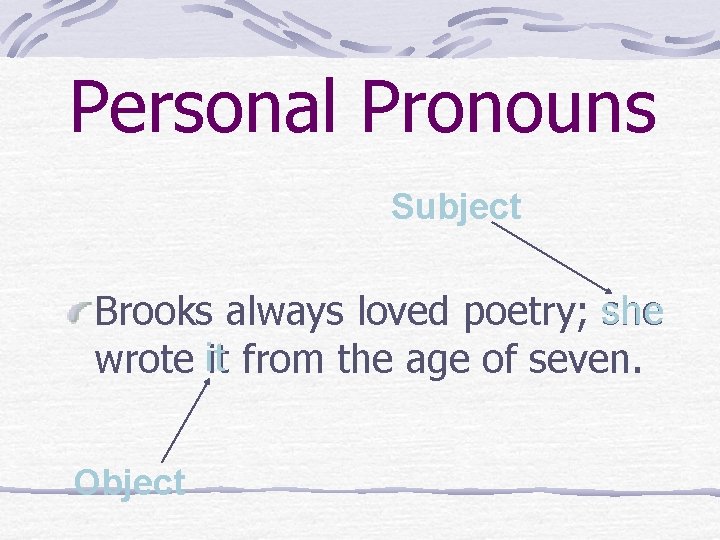
Personal Pronouns Subject Brooks always loved poetry; she wrote itit from the age of seven. Object
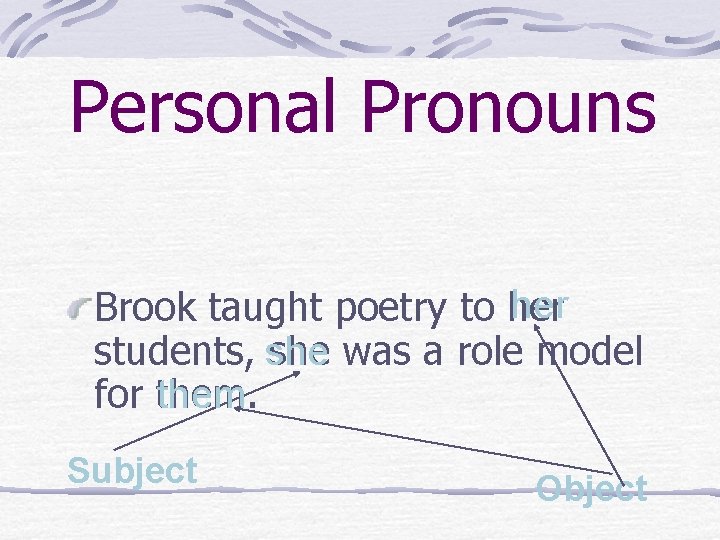
Personal Pronouns her Brook taught poetry to her students, she was a role model for them Subject Object
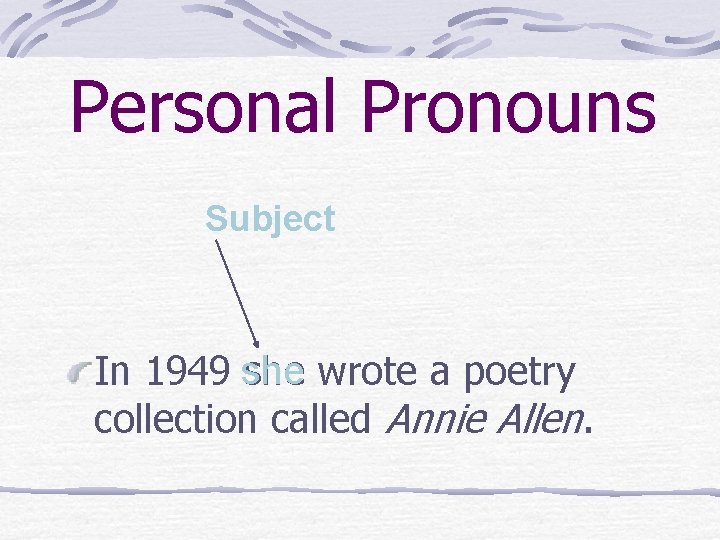
Personal Pronouns Subject In 1949 she wrote a poetry collection called Annie Allen.
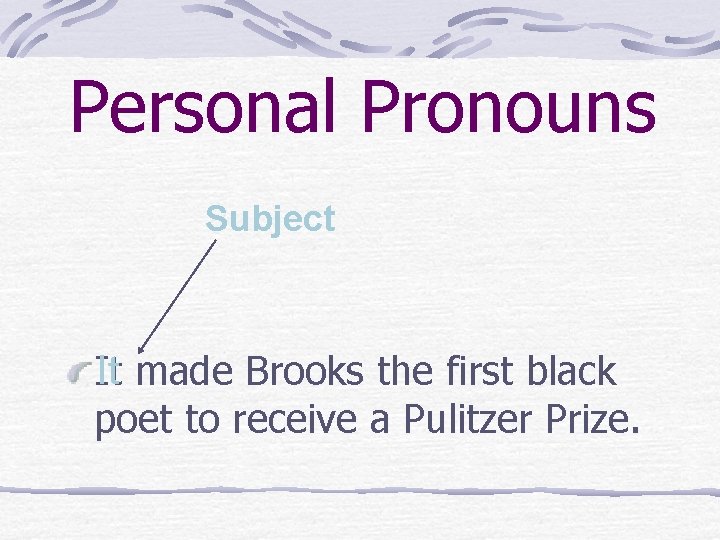
Personal Pronouns Subject It made Brooks the first black poet to receive a Pulitzer Prize.
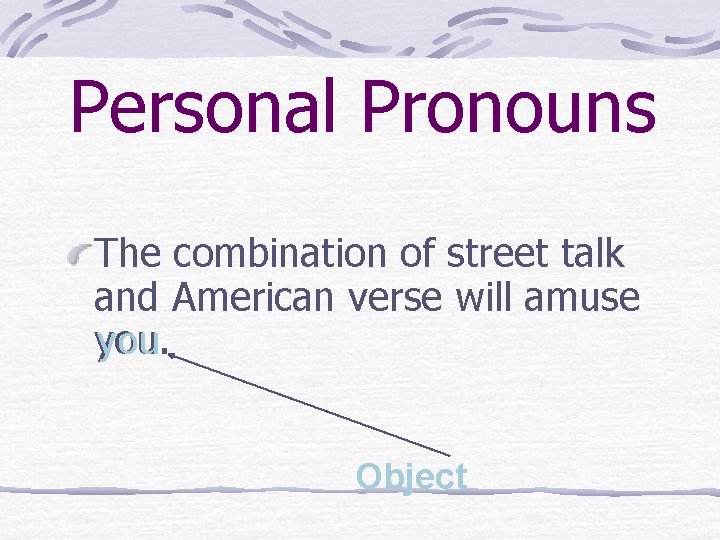
Personal Pronouns The combination of street talk and American verse will amuse you Object
Pronouns and Antecedents The noun or group of words that a pronoun refers to is call the antecedent.
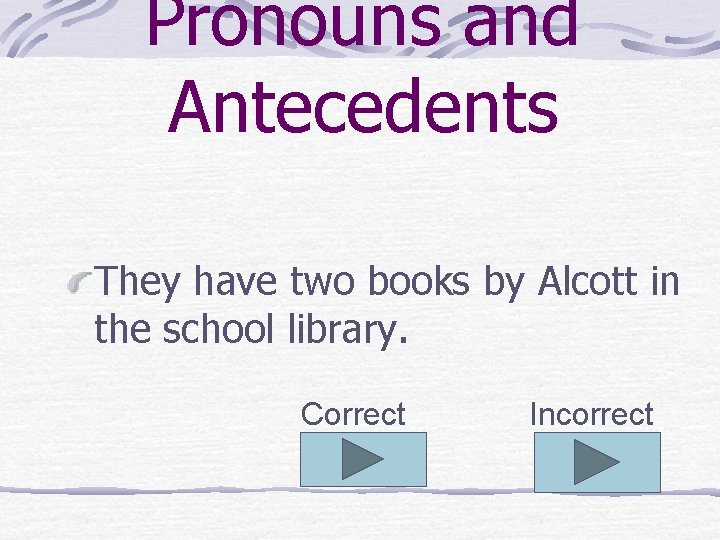
Pronouns and Antecedents They have two books by Alcott in the school library. Correct Incorrect
Correct Sentence Are you sure the sentence is correct? Who is they?
Incorrect Sentence You are right! The sentence is incorrect! Who was they? We don’t know because the pronoun doesn’t have a clear antecedent.
Pronouns and Antecedents Louisa May Alcott lived near Boston, Massachusetts. They had many famous neighbors. Correct Incorrect
Correct Sentence Are you sure the sentence is correct? Who is they?
Incorrect Sentence Nice job! Louisa May Alcott is the noun being replaced The subject is singular. The personal pronoun used should be SHE.
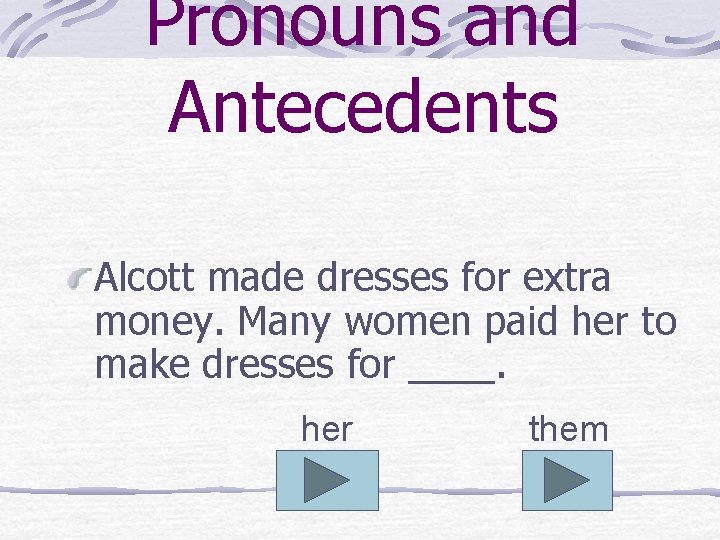
Pronouns and Antecedents Alcott made dresses for extra money. Many women paid her to make dresses for ____. her them
CORRECT!! Nice job! Go on to the next example.
Incorrect Many women is the group of words being replaced The subject is plural. The personal pronoun used should be them.
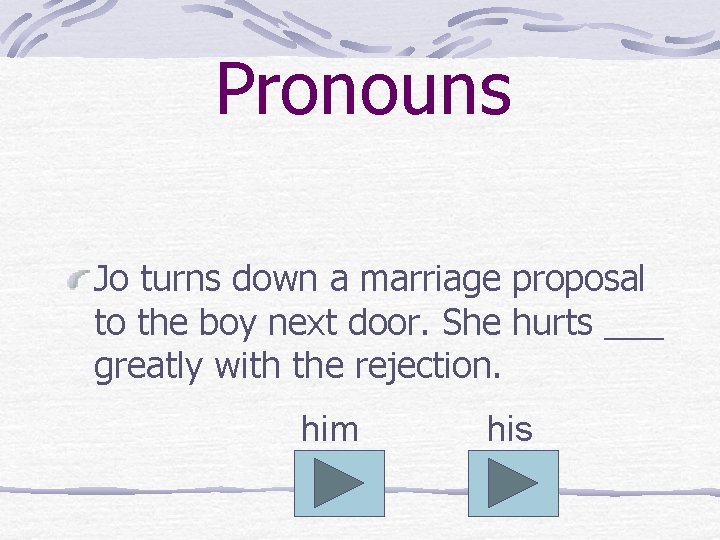
Pronouns Jo turns down a marriage proposal to the boy next door. She hurts ___ greatly with the rejection. him his
CORRECT!! Nice job! Go on to the next example.
Incorrect The boy next door is the group of words being replaced The subject is singular. The personal pronoun used should be him.
Reflexive Pronouns Reflexive pronouns refer to a noun or another pronoun and indicates that the same person or thing is involved.
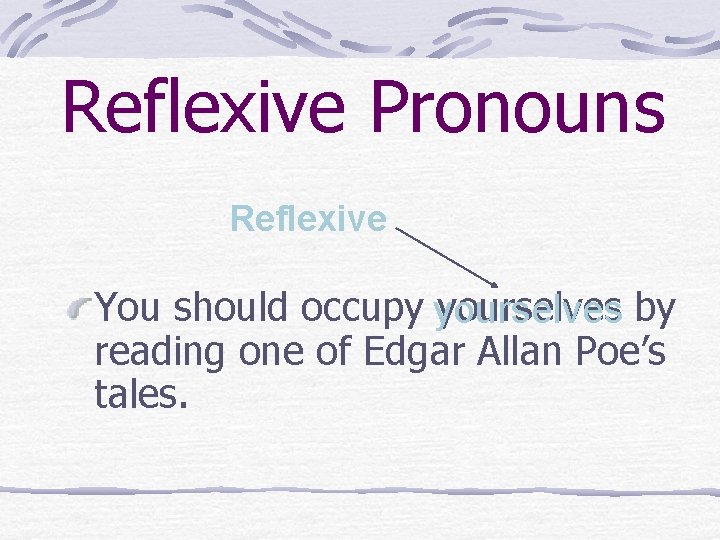
Reflexive Pronouns Reflexive You should occupy yourselves by reading one of Edgar Allan Poe’s tales.
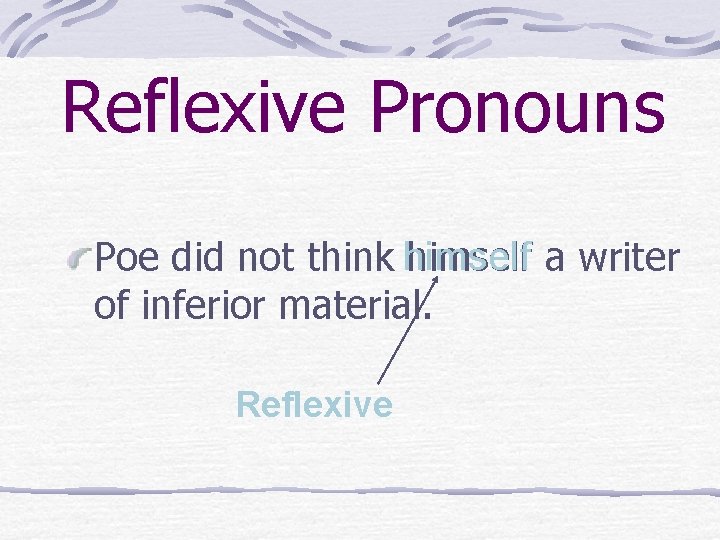
Reflexive Pronouns Poe did not think himself a writer of inferior material. Reflexive
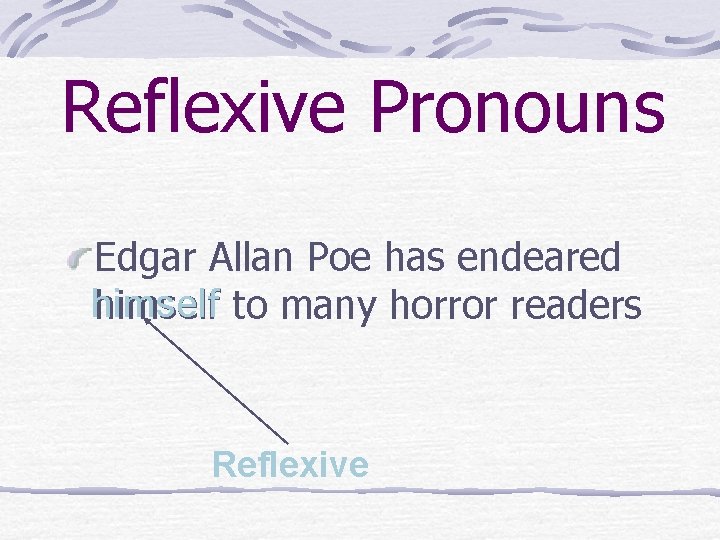
Reflexive Pronouns Edgar Allan Poe has endeared himself to many horror readers Reflexive
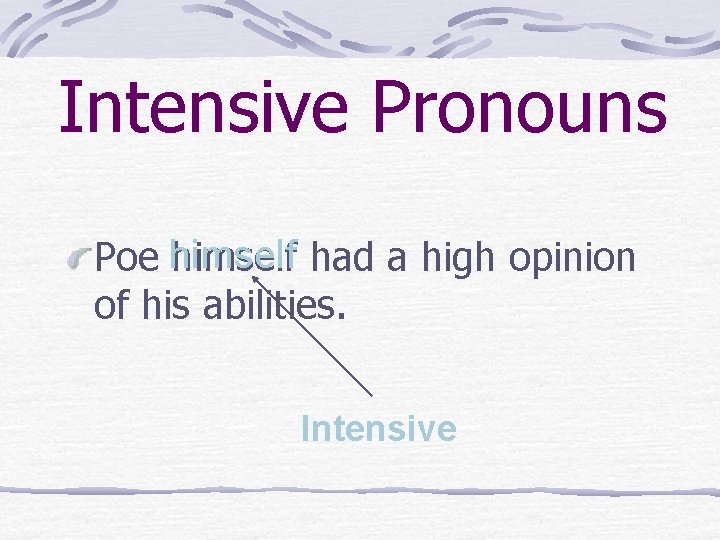
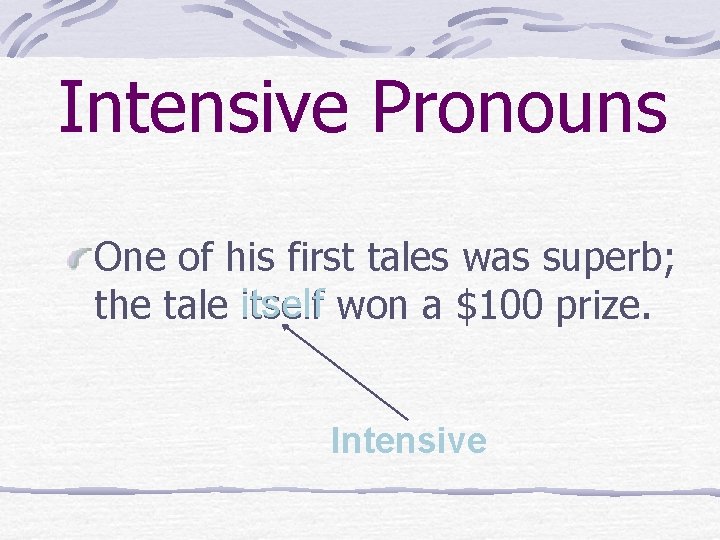
Intensive Pronouns Intensive pronouns are pronouns that add emphasis to a noun or pronoun already named.
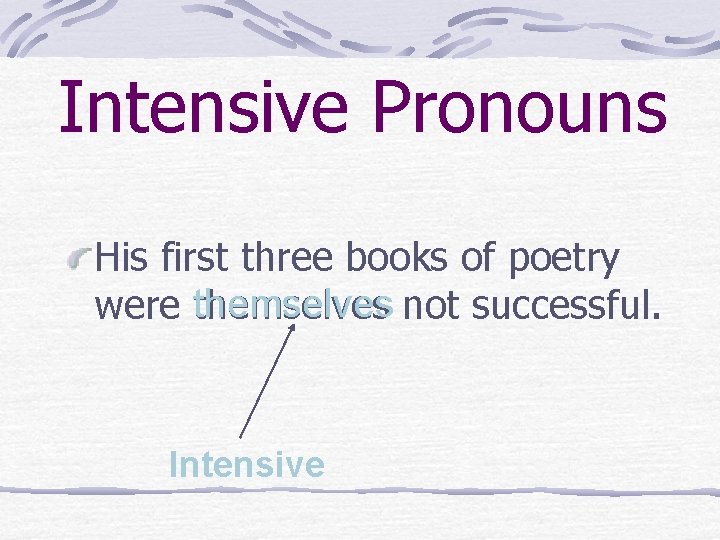
Intensive Pronouns His first three books of poetry themselves not successful. were themselves Intensive
Intensive Pronouns Poe himself had a high opinion of his abilities. Intensive
Intensive Pronouns One of his first tales was superb; the tale itself won a $100 prize. Intensive
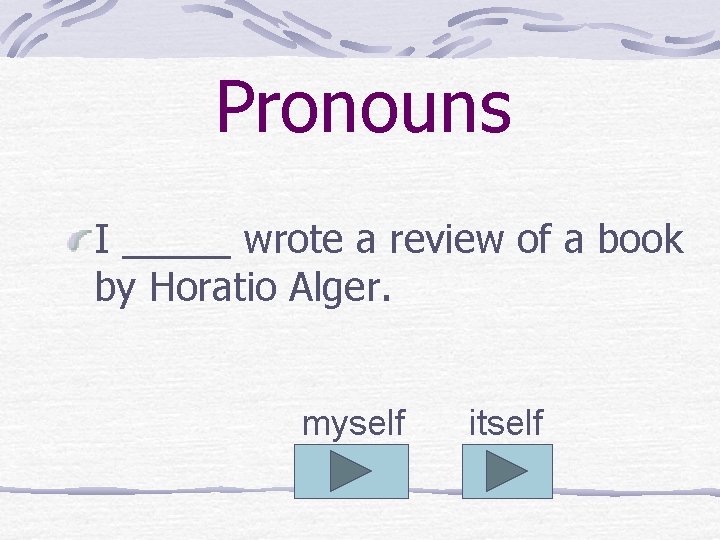
Pronouns I _____ wrote a review of a book by Horatio Alger. myself itself
CORRECT!! Nice job! Go on to the next example.
Incorrect The pronoun “I” is being intensified. Reread the sentence carefully.
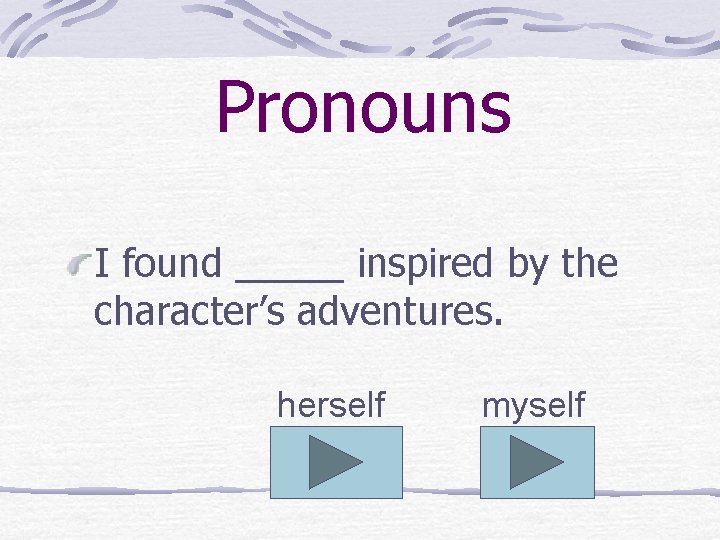
Pronouns I found _____ inspired by the character’s adventures. herself myself
CORRECT!! Nice job! Go on to the next example.
Incorrect The pronoun “I” is being reflected by another pronoun. Reread the sentence carefully.
Pronouns Read a story _____ about making hard work into a fortune. yourself itself
CORRECT!! Nice job! Go on to the next example.
Incorrect The noun “story” is not being intensified. Reread the sentence carefully.
Pronouns Alger’s life _____seems like one of his success stories. himself itself
CORRECT!! Nice job! Go on to the next example.
Incorrect The noun “Alger’s” is not being reflected by the pronoun. Reread the sentence carefully.
Pronouns I _____ wrote a review of a book by Horatio Alger. myself herself
CORRECT!! Nice job! Go on to the next example.
Incorrect The pronoun “I” is being intensified. Reread the sentence carefully.
Using Pronouns Correctly Heidi entertained _____ readers. us we
CORRECT!! Nice job! Go on to the next example.
Incorrect You are looking for an object pronoun. Reread the sentence carefully.
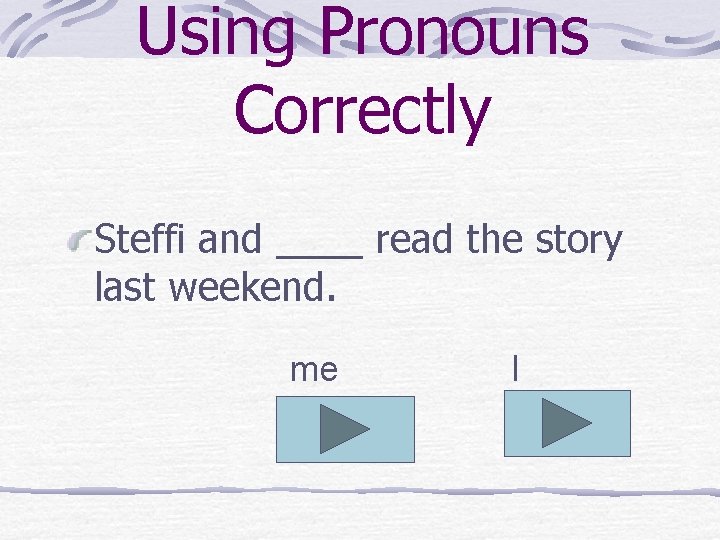
Using Pronouns Correctly Steffi and ____ read the story last weekend. me I
CORRECT!! Nice job! Go on to the next example.
Incorrect You are looking for a subject pronoun. Reread the sentence carefully.
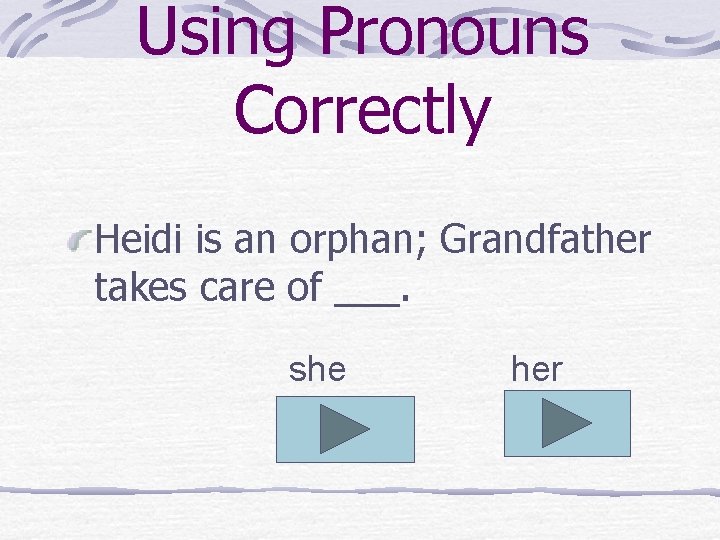
Using Pronouns Correctly Heidi is an orphan; Grandfather takes care of ___. she her
CORRECT!! Nice job! Go on to the next example.
Incorrect You are looking for an object pronoun. Reread the sentence carefully.
Using Pronouns Correctly ___ and Grandfather live in the Swiss Alps. Her She
CORRECT!! Nice job! Go on to the next example.
Incorrect You are looking for a subject pronoun. Reread the sentence carefully.
Demonstrative Pronouns Demonstrative pronouns are pronouns that point out something. This and these are nearby. That and those are far away.
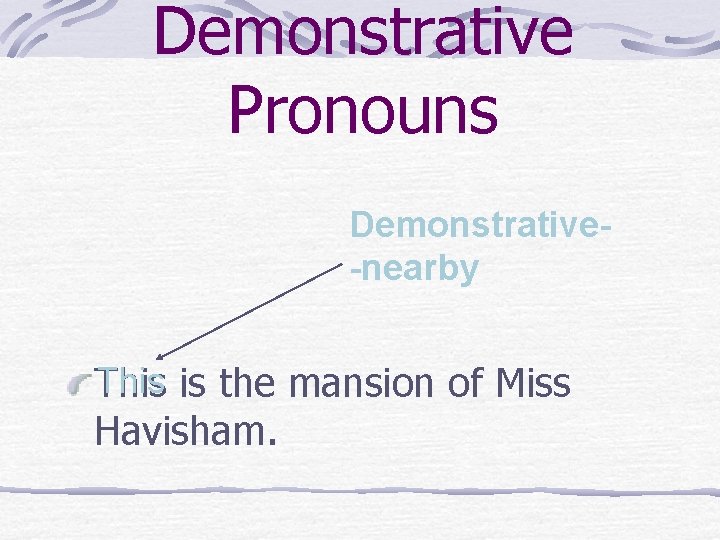
Demonstrative Pronouns Demonstrative-nearby This is the mansion of Miss Havisham.
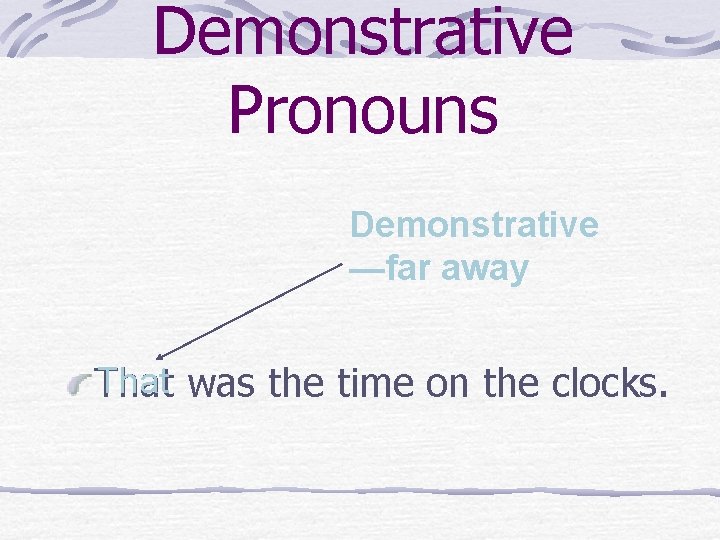
Demonstrative Pronouns Demonstrative —far away That was the time on the clocks. That
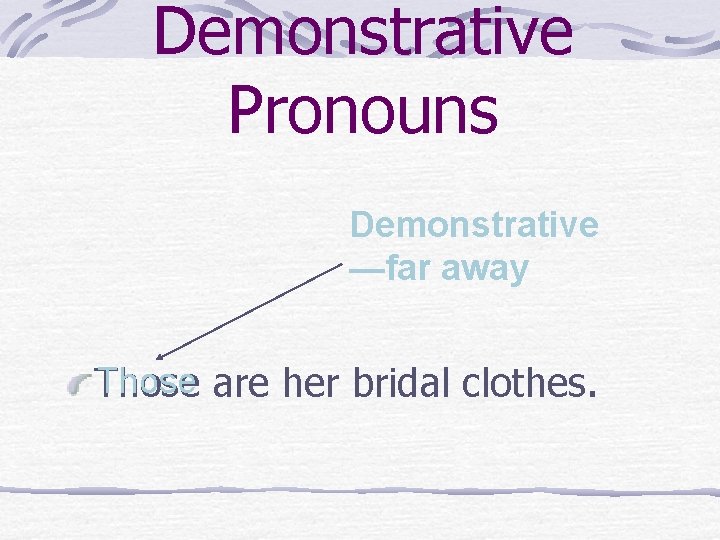
Demonstrative Pronouns Demonstrative —far away Those are her bridal clothes.
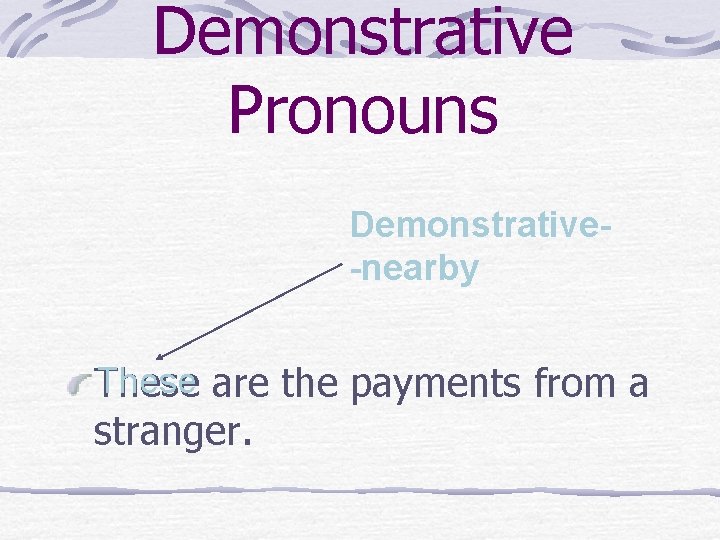
Demonstrative Pronouns Demonstrative-nearby These are the payments from a stranger.
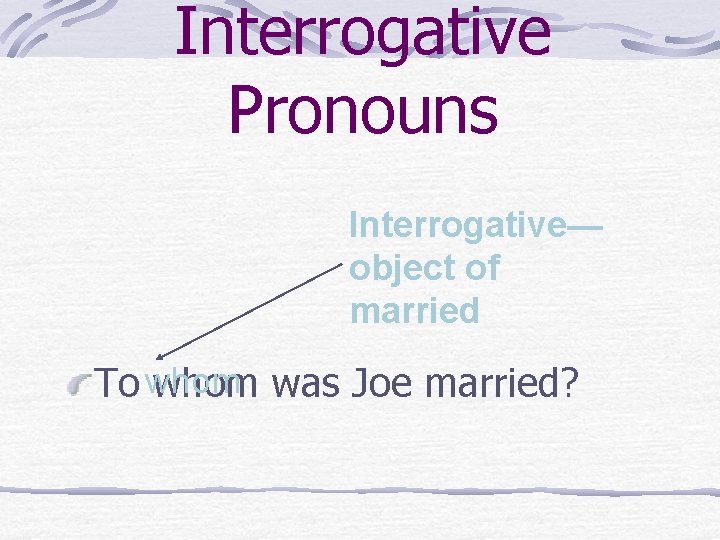
Interrogative Pronouns Interrogative— object of married To whom was Joe married?
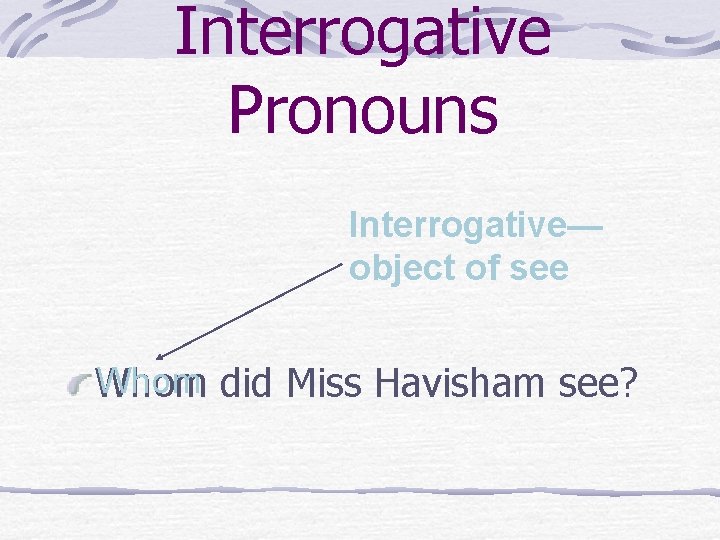
Interrogative Pronouns Interrogative— object of see Whom did Miss Havisham see? Whom
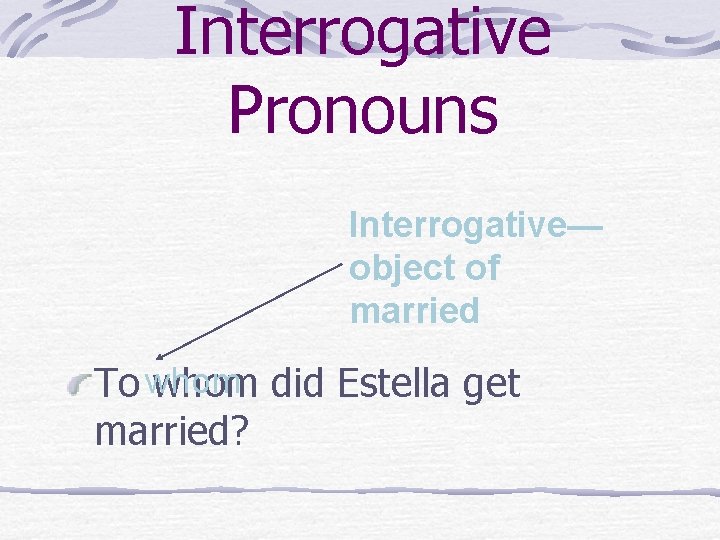
Interrogative Pronouns Interrogative— object of married To whom did Estella get married?
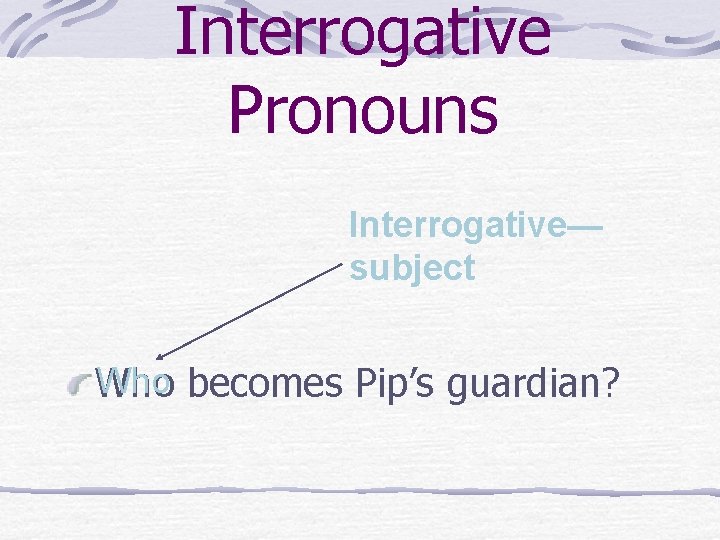
Interrogative Pronouns Interrogative— subject Who becomes Pip’s guardian?
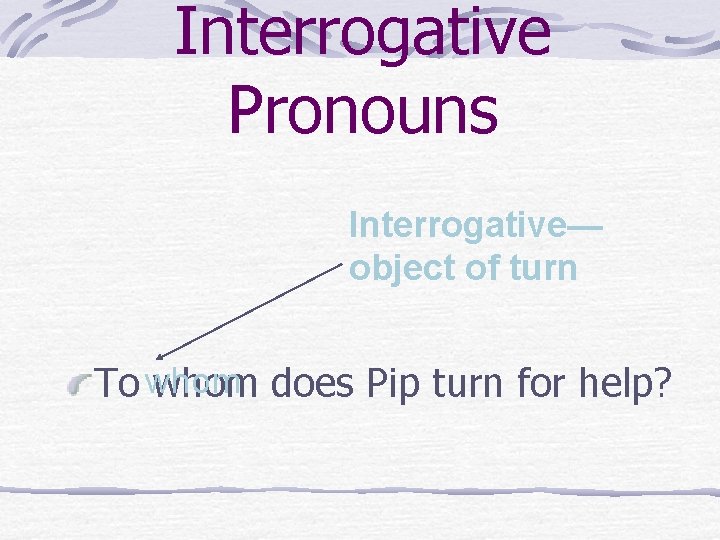
Interrogative Pronouns Interrogative— object of turn To whom does Pip turn for help?
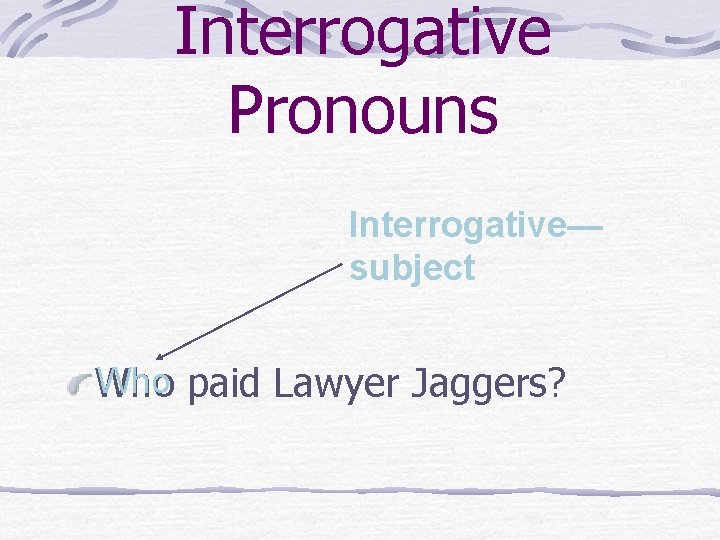
Interrogative Pronouns Interrogative— subject Who paid Lawyer Jaggers?