
Pronouns A WORD THAT TAKES THE PLACE OF
- Slides: 9
Pronouns A WORD THAT TAKES THE PLACE OF ONE OR MORE THAN ONE NOUN. THEY SHOW NUMBER AND GENDER.
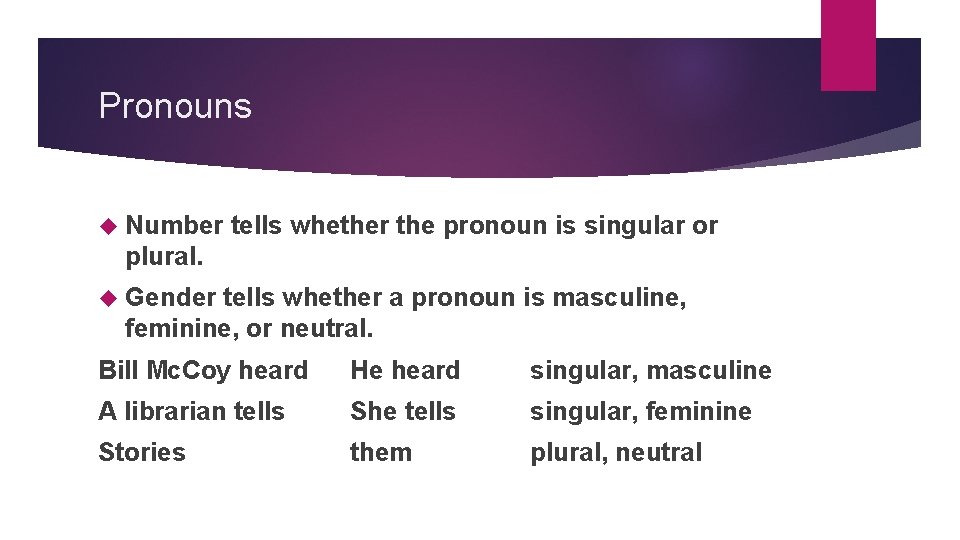
Pronouns Number tells whether the pronoun is singular or plural. Gender tells whether a pronoun is masculine, feminine, or neutral. Bill Mc. Coy heard He heard singular, masculine A librarian tells She tells singular, feminine Stories them plural, neutral
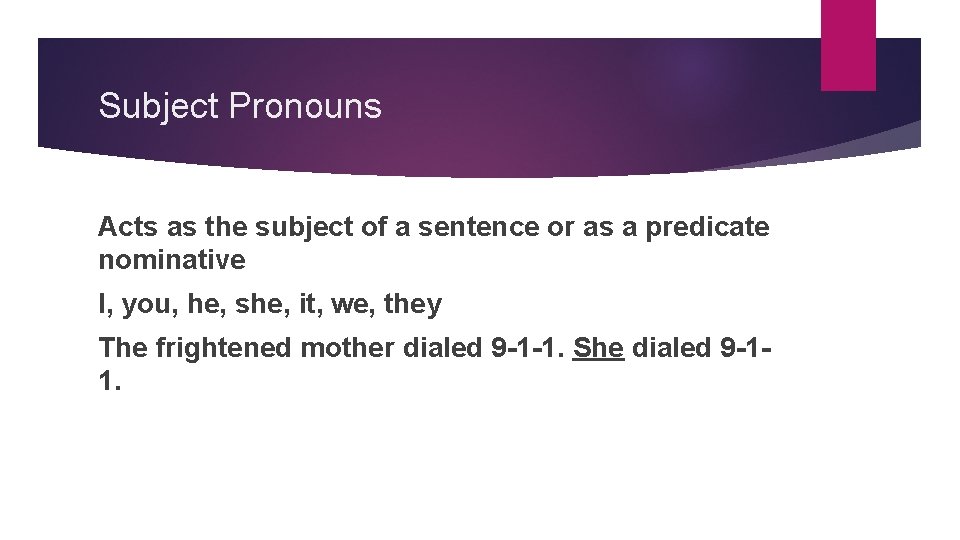
Subject Pronouns Acts as the subject of a sentence or as a predicate nominative I, you, he, she, it, we, they The frightened mother dialed 9 -1 -1. She dialed 9 -11.
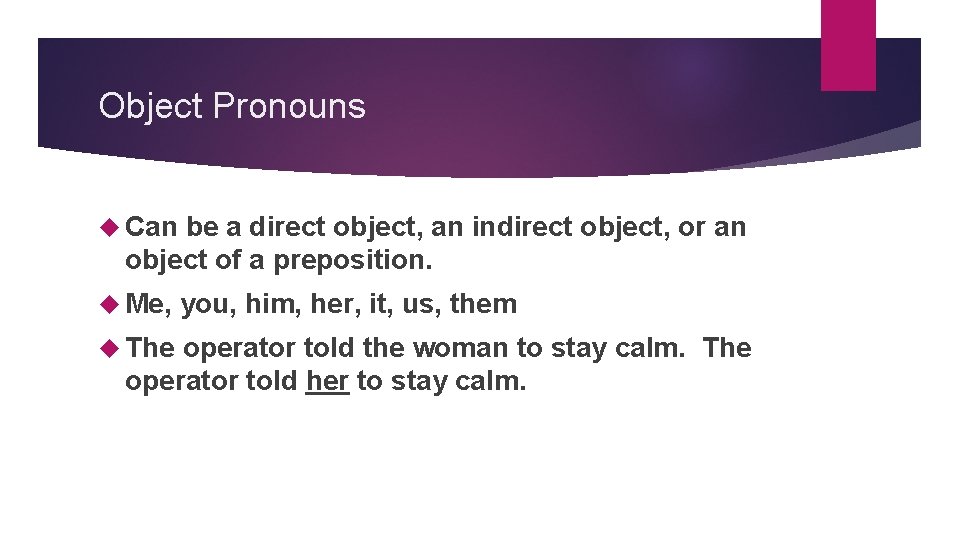
Object Pronouns Can be a direct object, an indirect object, or an object of a preposition. Me, The you, him, her, it, us, them operator told the woman to stay calm. The operator told her to stay calm.
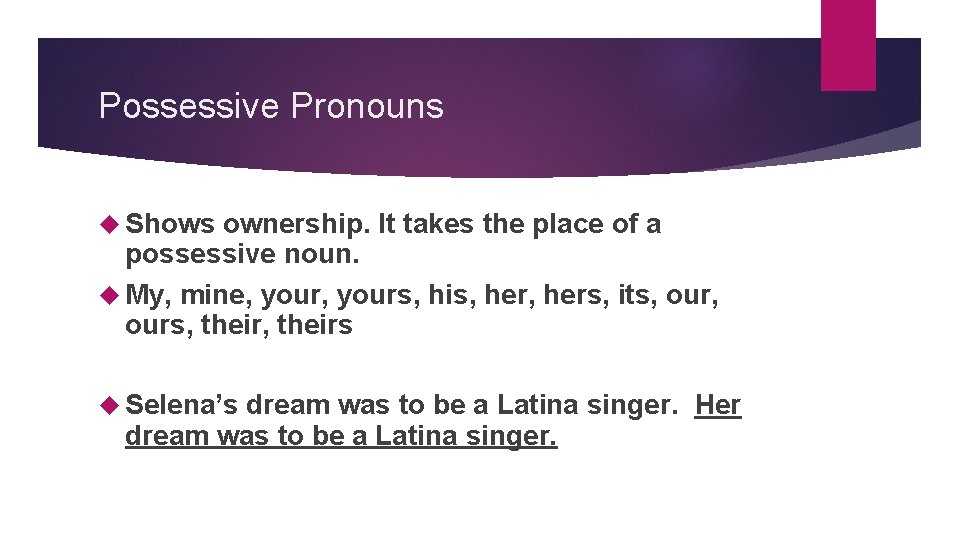
Possessive Pronouns Shows ownership. It takes the place of a possessive noun. My, mine, yours, his, hers, its, ours, theirs Selena’s dream was to be a Latina singer. Her dream was to be a Latina singer.
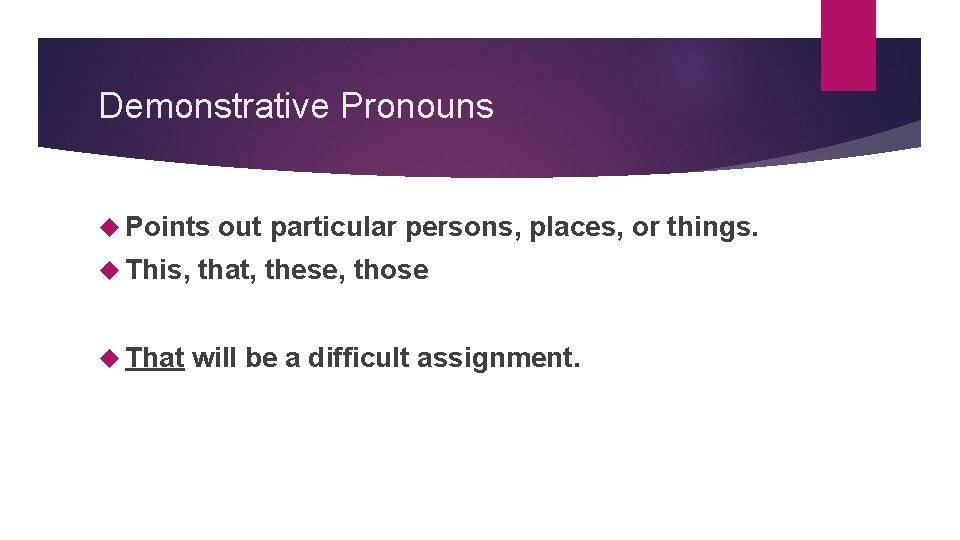
Demonstrative Pronouns Points out particular persons, places, or things. This, that, these, those That will be a difficult assignment.
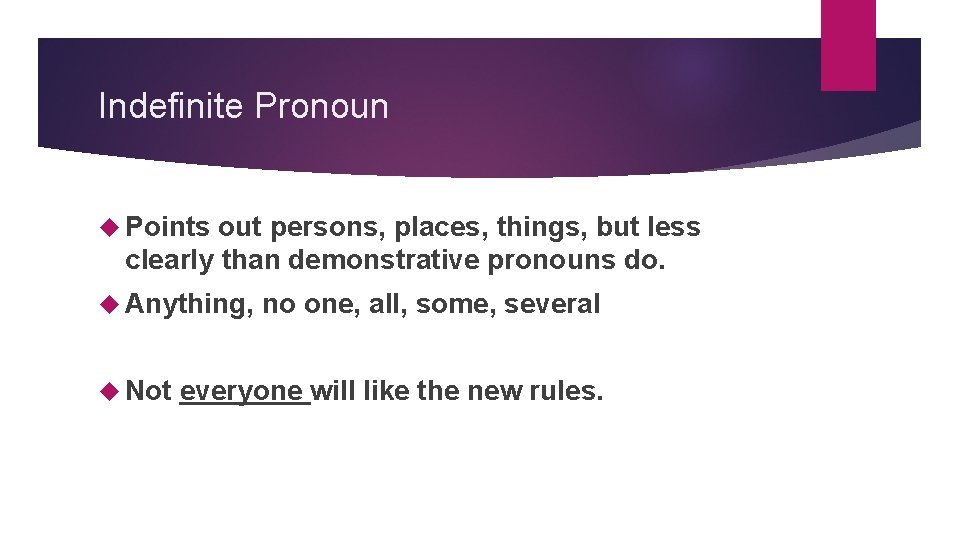
Indefinite Pronoun Points out persons, places, things, but less clearly than demonstrative pronouns do. Anything, Not no one, all, some, several everyone will like the new rules.
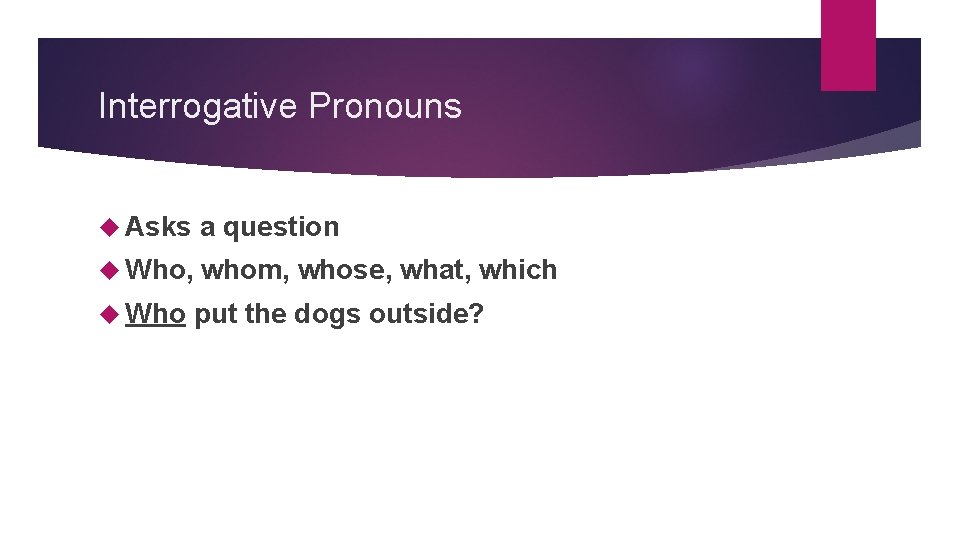
Interrogative Pronouns Asks a question Who, whom, whose, what, which Who put the dogs outside?
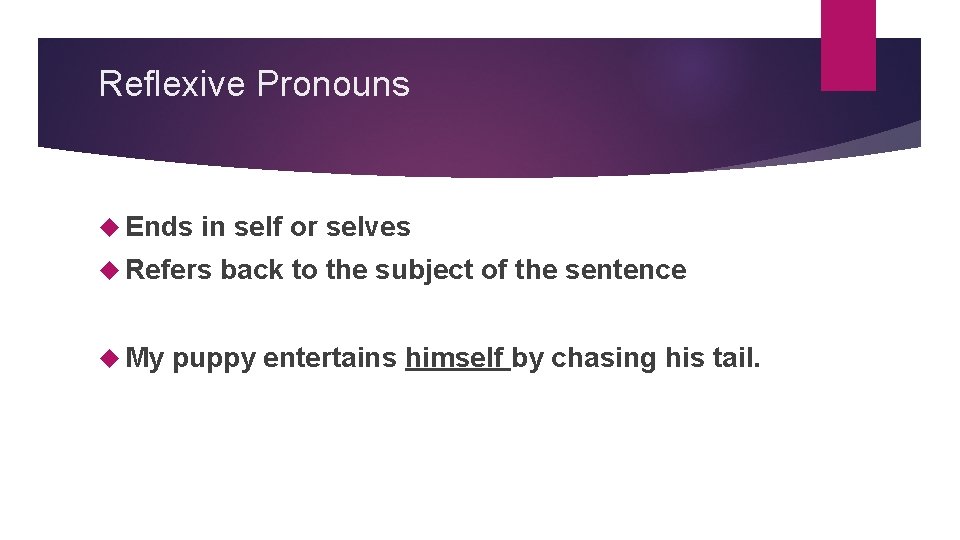
Reflexive Pronouns Ends in self or selves Refers My back to the subject of the sentence puppy entertains himself by chasing his tail.