
PRONOUN RULES 11 simple rules to using pronouns
- Slides: 20
PRONOUN RULES 11 simple rules to using pronouns correctly
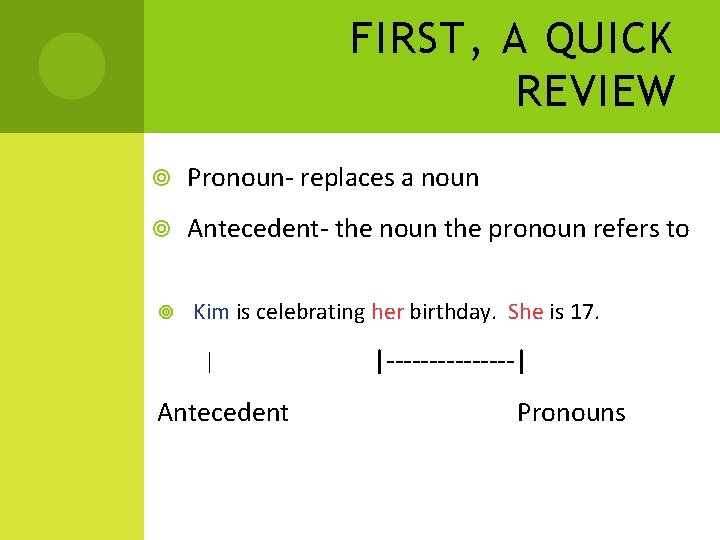
FIRST, A QUICK REVIEW Pronoun- replaces a noun Antecedent- the noun the pronoun refers to Kim is celebrating her birthday. She is 17. | Antecedent |--------| Pronouns
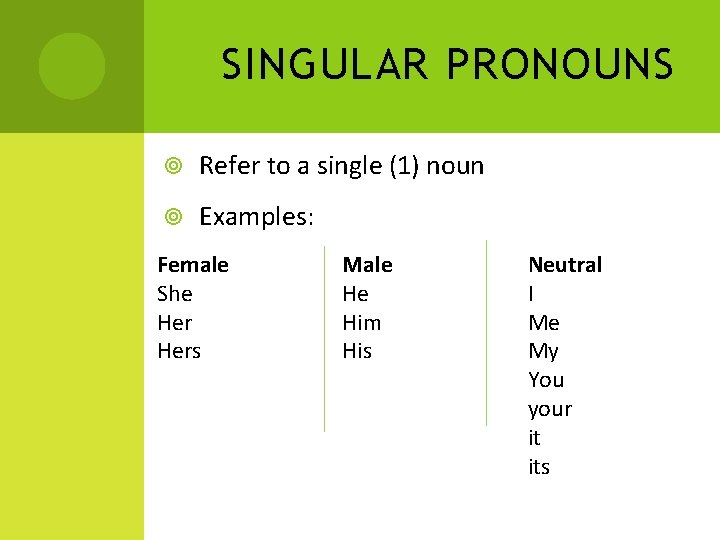
SINGULAR PRONOUNS Refer to a single (1) noun Examples: Female She Hers Male He Him His Neutral I Me My You your it its
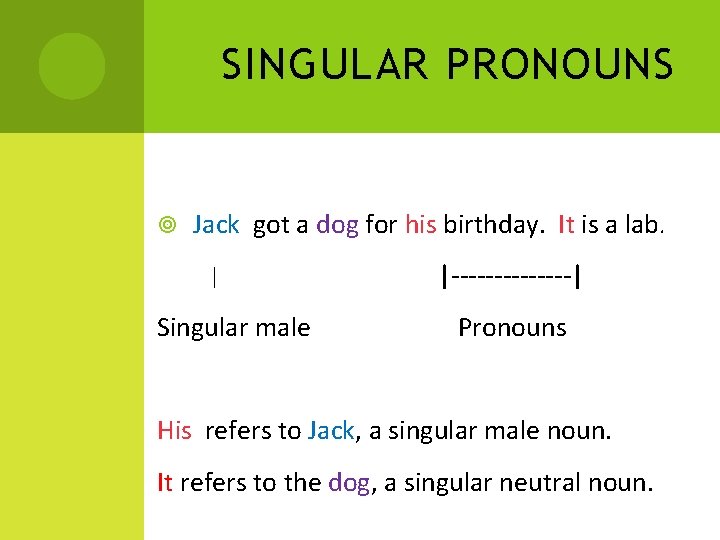
SINGULAR PRONOUNS Jack got a dog for his birthday. It is a lab. | Singular male |-------| Pronouns His refers to Jack, a singular male noun. It refers to the dog, a singular neutral noun.
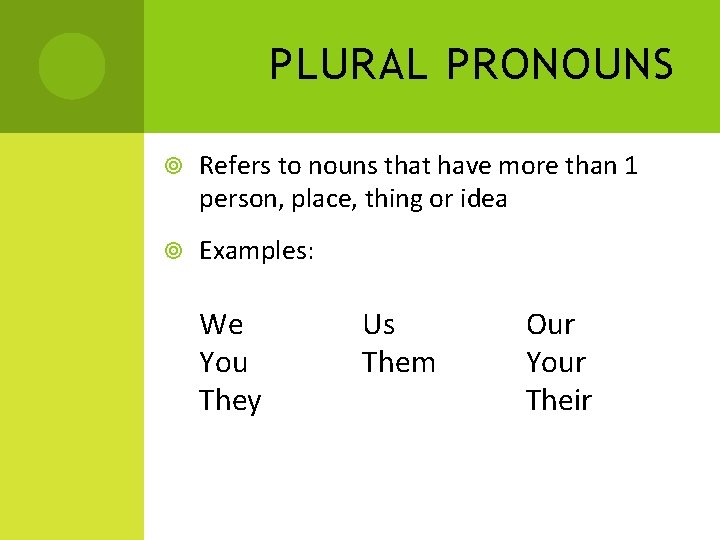
PLURAL PRONOUNS Refers to nouns that have more than 1 person, place, thing or idea Examples: We You They Us Them Our Your Their
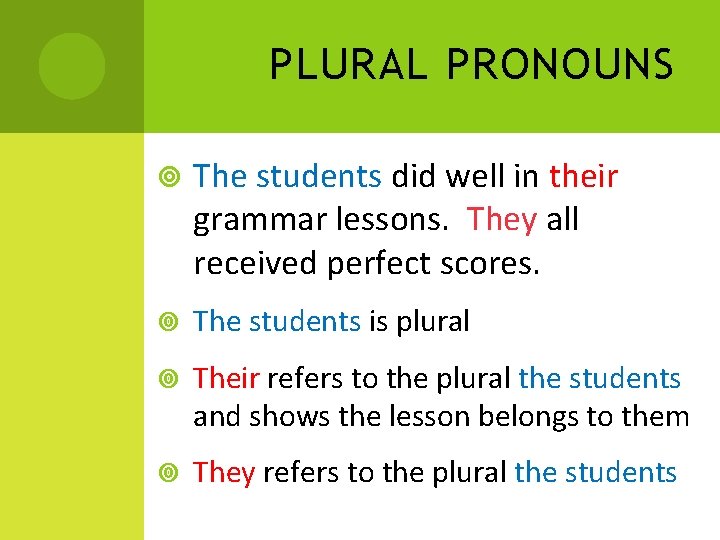
PLURAL PRONOUNS The students did well in their grammar lessons. They all received perfect scores. The students is plural Their refers to the plural the students and shows the lesson belongs to them They refers to the plural the students
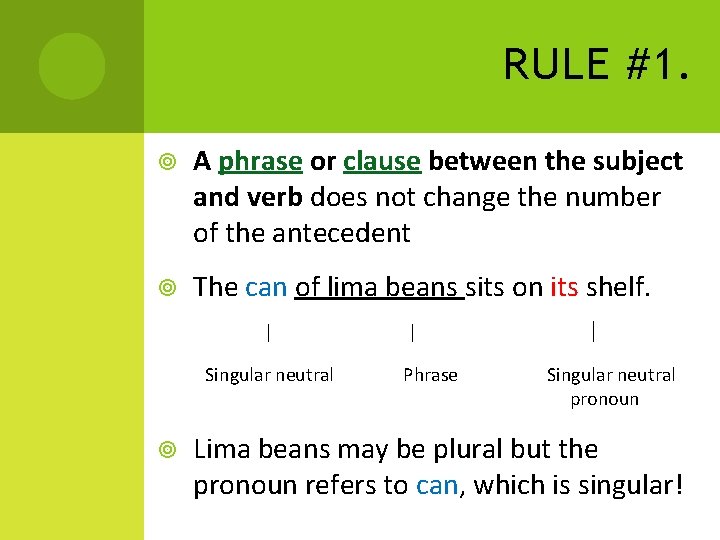
RULE #1. A phrase or clause between the subject and verb does not change the number of the antecedent The can of lima beans sits on its shelf. | Singular neutral | Phrase | Singular neutral pronoun Lima beans may be plural but the pronoun refers to can, which is singular!
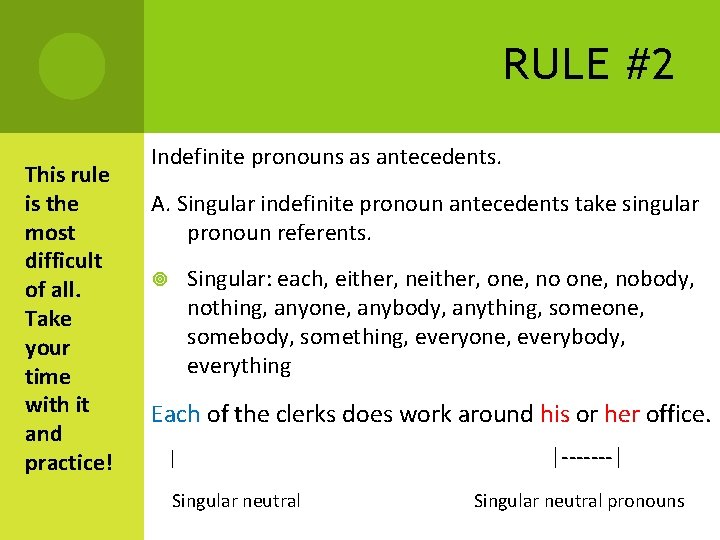
RULE #2 This rule is the most difficult of all. Take your time with it and practice! Indefinite pronouns as antecedents. A. Singular indefinite pronoun antecedents take singular pronoun referents. Singular: each, either, neither, one, nobody, nothing, anyone, anybody, anything, someone, somebody, something, everyone, everybody, everything Each of the clerks does work around his or her office. | Singular neutral |-------| Singular neutral pronouns
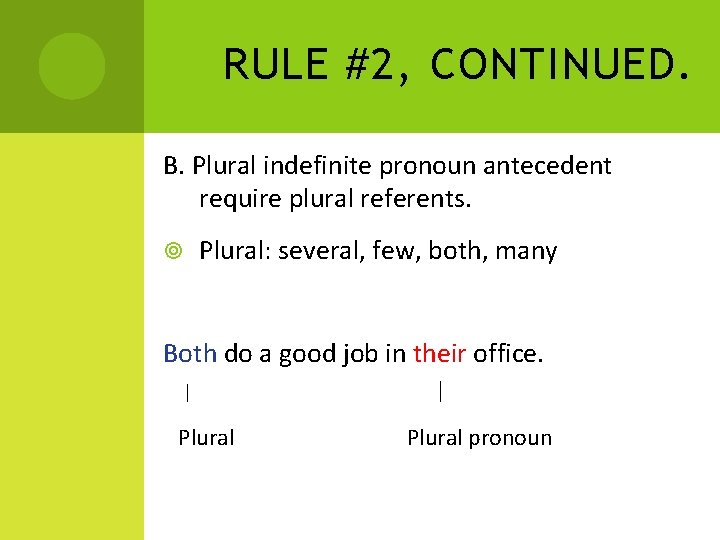
RULE #2, CONTINUED. B. Plural indefinite pronoun antecedent require plural referents. Plural: several, few, both, many Both do a good job in their office. | Plural pronoun
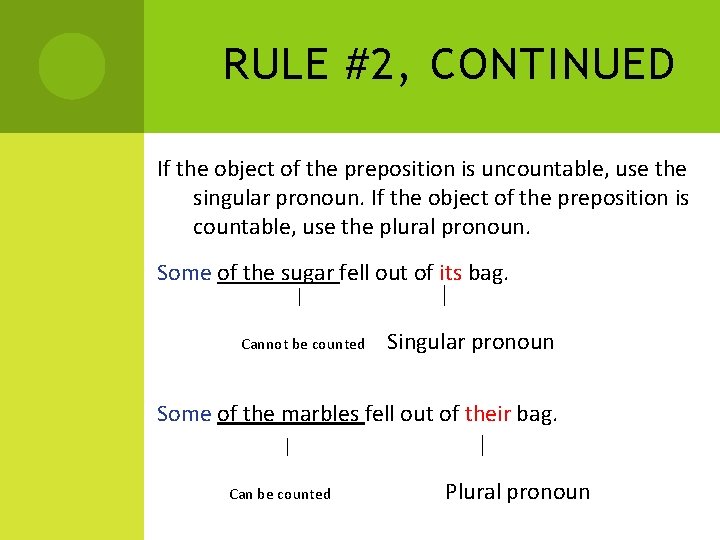
RULE #2, CONTINUED If the object of the preposition is uncountable, use the singular pronoun. If the object of the preposition is countable, use the plural pronoun. Some of the sugar fell out of its bag. | | Cannot be counted Singular pronoun Some of the marbles fell out of their bag. | | Can be counted Plural pronoun
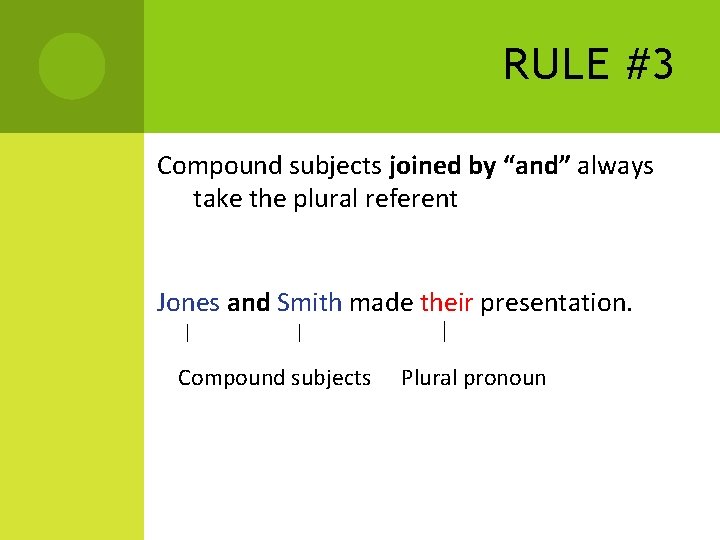
RULE #3 Compound subjects joined by “and” always take the plural referent Jones and Smith made their presentation. | | Compound subjects | Plural pronoun
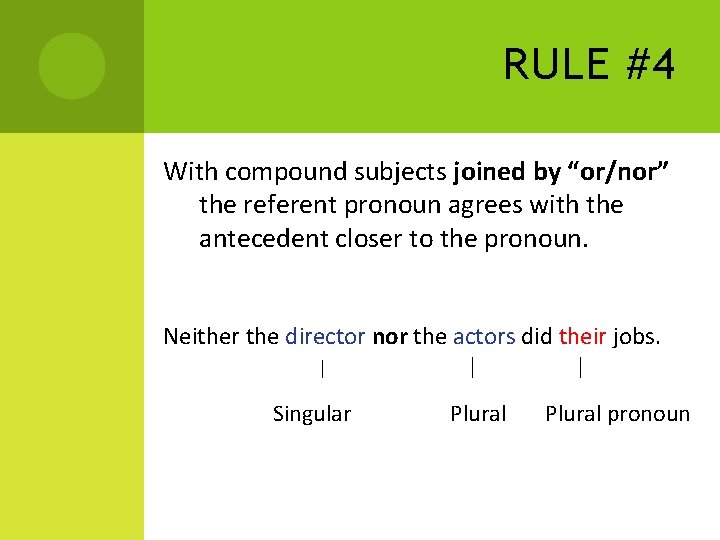
RULE #4 With compound subjects joined by “or/nor” the referent pronoun agrees with the antecedent closer to the pronoun. Neither the director nor the actors did their jobs. | | | Singular Plural pronoun
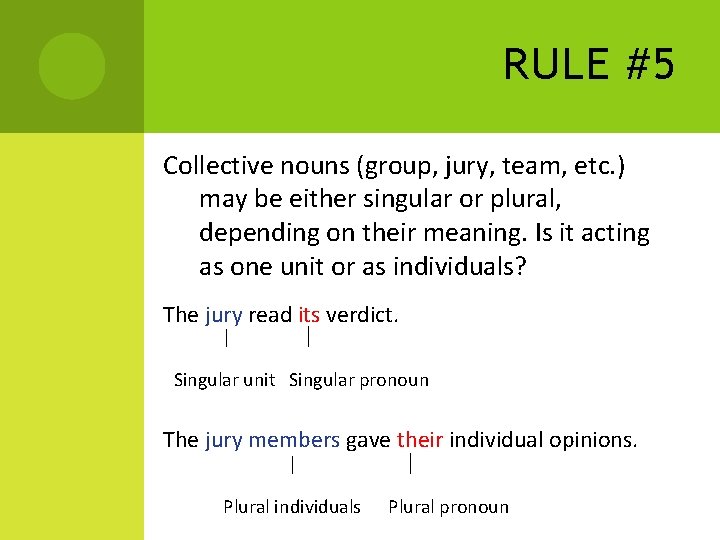
RULE #5 Collective nouns (group, jury, team, etc. ) may be either singular or plural, depending on their meaning. Is it acting as one unit or as individuals? The jury read its verdict. | | Singular unit Singular pronoun The jury members gave their individual opinions. | | Plural individuals Plural pronoun
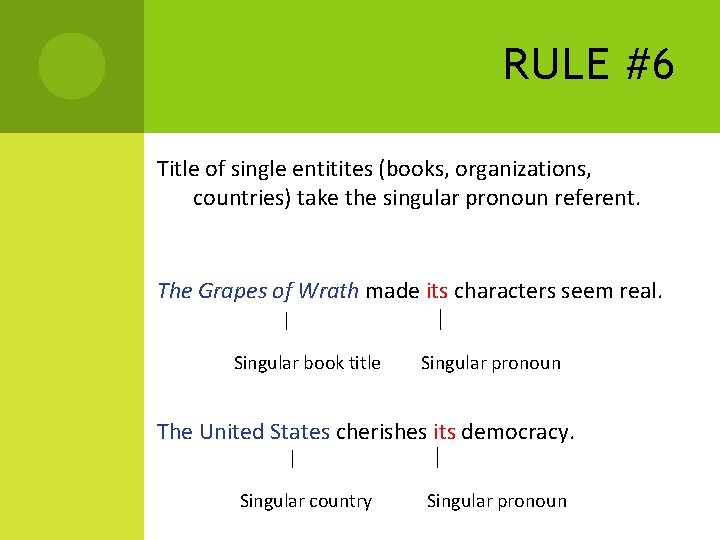
RULE #6 Title of single entitites (books, organizations, countries) take the singular pronoun referent. The Grapes of Wrath made its characters seem real. | | Singular book title Singular pronoun The United States cherishes its democracy. | | Singular country Singular pronoun
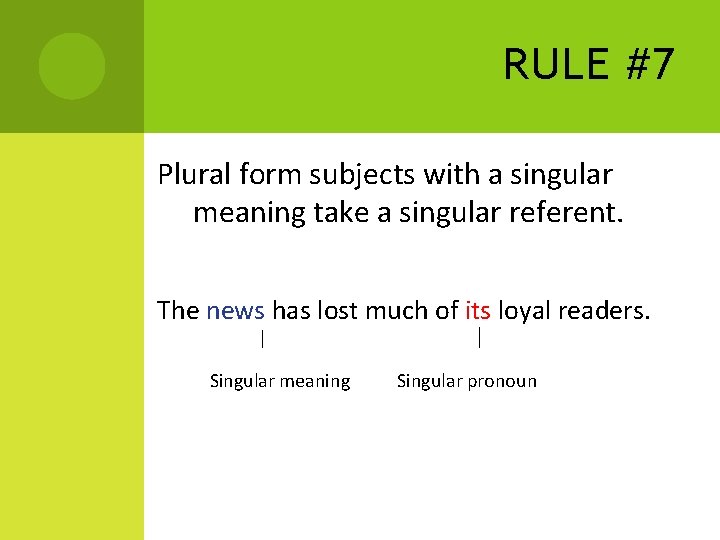
RULE #7 Plural form subjects with a singular meaning take a singular referent. The news has lost much of its loyal readers. | Singular meaning | Singular pronoun
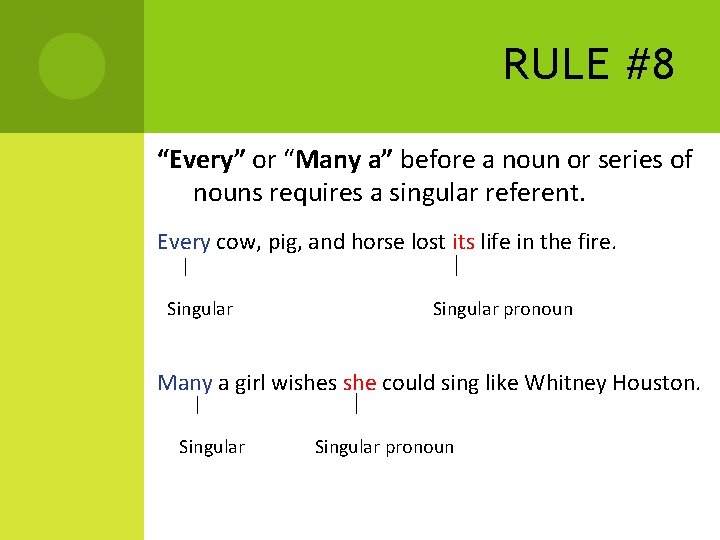
RULE #8 “Every” or “Many a” before a noun or series of nouns requires a singular referent. Every cow, pig, and horse lost its life in the fire. | | Singular pronoun Many a girl wishes she could sing like Whitney Houston. | | Singular pronoun
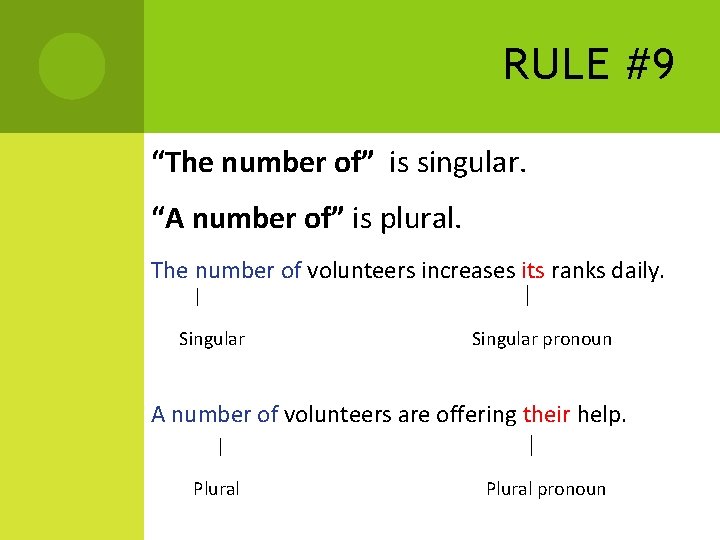
RULE #9 “The number of” is singular. “A number of” is plural. The number of volunteers increases its ranks daily. | | Singular pronoun A number of volunteers are offering their help. | | Plural pronoun
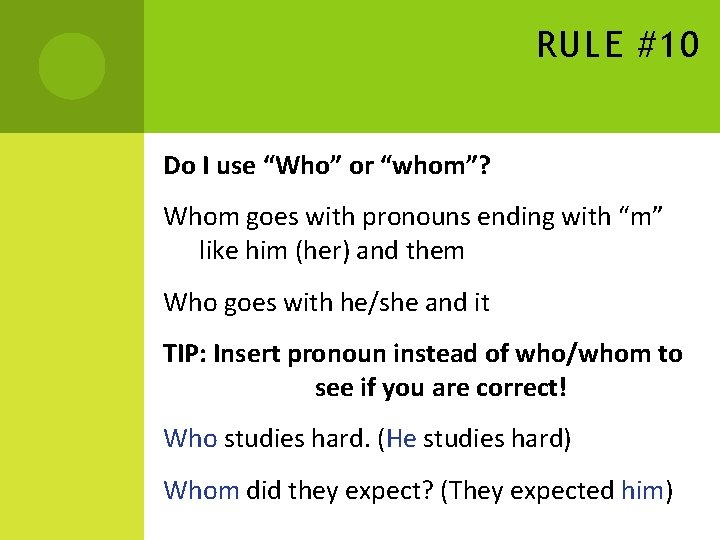
RULE #10 Do I use “Who” or “whom”? Whom goes with pronouns ending with “m” like him (her) and them Who goes with he/she and it TIP: Insert pronoun instead of who/whom to see if you are correct! Who studies hard. (He studies hard) Whom did they expect? (They expected him)
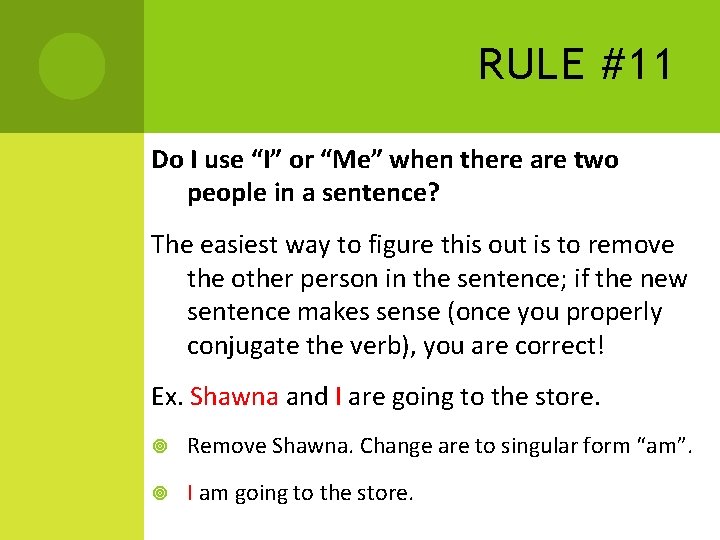
RULE #11 Do I use “I” or “Me” when there are two people in a sentence? The easiest way to figure this out is to remove the other person in the sentence; if the new sentence makes sense (once you properly conjugate the verb), you are correct! Ex. Shawna and I are going to the store. Remove Shawna. Change are to singular form “am”. I am going to the store.
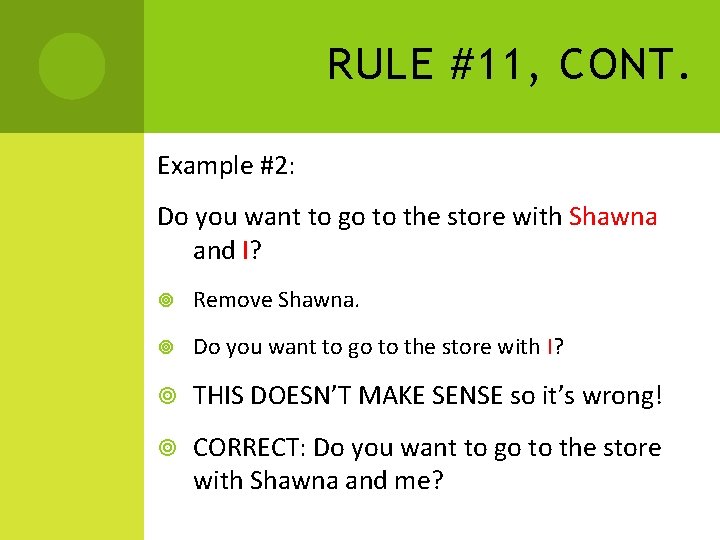
RULE #11, CONT. Example #2: Do you want to go to the store with Shawna and I? Remove Shawna. Do you want to go to the store with I? THIS DOESN’T MAKE SENSE so it’s wrong! CORRECT: Do you want to go to the store with Shawna and me?