
PRONOUN CASE NINTH GRADE ENGLISH PRONOUN CASE The
- Slides: 9
PRONOUN CASE NINTH GRADE ENGLISH
PRONOUN CASE The form that a pronoun takes to shows its relationship to other words in a sentence Three forms of personal pronouns
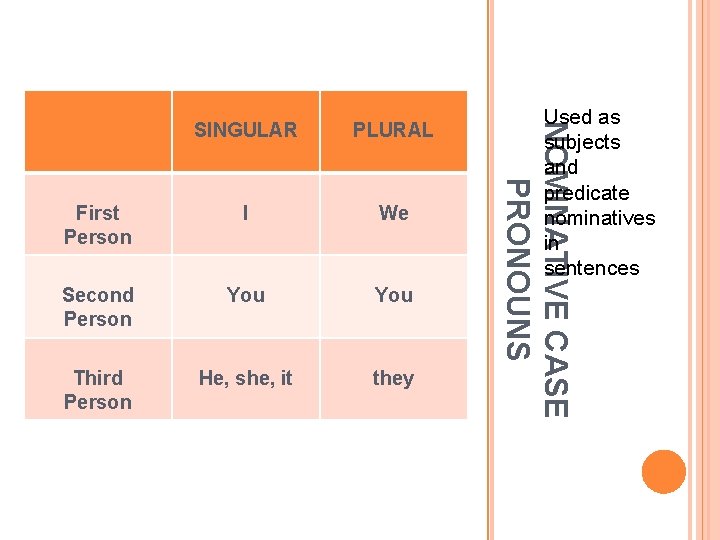
PLURAL First Person I We Second Person You Third Person He, she, it they Used as subjects and predicate nominatives in sentences NOMINATIVE CASE PRONOUNS SINGULAR
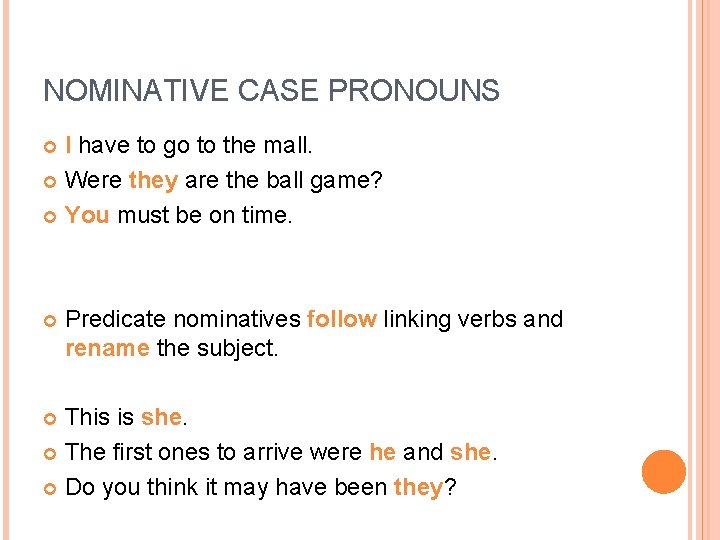
NOMINATIVE CASE PRONOUNS I have to go to the mall. Were they are the ball game? You must be on time. Predicate nominatives follow linking verbs and rename the subject. This is she. The first ones to arrive were he and she. Do you think it may have been they?
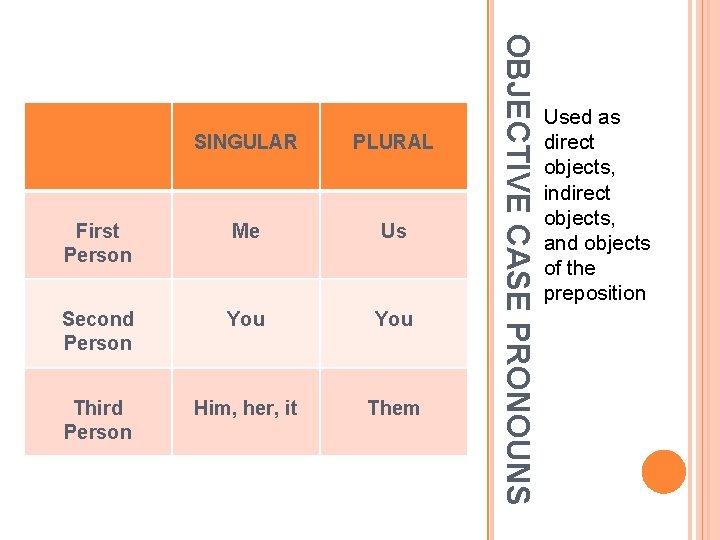
PLURAL First Person Me Us Second Person You Third Person Him, her, it Them OBJECTIVE CASE PRONOUNS SINGULAR Used as direct objects, indirect objects, and objects of the preposition
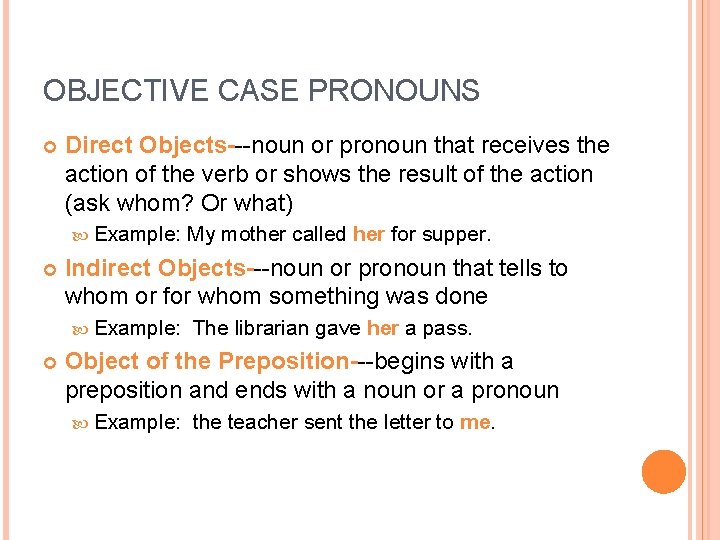
OBJECTIVE CASE PRONOUNS Direct Objects---noun or pronoun that receives the action of the verb or shows the result of the action (ask whom? Or what) Example: Indirect Objects---noun or pronoun that tells to whom or for whom something was done Example: My mother called her for supper. The librarian gave her a pass. Object of the Preposition---begins with a preposition and ends with a noun or a pronoun Example: the teacher sent the letter to me.
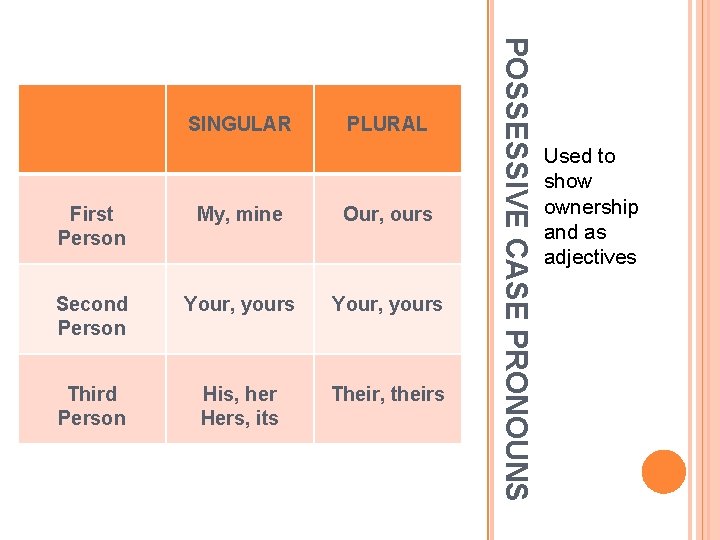
PLURAL First Person My, mine Our, ours Second Person Your, yours Third Person His, her Hers, its Their, theirs POSSESSIVE CASE PRONOUNS SINGULAR Used to show ownership and as adjectives
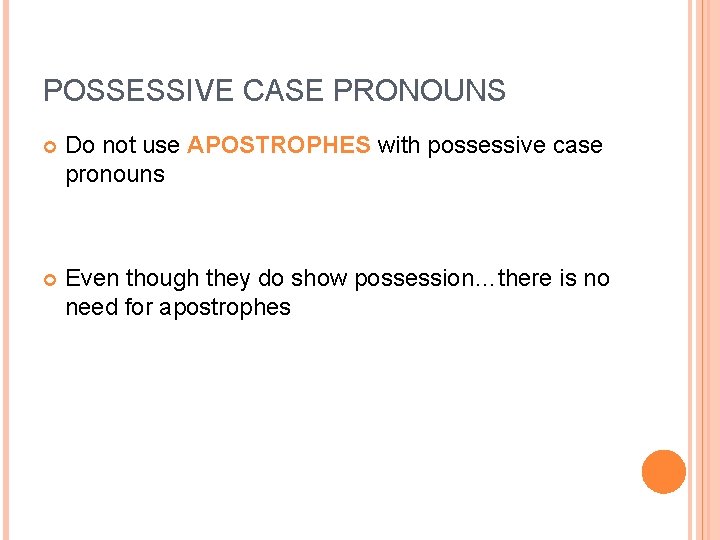
POSSESSIVE CASE PRONOUNS Do not use APOSTROPHES with possessive case pronouns Even though they do show possession…there is no need for apostrophes
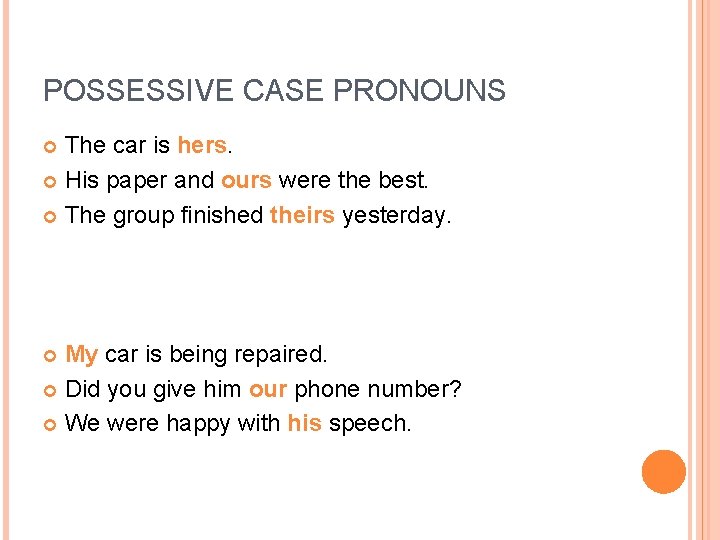
POSSESSIVE CASE PRONOUNS The car is hers. His paper and ours were the best. The group finished theirs yesterday. My car is being repaired. Did you give him our phone number? We were happy with his speech.