
PROMOTORAS AND COMMUNITY HEALTH WORKERS NETWORK How the

- Slides: 25
PROMOTORAS AND COMMUNITY HEALTH WORKERS NETWORK How the Promotores Model Facilitates Access to Health Care in California Communities © 2009 Visión Y Compromiso
Promotoras and Community Health Workers Network Hacia una Vida Digna y Sana Established in 2001 by Visión y Compromiso, the Network is now active in 10 regions and includes over 3, 000 P/CHWs. Network priorities are defined locally and may differ by region. Regional Comités (RCs) are the vehicle for local leadership development. RCs organize quarterly forums, trainings, health fairs and family events.
International Originsof the Promotores Model Source: US/Mexico Border Health Association
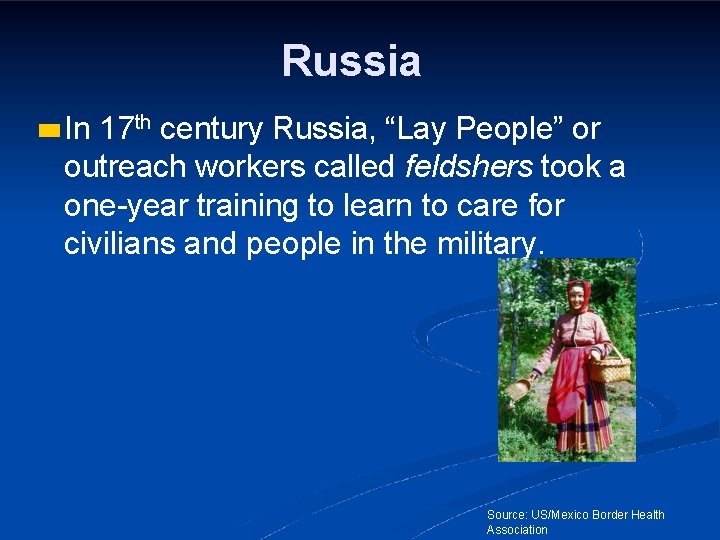
Russia In 17 th century Russia, “Lay People” or outreach workers called feldshers took a one-year training to learn to care for civilians and people in the military. Source: US/Mexico Border Health Association
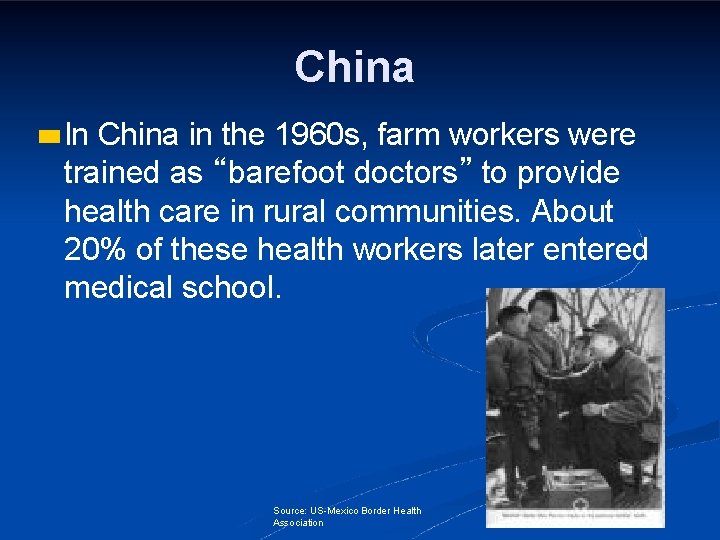
China Iin China in the 1960 s, farm workers were trained as “barefoot doctors” to provide health care in rural communities. About 20% of these health workers later entered medical school. Source: US-Mexico Border Health Association
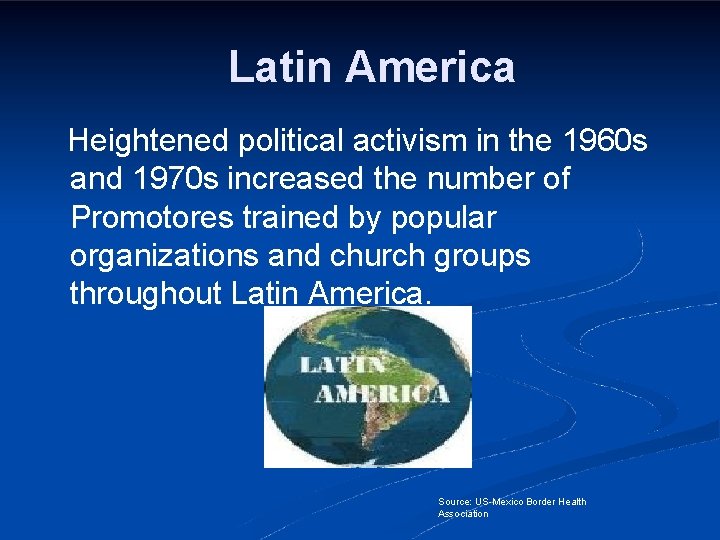
Latin America Heightened political activism in the 1960 s and 1970 s increased the number of Promotores trained by popular organizations and church groups throughout Latin America. Source: US-Mexico Border Health Association
United States The first formal community health worker programs in the United States were established in 1950 -1960 as a strategy to deliver accessible and appropriate health resources to communities not being served by the traditional medical system. Source: US-Mexico Border Health Association
The Health Promotores Mode The Alma Ata Declaration, signed at the World Health l Organization (WHO) conference in 1978, called for: Local community participation in determining health care priorities. Increased emphasis on primary health care and preventative medicine. Linkages between medicine, trade, economics, industry, rural politics, and other political and social arenas.
Who are Promotores and Community Health Workers? Promotores are community members who act as natural helpers and liaisons to their neighbors and local neighborhoods; they may or may not be affiliated with community institutions.
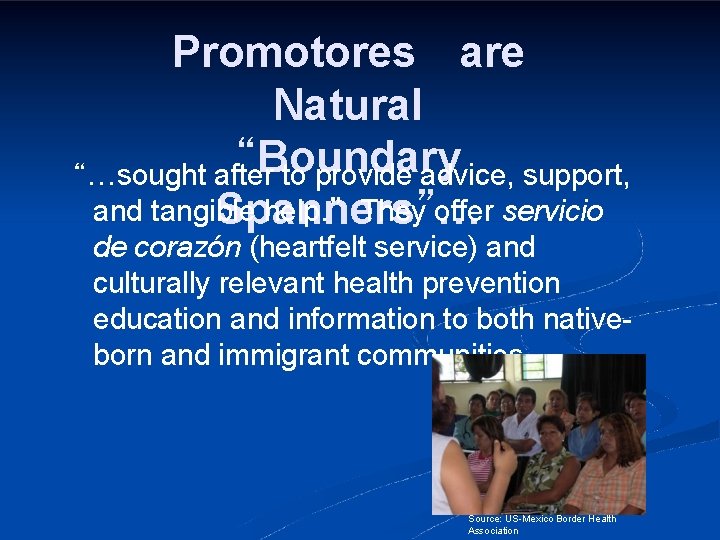
Promotores are Natural “Boundary “…sought after to provide advice, support, and tangible help. ” They offer servicio Spanners”… de corazón (heartfelt service) and culturally relevant health prevention education and information to both nativeborn and immigrant communities. Source: US-Mexico Border Health Association
Promotores Programs Promotor and Community Health Worker (P/CHW) programs flourish throughout California, particularly in metropolitan areas where community based organizations and health providers have nurtured P/CHW activities within their organizations. While the content of these programs and the actual services provided vary according to the funding, health condition or behavior priority for that region, the core capabilities remain constant. P/CHWs are involved in mental health, HIV/AIDS, diabetes and chronic disease prevention, cancer, nutrition, oral health, etc.
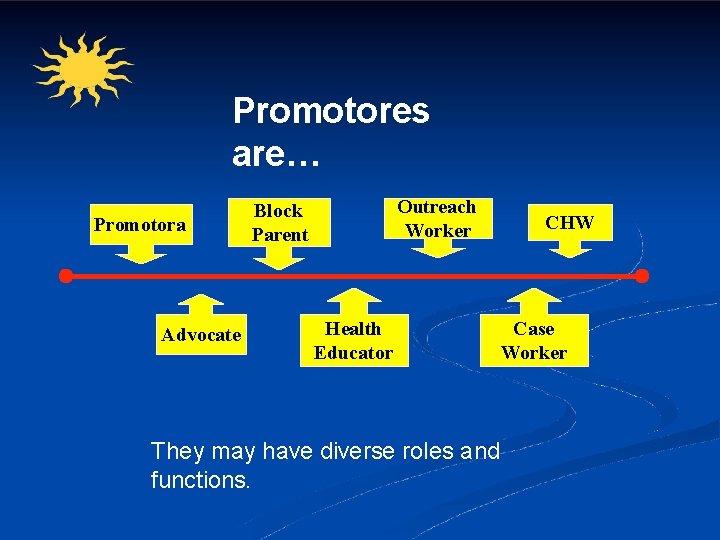
Promotores are… Promotora Advocate Outreach Worker Block Parent Health Educator They may have diverse roles and functions. CHW Case Worker
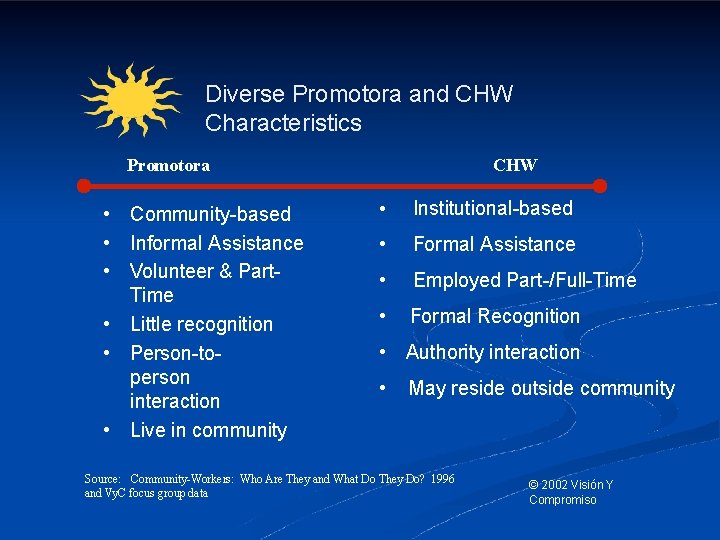
Diverse Promotora and CHW Characteristics Promotora • Community-based • Informal Assistance • Volunteer & Part. Time • Little recognition • Person-toperson interaction • Live in community CHW • Institutional-based • Formal Assistance • Employed Part-/Full-Time • Formal Recognition • Authority interaction • May reside outside community Source: Community-Workers: Who Are They and What Do They Do? 1996 and Vy. C focus group data © 2002 Visión Y Compromiso
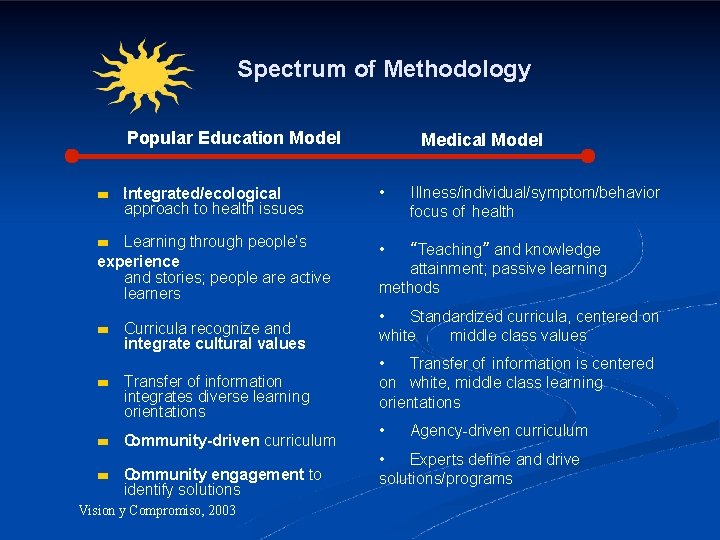
Spectrum of Methodology Popular Education Model Medical Model IIntegrated/ecological approach to health issues • Learning through people’s experience and stories; people are active learners • Curricula recognize and integrate cultural values Transfer of information integrates diverse learning orientations Community-driven curriculum Community engagement to identify solutions Vision y Compromiso, 2003 Illness/individual/symptom/behavior focus of health “Teaching” and knowledge attainment; passive learning methods • Standardized curricula, centered on white middle class values • Transfer of information is centered on white, middle class learning orientations • Agency-driven curriculum • Experts define and drive solutions/programs
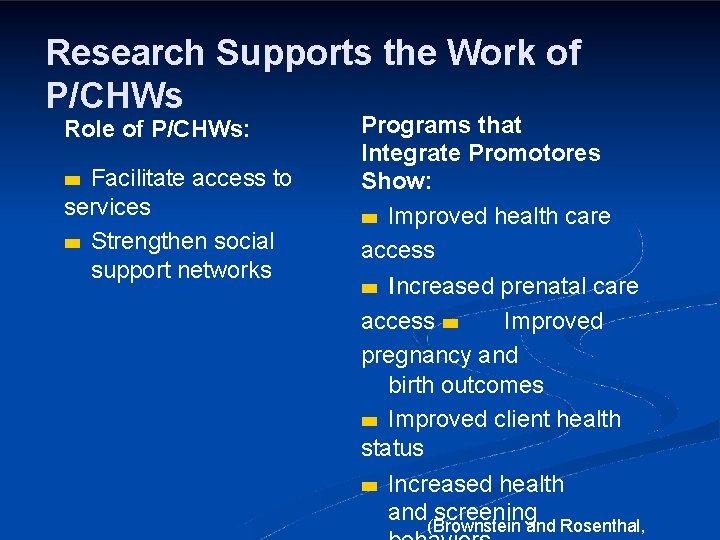
Research Supports the Work of P/CHWs Role of P/CHWs: Facilitate access to services Strengthen social support networks Programs that Integrate Promotores Show: Improved health care access IIncreased prenatal care access Improved pregnancy and birth outcomes Improved client health status Increased health and(Brownstein screeningand Rosenthal,
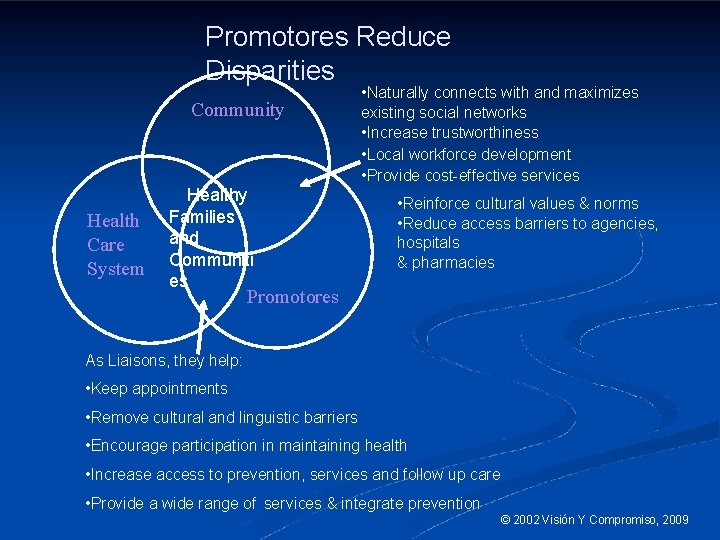
Promotores Reduce Disparities Community Health Care System Healthy Families and Communiti es • Naturally connects with and maximizes existing social networks • Increase trustworthiness • Local workforce development • Provide cost-effective services • Reinforce cultural values & norms • Reduce access barriers to agencies, hospitals & pharmacies Promotores As Liaisons, they help: • Keep appointments • Remove cultural and linguistic barriers • Encourage participation in maintaining health • Increase access to prevention, services and follow up care • Provide a wide range of services & integrate prevention © 2002 Visión Y Compromiso, 2009
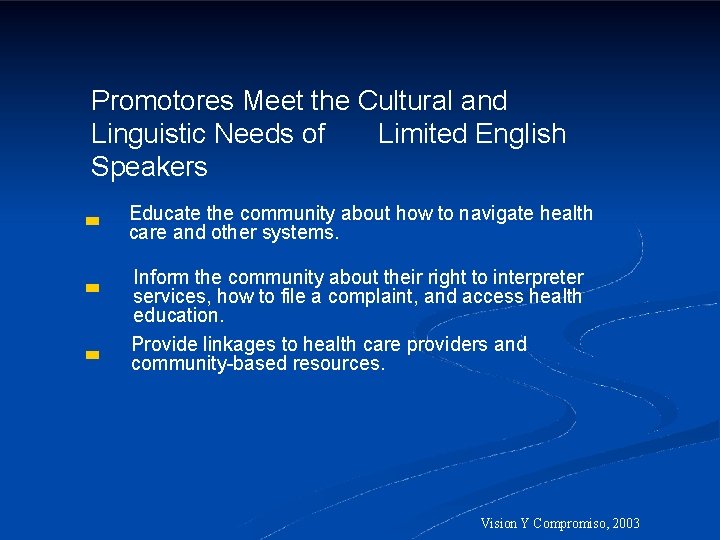
Promotores Meet the Cultural and Linguistic Needs of Limited English Speakers Educate the community about how to navigate health care and other systems. Inform the community about their right to interpreter services, how to file a complaint, and access health education. Provide linkages to health care providers and community-based resources. Vision Y Compromiso, 2003
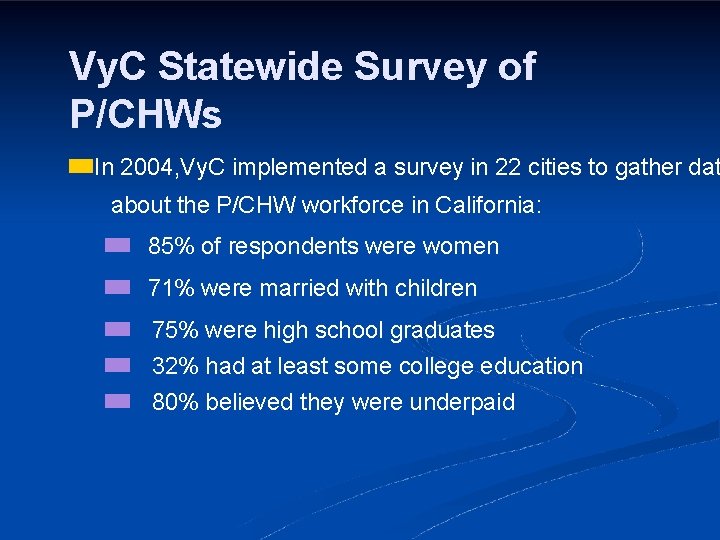
Vy. C Statewide Survey of P/CHWs In 2004, Vy. C implemented a survey in 22 cities to gather dat about the P/CHW workforce in California: 85% of respondents were women 71% were married with children 75% were high school graduates 32% had at least some college education 80% believed they were underpaid
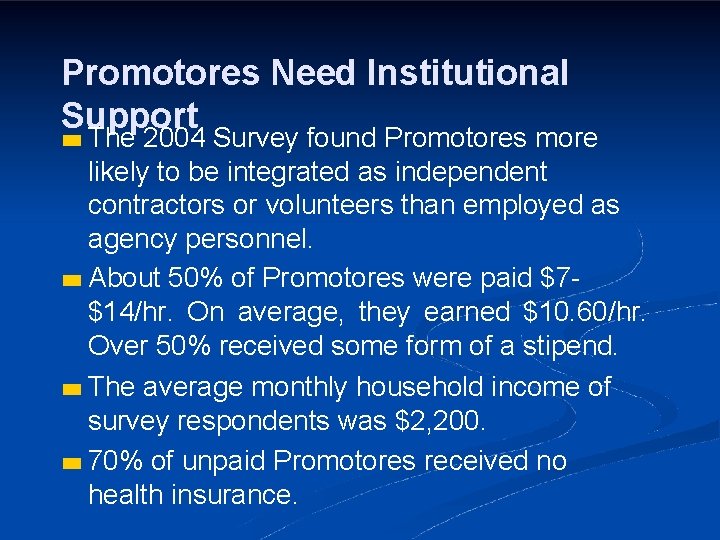
Promotores Need Institutional Support The 2004 Survey found Promotores more likely to be integrated as independent contractors or volunteers than employed as agency personnel. About 50% of Promotores were paid $7$14/hr. On average, they earned $10. 60/hr. Over 50% received some form of a stipend. The average monthly household income of survey respondents was $2, 200. 70% of unpaid Promotores received no health insurance.
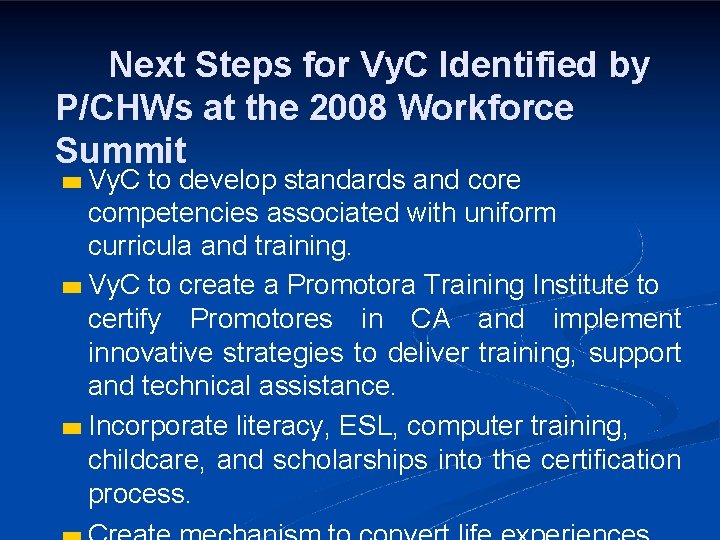
Next Steps for Vy. C Identified by P/CHWs at the 2008 Workforce Summit Vy. C to develop standards and core competencies associated with uniform curricula and training. Vy. C to create a Promotora Training Institute to certify Promotores in CA and implement innovative strategies to deliver training, support and technical assistance. Incorporate literacy, ESL, computer training, childcare, and scholarships into the certification process.
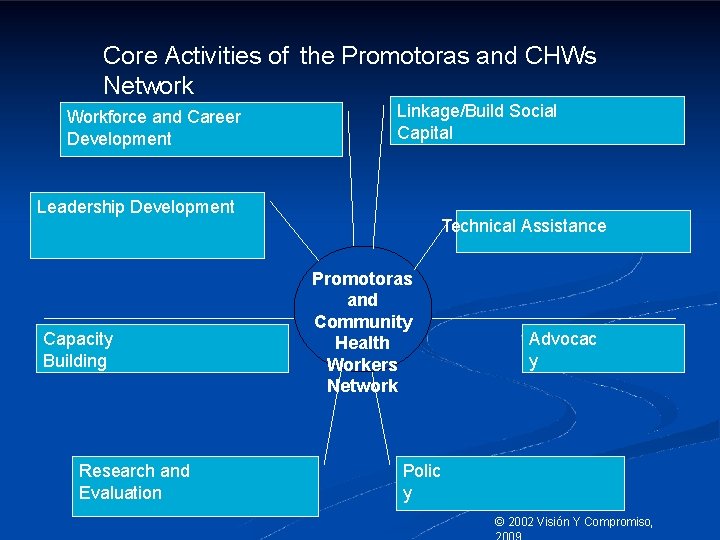
Core Activities of the Promotoras and CHWs Network Workforce and Career Development Linkage/Build Social Capital Leadership Development Capacity Building Research and Evaluation Technical Assistance Promotoras and Community Health Workers Network Advocac y Polic y © 2002 Visión Y Compromiso,
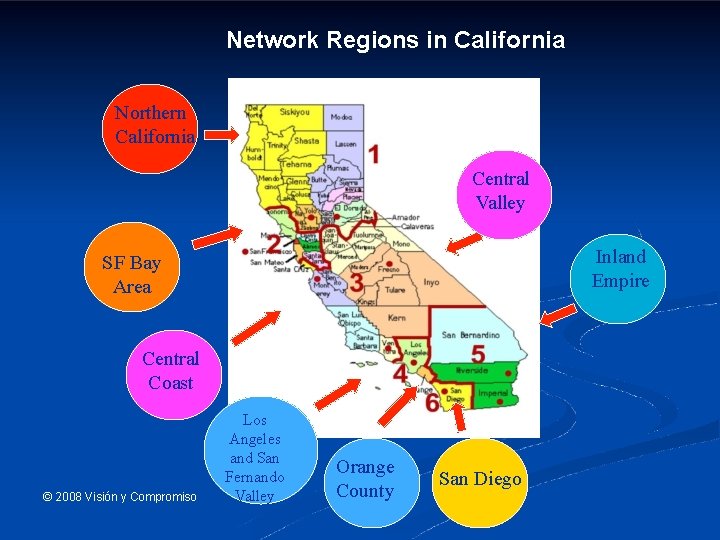
Network Regions in California Northern California Central Valley Inland Empire SF Bay Area Central Coast © 2008 Visión y Compromiso Los Angeles and San Fernando Valley Orange County San Diego
LA RED DE PROMOTORAS Y TRABAJADORES COMUNITARIOS For additional Maria Lemus Information: Melinda Executive Director mholl 67174@aol. c 510. 303. 34 om 44 Cordero Associate Director promotorasin. CA@aol. c om 626. 864. 6117
What do Promotores Need from You…? Get to know the Promotores in your District. Who are they? What role do they play in their neighborhoods? Which communities do they represent? What agencies, if any, are they affiliated with? What are their workforce concerns? What are their successes?
What do Promotores Need from You…? Understand the community. What are the community-identified priorities? What are the local assets? Are there community-identified solutions to some of these priority issues? How can you/your office become more involved in these priority issues?