
Promoting Structural Empowerment Creating a Regional EvidenceBased Practice
Promoting Structural Empowerment: Creating a Regional Evidence-Based Practice Consortium of Academic and Practice Partners Session C 710 Rhonda Maneval, D. Ed. , RN Temple University, Philadelphia , PA Sarah Harne-Britner, MSN, RN, ACNS-BC Pinnacle. Health System, Harrisburg, PA Carolyn Kreamer, Ph. D, RN, CNE Messiah College, Mechanicsburg, PA Paula Coe, MSN, RN, NEA-BC York Hospital, Wellspan Health York, PA Jane Oyler, MSN, RN, NEA-BC Gettysburg Hospital, Wellspan Health Gettysburg, PA 2013 ANCC National Magnet Conference®
Objectives • Identify strategies for developing a regional evidence-based practice (EBP) consortium. • Discuss the benefits of implementing a regional EBP consortium.
Why is Nursing EBP Important? • Ensuring the best patient outcomes • Positions nurses as knowledge workers with professional autonomy • Facilitates and encourages innovation
The Journey Begins in 2002 • Pinnacle. Health System in pursuit of Magnet designation • No formal research department • Need to develop research and EBP skills in nurses • Workgroup formed to search literature for strategies to develop EBP and research skills.
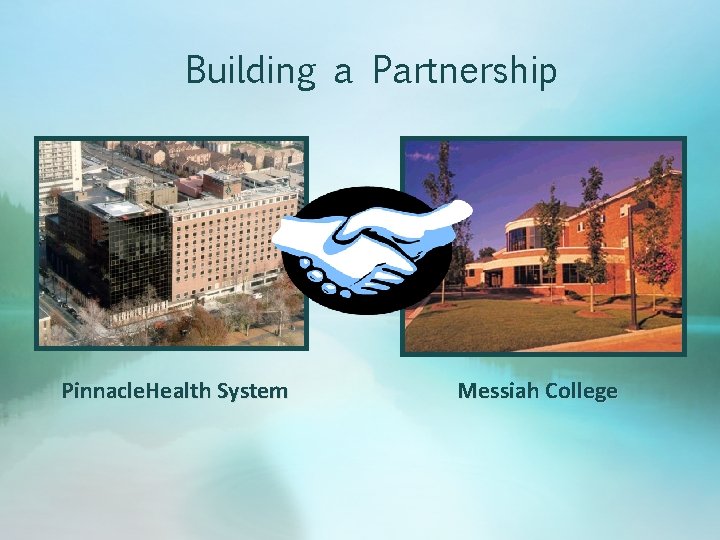
Building a Partnership Pinnacle. Health System Messiah College
Shared Vision Practicing Nurses Increase knowledge of research process and apply research to actual clinical problems in their practice Nursing Students Demystify the research process and apply research to actual clinical problems to their future practice
Research Roundtable Program 2003 -2004 • Purpose: to learn about the research process by working on a clinical issue • Incorporated a research experience in a one-semester 3 -credit nursing course • Group activity involving practicing nurses, advance practice nurses, faculty and senior nursing students • Research proposal draft developed
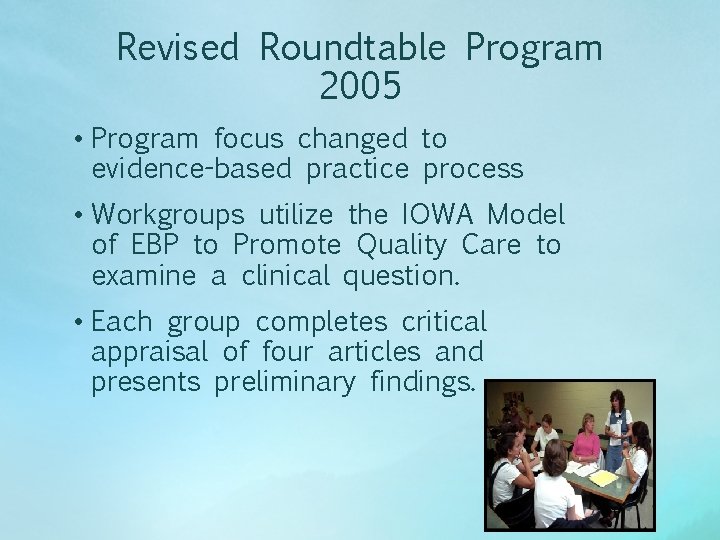
Revised Roundtable Program 2005 • Program focus changed to evidence-based practice process • Workgroups utilize the IOWA Model of EBP to Promote Quality Care to examine a clinical question. • Each group completes critical appraisal of four articles and presents preliminary findings.
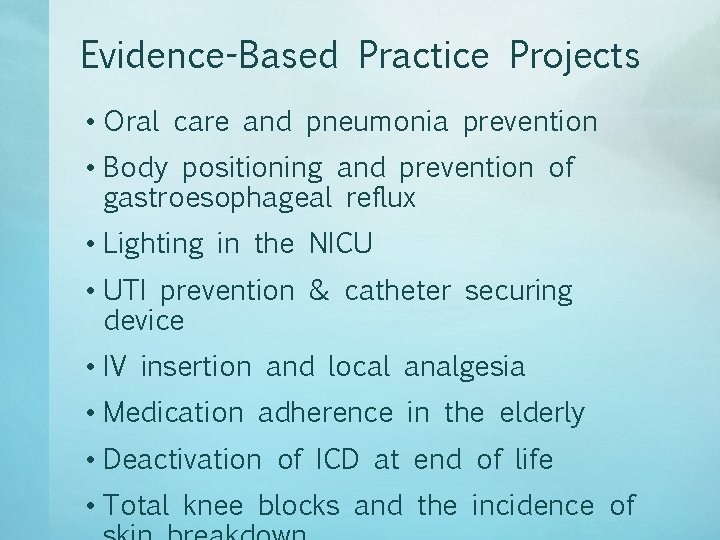
Evidence-Based Practice Projects • Oral care and pneumonia prevention • Body positioning and prevention of gastroesophageal reflux • Lighting in the NICU • UTI prevention & catheter securing device • IV insertion and local analgesia • Medication adherence in the elderly • Deactivation of ICD at end of life • Total knee blocks and the incidence of
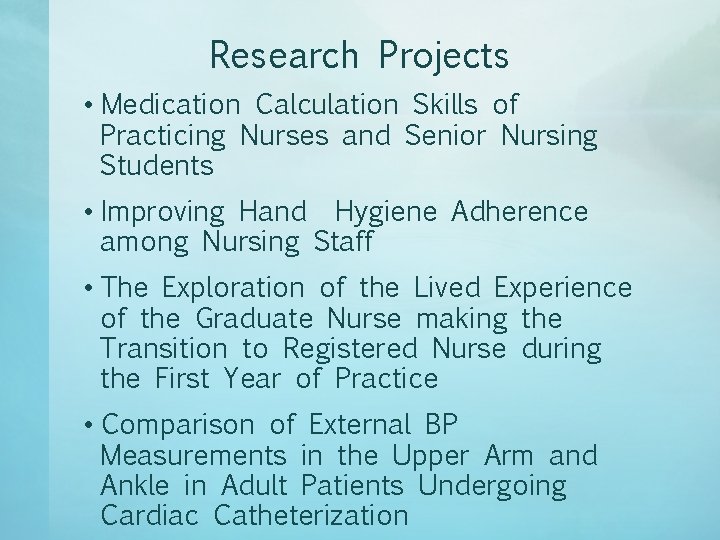
Research Projects • Medication Calculation Skills of Practicing Nurses and Senior Nursing Students • Improving Hand Hygiene Adherence among Nursing Staff • The Exploration of the Lived Experience of the Graduate Nurse making the Transition to Registered Nurse during the First Year of Practice • Comparison of External BP Measurements in the Upper Arm and Ankle in Adult Patients Undergoing Cardiac Catheterization
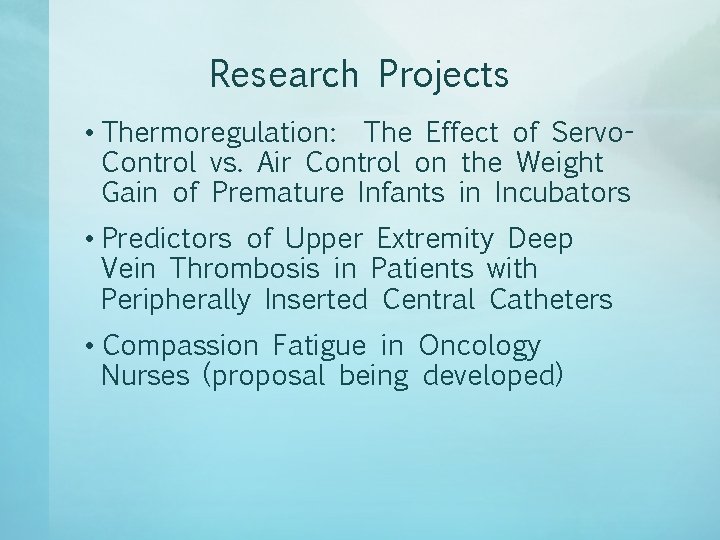
Research Projects • Thermoregulation: The Effect of Servo. Control vs. Air Control on the Weight Gain of Premature Infants in Incubators • Predictors of Upper Extremity Deep Vein Thrombosis in Patients with Peripherally Inserted Central Catheters • Compassion Fatigue in Oncology Nurses (proposal being developed)
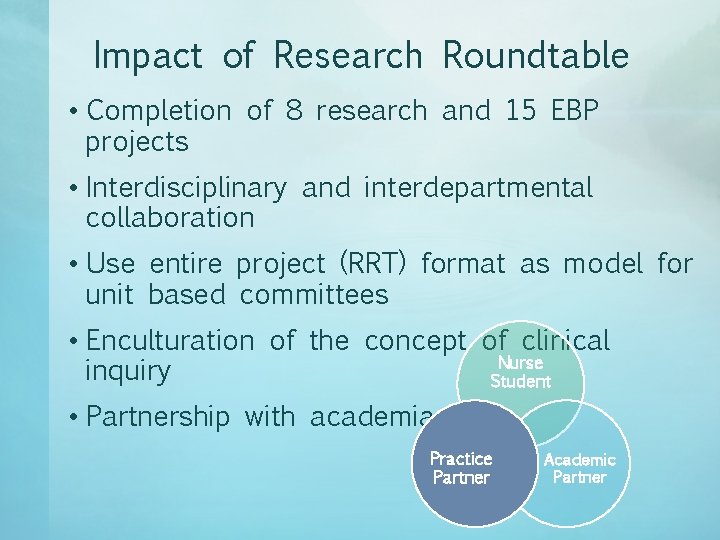
Impact of Research Roundtable • Completion of 8 research and 15 EBP projects • Interdisciplinary and interdepartmental collaboration • Use entire project (RRT) format as model for unit based committees • Enculturation of the concept of clinical Nurse inquiry Student • Partnership with academia Practice Partner Academic Partner
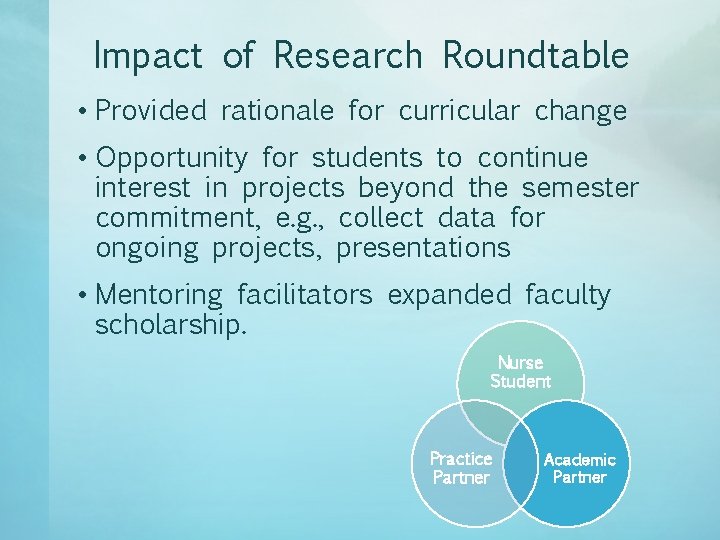
Impact of Research Roundtable • Provided rationale for curricular change • Opportunity for students to continue interest in projects beyond the semester commitment, e. g. , collect data for ongoing projects, presentations • Mentoring facilitators expanded faculty scholarship. Nurse Student Practice Partner Academic Partner
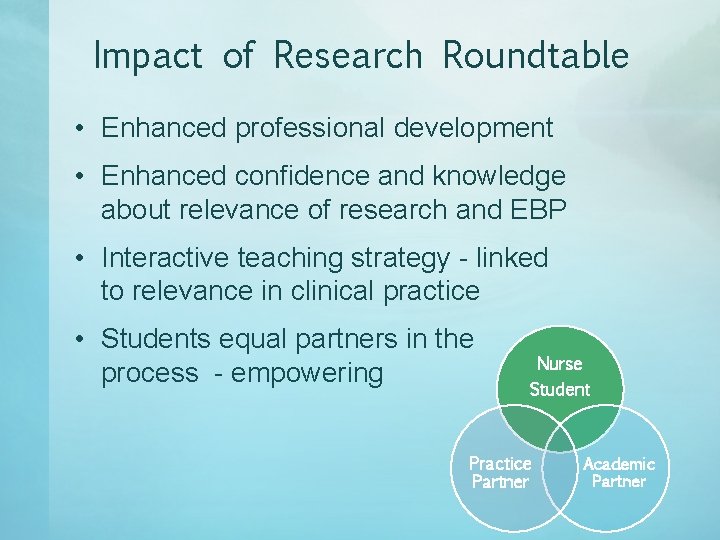
Impact of Research Roundtable • Enhanced professional development • Enhanced confidence and knowledge about relevance of research and EBP • Interactive teaching strategy - linked to relevance in clinical practice • Students equal partners in the process - empowering Nurse Student Practice Partner Academic Partner
Building on Success • Mentored healthcare and academic institutions in development of similar programs • Identified potential to share EBP projects and research on a broader scale • Idea for regional EBP consortium proposed as next step
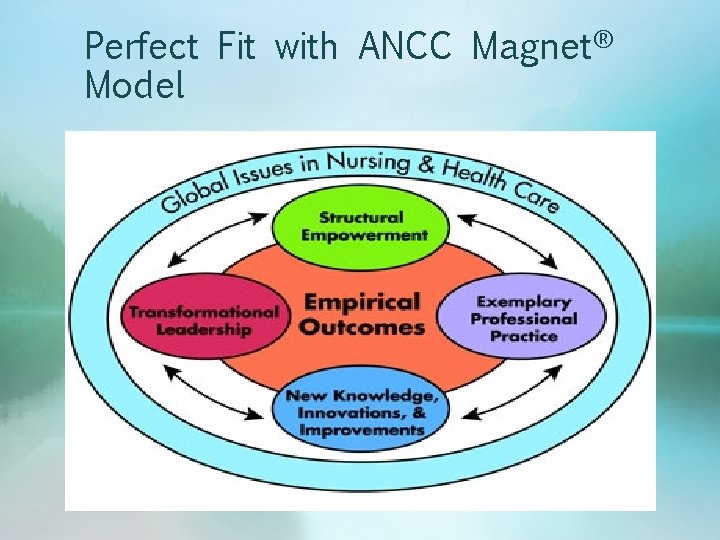
Perfect Fit with ANCC Magnet® Model
Perfect Fit with ANCC Magnet® Model Structural Empowerment
Planning Phase • Regional EBP consortium concept discussed with Research Council members and nursing leadership • Added as goal in the Nursing Strategic Plan (2008) • Nursing Research Consultant, led development of consortium in collaboration with Research Council
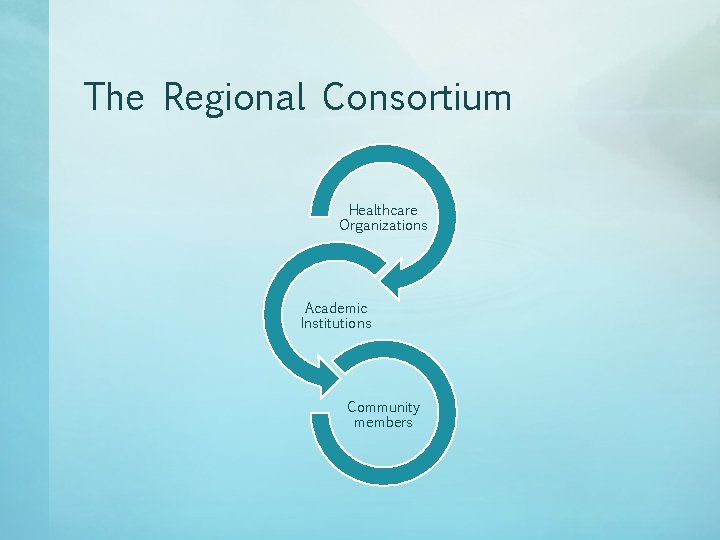
The Regional Consortium Healthcare Organizations Academic Institutions Community members
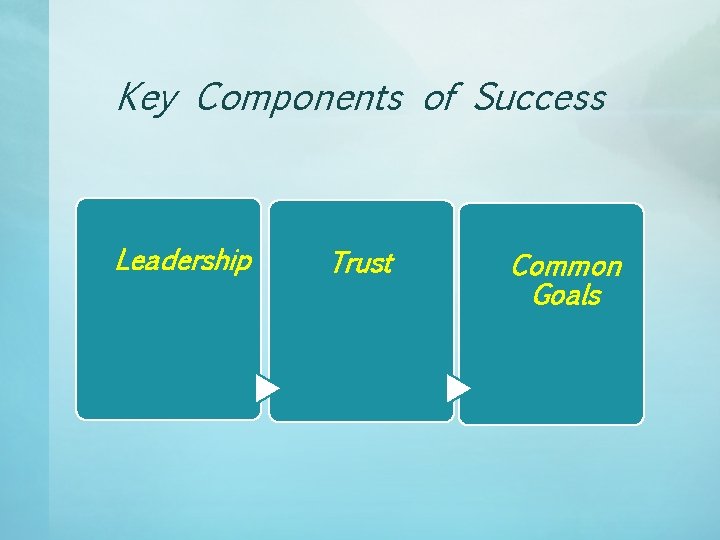
Key Components of Success Leadership Trust Common Goals
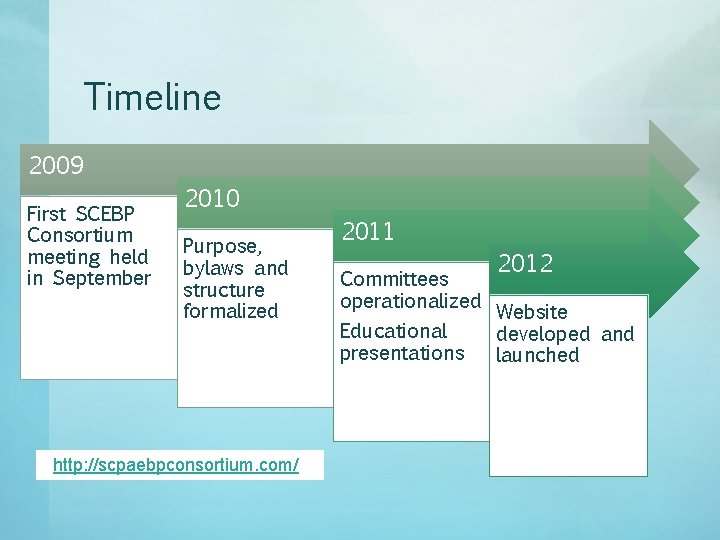
Timeline 2009 First SCEBP Consortium meeting held in September 2010 Purpose, bylaws and structure formalized http: //scpaebpconsortium. com/ 2011 2012 Committees operationalized Website Educational developed and presentations launched
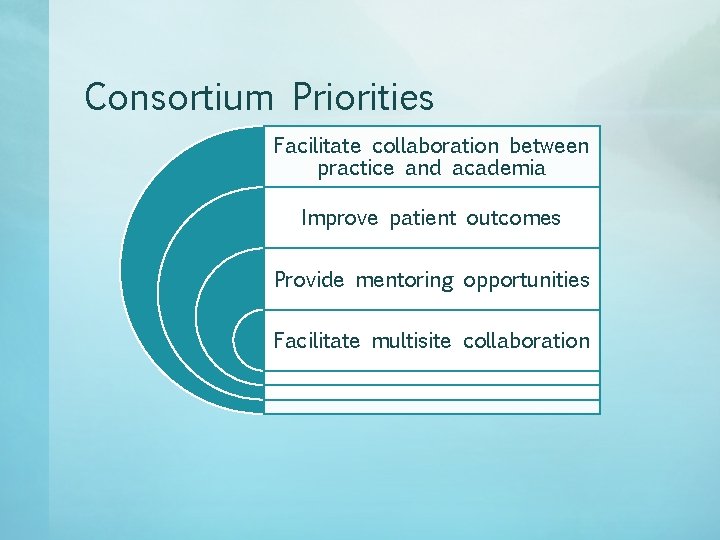
Consortium Priorities Facilitate collaboration between practice and academia Improve patient outcomes Provide mentoring opportunities Facilitate multisite collaboration
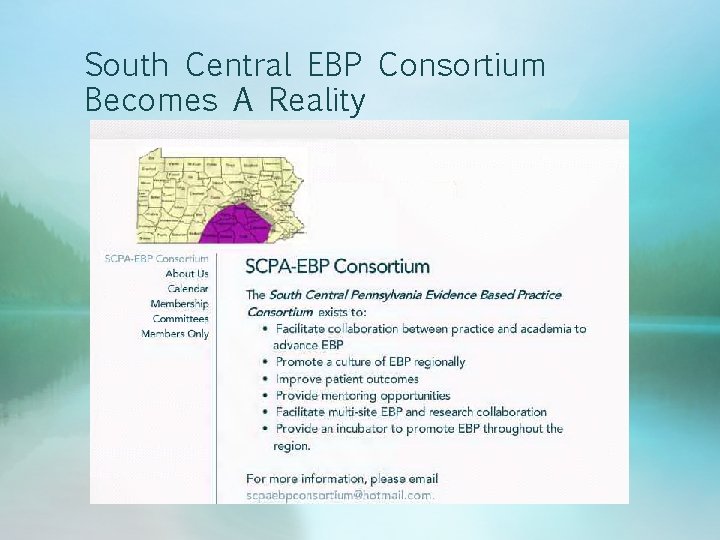
South Central EBP Consortium Becomes A Reality
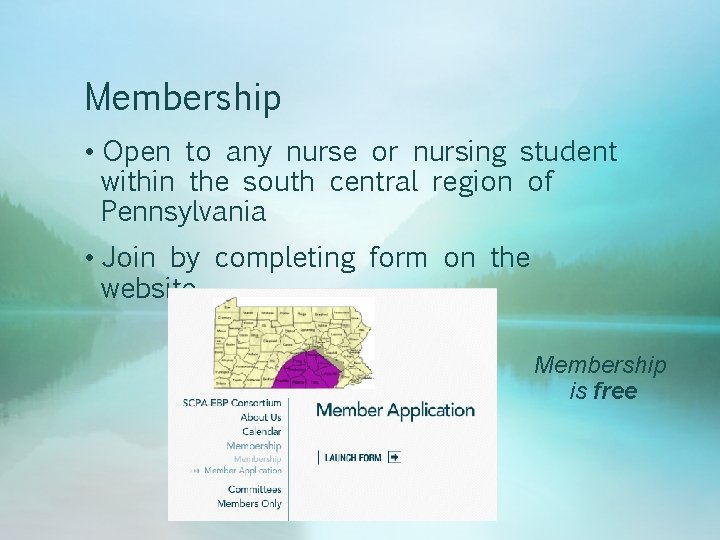
Membership • Open to any nurse or nursing student within the south central region of Pennsylvania • Join by completing form on the website Membership is free
Structure • Quarterly meetings held quarterly on Friday afternoons 1 -3 PM. • Healthcare and academic institutions rotate hosting the meetings. • Each meeting includes presentations of EBP or research projects followed by formal business agenda.
Committees EBP Toolkit Executive Mentorship Program Speakers Bureau Website
SCP-EBPC Outcomes • 14 Consortium Meetings held over the past 4 years. • 32 Presentations provided by students (UG and Graduate), Staff nurses, Advance practice nurses, and faculty – Original Research including dissertations (8) – EBP Projects (24) • Members attending other organization’s research conferences and presenting. • Enhanced communication among local nurses • Increased exposure to educational opportunities, encouraging degree advancement.
Presentations • ED Nurse Perception of Disaster Preparedness (Qualitative research) • Delirium Assessment in Trauma Surgical ICU (EBP project) • Finding a Pain Assessment Tool for the Non-verbal and Cognitively Impaired Child (EBP Project) • The Impact of Evidence-Based Practice on Kidney Transplant Education (EBP Project) • Learned helplessness, hardiness, and risk-taking as factors related to prescriptive practice among nurse practitioners (Quantitative research) • Management of Post-Opioid induced Pruritus in the Post C-Section Mother (EBP Project)
Moving Forward • Multi-site EBP and Research Initiatives • Opportunities to collaborate on Research Conferences • Grow membership in order to continue to improve the quality of nursing care throughout the region through the dissemination of research and EBP.
Structural Empowerment and the Consortium • A forum where colleagues support the goals and objectives in their respective organizations • Cost-effective way to share best practices and accelerate translation into practice • Improves the quality of nursing care • Promotes collegiality of nurses across the region.

Contact Information • Rhonda Maneval, D. Ed, RN – rmaneval@temple. edu • Sarah Harne-Britner, MSN, RN, ACNS-BC – sharne-britner@pinnaclehealth. org • Carolyn Kreamer, Ph. D, RN, CNE – kreamer@messiah. edu • Paula Coe, MSN, RN, NEA-BC – pcoe@wellspan. org • Jane Oyler, MSN, RN, NEA-BC – joyler@wellspan. org
- Slides: 32