
Promoting Relationships with the Teaching Personal and Social




- Slides: 41
Promoting “Relationships” with the Teaching Personal and Social Responsibility Model Paul M. Wright, Ph. D. Northern Illinois University May 2, 2013 SPEA Conference 2013
Objectives • • • Discuss the Relationships goal in PE Situate this goal in the broader curriculum Review the TPSR model Consider the alignment between these Connect this discussion to assessment
Aim and Goals of K-12 Physical Education • Aim …to support students in becoming physically educated individuals who have the understandings and skills to engage in movement activity, and the confidence and disposition to live a healthy, active lifestyle. • Goals – Active Living – Skillful Movement – Relationships
Relationships • Balance self through safe and respectful personal, social, cultural, and environmental interactions in a wide variety of movement activities.
HOW DOES THE PE GOAL OF ‘RELATIONSHIPS’ FIT INTO THE BROADER CURRICULUM?
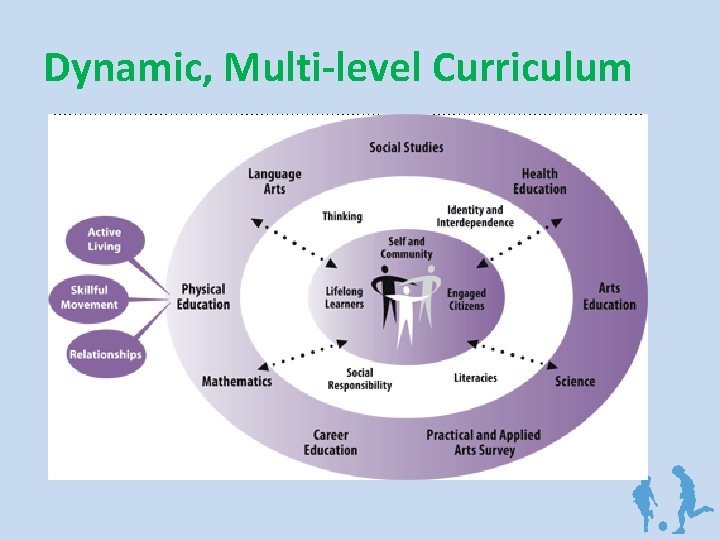
Saskatchewan Curriculum • Revised Curriculum Framework – Broad Areas of Learning • Desired attributes of students – Cross-curricular Competencies • Strengthen and enrich students’ present learning and future lives – Subject areas • PE, mathematics, etc.
Broad Areas of Learning • Broad Areas of Learning – Sense of Self, Community, and Place – Lifelong Learners – Engaged Citizens
Cross-cultural Competencies • Cross-cultural Competencies – Thinking – Identity and Interdependence – Literacies – Social Responsibility
Dynamic, Multi-level Curriculum
So what do these curricular values and goals look like in practice?
Teaching Personal and Social Responsibility • Value-based instructional model • Physical activity as vehicle to teach life skills • Developed by Don Hellison – Primarily with urban/underserved youth – Outside margins of PE at the time • Applied in varied settings & cultures – Physical education, sport camps, after-school programs – Spain, Portugal, Brazil, Mexico, Korea, New Zealand, South Africa…
TPSR Themes • Integration: responsibility integrated into physical activity • Transfer: connections to life skills in other settings • Empowerment: teacher shares responsibility with students • Teacher-Student Relationship: students are treated as individuals deserving respect, choice, and voice
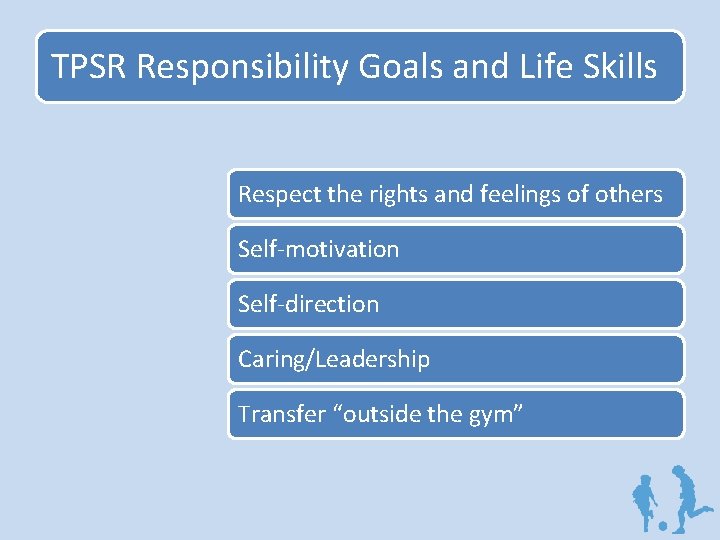
TPSR Responsibility Goals and Life Skills Respect the rights and feelings of others Self-motivation Self-direction Caring/Leadership Transfer “outside the gym”
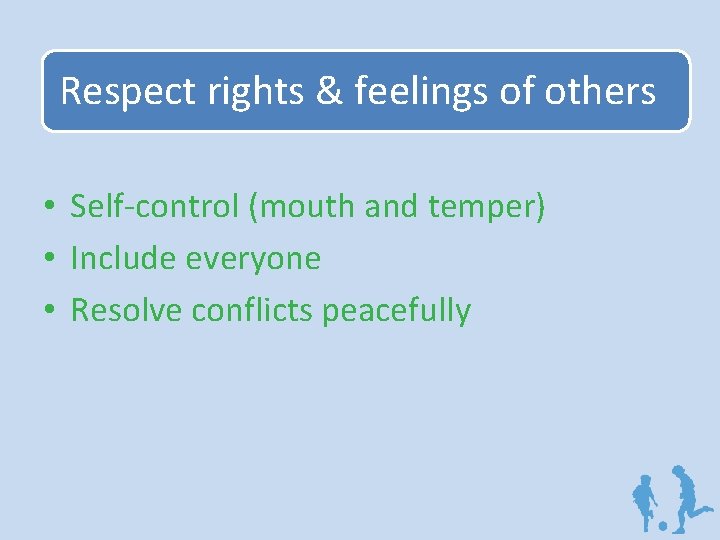
Respect rights & feelings of others • Self-control (mouth and temper) • Include everyone • Resolve conflicts peacefully
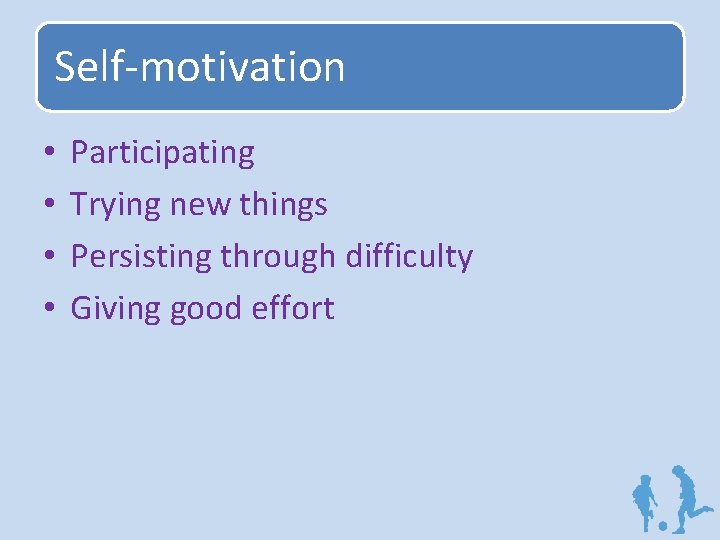
Self-motivation • • Participating Trying new things Persisting through difficulty Giving good effort
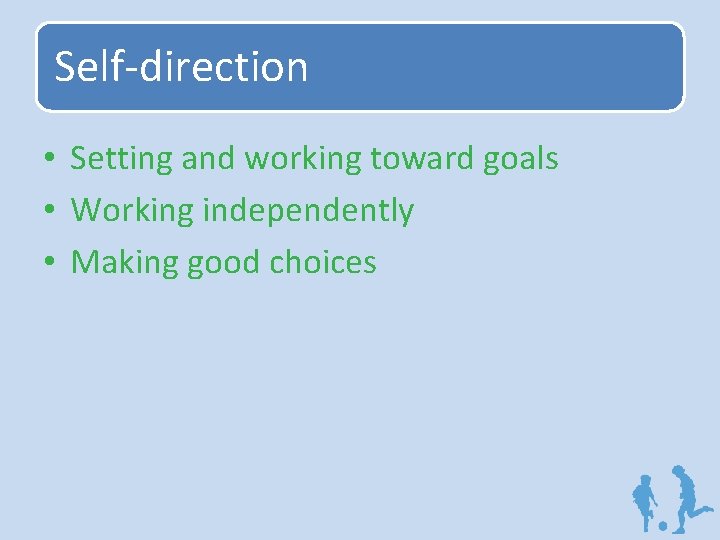
Self-direction • Setting and working toward goals • Working independently • Making good choices
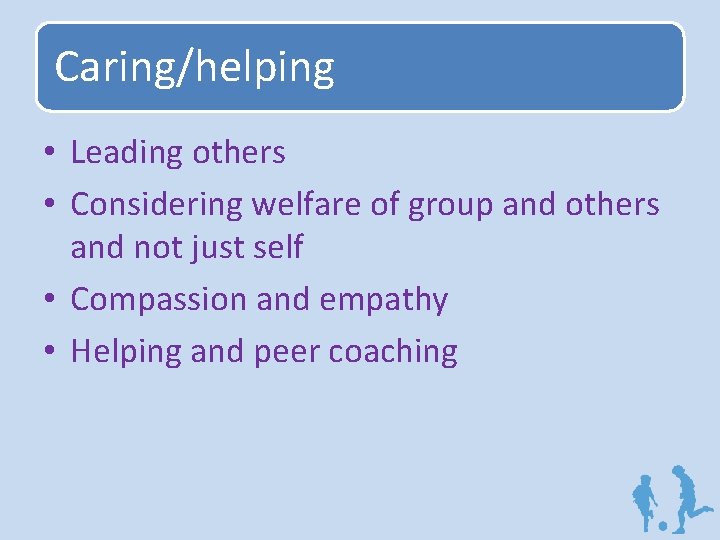
Caring/helping • Leading others • Considering welfare of group and others and not just self • Compassion and empathy • Helping and peer coaching
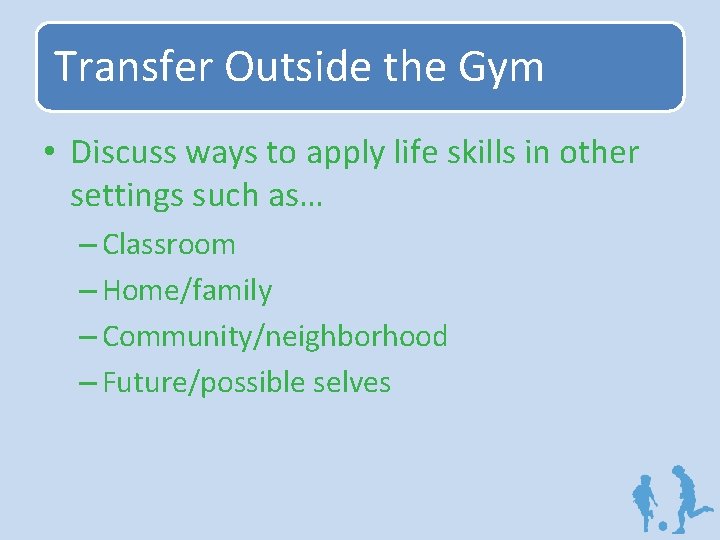
Transfer Outside the Gym • Discuss ways to apply life skills in other settings such as… – Classroom – Home/family – Community/neighborhood – Future/possible selves
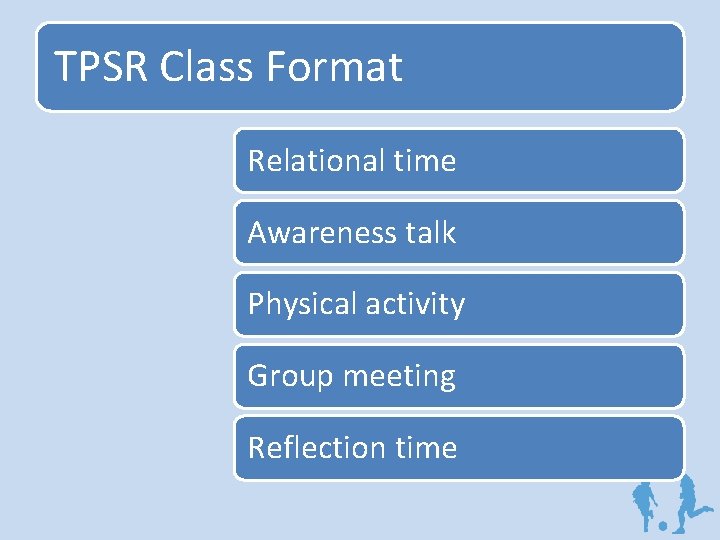
TPSR Class Format Relational time Awareness talk Physical activity Group meeting Reflection time
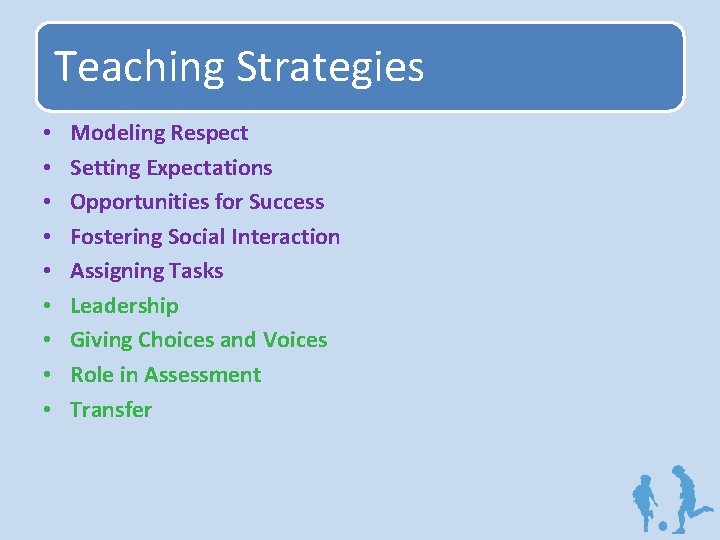
Teaching Strategies • • • Modeling Respect Setting Expectations Opportunities for Success Fostering Social Interaction Assigning Tasks Leadership Giving Choices and Voices Role in Assessment Transfer
Student Behaviors • • • Participation Engagement Showing Respect Cooperation Encouraging Others Helping Others Leading Expressing Voice Asking for Help
BUT DOES TPSR WORK?
Effectiveness in the Gym • Increased student responsibility & engagement • More positive learning environment • Correlations with enjoyment & intrinsic motivation • Relevance • Adapted physical activity • Gender equity/relevance for girls • Pre-K through 12 th grade
Transfer “outside the gym” • Student understanding – Interviews and focus groups – Goal-setting exercises – Individual and group discussions • Application ‘outside the gym’ – Self-report – Interviews w/ classroom teachers, youth workers, etc. – Outcomes vs. comparison or control group • Grades, truancy, tardiness, conduct
Applying TPSR School-wide • Current research w/ collaborators in Spain – From PE to school-wide implementation – Developing training and best practices for classroom • In Spain, responsibility survey correlated with – Lower aggression – Higher pro-social behavior, empathy, self-efficacy • Significant increases in self-efficacy for enlisting resources & self-regulation, & empathy in PE
Connecting back to the Saskatchewan Curriculum
Broad Areas of Learning, cont. • Sense of Self, Community, and Place – Possess positive sense of identity – Nurture meaningful relationships – Appreciate diversity – Demonstrate empathy – Understand self, others, and the influence of place – Balance their intellectual, emotional, physical, and spiritual dimensions
Broad Areas of Learning, cont. • Engaged Citizens – Shape positive change for the benefit of all – Contribute to the environmental, social, and economic sustainability of local and global communities – Support positive actions that recognize broader relationships and responsibilities – Advocate for self and others, and act for the common good as engaged citizens
Cross-cultural Competencies, cont. • Identity and Interdependence – Understand, value, and care for oneself (intellectually, emotionally, physically, spiritually) – Understand, value, and care for others – Understand value social, economic, and environmental interdependence and sustainability
Cross-cultural Competencies, cont. • Social Responsibility – Use moral reasoning processes – Engage in communitarian thinking and dialogue – Take social action
Alignment between these frameworks • Relationship goal v. broader curriculum • Relationship goal v. TPSR • Some subtle distinctions – Most TPSR development has been w/ “at risk” kids – TPSR emphasizes transfer beyond physical activity – Relationship goal considers broader “social, cultural, and environmental interactions”
Assessment and Program Evaluation
Crucial, but often neglected… Curriculum “Relationships” Assessment ? ? ? Instruction “TPSR”
Basic Assessment Strategies • • • Assess what you teach Balance formative and summative Use various methods Provide clear and explicit expectations Use assessment information to document and inform instruction
Best Practices • Integrate assessment with instruction • Make assessments authentic or performance based • Especially in the case of TPSR – Give students some power in the process – Assess their enactment of the responsibility goals/levels
Use a Broader Lens • Assess student learning/performance • Assess teacher implementation fidelity • Assess program effectiveness
TPSR Toolbox • Tool for Assessing Responsibility-based Education (TARE; Wright & Craig, 2011) • systematic observation tool and post-teaching reflection • Personal and Social Responsibility Questionnaire (Li et al. , 2008) • Two simple, seven item scales validated in urban middle school PE • Learner assessments, rubrics, etc. • Ch. 11 in Hellison (2011)
Youth Experience Survey (YES 2. 0; Hansen & Larson, 2005) • Initiative – Goal-Setting, Effort, Problem Solving, Time Management • Basic skills – Emotional Regulation, Cognitive Skills, Physical • Teamwork & Social Skills – Group Process, Feedback, Leadership & Responsibility • Positive Relationships – Pro-social Norms, Diverse Peer Relationships
So where does this leave us? • • Schools need to prepare students in life skills PE can play a key role via ‘relationships’ goal TPSR gives teaching strategies to enact this goal We have sufficient tools and strategies to assess
Topics to Discuss • • • Implementation of the Relationships goal Implementation of TPSR Opportunities to fortify one another Competing pressures and barriers to implementation Can these increase the status/role of PE – – – After school programming Athletics and intramurals Classroom applications Bully prevention ? ? ?
Thank you! Questions? Paul M. Wright, Ph. D. Associate Professor, Department of Kinesiology and Physical Education Director, Physical Activity and Life Skills (PALS) Group Northern Illinois University pwright@niu. edu http: //www. niu. edu/cea/pals