
Promoting Positive Parent Child Interactions Positive Results of

- Slides: 11
Promoting Positive Parent Child Interactions
Positive Results of Strong Parent Child Interactions ● Positive interactions affect how children feel and how they learn ● Young children who grow with a secure and healthy attachment to their parents stand a better chance of developing happy and content relationships with others in their life ● A child who has a secure relationship with parent learns to regulate emotions under stress and in difficult situations ● Helps the child exhibit optimistic and confident social behaviors ● Children also gain strong problem-solving skills when they have a positive relationship with their parents ● Supports healthy brain development
Resultados positivos de fuertes interacciones entre padres e hijos ● Las interacciones positivas afectan cómo se sienten los niños y cómo aprenden ● Los niños pequeños que crecen con un apego seguro y saludable a sus padres tienen más posibilidades de desarrollar relaciones felices y contentas con otras personas en su vida ● Un niño que tiene una relación segura con sus padres aprende a regular las emociones bajo estrés y en situaciones difíciles ● Ayuda al niño a exhibir comportamientos sociales optimistas y seguros ● Los niños también adquieren sólidas habilidades para resolver problemas cuando tienen una relación positiva con sus padres ● Apoya el desarrollo saludable del cerebro
How Do We Develop Strong Parent/Child Interactions? ● Use “mirror talk “ rather than saying “Good Job” to show your child you appreciate what he/she does. ● Tell children that you love them ● Play with your children ● Establish a special name or code word that is a secret code word that you can use with each other. Use the name as a simple reinforcement of your love. The code word can be used to extract a child from an uncomfortable situation (such as a sleepover that is not going well) without causing undue embarrassment to the child. ● Develop and maintain bedtime rituals ● Let your child help you ● Eat meals as a family
¿Cómo desarrollamos interacciones sólidas entre padres e hijos? ● Use “mirror talk” en lugar de decir “Buen trabajo” para demostrarle a su hijo que aprecia lo que hace ● Dígales a los niños que los ama ● Juega con tus hijos ● Establezca un nombre especial o una palabra en clave que sea una palabra en clave secreta que puedan usar entre sí. Utilice el nombre como un simple refuerzo de su amor. La palabra clave se puede utilizar para sacar a un niño de una situación incómoda (como una fiesta de pijamas que no va bien) sin causarle una vergüenza indebida. ● Desarrollar y mantener rituales para la hora de dormir ● Deje que su hijo le ayude ● Coman en familia
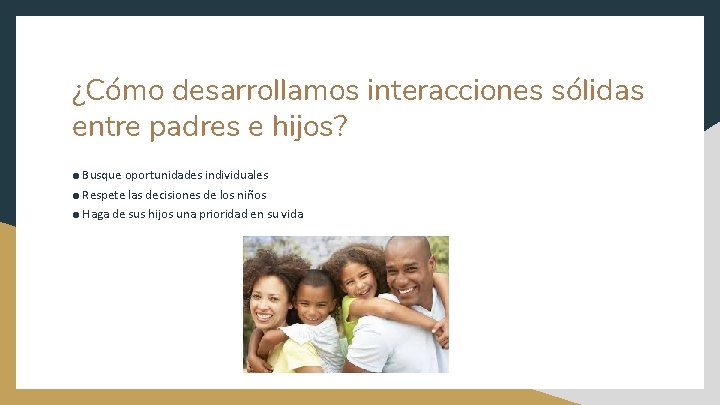
How Do We Develop Strong Parent/Child Interactions? ● Seek out one – one opportunities ● Respect children’s choices ● Make your children a priority in your life
¿Cómo desarrollamos interacciones sólidas entre padres e hijos? ● Busque oportunidades individuales ● Respete las decisiones de los niños ● Haga de sus hijos una prioridad en su vida
Important Sources of Information for Families ● Positive Interactions by Sesame Street- https: //www. youtube. com/watch? v=iyj 9 AVBqjr. A ● Continue to watch Ready Rosie videos that your teachers send you
Fuentes de información importantes para las familias ● Interacciones positivas de Sesame Street- https: //www. youtube. com/watch? v=iyj 9 AVBqjr. A ● Continúe viendo los videos de Ready Rosie que sus maestros le envían
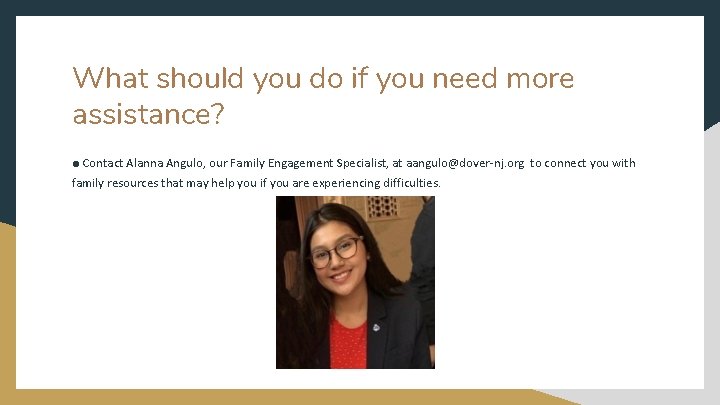
What should you do if you need more assistance? ● Contact Alanna Angulo, our Family Engagement Specialist, at aangulo@dover-nj. org to connect you with family resources that may help you if you are experiencing difficulties.
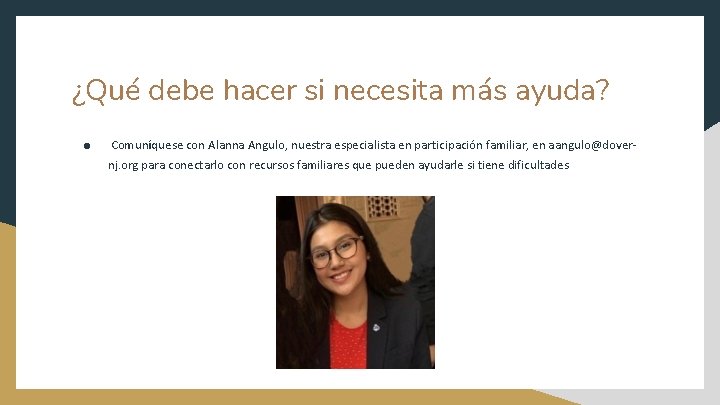
¿Qué debe hacer si necesita más ayuda? ● Comuníquese con Alanna Angulo, nuestra especialista en participación familiar, en aangulo@dovernj. org para conectarlo con recursos familiares que pueden ayudarle si tiene dificultades