
Promoting Child Safety Managing Risk of Significant Harm
- Slides: 30
Promoting Child Safety Managing Risk of Significant Harm and Wellbeing Concerns 2021
Objectives of this module 1. To introduce child protection and a brief history 2. To understand the relevant legislation and our responsibilities 3. To help you understand risk of significant harm 4. To define the different types of harm and to help you recognise indicators of abuse or neglect 5. To outline what to do when you suspect a student is at risk from abuse or neglect 6. To explain when you need to report concerns 7. To show you how to assess concerns using Child Story/Mandatory Reporters Guide 8. To help you know how to respond to the different outcomes of Child Story/Mandatory Reporters Guide 9. To explain how to support students and families at risk
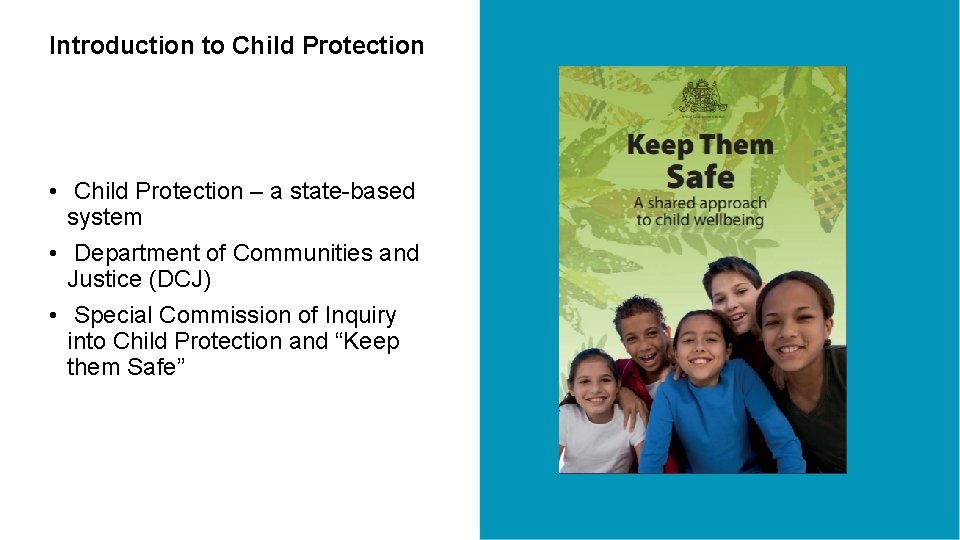
Introduction to Child Protection • Child Protection – a state-based system • Department of Communities and Justice (DCJ) • Special Commission of Inquiry into Child Protection and “Keep them Safe”
Legislation & school responsibilities • Children and Young Persons (Care and Protection) Act 1998 • Mandatory Reporting to DCJ • Chapter 16 A – Exchange of Information
Ch 16 A Exchange of Information Rules 1. Must be for the safety, welfare and wellbeing of children 2. Must be to assist a plan, service or investigation relating to child • Information exchanged through the Principal • Consent not required, although it is best practice • Document and keep records of the info shared • Standard templates must be used: (https: csochildprotection. weebly. com)
Defining Risk of Significant Harm: The NSW Interagency Guidelines for Child Wellbeing & Child Protection state: “A child or young person is at risk of significant harm if the circumstances that are causing concern for the safety, welfare or well being of the child or young person are present to a significant extent. ”
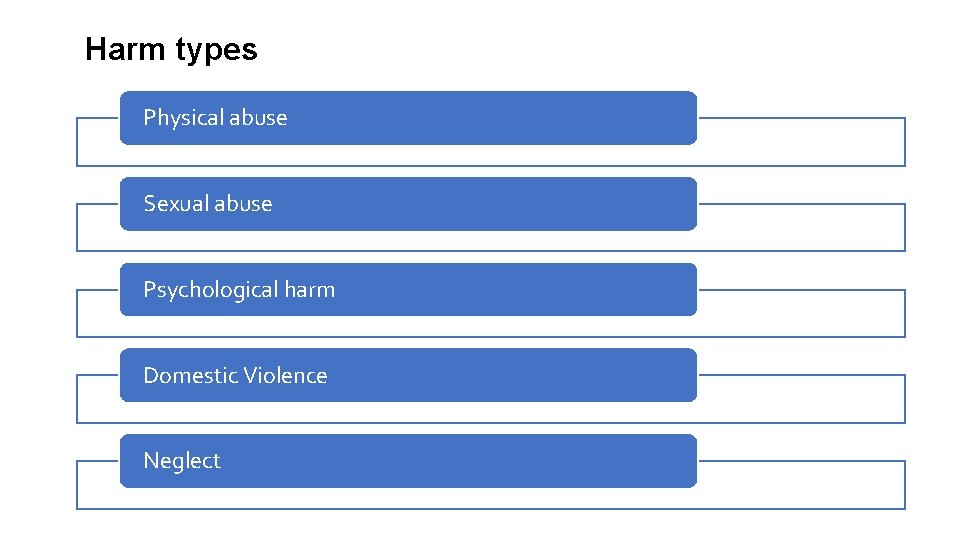
Harm types Physical abuse Sexual abuse Psychological harm Domestic Violence Neglect
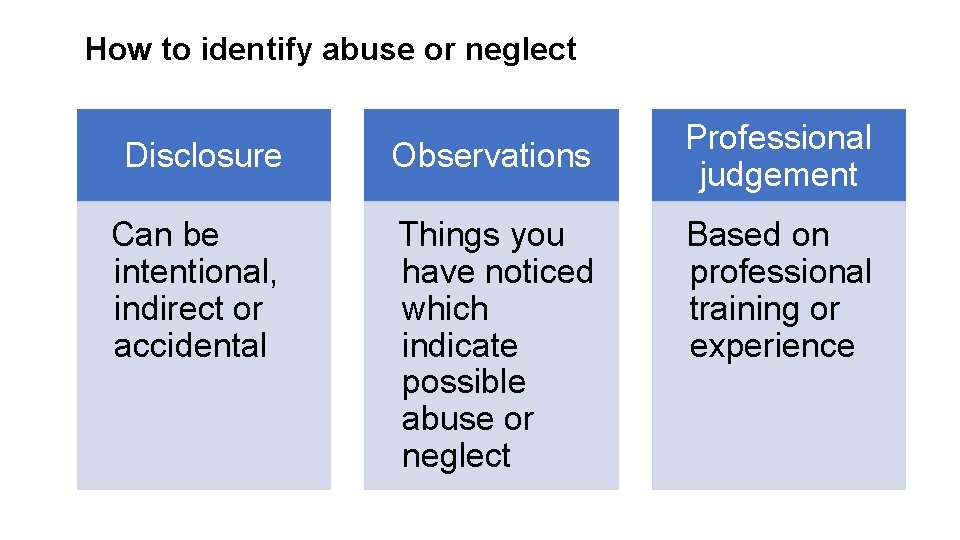
How to identify abuse or neglect Disclosure Observations Can be intentional, indirect or accidental Things you have noticed which indicate possible abuse or neglect Professional judgement Based on professional training or experience
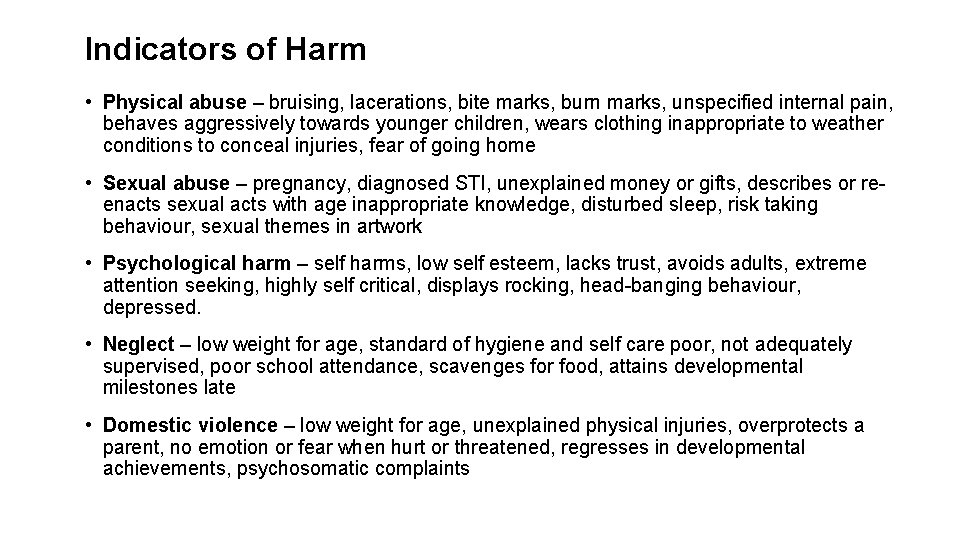
Indicators of Harm • Physical abuse – bruising, lacerations, bite marks, burn marks, unspecified internal pain, behaves aggressively towards younger children, wears clothing inappropriate to weather conditions to conceal injuries, fear of going home • Sexual abuse – pregnancy, diagnosed STI, unexplained money or gifts, describes or reenacts sexual acts with age inappropriate knowledge, disturbed sleep, risk taking behaviour, sexual themes in artwork • Psychological harm – self harms, low self esteem, lacks trust, avoids adults, extreme attention seeking, highly self critical, displays rocking, head-banging behaviour, depressed. • Neglect – low weight for age, standard of hygiene and self care poor, not adequately supervised, poor school attendance, scavenges for food, attains developmental milestones late • Domestic violence – low weight for age, unexplained physical injuries, overprotects a parent, no emotion or fear when hurt or threatened, regresses in developmental achievements, psychosomatic complaints
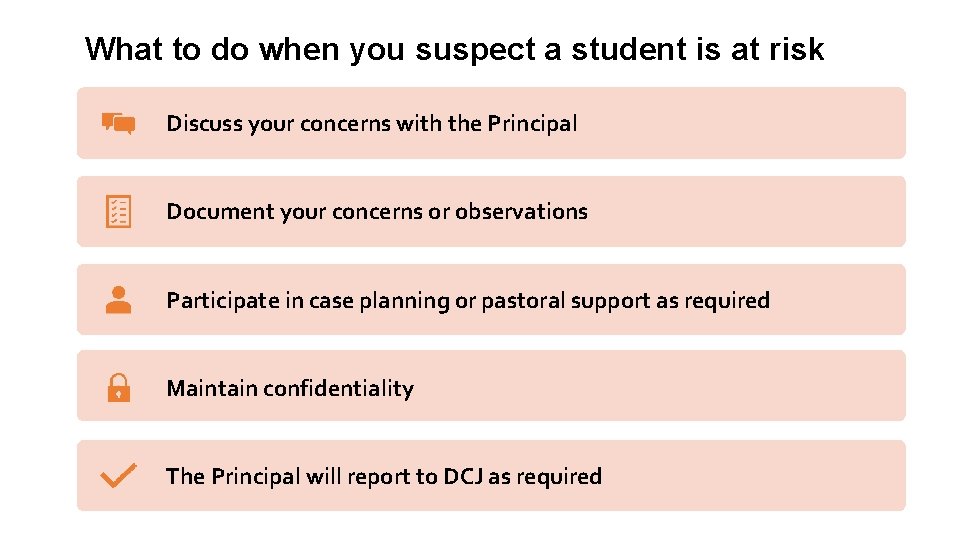
What to do when you suspect a student is at risk Discuss your concerns with the Principal Document your concerns or observations Participate in case planning or pastoral support as required Maintain confidentiality The Principal will report to DCJ as required
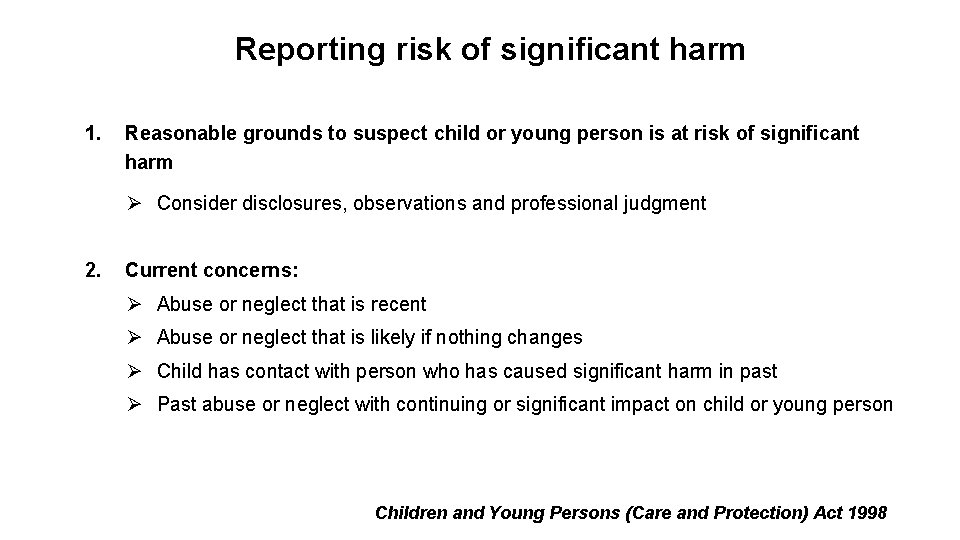
Reporting risk of significant harm 1. Reasonable grounds to suspect child or young person is at risk of significant harm Ø Consider disclosures, observations and professional judgment 2. Current concerns: Ø Abuse or neglect that is recent Ø Abuse or neglect that is likely if nothing changes Ø Child has contact with person who has caused significant harm in past Ø Past abuse or neglect with continuing or significant impact on child or young person Children and Young Persons (Care and Protection) Act 1998
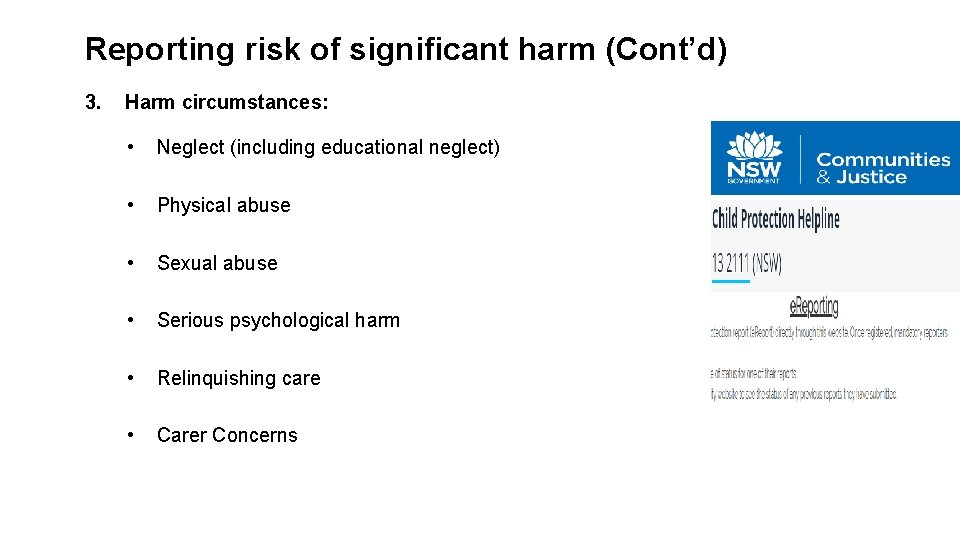
Reporting risk of significant harm (Cont’d) 3. Harm circumstances: • Neglect (including educational neglect) • Physical abuse • Sexual abuse • Serious psychological harm • Relinquishing care • Carer Concerns
CASE STUDY 1 Brendan
Brendan Using the screening tool: • What is the relevant category of abuse or neglect? • Do you think Brendan is at risk of significant harm?
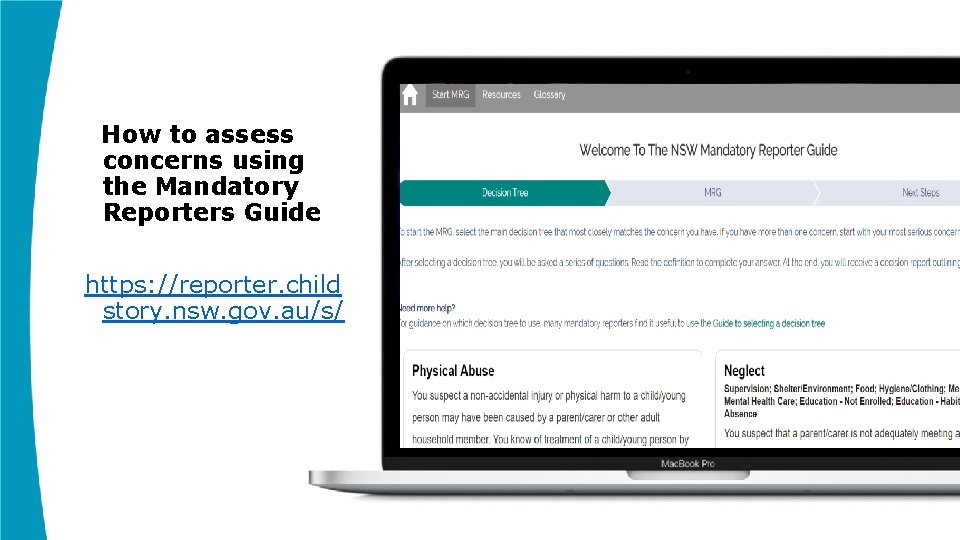
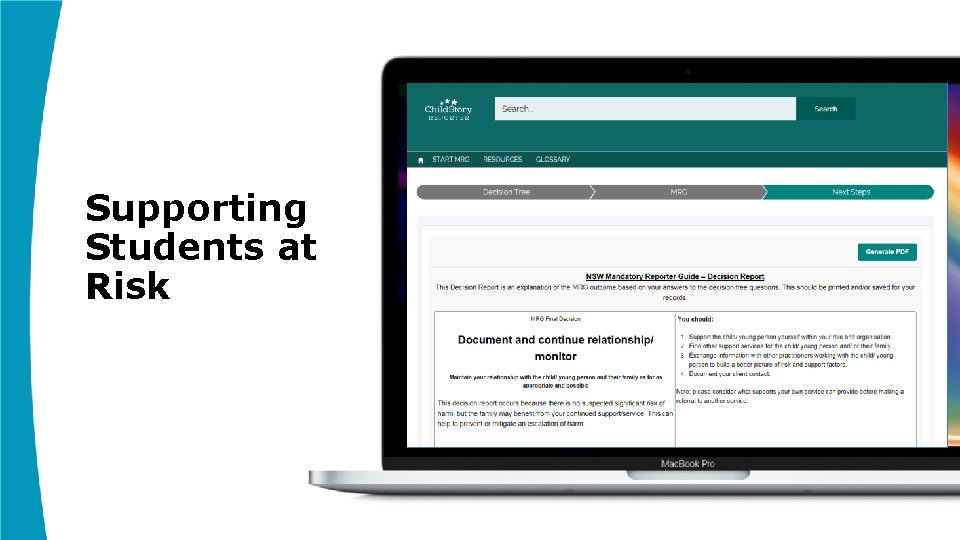
How to assess concerns using the Mandatory Reporters Guide https: //reporter. child story. nsw. gov. au/s/
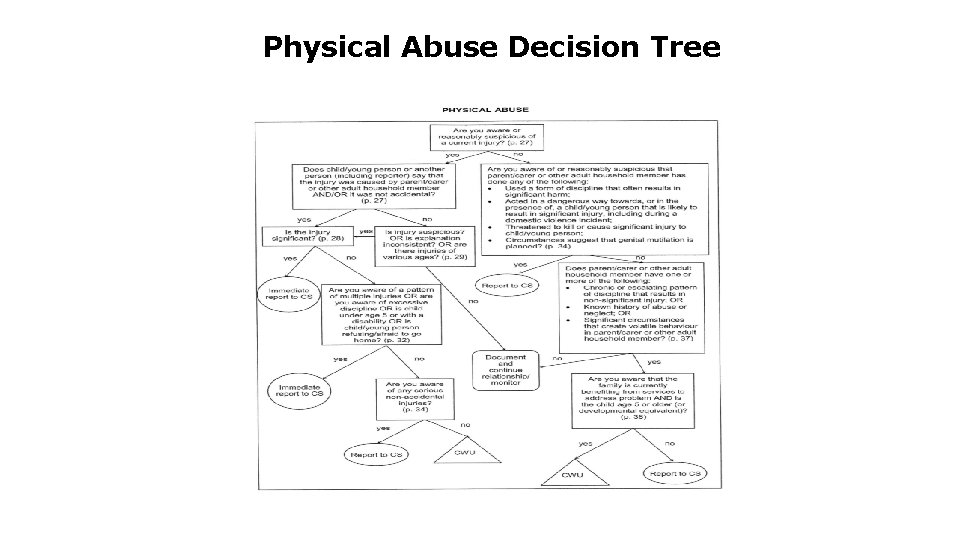
Physical Abuse Decision Tree
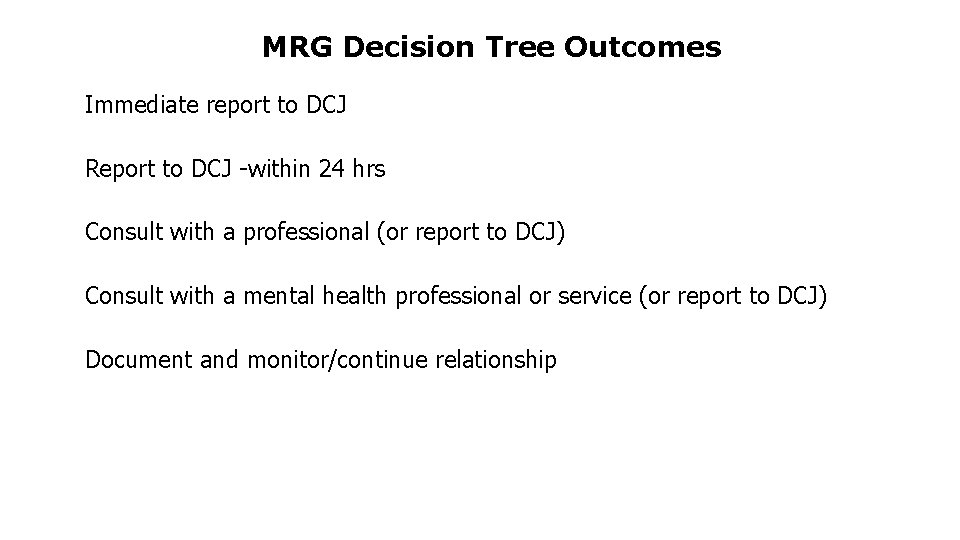
MRG Decision Tree Outcomes Immediate report to DCJ Report to DCJ -within 24 hrs Consult with a professional (or report to DCJ) Consult with a mental health professional or service (or report to DCJ) Document and monitor/continue relationship
CASE STUDY 2 Verity
Verity Using the screening tool: Is this possible abuse or neglect? Do you think Verity is at risk of significant harm? How would you respond?
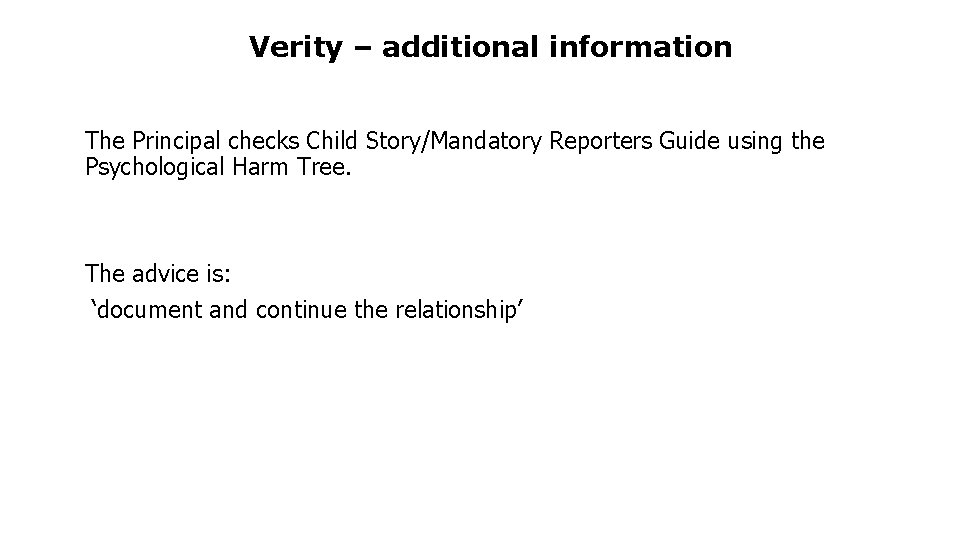
Verity – additional information The Principal checks Child Story/Mandatory Reporters Guide using the Psychological Harm Tree. The advice is: ‘document and continue the relationship’
Supporting Students at Risk
What does ‘continue the relationship’ mean? Monitor, create or maintain a safe space Discuss concerns with parents Talk to other agencies or professionals Make referrals to services if appropriate Promote resilience School counselling Consider what is reasonable possible and sustainable
What does the school document? � Observations, disclosures, incidents and conversations � Support plans �Advice given from other parties including who and date of contact �All action taken �All information provided or received
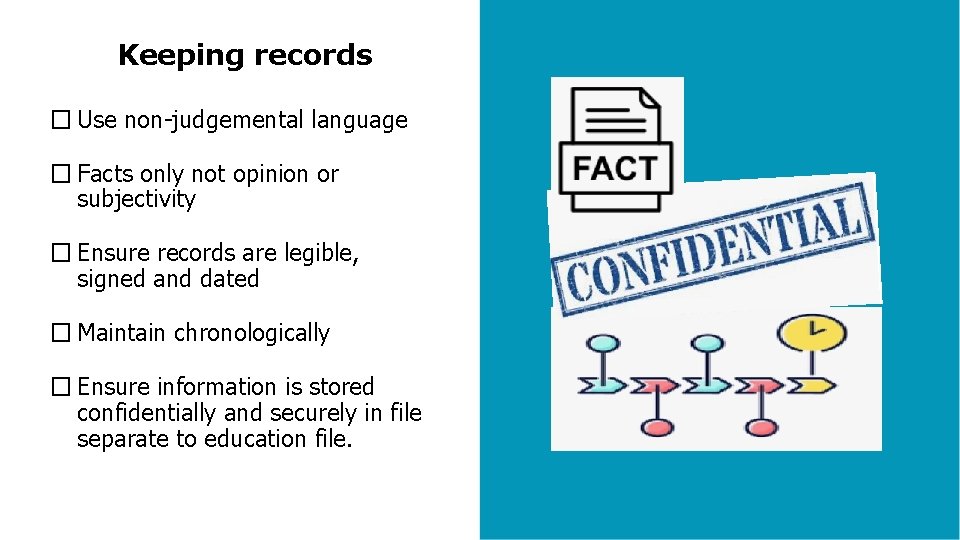
Keeping records � Use non-judgemental language � Facts only not opinion or subjectivity � Ensure records are legible, signed and dated � Maintain chronologically � Ensure information is stored confidentially and securely in file separate to education file.
CASE STUDY 3 Lucy
Lucy Using the screening tool: Is this possible abuse or neglect? Do you think Lucy is at risk of significant harm? How would you respond?
Lucy - additional information The family do not support a referral for assistance from the school counsellor stating that Lucy just needs a little time to settle in. The school has just received information from the previous school attended (letter of transfer) about Lucy’s behaviour. She was seeing the school counsellor because she drew a number of concerning pictures of sexually explicit behaviour in the classroom and was engaging in self harm by trying to cut her arm with a paper clip. The School Counsellor said that Lucy was an anxious child and reluctant to talk about anything at home.
More information, better decisions Especially consider: Details of child’s behaviour Changes/escalation in behaviour Parent’s behaviour and response to concerns
Summary – your role Be curious about safety, welfare & wellbeing Document concerns about students and families Document observations and disclosures Discuss concerns with Principal Participate as needed in supporting child Maintain confidentiality Monitor, create and maintain a safe space
CSBB, Office for Safeguarding Contact Details Tamara Hughes, Manager for Safeguarding (CSBB) T: 9847 0610 M: 0409 399 543 Sandra Bartlett, Safeguarding Officer (Mon, Thurs, Fri) T: 9847 0616 M: 0427 206 194 Ana Kosi, Safeguarding Officer T: 9847 0620 M: 0410 342 015 Wendy Collins, Admin Support T: 9847 0618