
Promoting Care of IDD Individuals through DBHDD Oversight
Promoting Care of I/DD Individuals through DBHDD Oversight and Risk Mitigation Policies Guidance for DBHDD Community Providers Georgia Department of Behavioral Health & Developmental Disabilities 1
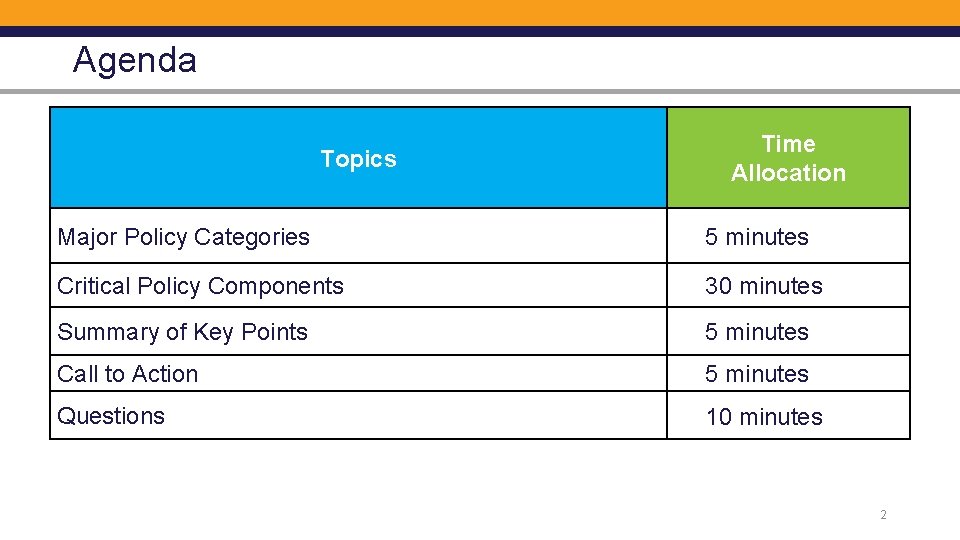
Agenda Topics Time Allocation Major Policy Categories 5 minutes Critical Policy Components 30 minutes Summary of Key Points 5 minutes Call to Action 5 minutes Questions 10 minutes 2
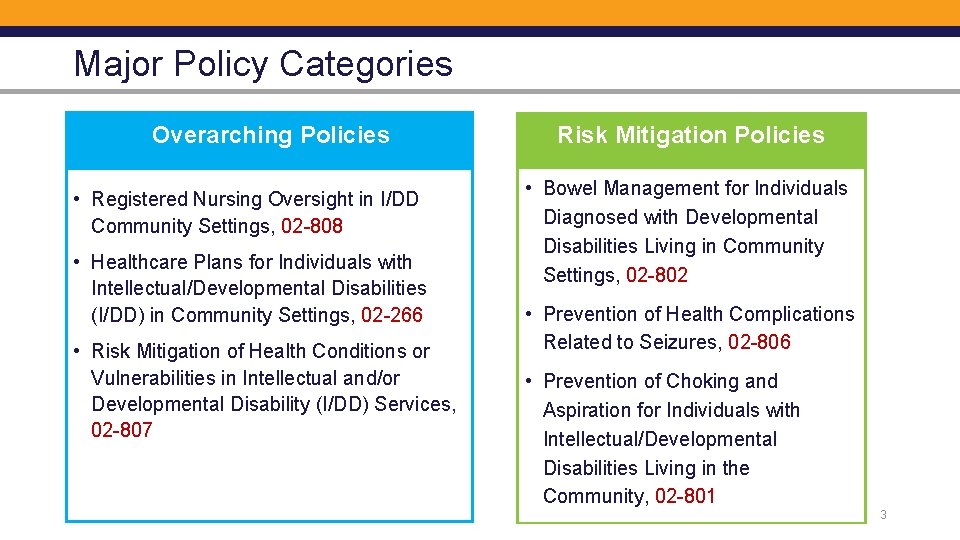
Major Policy Categories Overarching Policies • Registered Nursing Oversight in I/DD Community Settings, 02 -808 • Healthcare Plans for Individuals with Intellectual/Developmental Disabilities (I/DD) in Community Settings, 02 -266 • Risk Mitigation of Health Conditions or Vulnerabilities in Intellectual and/or Developmental Disability (I/DD) Services, 02 -807 Risk Mitigation Policies • Bowel Management for Individuals Diagnosed with Developmental Disabilities Living in Community Settings, 02 -802 • Prevention of Health Complications Related to Seizures, 02 -806 • Prevention of Choking and Aspiration for Individuals with Intellectual/Developmental Disabilities Living in the Community, 02 -801 3
Critical Policy Components Purpose Procedures 4
Overarching Policies • Registered Nursing Oversight • Healthcare Plans • Risk Mitigation 5
Registered Nursing Oversight in I/DD Community Settings, 02 -808 Purpose • Statute, law and professional standards of nursing practice • Treatment from licensed nurses or direct support staff • Oversight by Registered Nurses • Provider adherence to policy requirements 6
Registered Nursing Oversight in I/DD Community Settings, 02 -808 Procedures - Ensuring High Standards of Professional Nursing Practice • • • Assessment Planning of Care (ISP) Development of HCP Preventative and Healthcare Maintenance Activities Advocacy Health Education Delegation and Supervision Health Risk Screening Tool Clinical and Summary Notes Availability for Clinical Consultation 7

QUESTIONS 8
Registered Nursing Oversight in I/DD Community Settings, 02 -808 Procedures - Monitoring • Individual • HCP • Documentation • Medication Administration • Infection Control Procedures • Incident Follow-up • Verification of Certification • Other Nursing Practice Duties 9

QUESTIONS 10
Healthcare Plans for Individuals with I/DD in Community Settings, 02 -266 Purpose • Required upon identified risk or condition in all settings • Mitigated by documented and confirmed existence of individual factors that indicate stability such as relationship(s) with clinical professionals and collateral supports • Develop written Healthcare Plan (HCP) • Individual Service Plan (ISP) • Staff training • Multidisciplinary activities and interventions 11
Healthcare Plans for Individuals with I/DD in Community Settings, 02 -266 Procedures – Healthcare Plan Requirements • Developed by an RN • Individualized • Updated as needed annually • Incorporates input from multiple sources • Lists steps to be implemented by direct support staff • Guided by the Health Risk Screening Tool (HRST) 12
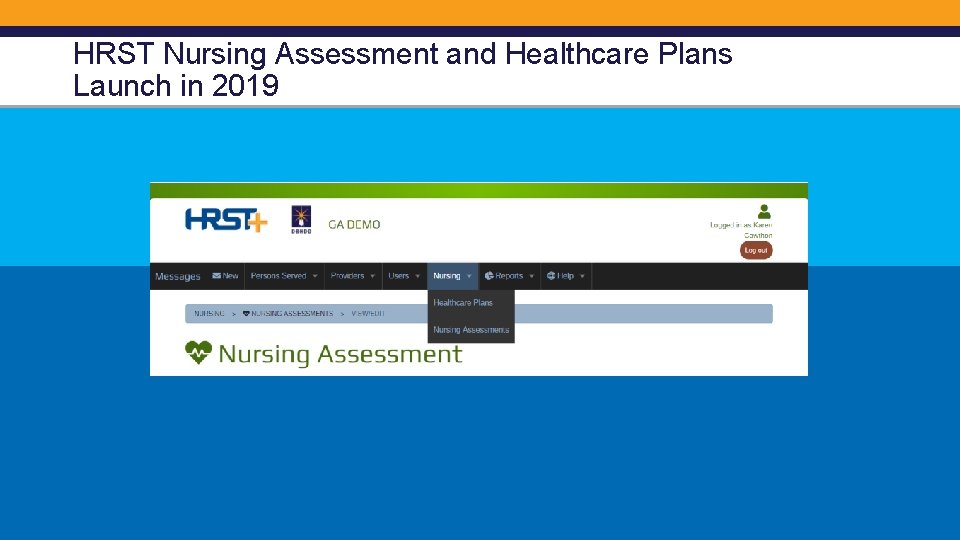
HRST Nursing Assessment and Healthcare Plans Launch in 2019
HRST Healthcare Plans Bowel and Bladder Management Gastrointestinal Management Neurological Management Skin Integrity Management Endocrine Management Respiratory Management Cardiovascular Management Musculoskeletal Management Reproductive Management Mental Health with Medications Management Preventative and Routine Healthcare Maintenance

Competency Check • Written test QUESTIONS 15
Risk Mitigation of Health Conditions or Vulnerabilities in I/DD Services, 02 -807 Procedures • Identifying Risk • Reducing or Eliminating Health Risks • Mitigating Risks of Related Clinical Conditions 16

QUESTIONS 17
Risk Mitigation-Specific Policies • Bowel Management • Prevention of Choking and Aspiration • Prevention of Seizure-related Health Complications
Bowel Management for I/DD Individuals Living in Community Settings, 02 -802 Procedures • Establishment of policy and protocols for monitoring bowel function • Supplementary information for successful bowel management • Minimum policy content requirements 19
Bowel Management for I/DD Individuals Living in Community Settings, 02 -802 Rationale for Levels of Risk Surveillance First Level - Screening for the risk and/or diagnosis of bowel obstruction, constipation, and impaction Second Level – Initiated: identified risk or confirmed diagnosis 20

QUESTIONS 21
Bowel Management for I/DD Individuals Living in Community Settings, 02 -802 Procedures - Provider Responsibilities • Know Individual’s baseline • Assess Individual’s risk on an ongoing basis • Develop bowel tracking document • Develop awareness of interventions • Adhere to notification and documentation requirement • Provide timely training 22
Bowel Management for I/DD Individuals Living in Community Settings, 02 -802 Procedures - Staff Responsibilities • Direct Support • Agency’s DDP or licensed healthcare professional • Other Support Staff 23
Bowel Management for I/DD Individuals Living in Community Settings, 02 -802 Procedures - Training Program • Target Audiences – Direct Support Staff • Program Content • Causes of Constipation, Impaction and Bowel Obstruction • Signs/Symptoms of Constipation, Impaction and Bowel Obstruction • Data collection, documentation and competency demonstration • Delivery Schedule – Initial Orientation and at least Annually • Trainer Documentation – Date, Purpose, and Content • On-the-Job Documentation- Competency 24
Bowel Management for I/DD Individuals Living in Community Settings, 02 -802 Procedures - Emergency Medical - Suspected Bowel Obstruction or Impaction 1. Take immediate action 2. Implement emergency medical procedures (e. g. , 911) 3. Ensure that the individual is out of danger 4. Make routine notification phone calls 25

QUESTIONS 26
Prevention of Health Complications related to Seizures, 02 -806 Purpose • Establishment of policy and protocols for individualized interventions • Direct support staff training 27
Prevention of Health Complications related to Seizures, 02 -806 Rationale for Levels of Risk Surveillance First Level - Screening for the risk and/or diagnosis of health complications related to seizures Second Level – Initiated: identified risk or confirmed diagnosis 28

QUESTIONS 29
Prevention of Health Complications related to Seizures, 02 -806 Procedures - Provider Responsibilities Develop an internal policy for addressing seizure activity: • Awareness of seizure status of each individual Provide timely training for direct support staff: • Competency to recognize and respond to seizure activity • Identification of change in condition • Seizure Management (during and after a seizure) • Implementation of interim interventions to decrease risk • Documentation of observations (before, during and after) 30
Prevention of Health Complications related to Seizures, 02 -806 Procedures - Staff Responsibilities • Identification of a prior risk for seizures • Identification of change in condition • Mitigation of identified risk • Development of an HCP by an RN 31
Prevention of Health Complications related to Seizures, 02 -806 Procedures – Training Program • Target Audiences – Direct Support Staff • Program Content • Recognize and respond to seizure activity • Record pertinent information about observed seizure activity • Conduct seizure management during and after a seizure • Know the content and requirements of the Healthcare Plan (HCP) • Document observations, medication and other interventions before, during and after a seizure • Delivery Schedule – Initial Orientation and at least Annually • Training Documentation – Date, Purpose, and Content 32
Prevention of Health Complications related to Seizures, 02 -806 Emergency Medical Procedures - Witnessed Seizures 1. Implement emergency medical procedures (e. g. , 911). 2. Ensure that the individual is out of danger. 3. Make notification phone calls to individual’s family. 33

QUESTIONS 34
Prevention of Choking and Aspiration for I/DD Individuals Living in the Community, 02 -801 Procedures • Establishment of protocols for monitoring and responding to choking and aspiration risks • Training of staff on designated emergency response plan for choking or aspiration 35
Prevention of Choking and Aspiration for I/DD Individuals Living in the Community, 02 -801 Purpose Rationale for Levels of Risk Surveillance First Level - Screening for the risk and/or diagnosis of choking and aspiration Second Level – Initiated: identified risk or confirmed diagnosis 36

QUESTIONS 37
Prevention of Choking and Aspiration for I/DD Individuals Living in the Community, 02 -801 Contraindicated Foods • Extraordinary precaution and possible exclusion of certain foods • Examples of Chokable Foods 38
Prevention of Choking and Aspiration for I/DD Individuals Living in the Community, 02 -801 Procedures - Provider Responsibilities Develop an internal policy for addressing potential risk or actual incidents: • Mitigation of occurrence or lessen frequency of choking • Response to incidents of choking, aspiration and related conditions Provide timely training for direct support staff: • Competency to recognize and respond to aspiration risk • Assessment and treatment at proper level of care • Documentation of clinical recommendations and physician’s orders in individual’s clinical record 39
Prevention of Choking and Aspiration for I/DD Individuals Living in the Community, 02 -801 Procedures - Staff Responsibilities • Identification of a prior risk for aspiration and choking • Identification of change in condition • Mitigation of identified risk • Development of an HCP by an RN 40
Prevention of Choking and Aspiration for I/DD Individuals Living in the Community, 02 -801 Procedures - Training Program • Target Audiences – Direct Support Staff • Program Content • Recognize aspiration risk status for all individuals • Review individual’s HRST, ISP, HCP and dietary needs to: • Identify prior risk for aspiration and choking • Identify change in condition that indicates development of risk for aspiration and choking • Know how to take immediate action to mitigate risk of harm when risk is identified • Identify individuals who are in need of mealtime and positioning supports (according to HCP) • Delivery Schedule – Initial Orientation and at least Annually • Training Documentation – Date, Purpose, and Content 41
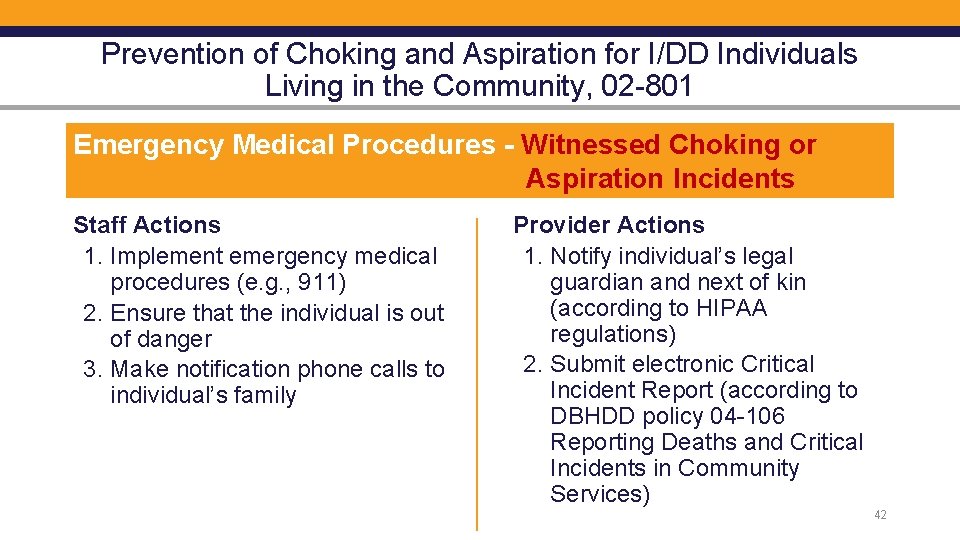
Prevention of Choking and Aspiration for I/DD Individuals Living in the Community, 02 -801 Emergency Medical Procedures - Witnessed Choking or Aspiration Incidents Staff Actions 1. Implement emergency medical procedures (e. g. , 911) 2. Ensure that the individual is out of danger 3. Make notification phone calls to individual’s family Provider Actions 1. Notify individual’s legal guardian and next of kin (according to HIPAA regulations) 2. Submit electronic Critical Incident Report (according to DBHDD policy 04 -106 Reporting Deaths and Critical Incidents in Community Services) 42

QUESTIONS 43
Summary of Key Points • Content - Varies according to each policy’s subject matter. • Common Elements - Found throughout all policies. • Complete Policies – Access by clicking the appropriate links. 44
Call to Action • Access policies in Policy. Stat. • Compare your policies to DBHDD policies. • Make adjustments to practice in order to gain alignment • Participate in training on policies from DBHDD. 45

FAQs 46


QUESTIONS 48
Read and Sign Reminder The ONLINE READ AND SIGN ATTESTATION TO BE COMPLETED AFTER WEBINAR After attending the Webinar, attendees should log into the DD Library on DBHDD University (dbhddu. com) and complete a Read and Sign attesting understanding of the policies, as well as responsibility for adhering to them and educating direct care staff about the requirements. READ AND SIGN COMPLETION DEADLINE The Read and Sign must be completed by May 1, 2019. HOW TO ACCESS THE READ AND SIGN: If you are a provider staff with an existing DBHDD Relias account, you can access the Read and Sign using the link below. Developmental Disability Service Providers Library: http: //ddlibrarydbhdd. training. reliaslearning. com/ If necessary, contact Michael Moryc at moryc@uga. edu 49
- Slides: 49