
PROMOTING A CULTURE OF SAFETY IN NURSING EDUCATION
- Slides: 24
PROMOTING A CULTURE OF SAFETY IN NURSING EDUCATION: A COMPREHENSIVE ERROR AND NEAR MISS REPORTING PROGRAM Nina P. Barkell MSN RN ACNS-BC Michelle M. Compton MSN RN Nursing Faculty Oakland Community College
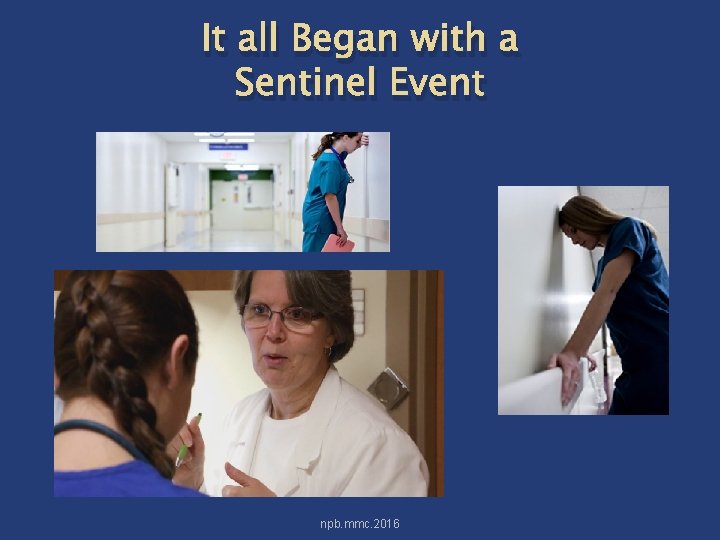
It all Began with a Sentinel Event npb. mmc. 2016
Questions We Asked � How can we prepare our students to become safe practitioners with the skills they are going to need? � How can we make sure our faculty have the knowledge and skills they need for safe, quality practice? � How can we address errors that will occur? nb. mc. 2016
Quality and Safety Committee � Key Objectives � Promote a culture of safety among faculty and students � Analyze errors, close calls/near misses, hazards, adverse events and “good catches” that occur in our clinical practice � Evolution of the Committee npb. mmc. 2016
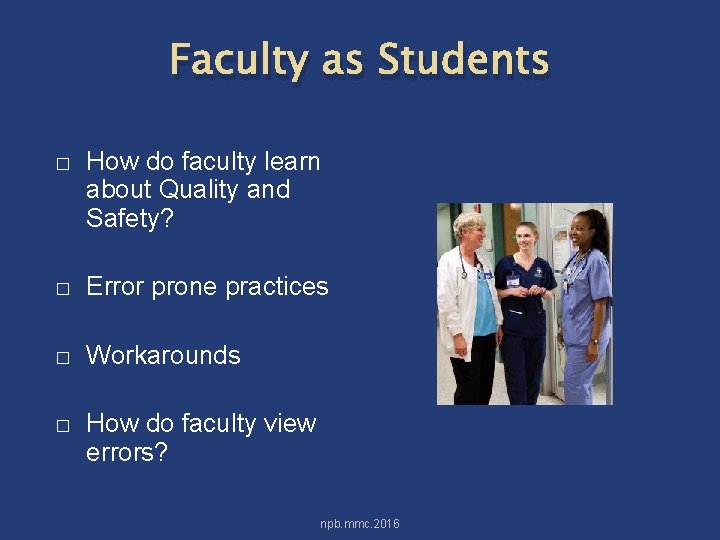
Faculty as Students � How do faculty learn about Quality and Safety? � Error prone practices � Workarounds � How do faculty view errors? npb. mmc. 2016
Do we have a Culture of Safety? � “Stop the bullying. ” � “…times when I felt belittled…” � “Fear of failure keeps us silent. ” � “We have to agree about things we knew were wrong. ” npb. mmc. 2016
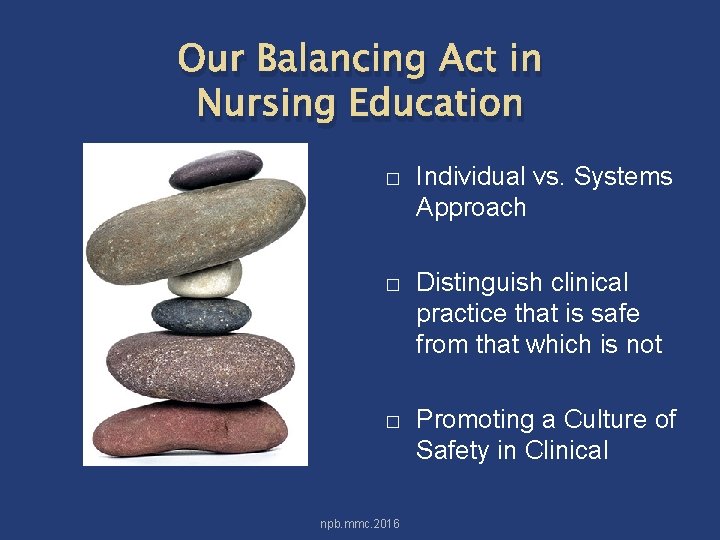
Our Balancing Act in Nursing Education � Individual vs. Systems Approach � Distinguish clinical practice that is safe from that which is not � Promoting a Culture of Safety in Clinical npb. mmc. 2016
Our Message to Students and Faculty Alike We ALL need to: � Accept responsibility for making our patients safer � Report errors, near misses, or ANY safety concern � Participate in change that decreases occurrence or recurrence of errors npb. mmc. 2016
Quality and Safety Reporting Tool � Facilitates reporting of quality and safety concerns � Voluntary and anonymous; no patient nor facility specific data is reported � Does not replace “Communication Record” for individual performance npb. mmc. 2016
Initial Barriers to Reporting � Lack of time during clinical day � Lack of access to internet during clinical day � Lack of awareness of the programs � Lack of feedback/follow up npb. mmc. 2016
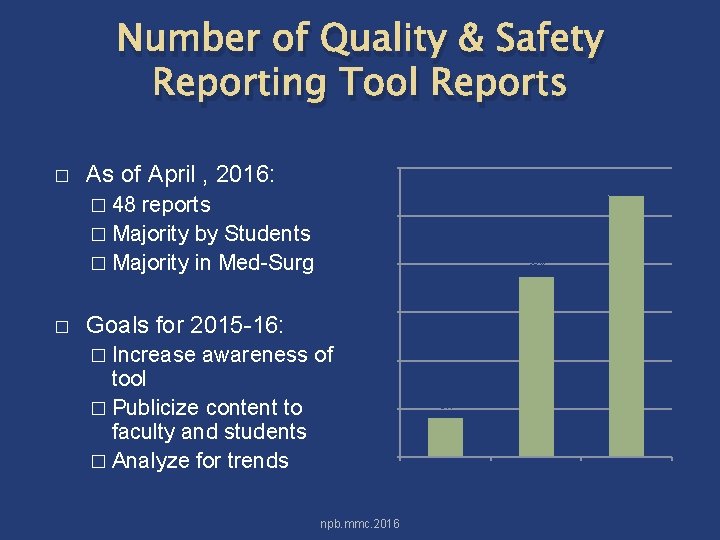
Number of Quality & Safety Reporting Tool Reports Increase in Reports Over Time � As of April , 2016: 60% 54% � 48 reports � Majority by Students � Majority in Med-Surg � 50% 40% 30% Goals for 2015 -16: � Increase awareness of tool � Publicize content to faculty and students � Analyze for trends 38% 20% 10% 8% 0% 2013 -14 npb. mmc. 2016 2014 -15 2015 -16
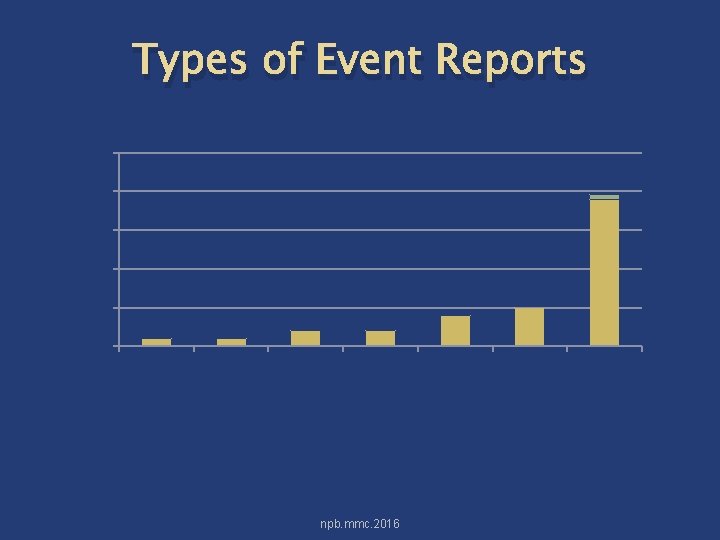
npb. mmc. 2016 M tio ns ca en t m ef ic it D Ju dg ed i k st ic ca tio n un i dg e le ow Kn m C om le ro l Fa lls on t C ee d N n ct io In fe Types of Event Reports 25 20 15 10 5 0
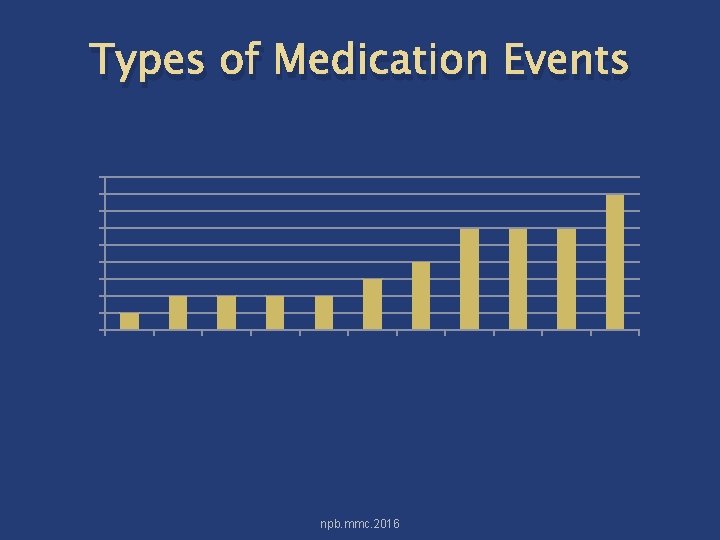
IV er O th e ou t R Fl ui ds ng ER /S R O m is si W on ro ng D ec D is ru io g n M ak W in ro g ng Ti m e Sc an ni ng In su W lin ro ng D os e sh i C ru ro ng W Types of Medication Events 9 8 7 6 5 4 3 2 1 0 npb. mmc. 2016
Good Catch Program � Recognizes an action that saved a patient from harm � Also referred to as a “Close Call” or “Near Miss” � Recipients self-nominate; receive a “Safety” pin and certificate for portfolio npb. mmc. 2016
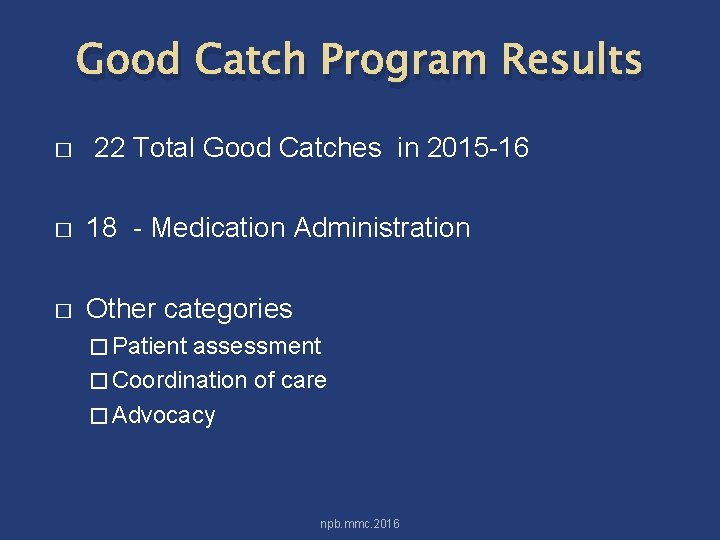
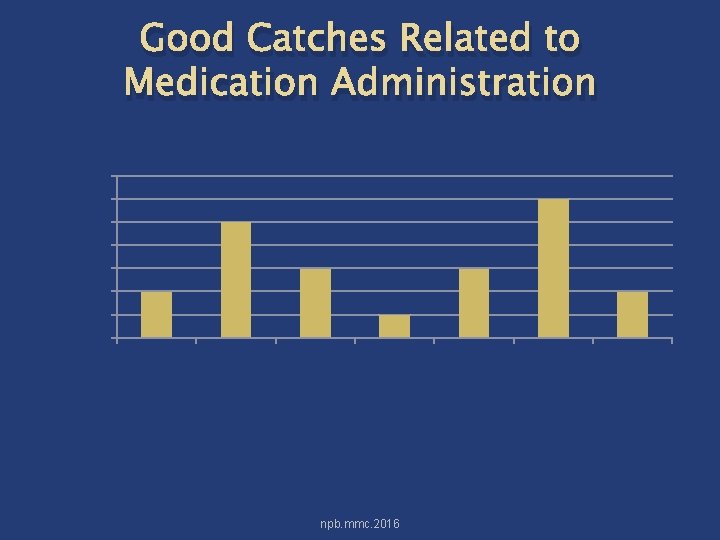
Good Catch Program Results � 22 Total Good Catches in 2015 -16 � 18 - Medication Administration � Other categories � Patient assessment � Coordination of care � Advocacy npb. mmc. 2016
h npb. mmc. 2016 er O th io ns at ns ca tio di c in C on tra ed i d is la be le d at e R el rin g to on i R M t. M er Al ca tio n ed i ig H M EM M at io n ic Id en tif ed M La b/ tie nt Pa Good Catches Related to Medication Administration Medication Categories 7 6 5 4 3 2 1 0
What Happens to the Data? � Monthly Review in Quality and Safety Meetings � Summaries and Recommendations � Linkage with QSEN Competencies � Monthly Q & S Newsletter npb. mmc. 2016
Linking “Good Catches” with QSEN Competencies Sally Student was caring for a patient receiving Keppra (Levetiracem) 500 mg, (an anticonvulsant) was ordered to prevent seizures. When pulling the medication from the Pyxis, the student noted that the package labeled 500 mg contained two pills, when it should have contained only one. The package was immediately given to the charge nurse and was returned to the pharmacy to alert them to the error. npb. mmc. 2016
Newsletter Linkage with QSEN � QSEN Competency Met: Safety � (Definition: Minimizes risk of harm to patients and providers through both system effectiveness and individual performance. ) � QSEN Competency Met: Informatics � (Definition: Use information and technology to communicate, manage knowledge, mitigate error, and support decision making. ) npb. mmc. 2016
Students Demonstrate: Teamwork and Collaboration � Collaboration with Staff Nurses, Physicians, Pharmacists � Speaking Up – Identifying Safety Concerns � Patient Advocacy npb. mmc. 2016
Dissemination of Reported Information � Monthly Newsletter � Safety theme EBP Case Studies Clinical Activities � Good Catches � Error Reports � ISMP newsletter � Desire 2 Learn online student resource site npb. mmc. 2016
Student Perspectives npb. mmc. 2016
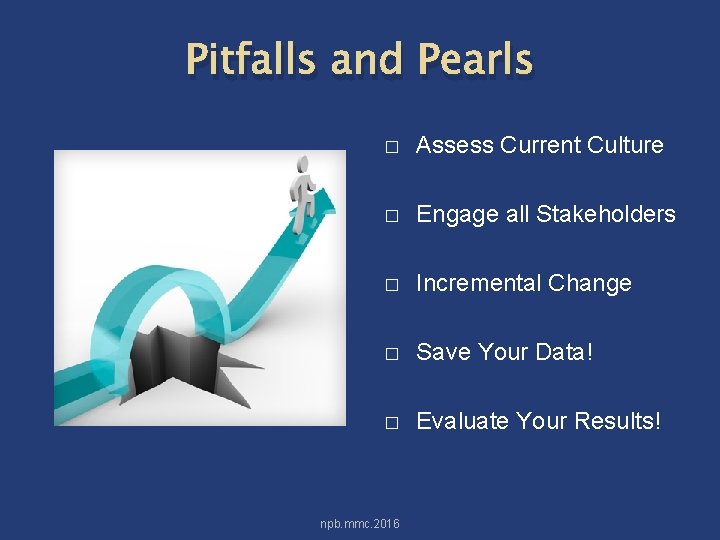
Pitfalls and Pearls � Assess Current Culture � Engage all Stakeholders � Incremental Change � Save Your Data! � Evaluate Your Results! npb. mmc. 2016
Summary � Students and Faculty can learn from errors and near misses � Be positive, not punitive. But don’t lose sight of individual factors and students who are not safe. � Don’t wait for a Sentinel Event! npb. mmc. 2016