
PROMOTE ECONOMIC GROWTH CONTROL UNEMPLOYMENT CONTROL INFLATION 3
- Slides: 18
PROMOTE ECONOMIC GROWTH CONTROL UNEMPLOYMENT CONTROL INFLATION { 3 GOALS OF EVERY ECONOMY
Federal Reserve and Monetary Policy { Impacting the Economy
Created by the Federal Reserve Act of 1913 central bank for the United States of America An independent organization within the government What is the Federal Reserve
Holds reserves of banks to control the money supply Assures stability in the national banking and monetary systems Regulates and supervises banks Controls the way money is issued and circulated Lends money to private banks and the government Duties of the Federal Reserve
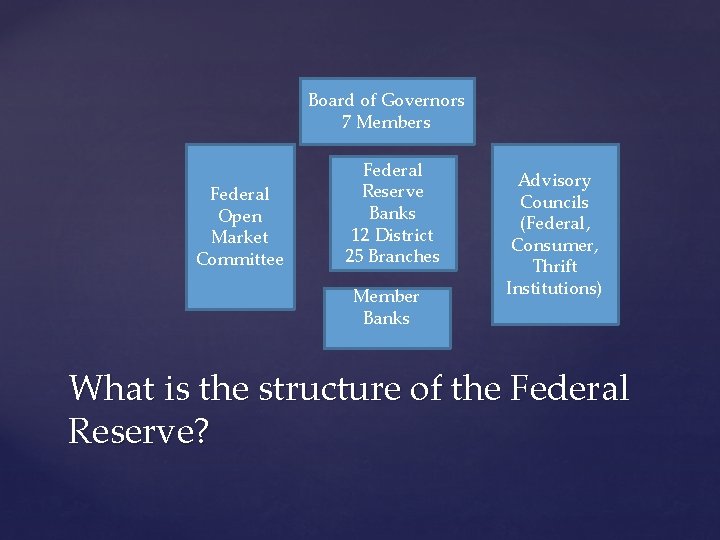
Board of Governors 7 Members Federal Open Market Committee Federal Reserve Banks 12 District 25 Branches Member Banks Advisory Councils (Federal, Consumer, Thrift Institutions) What is the structure of the Federal Reserve?
Board of Governors: 7 members appointed by the President and approved by the Senate Serve one 14 -year term Supervise the operations of the Fed Set policy for the Fed President selects the Chairman and Vice. Chairman from the appointed members Chairman is most influential member and serves as spokesperson for the Fed (Jerome Powell replaced Janet Yellen in January 2018) Structure of the Federal Reserve
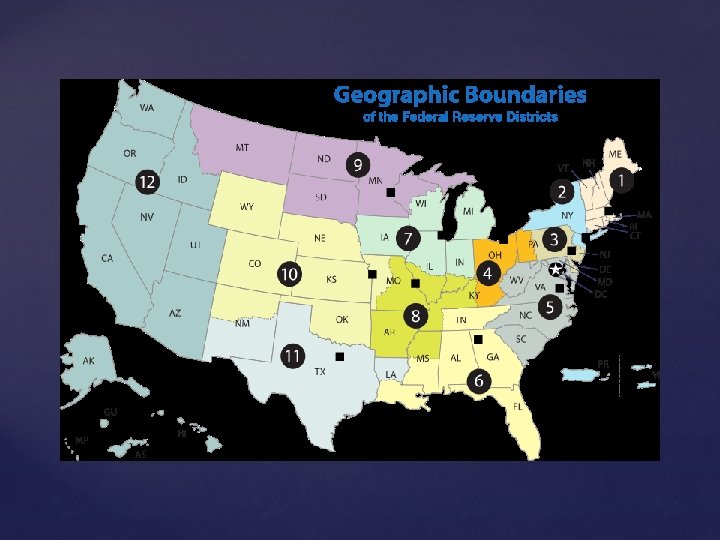
Twelve District Banks Carry out the policy established by the Board of Governors Meets the needs of their particular regions Structure of Fed: District Banks
All nationally chartered banks are automatic members State chartered banks can apply for membership Must purchase stock in their district banks Structure of the Fed: Member Banks
Supervises the sale and purchase federal government securities 12 voting members (includes the Board of Governors, president of the Fed. Reserve Bank of New York, and presidents of four other district banks) Structure of Fed: Federal Open Market Committee
3 committees provide advice directly to Board of Governors Federal Advisory Council Consumer Advisory Council Thrift Institutions Advisory Council Structure of the Fed: Advisory Councils
Fed has four tools that are used to affect the money supply and influence the economy Open Market Operations Adjusting the Reserve Requirement (RRR) Adjusting the Discount Rate Interest on the Required and Excess Reserves Monetary Tools of the Fed
Fed sells government bonds to raise the federal funds rate causing a decrease in the excess reserves and lending and contraction of the money supply Fed buys government bonds and securities to decrease the federal funds rate causing an increase in excess reserves and lending and an expansion of the money supply Open Market Operations
The Fed raises the RRR requiring banks to hold more in reserve causing a decrease in lending and contracting the money supply The Fed lowers the RRR requiring banks to hold less in reserve causing an increase in lending and expanding the money supply Adjusting the Reserve Requirement
Fed raises discount rate, banks borrow less and have fewer reserves to lend causing a contraction of the money supply Fed lowers discount rate, banks borrow more and have more reserves to lend causing an expansion of the money supply Adjusting the Discount Rate
2008 Congress authorized the FED to pay interest on reserves Banks now have incentive to hold more in reserve that necessary to create more money for the banks A bank’s incentive changes as the interest rate changes (increases or decreases) Interest on Reserves
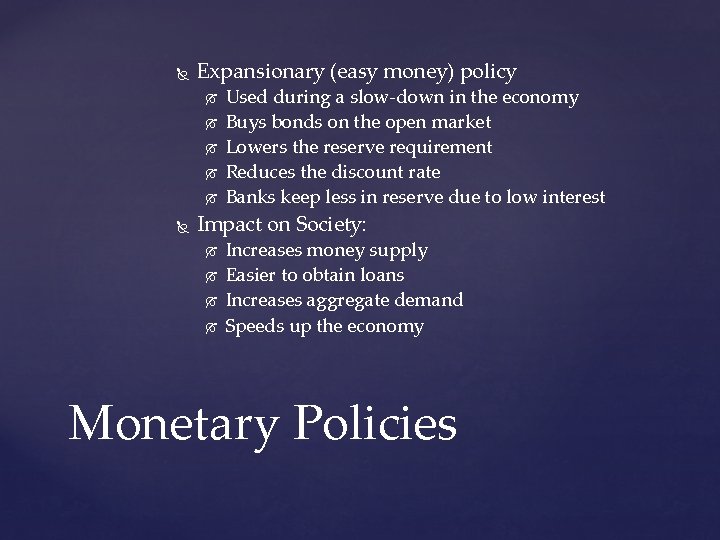
Expansionary (easy money) policy Used during a slow-down in the economy Buys bonds on the open market Lowers the reserve requirement Reduces the discount rate Banks keep less in reserve due to low interest Impact on Society: Increases money supply Easier to obtain loans Increases aggregate demand Speeds up the economy Monetary Policies
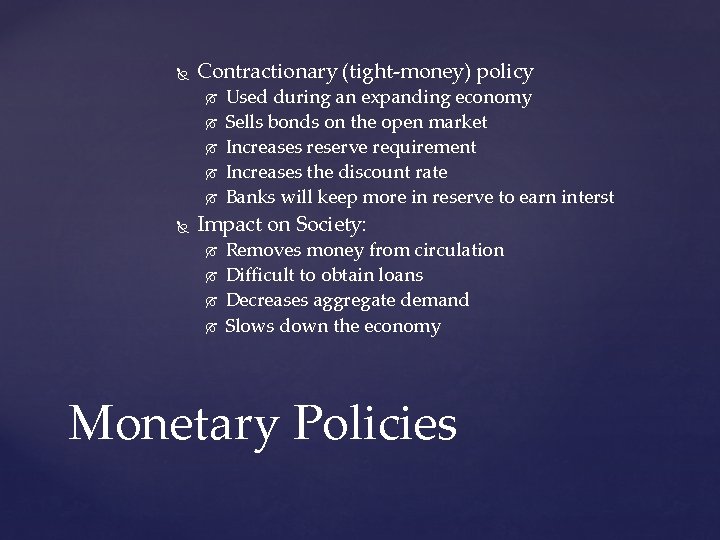
Contractionary (tight-money) policy Used during an expanding economy Sells bonds on the open market Increases reserve requirement Increases the discount rate Banks will keep more in reserve to earn interst Impact on Society: Removes money from circulation Difficult to obtain loans Decreases aggregate demand Slows down the economy Monetary Policies