
ProminenceCorona Transition Region T Kucera NASAGSFC ISSI Prominence



- Slides: 33
Prominence-Corona Transition Region T. Kucera, NASA/GSFC ISSI Prominence Cavity Team Jan. 2009
Outline • • Basic structure of the TR What it looks like in the EUV Prominence Motions - Models and Observations ISSI Prominence Group Topics
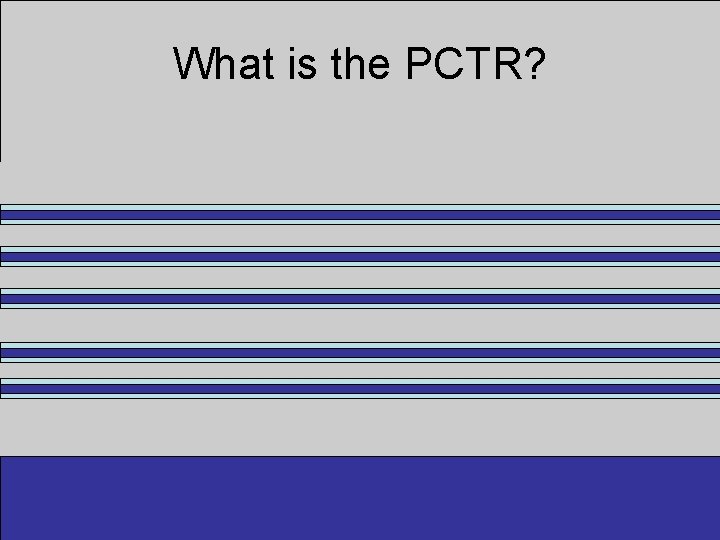
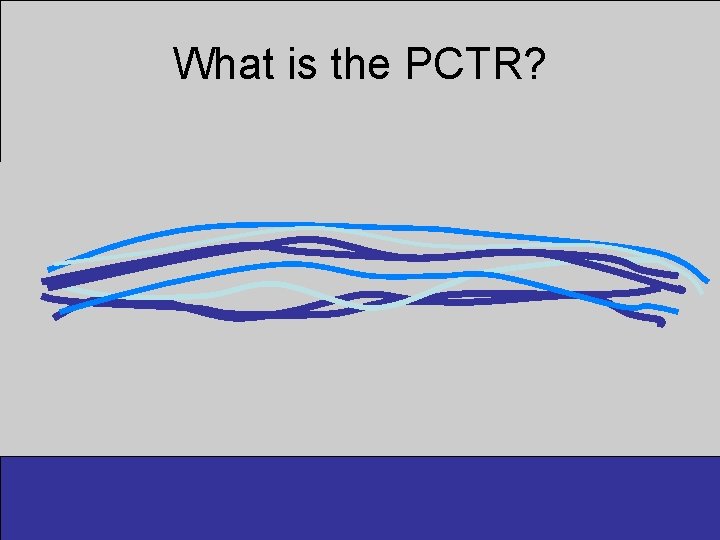
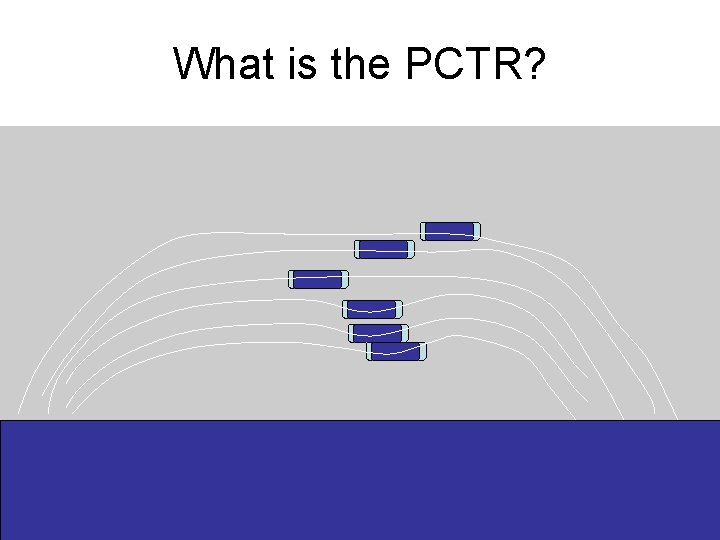
What is the PCTR? Material between the bulk of the prominence material at T<104 K and the corona at T>106 K. B
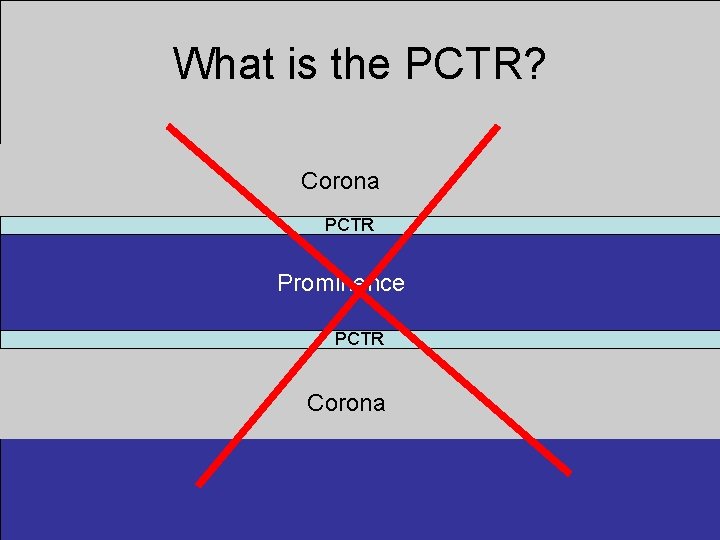
What is the PCTR? Corona PCTR Prominence PCTR Corona
What is the PCTR?
What is the PCTR?
What is the PCTR?
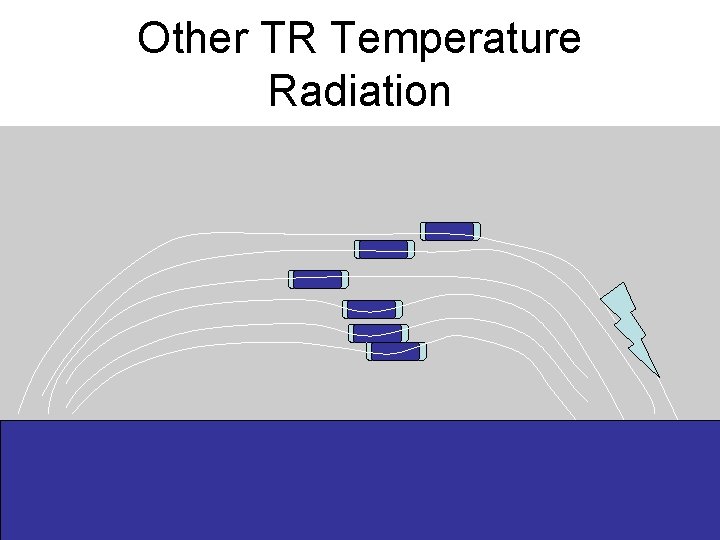
Other TR Temperature Radiation
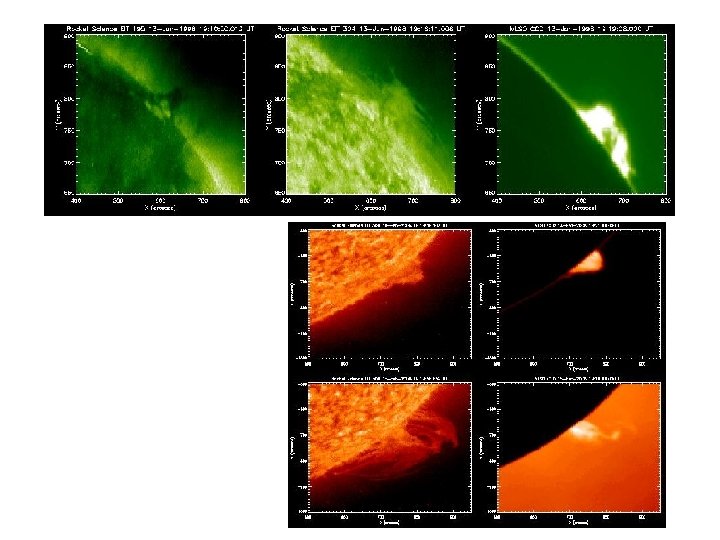
What does it actually look like?
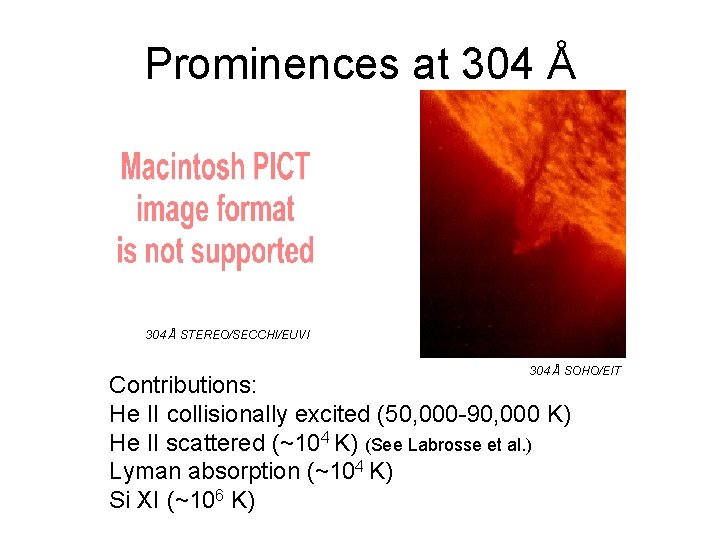
Prominences at 304 Å STEREO/SECCHI/EUVI 304 Å SOHO/EIT Contributions: He II collisionally excited (50, 000 -90, 000 K) He II scattered (~104 K) (See Labrosse et al. ) Lyman absorption (~104 K) Si XI (~106 K)
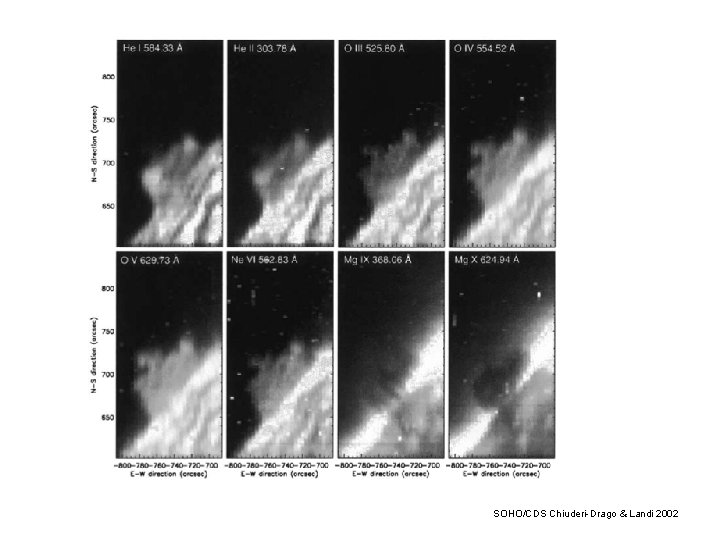
SOHO/CDS Chiuderi-Drago & Landi 2002
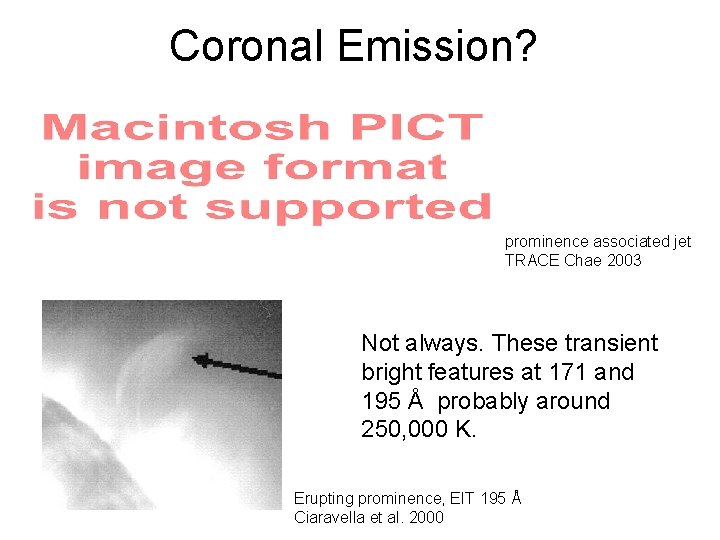
Coronal Emission? prominence associated jet TRACE Chae 2003 Not always. These transient bright features at 171 and 195 Å probably around 250, 000 K. Erupting prominence, EIT 195 Å Ciaravella et al. 2000
TRACE 171(? ) A
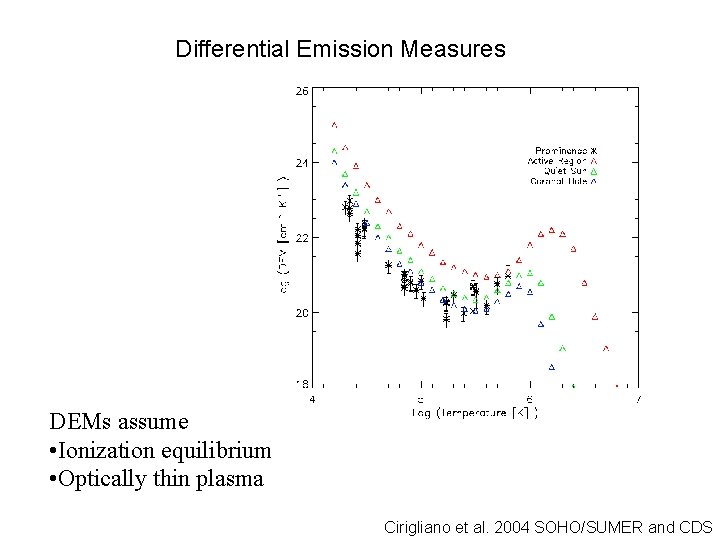
Differential Emission Measures DEMs assume • Ionization equilibrium • Optically thin plasma Cirigliano et al. 2004 SOHO/SUMER and CDS
Karpen et al. 2008
Prominence Motions Prominences are dynamic! Quiescent prominences in H show steady flows, including counterstreaming, up to 20 km/s, and sometimes show faster motions. Prominences observed in EUV and UV often show faster motions (30 -70 km/s)
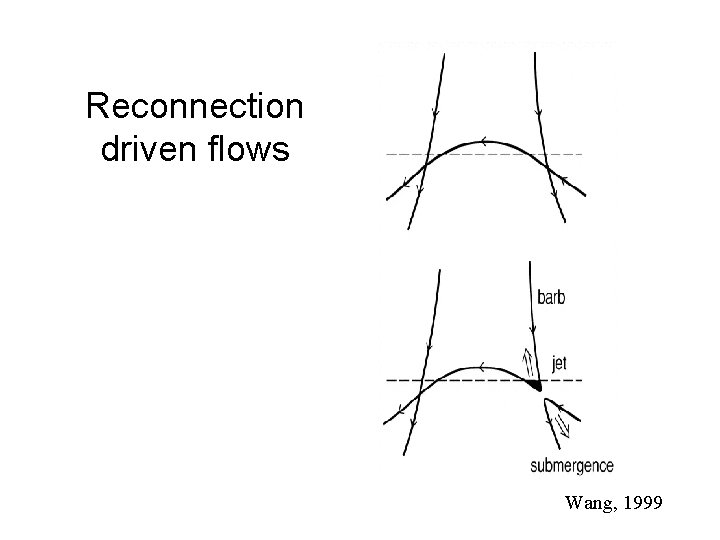
Prominence Motions Study prominence motions at different temperatures to understand their properties and how they are related. Goal: to test theories of prominence formation (which tie into theories of magnetic structure).
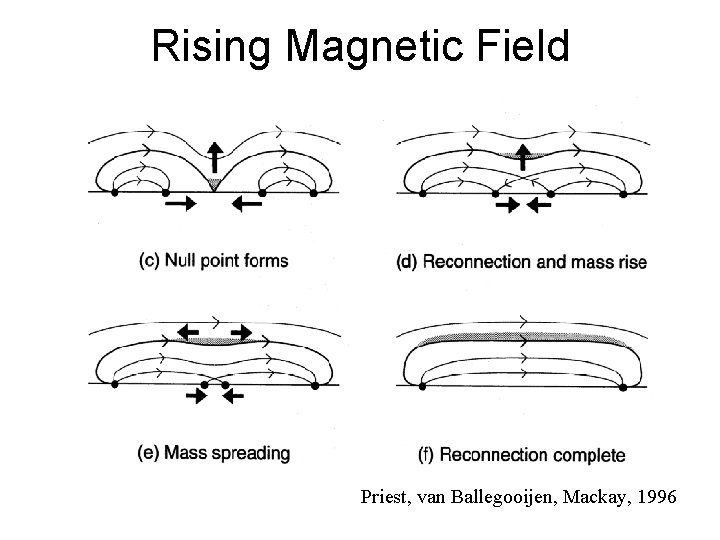
Rising Magnetic Field Priest, van Ballegooijen, Mackay, 1996
Reconnection driven flows Wang, 1999
Chromospheric Heating/Siphon Flow Models Karpen et al.
Studies of Motions in Prominences - Results Many motions in the EUV seem to be pretty fast Some seem to have detectable H components. Are there EUV components to slower H motions? Its hard to tell, but this may be a resolution problem. In general DEMs of motions look rather like DEMs of prominences of a whole. One difference is the extent to which you can see >300, 000 K material in the structure.
TRACE Ly and 1600 Å bands, May 26, 2000
SVST H Integrated Intensity and Doppler, May 26, 2000
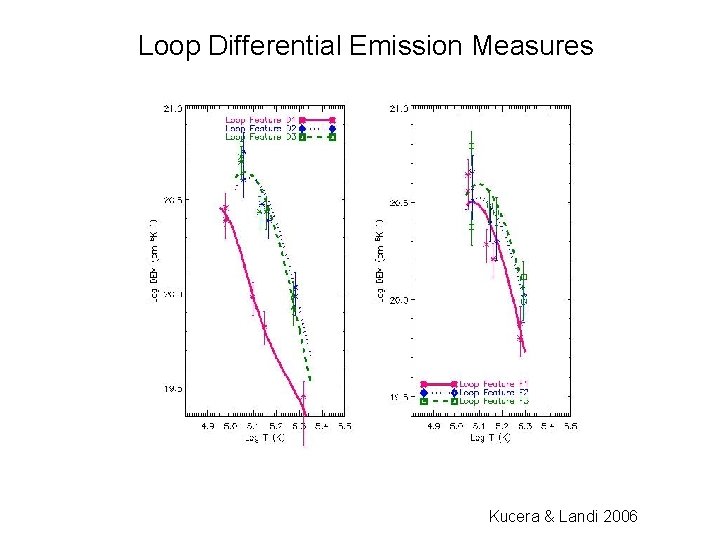
Activated Prominence and Cool Loop Apr. 17, 2003 Kucera & Landi 2006
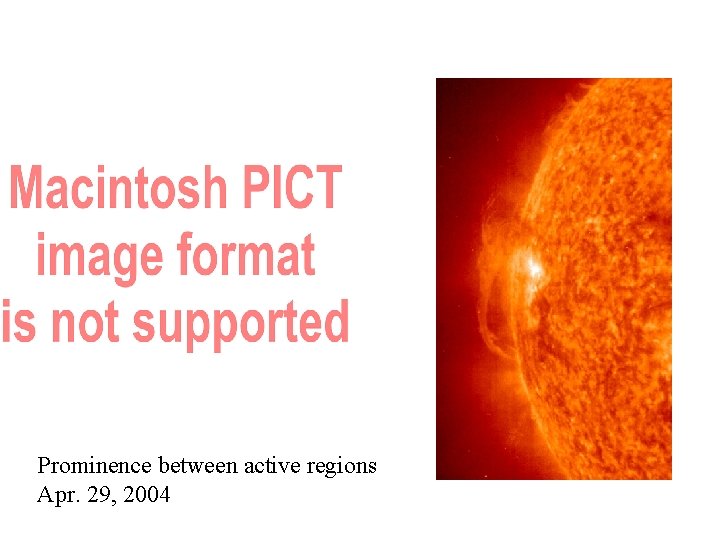
Prominence between active regions Apr. 29, 2004
Quiet and Activated Prominence Apr. 30 -May 1, 2004
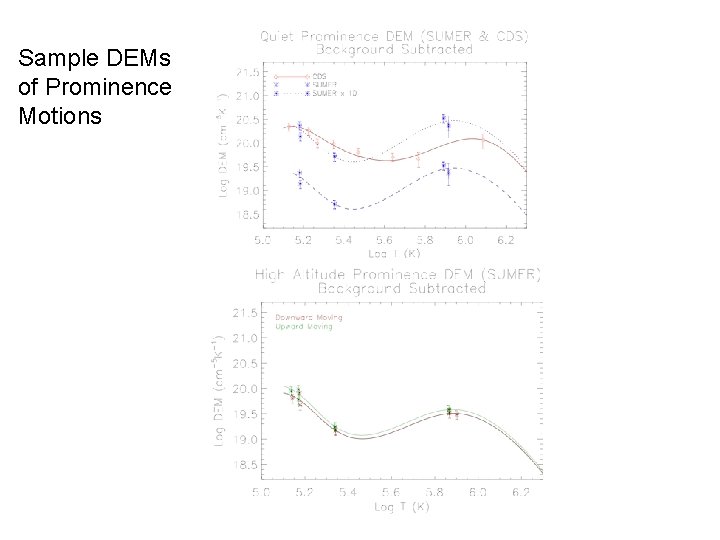
DEMs of Moving Prominence Features Different from others Promience DEMs because • Made using as small a piece of a moving feature as possible (in time and space) • When possible “background” has been estimated or subtracted Calculated with using method of Landi & Landini 1997
Sample DEMs of Prominence Motions
Loop Differential Emission Measures Kucera & Landi 2006
Many motions in the EUV seem to be pretty fast Some seem to have detectable H components. Are there EUV components to slower H motions? Its hard to tell, but this may be a resolution problem. In general DEMs of moving features look rather like DEMs of prominences of a whole. One difference is the extent to which you can see >300, 000 K material in the structure.
Plans & the Future • Can Dynamic Equilibrium Model simulate the short times scale DEMs? • SDO might be able to help understanding of the “high temperature” TR. Does this have any connection to very high temperature emission associated w/ prominences (“Chewy Nougat”)?
ISSI Prominence Group - Some topics • Prominence Radiative Transfer Observations & Modeling- Lyman Absorption, He lines • PCTR related observations and diagnostics • Flows • Oscillations • Prominence magnetic field, its formations and relationship to the cavity field (Aad)