
Prologue Definition An Introductory Scene Part of speech
- Slides: 13
Prologue Definition: An Introductory Scene Part of speech: Noun Prologue: Derives from Greek word Prologus = “a speech beforehand. ” Pro = “before” Logos = “speech, word”
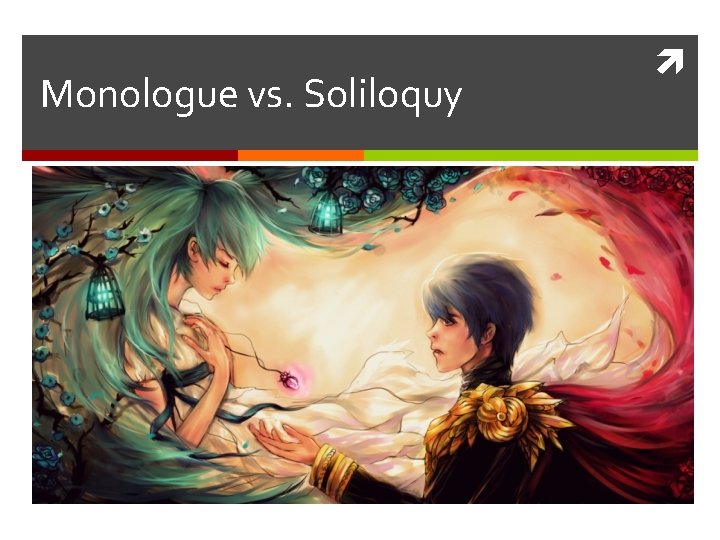
Monologue vs. Soliloquy
Let’s take a look at root words…
Monologue Definition: a speech by one character in a play; intended to be heard by other characters Part of Speech: Noun Derives from Greek word Monologos = “speaking alone” Mono = “single, alone” Logos = “speech, word”
Soliloquy Definition: a long speech expressing the thoughts of a character; gives insight into a character Part of Speech: noun Derives from Latin word Soliloquium = “a talking to oneself” Solus = “alone” Loqui = “speak”
Wait a minute…what’s the difference? Ask yourself: Who the intended audience? Is another character supposed to be listening? (hint: that’s a monologue) Or is it the inner thoughts of a character being said out loud, not intended to be heard by others? (hint: that’s a soliloquy)
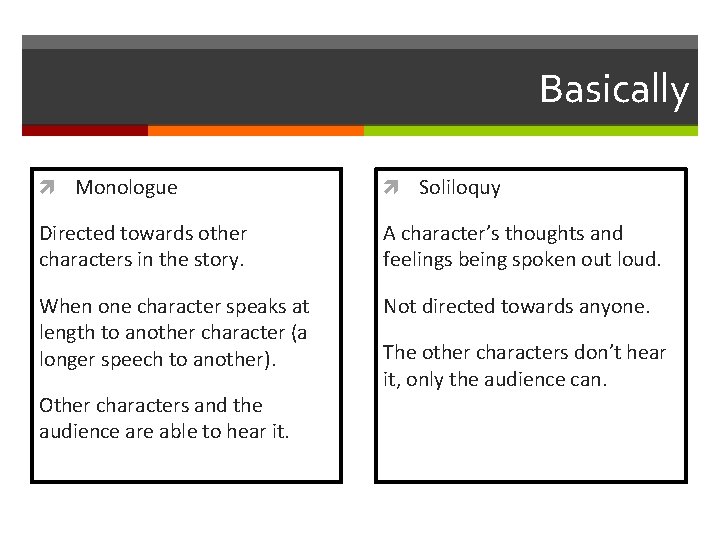
Basically Monologue Soliloquy Directed towards other characters in the story. A character’s thoughts and feelings being spoken out loud. When one character speaks at length to another character (a longer speech to another). Not directed towards anyone. Other characters and the audience are able to hear it. The other characters don’t hear it, only the audience can.
Let’s look at examples from Shakespeare:
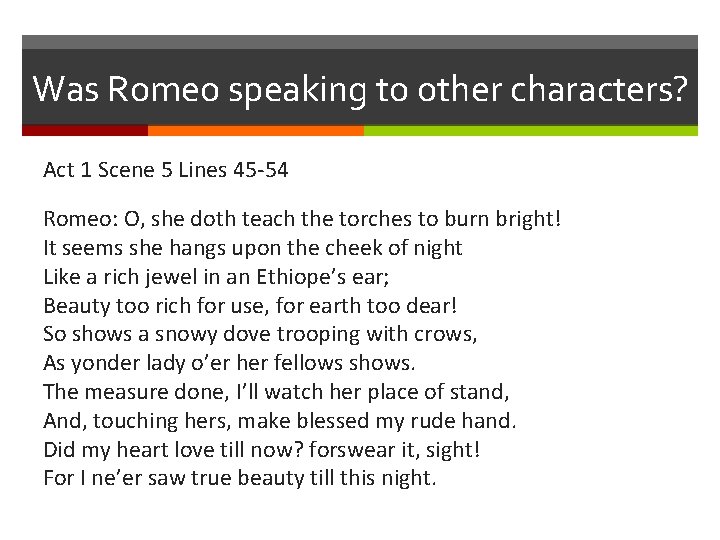
Was Romeo speaking to other characters? Act 1 Scene 5 Lines 45 -54 Romeo: O, she doth teach the torches to burn bright! It seems she hangs upon the cheek of night Like a rich jewel in an Ethiope’s ear; Beauty too rich for use, for earth too dear! So shows a snowy dove trooping with crows, As yonder lady o’er her fellows shows. The measure done, I’ll watch her place of stand, And, touching hers, make blessed my rude hand. Did my heart love till now? forswear it, sight! For I ne’er saw true beauty till this night.
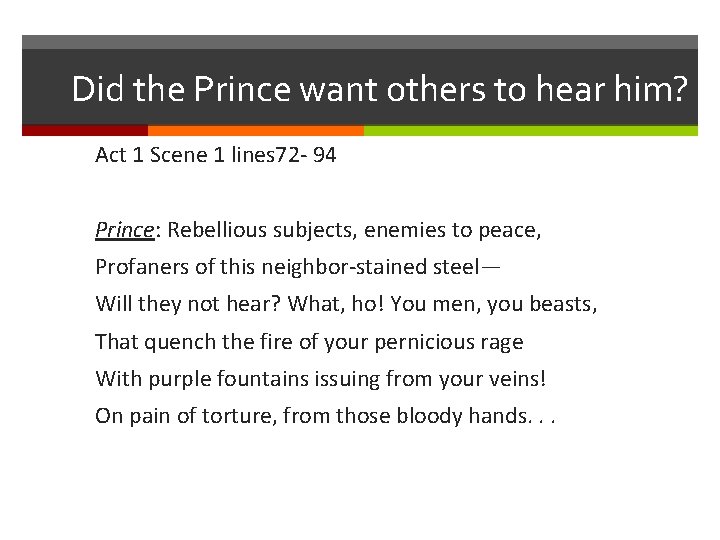
Did the Prince want others to hear him? Act 1 Scene 1 lines 72 - 94 Prince: Rebellious subjects, enemies to peace, Profaners of this neighbor-stained steel— Will they not hear? What, ho! You men, you beasts, That quench the fire of your pernicious rage With purple fountains issuing from your veins! On pain of torture, from those bloody hands. . .
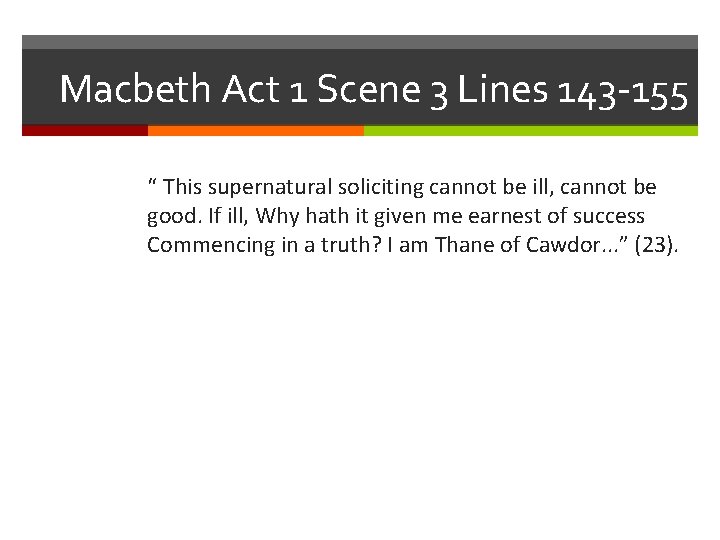
Macbeth Act 1 Scene 3 Lines 143 -155 “ This supernatural soliciting cannot be ill, cannot be good. If ill, Why hath it given me earnest of success Commencing in a truth? I am Thane of Cawdor. . . ” (23).
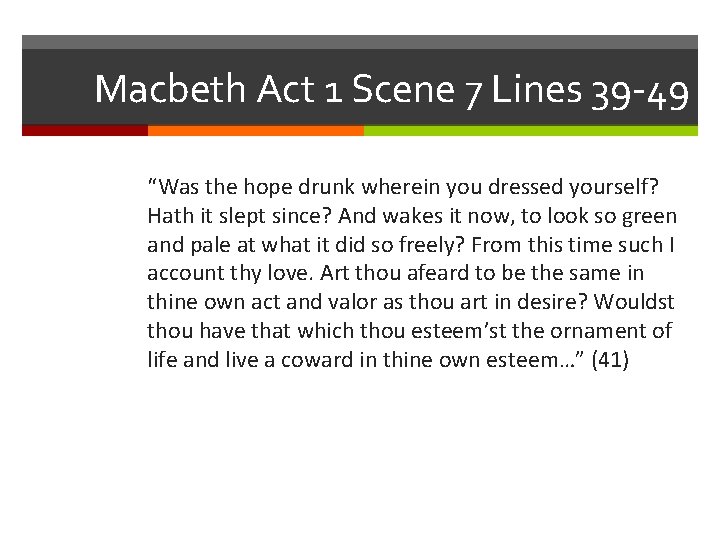
Macbeth Act 1 Scene 7 Lines 39 -49 “Was the hope drunk wherein you dressed yourself? Hath it slept since? And wakes it now, to look so green and pale at what it did so freely? From this time such I account thy love. Art thou afeard to be the same in thine own act and valor as thou art in desire? Wouldst thou have that which thou esteem’st the ornament of life and live a coward in thine own esteem…” (41)
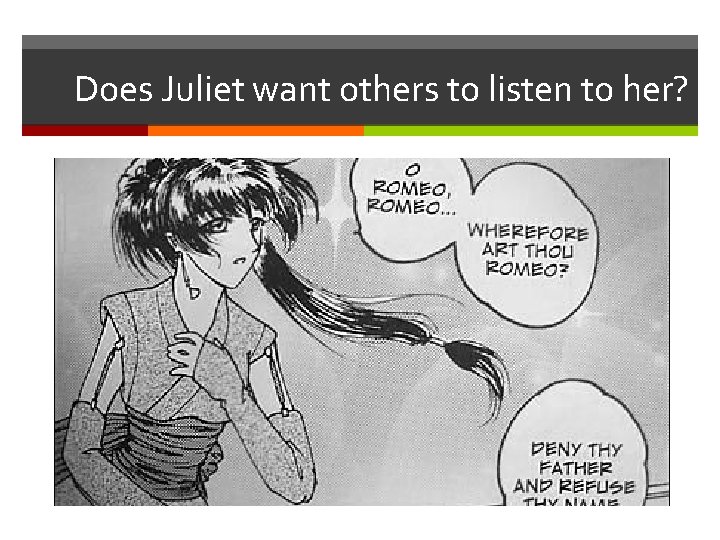
Does Juliet want others to listen to her?