
Prokaryotic vs Eukaryotic Cells All Cells Contain Cell

- Slides: 21
Prokaryotic vs. Eukaryotic Cells
All Cells Contain: • • Cell membranes Organelles Cytoplasm DNA http: //www. nslc. wustl. edu/courses/Bio 2960/labs/04 Microscopy/allcell. jpg
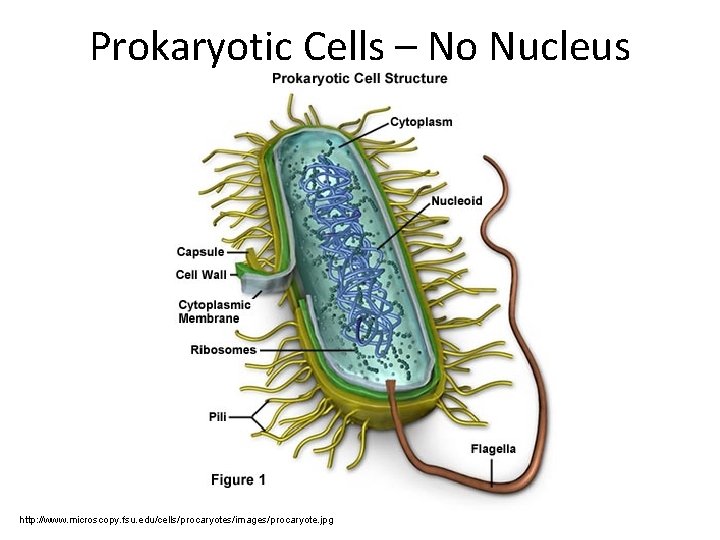
Prokaryotic Cells – No Nucleus http: //www. microscopy. fsu. edu/cells/procaryotes/images/procaryote. jpg
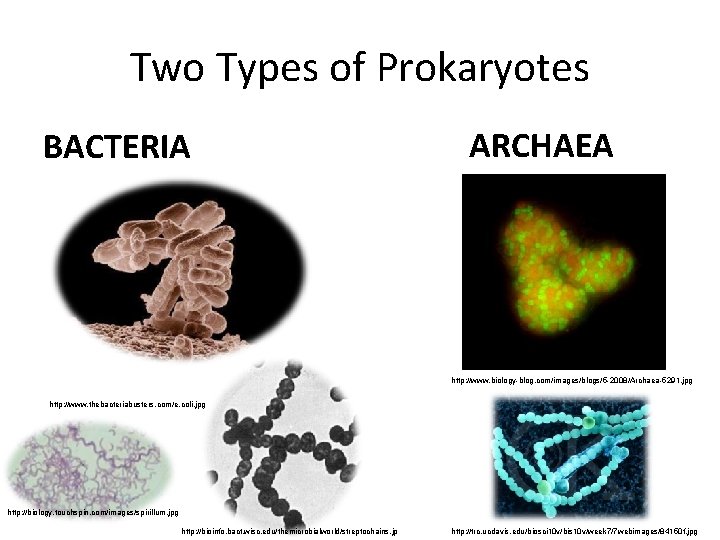
Two Types of Prokaryotes BACTERIA ARCHAEA http: //www. biology-blog. com/images/blogs/5 -2008/Archaea-5291. jpg http: //www. thebacteriabusters. com/e. coli. jpg http: //biology. touchspin. com/images/spirillum. jpg http: //bioinfo. bact. wisc. edu/themicrobialworld/streptochains. jp http: //trc. ucdavis. edu/biosci 10 v/bis 10 v/week 7/7 webimages/84150 f. jpg
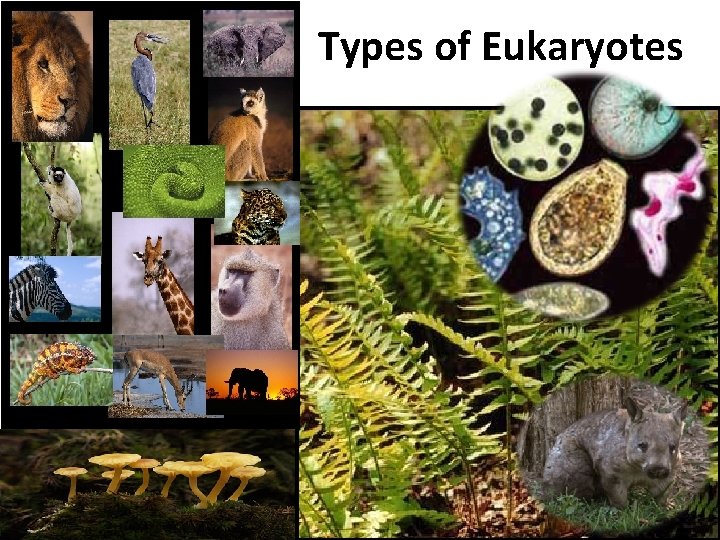
Types of Eukaryotes
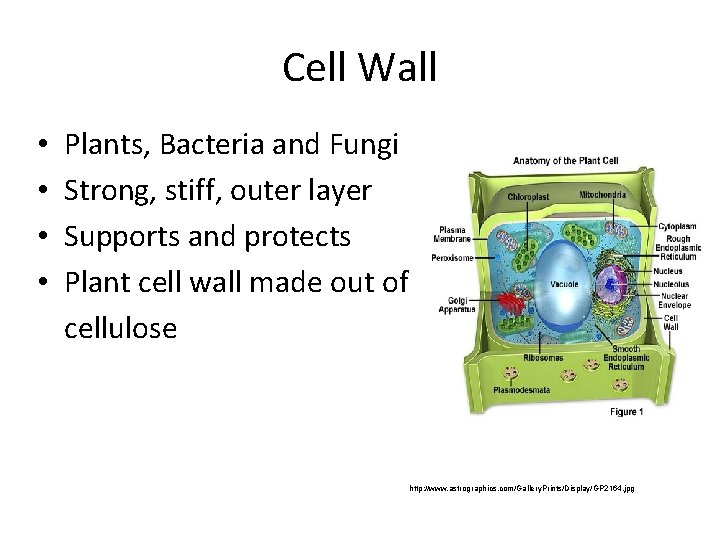
Cell Wall • • Plants, Bacteria and Fungi Strong, stiff, outer layer Supports and protects Plant cell wall made out of cellulose http: //www. astrographics. com/Gallery. Prints/Display/GP 2164. jpg
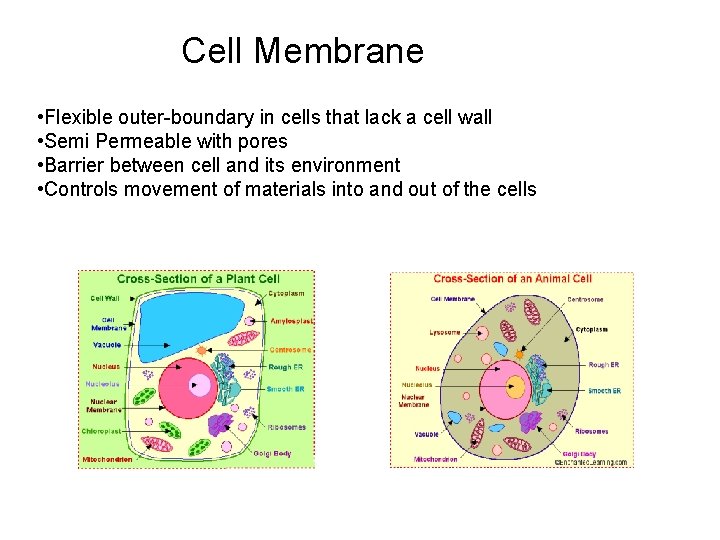
Cell Membrane • Flexible outer-boundary in cells that lack a cell wall • Semi Permeable with pores • Barrier between cell and its environment • Controls movement of materials into and out of the cells
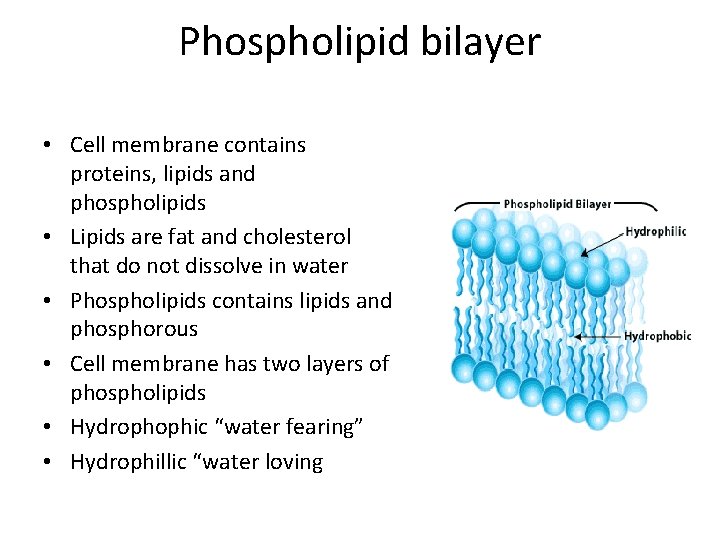
Phospholipid bilayer • Cell membrane contains proteins, lipids and phospholipids • Lipids are fat and cholesterol that do not dissolve in water • Phospholipids contains lipids and phosphorous • Cell membrane has two layers of phospholipids • Hydrophophic “water fearing” • Hydrophillic “water loving
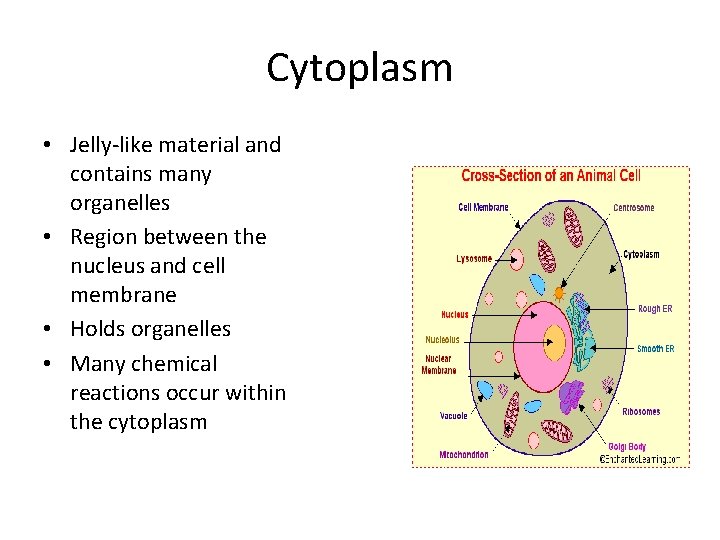
Cytoplasm • Jelly-like material and contains many organelles • Region between the nucleus and cell membrane • Holds organelles • Many chemical reactions occur within the cytoplasm
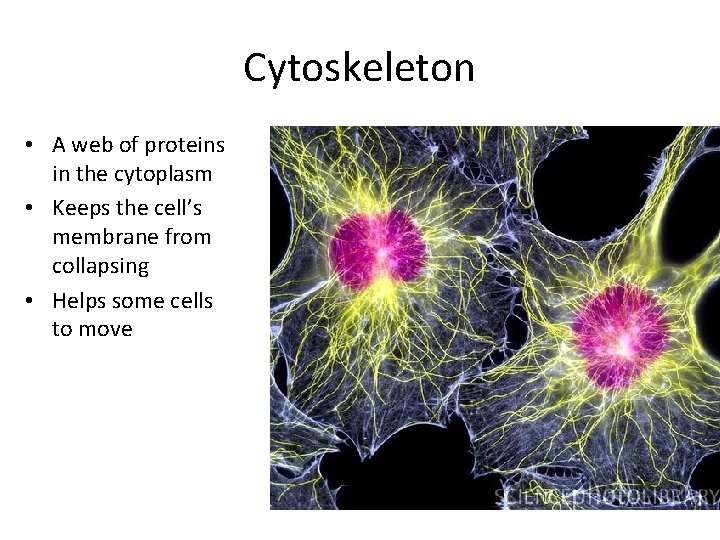
Cytoskeleton • A web of proteins in the cytoplasm • Keeps the cell’s membrane from collapsing • Helps some cells to move
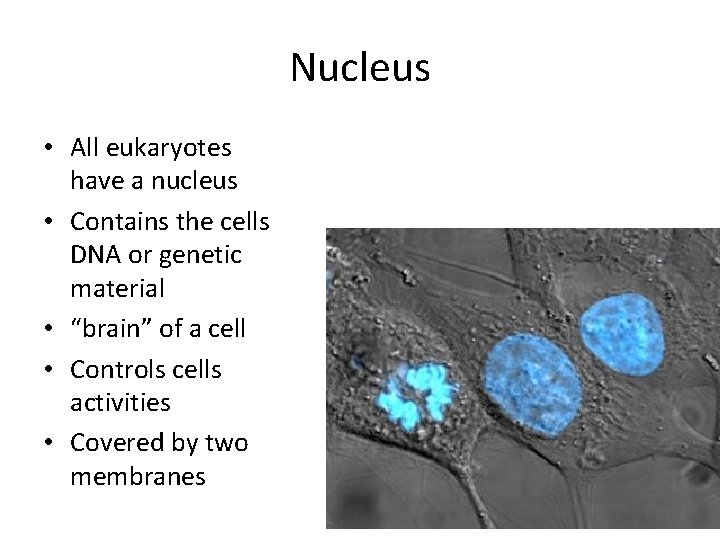
Nucleus • All eukaryotes have a nucleus • Contains the cells DNA or genetic material • “brain” of a cell • Controls cells activities • Covered by two membranes
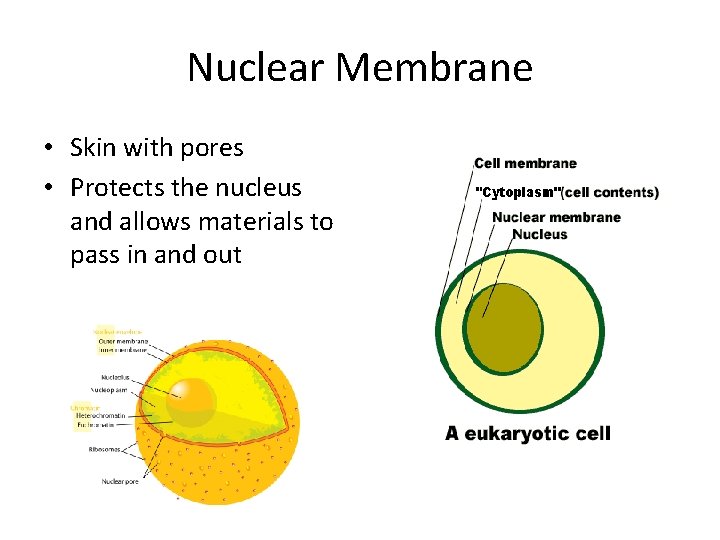
Nuclear Membrane • Skin with pores • Protects the nucleus and allows materials to pass in and out
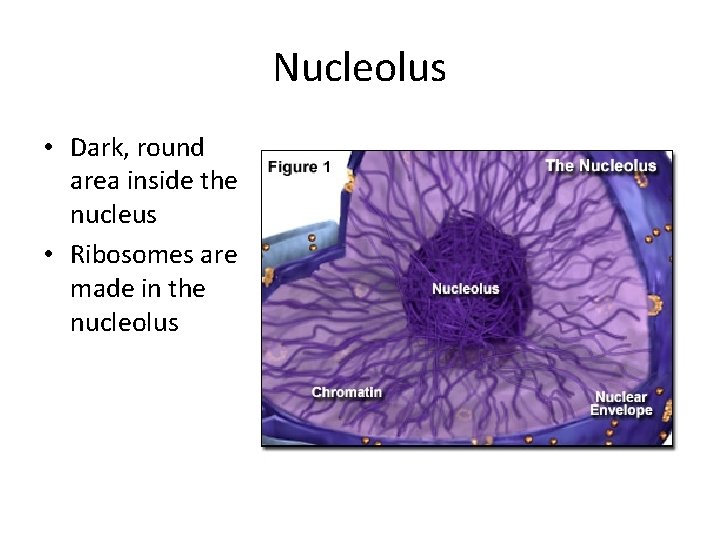
Nucleolus • Dark, round area inside the nucleus • Ribosomes are made in the nucleolus
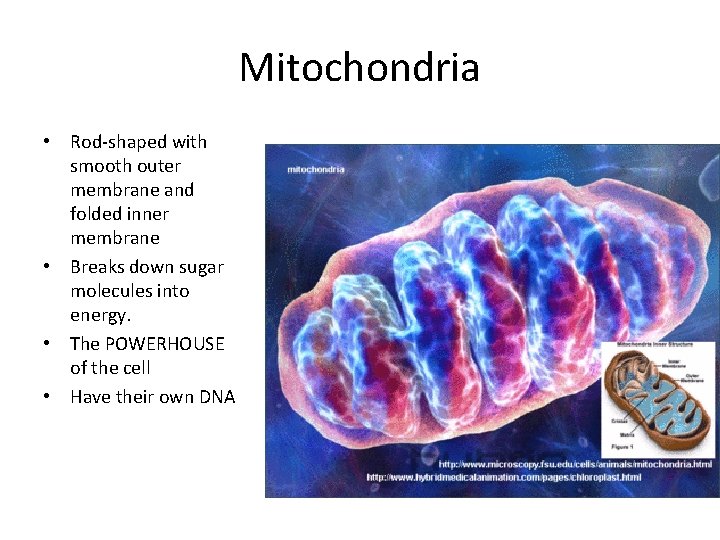
Mitochondria • Rod-shaped with smooth outer membrane and folded inner membrane • Breaks down sugar molecules into energy. • The POWERHOUSE of the cell • Have their own DNA
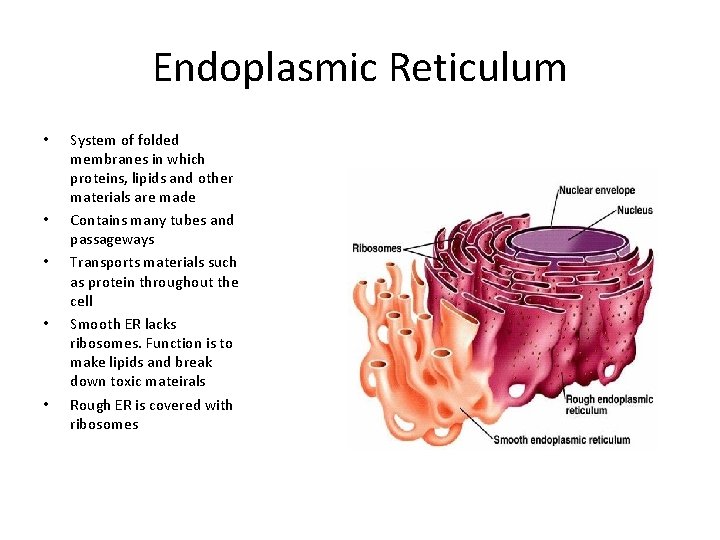
Endoplasmic Reticulum • • • System of folded membranes in which proteins, lipids and other materials are made Contains many tubes and passageways Transports materials such as protein throughout the cell Smooth ER lacks ribosomes. Function is to make lipids and break down toxic mateirals Rough ER is covered with ribosomes
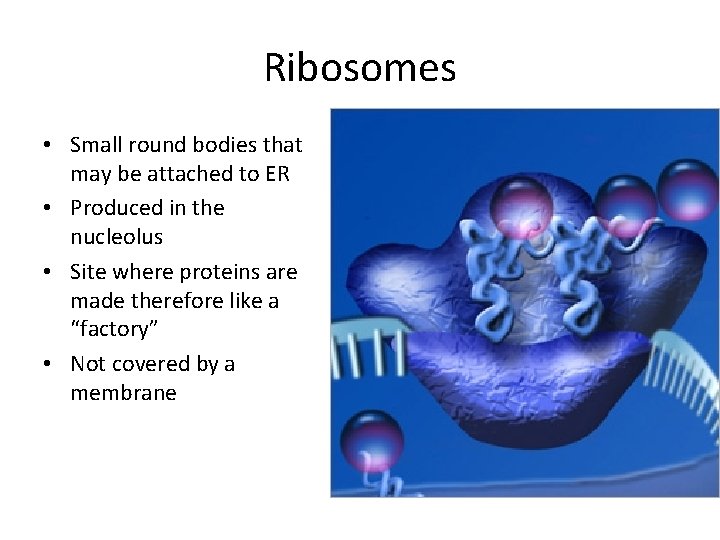
Ribosomes • Small round bodies that may be attached to ER • Produced in the nucleolus • Site where proteins are made therefore like a “factory” • Not covered by a membrane
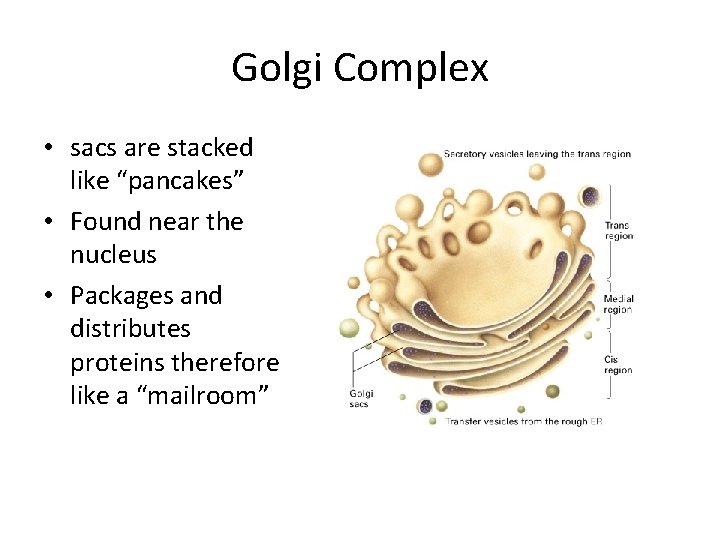
Golgi Complex • sacs are stacked like “pancakes” • Found near the nucleus • Packages and distributes proteins therefore like a “mailroom”
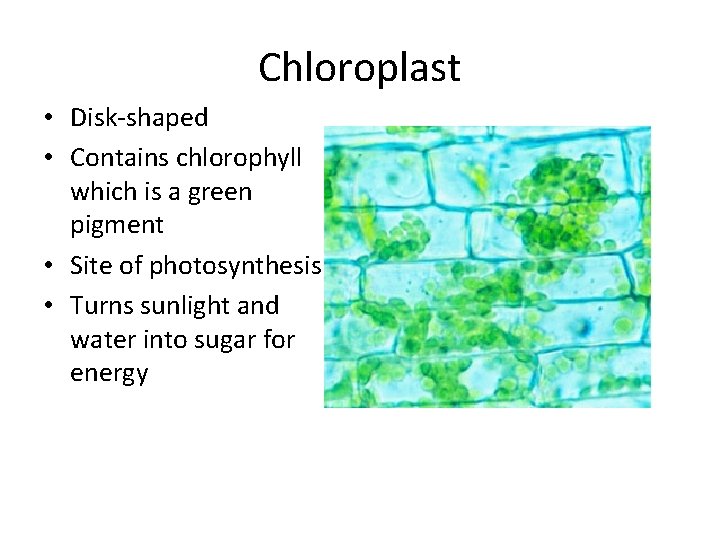
Chloroplast • Disk-shaped • Contains chlorophyll which is a green pigment • Site of photosynthesis • Turns sunlight and water into sugar for energy
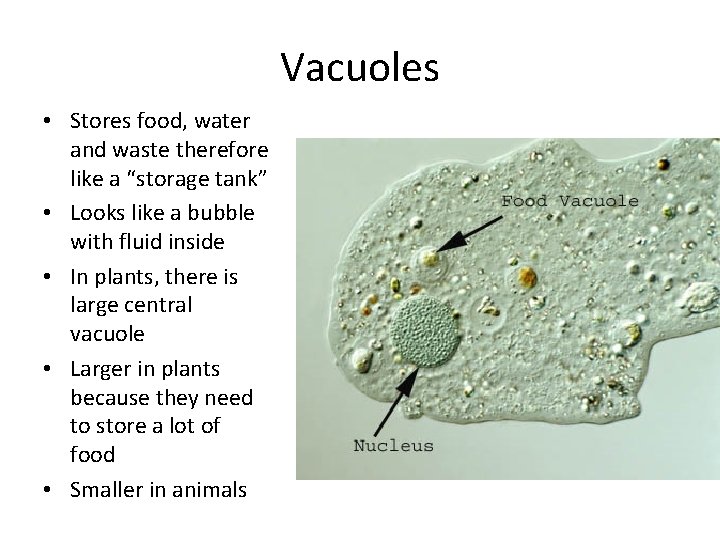
Vacuoles • Stores food, water and waste therefore like a “storage tank” • Looks like a bubble with fluid inside • In plants, there is large central vacuole • Larger in plants because they need to store a lot of food • Smaller in animals
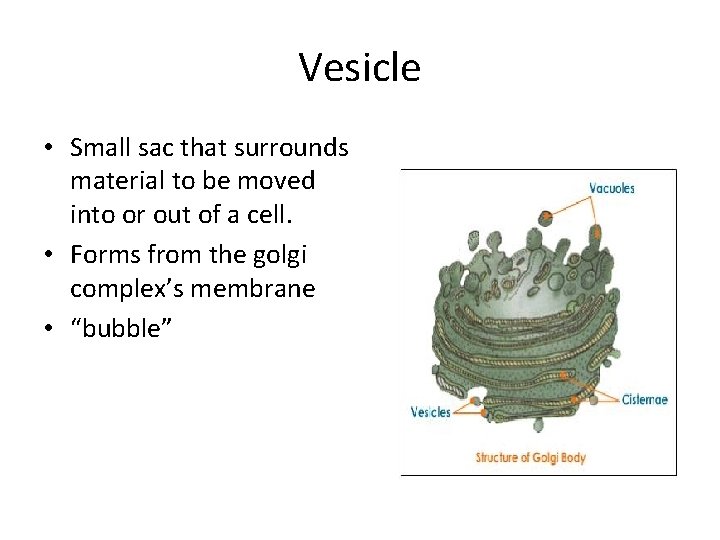
Vesicle • Small sac that surrounds material to be moved into or out of a cell. • Forms from the golgi complex’s membrane • “bubble”
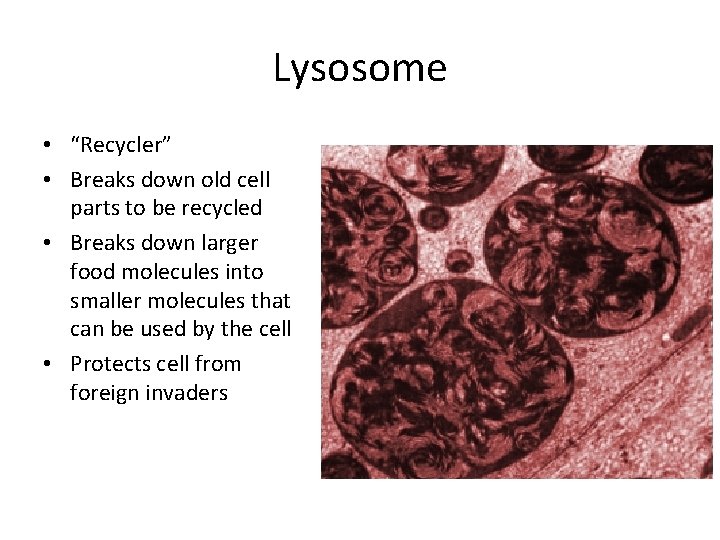
Lysosome • “Recycler” • Breaks down old cell parts to be recycled • Breaks down larger food molecules into smaller molecules that can be used by the cell • Protects cell from foreign invaders