
Prokaryotic Gene Control Operons Chapter 18 1 Prokaryotic


- Slides: 17
Prokaryotic Gene Control: Operons Chapter 18. 1
Prokaryotic Metabolism �Prokaryotes must use substances and synthesize macromolecules fast enough to meet their needs �If enzymes aren’t needed, genes for their production must be “off” �Conservation of resources
Operons �Genes grouped together operating together in prokaryotic cells �Can be inducible • Normally “off” but able to turn “on” when needed �Can be repressible • Normally “on” but able to turn “off” when not needed �Coordinated metabolism control of genes required for
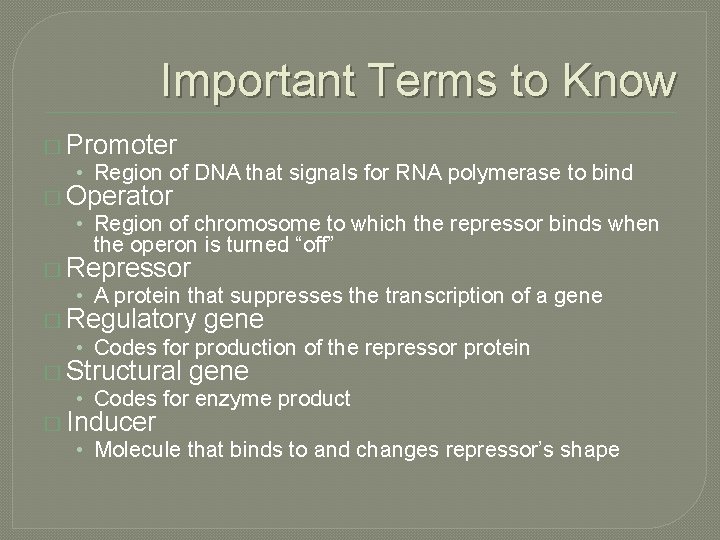
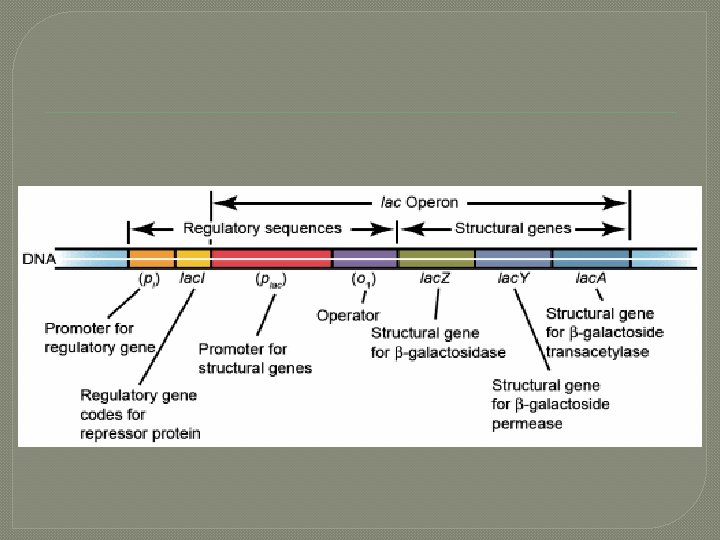
Important Terms to Know � Promoter • Region of DNA that signals for RNA polymerase to bind � Operator • Region of chromosome to which the repressor binds when the operon is turned “off” � Repressor • A protein that suppresses the transcription of a gene � Regulatory gene • Codes for production of the repressor protein � Structural gene • Codes for enzyme product � Inducer • Molecule that binds to and changes repressor’s shape
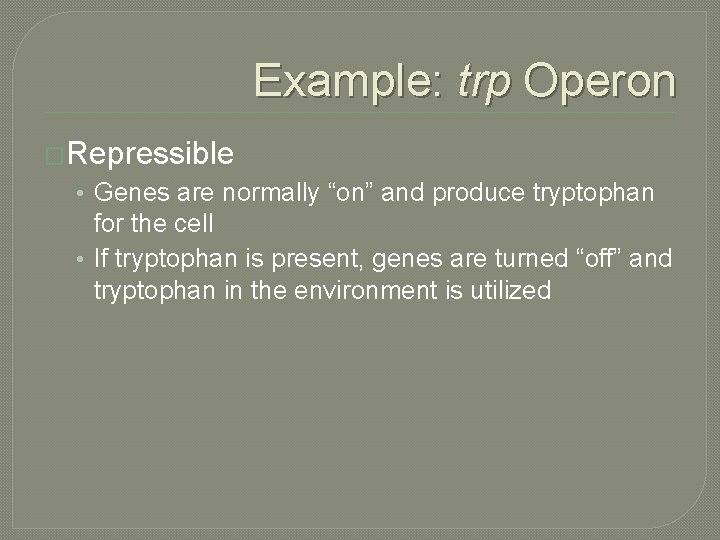
Example: trp Operon �Repressible • Genes are normally “on” and produce tryptophan for the cell • If tryptophan is present, genes are turned “off” and tryptophan in the environment is utilized
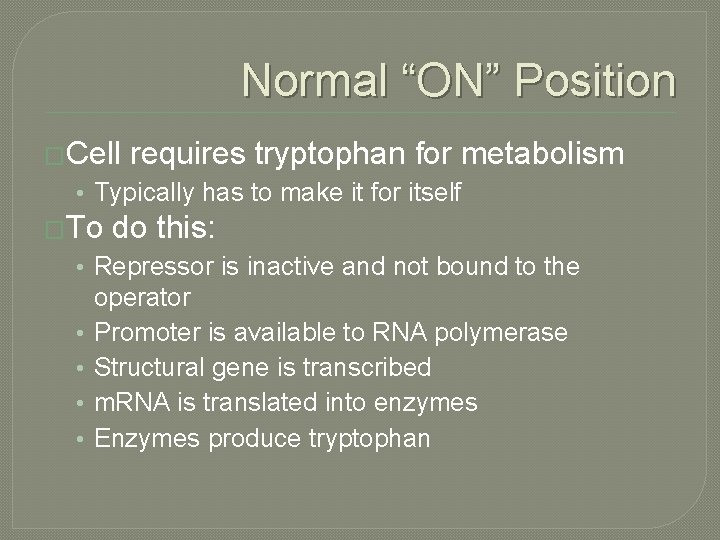
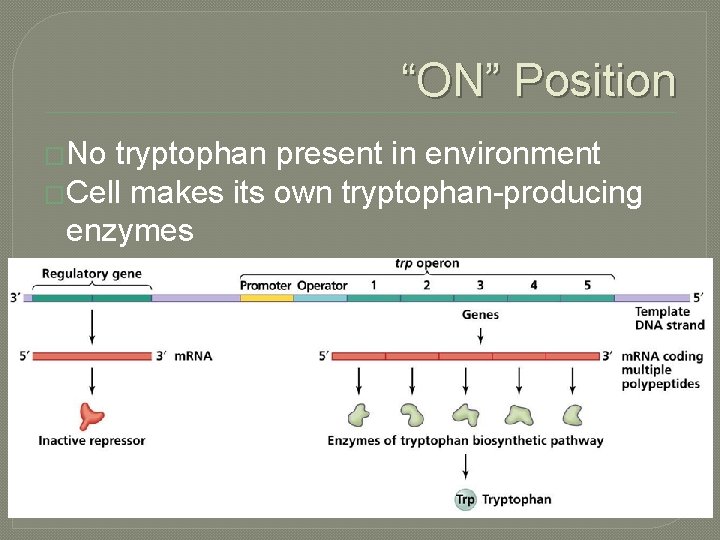
Normal “ON” Position �Cell requires tryptophan for metabolism • Typically has to make it for itself �To do this: • Repressor is inactive and not bound to the • • operator Promoter is available to RNA polymerase Structural gene is transcribed m. RNA is translated into enzymes Enzymes produce tryptophan
“ON” Position �No tryptophan present in environment �Cell makes its own tryptophan-producing enzymes
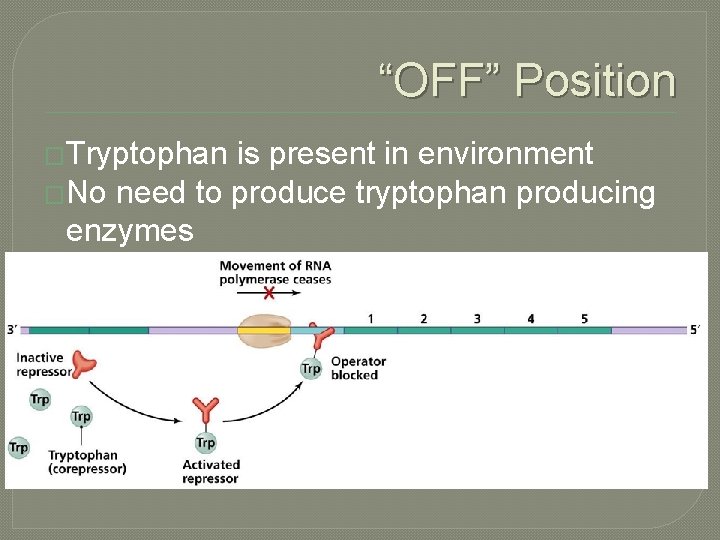
If trp is Abundant: Turning “OFF” � If the cell has adequate supply of tryptophan, it turns the operon “OFF” and uses what is available • Save resources – don’t make it if it’s already there! � To • • do this: Tryptophan binds to the repressor, activating it Activated repressor binds to the operator This blocks RNA polymerase from transcribing m. RNA No genes are transcribed no proteins produced
“OFF” Position �Tryptophan is present in environment �No need to produce tryptophan producing enzymes
Video �Mc. Graw Hill
Example: lac Operon �Inducible • Genes are normally “off” in absence of lactose • If lactose is present, genes are turned “on” and enzymes to digest it are produced
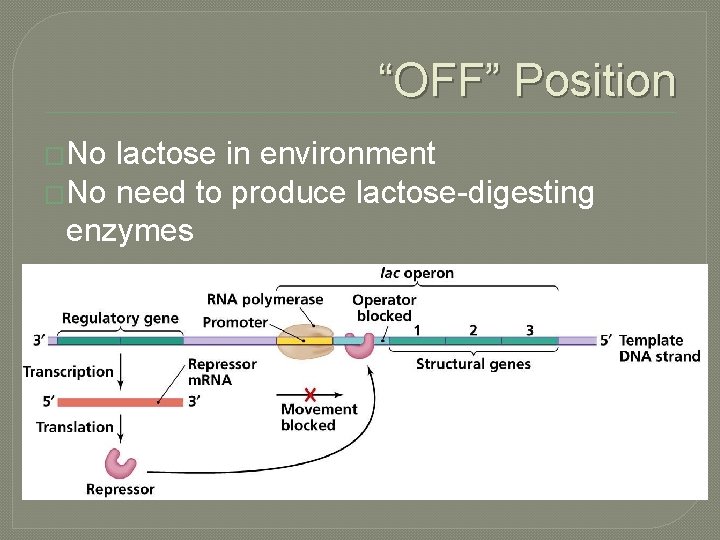
Normal “OFF” Position �If no lactose is present in the cell, no lactose-digesting enzymes are produced • Save resources – don’t make it if it’s not needed! �To do this: • Active repressor binds to operator • This blocks RNA polymerase from transcribing m. RNA • No genes are transcribed no proteins produced
“OFF” Position �No lactose in environment �No need to produce lactose-digesting enzymes
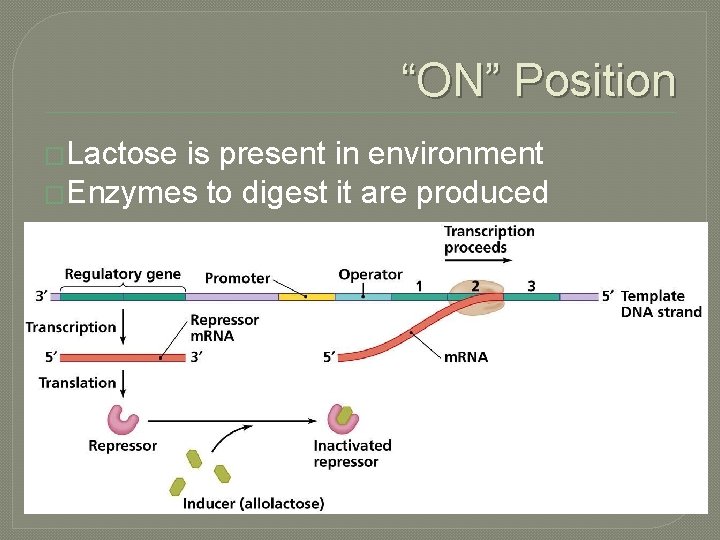
If lac is Present: Turning “ON” � Lactose is not normally present • If it is, bacteria will digest and use it � To do this: • Allolactose inducer binds to repressor, inactivating it • Inactivated repressor cannot bind to operator • RNA polymerase can bind to promoter • Genes coding for lactose-digesting enzymes transcribed • m. RNA is translated into enzymes that digest lactose � When lactose supply is depleted, inducer separates from repressor, allowing it to bind to operator again and block transcription
“ON” Position �Lactose is present in environment �Enzymes to digest it are produced
Video �Mc. Graw Hill