
PROKARYOTIC AND EUKARYOTIC CELLS Cell Theory says that




- Slides: 22
PROKARYOTIC AND EUKARYOTIC CELLS
Cell Theory says that…. 1. All living things are made of Cells. 2. Cells are the basic units of structure and function in all living things. 3. New cells are only made from existing cells.
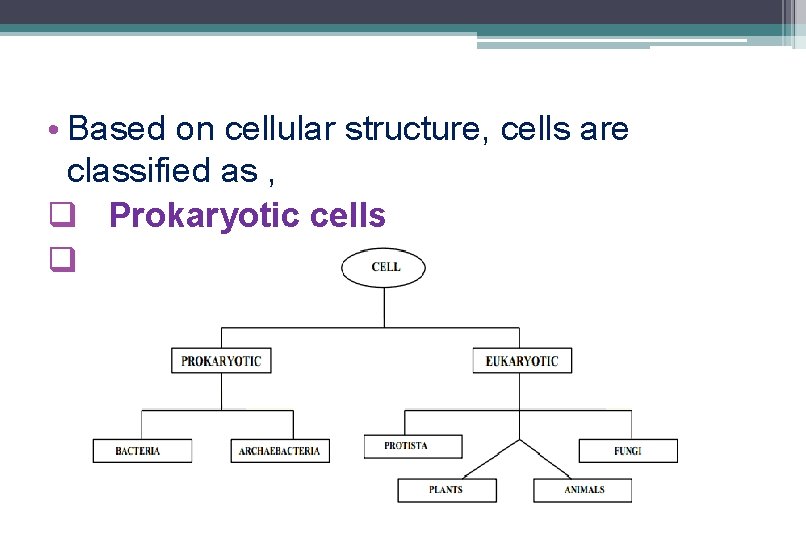
• Based on cellular structure, cells are classified as , q Prokaryotic cells q Eukaryotic cells
Prokaryotic and Eukaryotic Cells • In general microbes or microorganisms may be either prokaryotic (bacteria) or eukaryotic (protists, fungi, and some animals).
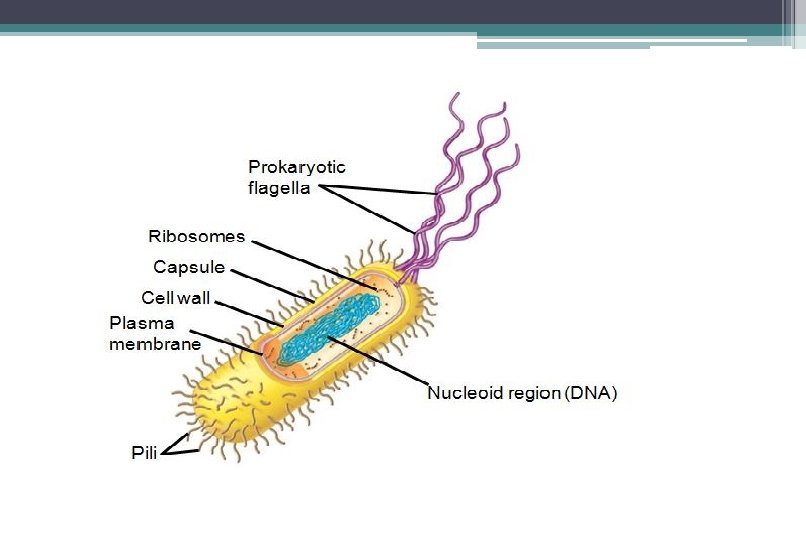
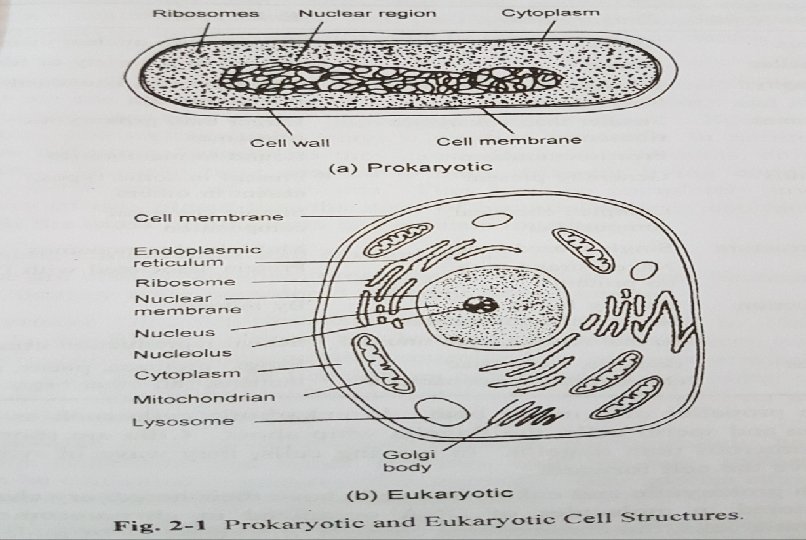
Prokaryotic cells • Prokaryotic cells are simpler and smaller than the eukaryotic cells. • “prokaryote” - Greek word- meaning before nuclei • Prokaryotes cells lack membrane bound organelles. • Prokaryotic cells are unicellular organisms, which reproduce through binary fission and in some cases few prokaryotic organisms also reproduce by budding.
• Capsule: It is composed of a thick polysaccharide. It is a kind of slime layer, which covers the outside of the cell wall. It is used to stick cells together and works as a food reserve and it also protects the cell from dryness and from chemicals. • Cell wall: It is made from the glycoprotein murein. Cell wall provides strength and rigidity to the cell and it is permeable to solutes. • Cytoplasm: It helps in cellular growth, metabolism and replication. Cytoplasm is the storehouses for all types of chemicals and components that are used to sustain the life of a bacterium.
• Plasma membrane: It is also known as a cell membrane. It is mainly composed of proteins, phospholipids and carbohydrates, which forms into a fluid-mosaic. Plasma membrane surrounds the bacteria and it is a most important organelle and plays a vital role in controlling the movement of substances in the cell. • Cytoplasm region (or) nucleiod region: An area of the cytoplasm that contains the single bacterial DNA molecule. • Ribosome: They are the smallest part of cell organelle. Ribosome plays a vital role in protein synthesis as they consist of protein and RNA. They are located freely in the cytoplasm of attached to the rough endoplasmic reticulum.
• Mesosomes: They are the folding, present inside the plasma membrane. Mesosome plays a vital role in cellular respirations, replication of DNA, cell division, separation of chromosomes during cell division and also performs the role of Golgi bodies and mitochondria. • Plasmids: They are a small circle of DNA. Plasmid plays a vital role in exchanging DNA between the bacterial cells. Bacterial cells have many plasmids. • Pili or Cilia: They are short protein appendages, which fixes bacteria to surfaces. These pili are smaller than those flagella and are used in conjugation to exchange the genetic information. • Flagella: They are rigid rotating tail. The clockwise rotation moves the cell forward anticlockwise rotation helps the cell
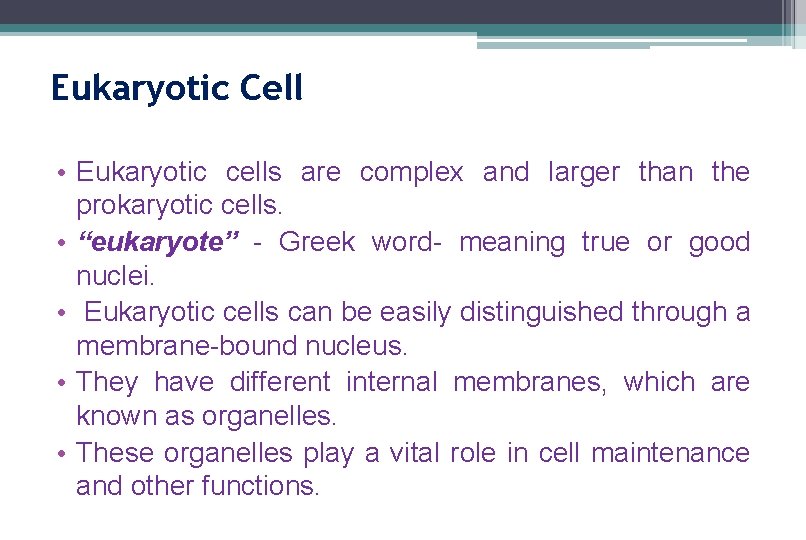
Eukaryotic Cell • Eukaryotic cells are complex and larger than the prokaryotic cells. • “eukaryote” - Greek word- meaning true or good nuclei. • Eukaryotic cells can be easily distinguished through a membrane-bound nucleus. • They have different internal membranes, which are known as organelles. • These organelles play a vital role in cell maintenance and other functions.
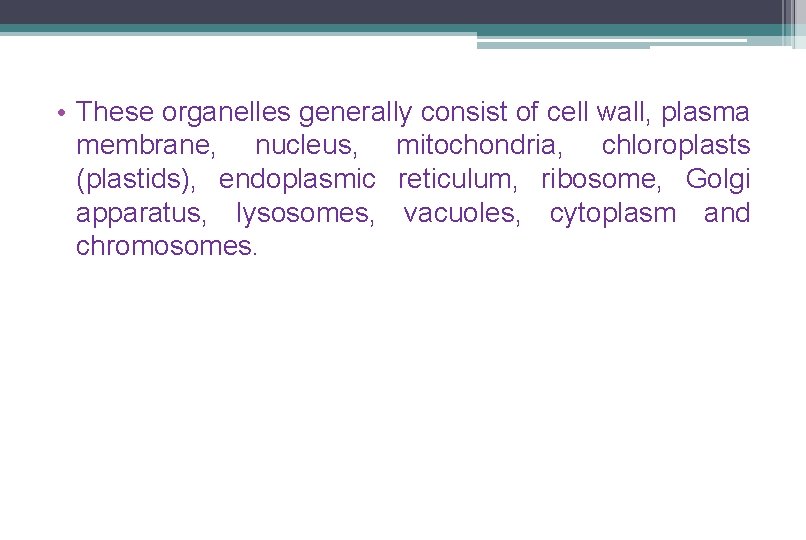
• These organelles generally consist of cell wall, plasma membrane, nucleus, mitochondria, chloroplasts (plastids), endoplasmic reticulum, ribosome, Golgi apparatus, lysosomes, vacuoles, cytoplasm and chromosomes.
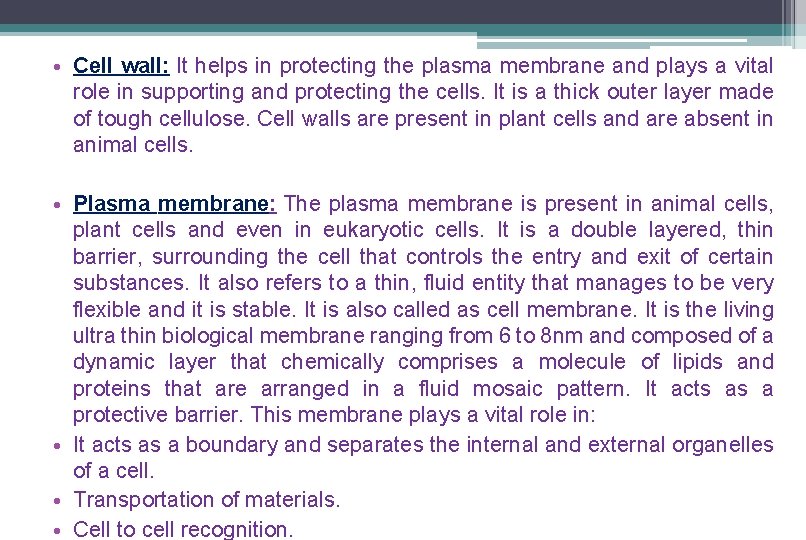
• Cell wall: It helps in protecting the plasma membrane and plays a vital role in supporting and protecting the cells. It is a thick outer layer made of tough cellulose. Cell walls are present in plant cells and are absent in animal cells. • Plasma membrane: The plasma membrane is present in animal cells, plant cells and even in eukaryotic cells. It is a double layered, thin barrier, surrounding the cell that controls the entry and exit of certain substances. It also refers to a thin, fluid entity that manages to be very flexible and it is stable. It is also called as cell membrane. It is the living ultra thin biological membrane ranging from 6 to 8 nm and composed of a dynamic layer that chemically comprises a molecule of lipids and proteins that are arranged in a fluid mosaic pattern. It acts as a protective barrier. This membrane plays a vital role in: • It acts as a boundary and separates the internal and external organelles of a cell. • Transportation of materials. • Cell to cell recognition.
• Nucleus: It is present both in animal cell and in plant cells. It is large and present in the center of a cell. It contains DNA and stores all the necessary information, which is required to control all the activities within the cell. Hence it is also called as a brain of the cell. • Nuclear membrane: It is a double layered, which surrounds the nucleus and helps in the entry and exits of material into the nucleus. It also separates the nucleus from the other parts of the cell. • Nucleolus: It is present in nucleus of both plant cell and animal cell. It plays a vital role in the synthesis of RNA and in the formation of the ribosome. • Mitochondria: The organelles that convert energy into usable forms, which are used by the cell to perform their cellular functions. They are double membranes, semi-autonomous organelles. This organelle plays a vital role in generating and transforming the energy. It is a powerhouse of the cell, which produces energy by breaking down fats
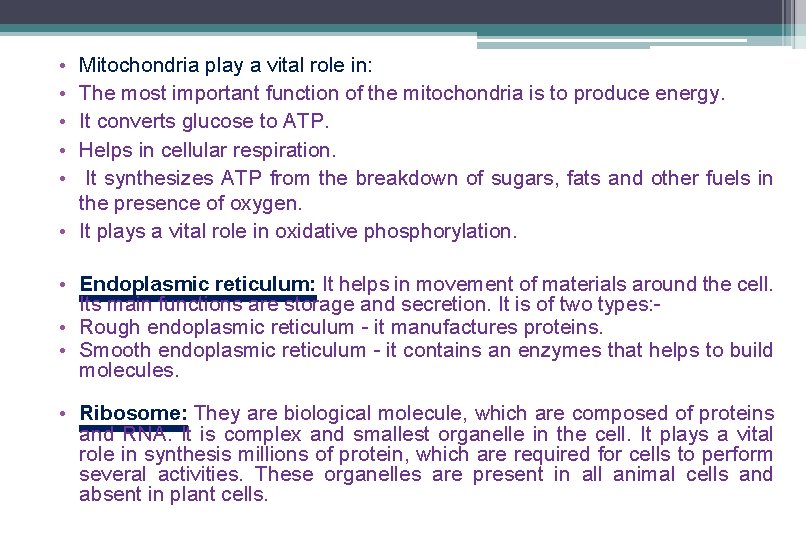
• • • Mitochondria play a vital role in: The most important function of the mitochondria is to produce energy. It converts glucose to ATP. Helps in cellular respiration. It synthesizes ATP from the breakdown of sugars, fats and other fuels in the presence of oxygen. • It plays a vital role in oxidative phosphorylation. • Endoplasmic reticulum: It helps in movement of materials around the cell. Its main functions are storage and secretion. It is of two types: • Rough endoplasmic reticulum - it manufactures proteins. • Smooth endoplasmic reticulum - it contains an enzymes that helps to build molecules. • Ribosome: They are biological molecule, which are composed of proteins and RNA. It is complex and smallest organelle in the cell. It plays a vital role in synthesis millions of protein, which are required for cells to perform several activities. These organelles are present in all animal cells and absent in plant cells.
• Golgi Bodies: They are sac like structures, which are specifically used for storing or preserving all the substances made by the cell. It helps in the movement or transportation of materials within the cell and in synthesis of plant cell wall; hence it is also called as the post office of the cell. It also plays a vital role in the modification, transportation and processing of macromolecules, which includes proteins and lipids. These organelles are present in all animal cells and absent in plant cells. • Lysosomes: They are spherical organelles, which contains enzymes that help in maintaining the physiologic turnover of cellular constituents. These organelles are present in all animal cells and absent in plant cells. They play a vital role in breaking the food materials and making it easier to digest. It is also called as suicidal bags as it helps in cell
• Lysosomes play a vital role in: • Removal of dead cells, hence they are named as a suicide bags. • They protect the cell by ingestion of other dying cells or larger extracellular material like-foreign invading microbes. • Lysosomes attacks the foreign or disease-causing agents such as bacteria, viruses, fungi, food and old organelles and break them into small pieces that can hopefully be used again. • Lysosomes play a vital role in protecting the cell from being digested by surrounding the cell membrane. • Vacuoles: They are vesicle that helps in the digestion. They are present both in plant cells and in animal cells. In plant cells it helps in maintaining its shape and it also stores water, food, enzymes, wastes, etc. • Cytoplasm: It refers to the jelly like material with organelles in it. It is present both in plant and in animal cells. They consist of inner region of the plasma membrane and also the outer region of DNA. The cytoplasm is made of components, which benefits the cell by keeping the organelles separate from each other. This helps to keep a cell in stable. Cytoplasm also contains some important organelles like endoplasmic reticulum, lysosomes, mitochondria and Golgi apparatus. Along with these organelles, it also contains chloroplast in plant cells. Every organelle is bound by a fatty
• A cytoplasm plays a vital role in: • Storage and manufacturing of energy. • Maintains the cells shape and its consistency and provides suspension to the organelles. • All types of cell functions like: cell expansion, growth and replication are carried out in the cytoplasm of a cell. • All types of cellular activities take place in this cytoplasm. • Cytoplasm also helps in the movement of different elements or molecules present within the cell.
• Chromosomes: The term chromosome is derived from the Greek word (Chroma� meaning colour and Somes� meaning the body. Chromosomes are small, coloured thread like structures present in the nucleoplasm of living cells, which helps in the inheritance or transmission of characters in form of Genes from one generation to another generation. It is made up of DNA and stored in the nucleus, which contains the instructions for traits and characteristics. • A chromosome plays a vital role in: • Self-duplication. • They help in transmitting or transferring the characters from one generation to another generation (or) from parents to offspring. • Controls the biological processes in the body of an organism. • They control cell metabolism by directing the formatting of necessary proteins. • They help in cell differentiation during development. • A chromosome also helps in determining a sex of an individual. • Centrosomes: They are the small hollow cylindrical shaped organelles, which are composed of nine bundles of micro tubules.
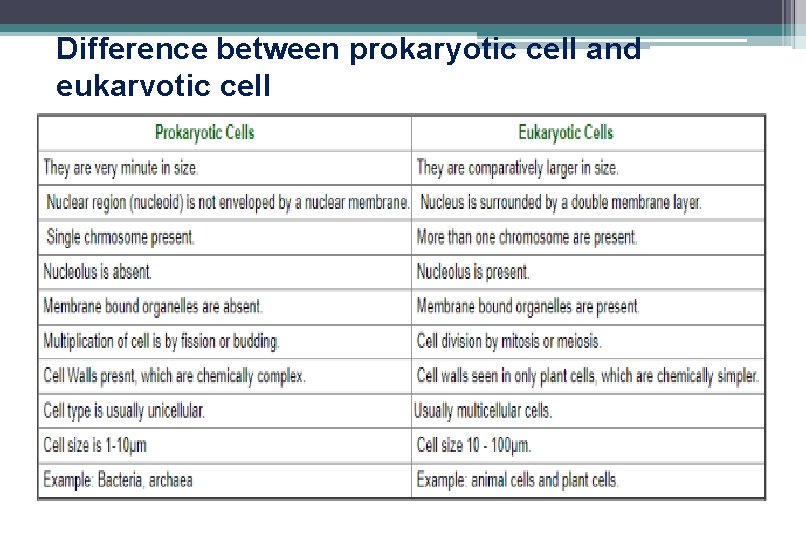
Difference between prokaryotic cell and eukaryotic cell
THANK YOU