
Prokaryotic and Eukaryotic Cells CELL STRUCTURE AND FUNCTION
- Slides: 42
Prokaryotic and Eukaryotic Cells CELL STRUCTURE AND FUNCTION
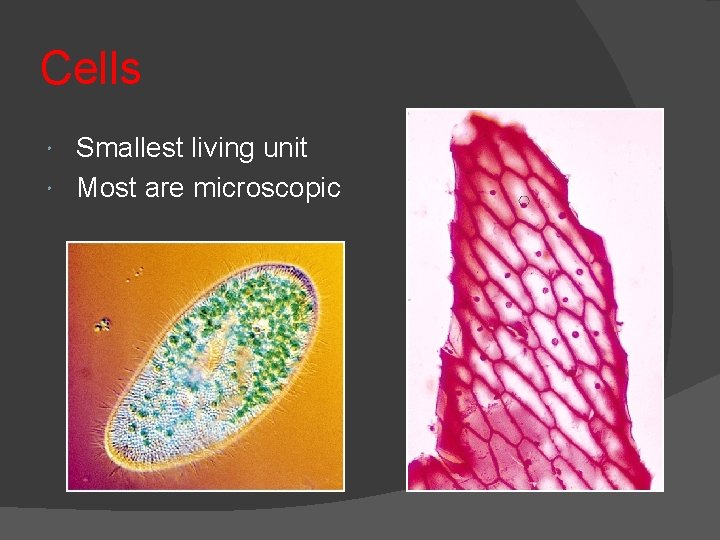
Cells Smallest living unit Most are microscopic
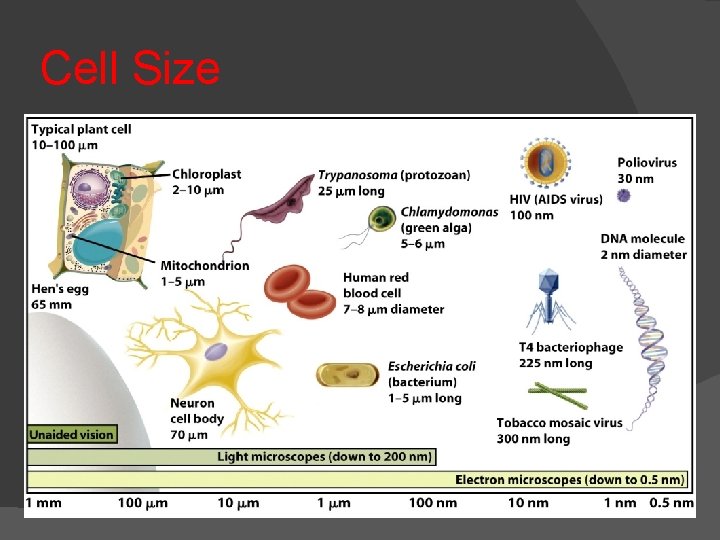
Cell Size
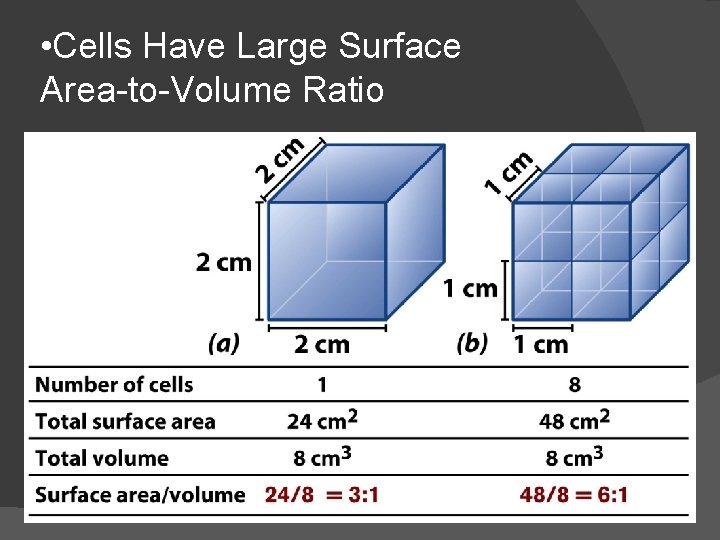
• Cells Have Large Surface Area-to-Volume Ratio
Cell Size Cells have a high surface to volume ratio to allow materials (food, O 2, water) to come in and waste (CO 2, etc. ) to move out at an efficient rate If cells were any bigger waste products would not move out as quickly as other materials move in and the cell would quickly die
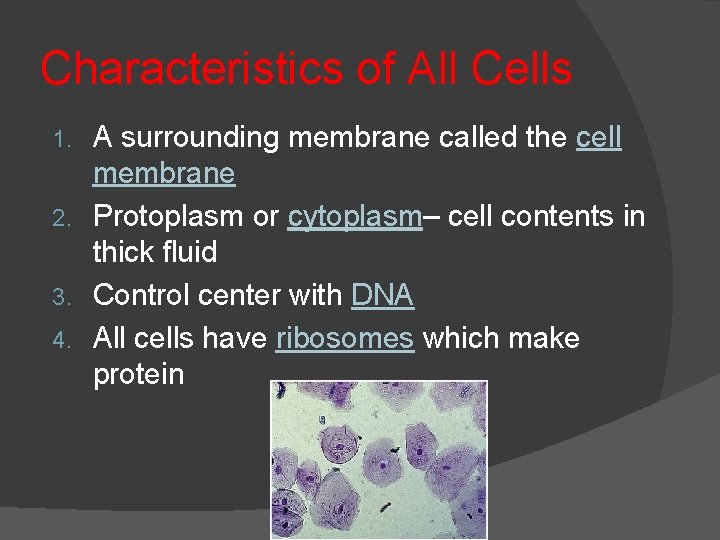
Characteristics of All Cells A surrounding membrane called the cell membrane 2. Protoplasm or cytoplasm– cell contents in thick fluid 3. Control center with DNA 4. All cells have ribosomes which make protein 1.
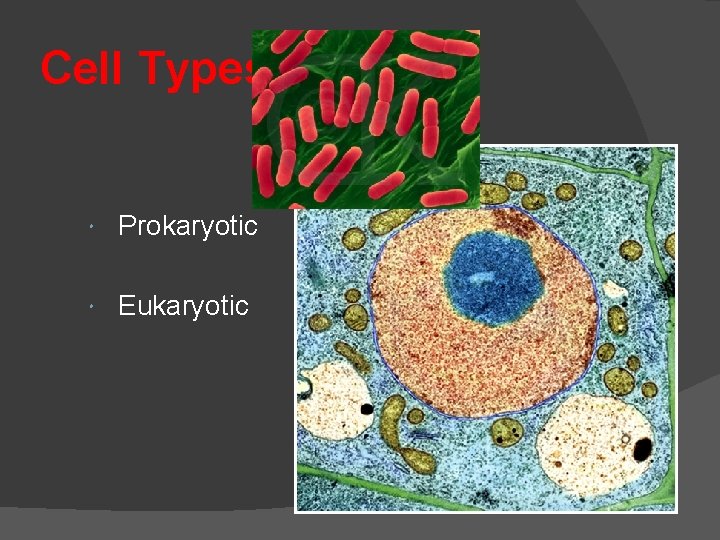
Cell Types Prokaryotic Eukaryotic
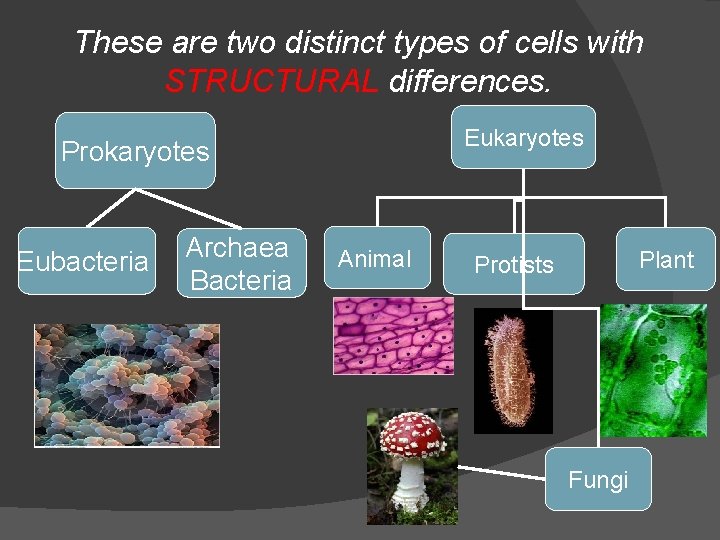
These are two distinct types of cells with STRUCTURAL differences. Eukaryotes Prokaryotes Eubacteria Archaea Bacteria Animal Plant Protists Fungi
Prokaryotic Cell Structures and Functions PROKARYOTIC CELLS
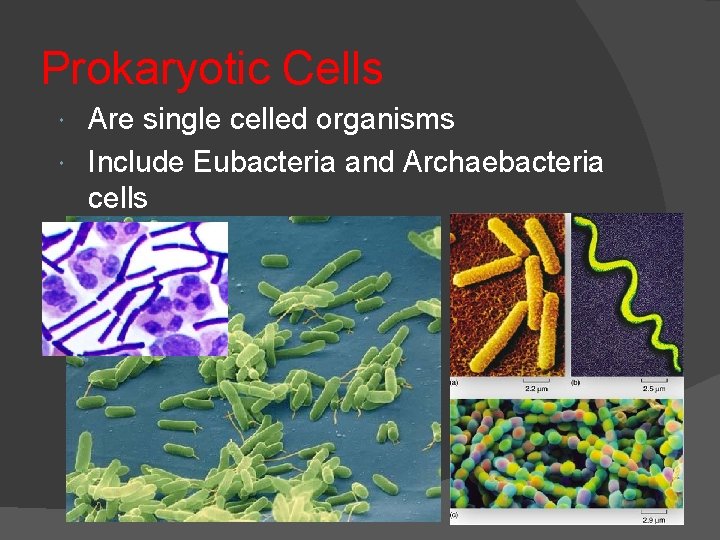
Prokaryotic Cells Are single celled organisms Include Eubacteria and Archaebacteria cells
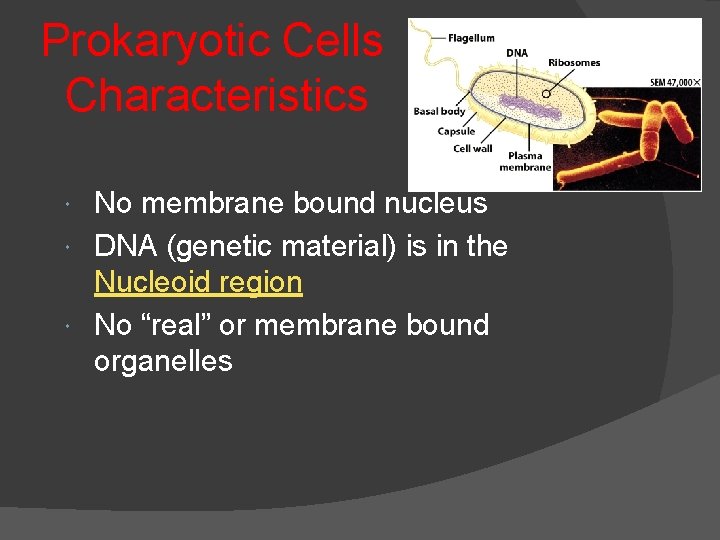
Prokaryotic Cells Characteristics No membrane bound nucleus DNA (genetic material) is in the Nucleoid region No “real” or membrane bound organelles
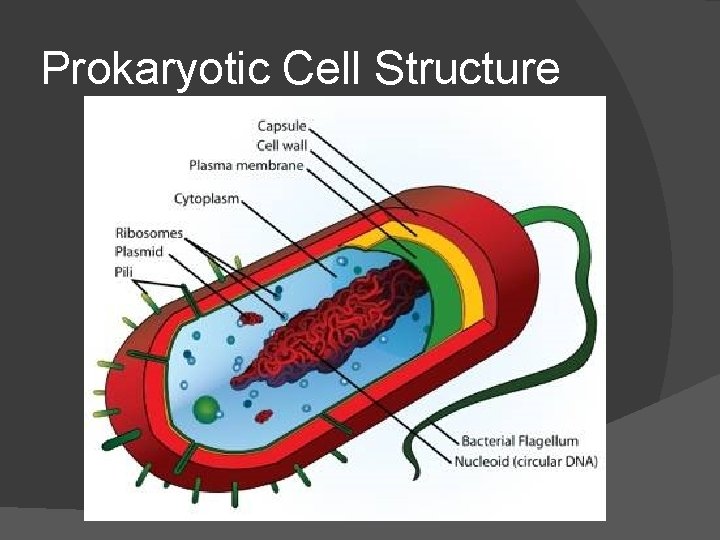
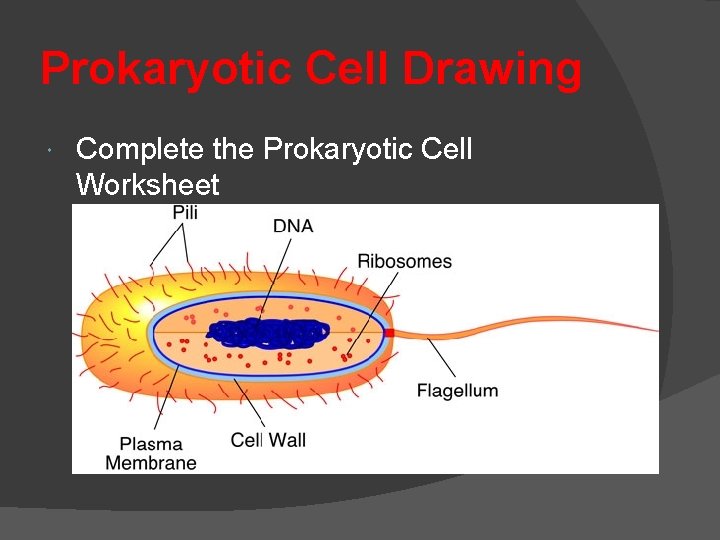
Prokaryotic Cells Characteristics Prokaryotes have the following Structures: Cell wall- made of peptidoglycans; for protection and support for the shape DNA- is circular; used for reproduction, repair, and maintenance Flagellum (or flagella pl. )- for movement Ribosomes- to make proteins Cytoplasm- suspend/hold internal structures in place Pili- to stick to surface and exchanging DNA
Prokaryotic Cell Structure
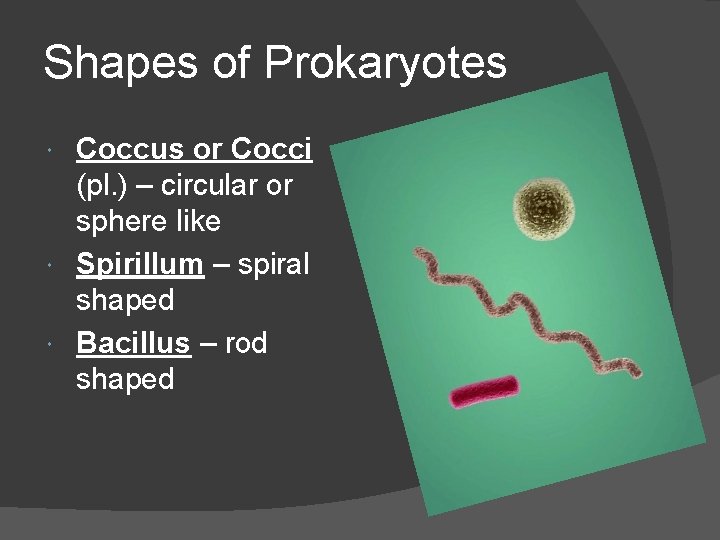
Shapes of Prokaryotes Coccus or Cocci (pl. ) – circular or sphere like Spirillum – spiral shaped Bacillus – rod shaped
Harmful Prokaryotes Disease- Some bacteria will directly attack the tissues of plants and animals that could potentially be fatal Ex: Bubonic Plague caused by Yersinia pestis Toxins- Some bacteria will attack organisms by releasing chemicals that are poisonous to plants and animals. Ex: Clostridium tetani causes tetanus or lockjaw, a disease in which the toxin paralyzes any muscle tissue
Benefits of Prokaryotes Digest food – Many types of bacteria live in the digestive systems of animals to help break down cellulose and make essential vitamins Decomposers- bacteria break down waste materials into simple substances that can be used by plants Production of human food- bacteria help create a variety of dairy products, vinegar, sauerkraut, and beverages
Prokaryotic Cell Drawing Complete the Prokaryotic Cell Worksheet
Animal and Plant Structures and Functions EUKARYOTIC CELLS
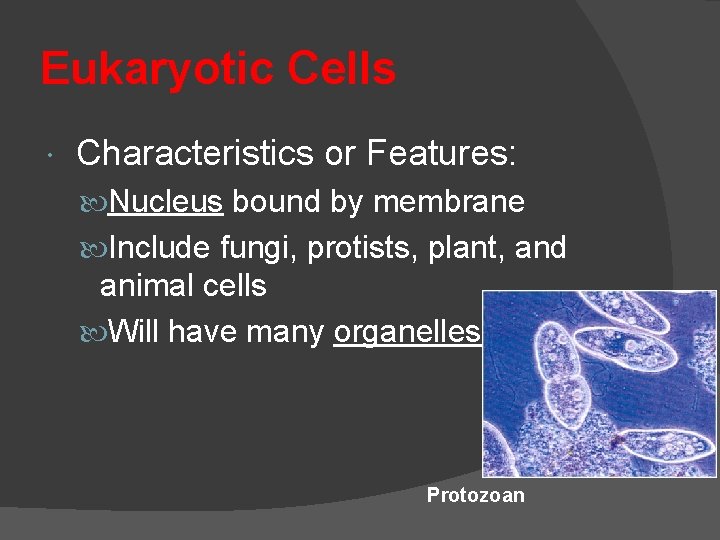
Eukaryotic Cells Characteristics or Features: Nucleus bound by membrane Include fungi, protists, plant, and animal cells Will have many organelles Protozoan
Structures for Support and Movement Exterior Structures Cell membrane Cell Wall Flagella Cilia Interior structures include: Cytoplasm Cytoskeleton
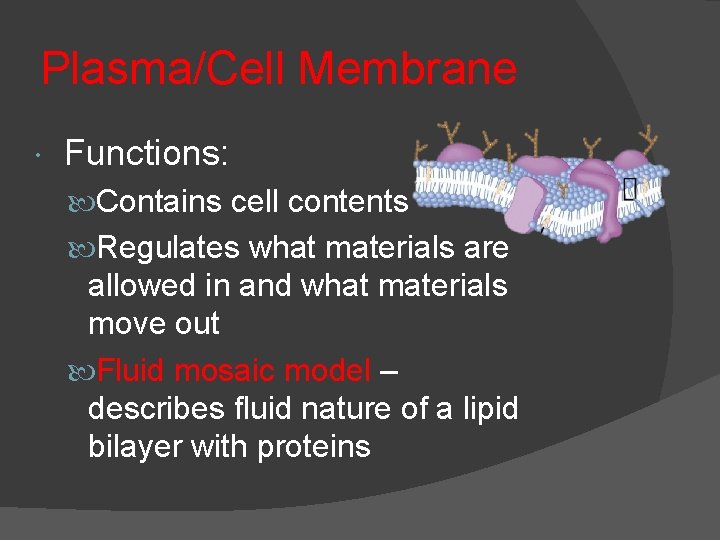
Plasma/Cell Membrane Functions: Contains cell contents Regulates what materials are allowed in and what materials move out Fluid mosaic model – describes fluid nature of a lipid bilayer with proteins
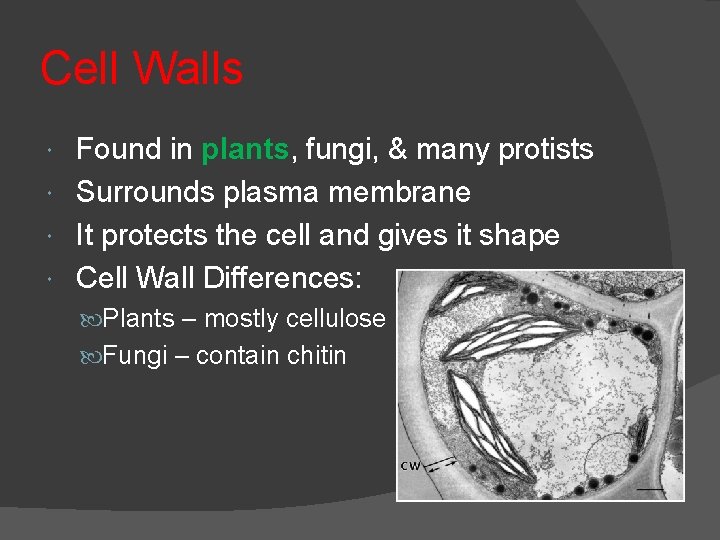
Cell Walls Found in plants, fungi, & many protists Surrounds plasma membrane It protects the cell and gives it shape Cell Wall Differences: Plants – mostly cellulose Fungi – contain chitin
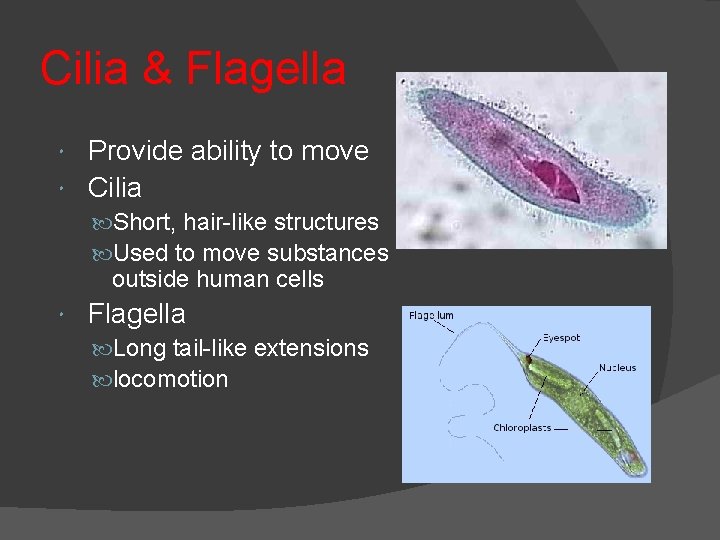
Cilia & Flagella Provide ability to move Cilia Short, hair-like structures Used to move substances outside human cells Flagella Long tail-like extensions locomotion
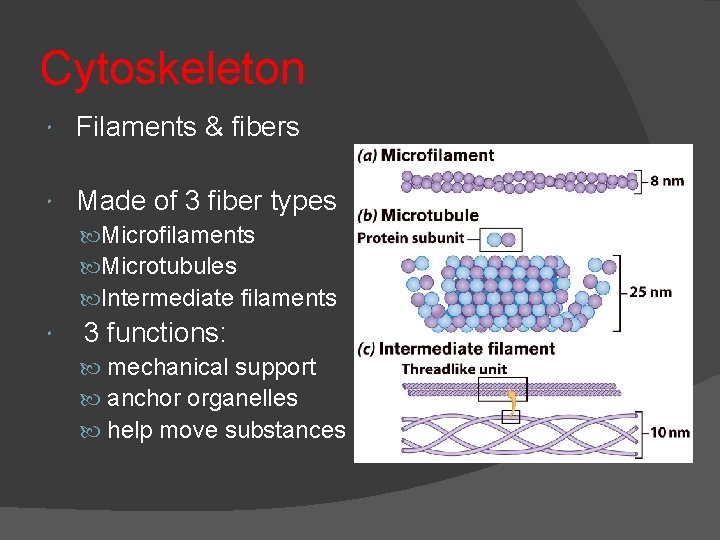
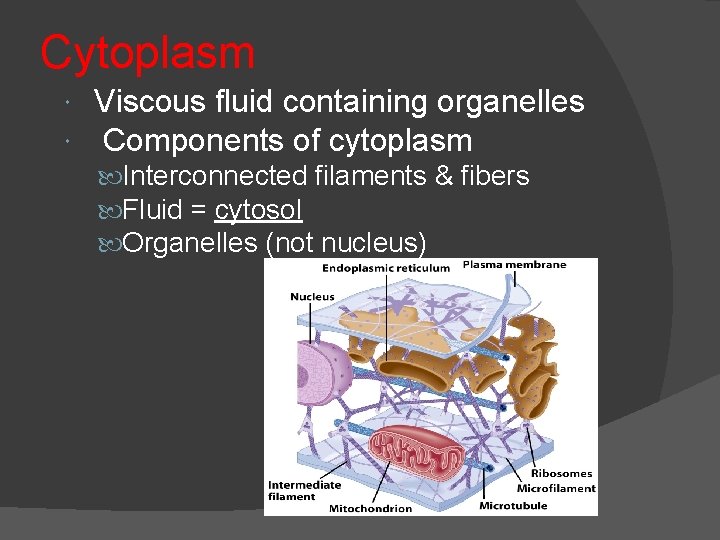
Cytoskeleton Filaments & fibers Made of 3 fiber types Microfilaments Microtubules Intermediate filaments 3 functions: mechanical support anchor organelles help move substances
Cytoplasm Viscous fluid containing organelles Components of cytoplasm Interconnected filaments & fibers Fluid = cytosol Organelles (not nucleus)
Organelles Cellular machinery Organelles are “little organs” inside the cell that have a special function or job Different Organelles inside the cell are: Golgi Bodies Lysosomes Mitochondria Rough and Smooth ER Chloroplasts Vacuoles Centrioles and Centrosomes
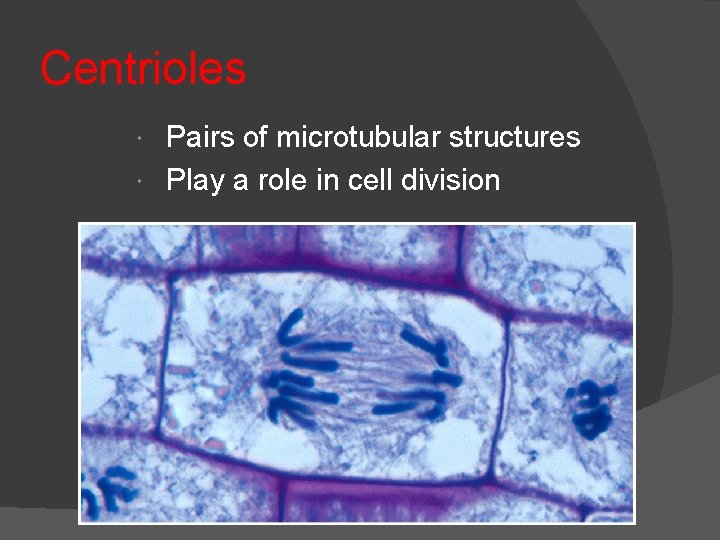
Centrioles Pairs of microtubular structures Play a role in cell division
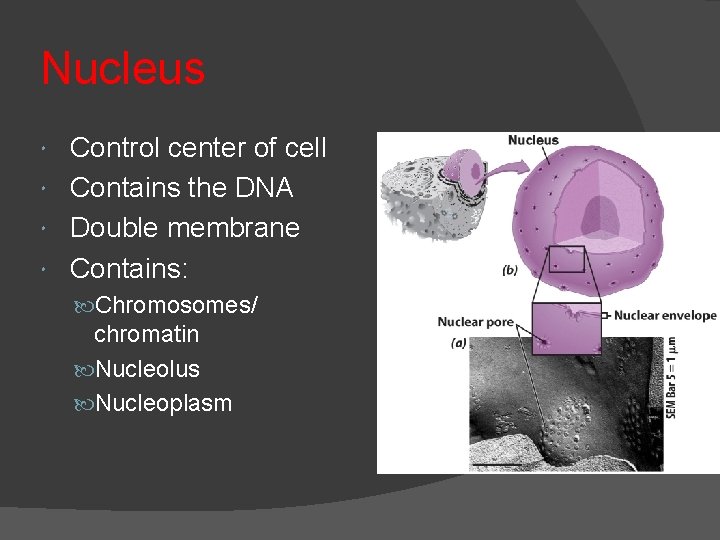
Nucleus Control center of cell Contains the DNA Double membrane Contains: Chromosomes/ chromatin Nucleolus Nucleoplasm
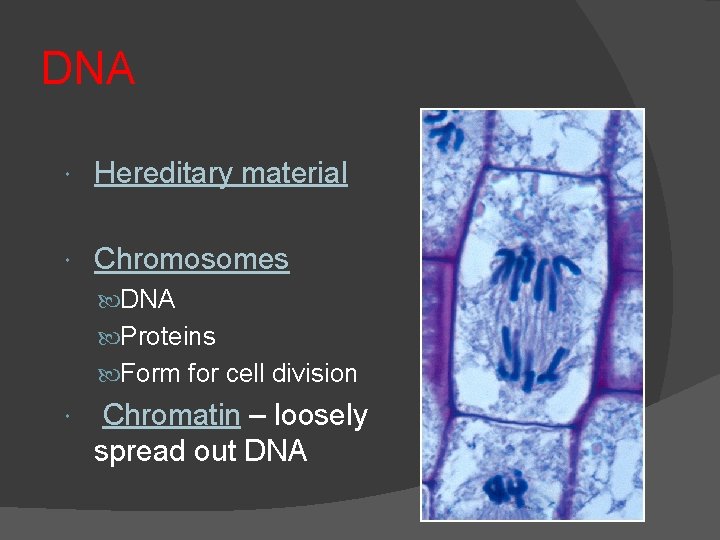
DNA Hereditary material Chromosomes DNA Proteins Form for cell division Chromatin – loosely spread out DNA
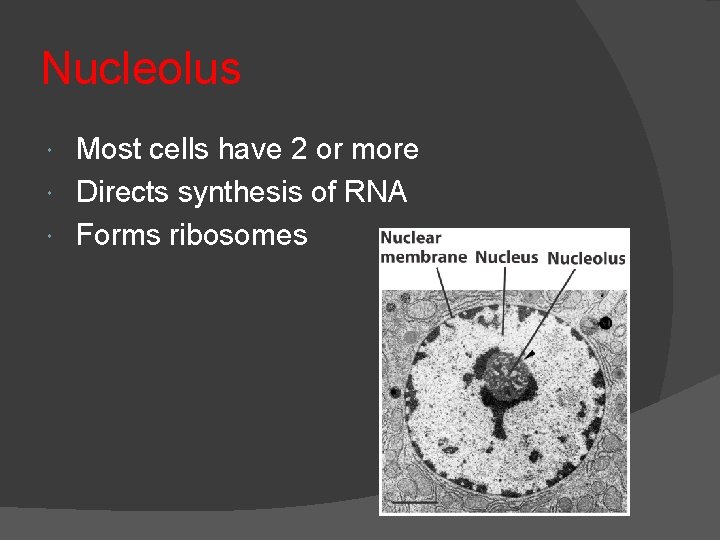
Nucleolus Most cells have 2 or more Directs synthesis of RNA Forms ribosomes
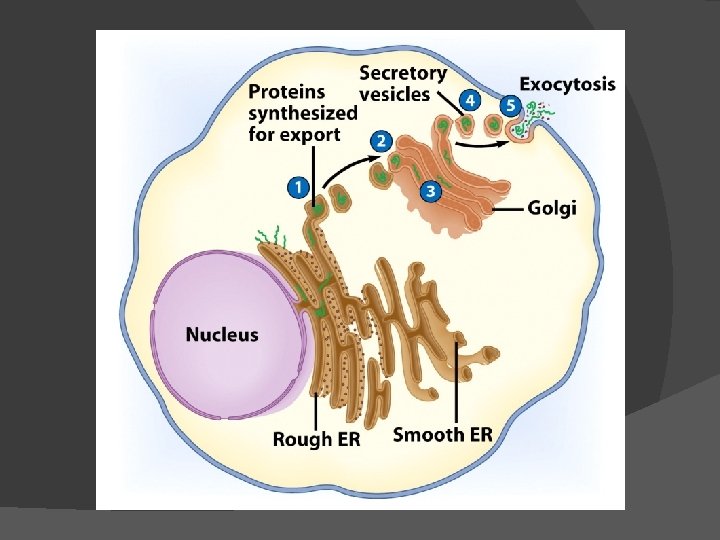
Endoplasmic Reticulum Helps move substances within cells Network of interconnected membranes Two types Rough endoplasmic reticulum (Rough ER) Smooth endoplasmic reticulum (Smooth ER)
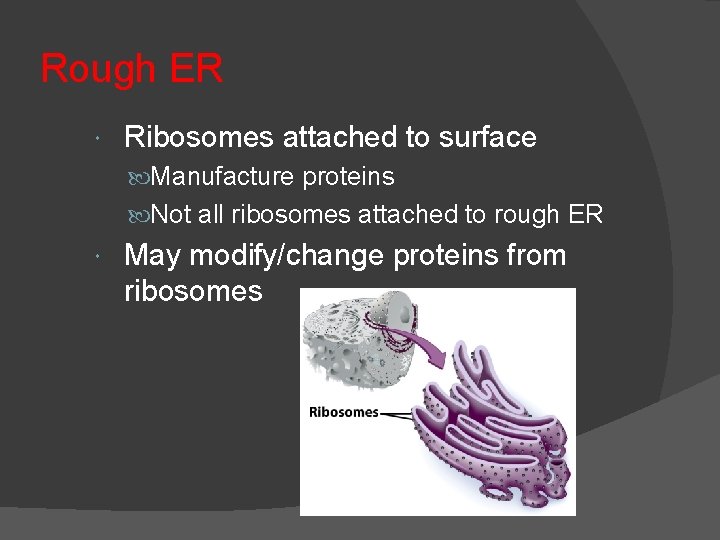
Rough ER Ribosomes attached to surface Manufacture proteins Not all ribosomes attached to rough ER May modify/change proteins from ribosomes
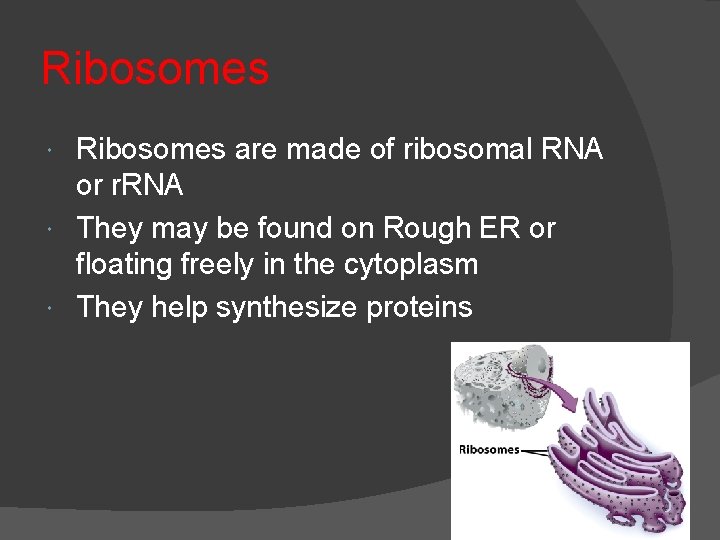
Ribosomes are made of ribosomal RNA or r. RNA They may be found on Rough ER or floating freely in the cytoplasm They help synthesize proteins
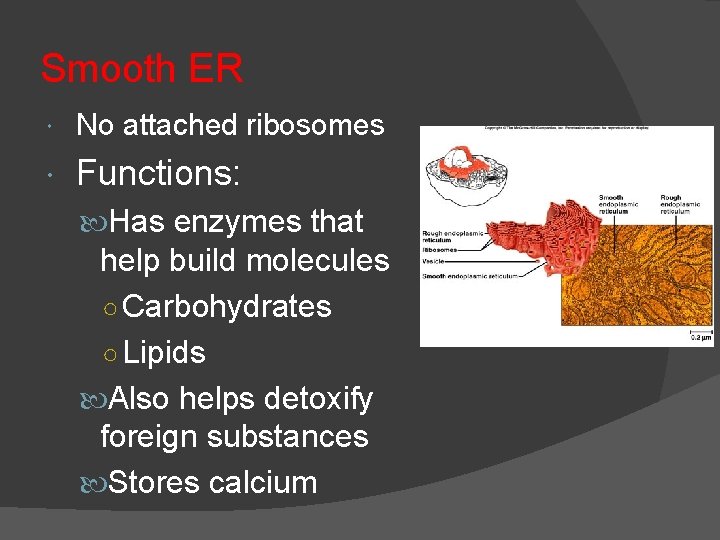
Smooth ER No attached ribosomes Functions: Has enzymes that help build molecules ○ Carbohydrates ○ Lipids Also helps detoxify foreign substances Stores calcium
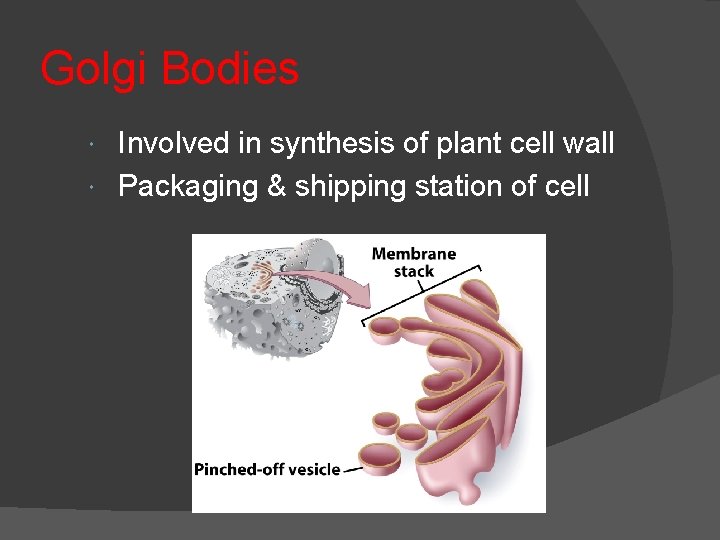
Golgi Bodies Involved in synthesis of plant cell wall Packaging & shipping station of cell
Golgi Apparatus Function 1. Molecules come in vesicles 2. Vesicles fuse with Golgi membrane 3. Molecules may be modified by Golgi 4. Molecules pinched-off in separate vesicle 5. Vesicle leaves Golgi apparatus 6. Vesicles may combine with plasma membrane to secrete contents
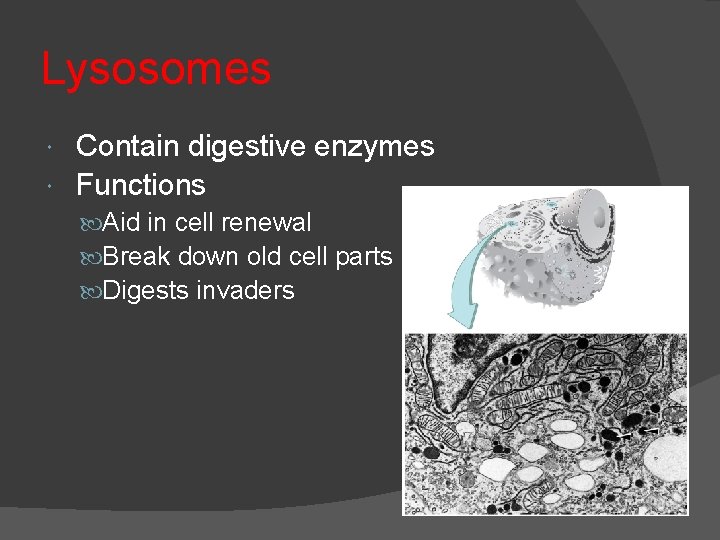
Lysosomes Contain digestive enzymes Functions Aid in cell renewal Break down old cell parts Digests invaders
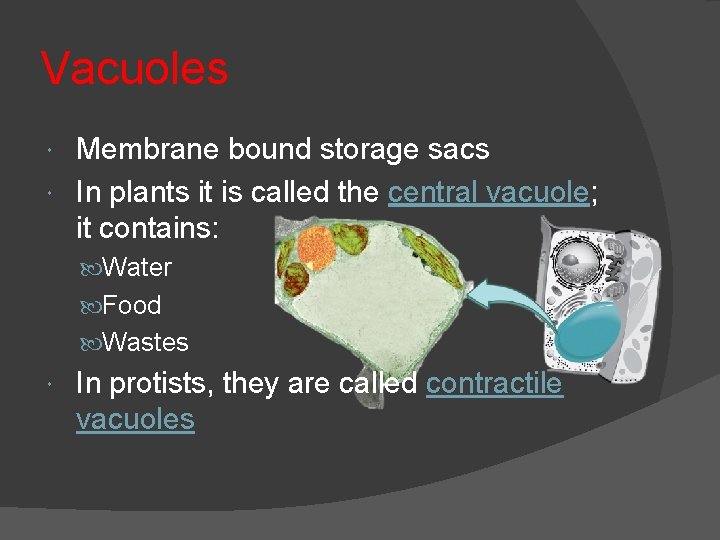
Vacuoles Membrane bound storage sacs In plants it is called the central vacuole; it contains: Water Food Wastes In protists, they are called contractile vacuoles
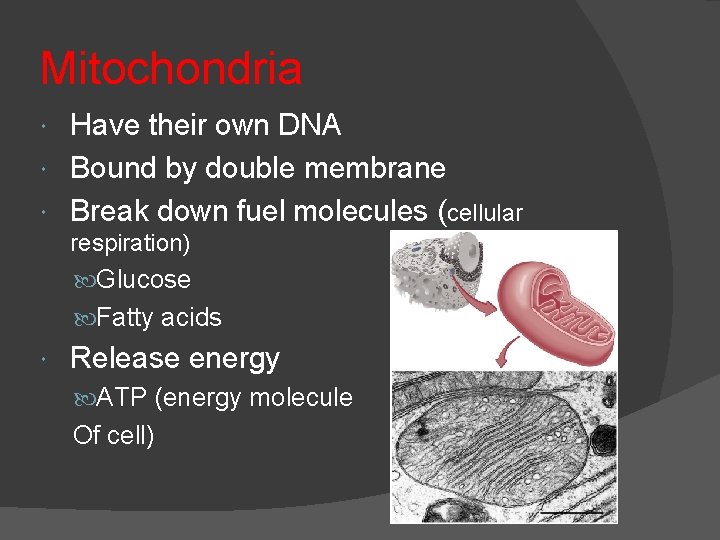
Mitochondria Have their own DNA Bound by double membrane Break down fuel molecules (cellular respiration) Glucose Fatty acids Release energy ATP (energy molecule Of cell)
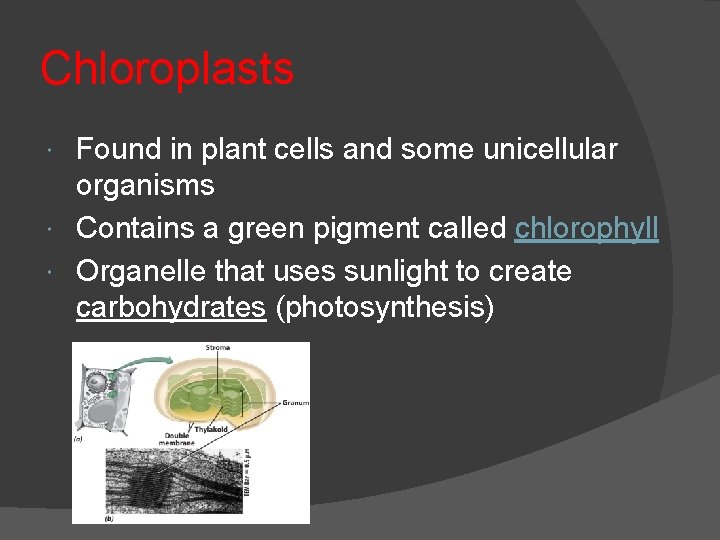
Chloroplasts Found in plant cells and some unicellular organisms Contains a green pigment called chlorophyll Organelle that uses sunlight to create carbohydrates (photosynthesis)
Eukaryotic/Prokaryotic Cell Lab