
Prokaryotes Lack nuclei Typically lack or have very
- Slides: 28
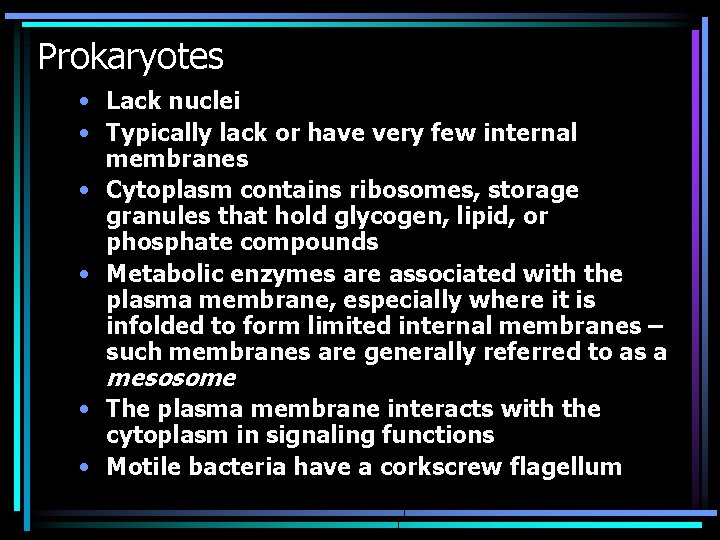
Prokaryotes • Lack nuclei • Typically lack or have very few internal membranes • Cytoplasm contains ribosomes, storage granules that hold glycogen, lipid, or phosphate compounds • Metabolic enzymes are associated with the plasma membrane, especially where it is infolded to form limited internal membranes – such membranes are generally referred to as a mesosome • The plasma membrane interacts with the cytoplasm in signaling functions • Motile bacteria have a corkscrew flagellum
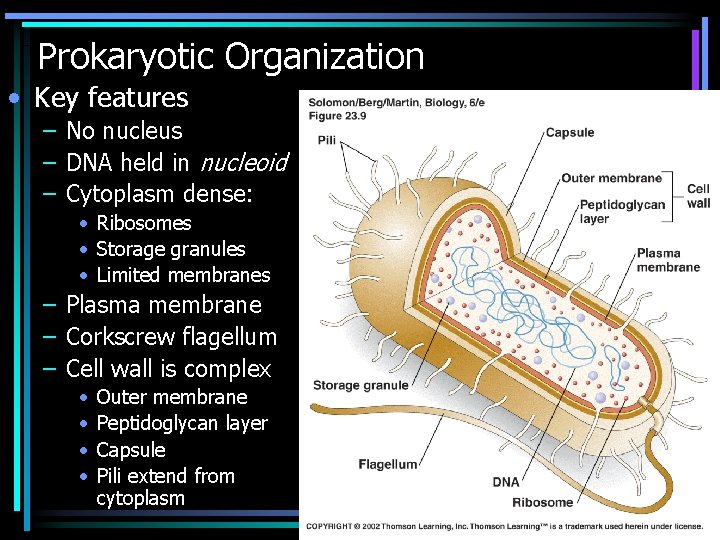
Prokaryotic Organization • Key features – No nucleus – DNA held in nucleoid – Cytoplasm dense: • Ribosomes • Storage granules • Limited membranes – Plasma membrane – Corkscrew flagellum – Cell wall is complex • • Outer membrane Peptidoglycan layer Capsule Pili extend from cytoplasm
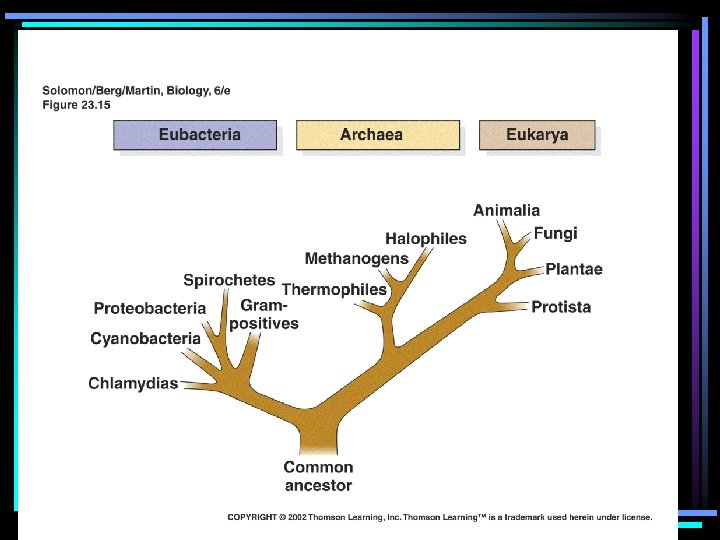
Domains of Life
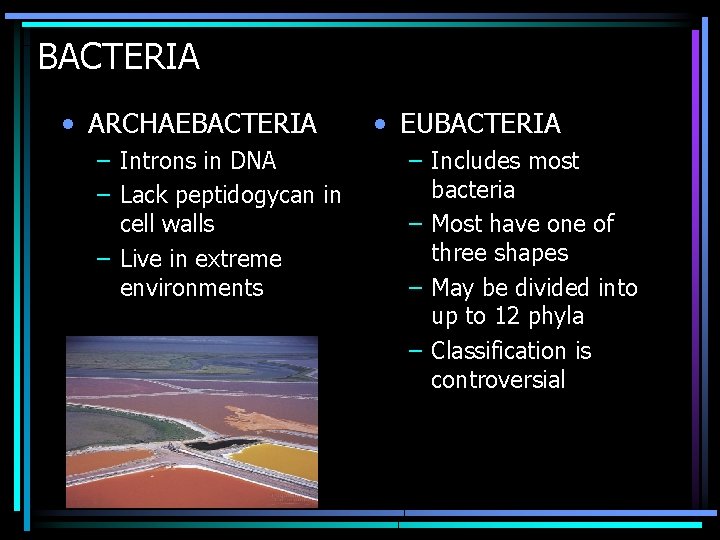
BACTERIA • ARCHAEBACTERIA – Introns in DNA – Lack peptidogycan in cell walls – Live in extreme environments • EUBACTERIA – Includes most bacteria – Most have one of three shapes – May be divided into up to 12 phyla – Classification is controversial
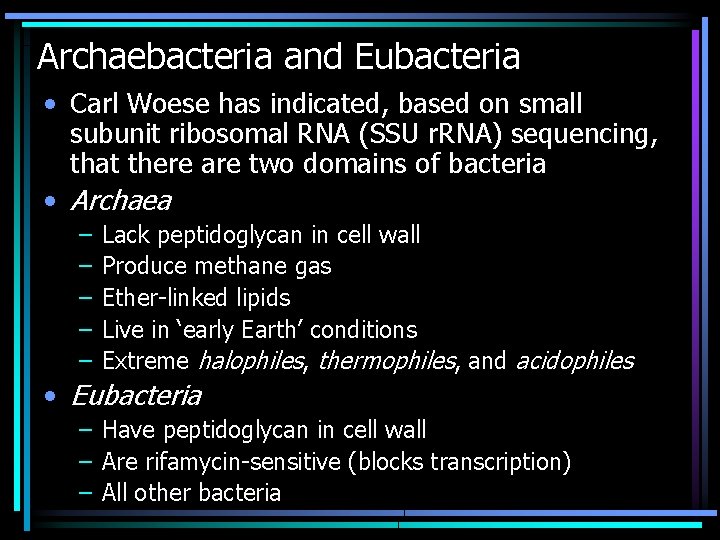
Archaebacteria and Eubacteria • Carl Woese has indicated, based on small subunit ribosomal RNA (SSU r. RNA) sequencing, that there are two domains of bacteria • Archaea – – – Lack peptidoglycan in cell wall Produce methane gas Ether-linked lipids Live in ‘early Earth’ conditions Extreme halophiles, thermophiles, and acidophiles • Eubacteria – Have peptidoglycan in cell wall – Are rifamycin-sensitive (blocks transcription) – All other bacteria
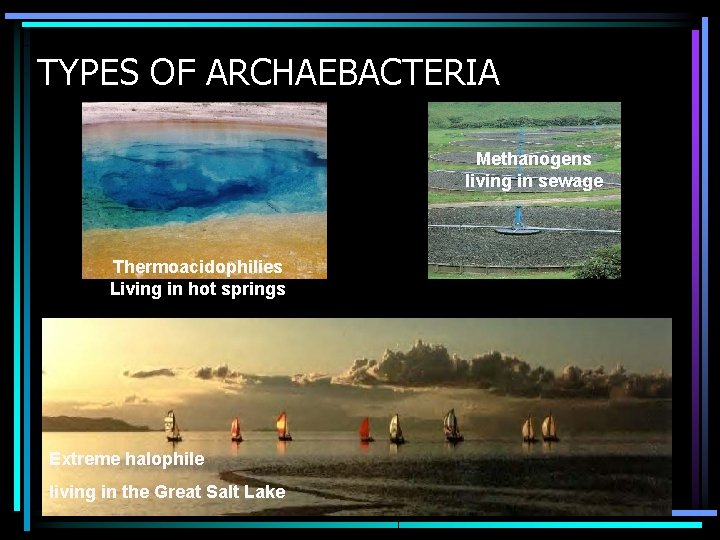
TYPES OF ARCHAEBACTERIA Methanogens living in sewage Thermoacidophilies Living in hot springs Extreme halophile living in the Great Salt Lake
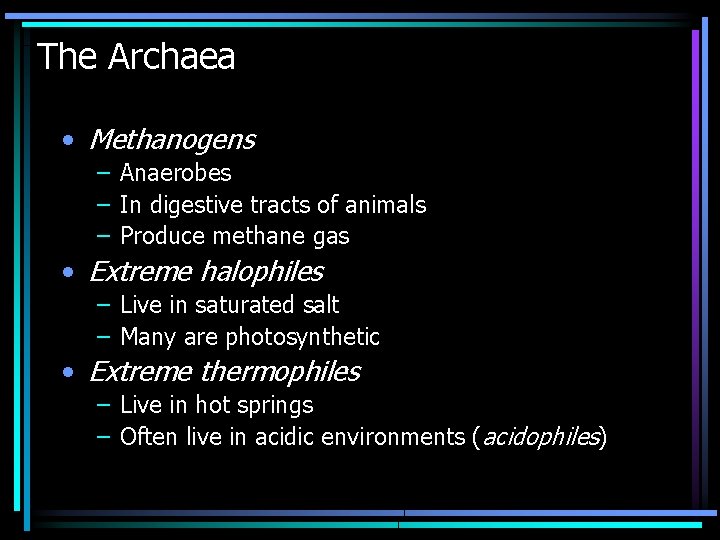
The Archaea • Methanogens – Anaerobes – In digestive tracts of animals – Produce methane gas • Extreme halophiles – Live in saturated salt – Many are photosynthetic • Extreme thermophiles – Live in hot springs – Often live in acidic environments (acidophiles)
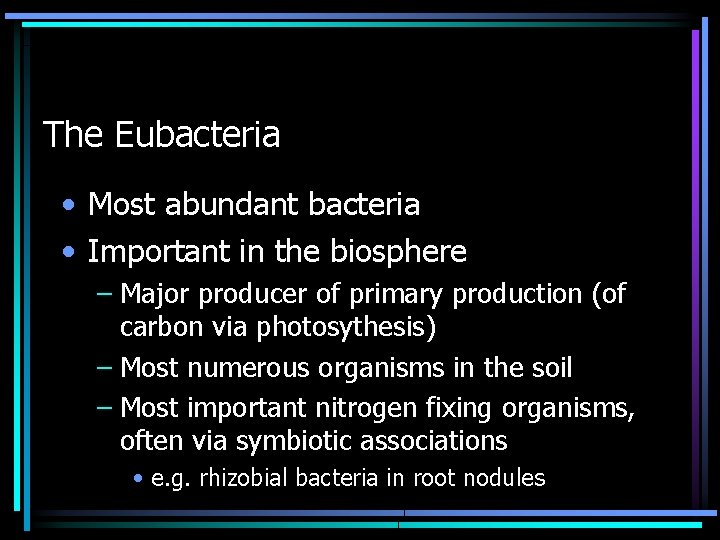
The Eubacteria • Most abundant bacteria • Important in the biosphere – Major producer of primary production (of carbon via photosythesis) – Most numerous organisms in the soil – Most important nitrogen fixing organisms, often via symbiotic associations • e. g. rhizobial bacteria in root nodules
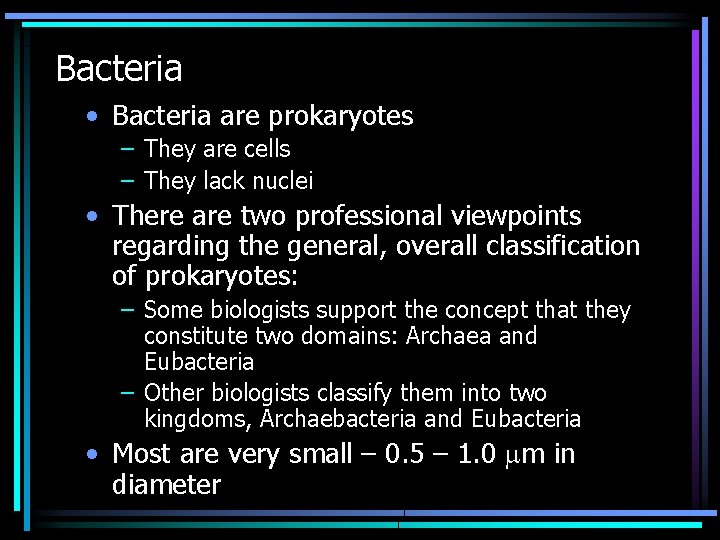
Bacteria • Bacteria are prokaryotes – They are cells – They lack nuclei • There are two professional viewpoints regarding the general, overall classification of prokaryotes: – Some biologists support the concept that they constitute two domains: Archaea and Eubacteria – Other biologists classify them into two kingdoms, Archaebacteria and Eubacteria • Most are very small – 0. 5 – 1. 0 mm in diameter
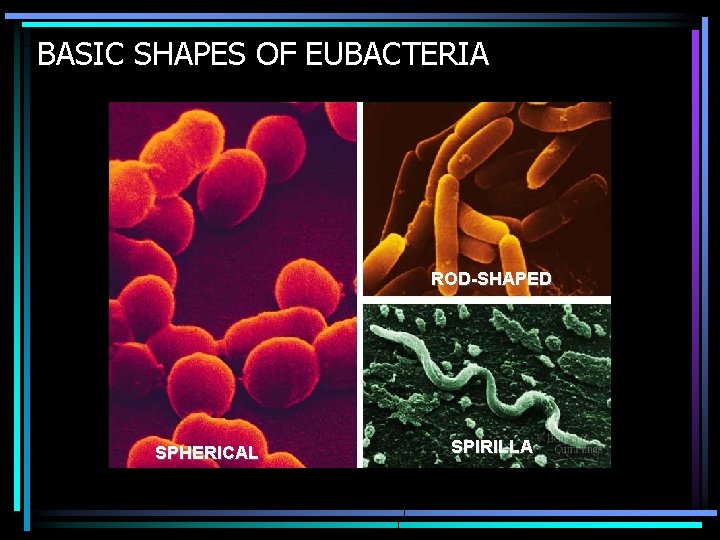
BASIC SHAPES OF EUBACTERIA ROD-SHAPED SPHERICAL SPIRILLA
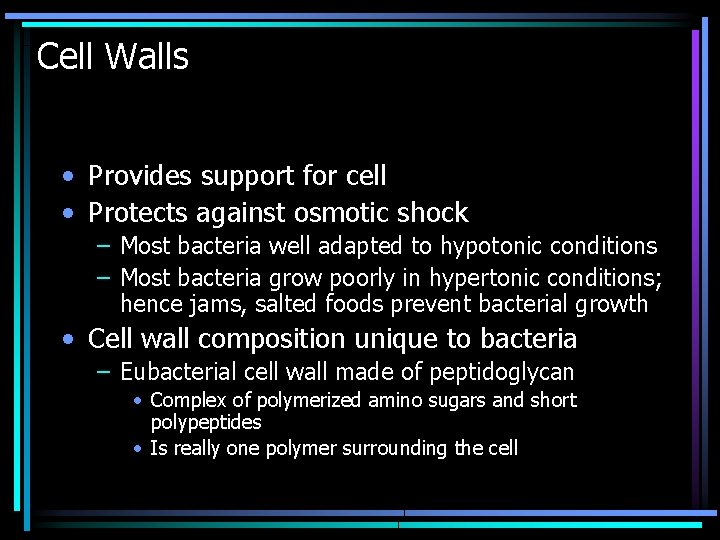
Cell Walls • Provides support for cell • Protects against osmotic shock – Most bacteria well adapted to hypotonic conditions – Most bacteria grow poorly in hypertonic conditions; hence jams, salted foods prevent bacterial growth • Cell wall composition unique to bacteria – Eubacterial cell wall made of peptidoglycan • Complex of polymerized amino sugars and short polypeptides • Is really one polymer surrounding the cell
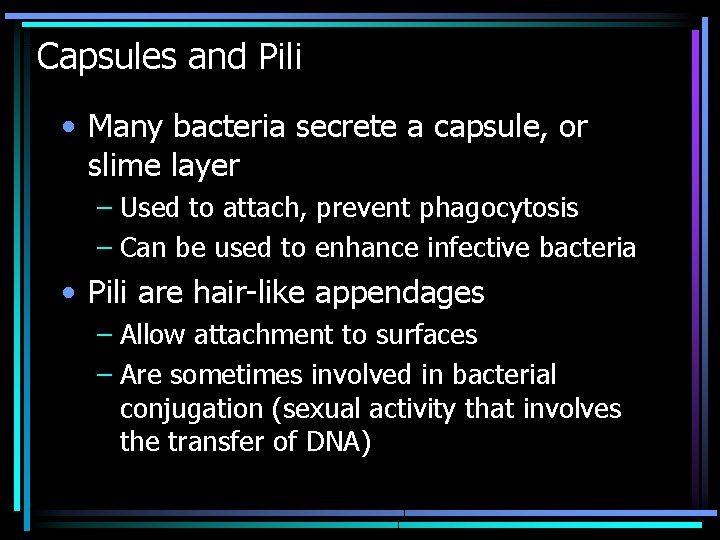
Capsules and Pili • Many bacteria secrete a capsule, or slime layer – Used to attach, prevent phagocytosis – Can be used to enhance infective bacteria • Pili are hair-like appendages – Allow attachment to surfaces – Are sometimes involved in bacterial conjugation (sexual activity that involves the transfer of DNA)
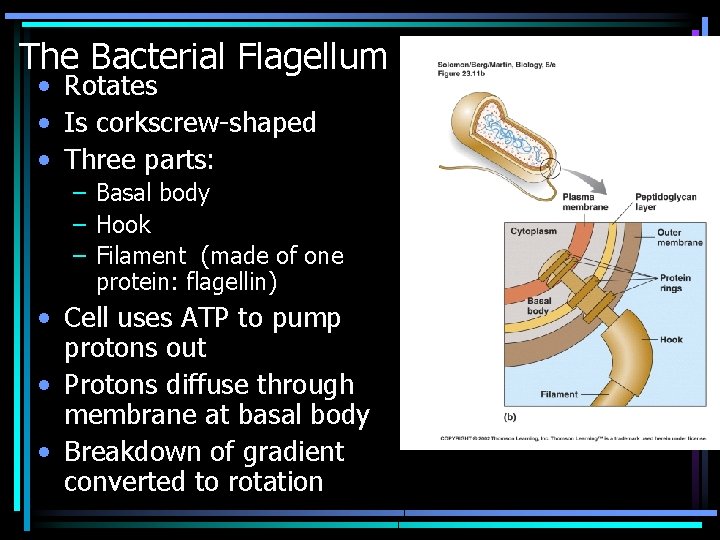
The Bacterial Flagellum • Rotates • Is corkscrew-shaped • Three parts: – Basal body – Hook – Filament (made of one protein: flagellin) • Cell uses ATP to pump protons out • Protons diffuse through membrane at basal body • Breakdown of gradient converted to rotation
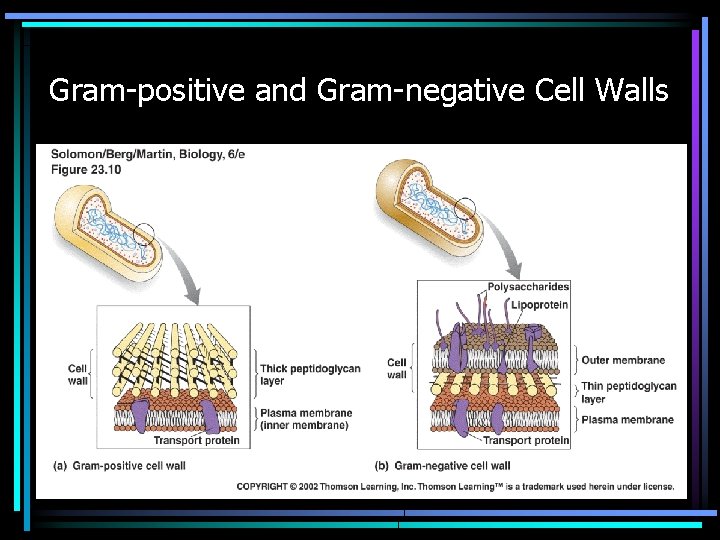
The Gram Stain • Bacterial cell wall differences can be used to identify and categorize cells • 1888: Christian Gram developed the Gram Stain – Some bacteria retain crystal violet stain after alcohol wash • Called gram-positive – Other cells referred to as gram-negative • Stain retention determined by cell wall organization – Gram-positive cells have thick peptidoglycan wall – Gram-negative cells have outer membrane and thin peptidoglycan layer
Gram-positive and Gram-negative Cell Walls
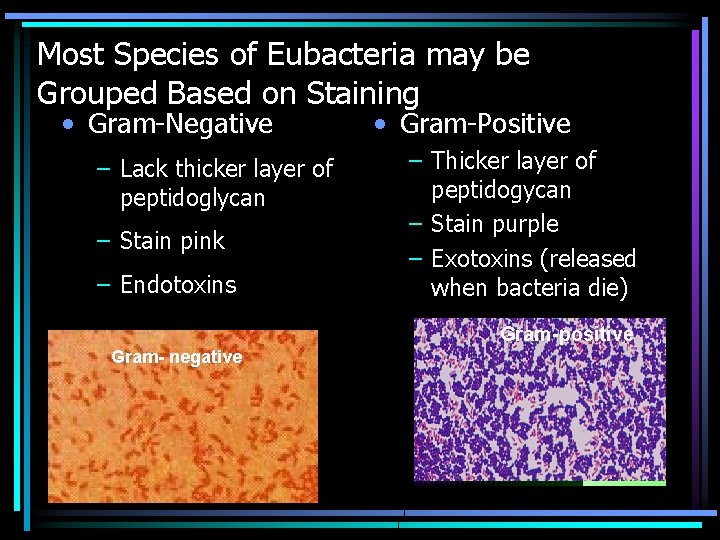
Most Species of Eubacteria may be Grouped Based on Staining • Gram-Negative – Lack thicker layer of peptidoglycan – Stain pink – Endotoxins • Gram-Positive – Thicker layer of peptidogycan – Stain purple – Exotoxins (released when bacteria die) Gram-positive Gram- negative
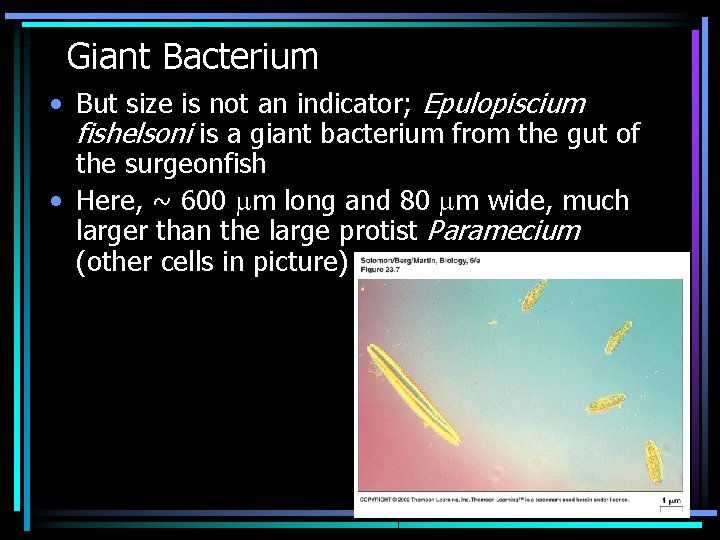
Giant Bacterium • But size is not an indicator; Epulopiscium fishelsoni is a giant bacterium from the gut of the surgeonfish • Here, ~ 600 mm long and 80 mm wide, much larger than the large protist Paramecium (other cells in picture)
Nutrition and Growth • • • Saprophtes ex: decomposers Photoautotrophs ex: blue-green algae Obligate anaerobes ex: tetanus Facultative anaerobes ex: E. Coli Obligate aerobes ex: tuberculosis Thermophilic bacteria Most bacteria grow at at neutral p. H but some grow best at a p. H of 6 or lower – Bacteria that produce yogurt and sour cream
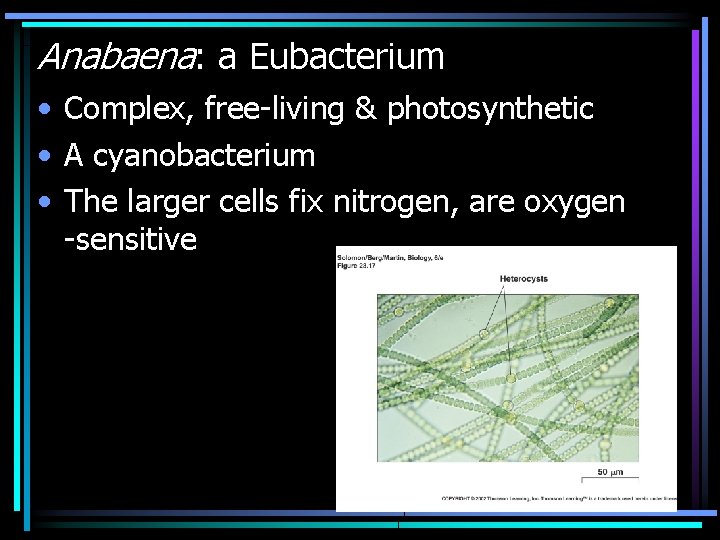
Anabaena: a Eubacterium • Complex, free-living & photosynthetic • A cyanobacterium • The larger cells fix nitrogen, are oxygen -sensitive
Bacterial Chromosome • Bacteria have a circular genomic DNA molecule – Single chromosome – ~1000 X longer than cell if stretched out • Also have plasmids – Small, circular DNA fragments – Can replicate independently of the genomic DNA or be integrated into genomic DNA – Carry genes for resistance, for genetic exchange or for enzymes
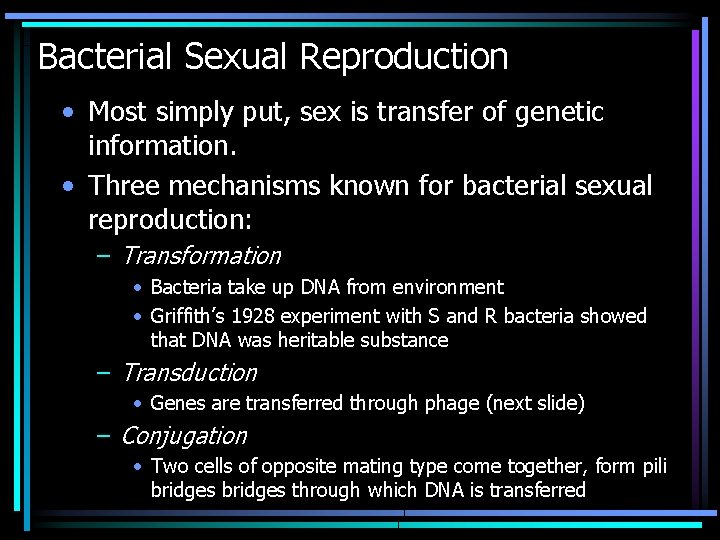
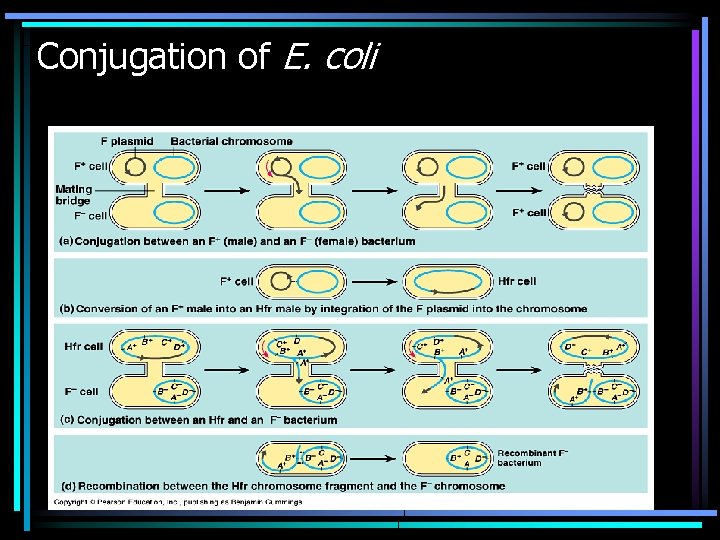
Bacterial Sexual Reproduction • Most simply put, sex is transfer of genetic information. • Three mechanisms known for bacterial sexual reproduction: – Transformation • Bacteria take up DNA from environment • Griffith’s 1928 experiment with S and R bacteria showed that DNA was heritable substance – Transduction • Genes are transferred through phage (next slide) – Conjugation • Two cells of opposite mating type come together, form pili bridges through which DNA is transferred
Conjugation of E. coli
Bacterial Pathogens • Some are disease-causing agents – Most bacteria are not harmful – Many have positive relationship with hosts – e. g. human gut microbe E. coli – But many are pathogenic – Cause serious disease: • Cholera • Diphtheria • Tuberculosis
Antibiotics • Antibiotics are drugs that combat bacteria by interfering with cellular functions – Penicillin – interferes with cell wall production – Tetracycline – interferes with protein production – Sulfa drugs – produced in the laboratory – Broad-spectrum antibiotics will affect a wide variety of organisms
Endotoxins • Pathogenic bacteria can produce exotoxins, which increase their success but tend to be very damaging to the host – Often the toxin, not the bacterial infection, is most dangerous – Examples: • Diphtheria toxin • Botulism toxin • Endotoxins: – Not secreted but are components of the cell wall – Affect host when released from dead bacteria – Can bind macrophage, cause the release of feverinducing agents – Resistant to heating
Commercial Bacteria • Bacteria used in many commercial processes – Lactic acid bacteria convert lactic acid to simpler monomers • Used in yogurt, acidophilous milk for lactose-intolerant people – Bacteria used for making • Cheeses • Fermented meats such as salami • Pickling agents such as vinegar – Bacteria also used to make pharmaceutical agents – Also used as means to make biomedical agents and biological molecules – Used also to reduce pollution – as bioremediation agents
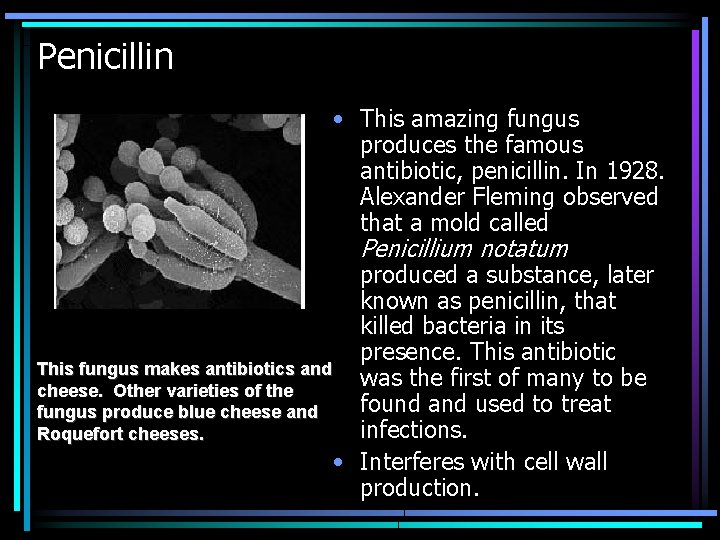
Penicillin • This amazing fungus produces the famous antibiotic, penicillin. In 1928. Alexander Fleming observed that a mold called Penicillium notatum produced a substance, later known as penicillin, that killed bacteria in its presence. This antibiotic This fungus makes antibiotics and was the first of many to be cheese. Other varieties of the found and used to treat fungus produce blue cheese and infections. Roquefort cheeses. • Interferes with cell wall production.
Koch’s Postulates • Robert Koch, late 19 th Century • Defined conditions likely to identify a pathogen 1. Present in all infected individuals 2. Sample of the micro organism can be grown in culture from the host 3. Culture produces disease in a second host 4. Microorganism can be recovered from second, experimentally created host