
Prokaryotes Commonly Known as Bacteria What are the
Prokaryotes Commonly Known as Bacteria
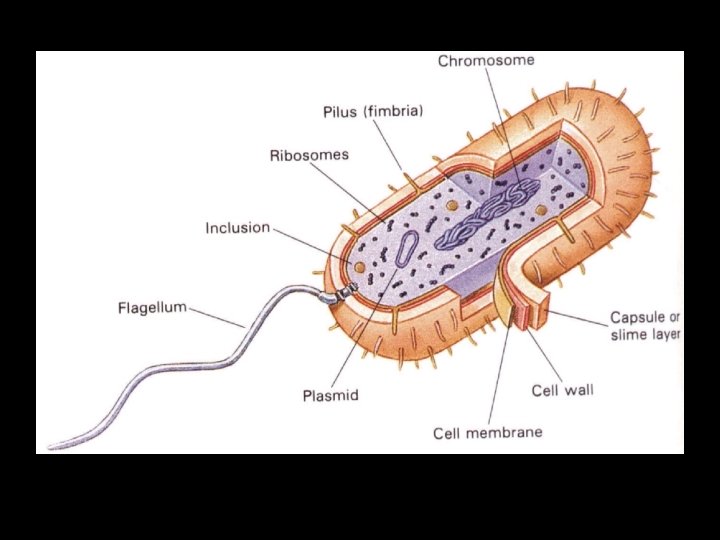
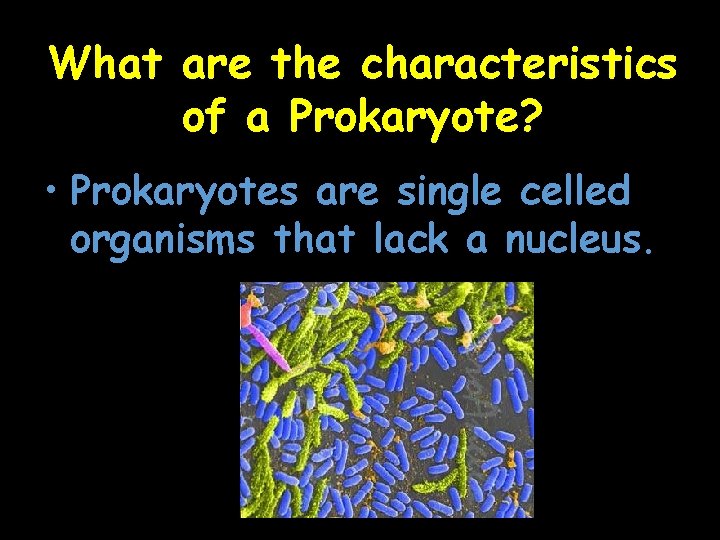
What are the characteristics of a Prokaryote? • Prokaryotes are single celled organisms that lack a nucleus.
What are the two kingdoms of Bacteria? • 1. Eubacteria – has a cell wall that is made of a carbohydrate called peptidoglycon Ø Live almost everywhere • 2. Archaea – don’t contain peptidoglycon Ø Have DNA similar to Eukaryotes Ø Live in harsh environments
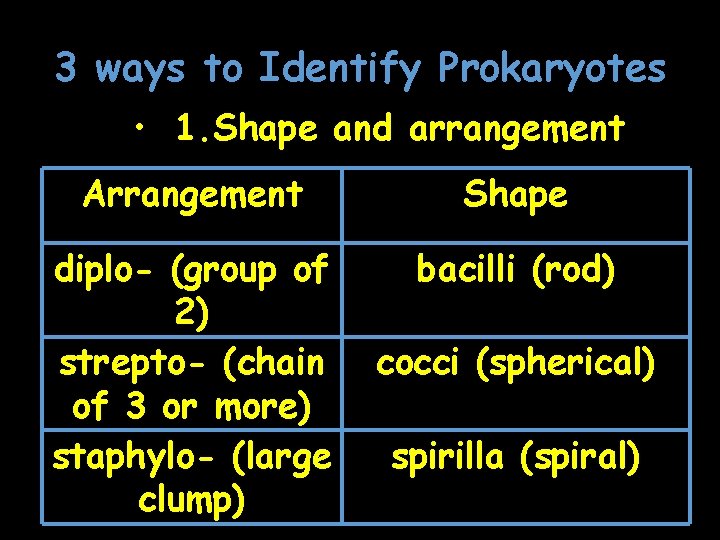
3 ways to Identify Prokaryotes • 1. Shape and arrangement Arrangement Shape diplo- (group of 2) strepto- (chain of 3 or more) staphylo- (large clump) bacilli (rod) cocci (spherical) spirilla (spiral)
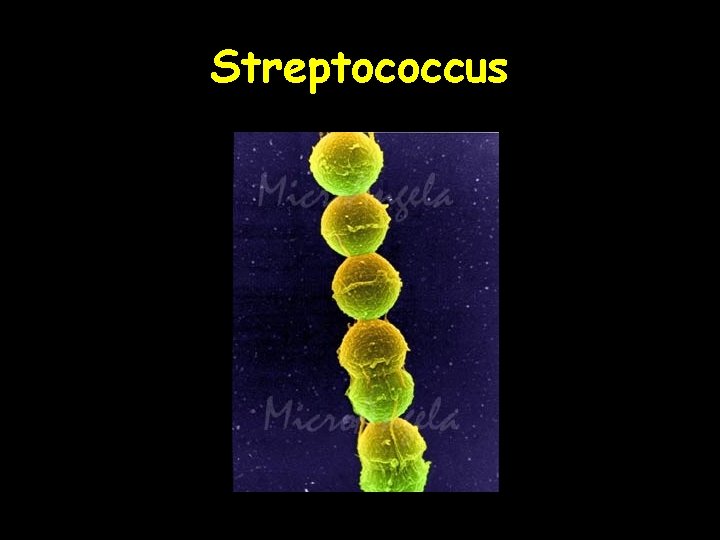
Streptococcus
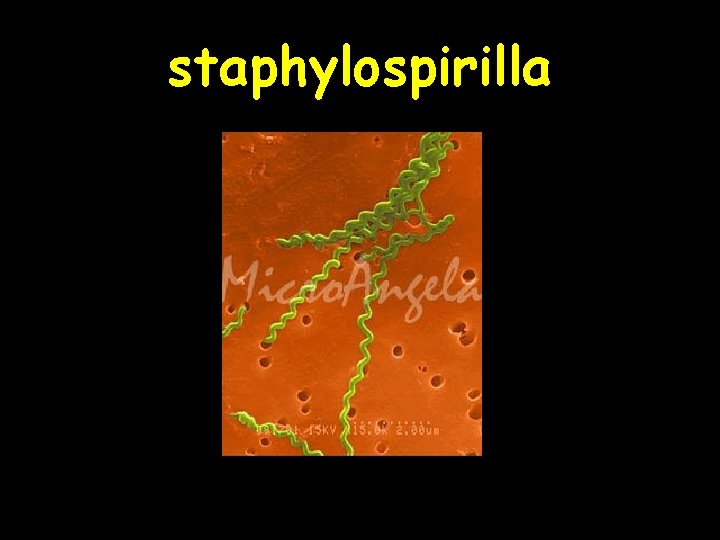
staphylospirilla
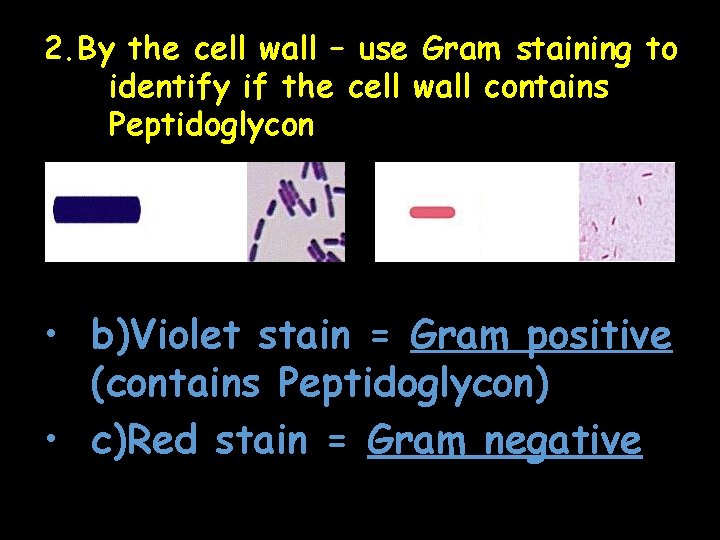
2. By the cell wall – use Gram staining to identify if the cell wall contains Peptidoglycon • b)Violet stain = Gram positive (contains Peptidoglycon) • c)Red stain = Gram negative
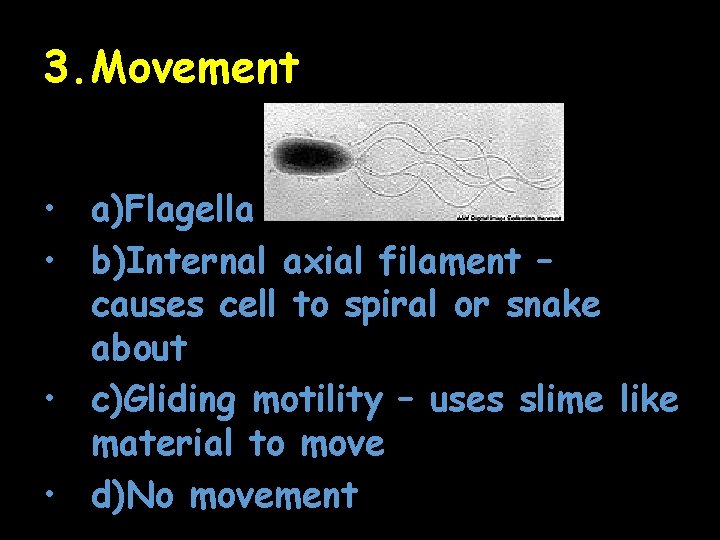
3. Movement • a)Flagella • b)Internal axial filament – causes cell to spiral or snake about • c)Gliding motility – uses slime like material to move • d)No movement
How do bacteria get energy? • 1. Autotrophs (Producers) – a)Photoautotrophs – convert energy from light – b)Chemoautotrophs – get energy from chemicals
How bacteria get energy • 2. Heterotrophs (Consumers) – a)Get energy by eating other organisms – b)Photoheterotrophs can get energy from light but also need eat other organisms.
Uses of Bacteria • 1. Decomposers – break down nutrients from dead material • 2. Used in sewage treatment • 3. Nitrogen fixation for plants • 4. Cheese / yogurt / buttermilk / sauerkraut
Disease Some bacteria are pathogens – Disease causing agents Two ways can cause disease • 1. Some directly attack the tissue of infected organisms breaking the tissues down for food • 2. Others release toxins that harm the body
Ways to control Bacteria • 1. Antibiotics – block growth and reproduction • 2. Sterilization – destroys bacteria by heat or chemicals • 3. Refrigeration – slows the growth and reproduction rates
Ways to control Bacteria • 4. Canning- sterilize by heat and seal out oxygen to store • 5. Chemical treatment such as salt, sugar, or vinegar cured food
- Slides: 15