
Prokaryotes College Prep Biology Mrs Wallis I Prokaryotes

Prokaryotes College Prep Biology Mrs. Wallis
I. Prokaryotes a. Unicellular organisms that do not have a nucleus b. Small and common organisms

II. Two Kingdoms of Prokaryotes a. Kingdom Eubacteria—larger kingdom of bacteria b. Kingdom Archaebacteria—small and less organisms
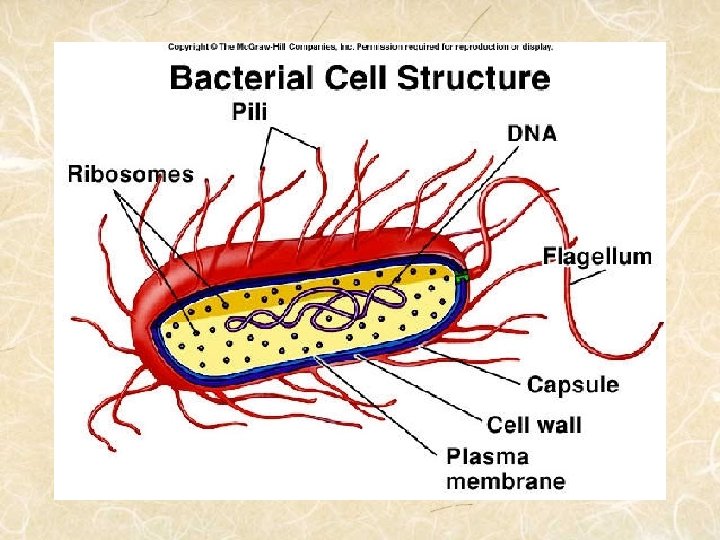
Kingdom Eubacteria i. Can live almost anywhere ii. Surrounded by a cell wall for protection iii. Cell walls have peptidoglycan—a polysaccharide carbohydrate iv. Some have a capsule for extra protection v. Ex: E. coli, Streptococcus aureus vi. ADD: endospore—can form so bacteria can survive harsh environmental conditions **contains DNA and cytoplasm
Kingdom Archaebacteria i. iii. iv. Do not have peptidoglycan in cell walls Have different lipids in cell walls May be ancestors of Eukaryotes Live in environments with harsh conditions Archae—Greek for Old or Ancient ** like in archaeology
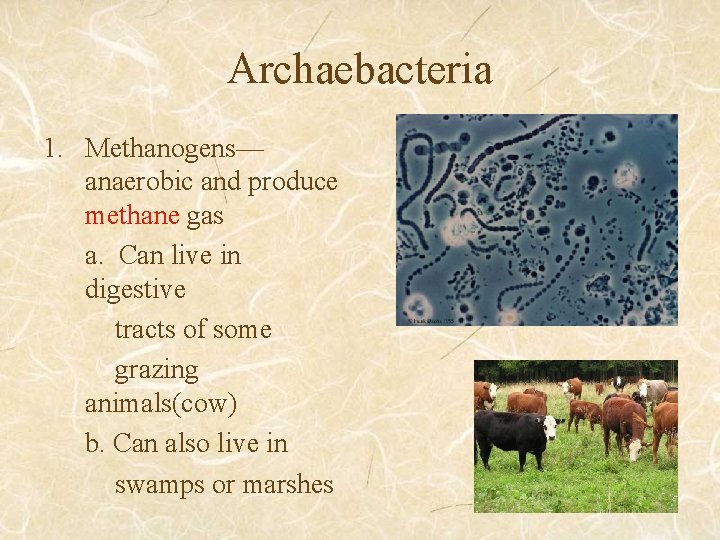
Archaebacteria 1. Methanogens— anaerobic and produce methane gas a. Can live in digestive tracts of some grazing animals(cow) b. Can also live in swamps or marshes
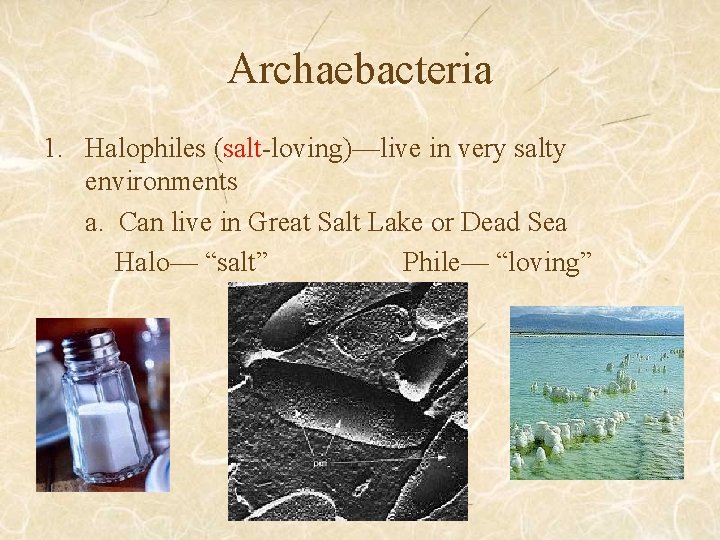
Archaebacteria 1. Halophiles (salt-loving)—live in very salty environments a. Can live in Great Salt Lake or Dead Sea Halo— “salt” Phile— “loving”
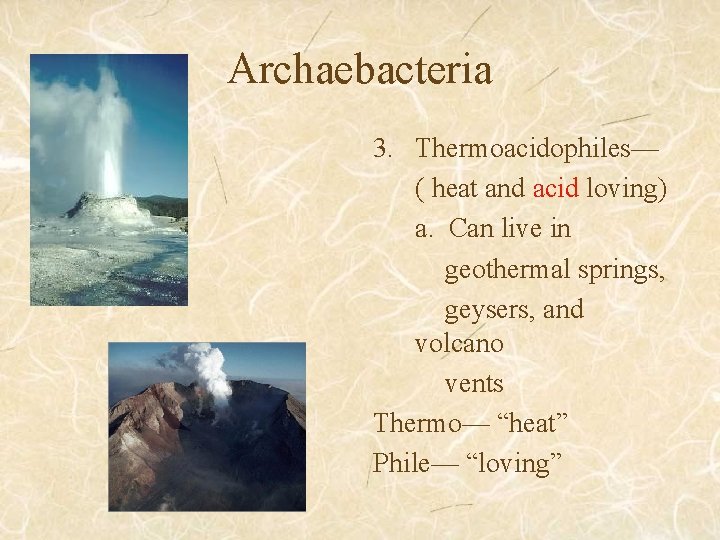
Archaebacteria 3. Thermoacidophiles— ( heat and acid loving) a. Can live in geothermal springs, geysers, and volcano vents Thermo— “heat” Phile— “loving”

III. Ways to Identify Prokaryotes a. Shape—there are three shapes: i. Bacilli—rod shaped(oval) ii. Cocci—spherical shaped(round) iii. Spirilla—spiral shaped
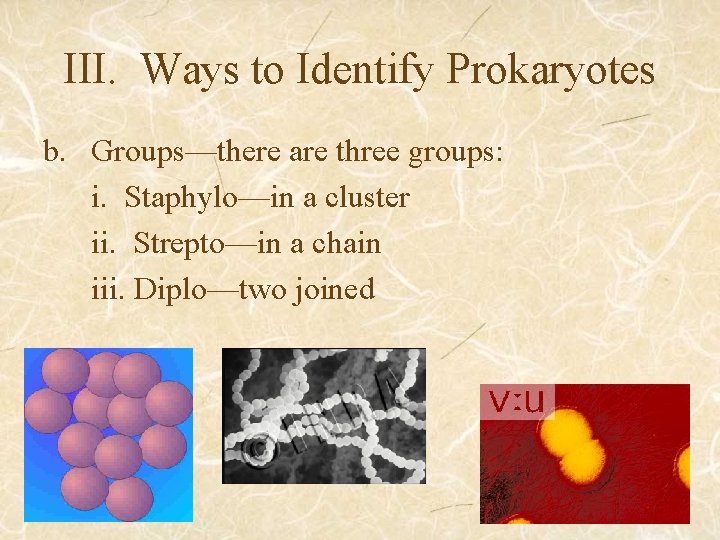
III. Ways to Identify Prokaryotes b. Groups—there are three groups: i. Staphylo—in a cluster ii. Strepto—in a chain iii. Diplo—two joined
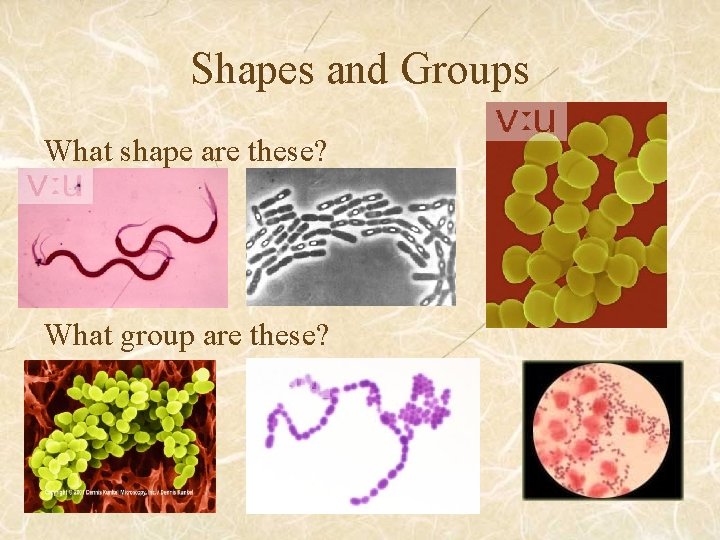
Shapes and Groups What shape are these? What group are these?
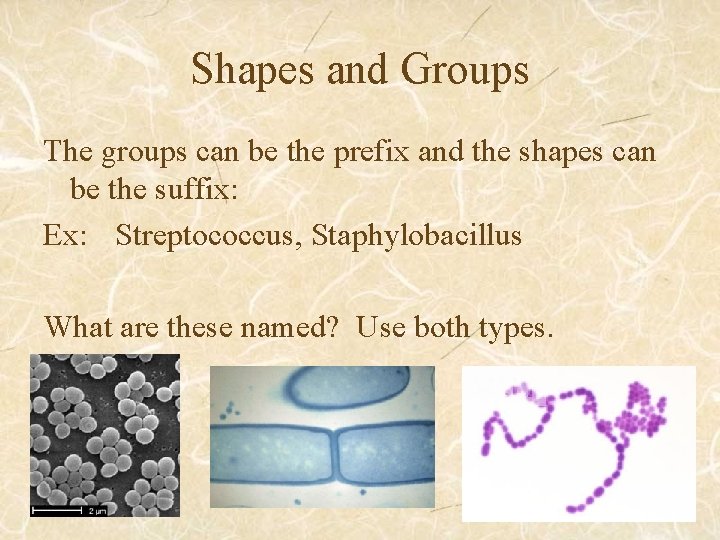
Shapes and Groups The groups can be the prefix and the shapes can be the suffix: Ex: Streptococcus, Staphylobacillus What are these named? Use both types.
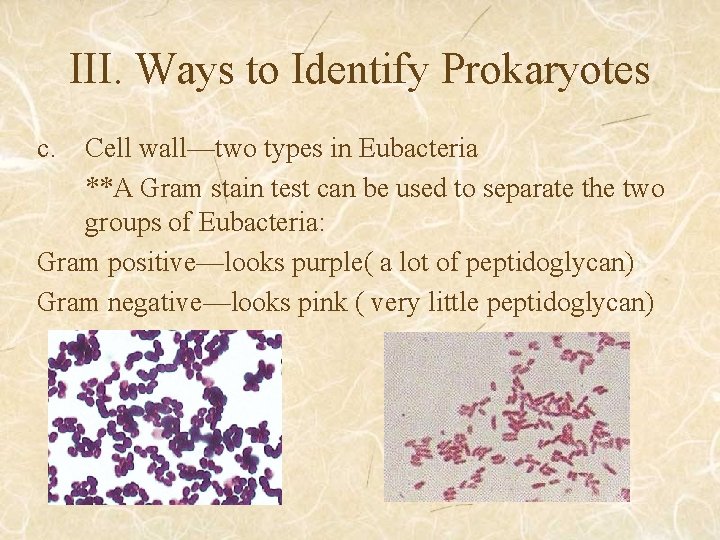
III. Ways to Identify Prokaryotes c. Cell wall—two types in Eubacteria **A Gram stain test can be used to separate the two groups of Eubacteria: Gram positive—looks purple( a lot of peptidoglycan) Gram negative—looks pink ( very little peptidoglycan)
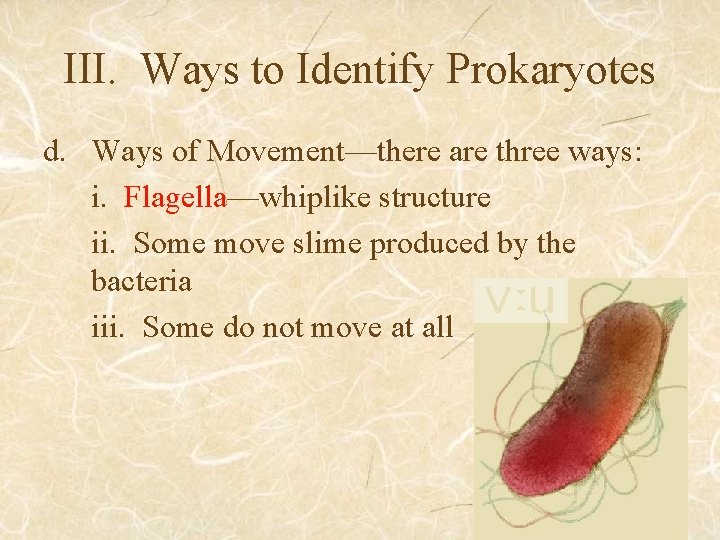
III. Ways to Identify Prokaryotes d. Ways of Movement—there are three ways: i. Flagella—whiplike structure ii. Some move slime produced by the bacteria iii. Some do not move at all
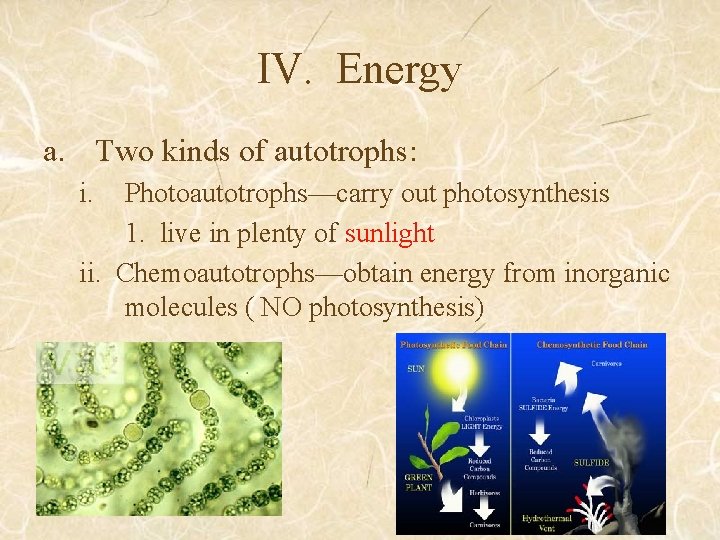
IV. Energy a. Two kinds of autotrophs: i. Photoautotrophs—carry out photosynthesis 1. live in plenty of sunlight ii. Chemoautotrophs—obtain energy from inorganic molecules ( NO photosynthesis)
IV. Energy b. Heterotrophs—get nutrients from surrouding environment i. Parasitic—live in or on a host ii. Saprophytic—decomposer
V. Antibiotics ADD: Antibiotic—a type of medicine that can stop or slow the growth of bacteria; most break down the cell wall—Ex. Penicillin ** Common bacterial diseases: food poisoning, botulism, strep throat, gonorrheoa (STD) Pathogen—an organism that causes disease; most bacteria are NOT pathogenic
- Slides: 18