
Projects and Sustainability Indicators Masudul Haque Talukder Bartosz
Projects and Sustainability Indicators Masudul Haque Talukder Bartosz Rzepkowski
Four major aspects: 1 the project scenario: applying systemic methodologies in project contexts to build SIs; 2 the stakeholder scenario: how to develop participation and coalition in the use of SIs; 3 accommodating multiple views of sustainability within projects; 4 introducing the systemic sustainability analysis idea.
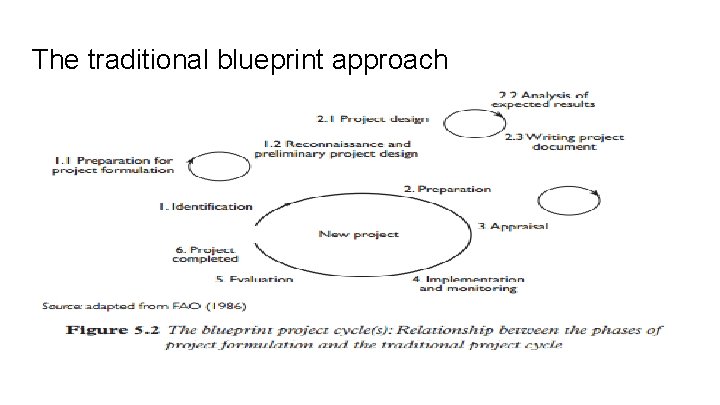
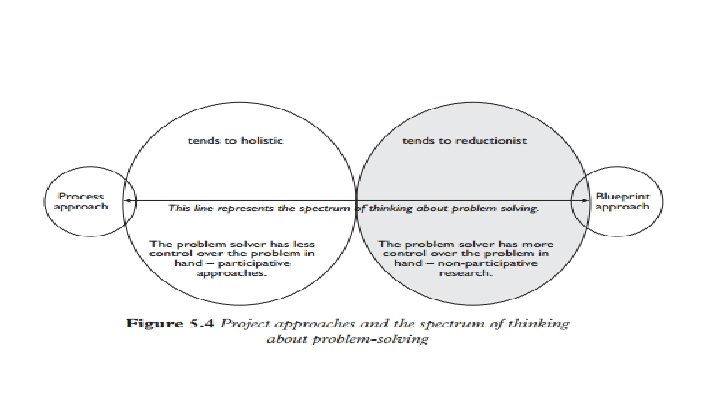
The traditional blueprint approach
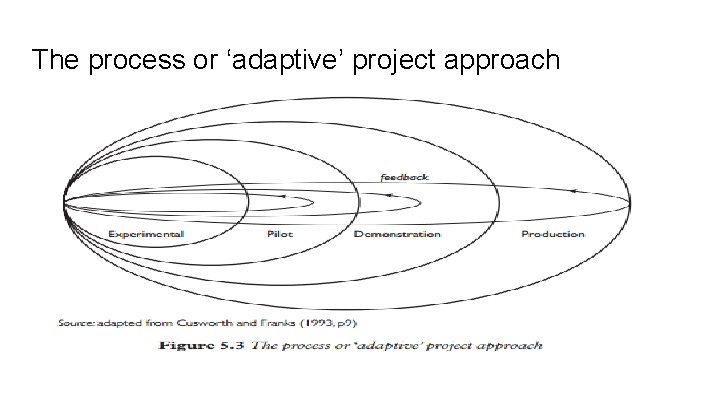
The process or ‘adaptive’ project approach
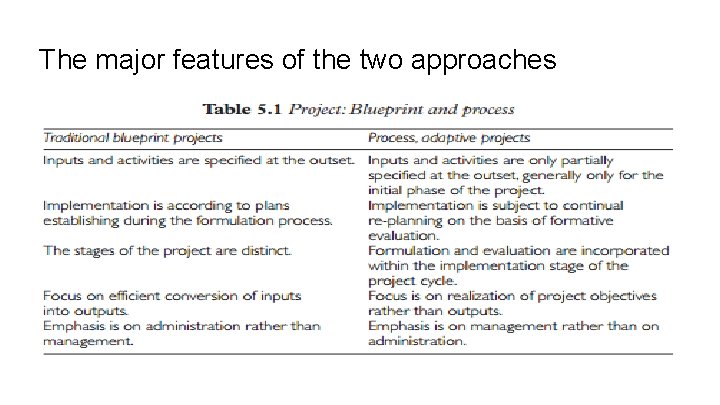
The major features of the two approaches
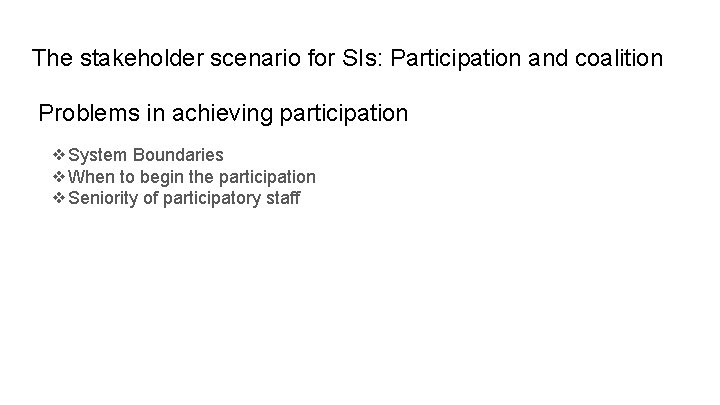
The stakeholder scenario for SIs: Participation and coalition Problems in achieving participation ❖System Boundaries ❖When to begin the participation ❖Seniority of participatory staff
Question 1: Is there anything else that makes problem in achieving participation?
Biggs’s five ‘practical suggestions’ 1 Question and un-package the new participation orthodoxy. 2 Advocacy and influence: aim to teach these approaches and methods in such a way that historical, political, cultural and economic contexts can be fully appreciated. 3 Claims about efficacy and agency: be cautious with regard to two particular kinds of claims that tend to be made by those advocating any set of methods and techniques in development interventions: first, that such techniques and methods possess intrinsic value or efficacy; and, second, that advocates themselves have been the key agents in bringing about particular development outcomes.
Biggs’s five ‘practical suggestions’ 4 Reflective analysis: encourage critical reflective writing by those who have been involved for many years in science technology development. 5 Coalitions and negotiations: recognize the involvement of contending coalitions in science and technology development.
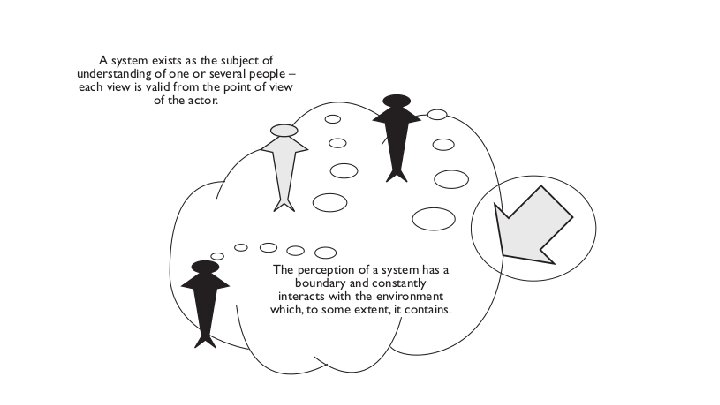
Accommodating multiple views of sustainability Groups which might be seen as participant stakeholders in a process project: Donors, Project managers, Implementers, Beneficiaries
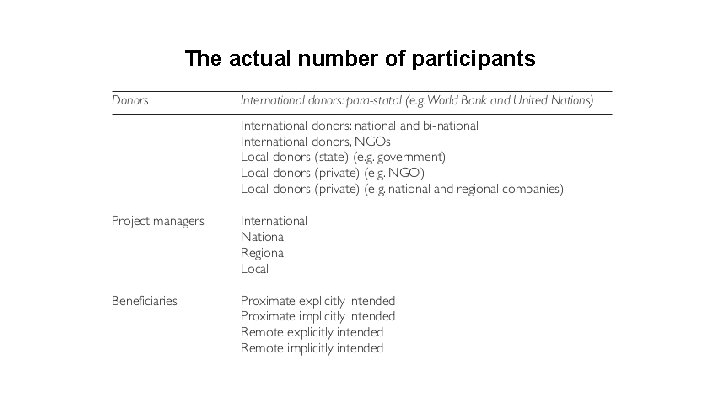
The actual number of participants
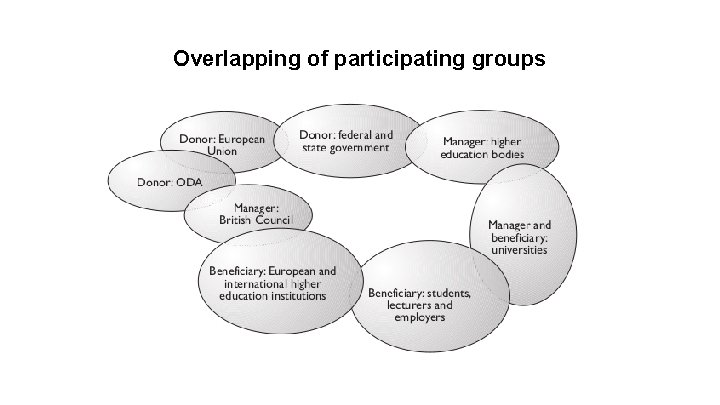
Overlapping of participating groups
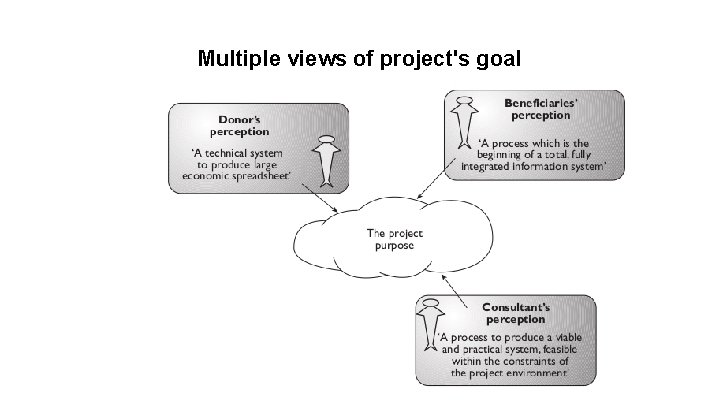
Multiple views of project's goal
„If the views between various participating groups in a project can vary on something as crucial and fundamental as the project goal, there is an even greater potential for differences of emphasis and comprehension on an idea as vague as sustainability. ”
Ison's principles for participation in projects Resultant communication is based on conversations that acknowledge each person’s experience as unique and valid, Appreciate particular contexts, Views of individuals may or may not concur with opinions of experts or institution's goals. Pursuit of these matters in open, collaborative and critically informed ways can lead to surprising results, Knowledge is both individually and socially constructed and because of this, processes are necessary to create learning networks, Diversity of experience, knowledge, research and ‘extension’ action is an asset of equal importance.
Accommodating multiple views of sustainability Groups which might be seen as participant stakeholders in a process project: Donors, Project managers, Implementers, Beneficiaries
Introducing the systemic sustainability analysis idea: The Imagine Approach „Systemic Sustainability Analysis (SSA), defined as the participatory deconstruction and negotiation of what sustainability means to a group of people, along with the identification and method of assessment of indicators to assess that vision of sustainability. ”
Imagine Approach – example of SSA Step 1 - Identify the stakeholders and the system, Step 2 - Identify the main SIs, Step 3 - Identify the band of equilibrium (i. e. the reference condition), Step 4 - The development of the AMOEBA diagram, Step 5 - The extension of the AMOEBA over time.
- Slides: 20