
Projectile Motion Its a blast The Force of
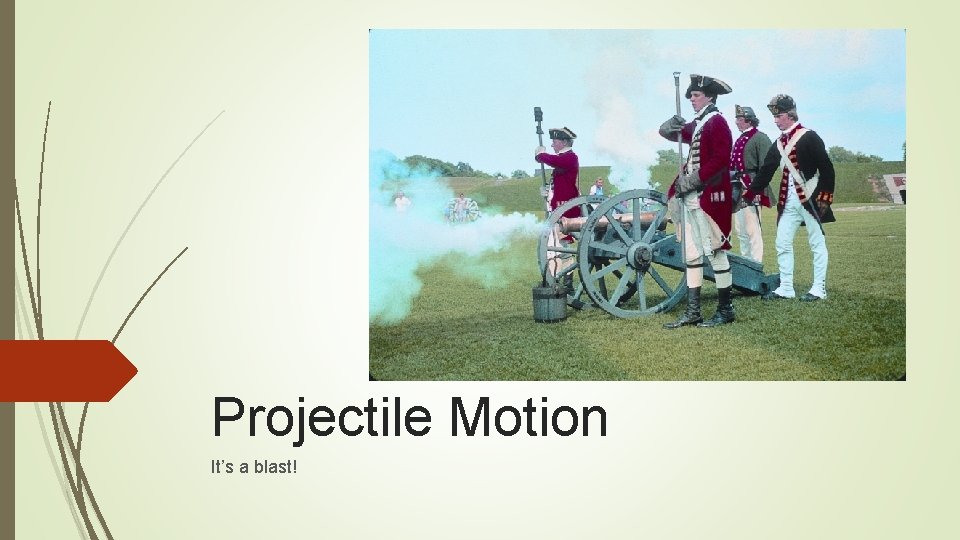
Projectile Motion It’s a blast!
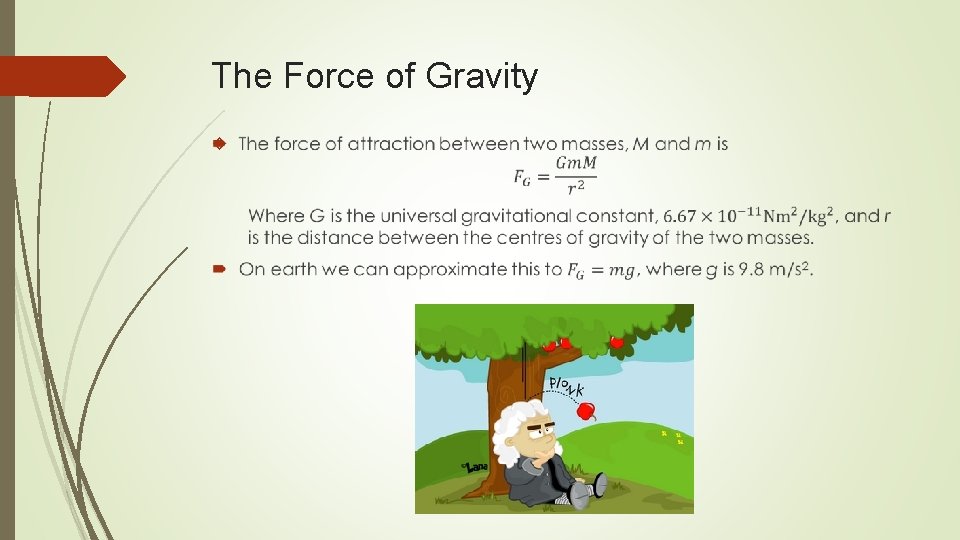
The Force of Gravity
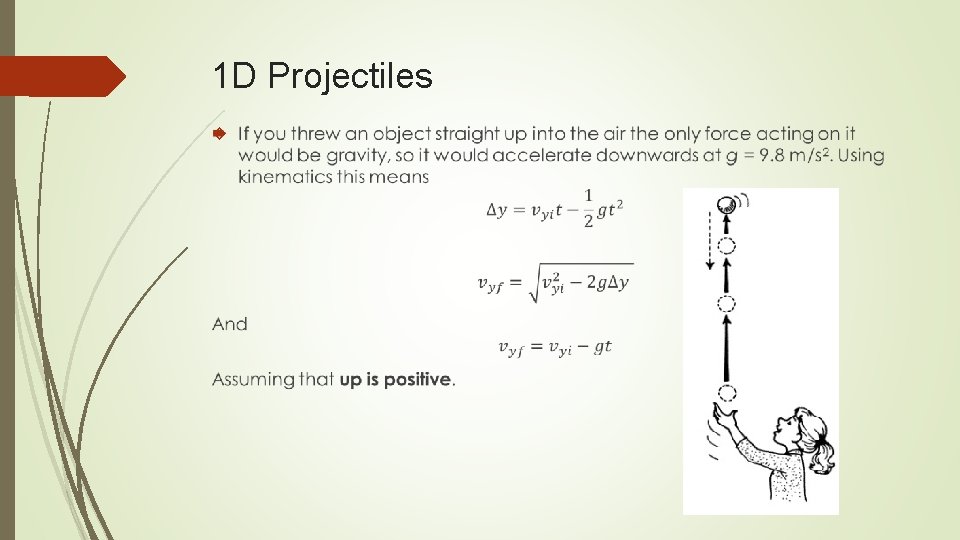
1 D Projectiles
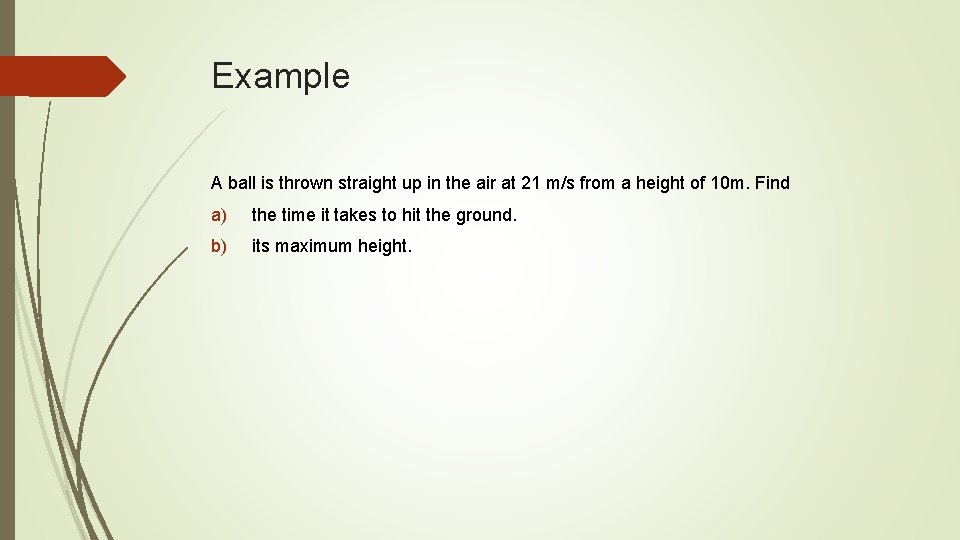
Example A ball is thrown straight up in the air at 21 m/s from a height of 10 m. Find a) the time it takes to hit the ground. b) its maximum height.
Vector Components Vectors have direction and magnitude. They can be written as a magnitude with a direction or two magnitudes with perpendicular directions in 2 D (three in 3 D). We call these directions x, y and z. They are all perpendicular to each other. We can use trigonometry to find the net magnitude and direction angles from the component values and vis-versa.
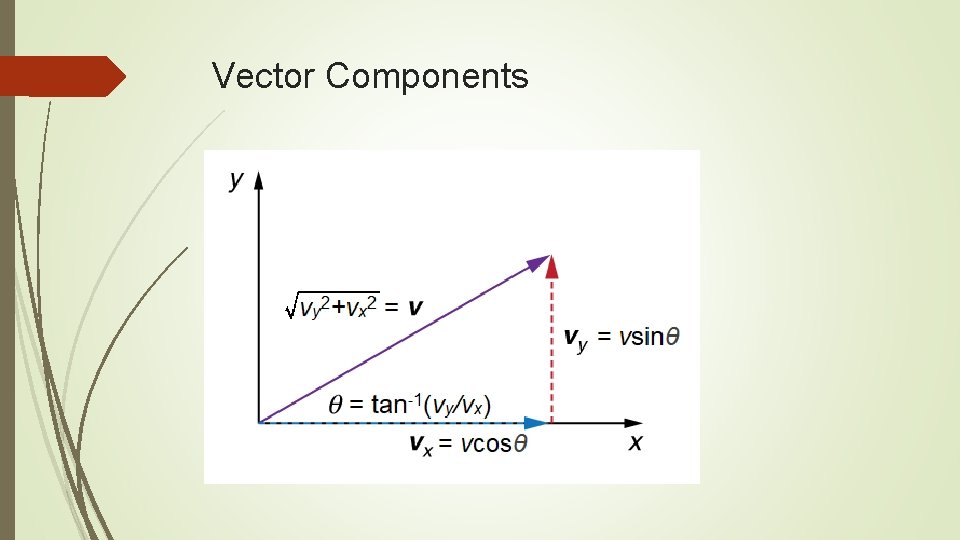
Vector Components
Example A plane can fly at 380. 0 km/h in still air and the wind blows at 80. 0 km/h north. a) If the plane points due west, what is its velocity relative to the ground (resultant velocity)? b) If it needed to head directly west, at what heading should it point?

2 D Projectile Motion
Example A student sits on the roof of their house which is 12 m high. She can launch water-balloons from a slingshot at 14. 0 m/s. If she fires a water-balloon directly horizontally a) how long will it be airborne? b) how far forward will it travel? c) what is its final velocity?
Example A cannon is perched on a 48 m high cliff. It aims 30 o above the horizontal and fires a shell at 52 m/s. Find the final velocity of the shell on impact.
Example King Arthur is laying siege to a nearby castle. His catapult can fire boulders at 38 m/s at a 50 o angle. If he wants to hit the top of a tower that is 12 m high, how far in front of the wall should he position his catapult?
- Slides: 11