
PROJECTILE MOTION How does a cannonball fly What
PROJECTILE MOTION How does a cannonball fly?
What goes up must go down or the effect of gravity and air resistance ? We’ve looked at LINEAR MOTION, or the motion of objects moving in a straight line. Now we’ll look at NONLINEAR MOTION or motion along curved paths !
When a ball is thrown upward: There is a constant horizontal velocity … and there is an accelerated vertical motion. These components act independently of each other.
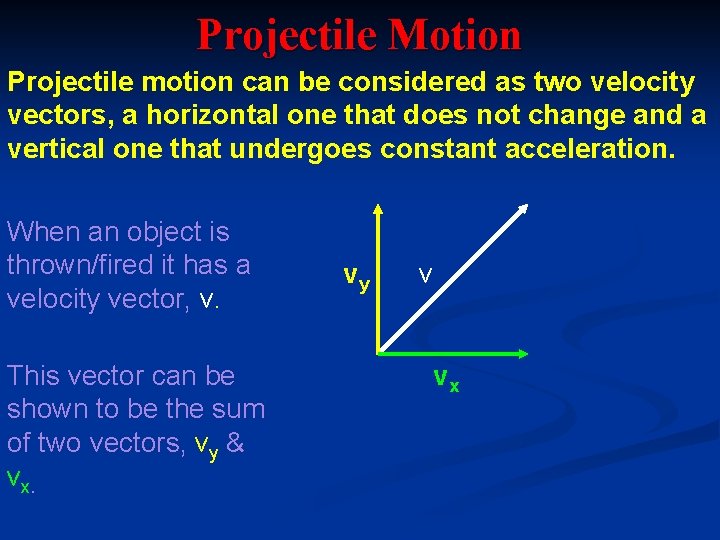
Projectile Motion Projectile motion can be considered as two velocity vectors, a horizontal one that does not change and a vertical one that undergoes constant acceleration. When an object is thrown/fired it has a velocity vector, v. This vector can be shown to be the sum of two vectors, vy & vx. vy v vx
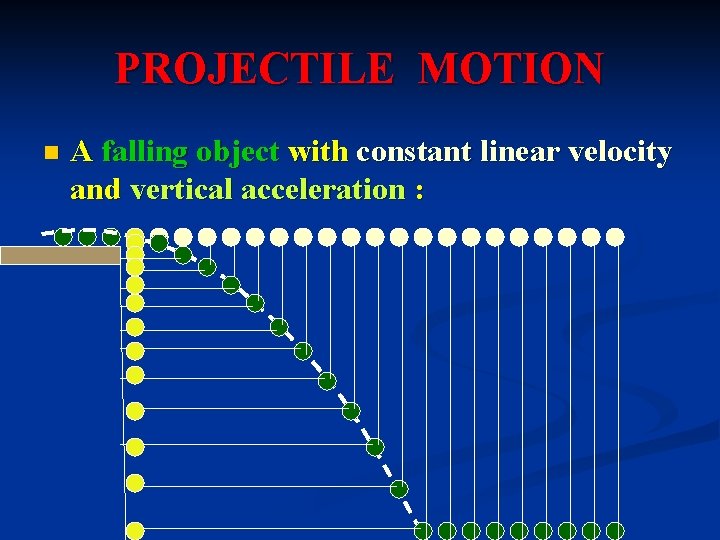
PROJECTILE MOTION n A falling object with constant linear velocity and vertical acceleration :
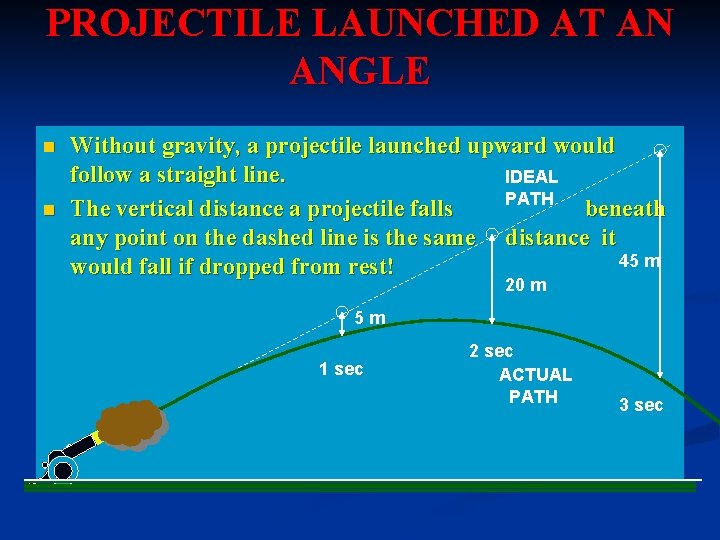
PROJECTILE LAUNCHED AT AN ANGLE n n Without gravity, a projectile launched upward would follow a straight line. IDEAL PATH The vertical distance a projectile falls beneath any point on the dashed line is the same distance it 45 m would fall if dropped from rest! 20 m 5 m 1 sec 2 sec ACTUAL PATH 3 sec
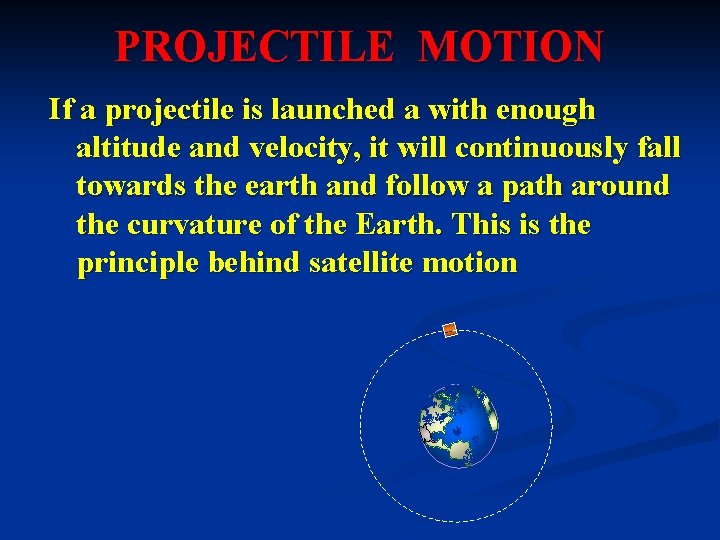
PROJECTILE MOTION If a projectile is launched a with enough altitude and velocity, it will continuously fall towards the earth and follow a path around the curvature of the Earth. This is the principle behind satellite motion
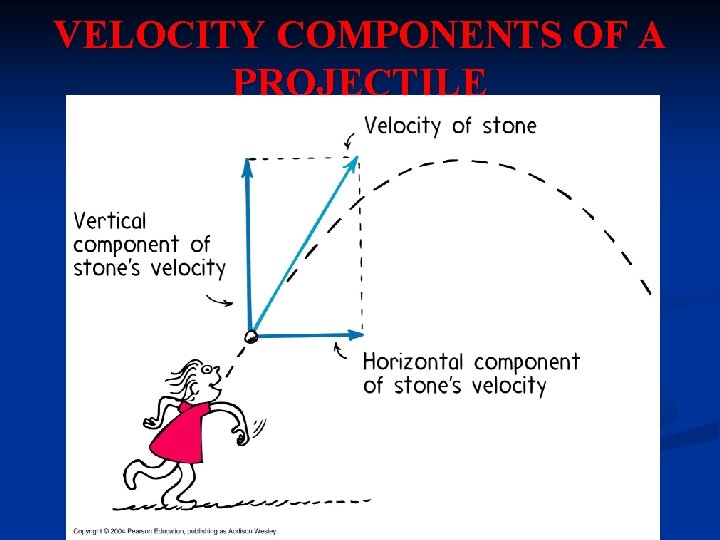
VELOCITY COMPONENTS OF A PROJECTILE
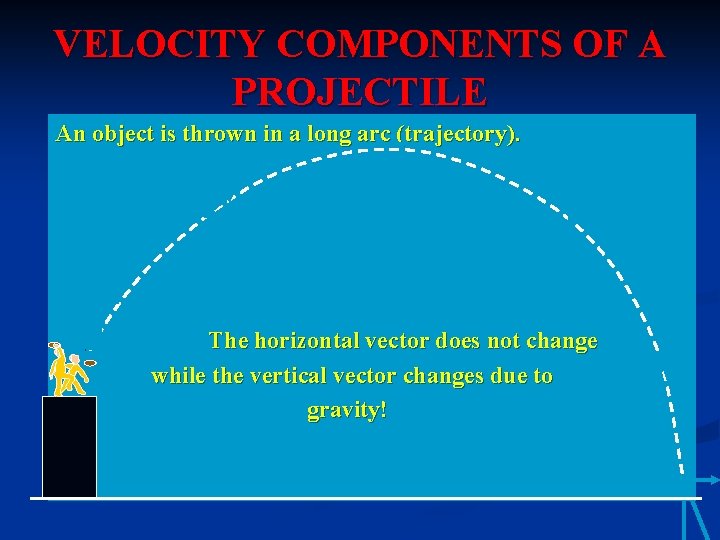
VELOCITY COMPONENTS OF A PROJECTILE An object is thrown in a long arc (trajectory). n The horizontal vector does not change while the vertical vector changes due to gravity!
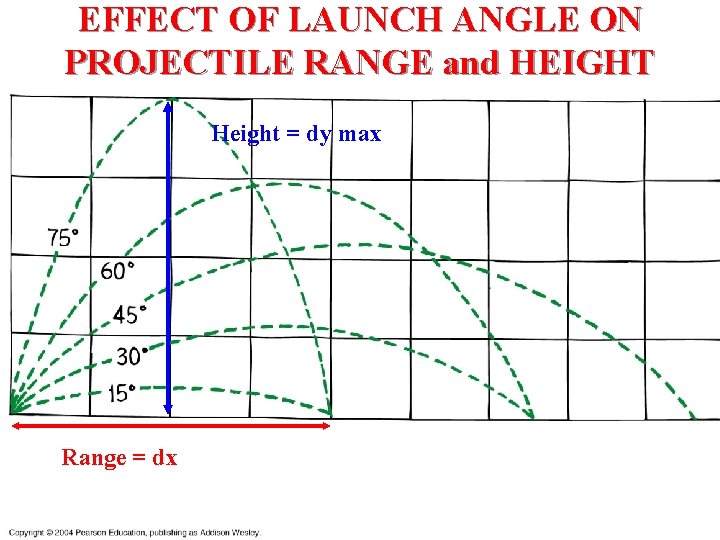
EFFECT OF LAUNCH ANGLE ON PROJECTILE RANGE and HEIGHT Height = dy max Range = dx
- Slides: 10