
Project Selection Six Sigma Foundations Continuous Improvement Training
- Slides: 19
Project Selection Six Sigma Foundations Continuous Improvement Training Six Sigma Simplicity
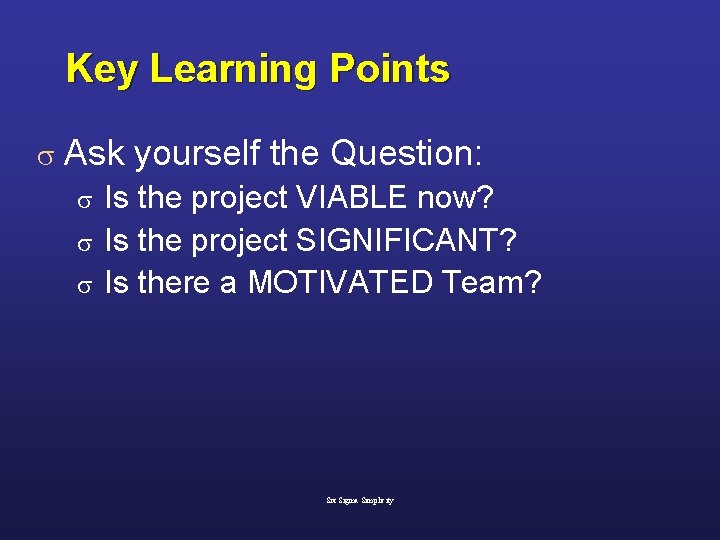
Key Learning Points s Ask yourself the Question: Is the project VIABLE now? s Is the project SIGNIFICANT? s Is there a MOTIVATED Team? s Six Sigma Simplicity
Project Selection remains the single most important element of the process. Six Sigma Simplicity
Project Selection s Organizations must develop a process to define strategic focus area and then effectively scope them into manageable DMAIC improvement projects Six Sigma Simplicity
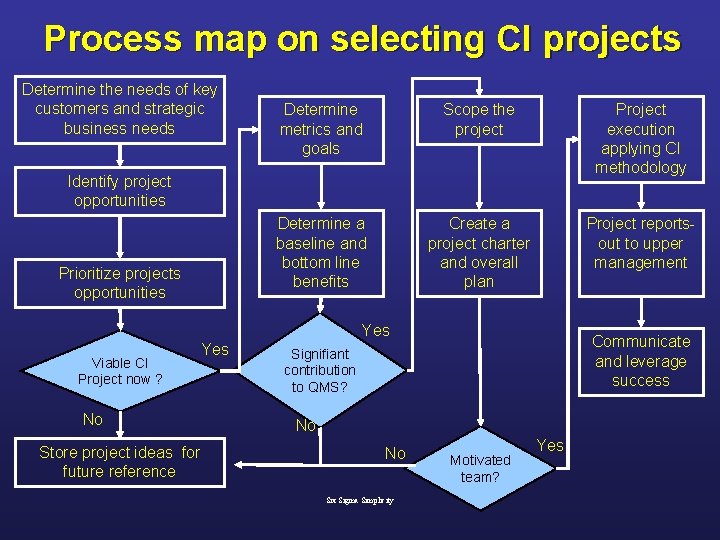
Process map on selecting CI projects Determine the needs of key customers and strategic business needs Determine metrics and goals Scope the project Project execution applying CI methodology Determine a baseline and bottom line benefits Create a project charter and overall plan Project reportsout to upper management Identify project opportunities Prioritize projects opportunities Yes Viable CI Project now ? No Store project ideas for future reference Yes Communicate and leverage success Signifiant contribution to QMS? No No Six Sigma Simplicity Motivated team? Yes
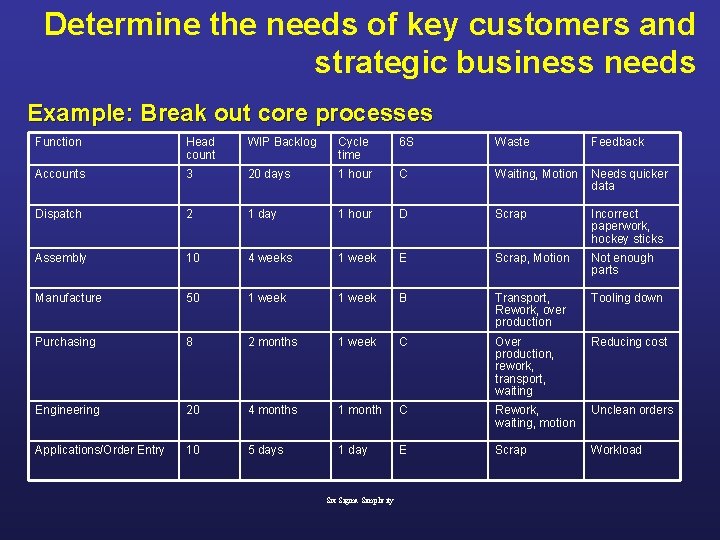
Determine the needs of key customers and strategic business needs Example: Break out core processes Function Head count WIP Backlog Cycle time 6 S Waste Feedback Accounts 3 20 days 1 hour C Waiting, Motion Needs quicker data Dispatch 2 1 day 1 hour D Scrap Incorrect paperwork, hockey sticks Assembly 10 4 weeks 1 week E Scrap, Motion Not enough parts Manufacture 50 1 week B Transport, Rework, over production Tooling down Purchasing 8 2 months 1 week C Over production, rework, transport, waiting Reducing cost Engineering 20 4 months 1 month C Rework, waiting, motion Unclean orders Applications/Order Entry 10 5 days 1 day E Scrap Workload Six Sigma Simplicity
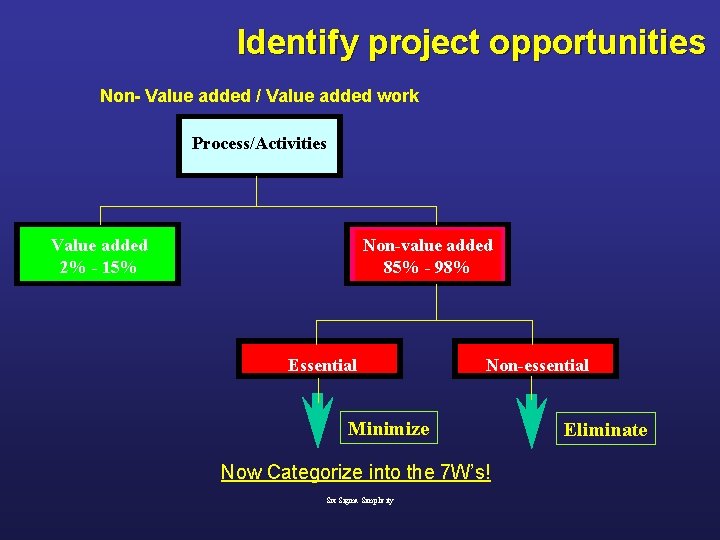
Identify project opportunities Non- Value added / Value added work Process/Activities Value added 2% - 15% Non-value added 85% - 98% Essential Non-essential Minimize Now Categorize into the 7 W’s! Six Sigma Simplicity Eliminate
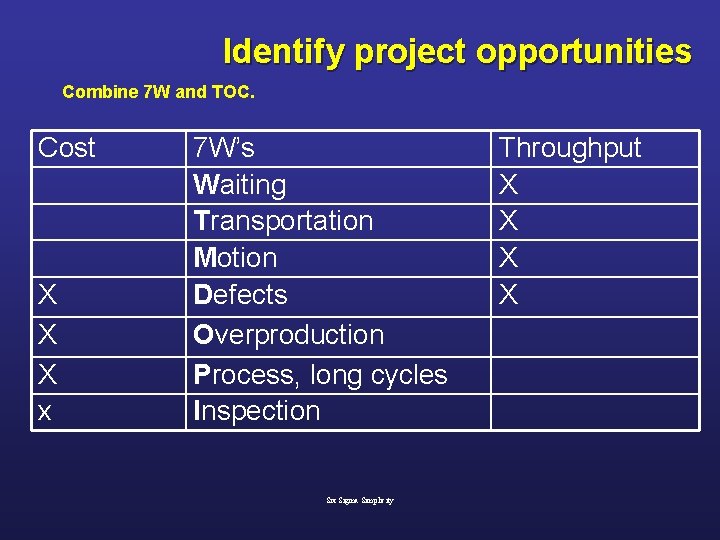
Identify project opportunities Combine 7 W and TOC. Cost X X X x 7 W’s Waiting Transportation Motion Defects Overproduction Process, long cycles Inspection Six Sigma Simplicity Throughput X X
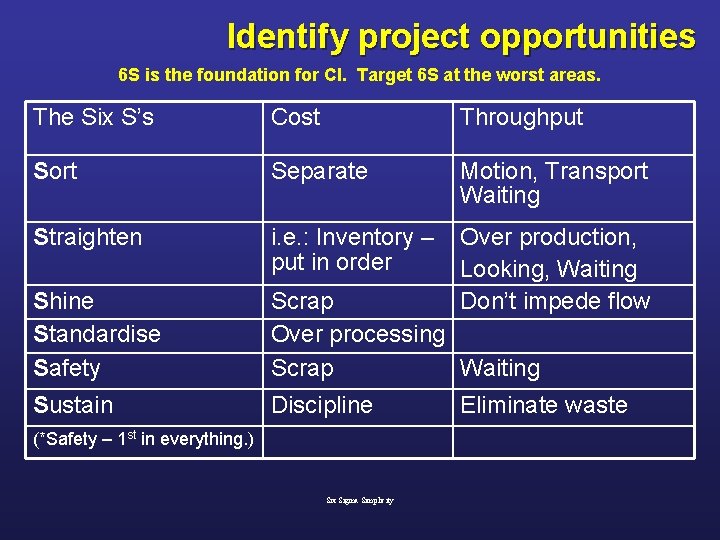
Identify project opportunities 6 S is the foundation for CI. Target 6 S at the worst areas. The Six S’s Cost Throughput Sort Separate Motion, Transport Waiting Straighten i. e. : Inventory – put in order Shine Standardise Safety Over production, Looking, Waiting Don’t impede flow Scrap Over processing Scrap Waiting Sustain Discipline (*Safety – 1 st in everything. ) Six Sigma Simplicity Eliminate waste
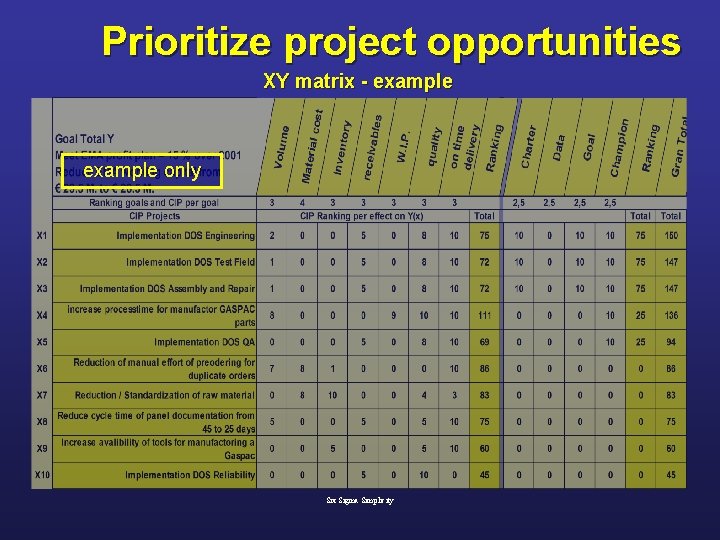
Prioritize project opportunities XY matrix - example only Six Sigma Simplicity
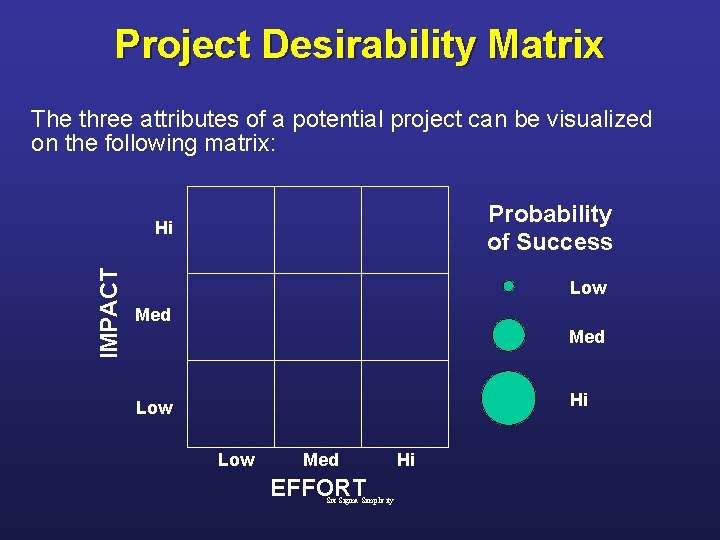
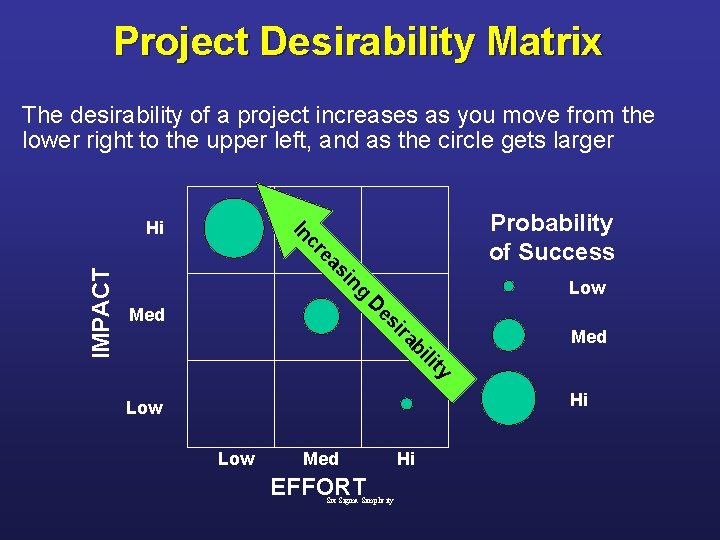
Project Desirability Matrix The three attributes of a potential project can be visualized on the following matrix: Probability of Success IMPACT Hi Low Med EFFORT Six Sigma Simplicity Hi
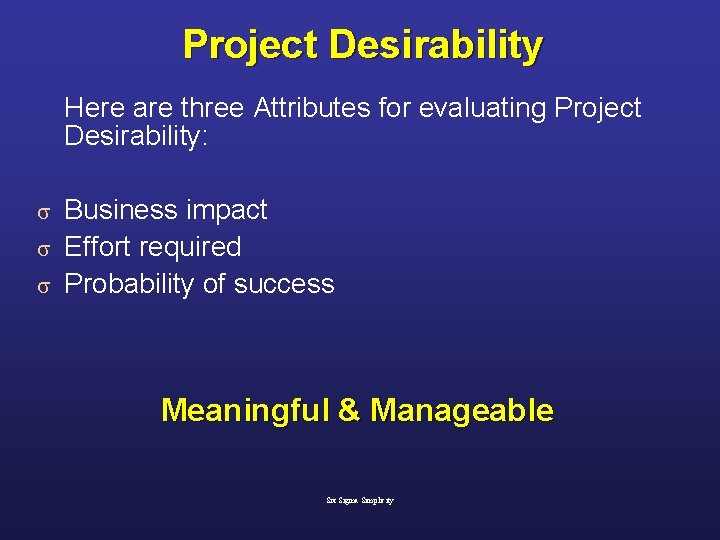
Project Desirability Here are three Attributes for evaluating Project Desirability: Business impact s Effort required s Probability of success s Meaningful & Manageable Six Sigma Simplicity
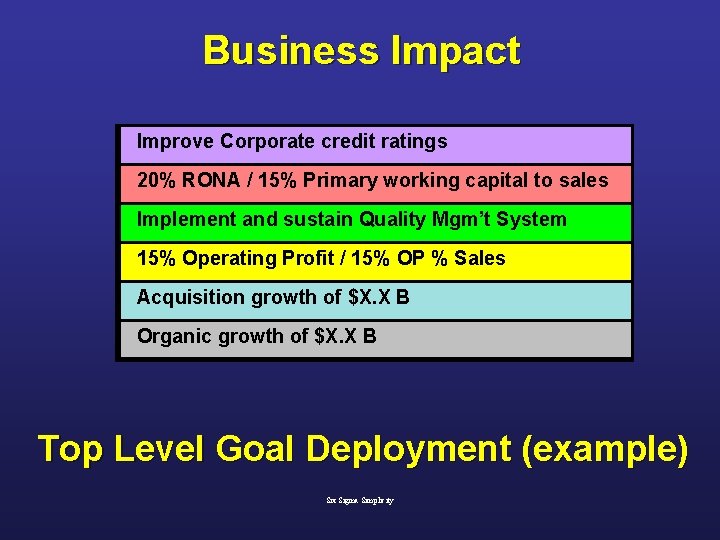
Business Impact Improve Corporate credit ratings 20% RONA / 15% Primary working capital to sales Implement and sustain Quality Mgm’t System 15% Operating Profit / 15% OP % Sales Acquisition growth of $X. X B Organic growth of $X. X B Top Level Goal Deployment (example) Six Sigma Simplicity
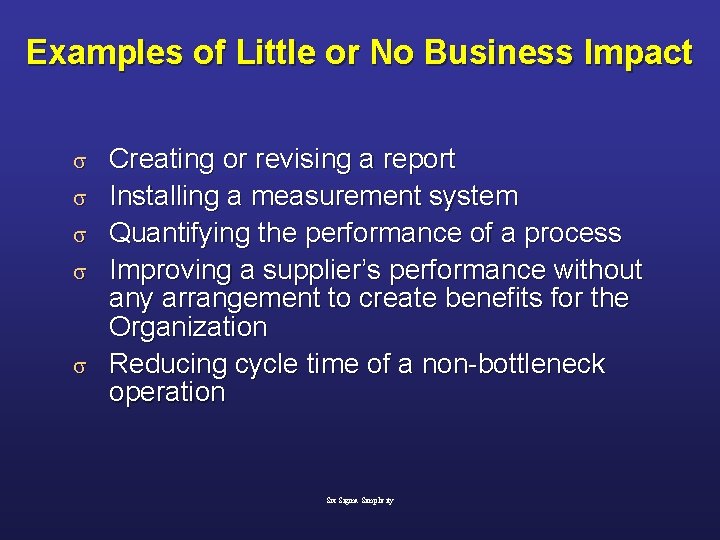
Examples of Little or No Business Impact s s s Creating or revising a report Installing a measurement system Quantifying the performance of a process Improving a supplier’s performance without any arrangement to create benefits for the Organization Reducing cycle time of a non-bottleneck operation Six Sigma Simplicity
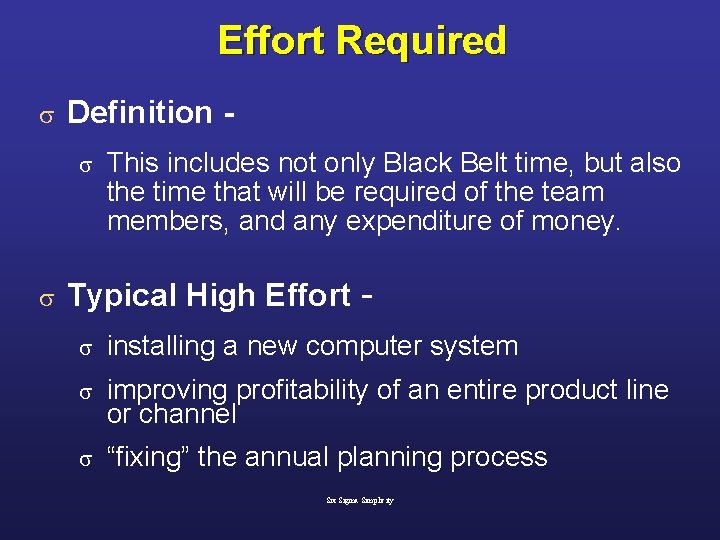
Effort Required s Definition s s This includes not only Black Belt time, but also the time that will be required of the team members, and any expenditure of money. Typical High Effort s installing a new computer system s improving profitability of an entire product line or channel s “fixing” the annual planning process Six Sigma Simplicity
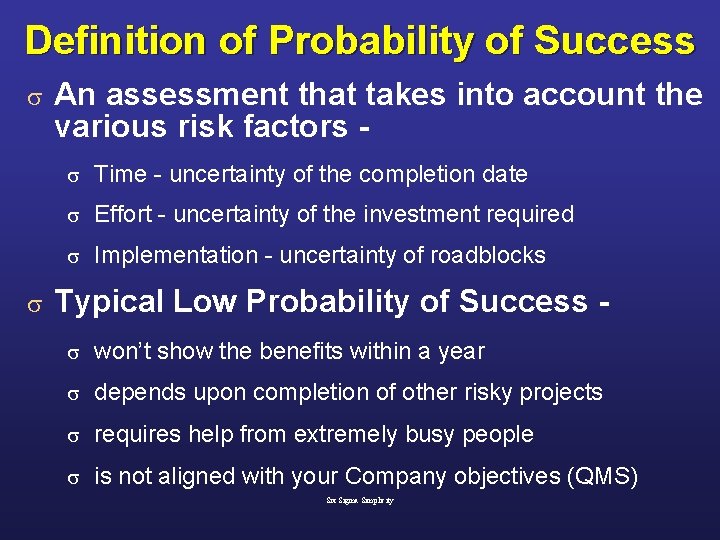
Definition of Probability of Success s s An assessment that takes into account the various risk factors s Time - uncertainty of the completion date s Effort - uncertainty of the investment required s Implementation - uncertainty of roadblocks Typical Low Probability of Success s won’t show the benefits within a year s depends upon completion of other risky projects s requires help from extremely busy people s is not aligned with your Company objectives (QMS) Six Sigma Simplicity
Project Desirability Matrix The desirability of a project increases as you move from the lower right to the upper left, and as the circle gets larger Probability of Success In Hi ea si ng D Med es Med i ra bi IMPACT cr Low lit y Hi Low Med EFFORT Six Sigma Simplicity Hi
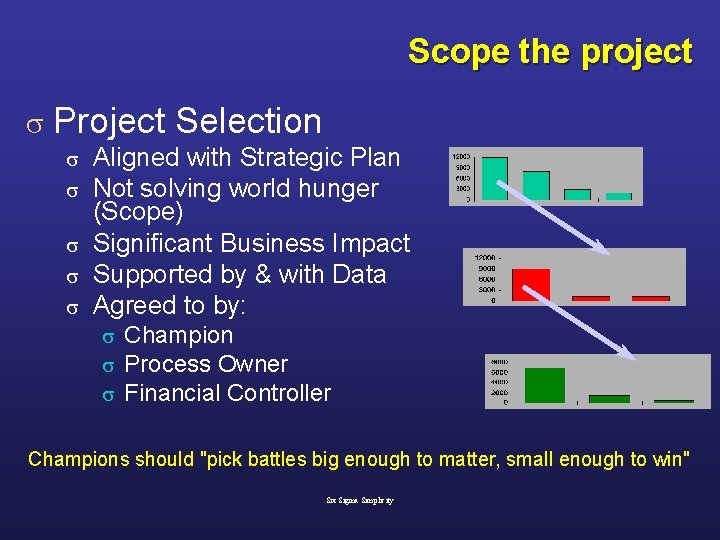
Scope the project s Project Selection Aligned with Strategic Plan Not solving world hunger (Scope) s Significant Business Impact s Supported by & with Data s Agreed to by: s s s Champion Process Owner Financial Controller Champions should "pick battles big enough to matter, small enough to win" Six Sigma Simplicity
Project Selection Six Sigma Foundations Continuous Improvement Training Six Sigma Simplicity