
Project Prioritisation Process Update to Members Workplan review
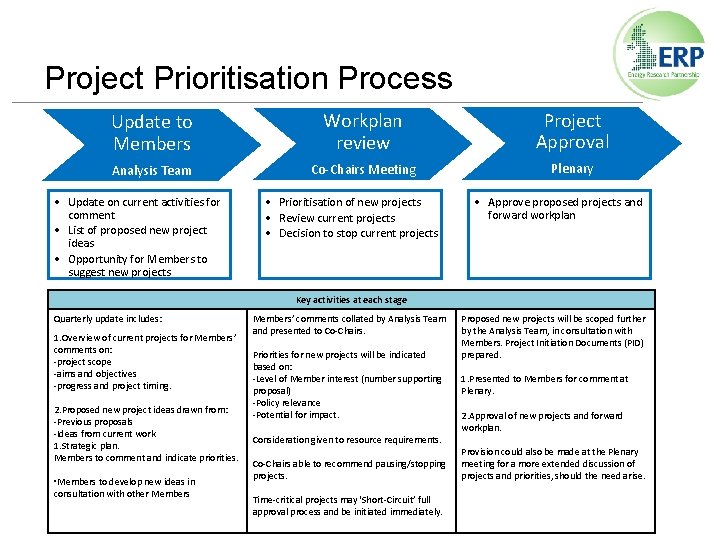
Project Prioritisation Process Update to Members Workplan review Project Approval Analysis Team Co‐Chairs Meeting Plenary • Update on current activities for comment • List of proposed new project ideas • Opportunity for Members to suggest new projects • Prioritisation of new projects • Review current projects • Decision to stop current projects • Approve proposed projects and forward workplan Key activities at each stage Quarterly update includes: 1. Overview of current projects for Members’ comments on: ‐project scope ‐aims and objectives ‐progress and project timing. 2. Proposed new project ideas drawn from: ‐Previous proposals ‐Ideas from current work 1. Strategic plan. Members to comment and indicate priorities. • Members to develop new ideas in consultation with other Members’ comments collated by Analysis Team and presented to Co‐Chairs. Priorities for new projects will be indicated based on: ‐Level of Member interest (number supporting proposal) ‐Policy relevance ‐Potential for impact. Consideration given to resource requirements. Co‐Chairs able to recommend pausing/stopping projects. Time‐critical projects may ‘Short‐Circuit’ full approval process and be initiated immediately. Proposed new projects will be scoped further by the Analysis Team, in consultation with Members. Project Initiation Documents (PID) prepared. 1. Presented to Members for comment at Plenary. 2. Approval of new projects and forward workplan. Provision could also be made at the Plenary meeting for a more extended discussion of projects and priorities, should the need arise.
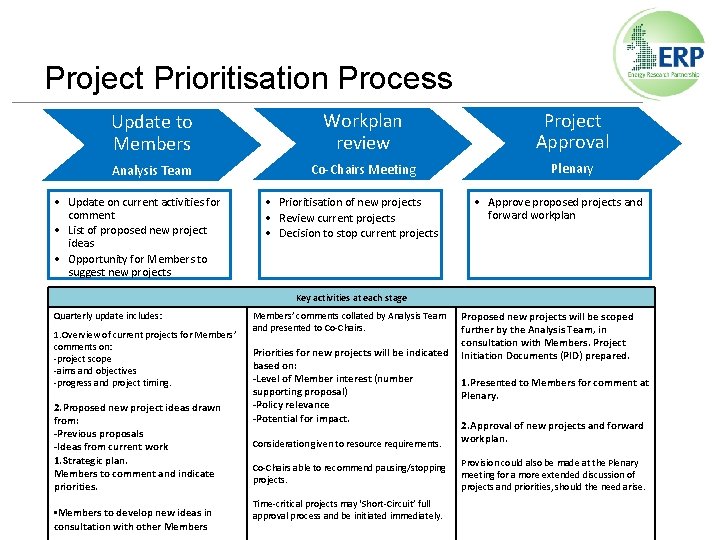
Project Prioritisation Process Update to Members Workplan review Project Approval Analysis Team Co‐Chairs Meeting Plenary • Update on current activities for comment • List of proposed new project ideas • Opportunity for Members to suggest new projects • Prioritisation of new projects • Review current projects • Decision to stop current projects • Approve proposed projects and forward workplan Key activities at each stage Quarterly update includes: 1. Overview of current projects for Members’ comments on: ‐project scope ‐aims and objectives ‐progress and project timing. 2. Proposed new project ideas drawn from: ‐Previous proposals ‐Ideas from current work 1. Strategic plan. Members to comment and indicate priorities. • Members to develop new ideas in consultation with other Members Proposed new projects will be scoped further by the Analysis Team, in consultation with Members. Project Priorities for new projects will be indicated Initiation Documents (PID) prepared. based on: ‐Level of Member interest (number 1. Presented to Members for comment at supporting proposal) Plenary. ‐Policy relevance ‐Potential for impact. 2. Approval of new projects and forward workplan. Consideration given to resource requirements. Members’ comments collated by Analysis Team and presented to Co‐Chairs able to recommend pausing/stopping projects. Time‐critical projects may ‘Short‐Circuit’ full approval process and be initiated immediately. Provision could also be made at the Plenary meeting for a more extended discussion of projects and priorities, should the need arise.
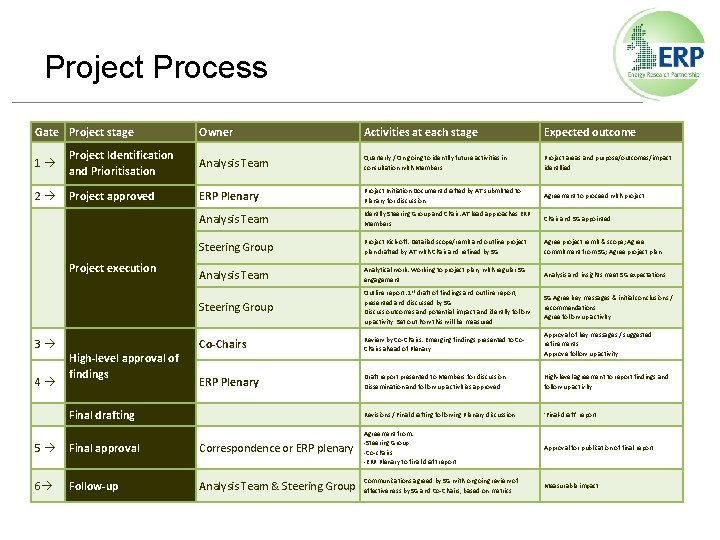
Project Process Gate Project stage Owner Activities at each stage Expected outcome 1 Project Identification and Prioritisation Analysis Team Quarterly / On‐going to identify future activities in consultation with Members Project areas and purpose/outcomes/impact identified 2 Project approved ERP Plenary Project Initiation Document drafted by AT submitted to Plenary for discussion Agreement to proceed with project Analysis Team Identify Steering Group and Chair: AT lead approaches ERP Members Chair and SG appointed Steering Group Project Kick‐off: Detailed scope/remit and outline project plan drafted by AT with Chair and refined by SG Agree project remit & scope; Agree commitment from SG; Agree project plan Analysis Team Analytical work: Working to project plan, with regular SG engagement Analysis and insights meet SG expectations Steering Group Outline report: 1 st draft of findings and outline report, presented and discussed by SG. Discuss outcomes and potential impact and identify follow up activity. Set out how this will be measured. SG Agree key messages & initial conclusions / recommendations. Agree follow up activity. Co-Chairs Review by Co‐Chairs: Emerging findings presented to Co‐ Chairs ahead of Plenary Approval of key messages / suggested refinements Approve follow up activity ERP Plenary Draft report presented to Members for discussion. Dissemination and follow up activities approved. High‐level agreement to report findings and follow up activity Revisions / Final drafting following Plenary discussion ‘Final‐draft’ report Approval for publication of final report Measurable impact 3 4 Project execution High-level approval of findings Final drafting 5 Final approval Correspondence or ERP plenary Agreement from: ‐Steering Group ‐Co‐chairs ‐ERP Plenary to final draft report 6 Follow-up Analysis Team & Steering Group Communications agreed by SG with ongoing review of effectiveness by SG and Co‐Chairs, based on metrics.
- Slides: 3